

In an era where sustainability is paramount, the modern woodworker is increasingly seeking innovative ways to minimize waste and maximize resourcefulness. Gone are the days when offcuts were simply destined for the burn pile or landfill. Today, savvy artisans are mastering the art of Turning Shop Scraps into Design Features: Mixed-Wood Techniques and Offcut Utilization for Zero-Waste Woodworking, transforming what was once considered waste into captivating elements that elevate their creations. This comprehensive guide, relevant for 2026, explores practical strategies for embedding sustainability into your woodworking practice, turning every sliver and chunk of wood into an opportunity for creativity and eco-conscious design.
The pursuit of zero-waste woodworking isn’t just about environmental responsibility; it’s a testament to a craftsman’s ingenuity and skill. By embracing mixed-wood techniques, segmented patterns, and clever joinery, woodworkers can unlock a new realm of design possibilities, adding unique character and stories to their pieces. This approach not only reduces ecological footprint but also fosters a deeper connection to the material, celebrating the inherent beauty and potential within every piece of wood, no matter how small.
Key Takeaways
- Embrace Offcuts as Design Assets: View every wood scrap as a potential design element rather than waste, fostering creativity and resourcefulness.
- Master Mixed-Wood Techniques: Learn various methods like lamination, inlay, and segmentation to combine different wood species for stunning visual effects.
- Optimize Shop Practices: Implement smart storage and processing techniques for offcuts to make their utilization efficient and integral to your workflow.
- Enhance Project Aesthetics: Utilize contrasting colors, grain patterns, and textures of mixed woods to add depth, character, and a unique story to your finished pieces.
- Contribute to Sustainability: By minimizing waste, woodworkers actively participate in eco-friendly practices, aligning with 2026’s growing emphasis on environmental responsibility.
The Philosophy of Zero-Waste Woodworking: Turning Shop Scraps into Design Features
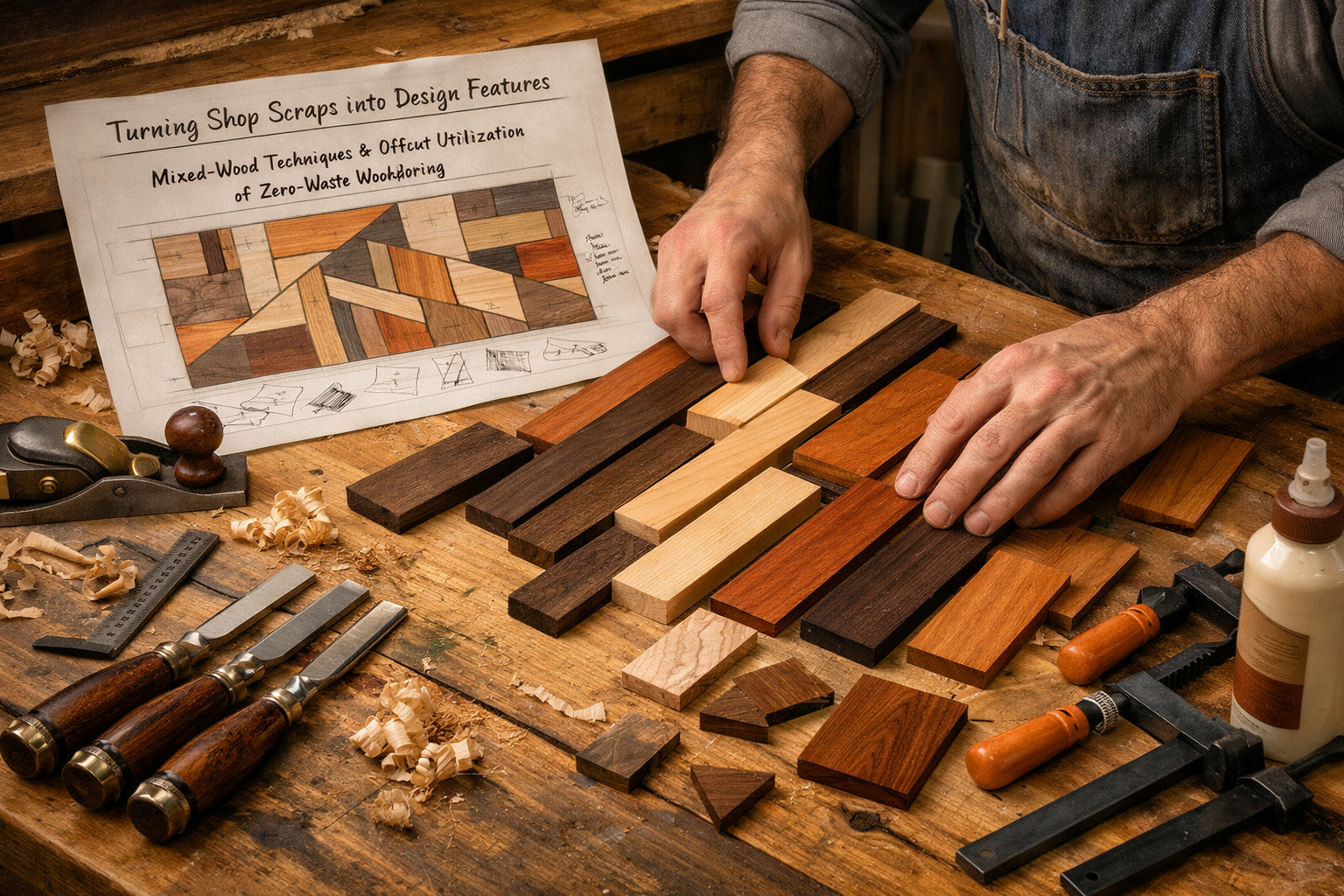
The concept of zero-waste woodworking is more than just a trend; it’s a mindset that prioritizes efficiency, sustainability, and respect for materials. Every cut in the workshop generates offcuts – pieces too small for the primary project but often perfectly good wood. Instead of discarding these, a zero-waste philosophy encourages their integration into new designs or secondary projects. This approach aligns perfectly with the current global emphasis on circular economies and responsible consumption, making it a highly valued practice in 2026.
Understanding Offcuts: Beyond the Scrap Bin
Offcuts come in various forms and sizes, each with its own potential. There are small strips from jointing edges, end-grain cutoffs from cross-cutting, thin veneers from resawing, and even larger chunks leftover from rough stock. The key is to see these not as unusable remnants but as valuable resources.
Types of Offcuts and Their Potential:
| Offcut Type | Description | Potential Use |
|---|---|---|
| Strips | Long, thin pieces, often from ripping boards. | Edge banding, small box components, intricate inlays, laminations. |
| Blocks | Chunkier, smaller pieces from cross-cutting. | Segmented turning, mosaic patterns, small decorative objects. |
| Veneers | Very thin sheets, often from resawing. | Marquetry, decorative overlays, laminations for curved forms. |
| Odd Shapes | Irregular pieces from template cutting or curves. | Sculptural elements, abstract art, creative puzzle-piece designs. |
Recognizing the potential within these varied scraps is the first step in Turning Shop Scraps into Design Features: Mixed-Wood Techniques and Offcut Utilization for Zero-Waste Woodworking. It encourages a more thoughtful approach to every piece of timber that enters the workshop.
The Aesthetic and Environmental Benefits
Utilizing offcuts brings both aesthetic and environmental advantages:
- Unique Aesthetics: Mixing different wood species introduces a rich palette of colors, grain patterns, and textures that can create stunning visual contrast and depth in a project. Imagine a vibrant cutting board with alternating stripes of dark walnut and light maple, or a subtle inlay of cherry in an oak tabletop.
- Reduced Material Cost: By using what you already have, the need to purchase new stock for smaller components diminishes, leading to cost savings over time.
- Environmental Responsibility: Minimizing waste lessens the demand for virgin timber, reduces landfill burden, and conserves natural resources. It’s a tangible way for woodworkers to contribute to a healthier planet.
- Enhanced Creativity: Working with limited or irregularly shaped pieces often sparks new ideas and challenges, pushing design boundaries and fostering innovation. This constraint can actually become a catalyst for remarkable creativity.
“The true craftsman doesn’t just build with wood; they understand and honor every fiber of it. Zero-waste woodworking is the ultimate expression of that respect.”
To effectively manage offcuts, consider dedicating specific storage solutions in your shop. Categorizing by wood species, size, or even potential use can make retrieval much more efficient. Simple bins or shelves can transform a chaotic pile into an organized inventory, ready to be incorporated into your next masterpiece. For larger offcuts that might seem initially unusable, consider resawing them into thinner stock or dimensioning them down to standard sizes for future smaller projects. Tools like a Reliant 14 Bandsaw or a Delta 28-160 Band Saw can be invaluable for this process, allowing you to mill custom stock from otherwise discarded pieces.
Mastering Mixed-Wood Techniques for Offcut Utilization
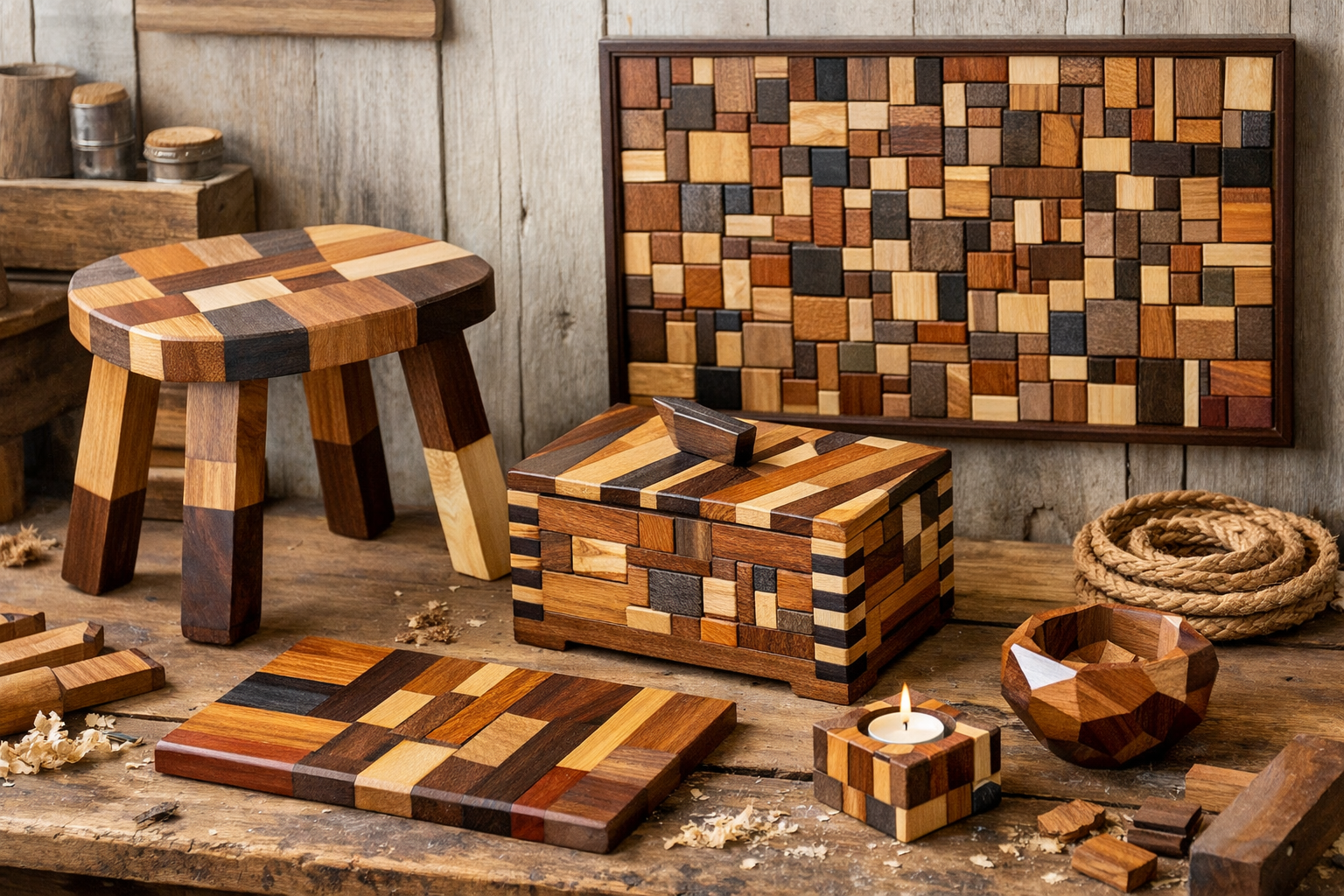
The true magic of Turning Shop Scraps into Design Features: Mixed-Wood Techniques and Offcut Utilization for Zero-Waste Woodworking lies in the application of various woodworking techniques that showcase the diversity of wood species. These methods allow you to combine different offcuts to create harmonious and visually striking designs.
1. Lamination and Edge Grain Butcher Blocks
Lamination is perhaps the most straightforward way to use strips of offcuts. By gluing together multiple pieces of varying woods, you can create new boards that are rich in color and pattern.
Strips and Panels: Combine thin strips of contrasting woods (e.g., maple, walnut, cherry) to create decorative panels for tabletops, drawer fronts, or cabinet doors. The resulting glue-up can be planed smooth and used as a single, unique piece of stock.
Edge Grain Butcher Blocks: One of the most popular and durable applications for offcuts. Small blocks of wood are arranged with their end grain facing up, glued together, and then surfaced. This creates a highly resilient and visually stunning surface, perfect for cutting boards, countertops, or even a woodworking dining chair seat. The varying hardness and color of different woods add incredible character.
Steps for an Edge Grain Butcher Block:
- Select & Prepare Offcuts: Gather uniform thickness blocks of contrasting woods.
- First Glue-Up: Glue strips together side-by-side to form larger panels.
- Cross-Cut Strips: Once dry, cross-cut these panels into individual strips.
- Second Glue-Up: Rotate every other strip 90 degrees so the end grain is up, then glue them together.
- Flatten & Finish: Use a planer (like an RBI Planer) or drum sander to flatten both faces. Finish with a food-safe oil.
2. Inlays and Marquetry
Inlaying involves embedding one material into the surface of another, creating a flush design. Marquetry is a more complex form, where various wood veneers are cut into shapes and assembled to form a pictorial design. Both are excellent for using small, thin offcuts.
- Simple Inlays: Cut small shapes (squares, diamonds, geometric patterns) from contrasting woods and rout matching recesses in a larger piece. Glue the inlay in place and sand flush. This can add a sophisticated touch to drawers, boxes, or furniture elements.
- Veneer Marquetry: Utilize thin slices of various wood veneers, even from exotic scraps, to create intricate pictorial scenes or complex patterns. These can be applied to furniture panels, decorative boxes, or wall art. Thin offcuts from resawing can be particularly useful here.
3. Segmented Turning
For woodturners, segmented turning is a fantastic method for using block offcuts. It involves cutting many small segments of wood, arranging them in rings, gluing them together, and then turning the resulting blank on a lathe.
- Bowls and Vases: Create stunning bowls, vases, or other hollow forms by combining different wood species into concentric rings or intricate patterns. The visual impact of the mixed grains and colors is truly captivating.
- Decorative Accents: Even small segments can be used to create decorative bands or bases for other turned items, adding a unique signature.
4. Creative Joinery and Patchwork
Beyond traditional joinery, offcuts can inspire unique structural and decorative joints.
- Spline Joints: Use thin strips of contrasting wood as splines in miter or butt joints. This not only strengthens the joint but also creates a beautiful visual detail.
- Dovetail Keys: Incorporate contrasting wood into decorative dovetail keys or butterfly keys (also known as Dutchman patches) to repair cracks or simply add a design accent.
- Patchwork Panels: For larger surfaces, consider creating a “patchwork” panel by gluing together irregularly shaped offcuts, akin to a wooden mosaic. This can be particularly effective for rustic or artisanal pieces. This technique can be applied to many projects, from small decorative boxes to larger table surfaces. For robust construction, appropriate woodworking fasteners or strong adhesives are key.
Remember that wood finishing techniques play a crucial role in enhancing the beauty of mixed-wood projects. Different woods react to finishes in unique ways, so testing on scrap pieces is always recommended to achieve the desired effect. For example, understanding oak wood finishing techniques alongside those for maple or walnut will ensure the mixed-wood piece shines.
Practical Strategies for Offcut Management and Design Integration
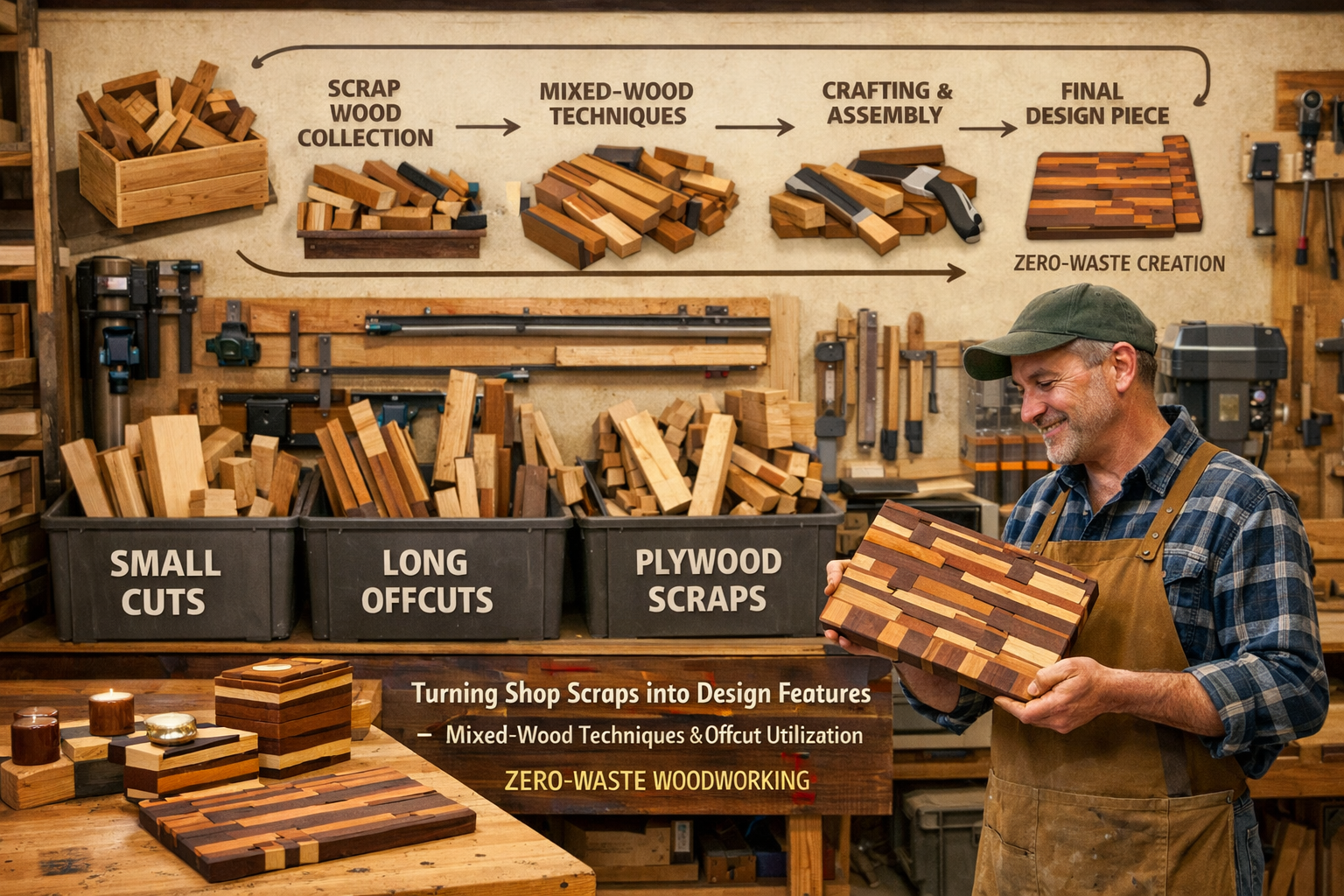
Successfully integrating offcuts into your designs requires more than just knowing techniques; it demands smart shop organization and a creative design approach. In 2026, efficient resource management is a hallmark of a professional woodworking operation.
Organize Your Offcuts Like a Pro
A dedicated system for offcut storage is paramount. Without it, the “zero-waste” intention quickly devolves into a messy pile of forgotten wood.
- Categorize by Species: Group similar wood types together (e.g., all maple in one bin, all walnut in another). This simplifies selection for mixed-wood projects where specific color or grain contrast is desired.
- Sort by Size/Thickness: Keep smaller, thinner pieces separate from larger blocks. This makes it easier to find suitable material for specific applications like inlays versus segmented turning.
- Labeling System: Clear labels on bins or shelves prevent confusion and save time. Consider also noting if pieces are pre-milled to a certain thickness or width.
- Visual Inventory: A transparent bin or an open shelf system allows for quick visual assessment of available materials.
| Storage Method | Best For | Benefits |
|---|---|---|
| Clear Plastic Bins | Small, frequently used offcuts | Visibility, portability, keeps dust out. |
| Dedicated Shelving | Larger blocks, longer strips, pre-milled stock | Easy access, good organization for various sizes. |
| Vertical Storage | Thin strips, veneer offcuts | Space-saving, prevents warping for longer, thinner pieces. |
| Scrap Wood Cart | General purpose, for quick sorting | Mobile, can be moved to different work areas as needed. |
Designing with Scraps in Mind
Proactive design thinking is crucial for Turning Shop Scraps into Design Features: Mixed-Wood Techniques and Offcut Utilization for Zero-Waste Woodworking.
- Start with the Scraps: Instead of designing a project and then trying to find scraps to fit, sometimes it’s more inspiring to look at your offcut inventory first. What interesting combinations or patterns emerge? This can lead to truly unique, organic designs.
- Embrace Imperfections: Small knots, sapwood, or unique grain patterns that might be rejected in primary stock can become charming features in a mixed-wood piece. They add character and a story to the wood’s journey.
- Plan for Contrast: When using mixed woods, consider the interplay of colors and grain.
- High Contrast: Dark wood next to light wood (e.g., walnut and maple) creates dramatic, bold patterns.
- Subtle Contrast: Similar tones with different grain patterns (e.g., cherry and mahogany) offer more sophisticated, understated elegance.
- Scale and Proportion: Ensure the offcuts used as design features are in proportion to the overall piece. Overwhelming a delicate design with chunky offcut details can detract from its beauty.
- Finishing Considerations: Different wood species absorb stains and finishes differently. Be mindful of this when selecting woods for mixed-wood projects. A clear finish often works best to highlight the natural beauty and contrast of various woods. For example, a quality clear finish for maple will reveal its natural light tones, while an oil finish on walnut will deepen its rich browns. Explore different cool wood finishing techniques to elevate your mixed-wood designs.
By treating offcuts as valuable assets and integrating their potential into the design process from the outset, woodworkers can consistently produce innovative, sustainable, and visually stunning pieces. This not only minimizes waste but also elevates the artistry and craftsmanship of every project in your shop in 2026. Remember, even small pieces of wood can have a big impact when thoughtfully utilized.
Conclusion
The journey of Turning Shop Scraps into Design Features: Mixed-Wood Techniques and Offcut Utilization for Zero-Waste Woodworking is a rewarding path for any woodworker in 2026 committed to sustainability, creativity, and craftsmanship. By shifting perception from “waste” to “resource,” and by mastering techniques such as lamination, inlay, segmented turning, and creative joinery, artisans can transform the smallest offcuts into breathtaking elements that define a piece. This approach not only champions environmental responsibility by significantly reducing material waste but also unlocks a vast spectrum of design possibilities, allowing for the creation of truly unique and personalized items.
Embracing offcut utilization enriches the woodworking process itself, fostering ingenuity and a deeper connection with the material. It encourages woodworkers to experiment with contrasting colors and textures, to celebrate the natural variations within timber, and to tell a more complete story with every project. The result is not just a finished product, but a testament to thoughtful design, skilled execution, and a profound respect for our natural resources.
Actionable Next Steps:
- Assess Your Current Scrap Management: Go through your workshop today and evaluate how you currently handle offcuts. Identify areas for improvement in organization and storage.
- Start Small with Mixed-Wood Techniques: Begin with a simple project like a laminated cutting board or a small box with a contrasting spline joint. This allows you to practice techniques without significant material investment.
- Experiment with Different Wood Combinations: Gather a variety of offcuts and test different mixed-wood pairings. Observe how their colors, grains, and densities interact before committing to a larger project.
- Dedicate Design Time to Offcuts: Before starting your next major project, spend time brainstorming how you can integrate existing offcuts into its design, either functionally or decoratively.
- Share Your Creations: Document your zero-waste projects and share them with the woodworking community. Inspire others to adopt these sustainable and creative practices.
By taking these steps, woodworkers can evolve their craft, contribute positively to the environment, and demonstrate that true artistry lies not just in what is made, but also in how it is made.
References
- Duginske, M. (1990). The New Complete Guide to the Band Saw. Taunton Press.
- Krenov, J. (2000). The Impractical Cabinetmaker. Linden Publishing Co.
- Lash, J. (1979). The Wood-Frame House Book. WoodenBoat Publications.
- Schwarz, C. (2011). The Anarchist’s Tool Chest. Lost Art Press.