

The world of woodworking offers endless opportunities for creativity and profit. Among the most sought-after pieces of furniture are wooden benches, versatile additions to any home or garden. For woodworkers looking to elevate their craft and maximize their earnings in 2026, focusing on “Crafting Profitable Wooden Benches: Indoor-Outdoor Designs with Advanced Joinery for 2026” is a strategic move. This comprehensive guide will walk aspiring and experienced makers through the process of building durable, beautiful, and highly marketable benches, emphasizing advanced joinery techniques like mortise and tenon or robust pocket hole methods, and highlighting the appeal of premium hardwoods such as walnut. We will also delve into optimizing small workshop spaces and selecting the perfect finishing techniques for weather resistance, ensuring your creations are not only stunning but also built to last.
Key Takeaways
- Versatile Design & Profitability: Design benches for both indoor and outdoor use to expand market reach and profitability in 2026.
- Advanced Joinery is Key: Master mortise and tenon, or advanced pocket hole techniques, for superior strength, durability, and a premium aesthetic.
- Hardwood Selection Matters: Utilize durable hardwoods like walnut, teak, or white oak for longevity, beauty, and higher perceived value.
- Workshop Optimization: Maximize efficiency and output in small workshops through smart layout and multi-functional tools.
- Strategic Finishing: Apply appropriate finishes (e.g., spar urethane for outdoor, polyurethane for indoor) to ensure longevity and market appeal.
Mastering Advanced Joinery for Durable Benches
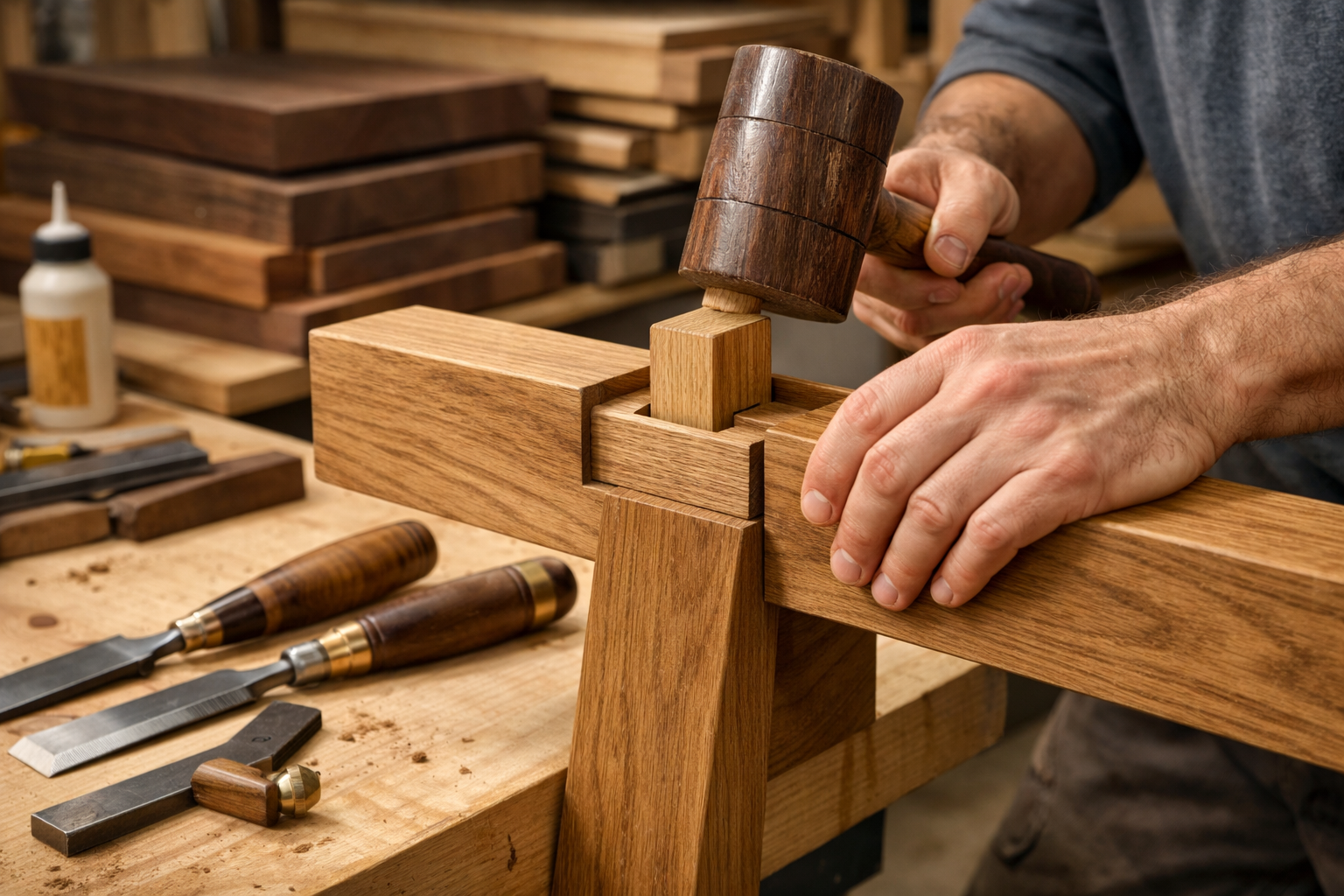
The foundation of any high-quality, long-lasting wooden bench lies in its joinery. While simple screws and butt joints might suffice for basic projects, advanced joinery techniques are essential for creating pieces that are both aesthetically pleasing and exceptionally durable, particularly for benches designed for both indoor and outdoor use. In 2026, discerning customers appreciate craftsmanship that promises longevity.
The Power of Mortise and Tenon Joinery
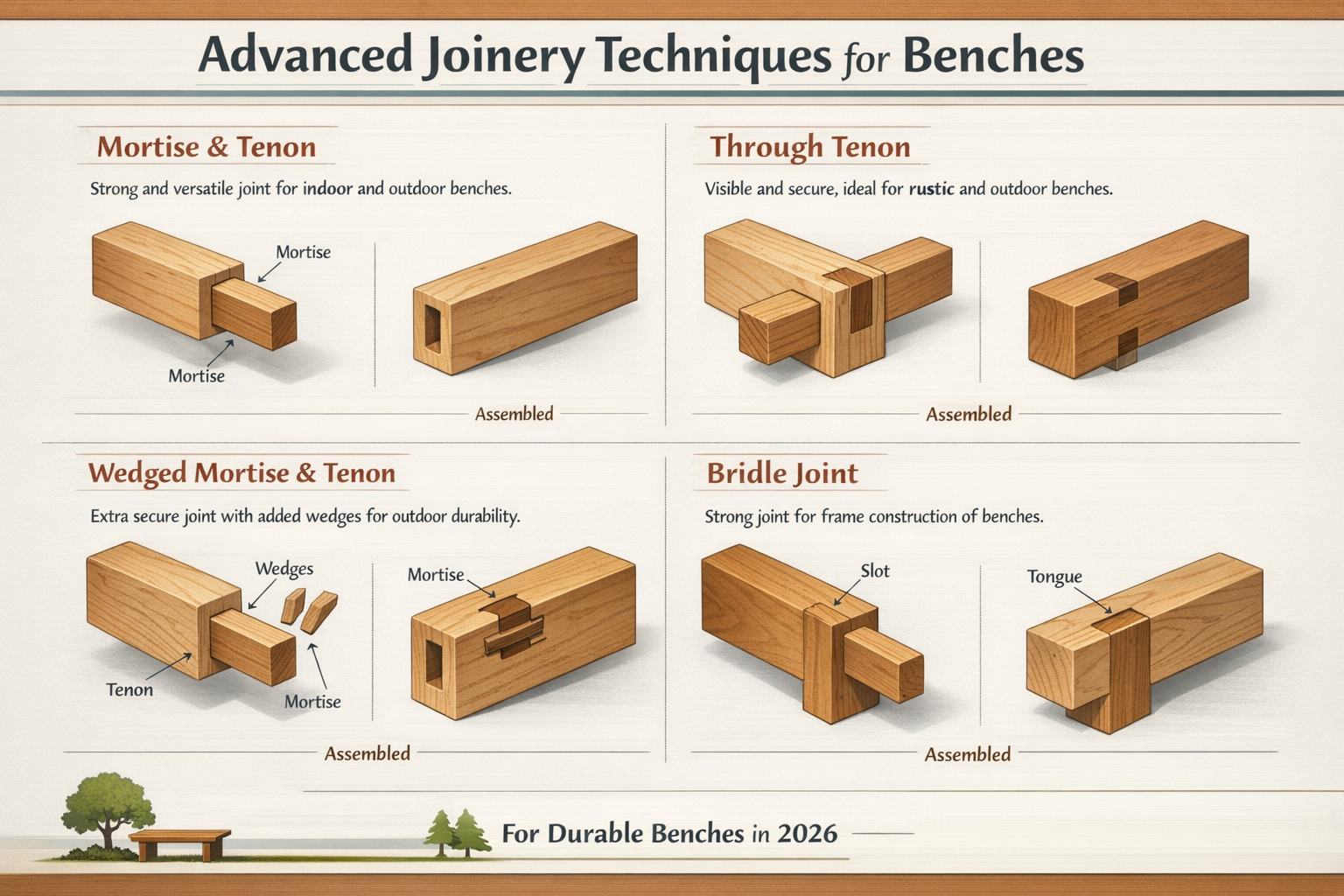
The mortise and tenon joint is a classic in woodworking, renowned for its strength and elegance. It involves fitting a projecting “tenon” from one piece of wood into a corresponding “mortise” (hole) in another. This mechanical lock, often reinforced with glue, creates a joint that can withstand significant stress and movement, making it ideal for the structural integrity of a bench.
Why choose mortise and tenon for benches?
- Exceptional Strength: Distributes load effectively, preventing racking and wobbling.
- Longevity: Less prone to failure than screw-only joints, especially with wood movement.
- Aesthetic Appeal: When executed well, it showcases superior craftsmanship.
- Suitable for Indoor & Outdoor: Its robust nature makes it perfect for the demands of outdoor exposure or the wear and tear of indoor use.
Building a solid mortise and tenon joint requires precision. Tools like a mortiser (both hollow chisel and horizontal mortisers are excellent choices, with Craftsman mortiser essential models, setup, and tips offering great guidance), chisels, and a sharp saw are indispensable. Even a drill press can be adapted with specific bits for creating mortises. For those with a more traditional approach, mastering hand-cut mortise and tenon joints is a rewarding skill that adds significant value to your “Crafting Profitable Wooden Benches: Indoor-Outdoor Designs with Advanced Joinery for 2026” projects.
“The true test of a craftsman’s skill often lies in the quality of their joinery. A well-executed mortise and tenon joint isn’t just strong; it’s a statement of dedication and precision.”
Exploring Advanced Pocket Hole Techniques
While mortise and tenon offers unparalleled strength, advanced pocket hole joinery can be a fantastic alternative, especially for those working in a smaller workshop or seeking efficiency without sacrificing too much strength. Modern pocket hole jigs allow for precise, strong connections that can be hidden or strategically placed for a clean look.
Advantages of advanced pocket holes:
- Speed and Efficiency: Quicker to execute than traditional mortise and tenon joints.
- Strong Fastening: Creates robust joints with proper screw selection and placement.
- Versatility: Works well for various bench components, from frames to slats.
- Accessibility: Easier for woodworkers with less experience in complex hand joinery.
For profitable bench making, combining the speed of pocket holes with the strength of other joints can be a winning strategy. For instance, a bench frame might utilize mortise and tenon for leg-to-apron connections, while slats could be attached with discreet pocket holes or dado joints. This hybrid approach allows for robust construction without excessive time investment, balancing durability with production efficiency. Utilizing tools like a Delta Table Saw 36-600 or a Pro Tech Table Saw can greatly aid in precise cuts needed for any joinery.
| Joinery Type | Strength for Benches | Skill Level Required | Aesthetic Impact | Best For |
|---|---|---|---|---|
| Mortise and Tenon | Excellent (Superior) | High (Precision) | High (Refined) | Main structural frame, legs, aprons |
| Advanced Pocket Hole | Very Good (Robust) | Medium (Efficient) | Good (Can be hidden) | Seat slats, internal supports, quicker assemblies |
| Dovetail | Excellent (Decorative) | High (Artistic) | High (Decorative) | Storage bench drawers, decorative accents |
| Bridle Joint | Excellent (Strong) | Medium-High | Good (Visible) | Leg-to-rail, open frame constructions |
Wood Selection and Workshop Optimization for Crafting Profitable Wooden Benches
Choosing the right wood and optimizing your workspace are critical factors in “Crafting Profitable Wooden Benches: Indoor-Outdoor Designs with Advanced Joinery for 2026.” The selection of wood directly impacts a bench’s durability, appearance, and ultimately, its market value. A well-organized and efficient workshop, even a small one, allows for seamless production and consistent quality.
Selecting the Ideal Hardwoods for Durability and Aesthetics
For benches designed for both indoor elegance and outdoor resilience, the wood species is paramount. Durable hardwoods not only stand up to the elements but also convey a sense of quality and craftsmanship that justifies a higher price point.
Top Hardwood Choices for Benches in 2026:
- Walnut: Renowned for its rich, dark color and beautiful grain, walnut is an excellent choice for indoor benches, offering a luxurious feel. While less commonly used outdoors due to cost, it can be, with proper finishing. Its stability and workability make it a favorite among fine woodworkers.
- Teak: The gold standard for outdoor furniture. Teak’s natural oils make it highly resistant to moisture, rot, and insects. Its beautiful golden-brown color weathers to a silvery-grey patina if left untreated, offering a classic outdoor aesthetic.
- White Oak: A strong, durable, and highly water-resistant wood due to its closed cellular structure. White oak is versatile for both indoor and outdoor use. It accepts stains well and has a distinctive, attractive grain.
- Cedar: While softer than the others, Western Red Cedar is naturally resistant to rot and insects, making it a good, lighter-weight option for outdoor benches where absolute hardness isn’t the primary concern. Its aromatic qualities are an added bonus.
- Ipe: An extremely dense and durable South American hardwood, often called “ironwood.” Ipe is highly resistant to rot, insects, and decay, making it superb for outdoor applications. Its rich, dark brown color is stunning.
When sourcing wood, always look for kiln-dried lumber to minimize movement and warping after construction. Consider how the wood’s natural properties will interact with your chosen joinery and finishing techniques. For projects like these, understanding various wood finishing techniques is crucial, especially for different wood types.
Small Workshop Optimization: Maximizing Efficiency and Output
Many skilled woodworkers operate from compact spaces. Optimizing a small workshop is about smart planning, multi-functional tools, and efficient workflow.
Strategies for a Productive Small Workshop:
- Layout and Flow: Design your workshop for a logical workflow, from rough milling to finishing. Keep frequently used tools easily accessible. Consider mobile tool bases for larger machines like table saws or planers. For example, a Super 125 Surface Planer on a mobile cart can be easily moved when not in use.
- Vertical Storage: Shelving, wall-mounted racks, and pegboards free up valuable floor space. Store lumber vertically where possible.
- Multi-functional Tools: Invest in tools that can perform multiple tasks. A quality table saw with dado stack capabilities can replace several dedicated machines for certain operations. A Master Your Craft: Building the Ultimate Woodworking Storage Bench in 2026 can provide both a workspace and valuable storage.
- Dust Collection: Essential for health and cleanliness, a good dust collection system keeps the air clear and minimizes cleanup. Even a small shop needs efficient dust extraction, perhaps even a Reliant Dust Collector: The Ultimate Guide to Dust Collection Basics to keep the area tidy.
- Smart Jigs and Fixtures: Custom jigs can turn repetitive tasks into efficient processes, saving time and ensuring accuracy. These can be stored compactly when not in use.
- Lighting: Good lighting reduces eye strain and helps prevent errors. Combine ambient lighting with task lighting over your workbench.
By focusing on these aspects, even a modest workshop can become a highly productive environment for “Crafting Profitable Wooden Benches: Indoor-Outdoor Designs with Advanced Joinery for 2026.”
Finishing for Longevity and Market Appeal in 2026
The final step in crafting a profitable wooden bench is applying the right finish. This not only enhances the wood’s natural beauty but, more importantly, protects it from environmental factors, ensuring longevity and maintaining its market value. Different finishes are suitable for indoor and outdoor applications, and understanding their properties is key in 2026.
Indoor Finishes: Enhancing Beauty and Durability
For indoor benches, the primary goal is to protect against spills, scratches, and everyday wear, while highlighting the wood’s natural grain and color.
Popular Indoor Finishing Options:
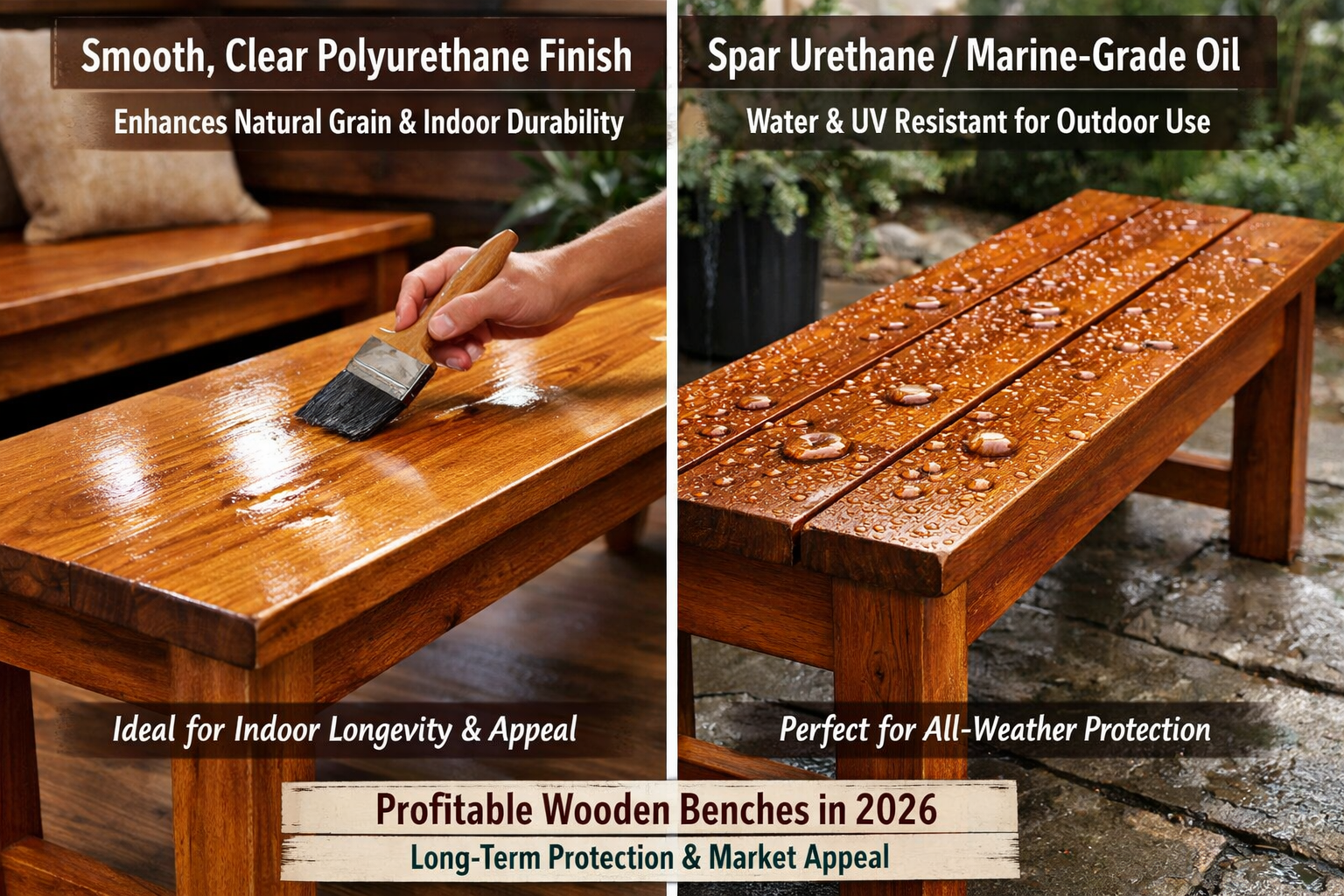
- Polyurethane: A highly durable and water-resistant finish available in oil-based and water-based formulas. Oil-based polyurethane offers a slightly amber tone and excellent protection, while water-based dries faster, cleans up with water, and remains clear. For application tips, consider exploring Sprayable Water Based Polyurethane: A Step-by-Step Guide or comparing Spray vs Brush Polyurethane: Pros, Cons, and Guidance.
- Varnish: Offers excellent protection, especially spar varnish, which is very flexible and resistant to UV light, though typically reserved for outdoor use. Interior varnishes offer similar hardness to polyurethane.
- Lacquers: Provide a very hard, durable, and fast-drying finish, often used in professional furniture making for a high-gloss look. However, they can be more challenging to apply without spray equipment.
- Oils (Danish Oil, Tung Oil, Boiled Linseed Oil): Penetrating oils soak into the wood, providing a natural, matte, or satin finish that enhances the grain. They offer moderate protection and are easy to repair but require more frequent reapplication than film-forming finishes. For more on this, check out Danish Oil vs. Boiled Linseed Oil: Understanding Wood Oils.
When finishing indoor benches, proper surface preparation is critical. Sanding through successively finer grits (e.g., 120, 180, 220) ensures a smooth surface for the finish to adhere to, preventing issues like sanding marks after staining.
Outdoor Finishes: Resilience Against the Elements
Outdoor benches face harsher conditions: UV radiation, rain, humidity, temperature swings, and sometimes even snow. The finish must provide robust protection against these elements.
Essential Outdoor Finishing Options:
- Spar Urethane (or Marine Varnish): This is arguably the best film-forming finish for outdoor furniture. It’s specifically formulated with UV inhibitors, fungicides, and flexible resins that allow it to expand and contract with the wood, preventing cracking and peeling. If you’re wondering Can You Put Spar Urethane Over Polyurethane? Compatibility Insights, the answer often depends on the type and cure of the polyurethane, but generally, spar urethane is the superior choice for outdoor exposure.
- Penetrating Oils (e.g., Teak Oil, Linseed Oil Blends): These oils soak into the wood, providing natural protection and enhancing its grain without forming a surface film that can peel. They need regular reapplication (typically annually) but are easy to maintain and repair. They are excellent for naturally weather-resistant woods like teak and cedar. For a deeper dive, consider Linseed Oil vs. Stain: Pros, Cons, and Choosing the Right Finish.
- Exterior Stains/Sealants: Combining color with protection, these products offer UV resistance and water repellency. They come in various opacities, from transparent to solid. Be mindful that solid stains obscure the wood grain.
- Epoxy Coatings (with UV topcoat): For ultimate durability and water resistance, especially for marine-grade projects, an epoxy base coat followed by a UV-resistant clear topcoat can offer unparalleled protection, though it’s a more intensive application process.
When finishing benches for outdoor use, pay close attention to all surfaces, including end grain, which absorbs moisture most readily. Applying multiple thin coats is generally better than one thick coat, providing better penetration and a more durable finish. Remember to always follow manufacturer recommendations for application and re-coat times.
Conclusion
“Crafting Profitable Wooden Benches: Indoor-Outdoor Designs with Advanced Joinery for 2026” is a venture that combines artistic skill with practical business acumen. By focusing on superior craftsmanship through advanced joinery like mortise and tenon, selecting durable and aesthetically pleasing hardwoods such as walnut or teak, optimizing your workshop for efficiency, and applying the correct, long-lasting finishes, woodworkers can create benches that stand out in a competitive market.
These benches will not only be beautiful and functional additions to homes and gardens but also enduring testaments to quality. The investment in mastering advanced techniques and choosing premium materials will pay dividends in customer satisfaction, reputation, and, ultimately, profitability.
Actionable Next Steps:
- Refine Your Joinery Skills: Practice mortise and tenon joints on scrap wood until you achieve consistent, tight fits.
- Research Wood Suppliers: Identify local or online suppliers for quality hardwoods like walnut, teak, or white oak.
- Optimize Your Workspace: Implement at least one new organizational or efficiency strategy in your workshop this month.
- Experiment with Finishes: Test various indoor and outdoor finishes on wood samples to understand their application and final appearance.
- Develop Your Design Portfolio: Start sketching and planning a range of bench designs that highlight your newfound skills and material choices.
By embracing these principles, you are well on your way to successfully “Crafting Profitable Wooden Benches: Indoor-Outdoor Designs with Advanced Joinery for 2026” and establishing yourself as a premier craftsman in the woodworking community.
References
- Fine Woodworking Magazine. (2022). The Essential Guide to Joinery. Taunton Press.
- Hoadley, R. B. (2000). Understanding Wood: A Craftsman’s Guide to Wood Technology. Taunton Press.
- Krenov, J. (1981). The Impractical Cabinetmaker. Van Nostrand Reinhold.
- Taunton Press. (2018). Finishing Wood: The Complete Guide to Choosing and Applying the Right Finish.
- Wood Magazine. (2023). Workshop Storage & Organization: Smart Solutions for Every Space. Meredith Corporation.