

For woodworking professionals and ambitious hobbyists alike, the choice of material is paramount. As we look towards 2026, the demand for high-quality, durable, and aesthetically superior furniture and custom builds continues to grow. Moving beyond the ubiquitous pine, this in-depth guide focuses on premium wood selection for 2026 projects, with a particular emphasis on the timeless elegance of Walnut and Cherry, alongside intriguing exotic alternatives. This article provides comprehensive insights into sourcing, characteristics, essential tool adjustments for hardwoods, cost comparisons, and finishing techniques, all designed to elevate your projects from beginner to professional-level profitability.
Key Takeaways
- Walnut & Cherry Offer Timeless Appeal: Black Walnut and American Cherry remain top choices for premium projects due to their rich aesthetics, excellent workability, and durability.
- Exotic Woods Expand Design Horizons: Explore alternatives like African Mahogany, Teak, and Purpleheart for unique colors, grain patterns, and enhanced properties.
- Tooling for Hardwoods is Crucial: Hardwoods require sharper, more robust tools and specific techniques to prevent tear-out and ensure clean cuts.
- Finishing Transforms Value: The right finishing technique can dramatically enhance the wood’s natural beauty and protect your investment, contributing to higher project profitability.
- Sourcing Smartly Impacts Cost & Sustainability: Understand the factors influencing hardwood prices and consider sustainable sourcing practices for long-term project viability.
Elevating Your Craft: The Appeal of Walnut and Cherry for 2026 Projects
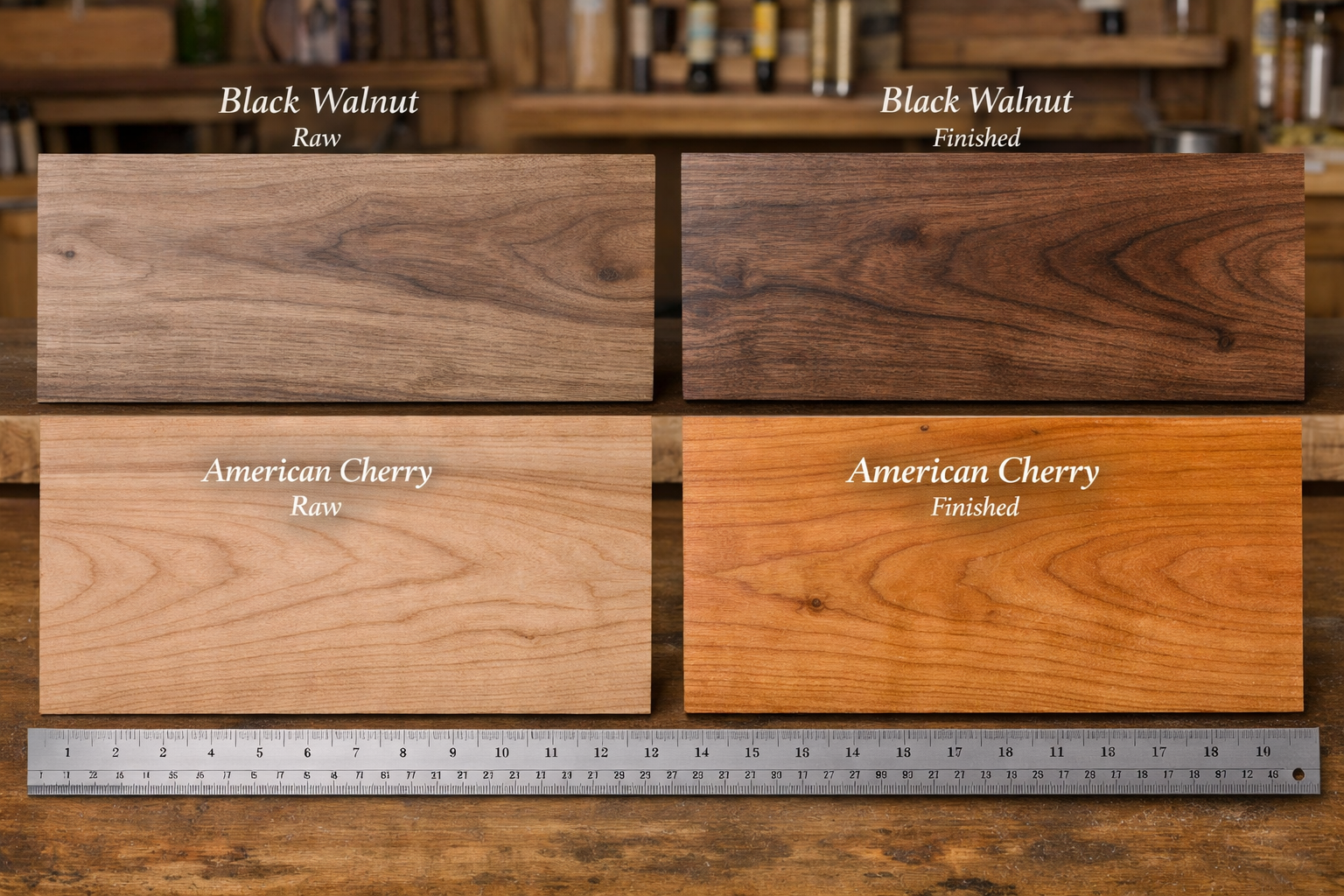
When contemplating premium wood selection for 2026 projects, Black Walnut and American Cherry invariably rise to the top of the list for their exquisite beauty, impressive durability, and excellent workability. These domestic hardwoods are mainstays in fine furniture, cabinetry, and decorative woodworking for good reason. Understanding their unique characteristics, sourcing considerations, and proper handling is key to maximizing their potential and ensuring your 2026 projects stand out.
Black Walnut: Richness and Resilience
Black Walnut ( Juglans nigra ) is a highly prized hardwood known for its deep, chocolate-brown heartwood, often accented with purplish or reddish hues. Its grain patterns can vary from straight to wavy, occasionally featuring highly figured crotches or burls that are especially sought after for veneers and decorative elements.
Key Characteristics:
- Appearance: Distinctive rich dark brown color, beautiful open grain, and natural luster.
- Durability: Moderately hard (1010 lbf Janka hardness), strong, and highly resistant to decay and insect attack.
- Workability: Generally easy to work with hand and power tools. It holds an edge well and can be sanded to a silky smooth finish. Steam bending can be challenging due to its brittleness.
- Stability: Exhibits good dimensional stability once properly dried.
- Sourcing: Primarily grown in the Eastern and Central United States. Due to its popularity, responsible sourcing from managed forests is important.
- Cost: Typically one of the more expensive domestic hardwoods, reflecting its aesthetic appeal and versatility. Prices vary significantly based on grade, thickness, and figure.
Best Uses for 2026 Projects: Fine furniture (dining tables, cabinets, chairs), gunstocks, decorative boxes, architectural millwork, and musical instruments. Its luxurious appearance makes it perfect for high-end bespoke pieces.
American Cherry: Warmth and Grace
American Cherry ( Prunus serotina ) is another iconic domestic hardwood, celebrated for its warm, reddish-brown color that deepens beautifully over time with exposure to light. Its fine, uniform texture and distinctive satiny luster make it a favorite for elegant and traditional designs.
Key Characteristics:
- Appearance: Light pinkish-brown heartwood that darkens to a rich reddish-brown with age. Features fine, straight grain, occasionally with small gum pockets or mineral streaks that add character.
- Durability: Medium hardness (950 lbf Janka hardness), good strength-to-weight ratio.
- Workability: Excellent to work with both hand and machine tools. It planes, sands, and finishes exceptionally well, resulting in a smooth, glass-like surface. Tear-out can occur if tools are not sharp, especially when planing figured pieces.
- Stability: Very stable once dried, with minimal movement.
- Sourcing: Abundant in the Eastern United States, particularly the Appalachian region. Readily available from sustainable sources.
- Cost: Generally less expensive than Black Walnut but still a premium hardwood.
Best Uses for 2026 Projects: Fine furniture, cabinetry, turned objects, decorative molding, and paneling. Its aging process is a significant appeal, creating heirlooms that gain character over decades.
Sourcing and Tool Adjustments for Walnut and Cherry
When sourcing these premium woods, consider purchasing from reputable lumberyards that offer kiln-dried stock. Kiln-drying ensures stability and prevents future warping or cracking. For optimal results, acclimate the wood in your shop for several weeks before beginning your project.
Working with Walnut and Cherry requires sharp tools. Dull blades will lead to tear-out, burning, and an overall poor finish, especially with cherry’s propensity for tear-out. For detailed insights on maintaining your equipment, consider exploring our guide on Precision Woodworking Tools: Top 5 Picks for Your Shop.
- Saw Blades: Use high-tooth count blades for cross-cutting (60-80 teeth) and rip-cut blades with fewer teeth (24-40 teeth) for efficient ripping. Ensure they are carbide-tipped for longevity.
- Planers and Jointers: Set shallow passes (1/32″ to 1/64″) to reduce tear-out, especially when working against the grain. If tear-out is an issue, try feeding the wood at a slight angle.
- Routers: Use sharp, carbide-tipped router bits. Take multiple shallow passes for profiles rather than one deep cut.
- Sanding: Both woods sand beautifully. Start with 120-grit, move to 150-grit, and finish with 180-220 grit for a silky smooth surface. Avoid skipping grits.
Beyond Pine: Exotic Alternatives for Distinctive 2026 Projects
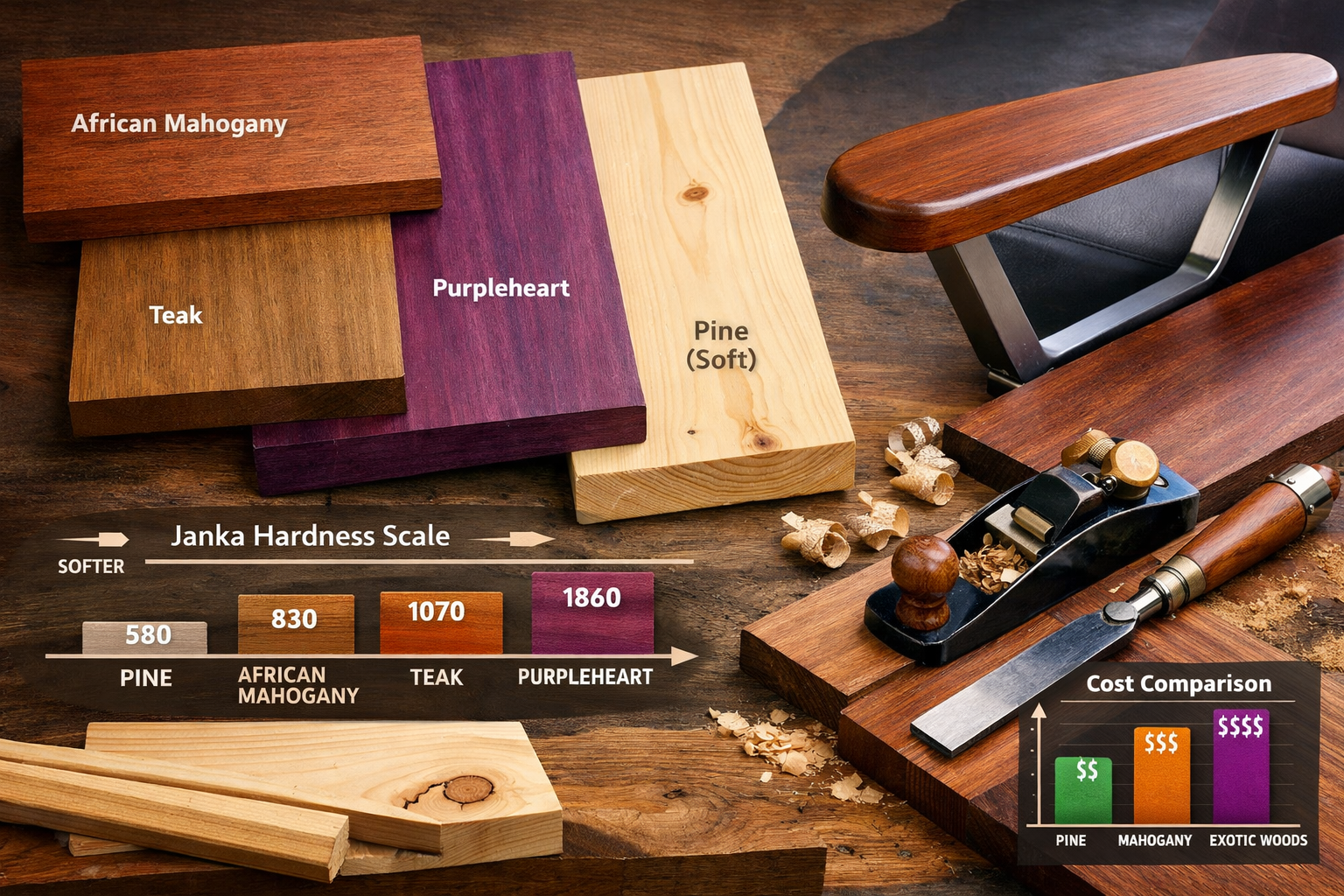
While pine offers affordability and ease of work, it often lacks the visual drama, density, and longevity required for high-end projects. For woodworkers seeking to create truly distinctive pieces in 2026, exploring exotic alternatives opens up a world of unparalleled beauty and unique properties. These woods can transform a standard build into a show-stopping masterpiece, greatly enhancing project profitability and prestige.
African Mahogany: The Versatile Classic
African Mahogany ( Khaya ivorensis or Khaya anthotheca ) is a popular and more readily available alternative to genuine Honduran mahogany. It offers a beautiful reddish-brown color that darkens with age, a generally straight grain, and a ribbon-like figure when quartersawn.
Key Characteristics:
- Appearance: Light pink to reddish-brown, darkening to a medium reddish-brown. Medium texture, often with a ribbon-like or wavy grain.
- Durability: Medium hardness (830 lbf Janka hardness), good rot resistance, and excellent dimensional stability.
- Workability: Very easy to work with both hand and machine tools. It planes, sands, and finishes exceptionally well, making it a favorite for furniture makers. However, interlocking grain can sometimes cause tear-out during planing.
- Sourcing: Primarily from West and East Africa. While generally sustainable, ensure you purchase from reputable suppliers who adhere to responsible forestry practices.
- Cost: More affordable than genuine mahogany, making it a popular choice for larger projects that still demand a high-end look.
Best Uses for 2026 Projects: High-quality furniture, boatbuilding, cabinetry, architectural millwork, and veneer. Its classic appeal and ease of finishing make it ideal for pieces requiring a refined look. For specific techniques, refer to our article on mahogany wood finishing techniques.
Teak: The Indomitable Outdoor Performer
Teak ( Tectona grandis ) is legendary for its extreme durability, water resistance, and natural oils that protect it from decay and insects. It is a premium choice for projects exposed to the elements or demanding exceptional longevity.
Key Characteristics:
- Appearance: Golden to medium brown, darkening with age. Grain is typically straight but can be wavy or interlocked. Coarse, uneven texture.
- Durability: Moderately hard (1070 lbf Janka hardness), exceptional resistance to moisture, rot, insects, and chemicals. Its natural oils give it unparalleled weather resistance.
- Workability: Contains silica, which rapidly dulls cutting edges. Carbide-tipped tools are essential. It can be difficult to glue due to its oily nature; surface preparation is critical.
- Sourcing: Native to South and Southeast Asia. Due to past overharvesting, sustainably grown plantation teak is the preferred and often only legal option.
- Cost: One of the most expensive exotic hardwoods, reflecting its superior performance and limited supply of old-growth timber.
Best Uses for 2026 Projects: Outdoor furniture, boat decks, marine applications, flooring, and projects requiring extreme durability and weather resistance.
Purpleheart: The Vivid Statement
Purpleheart ( Peltogyne spp. ) is an unmistakable exotic hardwood, famous for its incredible transformation from a dull grayish-brown when freshly cut to a vibrant deep purple upon exposure to air and UV light.
Key Characteristics:
- Appearance: When freshly cut, a dull grayish-brown that rapidly turns a rich purple. With prolonged UV exposure, it can eventually turn a dark brown.
- Durability: Very hard (2300 lbf Janka hardness), dense, and highly resistant to insects and decay.
- Workability: Challenging to work due to its extreme hardness and density. It can dull tools quickly and may experience tear-out if not worked carefully. Glue adhesion can also be difficult due to its oily resins.
- Sourcing: Central and South America. Generally available and considered sustainable.
- Cost: Moderately expensive, though typically less than Teak or some other highly figured exotics.
Best Uses for 2026 Projects: Accent pieces, inlay, turning, decorative items, flooring, and any project where a striking visual impact is desired. Its hardness also makes it suitable for heavy-duty applications.
Comparing Exotic Alternatives to Pine
| Feature | Pine (e.g., Eastern White Pine) | African Mahogany | Teak | Purpleheart |
|---|---|---|---|---|
| Color | Pale yellow/white | Pink to reddish-brown | Golden to medium brown | Dull gray-brown to vibrant purple |
| Grain | Straight, prominent knots | Straight, sometimes ribbon-like | Straight to wavy, coarse texture | Straight, fine texture |
| Janka Hardness | ~380 lbf | ~830 lbf | ~1070 lbf | ~2300 lbf |
| Durability | Low, prone to dents | Good, moderate rot resistance | Excellent, exceptional weather resistance | Excellent, high insect/decay resistance |
| Workability | Very easy | Easy, some tear-out with interlocking grain | Difficult (dulls tools), tricky gluing | Very difficult (hard, dulls tools, can splinter) |
| Cost | Very Low | Medium-High | Very High | Medium-High |
| Best For | Construction, basic furniture | Fine furniture, millwork, cabinetry | Outdoor furniture, marine, demanding uses | Decorative accents, heavy-duty applications |
This table clearly illustrates the significant upgrade in properties and aesthetics when choosing these alternatives for Premium Wood Selection for 2026 Projects: Walnut, Cherry, and Exotic Alternatives to Pine.
Maximizing Profitability: Finishing and Advanced Techniques for Premium Woods
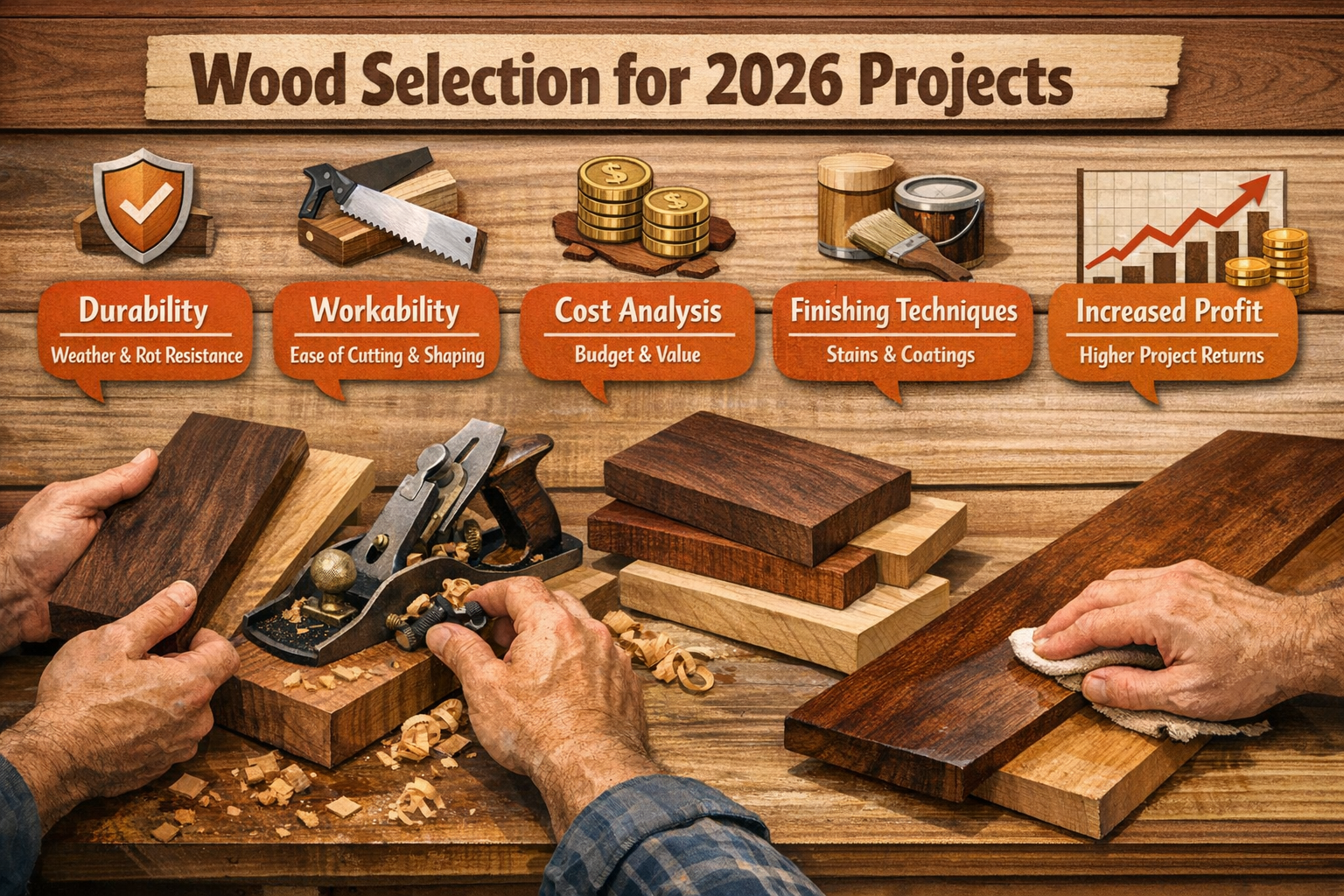
The journey from rough lumber to a professional-grade finished product is significantly influenced by the chosen finishing techniques. For Premium Wood Selection for 2026 Projects: Walnut, Cherry, and Exotic Alternatives to Pine, the finish is not merely a protective layer; it’s an enhancement that brings out the wood’s inherent beauty, elevates its perceived value, and ultimately contributes to the profitability of your projects. Furthermore, understanding the nuances of these woods allows for advanced techniques that truly differentiate your work.
Finishing Techniques for Walnut, Cherry, and Exotic Woods
The goal of finishing premium woods is often to highlight their natural color and grain rather than obscure them with heavy stains.
- Oil Finishes (e.g., Danish Oil, Tung Oil): These penetrate the wood, providing a natural, “hand-rubbed” look that enhances the grain and offers good protection. They are excellent for Walnut and Cherry, bringing out their depth and allowing the wood to age gracefully. Teak, with its natural oils, also responds well to oil finishes, which can be reapplied to maintain its luster. For a detailed comparison, explore Danish Oil vs Linseed: The Ultimate Wood Finishing Guide.
- Clear Lacquers and Polyurethanes: For projects requiring a more durable, hard-wearing surface, especially for tabletops or high-traffic areas, clear lacquers or polyurethanes are ideal. They offer excellent protection against scratches and moisture. These finishes can provide a range of sheens, from satin to high-gloss. Consider our guide on high gloss wood finishing techniques for achieving that mirror-like finish.
- Shellac: A traditional finish that offers a beautiful, warm glow. It’s a great choice as a sealer under other finishes or as a final topcoat for pieces that won’t see heavy wear. It’s particularly lovely on Cherry, enhancing its natural warmth.
- UV Protection for Purpleheart: Due to Purpleheart’s tendency to brown over time with UV exposure, a finish with strong UV inhibitors can help preserve its vibrant purple hue for longer. However, some browning is inevitable and part of the wood’s natural evolution.
Pro Tip: Always test your chosen finish on a scrap piece of the same wood species, prepared in the same manner as your project. This ensures you achieve the desired look and adhesion.
Joinery and Construction Considerations
Working with hardwoods for Premium Wood Selection for 2026 Projects: Walnut, Cherry, and Exotic Alternatives to Pine demands precision in joinery.
- Strong Joinery: Hardwoods are denser and heavier, requiring robust joinery methods like mortise and tenon, dovetails, or dowels to ensure structural integrity. Mechanical fasteners should be piloted and countersunk.
- Wood Movement: Even stable hardwoods will move with changes in humidity. Design your projects to accommodate this movement, especially for tabletops and panels. Floating panels and breadboard ends are classic solutions.
- Adhesion: While Walnut and Cherry glue well, some exotic woods like Teak and Purpleheart can be challenging due to their natural oils. Wiping glue surfaces with a solvent (like acetone or denatured alcohol) just before applying glue can improve adhesion for oily woods. Using fresh glue and ample clamping pressure is always critical.
Elevating Beginner Projects to Pro-Level Profitability
The strategic choice of premium wood is a significant step towards increasing project profitability.
- Perceived Value: High-quality wood like Walnut or Cherry instantly elevates the perceived value of a piece. Customers are willing to pay more for the aesthetic and durability benefits.
- Durability and Longevity: Projects made from hardwoods last longer, becoming heirlooms. This inherent quality justifies a higher price point.
- Finishing Excellence: Investing time in superior finishing techniques—such as hand-rubbed oil finishes or meticulously applied clear coats—transforms a good piece into an exceptional one.
- Craftsmanship Showcased: The beauty of premium woods often means simpler designs can shine, allowing the wood’s natural features to be the star. This doesn’t mean less skill, but rather a focus on meticulous execution.
- Target Market: Utilizing premium woods allows woodworkers to target higher-end clientele who appreciate quality materials and custom craftsmanship.
By carefully considering Premium Wood Selection for 2026 Projects: Walnut, Cherry, and Exotic Alternatives to Pine, coupled with expert finishing and precise construction, you can significantly enhance the profitability and reputation of your woodworking endeavors. The investment in superior materials pays dividends in customer satisfaction and a distinguished portfolio.
Conclusion
The pursuit of excellence in woodworking in 2026 necessitates a thoughtful approach to material selection. Moving beyond the limitations of common woods like pine, embracing the elegance of Black Walnut and American Cherry, and exploring the captivating appeal of exotic alternatives such as African Mahogany, Teak, and Purpleheart, fundamentally transforms a project. Each of these premium woods offers a unique blend of aesthetic beauty, structural integrity, and workability that justifies its higher cost, ultimately contributing to a more valuable and profitable finished product.
Successful execution with these superior materials hinges on understanding their individual characteristics, applying appropriate tooling adjustments, and mastering the finishing techniques that enhance their natural splendor. Whether you are crafting a heirloom dining table, a bespoke cabinet, or intricate decorative elements, the investment in premium wood for your 2026 projects will undoubtedly yield stunning results and elevate your craftsmanship to a professional level.
Actionable Next Steps
- Define Your Project Needs: Clearly outline the aesthetic, durability, and budget requirements for your 2026 project. This will guide your wood selection.
- Source Wisely: Identify reputable local lumberyards or online suppliers offering high-quality, sustainably sourced hardwoods. Inquire about kiln-drying processes and grading.
- Invest in Tools & Knowledge: Ensure your tools are sharp and appropriate for working with hardwoods. Consider taking advanced woodworking classes to hone your skills, especially for joinery and finishing. You can explore options via “Unleash Your Inner Artisan: Your Guide to Finding the Perfect Woodworking Class 🪚 – Wood Craft Wiz” – https://woodcraftwiz.com/unleash-your-inner-artisan-your-guide-to-finding-the-perfect-woodworking-class-%f0%9f%aa%9a/.
- Experiment with Finishes: On scrap pieces, test various finishing techniques to see how they interact with your chosen premium wood. This prevents costly mistakes on your main project.
- Plan for Movement: Always account for wood movement in your designs to ensure the longevity and stability of your premium wood projects.
By meticulously planning and executing these steps, your 2026 woodworking projects will not only be visually stunning but also enduring testaments to thoughtful material selection and superior craftsmanship.
References
- Hoadley, R. B. (2000). Identifying Wood: Accurate Results with Simple Tools. The Taunton Press.
- The Wood Database. (n.d.). Wood Species Information. Retrieved from https://www.wood-database.com/ (Accessed February 15, 2026).
- Fine Woodworking Magazine. (n.d.). Finishing & Surfacing. Retrieved from https://www.finewoodworking.com/finishing-surfacing (Accessed February 18, 2026).