
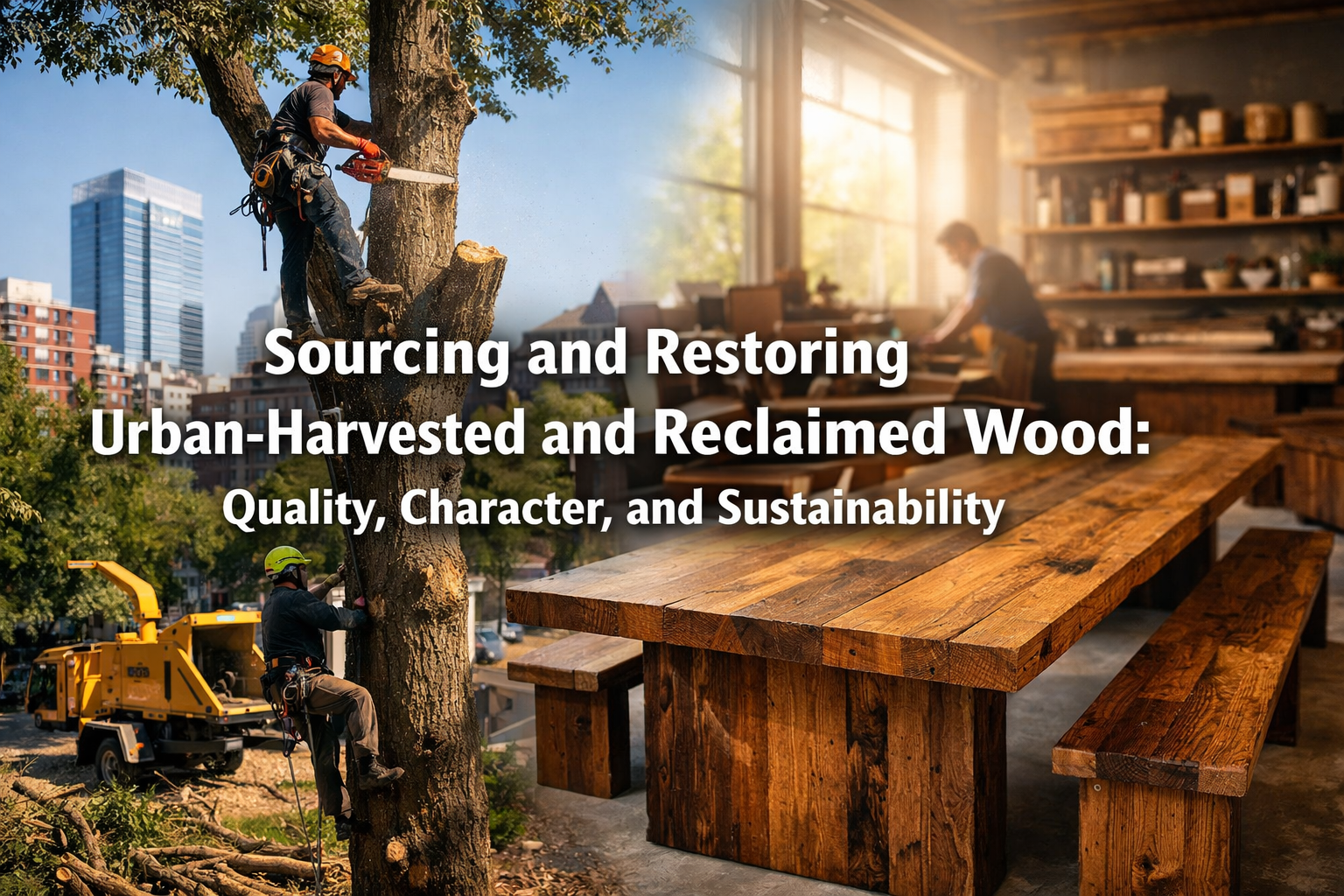
Imagine a piece of furniture in your home that tells a story, not just of its journey from tree to table, but of a previous life, perhaps as a sturdy beam in a century-old factory or a majestic oak shading a bustling city street for decades. This is the inherent charm and profound value of urban-harvested and reclaimed wood. In 2026, as the world increasingly prioritizes ecological responsibility and unique craftsmanship, the practice of Sourcing and Restoring Urban-Harvested and Reclaimed Wood: Quality, Character, and Sustainability has become more relevant and valuable than ever. This comprehensive guide will explore the fascinating process of finding these hidden treasures, understanding their unique qualities, expertly restoring them, and ultimately, recognizing their immense contribution to both aesthetics and environmental stewardship.
Woodworking enthusiasts and professional builders alike are discovering that salvaged timber offers unparalleled character, often superior stability due to its age and slow-growth origins, and a deeply satisfying narrative. Beyond its aesthetic appeal, choosing reclaimed wood makes a tangible difference in reducing waste, lessening the demand for virgin timber, and sequestering carbon – truly embracing sustainability in construction and design.
Key Takeaways
- Diverse Sources, Rich Stories: Urban-harvested wood comes from city trees removed due to infrastructure, disease, or safety, while reclaimed wood is salvaged from demolition sites like old barns, factories, and warehouses. Each source offers unique wood types and historical narratives.
- Superior Quality and Character: Aged and slow-grown, reclaimed and urban wood often boast higher density, greater stability, and unique aesthetic features like wormholes, nail marks, and natural patinas that cannot be replicated with new lumber.
- Meticulous Restoration is Key: Proper restoration involves careful cleaning, drying, de-nailing, milling, and finishing. This process enhances the wood’s inherent beauty and ensures its structural integrity for new applications.
- Embracing Sustainability: Utilizing urban-harvested and reclaimed wood significantly reduces landfill waste, decreases the demand for new logging, and minimizes the carbon footprint of construction and manufacturing, making it an eco-conscious choice.
- Marketing the Narrative: The ‘story’ behind a piece of reclaimed wood is a powerful selling point. Highlighting its origins, history, and sustainable benefits adds significant value and appeal to customers.
The Art of Sourcing Urban-Harvested and Reclaimed Wood
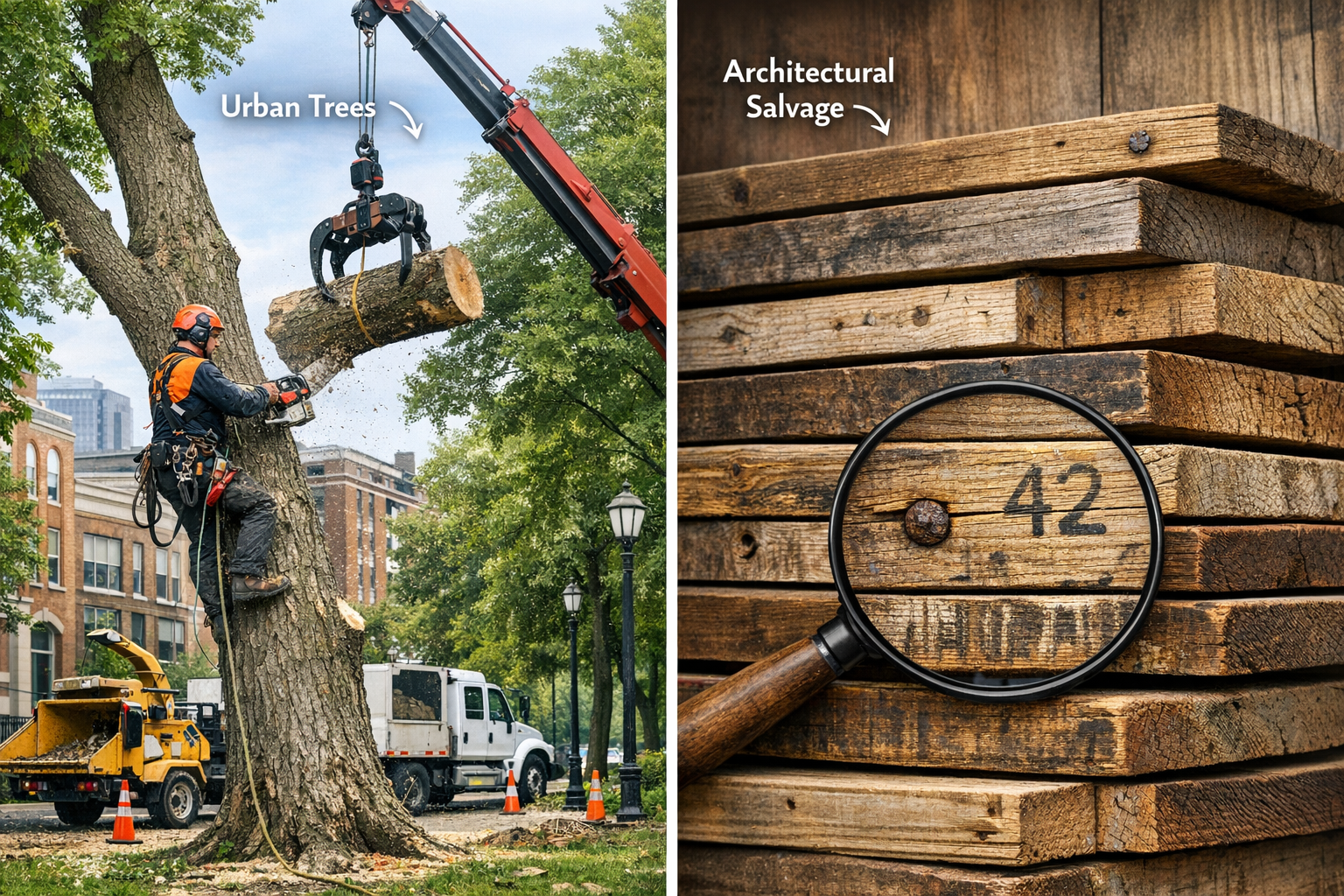
The first step in working with salvaged timber is understanding where it comes from. The term “reclaimed wood” often refers to timber salvaged from old buildings being demolished or renovated. “Urban-harvested wood,” a more specific category, comes from trees removed within urban environments for various reasons. Both offer incredible potential for crafting beautiful and sustainable pieces.
Understanding Urban-Harvested Wood
Urban trees, such as oaks, maples, sycamores, and elms, are often removed due to:
- Disease (e.g., Dutch elm disease) 🌳
- Storm damage or natural disasters
- Infrastructure conflicts (e.g., interfering with power lines, sidewalks, or building foundations)
- Development projects
Instead of these valuable trees being chipped or sent to landfills, urban harvesting programs intercept them. These programs often partner with municipalities, arborists, and sawyers to process logs into usable lumber. The species available are typically those common to urban landscapes, offering a diverse palette for woodworking. This wood, often large in dimension, can be particularly stable because it has grown slowly over many decades, sometimes even centuries, in a protected urban environment.
Exploring Reclaimed Wood Sources
Reclaimed wood typically originates from deconstructed structures, each offering specific types and characteristics:
- Barns: Often built from durable species like oak, pine, and hemlock, barn wood is known for its weathered patina, nail holes, and rich, rustic character. It comes in various forms, including beams, siding, and flooring. For those interested in rough cut lumber flooring, reclaimed barn wood offers unique opportunities.
- Factories and Warehouses: These industrial giants from the late 19th and early 20th centuries often feature massive timbers of old-growth Douglas fir, longleaf pine, and oak. These timbers are incredibly strong, dense, and possess tight grain patterns.
- Old Homes and Commercial Buildings: Floorboards, joists, and studs from these structures can yield quality lumber, often from species like heart pine, oak, and maple. The dimensions may be smaller, but the historical character remains.
- Water-Reclaimed Wood: Timber submerged in lakes or rivers for decades, sometimes centuries, offers exceptional stability and unique coloration due to mineral absorption. This is a rarer but highly prized source.
- Marine Salvage: Old boats, docks, and piers can provide fascinating wood with unique weathering and often exotic species.
A Note on Source Verification
When sourcing, it is crucial to verify the origin of the wood. Reputable suppliers provide documentation or clear provenance, ensuring the wood was ethically salvaged and properly processed. This also helps in understanding any potential contaminants or treatments the wood might have undergone in its previous life.
“Every nail hole, every saw mark, every weathered groove in reclaimed wood tells a silent story of its past life. Our job isn’t to erase that history, but to honor it and give it a new chapter.” — A leading reclaimed wood artisan, 2026
Practical Sourcing Strategies
Finding these unique materials requires a proactive approach:
- Local Mills and Sawyers: Many smaller, independent sawmills specialize in processing urban-harvested logs.
- Architectural Salvage Yards: These yards are treasure troves of reclaimed lumber, doors, windows, and other building components.
- Demolition Companies: Forge relationships with companies involved in deconstruction rather than demolition. They often have access to prime timber before it becomes waste.
- Online Marketplaces and Forums: Specialized websites and woodworking communities often list reclaimed wood for sale or trade.
- Community Initiatives: Look for local non-profits or government programs focused on urban wood utilization.
Table: Common Wood Species and Their Reclaimed Sources
| Wood Species | Typical Reclaimed/Urban Source | Common Characteristics |
|---|---|---|
| Oak (Red/White) | Barns, factories, old homes, urban removals | Durable, strong, pronounced grain, often rich patina |
| Pine (Heart/Longleaf) | Industrial buildings, older homes, barn structures | Dense, rich amber color, distinct grain, often nail holes, exceptionally strong |
| Douglas Fir | Large industrial timbers, old commercial buildings | Strong, straight grain, reddish-brown hues, very stable |
| Maple | Old gym floors, bowling alleys, urban removals | Hard, fine grain, light color, smooth finish, excellent for flooring or tabletops |
| Hemlock | Barns, rustic structures | Lighter weight, rustic appearance, often used for beams or decorative elements |
| Sycamore | Urban removals | Unique “lace-like” grain pattern, light to reddish-brown, often large slab potential |
| Elm | Urban removals (historically significant) | Interlocked grain, difficult to work but very beautiful once finished |
Assessing and Enhancing Quality and Character: The Restoration Process
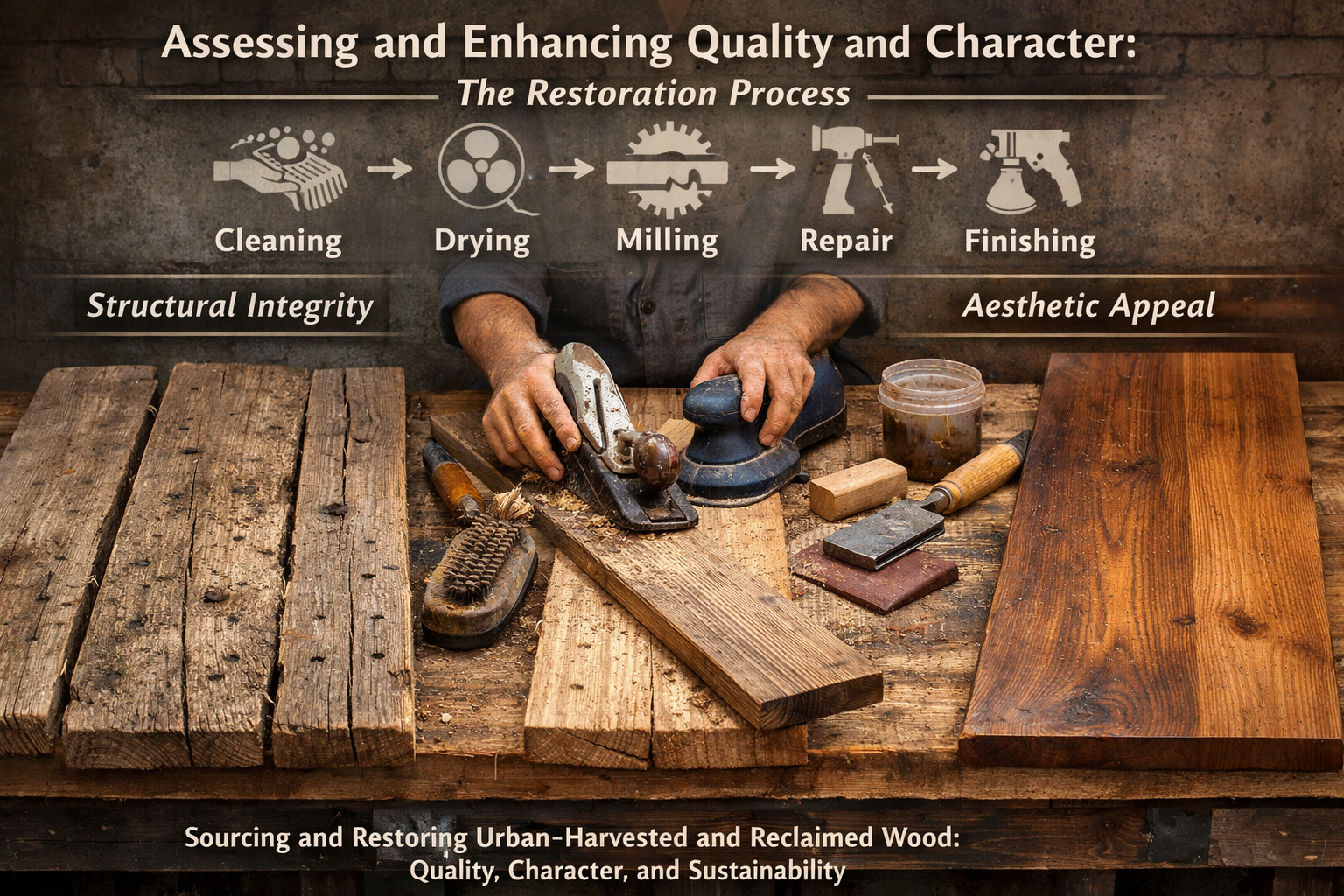
Once the wood is sourced, the real work of Sourcing and Restoring Urban-Harvested and Reclaimed Wood: Quality, Character, and Sustainability begins. This involves a careful assessment and a methodical restoration process to prepare the timber for its next life.
Initial Assessment: What to Look For
Before any tools touch the wood, a thorough inspection is critical:
- Moisture Content: This is paramount. Reclaimed wood, especially urban-harvested logs, can have high moisture content. Wood must be properly dried (kiln-dried or air-dried for extended periods) to prevent warping, cracking, and movement after fabrication. A moisture meter is an essential tool.
- Pest Infestation: Inspect for signs of insects (e.g., powderpost beetles, termites). Active infestations must be treated or the affected wood discarded.
- Metal Inclusions: Nails, screws, bolts, and other metal fragments are common in reclaimed wood. These can severely damage woodworking tools. A metal detector is indispensable.
- Rot and Decay: Check for soft spots, fungal growth, or discolored areas indicative of rot. Minor surface decay can sometimes be removed, but extensive rot compromises structural integrity.
- Structural Integrity: Assess for large cracks, splits, or weak points that might affect the wood’s strength.
- Species Identification: Knowing the wood species helps in determining its properties, workability, and best finishing practices.
The Restoration Journey: Step-by-Step
The restoration process is about revealing the wood’s inherent beauty while preserving its unique history.
- Cleaning: Remove dirt, grime, loose paint, and debris. This can involve wire brushing, pressure washing (with caution to avoid raising grain too much), or even hand scrubbing.
- De-Nailing and Metal Removal: This is a painstaking but crucial step. Use specialized tools to remove all metal fasteners. Even tiny pieces can ruin expensive planer blades or saw teeth. A strong magnet can help find hidden metal.
- Drying (if necessary): If the wood’s moisture content is too high, it must be dried. Air-drying involves stacking wood with spacers (stickers) in a well-ventilated area for months or even years. Kiln-drying is faster and achieves lower, more stable moisture levels, but requires specialized equipment.
- Milling and Dimensioning:
- Rough Milling: Pass the wood through a planer and jointer to flatten and square it. This also removes surface imperfections. For very warped pieces, a large band saw can be used to break down the material first.
- Final Dimensioning: Cut the wood to the required sizes for your project. Remember that reclaimed wood may not always yield standard dimensions, which can inspire creative project designs.
- Repairs and Stabilization:
- Filling Voids: Small knot holes, nail holes, or wormholes can be filled with epoxy resin or wood filler if a smooth surface is desired. For a rustic look, these imperfections are often left as-is.
- Stabilizing Cracks: Larger cracks can be stabilized with bow ties (butterflies) or epoxy, especially in live-edge slabs.
- Sanding: Progress through various grits of sandpaper to achieve the desired smoothness. Start with a coarser grit (e.g., 80 or 100) and move up to finer grits (e.g., 180, 220, or higher).
- Finishing: The finishing process protects the wood and enhances its appearance. The choice of finish depends on the desired aesthetic and the wood’s intended use.
- Oil Finishes: Penetrating oils like Danish oil or linseed oil bring out the natural warmth and grain of the wood, offering a natural, matte look. For a detailed comparison, see our guide on Danish Oil vs Linseed: The Ultimate Wood Finishing Guide.
- Varnishes and Polyurethanes: These offer higher durability and protection, available in various sheens from matte to high gloss. Consider exploring high gloss wood finishing techniques for a stunning, modern look.
- Waxes: Often applied over other finishes, wax provides a subtle sheen and additional protection. Our article on Johnson Paste Wax vs Minwax offers insights into popular wax options.
- Stains: Can be used to alter the color of the wood, though many prefer to let the natural color of reclaimed timber shine through. When working with particular species, specific techniques apply; for example, achieving a dark stained birch requires different considerations than staining a softer wood.
- Unique and Antique Finishes: For projects where preserving or enhancing the aged look is paramount, exploring antique wood finishing techniques or distressed wood finishing techniques can yield exceptional results, maintaining the wood’s unique character.
It is important to remember that restoration does not mean making the wood look “new.” The goal is to highlight its inherent character – the marks of its past life – while making it structurally sound and aesthetically pleasing for its new purpose.
Marketing the Story: Sustainability and Unique Appeal
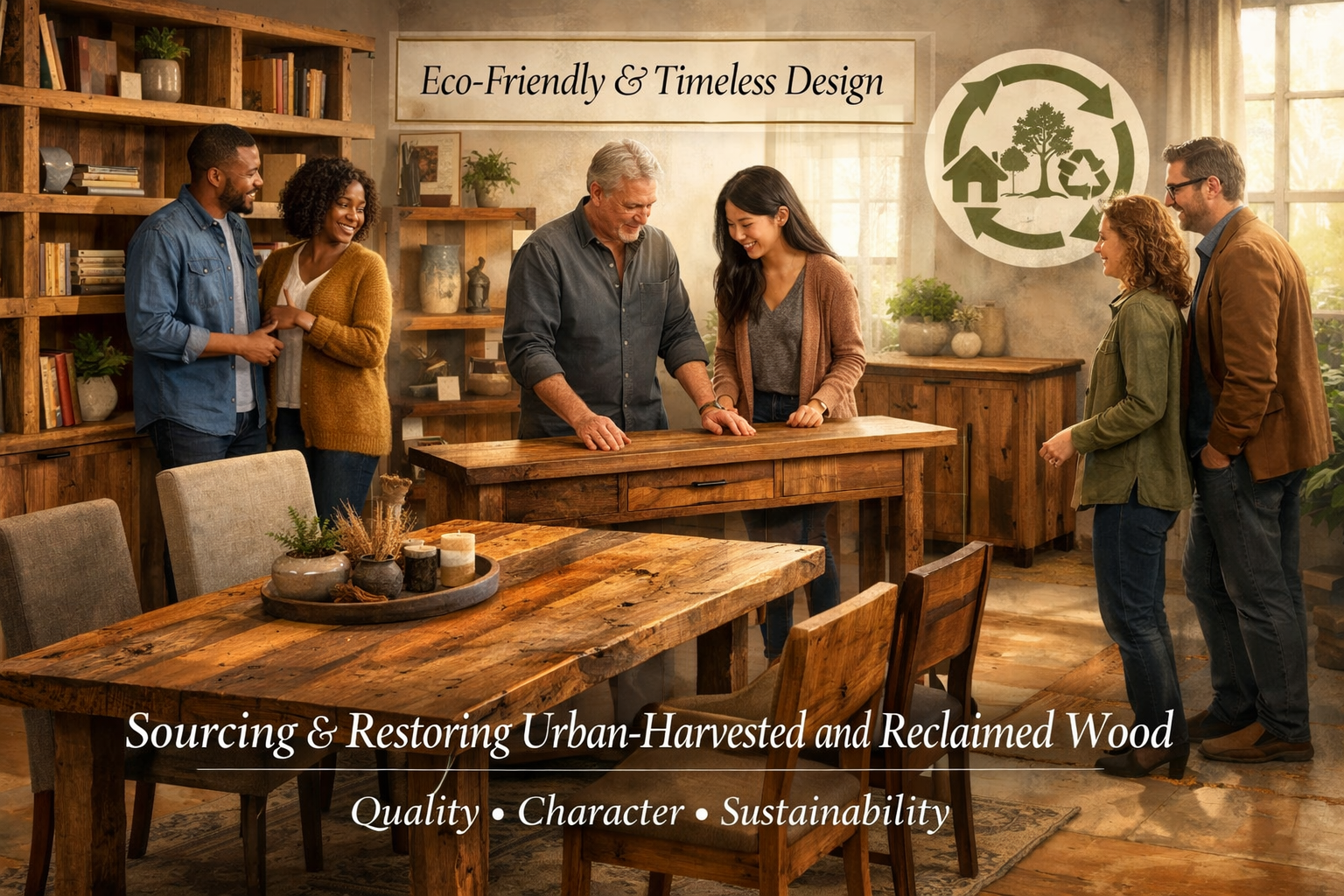
The final, crucial step in working with urban-harvested and reclaimed wood is effectively communicating its value to customers. The appeal of these materials goes far beyond their visual beauty; it resides in their story, their character, and their undeniable contribution to sustainability.
Highlighting Unique Character
Each piece of reclaimed wood is unique. Unlike mass-produced lumber, it carries the marks of time and history:
- Patina: The natural aging and weathering give the wood a distinct color and texture that cannot be artificially replicated.
- Original Markings: Nail holes, bolt holes, saw marks, and insect trails tell a visual story and add to the wood’s authenticity.
- Dense Grain: Often from old-growth trees, the tight growth rings signify superior strength and stability.
- Rarity: Some species, like old-growth longleaf pine, are no longer commercially harvested, making reclaimed versions rare and highly sought after.
This unique character allows artisans to create truly one-of-a-kind pieces, whether it’s a rustic farmhouse dining table, a modern office desk, or a beautiful storage bench. The uniqueness makes a compelling argument for customers seeking something beyond the ordinary.
Emphasizing Sustainability: A Powerful Selling Point
In 2026, sustainability is not just a buzzword; it’s a core value for many consumers. Marketing the environmental benefits of urban-harvested and reclaimed wood significantly enhances its appeal:
- Waste Reduction: Diverting wood from landfills prevents it from contributing to greenhouse gas emissions as it decomposes.
- Resource Conservation: Using salvaged wood reduces the demand for virgin timber, helping to preserve forests and their vital ecosystems.
- Reduced Carbon Footprint: The energy expended to reclaim and process wood is typically far less than that required for logging, milling, and transporting new timber from remote forests. Urban harvesting, in particular, often involves shorter transportation distances.
- Embodied Energy: Reclaimed wood already has a significant amount of “embodied energy” from its initial processing and transport. By reusing it, this energy is conserved.
Positioning products made from reclaimed wood as an eco-friendly choice resonates strongly with environmentally conscious buyers. It offers them a tangible way to make a positive impact through their purchasing decisions.
Crafting the Narrative
The “story” of the wood is perhaps its most compelling feature. When a customer knows their dining table was once a structural beam in a historic textile mill, or that their console table came from an elm tree that stood in a city park for 150 years, it creates an emotional connection and adds immeasurable value.
Elements to incorporate into your marketing narrative:
- Origin Story: Detail where the wood came from (e.g., “This oak was salvaged from a 1920s factory in Detroit,” or “This maple came from an urban tree removed for safety reasons in Seattle”).
- Species Information: Highlight the properties and history of the specific wood species.
- Craftsmanship: Emphasize the skill and care involved in the restoration process, from de-nailing to the final finish.
- Sustainability Benefits: Clearly articulate the environmental advantages.
- Uniqueness: Stress that no two pieces are exactly alike.
Consider creating a small tag or certificate that accompanies each piece, outlining its story. Use high-quality photography that captures the character of the wood and the craftsmanship of the finished product. Share the journey of the wood on your website and social media, from raw material to finished masterpiece. This transparency builds trust and highlights the ethical practices involved in Sourcing and Restoring Urban-Harvested and Reclaimed Wood: Quality, Character, and Sustainability.
Conclusion
The practice of Sourcing and Restoring Urban-Harvested and Reclaimed Wood: Quality, Character, and Sustainability offers a rewarding pathway for woodworkers, designers, and consumers alike. It’s a journey that transforms discarded materials into cherished objects, imbued with history, superior quality, and a profound sense of purpose. In 2026, as environmental awareness grows and appreciation for authentic craftsmanship deepens, the demand for these unique and sustainable materials will only continue to rise.
By understanding the diverse origins of salvaged timber, diligently applying the right restoration techniques, and effectively communicating the compelling stories and environmental benefits of each piece, professionals can not only create extraordinary works of art but also contribute significantly to a more sustainable future. Embracing reclaimed and urban wood is more than just a trend; it is a testament to innovation, resourcefulness, and a commitment to preserving both our planet and our heritage, one beautiful piece of wood at a time.
Actionable Next Steps:
- Educate Yourself: Research local urban forestry programs, architectural salvage yards, and specialized reclaimed wood suppliers in your area.
- Invest in Tools: Acquire essential tools like a moisture meter, metal detector, and quality woodworking machinery to safely and effectively process reclaimed timber.
- Start Small: Begin with smaller projects to gain experience with reclaimed wood’s unique challenges and characteristics.
- Network: Connect with arborists, demolition companies, and other woodworkers to share resources and knowledge.
- Tell the Story: Practice articulating the origin, quality, and sustainability aspects of your reclaimed wood projects to potential clients and customers.
References
- Sustainable Furnishings Council. (2023). A Guide to Reclaimed Wood.
- City of Portland, Oregon. (2021). Urban Wood Use Guidebook.
- The Forest Stewardship Council (FSC). (n.d.). Reclaimed Wood Standards.
- Mortenson, T. (2020). The New Reclaimed Home: Beautiful and Sustainable Projects from Architectural Salvage. Artisan Books.