
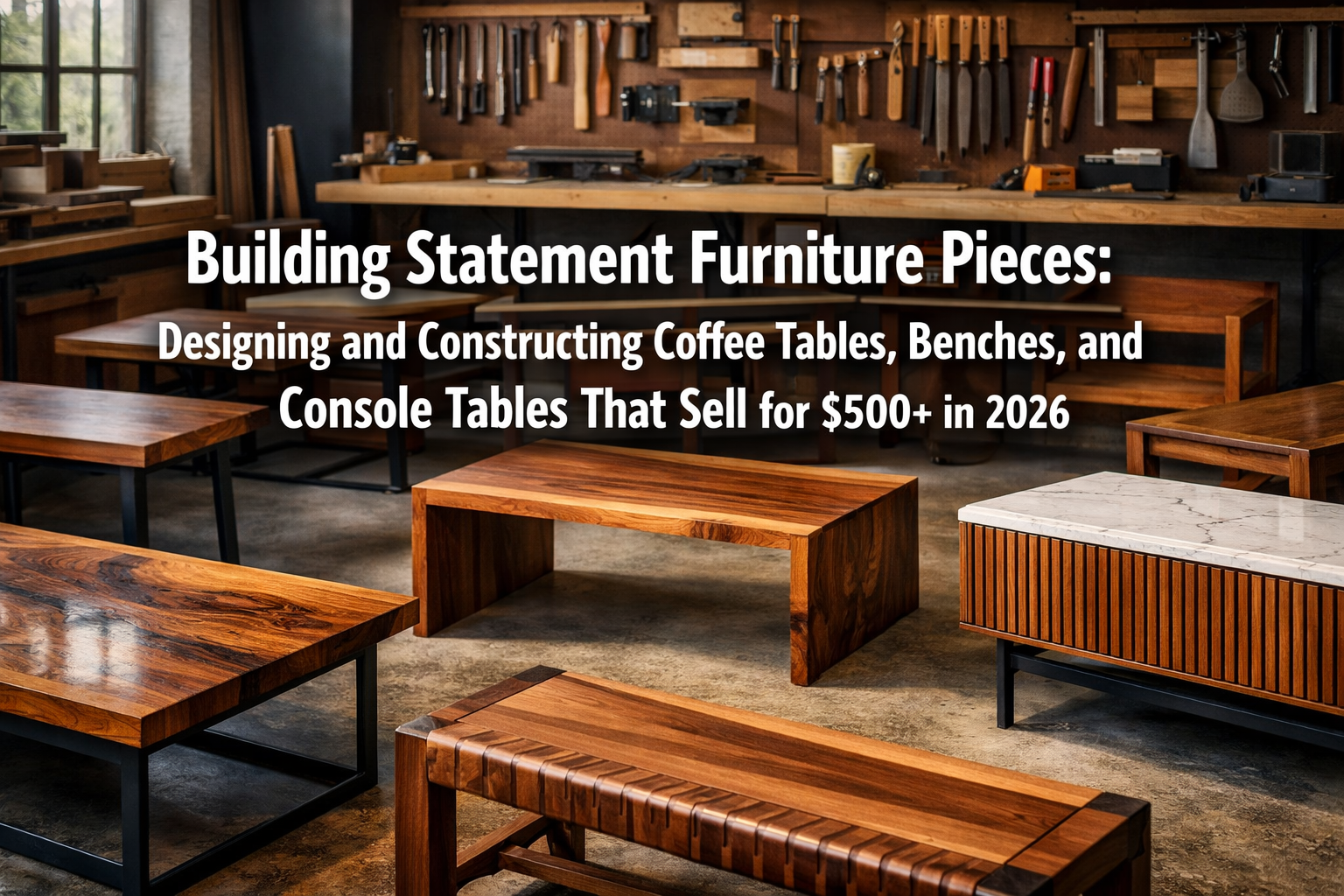
In the vibrant world of bespoke furniture, crafting pieces that not only captivate but also command premium prices is an art and a science. For woodworkers and designers in 2026, the demand for unique, high-quality furniture continues to grow, presenting a lucrative opportunity. This comprehensive guide will delve into the intricacies of Building Statement Furniture Pieces: Designing and Constructing Coffee Tables, Benches, and Console Tables That Sell for $500+ in 2026. It balances the timeless appeal of visible craftsmanship with the ever-evolving trends of market demand, covering essential design principles across popular styles like farmhouse, modern, and mid-century.
Whether you’re an experienced artisan looking to elevate your offerings or an aspiring builder aiming to enter the high-end market, understanding the nuances of design, material selection, construction techniques, and effective marketing is paramount. This article serves as your blueprint for creating furniture that stands out, reflects exceptional skill, and achieves significant commercial success in the current year.
Key Takeaways
- Design for Impact: Focus on unique aesthetics, clean lines, and purposeful design choices that reflect popular styles like modern, farmhouse, and mid-century, ensuring each piece tells a story.
- Premium Materials & Craftsmanship: Prioritize high-quality, often character-rich, lumber and utilize advanced joinery techniques that showcase skill and ensure longevity, justifying a higher price point.
- Precision and Finish: Meticulous attention to detail during construction and flawless finishing are non-negotiable for furniture intended to sell for $500+ in 2026.
- Strategic Pricing & Marketing: Understand your target audience, price your pieces based on material, labor, and market value, and present them through high-quality photography and compelling descriptions.
- Continuous Learning: Stay updated on design trends, explore new tools and techniques, and always strive to refine your craft to maintain a competitive edge in the high-end furniture market.
The Art of Designing High-Ticket Furniture for 2026
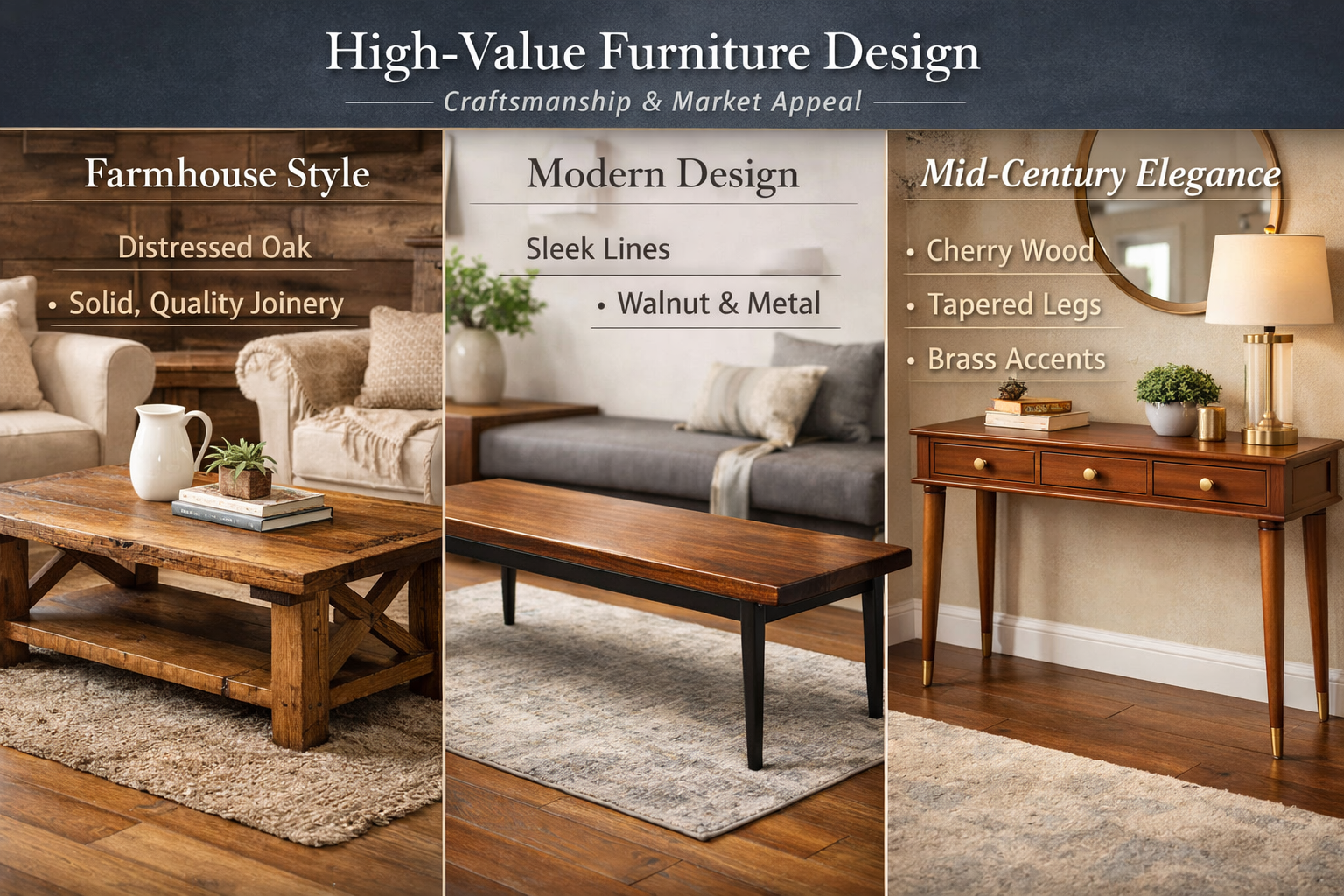
Designing furniture that commands a price tag of $500 or more in 2026 requires more than just functional utility; it demands artistry, thoughtful consideration of current trends, and a deep understanding of what discerning buyers seek. The goal is to create statement pieces – items that become focal points in a room, reflecting the owner’s taste and appreciation for quality craftsmanship.
Understanding Market Trends and Aesthetic Appeal
In 2026, several design aesthetics continue to dominate the high-end furniture market. Each style has its own unique characteristics that, when expertly executed, can elevate a piece to statement status.
1. Modern Minimalist
This style emphasizes clean lines, simple forms, and often incorporates mixed materials like wood, metal, and glass. For coffee tables, benches, and console tables, this means streamlined profiles, hidden joinery where possible, and a focus on the natural beauty of the materials. Think flush surfaces, crisp edges, and a sense of understated elegance.
- Coffee Tables: Large, low-profile designs with solid slab tops or intricate geometric bases.
- Benches: Sleek, often floating designs, or those with minimalist metal frames.
- Console Tables: Narrow, elongated forms that act as subtle display surfaces, often featuring cantilevered elements or unique leg structures.
2. Rustic Farmhouse (Refined)
While “farmhouse” might evoke images of distressed wood and rough finishes, the high-end interpretation in 2026 is refined and elevated. It celebrates natural wood, robust construction, and a sense of history, but with a polished execution. Reclaimed wood is a common choice, showcasing character through knots, grain, and subtle imperfections, but all surfaces are typically smooth and beautifully finished.
- Coffee Tables: Thick, solid tops, often live-edge, paired with sturdy, sometimes trestle-style, bases. For inspiration on working with live-edge materials, consider guides like DIY Live Edge Dining Table: Step-by-Step Build for 2026 Trends.
- Benches: Substantial lumber, perhaps with visible mortise and tenon joinery, designed for durability and comfort.
- Console Tables: Longer, narrower designs that might incorporate breadboard ends or a mix of wood and subtle wrought iron accents. Check out Reclaimed Wood Mantels: Craft a Rustic Focal Point for Any F for ideas on how to work with reclaimed pieces.
3. Mid-Century Modern
The enduring popularity of Mid-Century Modern (MCM) furniture means designs inspired by the 1950s and 60s continue to command high prices. Key features include tapered legs, organic curves, rich wood tones (walnut, teak), and often a blend of functionality and sculptural form.
- Coffee Tables: Oval or kidney-shaped tops, sometimes with integrated storage, supported by splayed or angled legs.
- Benches: Minimalist seats with clean lines, often featuring slender, splayed legs.
- Console Tables: Sleek, low-profile designs with ample surface area and often a light, airy feel due to slender leg work.
Incorporating Craftsmanship Visibility
A crucial element in justifying a high price point is the visible demonstration of superior craftsmanship. This means showcasing joinery, highlighting unique wood characteristics, and achieving impeccable finishes.
- Exposed Joinery: Dovetail joints, mortise and tenon joints, or finger joints are not just functional; they are beautiful design elements that speak volumes about a piece’s quality and the maker’s skill.
- Unique Wood Grain: Select lumber with striking grain patterns, interesting figure (like curl or burl), or rich natural colors. Use techniques that enhance, rather than obscure, these natural features. For ideas on sourcing unique materials, consider exploring Sourcing and Selecting Reclaimed Urban Lumber: Finding Chara.
- Hand-Carved Details: Subtle, well-executed hand carvings or sculpted elements can add a bespoke touch that factory-made furniture cannot replicate.
- Mixed Materials: Thoughtfully combining wood with metal, stone, or glass can add textural interest and a sophisticated dimension. For example, a polished brass inlay or a finely machined steel base can elevate a wooden piece.
“True statement furniture doesn’t just fill a space; it defines it. It’s where design integrity meets master craftsmanship, creating an heirloom for tomorrow.”
Design Principles for $500+ Pieces
When designing your statement piece, consider these principles:
| Principle | Description | Example Application |
|---|---|---|
| Originality | While inspired by existing styles, aim for a unique twist or combination that sets your piece apart. Avoid direct copies. | A coffee table that merges modern steel legs with a highly figured, reclaimed walnut slab top. |
| Proportion | Ensure all dimensions are harmonious. A piece that feels “off” visually will struggle to command a high price. Use the Golden Ratio or other classic proportions. | Legs are proportional to the top’s thickness and overall length/width of the table. |
| Balance | Create visual equilibrium. This can be symmetrical (formal) or asymmetrical (dynamic), but the overall impression should be stable and pleasing. | A console table with an off-center drawer balanced by a longer, open shelf on the other side. |
| Functionality | High-end furniture is not just beautiful; it’s practical. Consider how the piece will be used and design for durability and ease of use. | A coffee table with integrated, smooth-gliding drawers for remotes, or a bench designed for comfortable seating. |
| Storytelling | What is the narrative behind the piece? The type of wood, its origin, the challenges of the build, or the inspiration behind the design can all contribute to its perceived value. | Using wood salvaged from a historic barn, telling the story of its previous life. |
| Durability | A $500+ piece must be built to last generations. This means robust joinery, stable construction, and appropriate wood selection. | Using hardwoods, proper wood movement considerations, and strong mechanical fasteners or traditional joinery. |
Constructing High-Value Statement Furniture
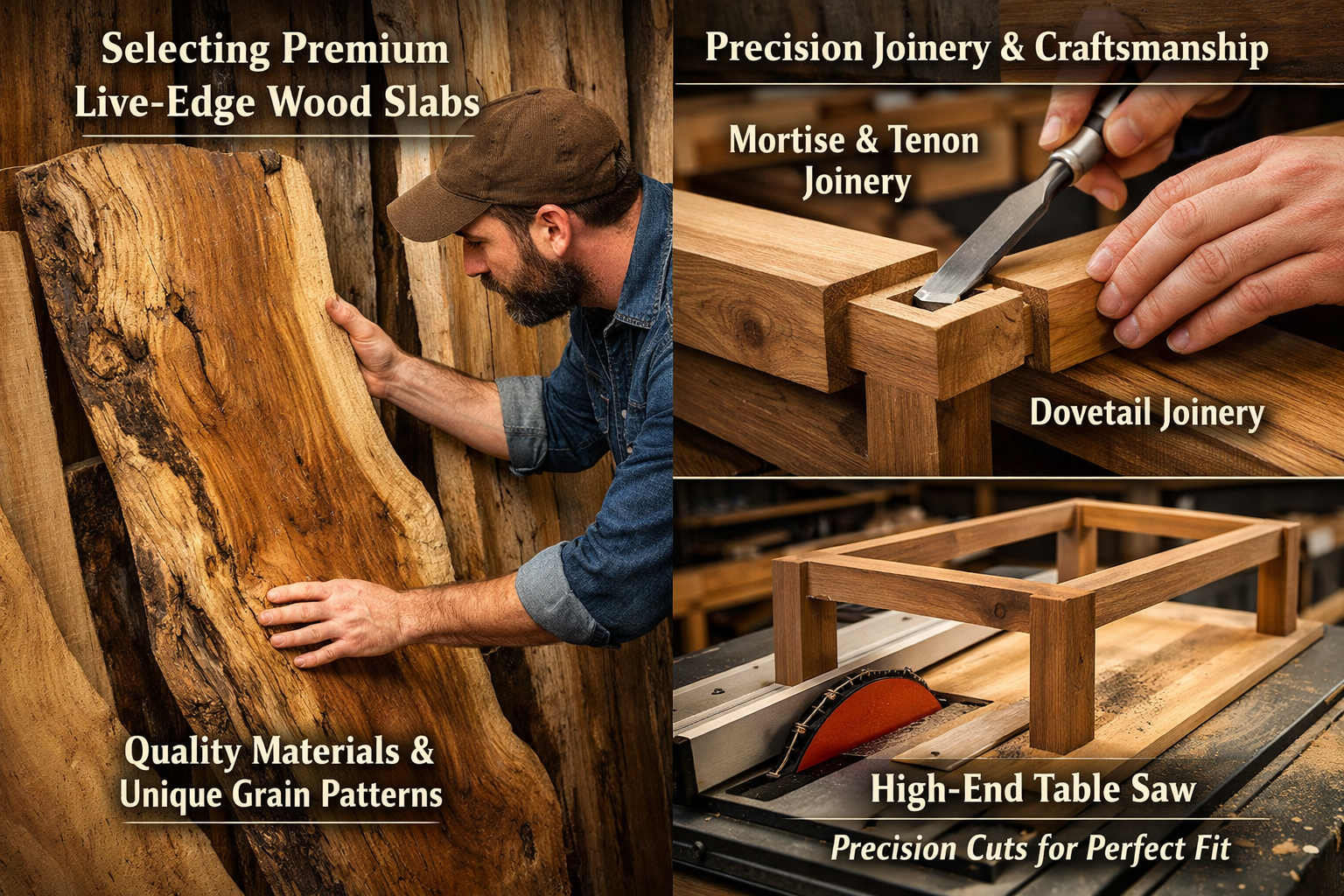
The construction phase is where design concepts are brought to life, and the quality of your execution directly impacts the final market value. For Building Statement Furniture Pieces: Designing and Constructing Coffee Tables, Benches, and Console Tables That Sell for $500+ in 2026, precision, material integrity, and advanced woodworking techniques are non-negotiable.
Material Selection: The Foundation of Value
Choosing the right materials is perhaps the most critical first step. For furniture that sells for $500+, cheap lumber won’t cut it.
- Premium Hardwoods: Walnut, cherry, maple, white oak, and figured varieties of these woods are excellent choices. Their durability, beauty, and workability make them ideal for high-end pieces. Consider the distinct characteristics of woods like blonde walnut or maple grey stain for specific aesthetic effects.
- Exotic Woods (Ethically Sourced): Bubinga, Wenge, Zebrawood, or Teak can add unique visual appeal and value, but ensure they are sustainably and ethically sourced.
- Slab Wood: Live-edge slabs offer incredible character and instantly elevate a piece, especially for coffee table tops or console surfaces. The unique contours and grain patterns are often the “statement” themselves.
- Hardware: Don’t skimp on hardware. High-quality drawer slides (e.g., heavy-duty slides for drawers), hinges, and fasteners should be chosen for durability and aesthetics. Solid brass, stainless steel, or bronze hardware can significantly enhance perceived value.
Precision Woodworking Techniques
The difference between a mass-produced item and a $500+ statement piece often lies in the precision and complexity of its joinery.
- Mortise and Tenon Joints: A classic and incredibly strong joint, perfect for table bases, legs, and aprons. Visible mortise and tenon joints can be a design feature in themselves.
- Dovetail Joints: Synonymous with fine woodworking, dovetails are beautiful and extremely strong, ideal for drawer boxes or carcases where strength and aesthetic appeal are paramount.
- Finger Joints (Box Joints): Another robust joint, often used for connecting corners of boxes or larger case pieces, providing a clean, geometric look.
- Biscuit and Domino Joints: While less traditional, these can be used effectively for alignment and strength in panel glue-ups or certain frame constructions, especially when hidden.
- Panel Glue-Ups: For wider surfaces like tabletops or bench seats, careful selection and matching of grain are crucial for seamless, strong glue-ups. Using clamps properly and allowing ample drying time prevent warps and cracks.
- Edge Treatment: Pay close attention to edges. Bevels, chamfers, or round-overs can dramatically change the feel and safety of a piece. Precision in these details reflects high quality.
Essential Tools for High-End Builds
To achieve the necessary precision and efficiency for high-value furniture, a well-equipped workshop is essential.
- Table Saw: A high-quality table saw is indispensable for accurate rips and cross-cuts. Whether you prefer a Craftsman 315 table saw or a more robust Delta Unisaw X5, precision is key. Maintaining sharp blades and proper alignment is crucial.
- Planer and Jointer: For flattening and squaring rough lumber, these tools ensure your stock is perfectly prepared for joinery. The Ryobi AP1300 planer is a popular choice for many workshops.
- Router Table: Essential for creating consistent dados, rabbets, and decorative edges.
- Band Saw: Useful for resawing thick lumber, cutting curves, and preparing smaller pieces.
- Hand Tools: Don’t underestimate the value of hand planes, chisels, and carving tools for refining details and joinery. These add a personal touch that machines can’t replicate.
- Clamps: A wide assortment of clamps is necessary for strong glue-ups and holding assemblies during construction.
- Sanding Equipment: From orbital sanders to belt sanders, proper sanding is key to an impeccable finish.
Assembly and Joinery Best Practices
- Dry Fit Everything: Before applying any glue, assemble all components without glue to ensure a perfect fit. Adjust as needed.
- Use Quality Adhesives: Select glues appropriate for your wood type and expected stress. Titebond III is a popular choice for its strength and open time.
- Sufficient Clamp Pressure: Apply even, firm pressure during glue-ups. Too little pressure results in weak joints, too much can starve the joint of glue.
- Allow Adequate Drying Time: Respect the glue’s drying time before removing clamps and further working the piece. Patience here prevents joint failure.
- Consider Wood Movement: Design and construct with the natural expansion and contraction of wood in mind. Failure to do so can lead to cracks and warps. For large tabletops, breadboard ends or floating panel construction are excellent methods to accommodate movement.
Finishing and Marketing for the $500+ Price Point
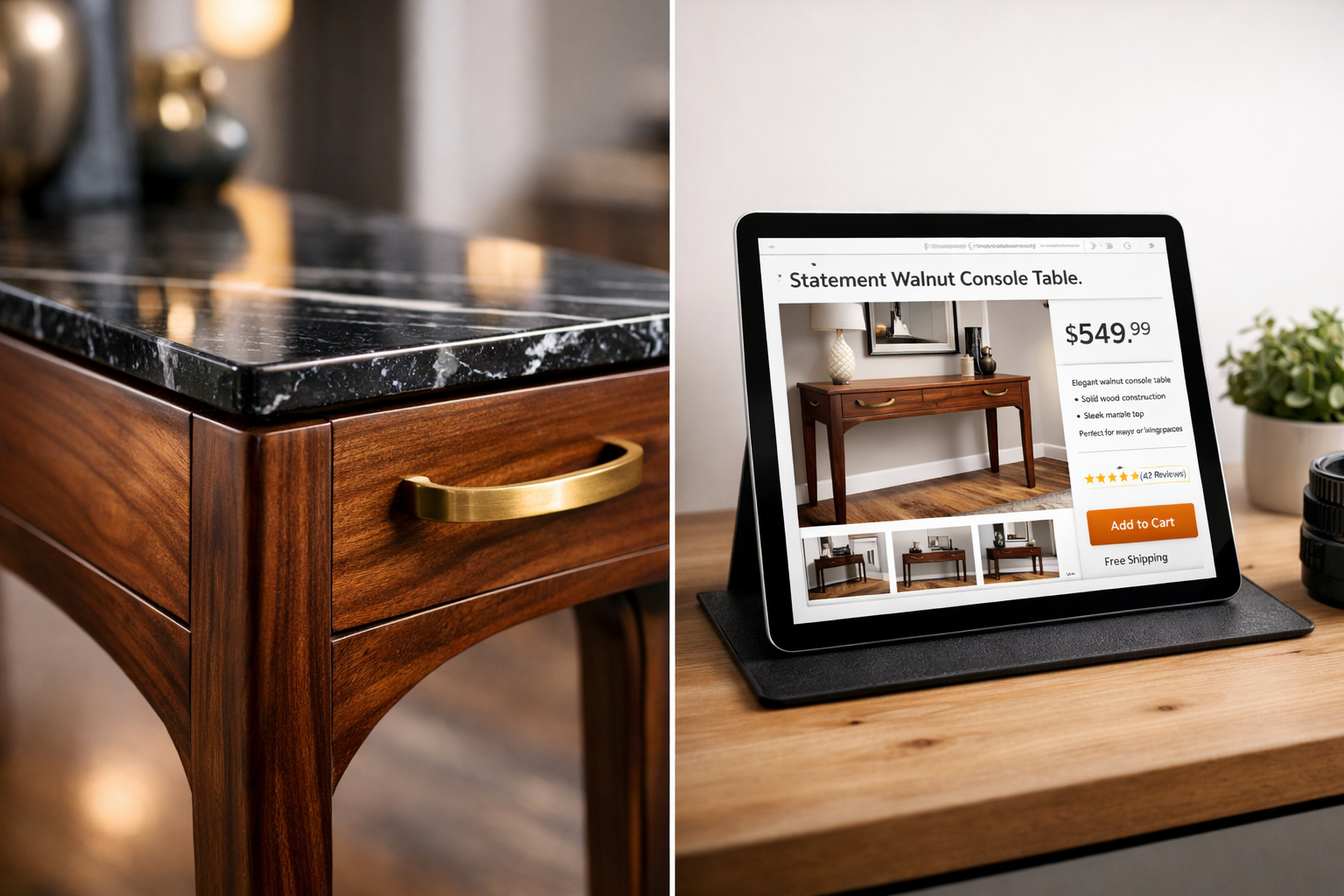
Once construction is complete, the finishing touches and strategic marketing become paramount for Building Statement Furniture Pieces: Designing and Constructing Coffee Tables, Benches, and Console Tables That Sell for $500+ in 2026. A flawless finish protects the wood and dramatically enhances its visual appeal, while effective marketing connects your masterpiece with discerning buyers.
The Art of the Impeccable Finish
A high-end piece of furniture demands a high-end finish. This isn’t just about protection; it’s about enhancing the wood’s natural beauty, providing a luxurious feel, and ensuring durability.
- Sanding, Sanding, Sanding: This step cannot be rushed. Start with coarser grits (e.g., 80 or 100) and progressively move to finer grits (220-320). Ensure all scratch marks are removed from previous grits.
- Tip: After sanding with 150 or 180 grit, dampen the wood lightly with water (a “water pop”) to raise the grain. Once dry, lightly sand again with the previous fine grit (e.g., 220) to knock down the raised fibers, resulting in a super smooth surface.
- Staining (Optional): If a specific color or deeper tone is desired, apply stain evenly. Test on scrap wood first. Different woods, like red oak plywood or dark stain on birch, react differently to stains.
- Top Coats: This is where protection and sheen come from.
- Polyurethane: Highly durable and available in various sheens. Spraying water-based poly can achieve a smooth, professional finish, often superior to brushing. Consider the pros and cons of spray polyurethane vs. brush.
- Varnish/Spar Urethane: Offers excellent protection, especially for pieces that might encounter more wear or moisture. Water-based spar urethane vs. polyurethane considerations are important here.
- Oil Finishes (e.g., Tung Oil, Linseed Oil): These penetrate the wood, providing a natural, “in-the-wood” feel and enhancing grain depth. They offer less surface protection than poly but are easier to repair. Multiple coats are required.
- Shellac: A natural resin that provides a beautiful, traditional finish, often used as a sealer or as a finish itself for a classic look (e.g., garnet shellac pine).
- Buffing and Polishing: For the ultimate smooth finish, especially with film-building finishes like polyurethane, light wet-sanding with very fine grits (2000+) followed by buffing compounds can achieve a mirror-like shine.
Pricing Your Statement Pieces
Pricing your handcrafted furniture appropriately is crucial. It reflects your skill, the quality of materials, and the time invested.
- Material Cost: Calculate every penny spent on lumber, hardware, glue, and finish.
- Labor Cost: Determine your hourly rate. For high-end work, this should reflect your expertise. Track all hours spent on design, milling, construction, and finishing.
- Overhead: Factor in workshop rent, tool depreciation, utilities, marketing costs, and insurance.
- Market Value: Research similar high-quality, handmade pieces. What are other artisans charging for comparable coffee tables, benches, or console tables?
- Profit Margin: Add a healthy profit margin that allows your business to thrive and grow.
A general formula might be: (Material Cost + Labor Cost) x 2 or 3, depending on market demand and your desired profit. For a piece to sell for $500+, your material and labor costs should already be substantial, reflecting the high-quality inputs.
Marketing Your Creations for Success
Even the most beautiful furniture won’t sell if no one knows about it. Effective marketing is key for Building Statement Furniture Pieces: Designing and Constructing Coffee Tables, Benches, and Console Tables That Sell for $500+ in 2026.
- Professional Photography: This is non-negotiable. High-resolution, well-lit photos taken from multiple angles, showcasing details, joinery, and the overall aesthetic are vital. Include lifestyle shots to help potential buyers visualize the piece in their own homes.
- Compelling Product Descriptions: Tell the story of your piece.
- Highlight unique features: Is it a live-edge slab sourced from a local arborist? Are there hand-cut dovetails?
- Mention materials: Specify the wood species, finish type, and any special hardware.
- Describe the design inspiration: What led you to create this particular piece?
- Include dimensions: Crucial for buyers to assess fit.
- Care instructions: Adds value and shows attention to detail.
- Online Presence:
- Website/Portfolio: A dedicated website showcasing your work is essential. Include high-quality images, descriptions, and testimonials.
- E-commerce Platforms: Consider platforms like Etsy (for starting out), Shopify (for a custom store), or high-end art/craft marketplaces.
- Social Media: Instagram and Pinterest are highly visual platforms perfect for showcasing furniture. Use relevant hashtags, post behind-the-scenes content, and engage with your audience.
- Local Markets & Galleries: Participate in high-end craft fairs, art shows, or seek representation in local furniture galleries. This allows potential buyers to see and touch your work in person.
- Networking: Connect with interior designers, architects, and real estate stagers. They are often looking for unique, custom pieces for their clients.
By meticulously focusing on design, executing with unparalleled craftsmanship, and presenting your work professionally, you can successfully create and sell statement furniture pieces for $500+ in 2026 and beyond.
Conclusion
Building Statement Furniture Pieces: Designing and Constructing Coffee Tables, Benches, and Console Tables That Sell for $500+ in 2026 is a rewarding endeavor that blends artistic vision with technical skill. By carefully considering current market trends, understanding the nuances of design aesthetics like modern, farmhouse, and mid-century, and prioritizing visible craftsmanship, artisans can create pieces that are not only functional but also works of art.
The journey from raw lumber to a high-value statement piece involves meticulous material selection, the application of precise woodworking techniques, and a commitment to impeccable finishing. Whether it’s the rich grain of a live-edge coffee table, the robust joinery of a farmhouse bench, or the elegant lines of a mid-century console table, every detail contributes to the perceived value. Finally, strategic pricing and professional marketing, emphasizing high-quality photography and compelling storytelling, are the bridges that connect your exquisite creations with appreciative buyers willing to invest in lasting quality and unique design.
Embrace continuous learning, refine your skills, and let your passion for woodworking shine through every piece you create. The market for high-quality, handcrafted furniture in 2026 is ripe with opportunity for those dedicated to excellence.