
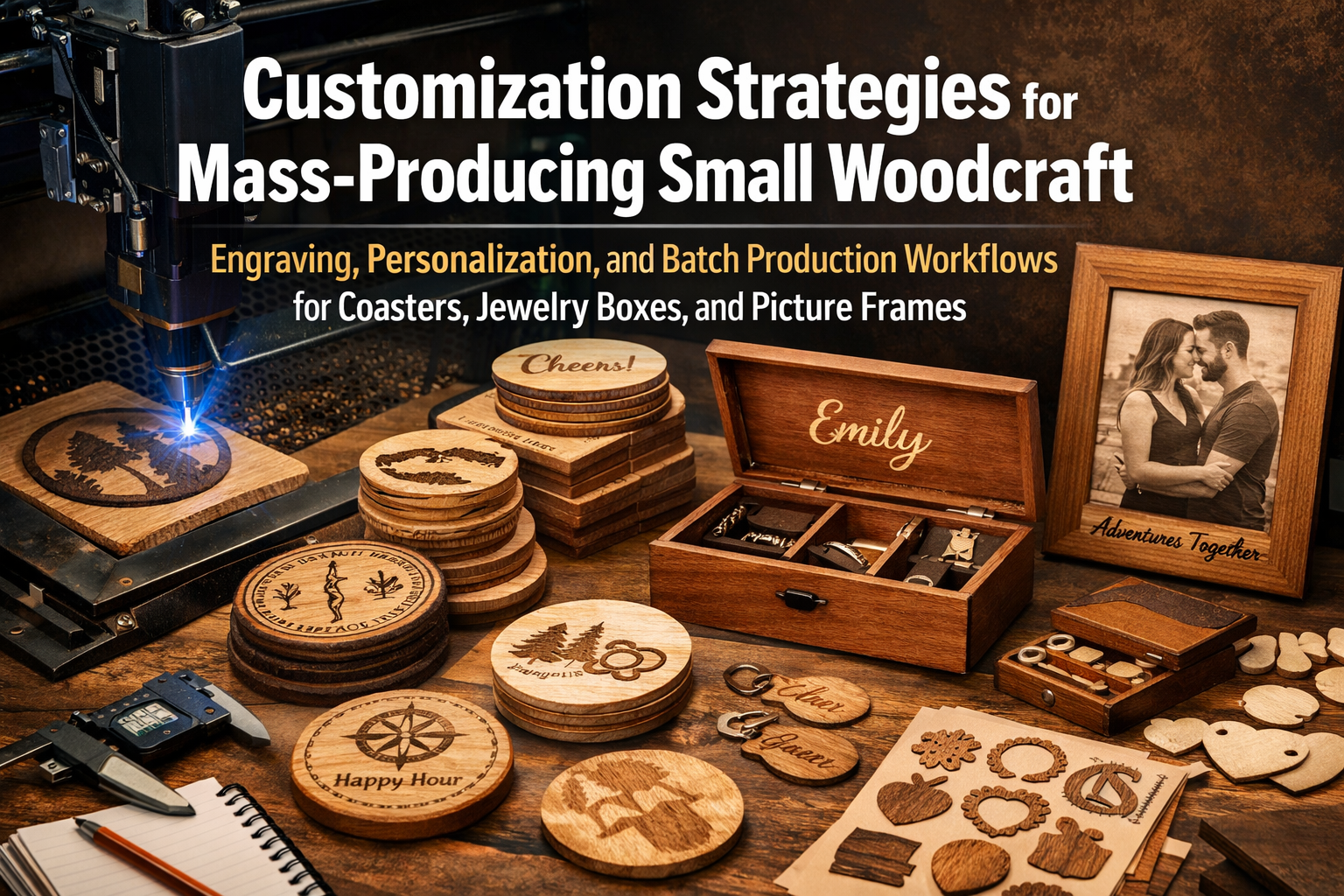
In the competitive landscape of 2026, the demand for personalized goods continues to surge, transforming the woodworking industry. For artisans and businesses focusing on small woodcraft items like coasters, jewelry boxes, and picture frames, the challenge lies in scaling production without sacrificing the unique appeal that customization offers. This article delves into robust Customization Strategies for Mass-Producing Small Woodcraft: Engraving, Personalization, and Batch Production Workflows for Coasters, Jewelry Boxes, and Picture Frames. The goal is to provide an operational guide for scaling profitable small projects through efficient jigs, batch processes, and personalization techniques that justify premium pricing, ensuring both efficiency and artistic integrity.
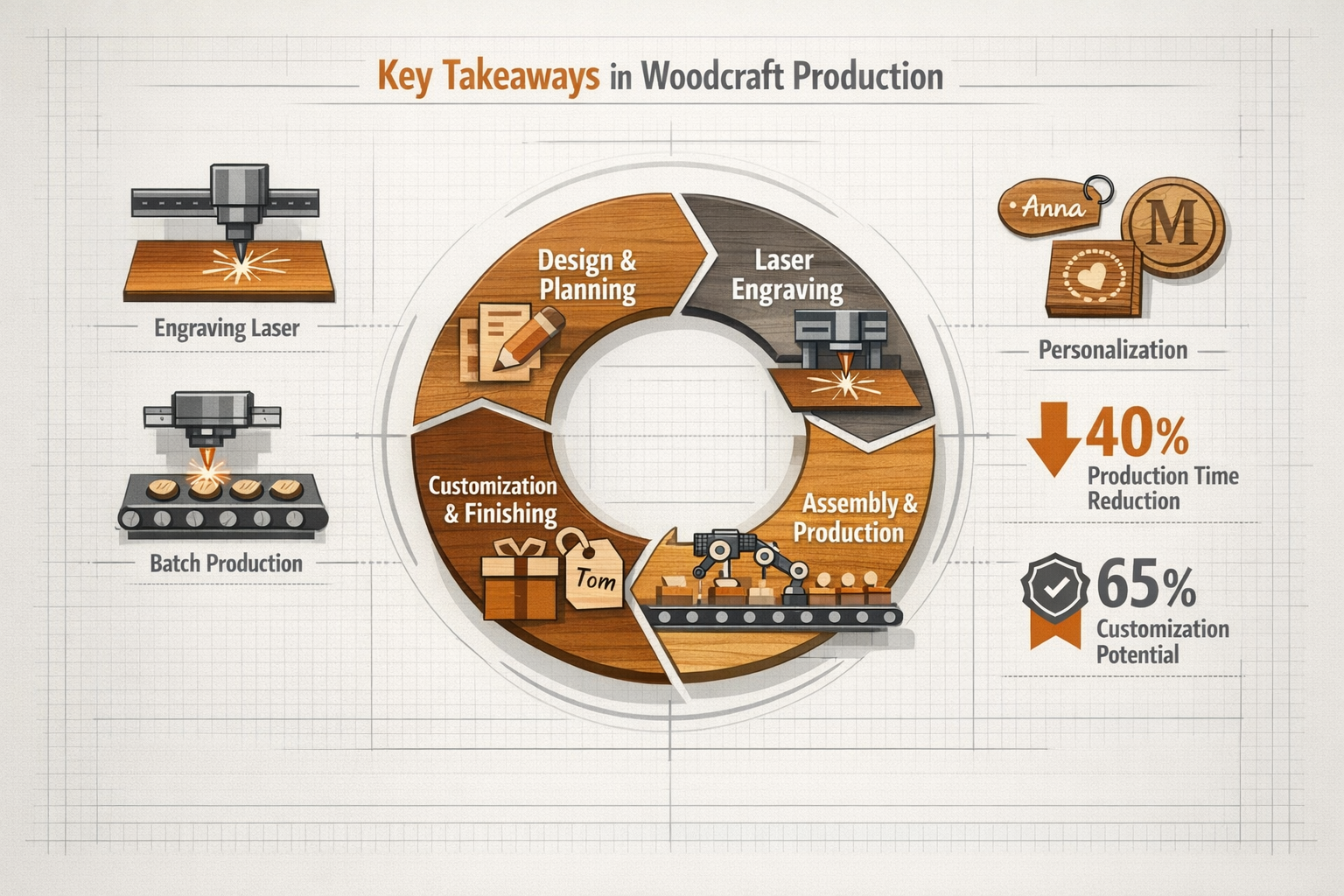
Key Takeaways
- Embrace Digital Customization: Laser engraving and CNC routing are indispensable for scalable personalization, allowing for intricate designs and consistent quality across batches.
- Optimize with Batch Production: Implement jigs, fixtures, and a modular approach to assembly to streamline workflows and reduce per-unit production time for small woodcraft.
- Strategic Personalization Options: Offer a tiered approach to personalization, from simple initials to complex custom designs, to cater to diverse customer needs and price points.
- Quality Control is Paramount: Even in mass production, rigorous quality checks are essential to maintain brand reputation and customer satisfaction for customized items.
- Marketing the Value Proposition: Clearly communicate the unique value of personalized, handcrafted small woodcraft to justify premium pricing and attract a discerning clientele.
Leveraging Technology for Engraving and Personalization in Small Woodcraft
[[IMAGE_PROMPT_1]]
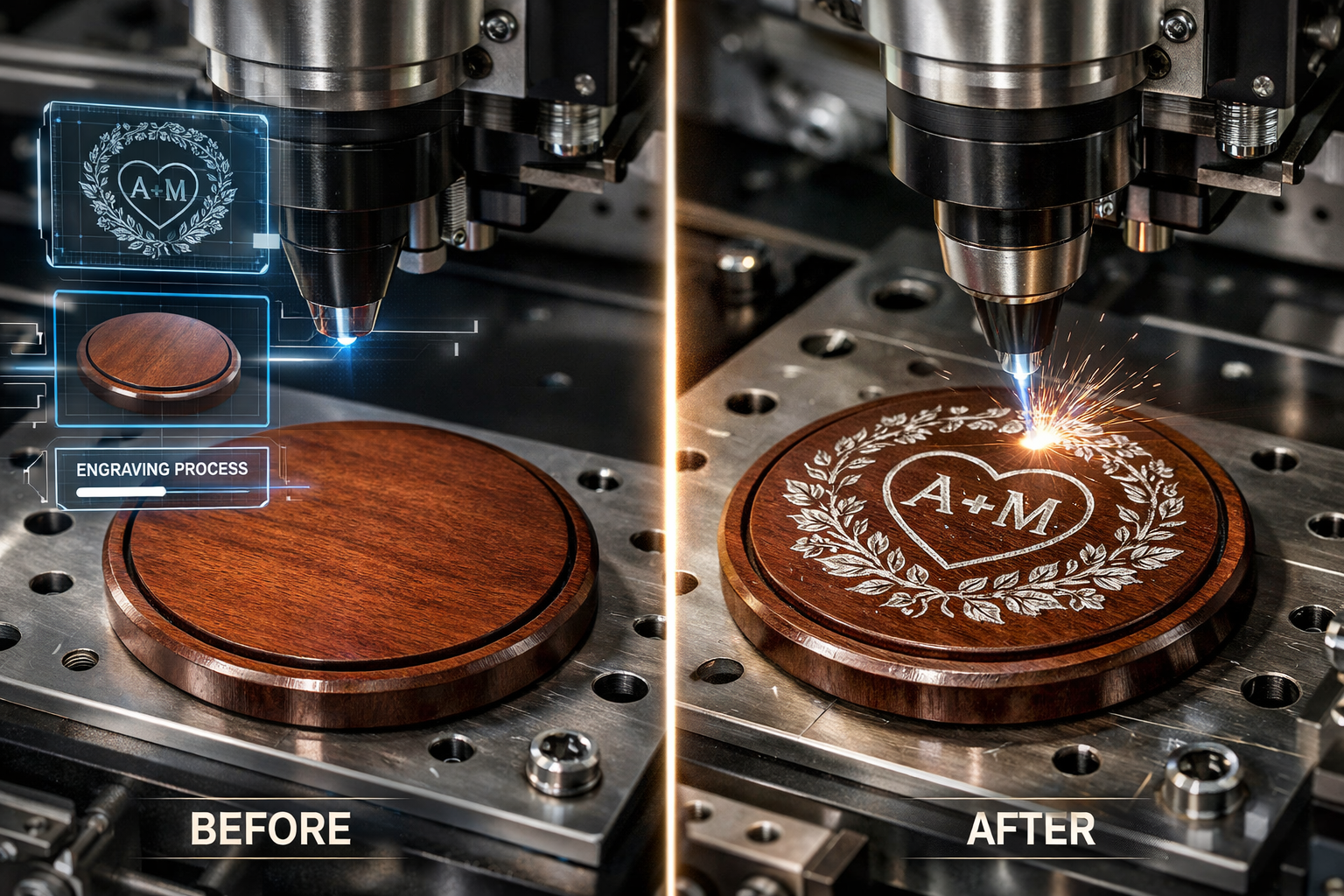
The cornerstone of successful mass-produced customization in 2026 is the strategic integration of advanced technology. For small woodcraft items such as coasters, jewelry boxes, and picture frames, tools like laser engravers and CNC routers have revolutionized the ability to offer intricate personalization at scale. These machines enable businesses to consistently reproduce complex designs, text, and even images with unparalleled precision, transforming a generic item into a cherished keepsake.
Laser Engraving: Precision and Versatility
Laser engraving stands out as a primary method for adding personalized touches to woodcraft. A focused laser beam etches designs directly onto the wood surface, creating permanent and high-resolution markings. The versatility of laser engraving allows for a vast array of customization options:
- Text Engraving: From monograms and names to quotes and dates, text personalization is perhaps the most common and sought-after form of customization. Software allows for easy font changes, sizing, and placement.
- Graphic Engraving: Logos, intricate patterns, illustrations, and even photographs can be precisely engraved. This opens doors for corporate branding, commemorative items, and artistic designs.
- Deep Etching and Scoring: Depending on the laser’s power and settings, a deeper etch can be achieved, creating a tactile texture. Scoring involves cutting partway through the material, ideal for outlining shapes or creating decorative grooves.
Implementing Laser Engraving Workflows
To integrate laser engraving into a mass-production workflow for items like coasters, consider the following:
- Design Template Standardization: Create a library of pre-approved design templates for various products. This streamlines the customer’s design selection process and simplifies the engraving setup. For instance, a standardized coaster template might have defined areas for initials, a date, and a small icon.
- Batch Processing with Jigs: Efficiency is key. Develop custom jigs and fixtures that can hold multiple small woodcraft items securely in the laser engraver’s bed. This allows for engraving several coasters or jewelry box lids in a single run, minimizing machine downtime and operator intervention.
- Software Integration: Modern laser engravers are driven by sophisticated software. Integrating this software with order management systems can automate the transfer of customer personalization requests directly to the engraving files, reducing manual data entry errors.
- Material Compatibility: While many woods are suitable for laser engraving, different wood types react differently. Softer woods like basswood and alder typically engrave darker and more easily, while hardwoods like maple and cherry require more power but offer finer detail. Understanding premium wood selection for 2026 projects is crucial for optimal results.
CNC Routing: Beyond Surface Level
While laser engraving excels at surface marking, CNC routing offers the ability to cut shapes, carve intricate details, and create recessed areas. This is particularly useful for items like jewelry boxes where decorative inlays, carved lids, or custom-shaped compartments might be desired, or for unique picture frame designs.
- Carved Details: Create raised or recessed designs that add a tactile and sculptural element to the woodcraft.
- Inlays: CNC routers can precisely cut pockets for contrasting wood or other materials to be inlaid, adding a touch of luxury.
- Custom Shapes: For picture frames, CNC can cut unique apertures or external frame profiles that would be difficult or impossible with traditional methods.
Integrating CNC into Batch Production
- Fixture Design: Similar to laser engraving, custom fixtures that hold multiple blanks are essential for efficient CNC routing. These fixtures must be robust enough to withstand cutting forces and ensure consistent part placement.
- Tool Path Optimization: Advanced CAM (Computer-Aided Manufacturing) software is used to generate tool paths. Optimizing these paths minimizes cutting time, reduces tool wear, and improves surface finish.
- Dust Collection: CNC routing generates significant sawdust. An effective dust collection system is critical for maintaining a clean workshop and protecting equipment.
- Batching Raw Materials: Pre-cutting wood blanks to precise dimensions before CNC processing ensures uniformity and reduces setup time between batches.
Hybrid Approaches and Workflow Synergies
Many small woodcraft manufacturers utilize both laser engraving and CNC routing in their operations. For instance, a jewelry box might have its structural components cut by a CNC router, while the lid receives a personalized laser engraving. Combining these technologies allows for a broader range of customization options and a more efficient production process.
Consider using jigs that can seamlessly transfer between machines, or designing common alignment points that work for both the laser and the CNC. This reduces setup time and potential errors when moving workpieces from one stage of customization to the next. The overall workflow must prioritize efficiency, consistency, and the seamless integration of these powerful tools to truly excel at Customization Strategies for Mass-Producing Small Woodcraft: Engraving, Personalization, and Batch Production Workflows for Coasters, Jewelry Boxes, and Picture Frames.
Batch Production Workflows: Efficiency for Coasters, Jewelry Boxes, and Picture Frames
[[IMAGE_PROMPT_2]]
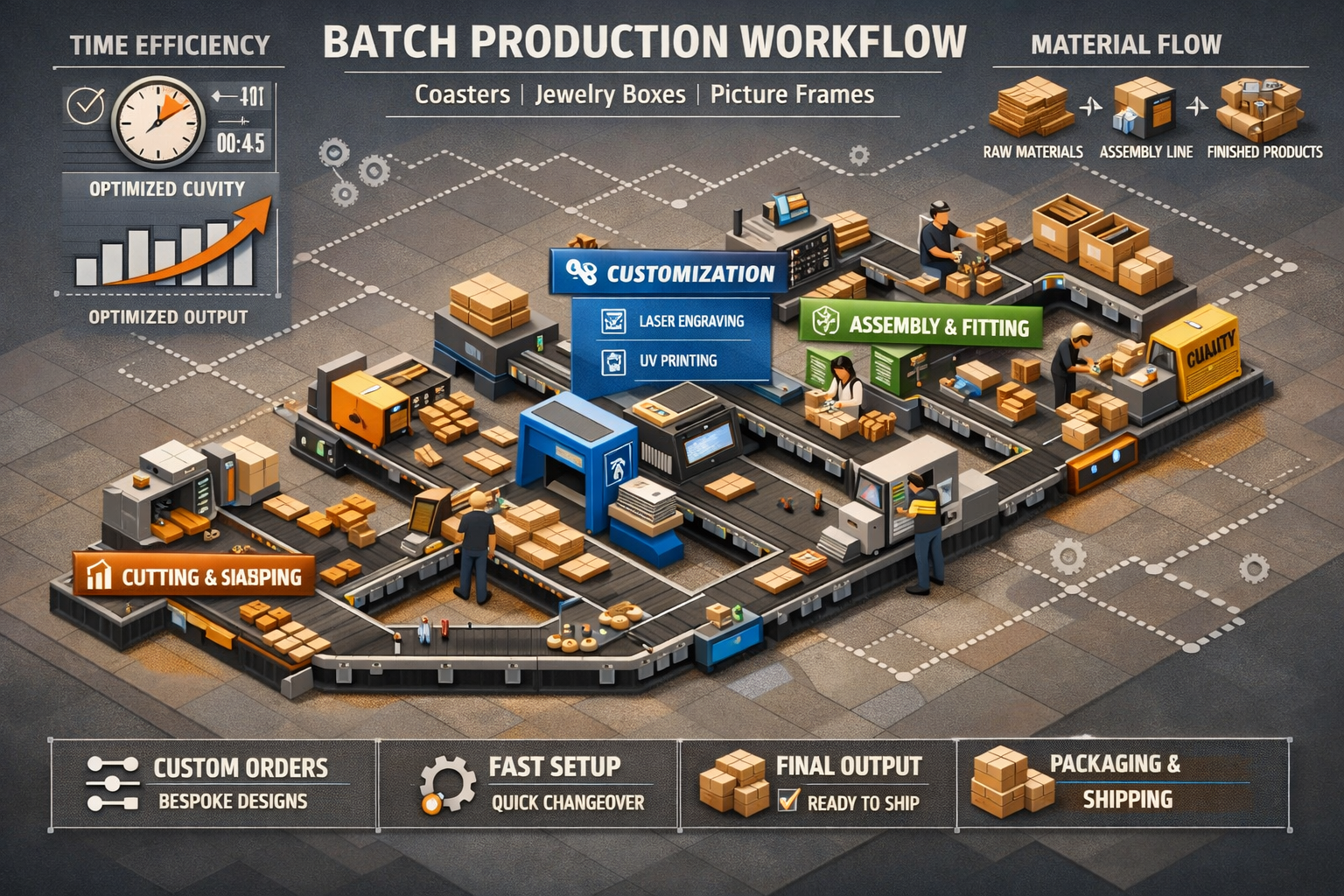
The true art of scaling small woodcraft lies in mastering batch production workflows. Instead of crafting each item individually, batch production involves creating multiple identical or near-identical items simultaneously through a series of specialized steps. This methodology is crucial for items like coasters, jewelry boxes, and picture frames, where volume is often a key driver of profitability.
Designing for Batch Production
Successful batch production begins at the design stage. When conceptualizing new products or refining existing ones, consider how components can be standardized and processes streamlined.
- Modular Design: Break down each woodcraft item into its simplest components. For a jewelry box, this might include a base, four sides, a lid, and internal dividers. Standardizing the dimensions and joinery for these modules allows for interchangeable parts and efficient assembly.
- Jig and Fixture Friendliness: Design components to be easily held and processed by jigs and fixtures. This might mean incorporating flat surfaces for clamping, or specific dimensions that fit standard templates.
- Material Optimization: Plan cuts to minimize material waste. Gang cutting multiple pieces from a single board is a hallmark of efficient batch production. Explore sourcing and selecting reclaimed urban lumber for sustainable and cost-effective material choices.
Streamlining Production Stages
A typical batch production workflow for small woodcraft can be broken down into several distinct stages, each optimized for efficiency.
1. Material Preparation and Cutting 🌳
- Rough Milling: Lumber is dimensioned and cut to rough sizes. For example, boards for coasters might be planed and then ripped into strips of the appropriate width.
- Precision Cutting: Using a table saw with sleds, a miter saw station, or a CNC router, individual components are cut to their final precise dimensions. Jigs are indispensable here for repetitive, accurate cuts.
- Coasters: Multiple blanks cut from a larger sheet.
- Jewelry Boxes: Sides, tops, and bottoms cut simultaneously.
- Picture Frames: Rails cut to length with precise miters using specialized jigs.
2. Joinery and Assembly 🛠️
- Batch Joinery: Instead of assembling one piece at a time, prepare all joinery for a batch simultaneously. For dadoes, rabbits, or finger joints, set up a router table or table saw once and run all similar pieces through.
- Assembly Jigs: Create jigs that hold multiple components in perfect alignment for glue-up. For jewelry boxes, a four-sided clamping jig can greatly speed up assembly. For picture frames, a specialized clamping system ensures tight miter joints across a batch.
- Fasteners: Where appropriate, consider efficient fastening methods. Mastering woodworking screws can significantly speed up assembly for non-visible joints or internal structures.
3. Sanding and Finishing ✨
- Pre-Assembly Sanding: For many small woodcraft items, it is more efficient to sand individual components before assembly, especially for intricate areas that become difficult to access later.
- Batch Sanding: Use orbital sanders and sanding blocks in an assembly-line fashion. Consider sanding jigs that hold multiple items for consistent pressure and finish.
- Application Techniques: Apply finishes in batches. For example, arranging 50 coasters on a drying rack and using a spray gun for finish application is far more efficient than brushing each one individually. Explore various wood finishing techniques to find the most efficient and durable options for your products.
- Dipping: For very small items, some finishes can be applied by dipping, though consistency might vary.
- Spraying: Ideal for quick, even coverage on large batches.
- Wipe-on Finishes: Can be efficient for batches if a proper setup is used, allowing multiple pieces to be wiped down in sequence.
4. Customization Integration 🎯
This is where the personalization aspects discussed in the previous section integrate seamlessly.
- Post-Finish Engraving: For laser engraving, it’s often more effective to apply the primary finish first, then engrave. This creates a striking contrast as the laser burns through the finish.
- Staging Area: Designate a specific area for personalization where items are brought from the finishing line to the laser engraver or other customization stations.
- Quality Check: After customization, a thorough quality check ensures that both the underlying woodcraft and the personalization meet high standards.
Case Study: Coaster Batch Production
Imagine producing 100 custom wooden coasters.
- Material: Select a uniform wood species, e.g., maple.
- Milling: Plane and rip stock into 4×4 inch squares.
- Cutting: Use a crosscut sled on a table saw or a CNC router to cut 100 blanks accurately. Round edges with a router table and a small chamfer bit, holding multiple coasters in a jig.
- Sanding: Create a large sanding board with adhesive sandpaper. Place 10-20 coasters at a time and apply pressure with a flat block for initial sanding (e.g., 120 grit). Repeat with finer grits (220, 320).
- Finishing: Arrange coasters on a rack. Spray 2-3 coats of a durable, food-safe finish, allowing appropriate drying time between coats.
- Engraving: Load custom jigs into the laser engraver that hold 10-20 coasters. Batch engrave personalized designs, rotating the jig as needed.
- Final Inspection: Inspect each coaster for finish quality and engraving accuracy.
By meticulously planning and optimizing each stage, businesses can achieve significant economies of scale, making customized small woodcraft a highly profitable venture.
Marketing and Pricing Personalized Small Woodcraft in 2026
[[IMAGE_PROMPT_3]]
Successfully implementing Customization Strategies for Mass-Producing Small Woodcraft: Engraving, Personalization, and Batch Production Workflows for Coasters, Jewelry Boxes, and Picture Frames is only half the battle. The other crucial aspect is effectively marketing these personalized items and establishing pricing that reflects their unique value. In 2026, consumers are willing to pay a premium for products that tell a story, represent their identity, or serve as meaningful gifts.
Crafting a Compelling Value Proposition
The key to selling personalized woodcraft is to highlight the intangible benefits alongside the tangible quality.
- Emotional Connection: Emphasize how personalization transforms an ordinary object into a cherished memory or a unique expression of individuality. For a jewelry box, it’s not just a storage solution; it’s a personalized heirloom.
- Storytelling: Share the story behind your craft – the quality of the wood, the precision of the techniques, and the care taken in each customization. If you use reclaimed wood accent walls or other sustainable materials, highlight these aspects.
- Quality and Durability: Reassure customers about the longevity of your products. Detail the types of wood used (e.g., solid hardwoods vs. plywood) and the sustainable finishes for reclaimed wood or other protective coatings applied.
- Exclusivity: Even in mass production, customization offers a sense of exclusivity. Each piece, though efficiently produced, is uniquely tailored to the customer.
Tiered Personalization Pricing
One effective strategy is to offer different tiers of personalization, allowing customers to choose based on their budget and desired level of uniqueness. This also allows you to scale pricing based on the complexity and time involved in customization.
| Personalization Tier | Description | Example for a Coaster | Pricing Strategy |
|---|---|---|---|
| Standard | Simple, pre-designed templates with minimal changes (e.g., text only, limited font choices). | Choose from 5 fonts for initials (1-3 letters). | Base price + small flat fee. |
| Enhanced | More design options, custom text, selection from a broader graphic library. | Initials, date, and choice of 1 from 20 pre-approved icons. | Base price + moderate flat fee or per-character/per-graphic fee. |
| Premium/Bespoke | Fully custom designs, customer-provided artwork, complex graphics, multiple engraving locations. | Upload custom logo, specific font, or intricate pattern. | Base price + hourly design fee or significant flat fee based on complexity. |
This tiered approach ensures that you capture a wider market segment while appropriately valuing your design and customization efforts.
Channels for Sales and Marketing
In 2026, a multi-channel approach is vital for reaching your target audience.
- E-commerce Website: A professional, user-friendly website with an integrated customization tool is paramount. Allow customers to preview their engraved designs before purchase.
- Online Marketplaces: Platforms like Etsy, Shopify, and Amazon Handmade provide access to vast audiences seeking unique handcrafted items. Optimize product listings with high-quality images and clear descriptions.
- Social Media Marketing: Leverage platforms like Instagram, Pinterest, and TikTok to showcase your customized woodcraft. Use high-quality visuals, short videos of the engraving process, and customer testimonials. Run targeted ads based on demographics and interests.
- Collaborations and Wholesale: Partner with event planners, wedding coordinators, or corporate gift companies. Offer wholesale pricing for bulk customized orders.
- Local Craft Fairs and Markets: While focusing on mass production, local markets can still be valuable for direct customer interaction, gathering feedback, and showcasing samples of your work. Consider how woodworking projects that sell often benefit from this face-to-face interaction.
Photography and Presentation
High-quality product photography is non-negotiable for personalized woodcraft.
- Showcase Customization: Include close-up shots of engraved details.
- Lifestyle Photos: Show the items in use (e.g., coasters on a coffee table, jewelry box on a dresser, picture frame holding a cherished photo). This helps customers visualize the product in their own lives.
- Variety: Display examples of different customization options and wood types.
- Professionalism: Invest in good lighting, a clean backdrop, and professional editing.
By effectively marketing the uniqueness, quality, and emotional value of your personalized small woodcraft, and by strategically pricing your customization options, businesses can thrive in the demanding and rewarding market of 2026.
Conclusion
The ability to offer bespoke touches within a scalable production model is no longer a luxury but a necessity for small woodcraft businesses in 2026. Implementing robust Customization Strategies for Mass-Producing Small Woodcraft: Engraving, Personalization, and Batch Production Workflows for Coasters, Jewelry Boxes, and Picture Frames empowers artisans and manufacturers to meet consumer demand for unique, high-quality items.
By embracing digital fabrication tools like laser engravers and CNC routers, streamlining operations through intelligent batch production workflows and dedicated jigs, and carefully designing for efficiency, businesses can transform their output. From the precision cutting of raw materials to the final application of a personalized engraving, every step must be optimized for both speed and unwavering quality.
Furthermore, effectively communicating the inherent value of these customized pieces through compelling marketing and strategic pricing is paramount. Emphasizing the emotional connection, craftsmanship, and bespoke nature of each item justifies premium pricing and fosters strong customer relationships.
Actionable Next Steps:
- Audit Current Workflow: Identify bottlenecks in your existing production process for small woodcraft.
- Invest in Technology: Research and consider investing in a laser engraver or upgrading your CNC capabilities if current equipment is limiting.
- Develop Jigs and Fixtures: Design and build specific jigs for your most popular products (coasters, jewelry boxes, picture frames) to optimize cutting, assembly, and engraving stages.
- Standardize Design Templates: Create a library of customizable design options that can be easily scaled and integrated into your production software.
- Refine Pricing Strategy: Implement a tiered pricing model for personalization that reflects the complexity and value offered.
- Enhance Online Presence: Update your website and product listings with high-quality photography and clear descriptions highlighting customization options. Explore ways to leverage customer-generated content for marketing.
By proactively adopting these strategies, woodcraft businesses can not only survive but truly flourish in the evolving market, turning the desire for personalization into a powerful engine for growth and profitability.
References
- Alvarado, N. (2018). The Maker’s Guide to Laser Engraving. CreateSpace Independent Publishing Platform.
- Koch, L. (2020). CNC Router Essentials: A Beginner’s Guide to Mastering the Machine. Woodworking Magazine.
- Schwartz, K. (2019). Smart Woodworking: The Essential Guide to Building Jigs, Fixtures, and Shop Furniture. Taunton Press.
- Stickler, B. (2021). Batch Production for Small Shops: Maximizing Efficiency and Profitability. Fine Woodworking.