
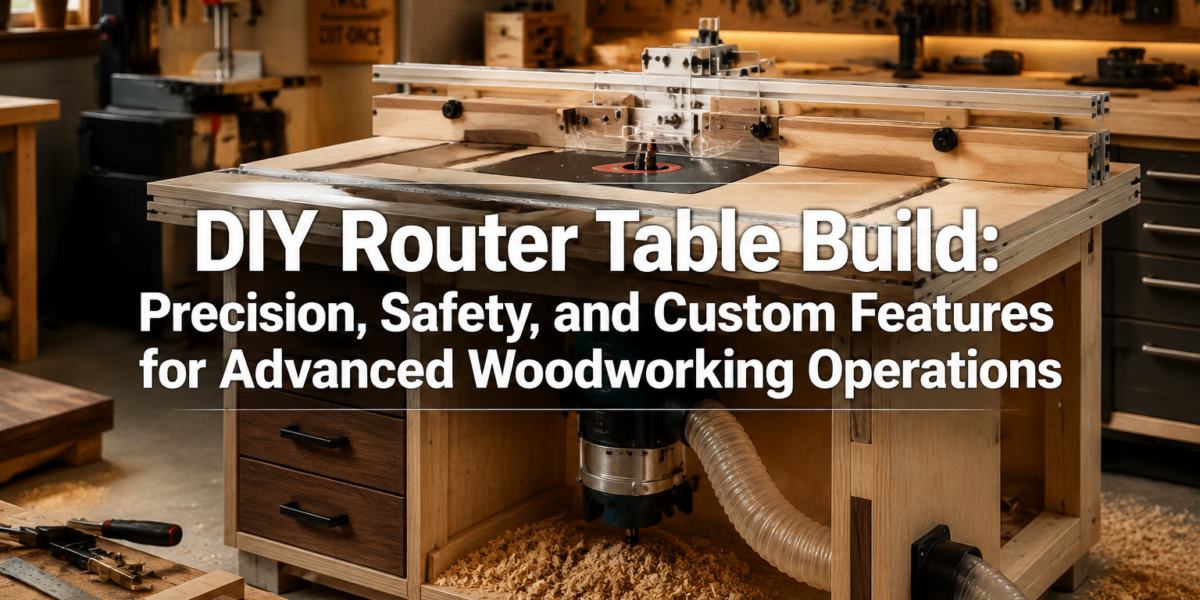
A precisely engineered router table can redefine the boundaries of your woodworking workshop. In 2026, many woodworkers still rely on handheld routers, often overlooking the profound leap in accuracy, repeatability, and safety that a well-constructed router table provides. This article will guide you through a comprehensive DIY Router Table Build: Precision, Safety, and Custom Features for Advanced Woodworking Operations, covering everything from fundamental design principles to integrating sophisticated enhancements that elevate your routing capabilities for joinery, profiling, and panel raising.
Key Takeaways
- A custom DIY router table offers superior precision, safety, and versatility compared to handheld router operations.
- Careful planning of the tabletop, router plate, fence, and dust collection is crucial for optimal performance.
- Integrating safety features like power switches, push blocks, and effective dust collection is non-negotiable.
- Advanced features such as router lifts, micro-adjustable fences, and specialized jigs unlock complex woodworking operations.
- Building your own router table provides an opportunity to tailor it exactly to your workflow and workshop space.
Designing the Foundation: Precision and Stability for Your DIY Router Table Build
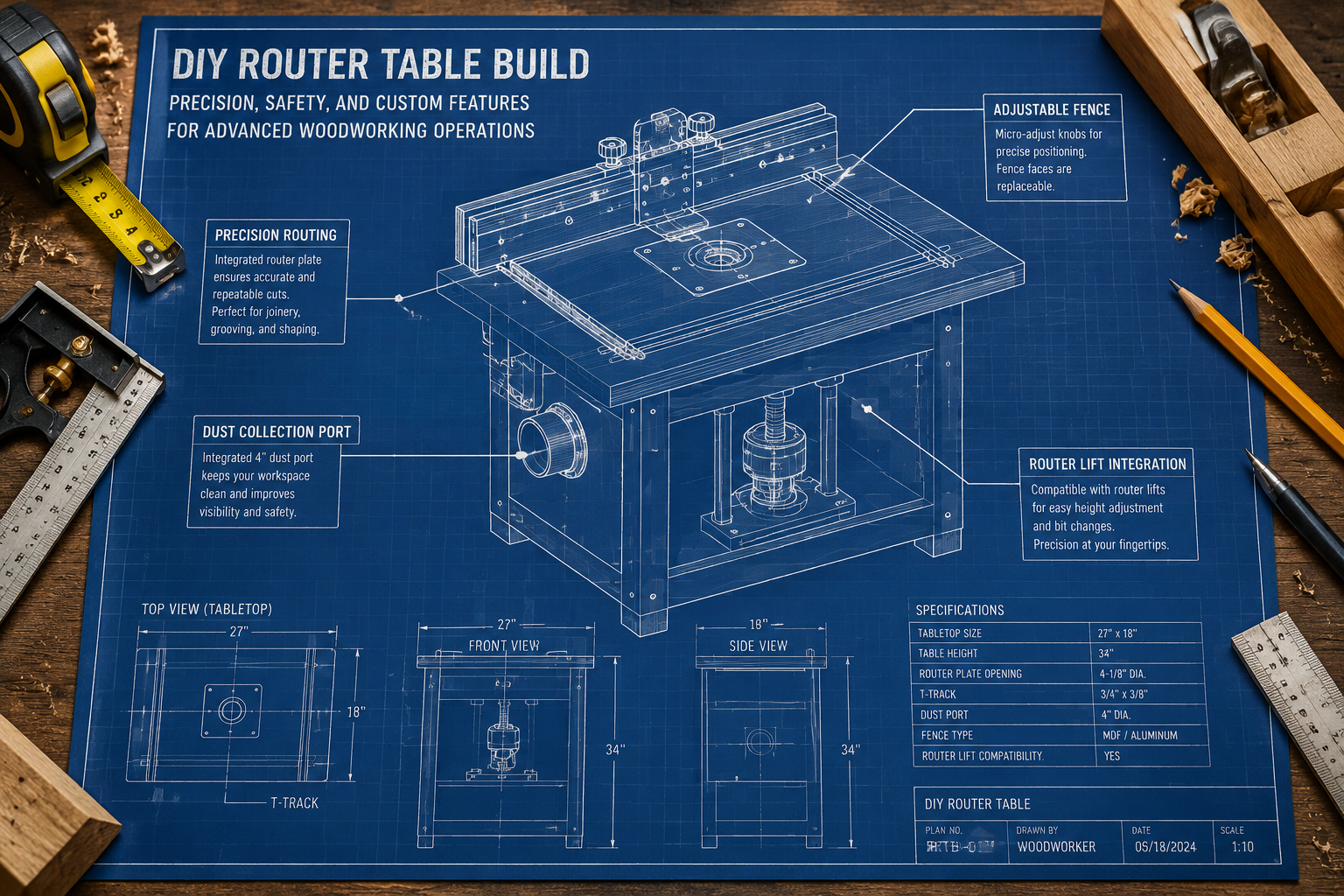
The journey to an exceptional router table begins with meticulous design. The core components—the tabletop, router plate, and cabinet—must work in harmony to ensure stability, flatness, and vibration dampening. For any DIY Router Table Build: Precision, Safety, and Custom Features for Advanced Woodworking Operations, these elements form the bedrock of accurate routing.
Tabletop Material and Dimensions
The tabletop is arguably the most critical component. It must be perfectly flat, durable, and resistant to wear.
- MDF (Medium Density Fiberboard): A popular choice due to its inherent flatness, stability, and affordability. A 1-inch thick piece, often laminated with high-pressure laminate (HPL) on both sides, provides excellent rigidity and a slick, low-friction surface.
- Phenolic Plywood: A premium option, this material offers superior wear resistance and flatness, though at a higher cost.
- Solid Wood: While aesthetically pleasing, solid wood is prone to movement with changes in humidity, making it less ideal for precision work unless engineered carefully with a stable substrate.
A common size for a router table top is 24×32 inches, offering ample workpiece support without consuming excessive workshop space. Consider a size that accommodates your typical projects while leaving room for future accessory integration.
Router Plate and Mounting
The router plate is where your router mounts, allowing it to be flush with the tabletop. Precision here is paramount.
- Material: Phenolic resin or aluminum plates are common. Phenolic is durable and less prone to scratching wood, while aluminum offers excellent rigidity.
- Leveling: The plate must sit perfectly flush with the tabletop. A simple rabbet cut into the tabletop, sized precisely for your chosen plate, is the standard method. Leveling screws integrated into the plate or the table itself allow for fine-tuning.
- Interchangeable Inserts: Different sized router bits require different opening diameters in the plate to maximize dust collection and provide workpiece support. Removable insert rings allow you to switch these openings quickly.
Cabinet and Base Construction
The base provides stability, vibration absorption, and often, integrated storage and dust collection.
- Sturdy Materials: Plywood (¾-inch birch or similar) or MDF are excellent choices. Employ robust joinery like dadoes, rabbets, or screws with glue for maximum strength.
- Weight: A heavier base generally means less vibration. Consider adding weight to the base, perhaps with sandbags or concrete blocks, if vibration is an issue.
- Mobility: Locking casters are a valuable addition, allowing you to move the table around your workshop as needed. For inspiration on creating ergonomic workshop furniture and optimizing your space, consider exploring “Creating Ergonomic Workshop Furniture: Building Custom Workbenches”.
Prioritizing Safety and Dust Management in Your Advanced DIY Router Table Build
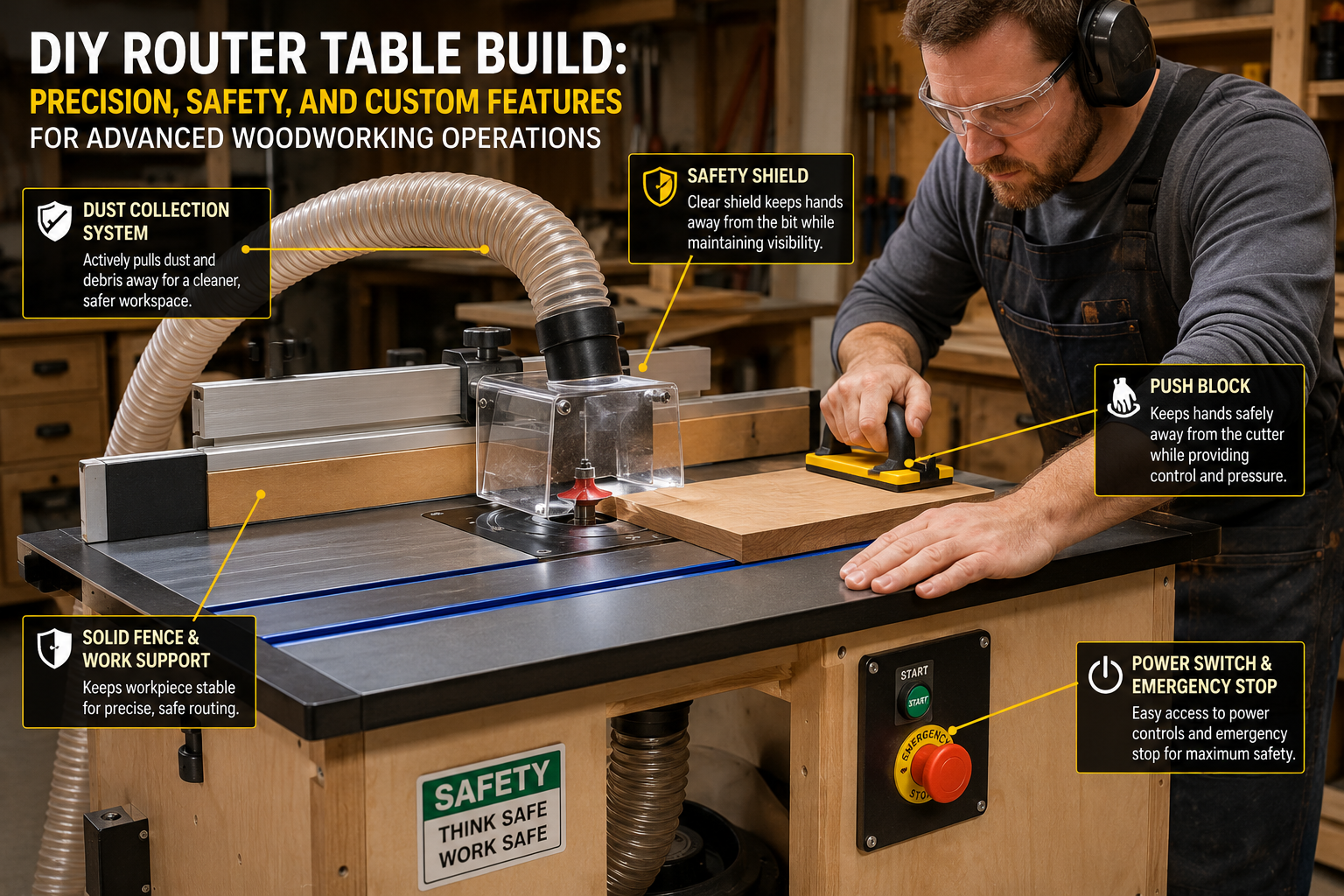
Safety is paramount in any woodworking operation, and a router table, with its high-speed rotating cutter, demands particular attention. Integrating effective safety features and robust dust management systems into your DIY Router Table Build: Precision, Safety, and Custom Features for Advanced Woodworking Operations is not optional; it’s essential for a secure and clean workspace.
Essential Safety Features
Beyond basic shop safety practices, a router table requires specific design considerations:
- Accessible Power Switch: A large, clearly marked power switch with an emergency stop feature (often a paddle switch) should be mounted prominently on the front of the table. This allows for quick power cut-off in an emergency. Some advanced setups integrate a foot pedal switch for hands-free control.
- Push Blocks and Featherboards: Never rout small pieces by hand. Always use push blocks to maintain control and keep your hands away from the spinning bit. Featherboards, either store-bought or shop-made, apply constant pressure to the workpiece against the fence and tabletop, preventing kickback and improving cut quality.
- Clear Safety Shield/Guard: A transparent guard positioned over the router bit can prevent chips and debris from being ejected towards the operator, while still allowing visibility of the cut.
- Proper Lighting: Adequate lighting focused on the work area reduces eye strain and enhances visibility, contributing to safer operation.
Integrated Dust Collection
Routing operations generate significant amounts of fine dust and chips, which are both a health hazard and a hindrance to precision.
- Fence-Mounted Port: The most effective dust collection strategy involves a port integrated directly into the router table fence, close to the bit. This captures airborne dust at its source.
- Below-Table Collection: A sealed cabinet beneath the router table, connected to a dust collector, can capture chips and dust falling through the router plate opening. This is particularly effective when combined with a fence-mounted port.
- Sealing: Ensure all joints and openings in your router table cabinet are well-sealed to maximize the efficiency of your dust collection system. This can be achieved with caulk, weather stripping, or carefully fitted panels.
- Vacuum Connection: Design the dust ports to accommodate standard shop vacuum or dust collector hoses (e.g., 2.5-inch or 4-inch diameter). For more on workshop organization, including dust collection strategies, refer to “Building Modular Wood Storage Systems for Small Workshops: Maximizing”.
Enhancing Capabilities: Custom Features for Advanced Woodworking Operations
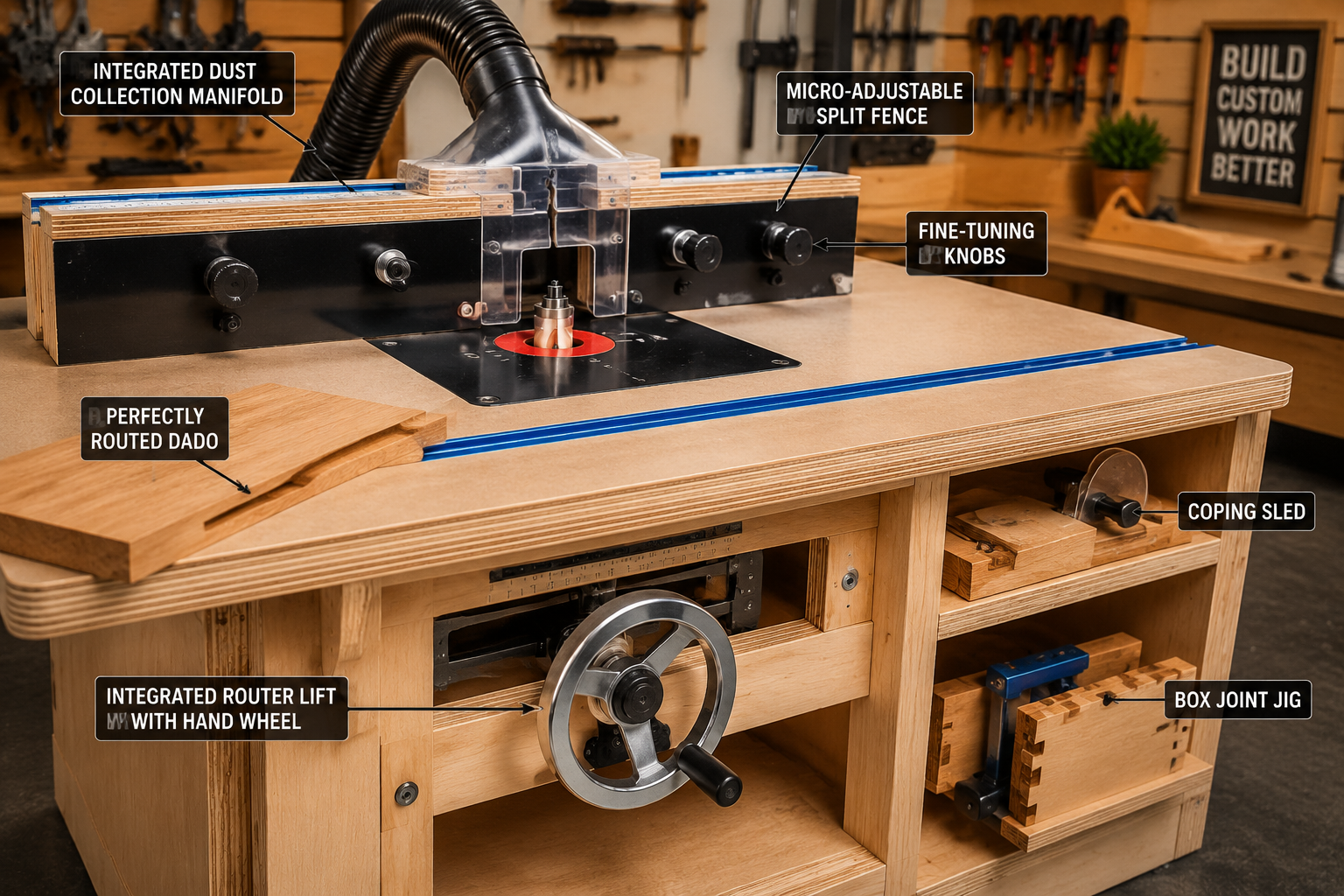
Once the foundational elements of precision and safety are established, you can begin to integrate custom features that truly unlock the advanced capabilities of your DIY Router Table Build: Precision, Safety, and Custom Features for Advanced Woodworking Operations. These enhancements will allow you to tackle complex joinery, intricate profiles, and larger panel work with ease and confidence.
Router Lift Mechanism
A router lift is a game-changer for precise bit height adjustments.
- Benefits: Allows for micro-adjustments from above the table, eliminating the need to awkwardly reach under to change bit height. This saves time and significantly improves accuracy for critical setups.
- Types: Commercial router lifts are available and can be integrated into your custom table. Alternatively, DIY router lifts, often employing threaded rods and hand wheels, can be constructed for cost savings.
- Integration: The lift mechanism is mounted to the underside of the tabletop, with the router clamped directly into the lift. Ensure the opening in your router plate is large enough to accommodate the lift’s mechanism.
Advanced Fence Systems
A basic fence is good, but an advanced system offers unparalleled control.
- Split Fence: A split fence allows you to offset the outfeed fence from the infeed fence, essential for operations like jointing edges. This corrects slight inaccuracies in workpiece edges, resulting in perfectly straight boards.
- Micro-Adjusters: Integrating fine-tuning knobs or lead screws into your fence design allows for minute adjustments to the fence position, crucial for dialed-in precision.
- T-Track and Miter Slot Integration: Embedding T-tracks into the tabletop allows for easy attachment of featherboards, stops, and custom jigs. A miter slot, similar to a table saw, enables the use of miter gauges and other sleds for cross-cutting and angular routing. Learn more about the versatility of router bits in “The Essential Guide to Router Bits: Choosing the Right Profile,”.
Custom Jigs and Fixtures
The versatility of a router table is significantly expanded by custom-built jigs.
- Coping Sleds: Essential for cutting the cope (or reverse profile) on rail-and-stile cabinet doors, ensuring a perfect fit.
- Box Joint and Dovetail Jigs: While commercially available, building your own custom jigs for these classic joinery methods allows for specific dimensions and greater control.
- Panel Raising Jigs: For large panels, a jig that securely holds the workpiece vertically against the fence enables safe and efficient panel raising.
- Circle Cutting Jigs: Easily rout perfect circles or arcs with a simple pivot jig that attaches to your miter slot or T-track.
Integrated Storage and Organizational Features
A well-organized router table enhances workflow and efficiency.
- Bit Storage: Dedicated drawers or wall-mounted racks for router bits keep them organized and protected.
- Accessory Storage: Compartments for wrenches, insert rings, push blocks, and other accessories keep everything within reach.
- Adjustable Shelving: Within the cabinet, adjustable shelves can accommodate different sized jigs and accessories. For other custom workshop solutions, check out “Building a Custom Wood Workbench: Design Considerations and”.
By thoughtfully incorporating these advanced features, your DIY router table will transform from a simple tool holder into a sophisticated woodworking station, capable of tackling a vast array of demanding tasks with unmatched precision and safety.
Conclusion
Embarking on a DIY Router Table Build: Precision, Safety, and Custom Features for Advanced Woodworking Operations is one of the most rewarding projects a woodworker can undertake. It’s an opportunity to create a tailored tool that directly addresses your specific needs, significantly enhancing the quality, accuracy, and safety of your routing operations. From the stable foundation of a flat tabletop and robust cabinet to the critical integration of safety features and the ingenious addition of custom lifts, fences, and jigs, each step contributes to a router table that will serve you for years to come.
As you plan your build in 2026, remember that patience and attention to detail are your best allies. Don’t rush the process, and prioritize precise measurements and careful construction. The investment of your time and effort will pay dividends in the form of perfectly routed joints, beautifully profiled edges, and an elevated woodworking experience. Start by sketching out your ideal design, gather high-quality materials, and enjoy the process of crafting a truly indispensable piece of workshop equipment.