
Reclaimed Wood Restoration: Adding Narrative and Soul to Modern Spaces
In a world increasingly driven by mass production and fleeting trends, there’s a profound yearning for authenticity, history, and sustainability. This desire has fueled the remarkable rise of Reclaimed Wood Restoration: Adding Narrative and Soul to Modern Spaces. It’s more than just repurposing old timber; it’s about breathing new life into forgotten fragments of history, transforming them into pieces that tell a story and imbue contemporary environments with unparalleled character. As an expert SEO content strategist and senior editor, I’ve observed this trend evolve from a niche interest into a dominant force in interior design and architecture, captivating homeowners and designers alike in 2026. The reclaimed lumber market is, in fact, forecast to reach an impressive $16.2 billion in 2026, demonstrating its strong growth trajectory [3].
Indeed, reclaimed wood has moved beyond a mere trend; it is now considered a timeless element, maintaining its appeal regardless of shifting design preferences [1]. Over 30% of custom home builders in the U.S. currently incorporate reclaimed wood into their projects, with the residential segment alone accounting for 50.7% of the global reclaimed lumber market share as of 2024 [4]. This article delves deep into why reclaimed wood restoration is a powerful choice for adding narrative and soul, exploring its benefits, techniques, and the incredible stories it brings to modern living.
Key Takeaways
- Sustainability Champion: Reclaimed wood significantly reduces deforestation and lowers carbon emissions, making it “the ultimate sustainable building material” and a key component in LEED-certified projects [2, 4].
- Unmatched Durability & Quality: Sourced from old-growth trees, reclaimed timber boasts tighter grain and higher density, offering superior durability and wear resistance compared to new wood [1].
- Rich Historical Narrative: Each piece carries a unique story and character, adding an authentic, soulful dimension to modern spaces that mass-produced materials cannot replicate [2].
- Versatile Design Element: Reclaimed wood effortlessly transcends styles, from rustic farmhouse to sleek industrial and minimalist modern, aligning perfectly with 2026’s “narrative interiors” trend [2, 6, 9].
- Economic & Investment Value: Despite initial costs, its durability, longevity, and timeless appeal make reclaimed wood a wise, long-term investment that adds significant value to properties [1].
The Enduring Appeal of Reclaimed Wood Restoration: Adding Narrative and Soul to Modern Spaces
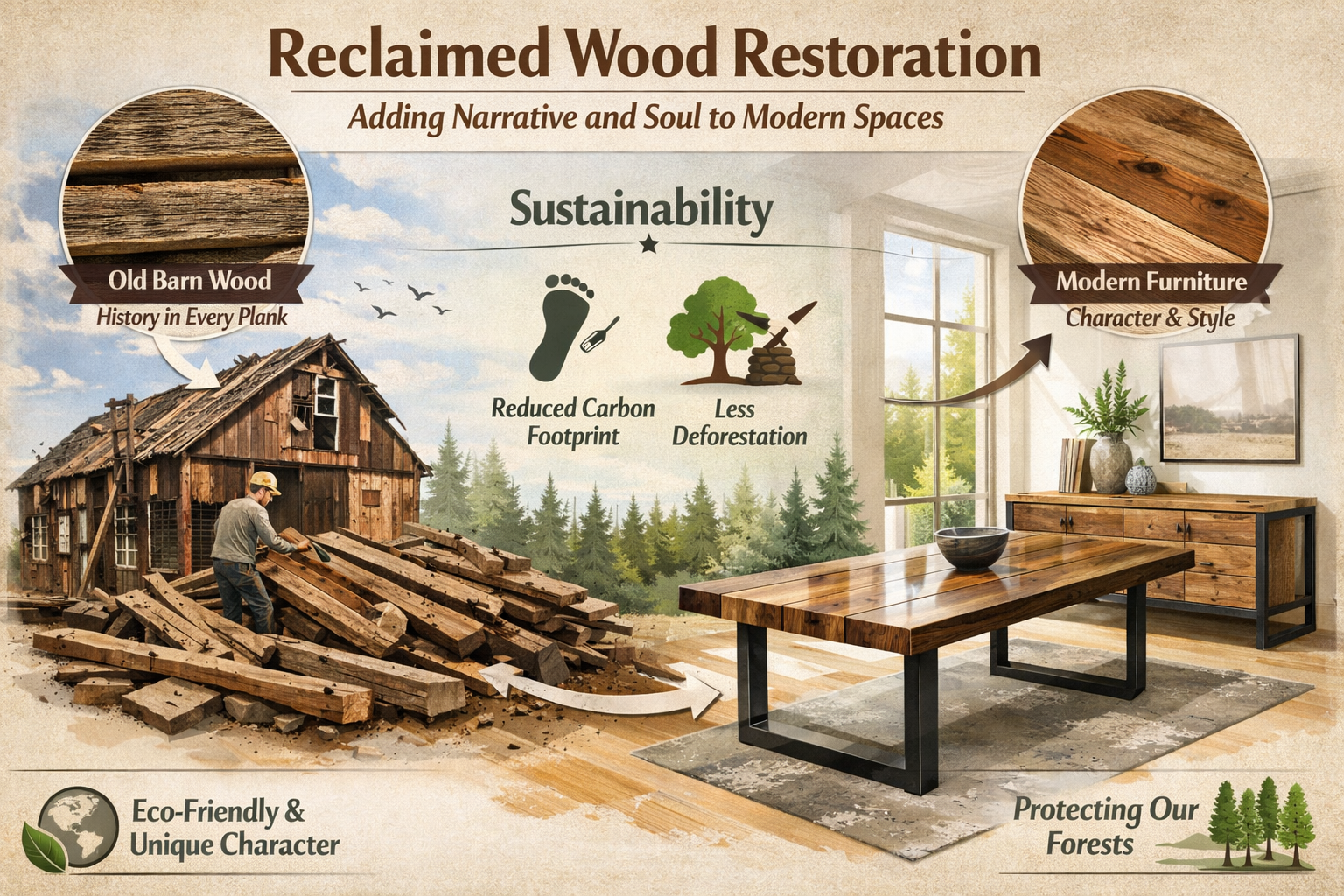
The allure of reclaimed wood lies not just in its aesthetic beauty but in its profound connection to the past. Imagine a beam salvaged from a 19th-century barn, now gracing a sleek, minimalist dining room table. Every knot, every weathered groove, every nail hole whispers tales of its former life. This is the essence of Reclaimed Wood Restoration: Adding Narrative and Soul to Modern Spaces. In 2026, the dominant interior design trend is “narrative interiors,” where clients actively seek out materials with an origin story and historical character [2, 5]. Reclaimed wood perfectly embodies this trend, moving it beyond traditional “farmhouse” aesthetics into modern, transitional, and industrial designs [2].
A Sustainable Choice for the Modern Era
One of the most compelling reasons for the burgeoning popularity of reclaimed wood is its undeniable environmental benefits. In an era where sustainability is paramount, choosing reclaimed wood is a powerful statement.
- Reduced Deforestation: By reusing existing timber, we lessen the demand for newly harvested trees, preserving precious forests and biodiversity [4].
- Lower Carbon Footprint: The energy expended in salvaging, milling, and transporting reclaimed wood is significantly less than that required for felling new trees, processing them, and then transporting them over long distances [4]. Reclaimed wood flooring, for instance, is noted for significantly reducing carbon footprints compared to conventional materials [4].
- Waste Diversion: Reclaiming wood prevents old structures from being demolished and sent to landfills, turning waste into valuable resources.
- LEED Certification: Reclaimed wood is recognized as a valuable material for earning LEED credits, contributing to green building certifications [4]. As of 2023, 105,000 LEED-certified projects have been completed across 185 countries, highlighting the growing commitment to sustainable construction [4].
“Reclaimed wood is recognized as ‘the ultimate sustainable building material’ due to reduced deforestation and lower carbon emissions.”
— Source [2]
This commitment to eco-conscious living is not just a passing fad. Over 35% of new residential builds in 2026 are expected to incorporate sustainable materials like reclaimed lumber [4]. This makes Reclaimed Wood Restoration: Adding Narrative and Soul to Modern Spaces a choice that aligns with both personal values and global environmental goals.
Unmatched Quality and Durability
Beyond its eco-friendly credentials, reclaimed wood offers superior structural integrity and aesthetic richness. Most reclaimed timber comes from old-growth trees, which were harvested centuries ago. These trees grew slowly, resulting in:
- Tighter Grain: This dense structure makes the wood incredibly strong and stable.
- Higher Density: Old-growth wood is less prone to warping, shrinking, or expanding with changes in humidity.
- Exceptional Durability: This inherent strength makes it more resilient to wear and tear than much of the faster-grown, modern farmed hardwood [1]. This means that a reclaimed wood floor or countertop isn’t just beautiful; it’s built to last for generations, potentially outliving its modern counterparts.
This durability translates into a smart investment. While the upfront cost of reclaimed wood can sometimes be higher than new timber, its longevity and resistance to damage mean less need for replacement or extensive repairs over time, offering excellent long-term value [1]. For those looking to master various wood finishing techniques, understanding how different finishes interact with the dense grain of reclaimed wood is crucial. Our guide on wood finishing techniques offers a comprehensive overview.
Aesthetic Versatility and Timeless Appeal
The beauty of reclaimed wood lies in its imperfections. The unique character marks—nail holes, saw marks, natural weathering, and variations in color—are precisely what make each piece unique and give it a soul that manufactured materials simply cannot replicate.
This distinct character makes reclaimed wood incredibly versatile across various design styles:
- Rustic/Farmhouse: Its natural, weathered look perfectly complements this aesthetic, creating warmth and authenticity.
- Industrial: When paired with metal or concrete, reclaimed wood adds an organic contrast, softening industrial edges.
- Modern/Minimalist: A beautifully restored reclaimed wood slab can become a striking focal point, adding warmth and a narrative without overwhelming a clean, uncluttered space. Oversized, rough-hewn reclaimed timber mantels are, for example, emerging as focal points even in contemporary homes with modern fireplaces [2].
- Transitional: It bridges the gap between traditional and contemporary, creating a balanced and inviting atmosphere.
In 2026, we are seeing a conscious move towards furniture styles that celebrate authenticity and craftsmanship [6, 7]. Reclaimed wood furniture, like a woodworking dining chair made from salvaged oak, embodies this perfectly. It is no longer trendy but timeless, holding its appeal across evolving design preferences [1].
The Art and Science of Reclaimed Wood Restoration: Adding Narrative and Soul to Modern Spaces
The process of reclaiming and restoring wood is an intricate dance between preservation and transformation. It requires skilled craftsmanship and a deep understanding of wood’s unique properties to bring out its hidden beauty while maintaining its historical integrity. For those interested in the details of surface treatment, our article on reclaimed wood finishing techniques provides excellent insights.
Sourcing and Initial Processing
The journey of reclaimed wood begins with careful sourcing. Common origins include:
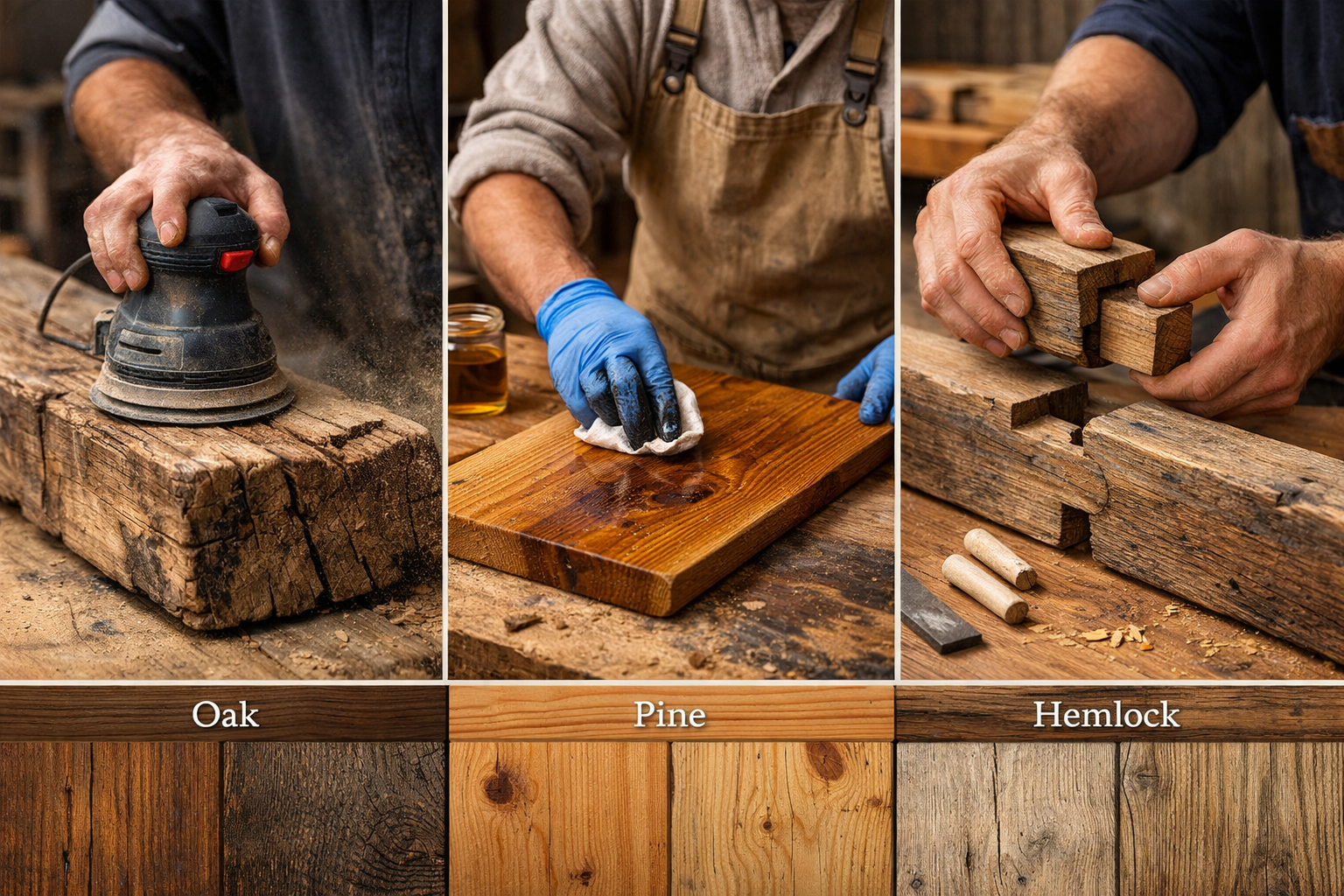
- Old Barns and Agricultural Structures: These often yield large timbers like oak, pine, and hemlock, frequently exhibiting rich patina and weathering.
- Industrial Buildings and Factories: Structures like old mills can provide dense, hard-wearing woods used for beams and flooring.
- Demolished Homes: Salvaged floorboards, joists, and architectural elements can be repurposed.
- Sunken Logs: Timber lost during logging operations centuries ago can be recovered from riverbeds and lakes, offering unique colorations and incredible density.
Once sourced, the wood undergoes initial processing:
- De-nailing and Metal Removal: Every piece is meticulously inspected for nails, screws, and other metal fragments, which can damage tools during milling. This is often done by hand, a testament to the labor of love involved.
- Cleaning: The timber is cleaned to remove dirt, debris, and any biological contaminants.
- Milling: Depending on its intended use, the wood is then milled. This could involve simply flattening rough-sawn faces for a more rustic look or precision cutting into new planks for flooring, furniture, or architectural elements.
Restoration Techniques and Finishing
This is where the true art of Reclaimed Wood Restoration: Adding Narrative and Soul to Modern Spaces comes into play. The goal is to enhance the wood’s natural character without erasing its history.
| Restoration Step | Description |
|---|---|
| Stabilization | Before any finishing, the wood must be stable. This often involves careful drying processes to ensure moisture content is appropriate for its new environment, preventing future warping or cracking. |
| Sanding | A delicate balance is required. Light sanding can smooth rough surfaces while preserving tool marks, distress, and original patinas. Deeper sanding might be needed for high-traffic areas like flooring or tabletops, followed by progressively finer grits to achieve desired smoothness. |
| Filling (Optional) | For some applications, larger nail holes or deep cracks might be filled with wood epoxy or custom-made wood putty to create a smoother, more uniform surface while still acknowledging the wood’s past. |
| Finishing | This is critical for both protection and aesthetic enhancement. Options range from clear coats that highlight natural grain to subtle stains that deepen color. 🎨 Popular Finishes: – Oil Finishes (e.g., Danish Oil, Linseed Oil): Penetrate the wood, offering a natural, matte look and enhancing the grain. Excellent for highlighting the wood’s natural character. Learn more about Danish Oil vs Linseed: The Ultimate Wood Finishing Guide. – Polyurethane/Varnish: Create a durable, protective layer on the surface, available in various sheens from matte to high gloss. Ideal for high-traffic areas. – Waxes: Offer a soft, natural sheen and provide some protection, often used over oil finishes. – Stains: Can be used sparingly to achieve a desired color tone, though many prefer to let the wood’s natural color shine. For specific applications, like stained hemlock wood, understanding the right process is key. |
The choice of finish dramatically impacts the final look and feel. A rustic finish might embrace and highlight imperfections, while a more refined approach might aim for a smoother, yet still character-rich, surface. The goal is always to reveal the wood’s unique story, allowing its narrative to integrate seamlessly into a modern space.
Incorporating Reclaimed Wood in Modern Design
The versatility of reclaimed wood makes it suitable for countless applications in contemporary homes and commercial spaces.
- Flooring: Reclaimed wood flooring is incredibly durable and adds a warmth and character that new flooring struggles to match [1]. It’s a significant investment that adds value and timeless appeal.
- Accent Walls: A reclaimed wood accent wall can transform a bland room into a focal point, adding texture and a sense of history.
- Furniture: From dining tables and coffee tables to bed frames and shelving, reclaimed wood furniture pieces become instant heirlooms. Imagine a beautifully crafted woodworking nightstand made from 100-year-old oak.
- Architectural Elements: Beams, mantels, and door frames salvaged from old structures add incredible gravitas and authenticity.
- Kitchen Islands and Countertops: These high-traffic areas benefit from the durability and character of reclaimed timber, creating a striking focal point.
- Decorative Items: Even smaller pieces of reclaimed wood can be transformed into unique decorative items, like lamps, picture frames, or custom art pieces. For creative uses, exploring projects like Illuminate Your Space: A Comprehensive Guide to Lamp Woodworking can offer inspiration.
In 2026, the global reclaimed lumber market is projected to reach USD 97.25 billion by 2034, underscoring the growing demand for these unique materials [4]. This growth is largely driven by residential applications, where homeowners are increasingly seeking to infuse their spaces with character, sustainability, and a story. The aesthetic appeal and inherent quality of reclaimed wood ensure that it is a prominent feature in both luxury and accessible design schemes this year and beyond.
Conclusion
Reclaimed Wood Restoration: Adding Narrative and Soul to Modern Spaces is more than just a design choice; it’s a philosophy that champions sustainability, celebrates history, and embraces the inherent beauty of imperfection. In 2026, as homeowners and designers alike gravitate towards “narrative interiors” and a deeper connection to the origins of their materials, reclaimed wood stands out as a material with unparalleled integrity and timeless appeal. Its superior durability, eco-friendly credentials, and the unique story embedded in every plank make it a truly soulful addition to any modern environment.
By choosing reclaimed wood, we’re not just decorating a space; we’re investing in a piece of history, contributing to a sustainable future, and crafting environments that resonate with authentic character and warmth. Whether it’s a grand dining table, a rustic accent wall, or a beautifully restored beam, reclaimed wood transforms the ordinary into the extraordinary, offering not just functionality but a compelling narrative for generations to come.
Actionable Next Steps
- Research Local Suppliers: Look for reputable reclaimed wood suppliers in your area. Ask about their sourcing practices and restoration processes.
- Consider Your Project: Determine if you’re looking for flooring, furniture, an accent piece, or structural elements to ensure you find the right type and size of reclaimed timber.
- Consult a Professional: For larger projects, or if you’re unsure about the restoration process, consider consulting with a skilled woodworker or designer specializing in reclaimed materials.
- Explore Finishing Options: Familiarize yourself with different reclaimed wood finishing techniques to achieve the desired look and protection for your specific piece.
- Embrace Imperfection: Remember that the unique character marks are part of the wood’s charm and story. Embrace them!
References
[1] Is Reclaimed Wood Flooring Worth The Investment 2026 – https://americanreclaimedfloors.com/is-reclaimed-wood-flooring-worth-the-investment-2026/
[2] 2026 Trends To Watch In Custom Woodworking And Design – https://www.atlantawoods.com/post/2026-trends-to-watch-in-custom-woodworking-and-design
[3] Reclaimed Building Materials – https://www.elmwoodreclaimedtimber.com/blog/reclaimed-building-materials/
[4] Reclaimed Lumber Market – https://www.marketdataforecast.com/market-reports/reclaimed-lumber-market
[5] The Top Interior Design Trends For 2026 – https://idi.edu/the-top-interior-design-trends-for-2026/
[6] Trend Forecast Furniture Styles That Will Shape 2026 – https://curatedevents.com/blog/trend-forecast-furniture-styles-that-will-shape-2026/
[7] Wooden Furniture Trends – https://ecofurnituredesign.com/wooden-furniture-trends/
[8] 4372455 Reclaimed Wood Furniture Market – https://www.htfmarketinsights.com/report/4372455-reclaimed-wood-furniture-market
[9] Get To Know These Top Design Trends For 2026 – https://www.urbannatural.com/blogs/journal/get-to-know-these-top-design-trends-for-2026
Meta Title: Reclaimed Wood Restoration: Narrative & Soul for Modern Spaces
Meta Description: Discover how reclaimed wood restoration adds unique narrative, sustainability, and timeless soul to modern interiors in 2026. Explore benefits & techniques.