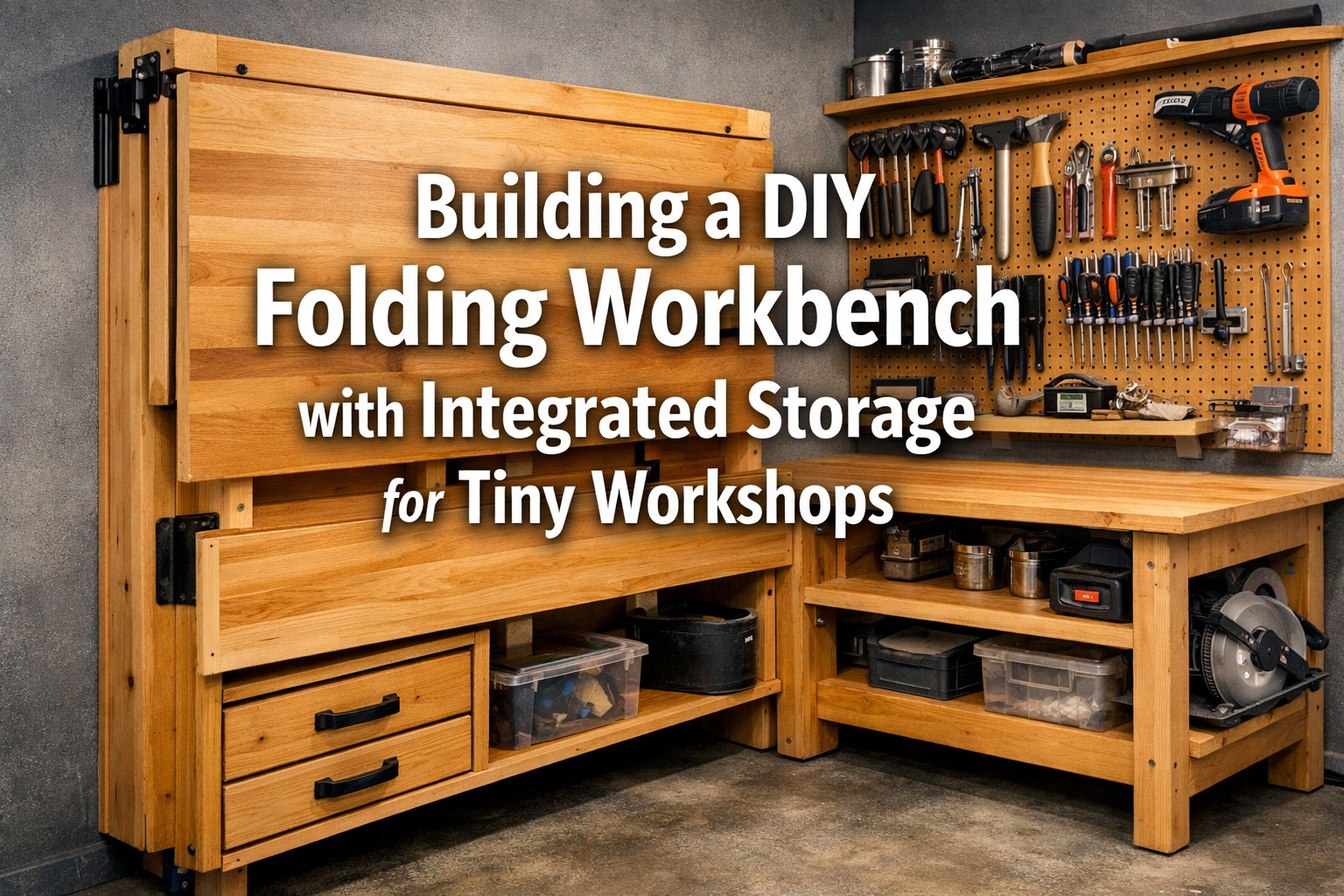

In the cramped confines of a small workshop, every inch counts. Maximizing usable space while maintaining functionality and organization is a constant challenge for woodworkers and DIY enthusiasts. The solution? A meticulously designed, multi-functional folding workbench that seamlessly integrates storage, tool organization, and sturdy construction. This comprehensive guide details the process of Building a DIY Folding Workbench with Integrated Storage for Tiny Workshops—a project that transforms your limited area into an efficient, productive powerhouse.
By constructing a workbench that can fold away when not in use and store essential tools within its frame, you reclaim valuable floor space and bring order to chaos. This project is not just about building a piece of furniture; it’s about engineering a smarter, more adaptable workspace tailored to the demands of compact environments in 2026.

Key Takeaways
- Space Optimization is Paramount: A folding design allows the workbench to disappear when not needed, freeing up precious workshop floor space.
- Integrated Storage is Essential: Built-in drawers, shelves, and cubbies keep tools and supplies organized and readily accessible, reducing clutter.
- Sturdy Construction for Versatility: The workbench must be robust enough to handle various woodworking tasks, from precise joinery to heavy assembly.
- Customization Enhances Functionality: Tailor dimensions, storage types, and features (like dog holes or a T-track system) to your specific tools and workflow.
- Material Selection Impacts Durability: Choosing the right wood and hardware ensures longevity and stability for years of demanding use.
Designing Your Space-Saving Folding Workbench
{{IMG_SLOT_1}}
Before you even pick up a saw, thoughtful design is crucial when Building a DIY Folding Workbench with Integrated Storage for Tiny Workshops. This initial phase lays the groundwork for a successful and highly functional project. Consider your available space, the types of tasks you’ll perform, and the tools you need to store.
Assessing Your Workshop and Needs
Start by measuring your workshop area precisely. Pay attention to wall space, clearance for folding mechanisms, and existing obstructions.
- Available Footprint: How much floor space can you realistically dedicate to the workbench when it’s unfolded? How much wall space is available for it to fold against?
- Workflow: What operations do you perform most often? Do you need a large surface for sheet goods, or a smaller, more precise area for joinery?
- Tool Inventory: Which tools do you use regularly that could be stored within or directly on the workbench? This might include hand tools, power tool accessories, or even smaller power tools. For ideas on organizing your tools, consider exploring guides on Building Modular Wood Storage Systems for Small Workshops: Maximizing.
- Ergonomics: What is the ideal working height for you? A comfortable height reduces fatigue and improves precision.
“A well-designed tiny workshop workbench isn’t just about saving space; it’s about creating a more intuitive and enjoyable work environment that boosts productivity.”
Key Design Considerations and Features
A successful folding workbench for a tiny workshop balances compactness with robust utility.
Folding Mechanism:
- Wall-Mounted Fold-Down: The most common design, where the workbench top hinges down from a wall-mounted ledger. Legs fold or retract.
- Gate-Leg Style: The workbench top extends, and hinged legs swing out to support it. This can allow for a smaller footprint when partially folded.
- Caster-Based Mobility: Incorporating heavy-duty locking casters can allow you to move the workbench to the center of your shop for work, then roll it against a wall when folded. This also helps with cleaning.
Workbench Top Material:
- Plywood (Baltic Birch or Hardwood Plywood): Excellent stability, flat, and relatively affordable. Multiple layers laminated together create a thick, durable surface.
- MDF (Medium-Density Fiberboard): Very flat and smooth, good for precision work. However, it’s susceptible to moisture and impact damage.
- Solid Hardwood: The most durable and traditional, but also the heaviest and most expensive.
Integrated Storage Options:
- Drawers: Essential for small tools, fasteners, and frequently used items. Consider Mastering Dovetail Drawers for Cabinets: Hand-Cut and Router for sturdy construction.
- Shelves: Open shelving is good for larger items, bins, or power tools.
- Pegboard/French Cleat System: Integrate a section on the wall behind or on the folding legs for hanging frequently used hand tools.
- Compartments: Small, divided sections for accessories like router bits, sandpaper, or specific jigs.
- Tool Wells: Recessed areas in the workbench top to hold small parts or tools temporarily.
Structural Integrity:
- Sturdy Framing: Use strong lumber (e.g., 2x4s or 2x6s) or heavy-duty plywood for the main frame.
- Robust Hinges: Heavy-duty piano hinges or strong butt hinges are critical for the folding mechanism.
- Locking Mechanisms: Ensure the legs or support structure locks securely in place when the bench is deployed to prevent accidental collapse.
- Wall Anchoring: For wall-mounted designs, firmly anchor the ledger board into wall studs.
Bench Dog Holes or T-Track:
- These features enhance clamping options and work holding. For a detailed comparison, see T-Track vs Dog Holes: Workbench Essentials.
Sketching and Prototyping
Once you have a clear idea of the features, sketch out several designs. Consider:
- Dimensions: Overall length, width, and height.
- Folding Action: How will it fold? Where will the legs go?
- Storage Layout: Where will drawers, shelves, and pegboard sections be placed?
- Material List: Start roughing out the lumber, plywood, and hardware needed.
A cardboard or foam core prototype can help visualize the folding action and check for clearance issues before cutting any wood.
Step-by-Step Construction: Building the Frame and Storage
{{IMG_SLOT_2}}
With a solid design in hand, it’s time to begin the actual construction. This phase focuses on creating a robust frame and integrating the essential storage elements for your DIY folding workbench. Remember, precision in cutting and assembly is key to a stable and functional workbench.
Materials and Tools Checklist
Before starting, gather all your materials and tools.
Materials:
- Plywood: (e.g., 3/4″ Baltic Birch or furniture-grade hardwood plywood) for the workbench top, main frame, and drawer boxes. A 4×8 sheet is a good starting point.
- Lumber: (e.g., 2x4s or 2x6s) for the wall ledger, folding legs, and any internal bracing.
- Heavy-Duty Hinges: Piano hinge (full length of the bench) or multiple strong butt hinges for the folding top.
- Drawer Slides: Full-extension ball-bearing slides for smooth drawer operation.
- Hardware: Screws (wood screws, pocket hole screws), bolts (for leg attachments), T-nuts (if adding dog holes), wood glue.
- Locking Mechanism: Barrel bolts, folding leg brackets, or gate latches for the legs.
- Optional: Casters (heavy-duty locking), T-track, bench dogs, pegboard, drawer pulls.
Tools:
- Measuring Tools: Tape measure, combination square, marking knife.
- Cutting Tools: Circular saw, miter saw, jigsaw, table saw (if available).
- Drilling Tools: Cordless drill, drill bits (for pilot holes, counter-sinking), Kreg jig (for pocket holes).
- Clamping Tools: Bar clamps, F-clamps.
- Assembly Tools: Wood mallet, screwdriver set.
- Safety Gear: Safety glasses, hearing protection, dust mask.
Constructing the Main Frame and Wall Ledger
- Cut the Wall Ledger: Cut a piece of lumber (e.g., 2×4 or 2×6) to the desired length of your workbench. This will be anchored to the wall and support the back edge of the folding top.
- Locate Wall Studs: Use a stud finder to locate the wall studs where your workbench will be mounted. Mark their positions precisely.
- Mount the Ledger: Securely attach the ledger board to the wall studs using long, heavy-duty structural screws. Ensure it is perfectly level. This is the foundation of your entire workbench, so don’t cut corners here.
- Build the Main Workbench Top Frame:
- Cut plywood pieces for the top (main work surface) and the underside.
- Create a sturdy frame using lumber or plywood strips around the perimeter of the underside of your workbench top. This frame will house your integrated storage.
- Assemble this frame using wood glue and screws, ensuring it’s square and flat.
- Attach the main workbench top plywood to this frame. You now have a sturdy, flat base for your working surface and storage.
Integrating Storage: Drawers and Shelves
- Design Storage Layout: Determine the number and size of drawers and shelves based on your initial design.
- Build Drawer Carcasses/Supports:
- Inside the main workbench top frame, create vertical and horizontal dividers from plywood to define your storage compartments.
- These dividers will serve as mounting points for drawer slides and supports for shelves. Use pocket holes or dado joints for strong, concealed connections.
- For excellent insights into building robust storage, check out Building a Custom Wood Workbench: Design Considerations and.
- Construct Drawer Boxes:
- Cut plywood pieces for the drawer sides, front, back, and bottom.
- Assemble using dado joints, rabbet joints, or pocket screws and wood glue. Ensure drawers are square.
- Attach full-extension drawer slides to the drawer boxes and the workbench frame.
- Install drawer fronts last, allowing for proper alignment and consistent gaps.
- Add Shelving:
- Cut plywood shelves to fit the remaining open compartments.
- Support shelves with cleats screwed to the frame/dividers, or use adjustable shelf pins for flexibility.
- Optional: Pegboard/French Cleat Integration:
- If you designed for a pegboard, cut a piece to size and mount it to the underside of the workbench top frame, or a section of the folding legs.
- For a French cleat system, cut cleats and attach them similarly.
Attaching the Folding Mechanism and Legs
- Connect Workbench Top to Ledger:
- Lay the workbench top (with integrated storage) flat on sawhorses, with the back edge aligning perfectly with the wall ledger.
- Attach your heavy-duty piano hinge along the entire length of the joint between the workbench top and the wall ledger. This ensures even weight distribution and smooth folding. Alternatively, use multiple robust butt hinges spaced evenly.
- Construct Folding Legs:
- Cut lumber for the folding legs. These need to be sturdy enough to support the full weight of the workbench and any workpieces.
- Consider a “T-leg” design for stability or simple rectangular frames.
- Attach the legs to the underside of the workbench top using heavy-duty gate hinges or specialized folding leg brackets. These brackets often have a locking mechanism built-in.
- Ensure the legs fold neatly against the underside of the workbench when not in use.
- Install Locking Mechanism:
- Install barrel bolts, slide latches, or similar locking hardware to secure the legs when the workbench is in its deployed, upright position. This is a critical safety feature to prevent accidental collapse.
- Test the folding action and locking mechanism repeatedly to ensure smooth operation and secure stability.
- Add Casters (Optional):
- If you opted for a mobile design, attach heavy-duty locking casters to the bottom of your folding legs. This makes it easy to move the bench.
Finishing Touches and Enhancing Functionality
{{IMG_SLOT_3}}
With the core structure of your DIY folding workbench complete, the final phase involves adding critical features, applying a protective finish, and optimizing its use within your tiny workshop. These details truly elevate its functionality and durability.

Adding Work-Holding Features
Work-holding is paramount for any workbench, especially one designed for a tiny workshop. These additions will make your new workbench incredibly versatile.
- Bench Dog Holes: Use a drill press to accurately drill 3/4″ or 20mm holes into the workbench top, spaced evenly. These allow for the use of bench dogs, which are essential for clamping workpieces securely across the surface. Ensure the holes pass cleanly through the top.
- T-Track System: Install T-track channels flush with the workbench surface. These provide versatile clamping options for various jigs and hold-downs. Consider strategic placement along the front edge and across the width. For more on this, revisit our T-Track vs Dog Holes: Workbench Essentials guide.
- Integrated Vise (Optional): While more complex, a small, quick-release woodworking vise can be mounted to one end of the workbench. Ensure its placement does not interfere with the folding mechanism.
Applying a Protective Finish
A good finish protects your workbench top from spills, glue, paint, and general wear and tear, ensuring it lasts for years.
- Sanding: Thoroughly sand all surfaces, especially the workbench top, starting with coarser grits (e.g., 80-100 grit) and progressing to finer grits (e.g., 180-220 grit) for a smooth finish.
- Dust Removal: Clean off all sanding dust with a vacuum, tack cloth, or compressed air.
- Apply Finish:
- Polyurethane (Oil-Based or Water-Based): Offers excellent durability and chemical resistance. Apply multiple thin coats, sanding lightly between coats with fine-grit sandpaper (e.g., 320-400 grit). For application tips, see Aerosol Polyurethane: Benefits, Application, and Types.
- Varnish: Similar to polyurethane, providing good protection.
- Epoxy Finish: For the ultimate in durability and chemical resistance, a two-part epoxy coating creates a hard, glass-like surface. This is particularly useful if you frequently work with paints, glues, or chemicals.
- Boiled Linseed Oil (BLO) / Tung Oil: Penetrating oils provide a natural look and some protection but require more frequent reapplication. They are less resistant to heavy impact or chemical spills. You can also explore options like Reclaimed Wood Finishing Techniques for unique aesthetics.
- Paste Wax: Can be applied over other finishes or directly to raw wood for a slick, protective layer that makes cleanup easier.
Allow ample drying time between coats and before putting the workbench into heavy use.
Optimizing Your Tiny Workshop with the New Bench
Now that your DIY folding workbench with integrated storage is complete, it’s time to integrate it seamlessly into your tiny workshop for maximum efficiency.
- Tool Organization:
- Utilize the integrated drawers and shelves to organize your tools logically. Group similar tools together (e.g., chisels in one drawer, screwdrivers in another).
- Consider drawer dividers or custom inserts for small items and accessories.
- If you included pegboard, hang your most frequently used hand tools within easy reach.
- Vertical Space Utilization: Remember that the wall space above your folded workbench is now free. Install additional wall-mounted storage like shelves, cabinets, or another French cleat system to store larger items or less frequently used tools.
- Lighting: Ensure good overhead and task lighting for your workbench. Proper lighting reduces eye strain and improves accuracy.
- Dust Collection Integration: Plan for how your dust collection system will interact with your new workbench. If using portable tools, having a mobile dust collector is essential. You might find our guide on Building a Mobile Dust Collection Cart for Any Workshop: Design helpful.
- Work Zones: Even in a tiny workshop, try to define “zones” for different activities. Your folding workbench might be your primary work zone, but you could have a separate cutting zone or finishing zone.
By taking these final steps, you transform a functional piece of furniture into the heart of a highly efficient and organized tiny workshop.
Conclusion
Building a DIY Folding Workbench with Integrated Storage for Tiny Workshops is a transformative project that directly addresses the challenges of limited space. In 2026, efficient use of every square foot is not just a luxury but a necessity for hobbyists and professionals alike. This comprehensive guide has walked you through the critical stages, from meticulous design and material selection to robust construction and the crucial finishing touches.
The result is more than just a workbench; it’s a dynamic workspace solution that offers flexibility, unparalleled organization, and the structural integrity needed for diverse woodworking tasks. By investing your time in this project, you gain the ability to reclaim valuable floor space when not actively working, keep your essential tools neatly tucked away but readily accessible, and maintain a clutter-free environment that fosters creativity and productivity.
Actionable Next Steps:
- Refine Your Design: Revisit your workshop measurements and specific tool inventory. Sketch out a detailed plan, incorporating the key design considerations and features discussed.
- Source Quality Materials: Create a precise cut list and hardware list. Purchase high-quality plywood, sturdy lumber, and robust hardware to ensure longevity and safety.
- Prioritize Safety: Always wear appropriate personal protective equipment (PPE) and follow safe operating procedures for all power tools.
- Build in Phases: Don’t rush the process. Tackle the construction in manageable stages, ensuring each component is accurately cut and securely assembled.
- Personalize and Optimize: Add work-holding features like dog holes or T-track, apply a durable finish, and arrange your tools logically within the integrated storage. Regularly evaluate your workflow to make small adjustments that enhance efficiency.
Embrace the challenge of building this essential piece of workshop furniture. The satisfaction of crafting a functional, space-saving solution will empower you to take on even more ambitious woodworking projects in your newly optimized tiny workshop.