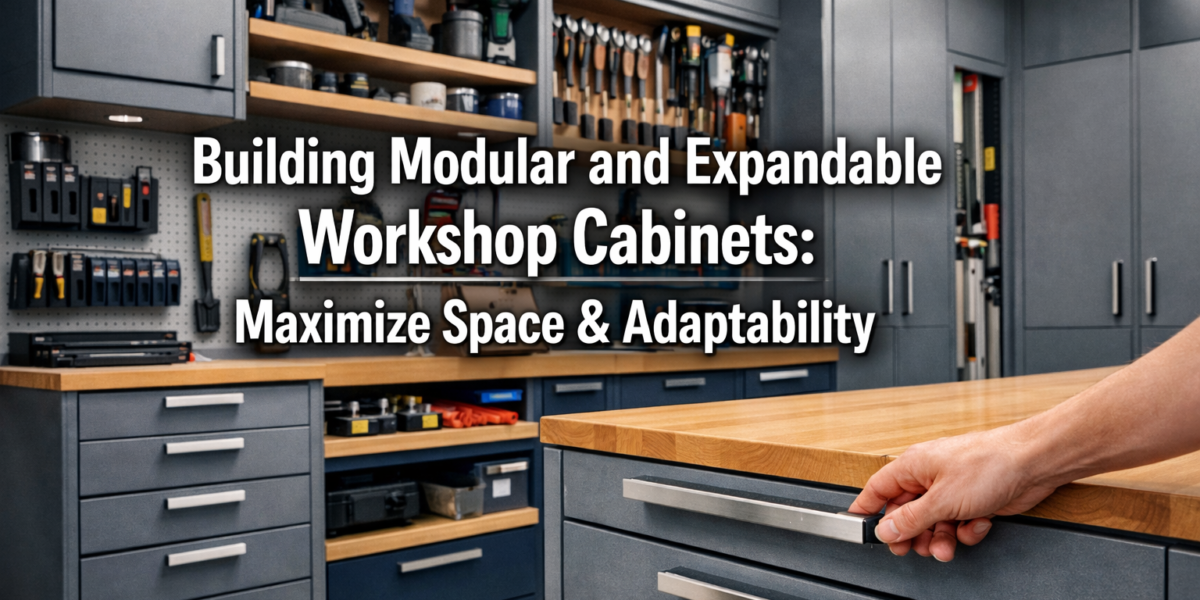

In the dynamic world of woodworking and DIY, an organized workshop is not just a luxury; it’s a necessity. As projects evolve and tool collections grow, the need for intelligent storage becomes paramount. This is where the concept of building modular and expandable workshop cabinets shines, offering a flexible and efficient solution for maximizing vertical space and reconfigurability in any shop, regardless of its size. No longer are you confined to static, immovable storage; instead, you can design and construct a system that adapts to your changing needs in 2026 and beyond.
Imagine a workshop where every tool has its place, where materials are neatly organized, and where your storage system can literally grow with your ambitions. Modular cabinets provide this exact advantage. They are designed as independent units that can be combined, stacked, and rearranged, allowing you to optimize every inch of your vertical space and easily reconfigure your layout as your workflow or equipment changes.

Key Takeaways
- Modular cabinets offer unmatched flexibility, allowing for easy expansion and reconfiguration as workshop needs evolve.
- They are highly effective at maximizing vertical space, turning unused wall areas into valuable storage.
- DIY construction provides significant cost savings and allows for complete customization to specific tool sizes and workflows.
- Standardized dimensions and joinery are crucial for ensuring interchangeability and ease of future modifications.
- Thoughtful design, including drawers, shelves, and specialty inserts, enhances organization and accessibility.
The Core Principles of Modular Workshop Design 🛠️
Building modular and expandable workshop cabinets isn’t just about stacking boxes; it’s about intelligent design that prioritizes adaptability, efficiency, and future growth. At its heart, modular design relies on creating standardized units that can interlock, stack, or connect seamlessly. This approach ensures that individual cabinets can function independently but also integrate into a larger, cohesive storage system.
{{IMG_SLOT_1}}
Understanding Modular Systems
A modular system is essentially a collection of interchangeable components. For workshop cabinets, this means designing individual cabinet boxes, drawers, and shelving units with consistent dimensions and connection points. This consistency is what allows for the “expandable” and “reconfigurable” aspects.
- Standardized Dimensions: Choosing a few core dimensions for your modules (e.g., standard widths, depths, and heights) allows for endless combinations. For instance, a half-width cabinet might stack perfectly on a full-width one.
- Interchangeable Components: Imagine drawers that can fit into any module of a certain size, or shelves that are universally adjustable within all your cabinet units. This creates incredible flexibility.
- Simple, Strong Joinery: The methods you use to build and connect your modules must be robust enough for workshop use but also simple enough for disassembly and reconfiguration.
One of the greatest benefits of this approach is its ability to maximize vertical space. Instead of spreading out, you build up. Tall cabinet stacks can house infrequently used items at the top, while frequently accessed tools remain at eye level. This vertical strategy is especially critical for smart workshop storage solutions: maximizing small spaces.
Benefits of Reconfigurable Cabinets
The ability to reconfigure your workshop layout without tearing everything down is a game-changer.
- Adapt to New Tools: Acquired a new band saw or planer? Simply rearrange existing modules or build a new one to accommodate it, rather than redesigning your entire setup.
- Optimize Workflow: As your projects change, so might your ideal workshop layout. Reconfigurable cabinets allow you to move storage closer to specific workstations, improving efficiency.
- Space Management: If you need to clear floor space for a large project, you can temporarily stack or move modules to create the necessary room.
- Cost-Effective Expansion: Instead of buying entirely new furniture, you can incrementally build new modules as your needs or budget allows, ensuring a phased and sustainable expansion.
“A well-designed modular workshop system doesn’t just store tools; it liberates your creative potential by eliminating clutter and optimizing accessibility.”
Planning and Constructing Your Modular Cabinets: Maximizing Vertical Space and Reconfigurability
The journey to building modular and expandable workshop cabinets begins with meticulous planning, followed by precise construction. The goal is to create durable, functional units that align with your workshop’s unique demands.
Design Considerations and Material Selection
Before cutting any wood, sketch out your ideal workshop layout. Consider:
- Available Space: Measure your workshop walls and ceiling height. How many units can you realistically fit?
- Tool Inventory: Categorize your tools by size, frequency of use, and weight. This will help determine the types of storage (drawers, shelves, open cubbies) and the strength required.
- Module Dimensions: Decide on your core module sizes. A common base unit might be 24″ wide x 24″ deep x 30″ high, with variations for shallower wall cabinets or narrower drawer units. Remember, consistency in width and depth is key for seamless stacking and side-by-side placement.
- Material Choice: For workshop cabinets, ¾-inch plywood is typically the material of choice due to its stability, strength, and ease of working. Birch or Baltic birch plywood offers a smooth finish and excellent durability. For extreme heavy-duty applications, thicker plywood or even laminated particleboard can be considered.
- Joinery Methods:
- Pocket Hole Joinery: Fast, strong, and beginner-friendly, ideal for attaching cabinet sides, tops, and bottoms.
- Dado and Rabbet Joints: Offer superior strength and alignment, especially for shelves and drawer boxes. These can be cut precisely with a table saw or router. For guidance on achieving precision, explore our article on mastering the router table.
- Mechanical Fasteners: Screws, bolts, and cam locks can also be used, particularly for modular connections that you intend to disassemble frequently.
Step-by-Step Construction Guide for a Basic Module
Here’s a simplified outline for building a robust, basic cabinet module. For detailed joinery techniques, you might refer to guides like Mastering Dovetail Joinery for Drawers.
{{IMG_SLOT_2}}
- Cut Plywood Components:
- Cut two side panels, one top, one bottom, and a back panel (if desired, or use a French cleat system).
- Ensure all cuts are square and precise – this is critical for modularity.
- Assemble the Carcass:
- Using pocket hole screws, dadoes, or rabbets and wood glue, assemble the side, top, and bottom panels to form a strong box. Clamping is essential for tight joints.
- If using a back panel, attach it securely. A recessed back panel adds rigidity and keeps the unit square.
- Add Internal Features:
- Install adjustable shelf pin holes using a jig. This allows for flexible shelf placement.
- For drawers, install high-quality drawer slides. Measure carefully to ensure smooth operation.
- Edge Banding (Optional but Recommended):
- Apply iron-on or glue-on edge banding to exposed plywood edges for a cleaner look and added durability.
- Finishing:
- Sand all surfaces smooth.
- Apply a durable finish like polyurethane, lacquer, or an oil-based finish to protect against moisture, dust, and wear. This also makes cleaning easier.
Hardware and Accessories
The right hardware significantly enhances functionality and durability.
- Heavy-Duty Casters: For base units, locking casters allow you to move modules for cleaning or reconfiguring.
- Adjustable Leveling Feet: For static units, these ensure stability on uneven workshop floors.
- Drawer Slides: Full-extension ball-bearing slides are ideal for easy access to drawer contents and higher weight capacities.
- Hinges: Durable concealed or surface-mount hinges for cabinet doors.
- Interlocking Hardware: Consider cam locks, T-nuts with bolts, or specialized modular connectors if frequent reassembly is planned. French cleat systems are also excellent for wall-mounted reconfigurability.
Integrating and Expanding Your Workshop Cabinet System 🔄
The true power of building modular and expandable workshop cabinets lies in their ability to integrate seamlessly into your existing space and grow with your needs. This means not just building individual boxes, but creating a cohesive system that enhances your entire workshop environment in 2026.
{{IMG_SLOT_3}}
Maximizing Vertical Space
Vertical space is often underutilized. Modular cabinets allow you to reclaim this valuable area.

- Stacking Strategies: Design cabinets that are specifically meant to stack. This often involves reinforcing tops and bottoms or incorporating interlocking features. Heavy-duty dowels or aligning pins can help prevent shifting.
- Wall Mounting: For upper cabinets, a robust French cleat system is highly recommended. It allows for easy installation, removal, and reconfiguration of wall-mounted units. For more on optimizing workshop layouts, consider resources on creating ergonomic workshop furniture.
- Overhead Storage Integration: Utilize the space above taller cabinets for less frequently used items, integrating with your overall workshop storage strategy.
Consider a multi-tier approach:
- Lower Cabinets: Often deeper, providing sturdy bases for benchtops or housing heavy power tools.
- Upper Cabinets: Shallower, for hand tools, consumables, and lighter equipment, easily accessible.
- Tall Units: Full-height cabinets for lumber storage, long-handled tools, or dedicated project zones.
Reconfigurability and Future Growth
The ability to adapt is what sets modular systems apart.
- Flexible Interiors: Build adjustable shelves into all modules. This allows you to change the internal layout as your storage needs change, without building new units.
- Specialty Inserts: Create custom inserts or dividers for specific tools, hardware, or project parts. Since your modules are standardized, these inserts can often be moved between units.
- Tray dividers for small parts 🗄️
- Custom foam cutouts for sensitive tools 🛠️
- Pull-out bins for fasteners 🔩
- Accessible Power: Plan for power strips and dust collection ports within or around your modular system. This allows for tool use directly from the storage area and enhances overall workshop functionality. For inspiration on integrating smart systems, check out building a DIY smart workshop dust collection system.
- Continuous Improvement: Embrace the iterative nature of modular design. As you use your workshop, you’ll discover new ways to optimize your storage. The beauty of modularity is that you can build new units to fill specific needs or modify existing ones without disrupting the entire system.
Pull Quote: “Don’t just store; organize. Modular cabinets transform clutter into a creative advantage.”
By focusing on these integration and expansion strategies, your investment in building modular and expandable workshop cabinets will pay dividends in efficiency, organization, and peace of mind for years to come.
Conclusion
Building modular and expandable workshop cabinets is a powerful strategy for any woodworker or DIY enthusiast aiming for a truly optimized workspace. In 2026, the demand for flexible and efficient storage solutions is higher than ever, and a custom-built modular system provides the ultimate answer. By adopting standardized dimensions, robust joinery, and a focus on maximizing vertical space, you create a dynamic storage infrastructure that not only meets your current needs but also effortlessly adapts to future challenges and opportunities.
This approach offers significant advantages, from cost savings and complete customization to unparalleled flexibility and the ability to grow your workshop incrementally. It transforms a cluttered space into an organized, inspiring environment where creativity can flourish.
Actionable Next Steps:
- Assess Your Needs: Catalog your tools and materials, and identify current storage pain points.
- Plan Your Layout: Sketch out potential module configurations, focusing on vertical space and workflow efficiency.
- Choose Your Materials: Select durable plywood and appropriate hardware for your modules.
- Build a Prototype: Start with one or two basic modules to refine your design and construction techniques.
- Iterate and Expand: As your workshop evolves, continue to build, reconfigure, and optimize your modular system.
Embrace the power of modularity, and transform your workshop into a highly organized, reconfigurable, and efficient hub for all your projects.
References
- Fine Woodworking. (2020). Cabinetmaking & Built-ins: 20 Essential Shop Projects. Taunton Press.
- Schwartz, J. (2018). The Anarchist’s Workbench. Lost Art Press.
- Peters, F. (2015). Working with Plywood. Fox Chapel Publishing.
SEO Meta Title: Build Modular Workshop Cabinets: Maximize Space & Reconfigurability SEO Meta Description: Learn to build modular and expandable workshop cabinets in 2026. Maximize vertical space, reconfigure layouts easily, and optimize your shop storage.