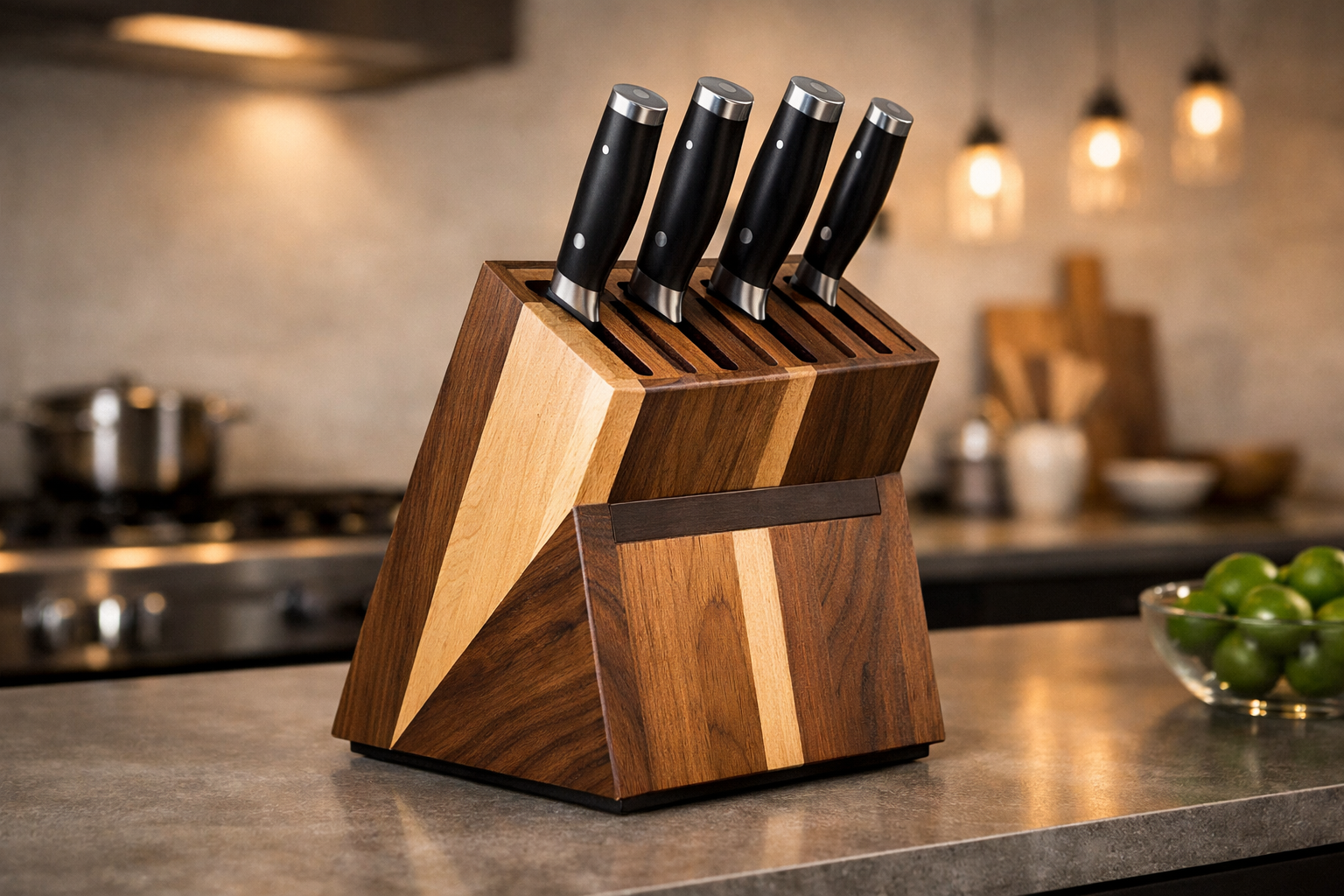

The kitchen, often considered the heart of the home, demands both functionality and aesthetic appeal. At the core of a well-equipped kitchen lies a reliable set of knives, and their proper storage is paramount. A poorly designed knife block can dull blades, pose safety risks, and detract from your kitchen’s overall look. This comprehensive guide delves into Building Robust Knife Blocks: Custom Slots, Safety Features, and Kitchen Display Designs for 2026, offering insights for crafting durable, stylish, and highly functional knife storage solutions. Whether you’re a seasoned woodworker or a beginner eager to enhance your kitchen, understanding the principles of custom design, material selection, and safety integration will empower you to create a bespoke piece that stands the test of time.
Key Takeaways
- Customization is Key: Tailor knife block slots to the exact dimensions of your knife collection for optimal fit and blade protection.
- Prioritize Safety: Implement features like deep, angled slots, weighted bases, and magnetic accents to prevent accidents.
- Material Matters: Select durable hardwoods and food-safe finishes for longevity and hygiene.
- Design for Display: Integrate your knife block seamlessly into your kitchen’s aesthetic, from countertop to drawer and wall-mounted options.
- Precision and Joinery: Utilize accurate measurements and strong joinery techniques for a robust and stable construction.
Crafting Custom Slots and Robust Construction for 2026
The foundation of any superior knife block lies in its robust construction and precisely tailored slots. Generic knife blocks often feature uniformly sized slots, leading to blades rattling, dulling, or not fitting at all. In 2026, the trend leans towards personalized solutions that cater to individual knife collections.

Understanding Custom Slot Design
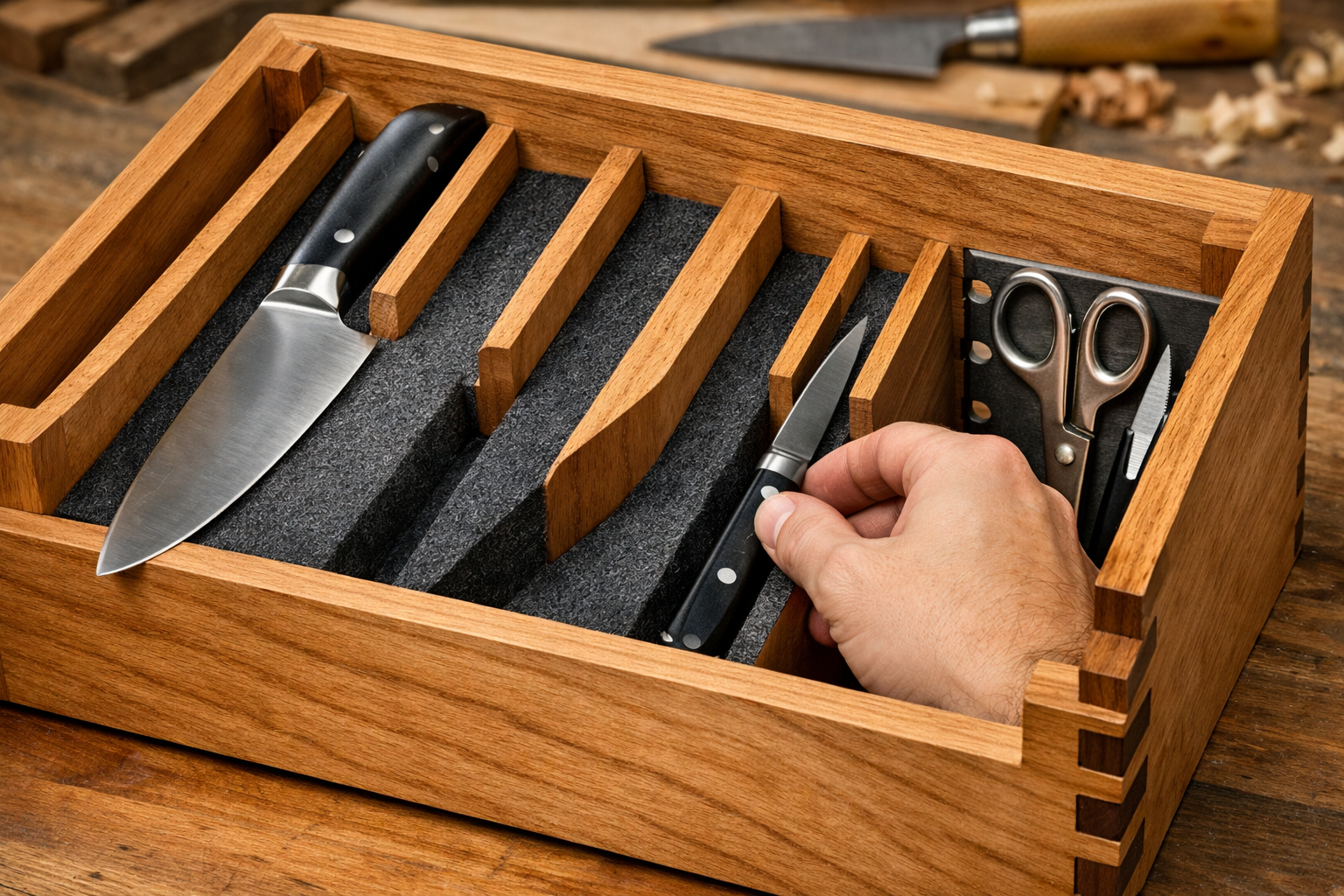
The first step in Building Robust Knife Blocks: Custom Slots, Safety Features, and Kitchen Display Designs for 2026 is meticulous planning of your slots. Each knife in your collection — from your chef’s knife to a small paring knife, and even a bread knife – has a unique blade length, width, and thickness.
- Measure Twice, Cut Once: Carefully measure the full length of each blade, its widest point, and the handle dimensions. Allow a slight clearance (e.g., 1/16 to 1/8 inch) around the blade for easy insertion and removal without undue friction.
- Angled vs. Vertical Slots: Angled slots, typically at 15-20 degrees, are generally preferred. They allow for easier access, reduce the chance of scraping the blade against the wood upon insertion, and often present the knife handles more aesthetically. Vertical slots are simpler to cut but can make knife retrieval less ergonomic.
- Slot Depth: Ensure slots are deep enough to fully conceal the blade, protecting both the blade edge and the user’s fingers. However, avoid making them so deep that the handle becomes difficult to grip.
Material Selection: The Backbone of Durability
The choice of wood greatly influences the knife block’s durability, appearance, and longevity. Hardwoods are the preferred option due to their density and resistance to dents and scratches.
- Popular Hardwoods:
- 🌳 Walnut: Known for its rich, dark color and beautiful grain patterns. It’s stable and relatively easy to work with.
- 🍁 Maple: A lighter, dense wood with a fine, even grain. It’s incredibly durable and excellent for knife blocks.
- 🍒 Cherry: Offers a warm, reddish-brown hue that deepens with age. It’s also durable and machines well.
- 🪵 Oak: Strong and classic, with a pronounced grain. Red oak and white oak are both suitable.
- Avoid Softwoods: Softwoods like pine or fir are too susceptible to knife marks and dents, compromising both aesthetics and functionality over time.
- Consider Sustainable Options: Explore sourcing and restoring urban-harvested and reclaimed wood for an eco-friendly and character-rich material.
- Dimensional Stability: Select kiln-dried lumber to minimize warping and movement, ensuring your slots remain perfectly aligned.
Precision Joinery and Assembly Techniques
A robust knife block relies on strong, lasting joinery. While simple butt joints with screws might seem appealing, they lack the elegance and durability expected of a high-quality piece.
- Dovetail Joints: These interlocking joints are incredibly strong and aesthetically pleasing, often used for premium woodworking projects. They resist pulling apart, which is ideal for a heavy, functional item like a knife block.
- Finger Joints (Box Joints): Similar to dovetails but with rectangular pins and tails, finger joints offer excellent strength and a clean, modern look.
- Dadoes and Rabbets: For internal dividers or a slotted top piece, dadoes (grooves cut across the grain) and rabbets (grooves cut along the edge) provide secure connections.
- Adhesives: Use a high-quality wood glue, such as Titebond III, for maximum strength and moisture resistance. Apply clamps evenly and allow sufficient drying time.
- Reinforcement: For added strength, consider hidden fasteners or dowels, though well-executed joinery often suffices. Refer to our guide on mastering woodworking screws for appropriate fastener choices where necessary.
Integrating Safety Features for a Modern Kitchen in 2026
Safety is paramount when designing and Building Robust Knife Blocks: Custom Slots, Safety Features, and Kitchen Display Designs for 2026. Sharp knives require secure storage to prevent accidental cuts, especially in busy kitchens or homes with children. Modern knife blocks incorporate several features to enhance user safety.
Secure Blade Retention
The primary safety concern is ensuring blades are held securely and entirely out of reach.
- Deep, Angled Slots: As discussed, deep slots ensure the entire blade is sheathed, while the angle facilitates safe entry and exit.
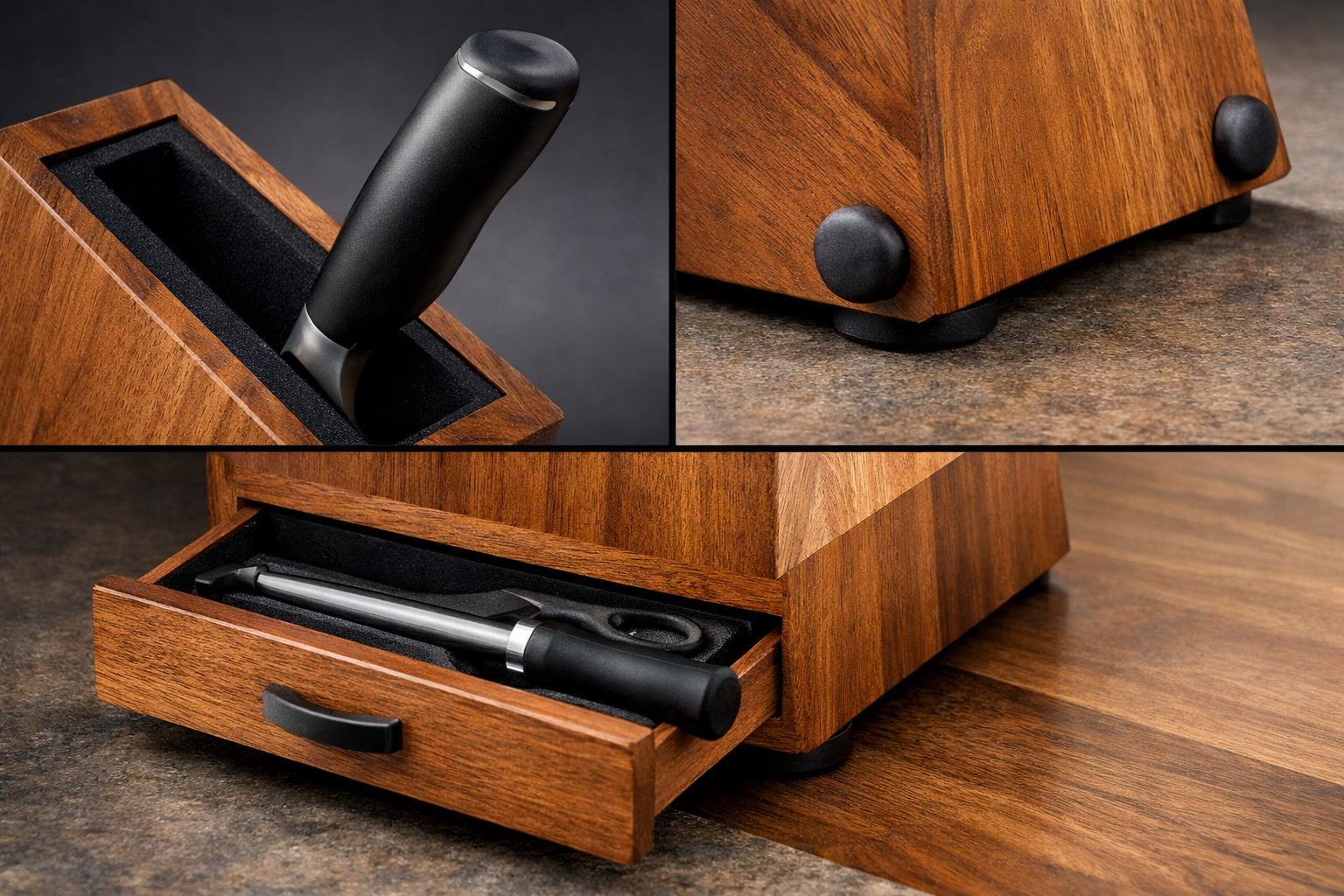
- Felt or Cork Liners: Lining the inside of each slot with thin felt or cork not only protects the blade from dulling but also provides a snug fit, preventing knives from rattling or falling out easily. This is particularly useful for custom slots.
- Magnetic Strips (Internal): For a truly robust design, consider embedding neodymium magnets within the wood, along the length of the slots. These magnets gently hold the blade in place, adding an extra layer of security. Ensure the magnets are strong enough to hold the knife but not so strong that removal becomes difficult.
Stability and Weighted Bases
A knife block must be incredibly stable to prevent tipping, which could lead to knives falling out and causing injury.
- Broad Footprint: Design the base of the knife block to be wider than the main body, increasing its resistance to tipping.
- Weighted Base: Integrate heavy materials into the base. This can be done by using a thicker piece of dense hardwood for the bottom or by routing out pockets and embedding lead weights, steel plates, or even poured epoxy mixed with heavy aggregate. Ensure these weights are securely encapsulated within the wood.
- Non-Slip Feet: Apply rubber feet or cork pads to the underside of the base. This prevents the block from sliding on smooth countertops, further enhancing stability.
Ergonomics and Accessibility
Safety also extends to the ease and comfort of using the knife block daily.
- Handle Presentation: Angled slots naturally present knife handles for an easy, secure grip, reducing the chance of fumbling.
- Clear Organization: Designate specific slots for specific knives. This helps users quickly identify and retrieve the correct knife without unnecessary rummaging.
- Additional Storage: Consider incorporating additional storage elements for other sharp tools, such as a honing steel or kitchen shears. This can be a dedicated slot or a small, integrated drawer. For example, a small drawer integrated into the base could hold a honing steel, keeping it safely out of the way until needed.
“A well-designed knife block isn’t just storage; it’s a safety device disguised as an elegant kitchen accessory. Every detail, from the angle of the slot to the weight of the base, contributes to preventing accidents in a busy kitchen.”
Kitchen Display Designs for 2026: Aesthetics and Integration
The functionality and safety of a knife block are paramount, but its visual integration into your kitchen’s design for 2026 is equally important. A custom knife block can be a stunning focal point, blending seamlessly with modern aesthetics or standing out as a piece of art.
Countertop Display Options
Traditional and still highly popular, countertop knife blocks offer easy access and can be a statement piece.
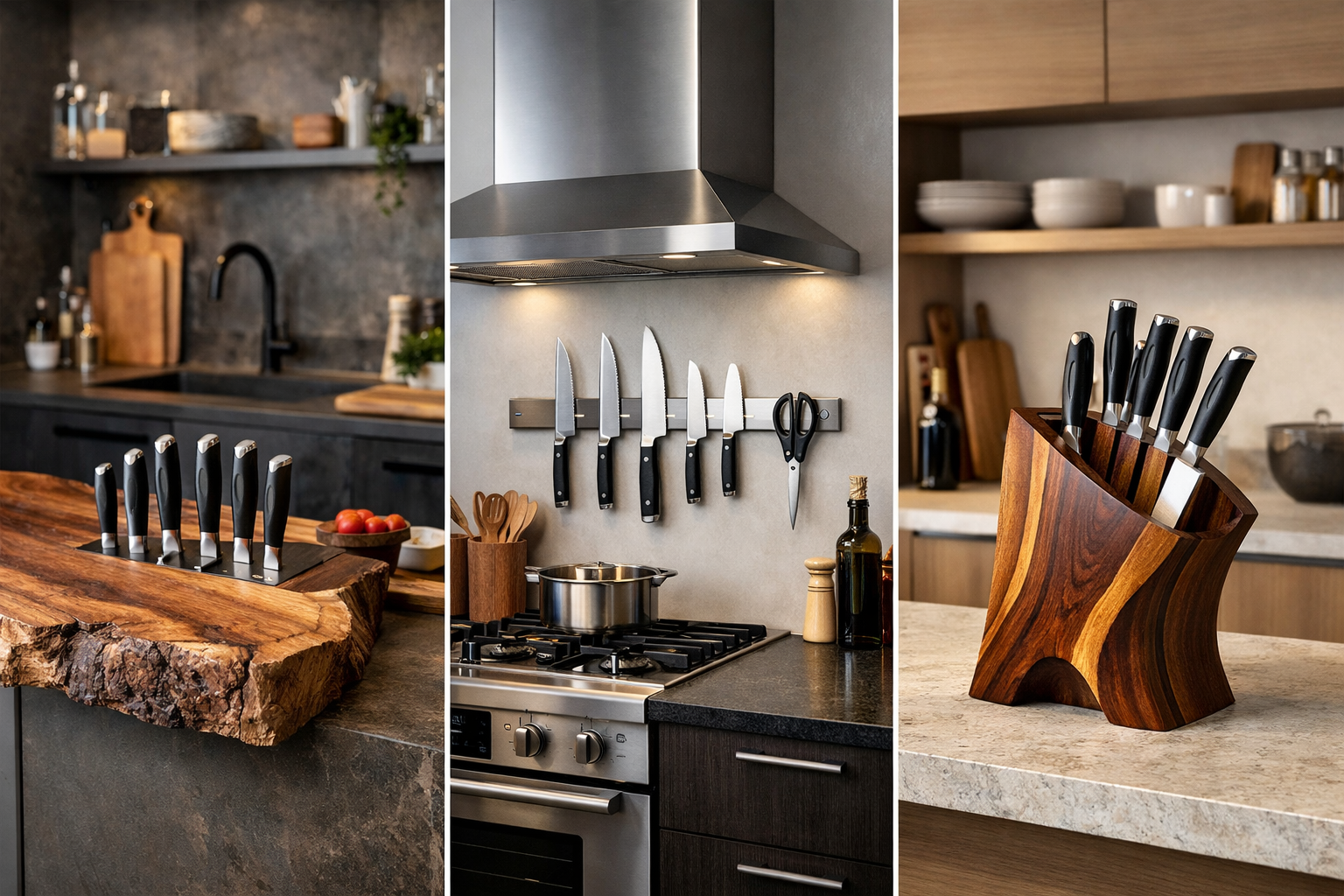
- Sculptural Forms: Move beyond the basic rectangular block. Consider organic shapes, multi-tiered designs, or blocks that incorporate mixed materials like wood and metal. This allows your knife block to complement other custom elements, such as a DIY live edge dining table.
- Showcase Designs: Blocks with clear acrylic sides or open-face designs can beautifully display the full profile of your knives, transforming them into a visual collection.
- Integrated into Kitchen Islands: For new kitchen builds or remodels, integrate the knife block directly into a butcher block countertop or a kitchen island from scratch. This creates a seamless, clutter-free look.
Drawer and In-Cabinet Solutions
For those who prefer a minimalist or clutter-free countertop, drawer and in-cabinet knife storage are excellent options.
- In-Drawer Organizers: Custom-made wooden inserts can fit perfectly into a kitchen drawer, providing angled slots for knives laid horizontally. This keeps knives out of sight, protected, and frees up counter space. Ensure the drawer is deep enough and that knives are easily accessible without lifting them too high.
- Pull-Out Cabinet Inserts: Design a dedicated vertical pull-out cabinet system, similar to a spice rack, with built-in knife slots. This keeps knives hidden but within easy reach when cooking.
Wall-Mounted and Magnetic Displays
For a truly modern and space-saving approach, consider wall-mounted options.
- Magnetic Knife Strips (Custom): While commercial magnetic strips exist, a custom wooden strip with embedded rare-earth magnets offers superior aesthetics and a perfect match to your kitchen’s wood finishes. Ensure the magnets are strong enough to hold knives securely but allow for easy removal. Use a variety of wood species for a striking effect, similar to turning shop scraps into design features.
- Wall-Mounted Blocks: Designs where a block with vertical or angled slots is securely fastened to the wall can create a floating effect, maximizing counter space and adding a unique visual element. This approach aligns well with concepts for custom floating shelves and robust wall installations.
Finishing for Longevity and Hygiene
Regardless of the display design, the finish applied to your knife block is critical for both its appearance and its ability to withstand kitchen conditions.
- Food-Safe Finishes: Since the knife block will be in contact with kitchen tools, use a food-safe finish. Mineral oil, tung oil, or a beeswax/mineral oil blend are excellent choices that penetrate the wood, offering protection and enhancing its natural beauty. These finishes can also be easily reapplied as needed.
- Durability: For areas prone to more wear, consider a food-safe cutting board oil or conditioner. Avoid film-building finishes like polyurethane, as they can chip and are not ideal for direct contact with knife blades, though a light, matte water-based spar urethane vs. polyurethane could be considered for exterior, non-contact surfaces if extreme durability is desired for the block’s body.
- Regular Maintenance: Advise on routine cleaning and re-oiling to maintain the block’s integrity and hygienic surface.
Conclusion
Building Robust Knife Blocks: Custom Slots, Safety Features, and Kitchen Display Designs for 2026 is more than just a woodworking project; it’s an investment in kitchen functionality, safety, and aesthetic appeal. By carefully planning custom slots, selecting durable hardwoods, implementing robust joinery, and integrating essential safety features, you can create a knife block that is perfectly tailored to your needs. Furthermore, designing the block with your kitchen’s overall aesthetic in mind—whether it’s a sculptural countertop piece, a discreet drawer insert, or a modern wall-mounted display—elevates it from a mere storage solution to a significant design element. Embrace the opportunity to craft a truly bespoke item that not only protects your valuable knives but also enhances the heart of your home for years to come.

Actionable Next Steps:
- Inventory Your Knives: Measure each knife precisely to determine custom slot requirements.
- Sketch Your Design: Visualize your preferred display method (countertop, drawer, wall) and sketch out potential designs.
- Source Quality Materials: Select a durable hardwood and gather any necessary hardware (magnets, non-slip feet).
- Practice Joinery: If new to advanced joinery, practice on scrap pieces before committing to your final project.
- Apply Food-Safe Finish: Ensure a safe and beautiful finish for longevity.
References
Woodcraft Wiz. (n.d.). Custom Floating Shelves: Design & Install for 2026 Kitchens. Retrieved from https://woodcraftwiz.com/custom-floating-shelves-from-design-to-installation-in-modern-kitchens/
Woodcraft Wiz. (n.d.). DIY Live Edge Dining Table: Step-by-Step Build for 2026 Tren. Retrieved from https://woodcraftwiz.com/diy-live-edge-dining-table-step-by-step-build-for-2026-trends/
Woodcraft Wiz. (n.d.). Kitchen Islands from Scratch: Adding Storage Drawers and But. Retrieved from https://woodcraftwiz.com/kitchen-islands-from-scratch-adding-storage-drawers-and-butcher-block-tops-for-small-workshops/
Woodcraft Wiz. (n.d.). Mastering Woodworking Screws: Your Ultimate Guide for 2026 – Wood Craft Wiz. Retrieved from https://woodcraftwiz.com/mastering-woodworking-screws-your-ultimate-guide-for-2026/
Woodcraft Wiz. (n.d.). Sourcing and Restoring Urban-Harvested and Reclaimed Wood: Q. Retrieved from https://woodcraftwiz.com/sourcing-and-restoring-urban-harvested-and-reclaimed-wood-quality-character-and-sustainability/
Woodcraft Wiz. (n.d.). Turning Shop Scraps into Design Features: Mixed-Wood Techniq. Retrieved from https://woodcraftwiz.com/turning-shop-scraps-into-design-features-mixed-wood-techniques-and-offcut-utilization-for-zero-waste-woodworking-2/
Woodcraft Wiz. (n.d.). Water-Based Spar Urethane vs. Polyurethane: Understanding the Key Differences. Retrieved from https://woodcraftwiz.com/water-based-spar-urethane-vs-polyurethane-understanding-the-key-differences/