

In an increasingly urbanized world, the innate human desire to connect with nature—a concept known as biophilia—is more crucial than ever. For woodworkers, this presents a unique and rewarding opportunity to craft pieces that not only serve a function but also foster a deeper connection to the natural world. This comprehensive article delves into Creating Biophilic Design Elements in Woodworking: Incorporating Natural Forms and Live Plants into Furniture and Decor, exploring how skilled artisans can infuse their creations with the calming, life-affirming essence of nature. By blending organic shapes, natural textures, and integrated living elements, woodworkers can transform ordinary objects into extraordinary experiences.
Key Takeaways
- Biophilic design in woodworking enhances well-being by connecting spaces with nature.
- Embrace organic shapes, natural wood grain, and textures to mimic natural environments.
- Strategically integrate live plants into furniture and decor for improved air quality and aesthetics.
- Sustainable wood sourcing and natural finishes are vital to genuine biophilic principles.
- Innovative joinery and waterproofing techniques are essential for successful plant integration.
Embracing Natural Forms and Textures in Woodworking
The foundation of Creating Biophilic Design Elements in Woodworking: Incorporating Natural Forms and Live Plants into Furniture and Decor lies in a profound appreciation for natural aesthetics. This involves more than just using wood; it’s about celebrating the material’s inherent qualities and mimicking the patterns and forms found in nature itself.

The Power of Organic Shapes and Curves
Nature rarely adheres to perfect straight lines or sharp angles. Think of the gentle curve of a river, the meandering growth of a vine, or the soft contours of a stone worn smooth by water. Woodworkers can draw inspiration from these elements to create furniture and decor that feels more harmonious and inviting.
- Curved Edges and Profiles: Instead of sharp corners, consider softly rounded edges or graceful, flowing curves. These can be incorporated into tabletops, chair backs, or cabinet doors.
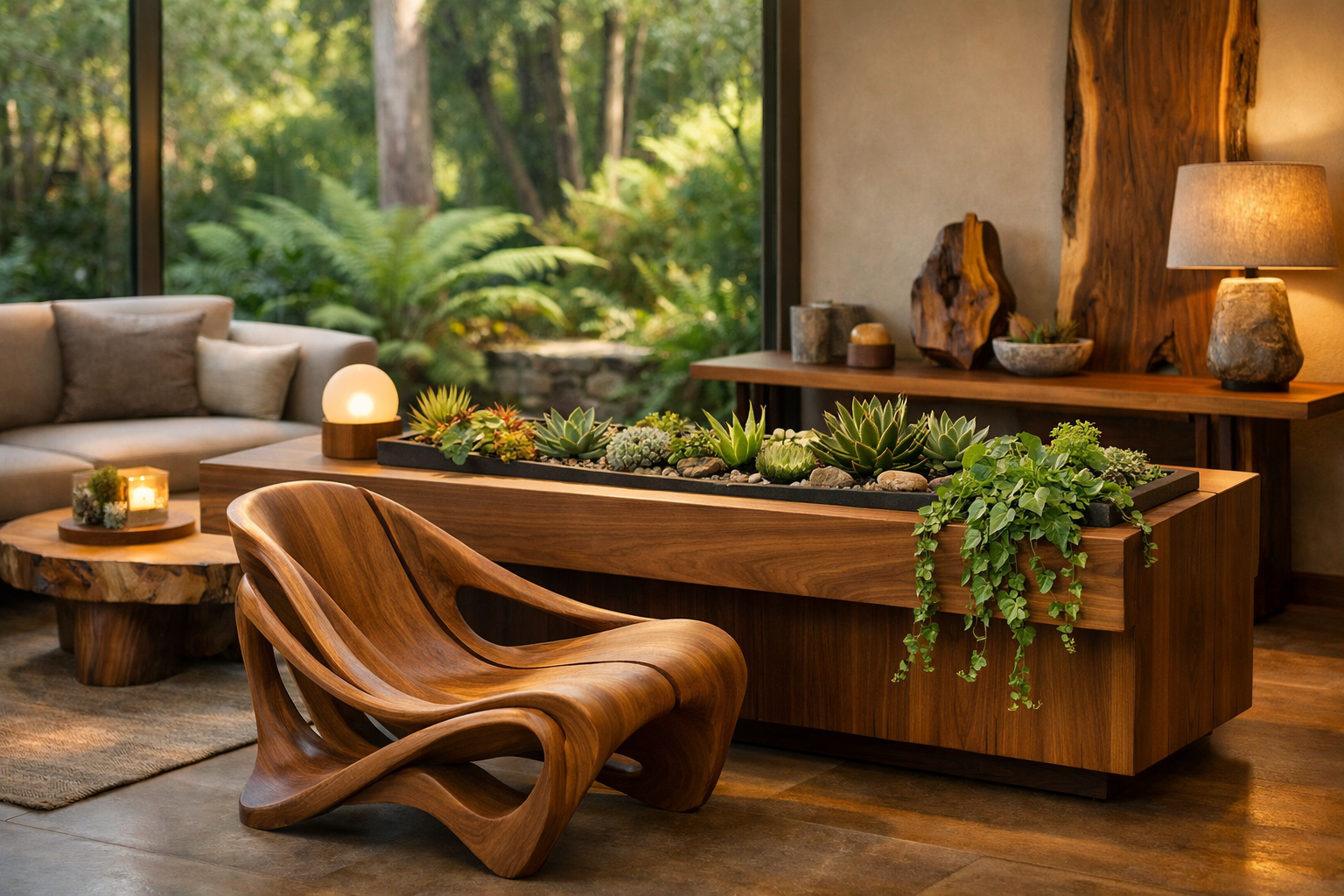
- Irregular Silhouettes: Pieces that deviate from strict geometric forms—like a shelf with an undulating front edge or a lamp base carved to resemble a tree root—can evoke a sense of authenticity and natural growth.
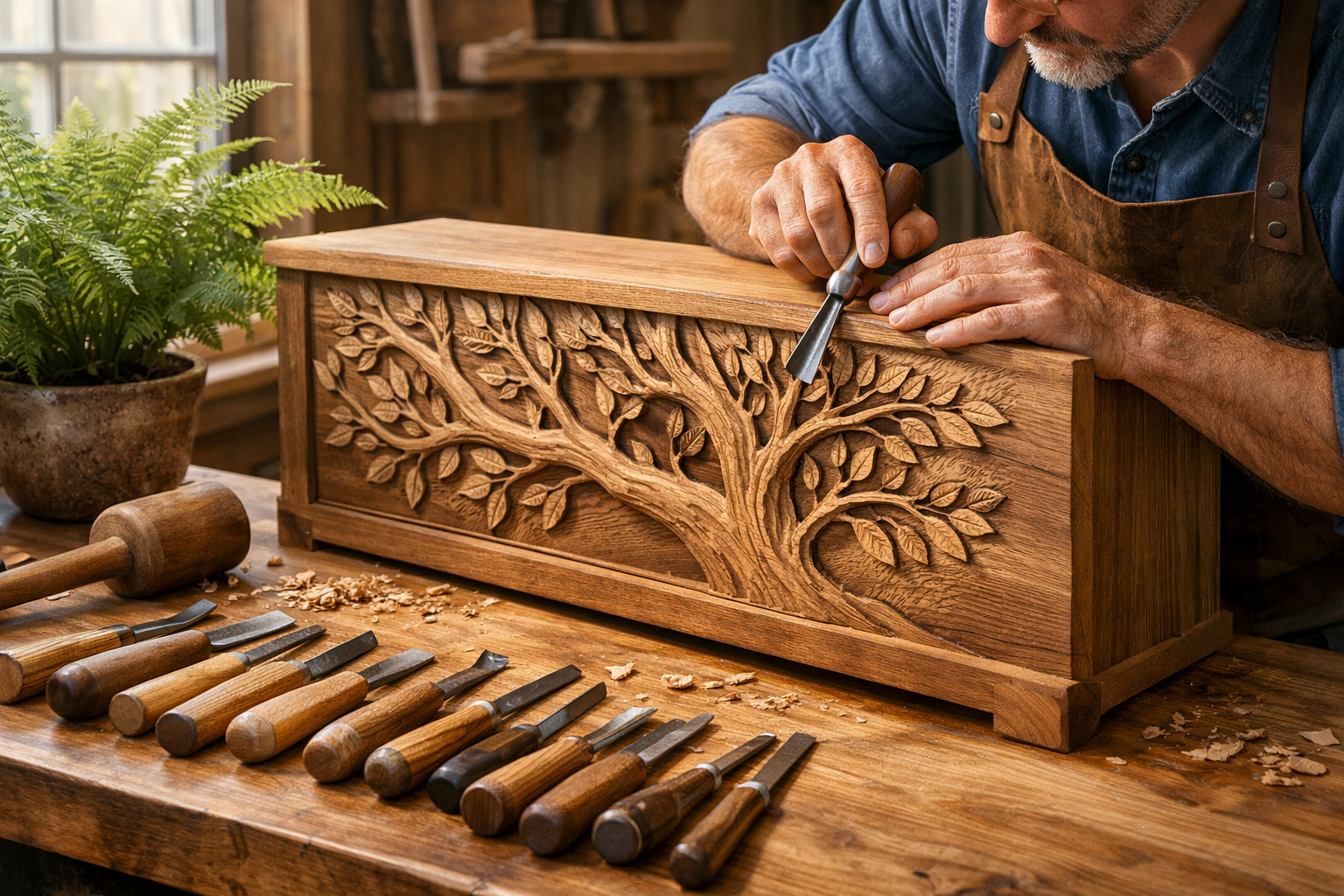
- Biomorphic Sculptures: Integrate abstract or representational carvings of leaves, branches, or flowing water patterns directly into the wood. Our guide on advanced wood carving techniques for decorative furniture accents offers excellent methods for achieving these intricate details.
Highlighting Natural Wood Grain and Character
The wood itself is a canvas for biophilic design. Each piece tells a story through its grain patterns, knots, and natural imperfections. The goal is to enhance, not obscure, this intrinsic beauty.
- Live Edge Design: Perhaps the most direct way to incorporate natural forms is through live edge pieces. Retaining the natural edge of a slab for tables, shelves, or benches brings an undeniable organic quality to any space. Explore our resources on live edge wood projects from design to execution and live edge slab selection and preparation for detailed guidance.
- Figured Woods: Woods with unique grain patterns like curly maple, spalted tamarind, or burled walnut offer stunning visual interest that mimics natural phenomena.
- Textural Finishes: Instead of perfectly smooth, highly polished surfaces, consider finishes that allow the wood’s texture to be felt and seen. This might include light wire-brushing, sanding to a satin sheen, or using natural oils that penetrate the wood rather than forming a thick surface film. Learn more about natural wood finishing techniques to preserve and highlight these characteristics.
- Sourcing Reclaimed Wood: Utilizing reclaimed or salvaged wood often means working with pieces that inherently possess character, history, and unique imperfections, adding depth to biophilic designs. Our article on sourcing reclaimed and salvaged wood provides valuable insights.
“Biophilic woodworking is more than just aesthetics; it’s about crafting experiences that reconnect us with the fundamental rhythms and beauty of the natural world.”
Integrating Live Plants into Furniture and Decor
The most dynamic aspect of Creating Biophilic Design Elements in Woodworking: Incorporating Natural Forms and Live Plants into Furniture and Decor is the thoughtful inclusion of living plants. This goes beyond simply placing a potted plant on a wooden surface; it involves seamlessly integrating planters and growing spaces directly into the woodworking piece.
Design Considerations for Plant Integration
Successful integration requires careful planning to ensure the health of the plants and the longevity of the furniture.
- Waterproofing is Paramount: Wood and water are not natural allies. Any section designed to hold soil or water must be meticulously waterproofed. This can involve using sealed liners, epoxy coatings, or selecting naturally water-resistant woods like cedar or cypress (though still requiring liners for direct contact).
- Drainage Solutions: Plants need proper drainage to thrive. Consider hidden drip trays, drainage holes leading to external collection points, or using self-watering planter inserts.
- Plant Accessibility: Ensure plants are easy to water, prune, and replace. Removable inserts or accessible compartments simplify maintenance.
- Light Requirements: Design furniture that can be placed in areas with adequate natural light for the chosen plants, or consider integrating discreet grow lights for low-light situations.
Types of Furniture and Decor for Plant Integration
Virtually any piece of furniture can be adapted to incorporate plants, from subtle accents to dominant features.
- Console and Coffee Tables: These are prime candidates for integrated planters. A recessed section in a console table can house a row of succulents, while a coffee table might feature a central planter well. Explore ideas for building statement furniture pieces that incorporate these unique features.
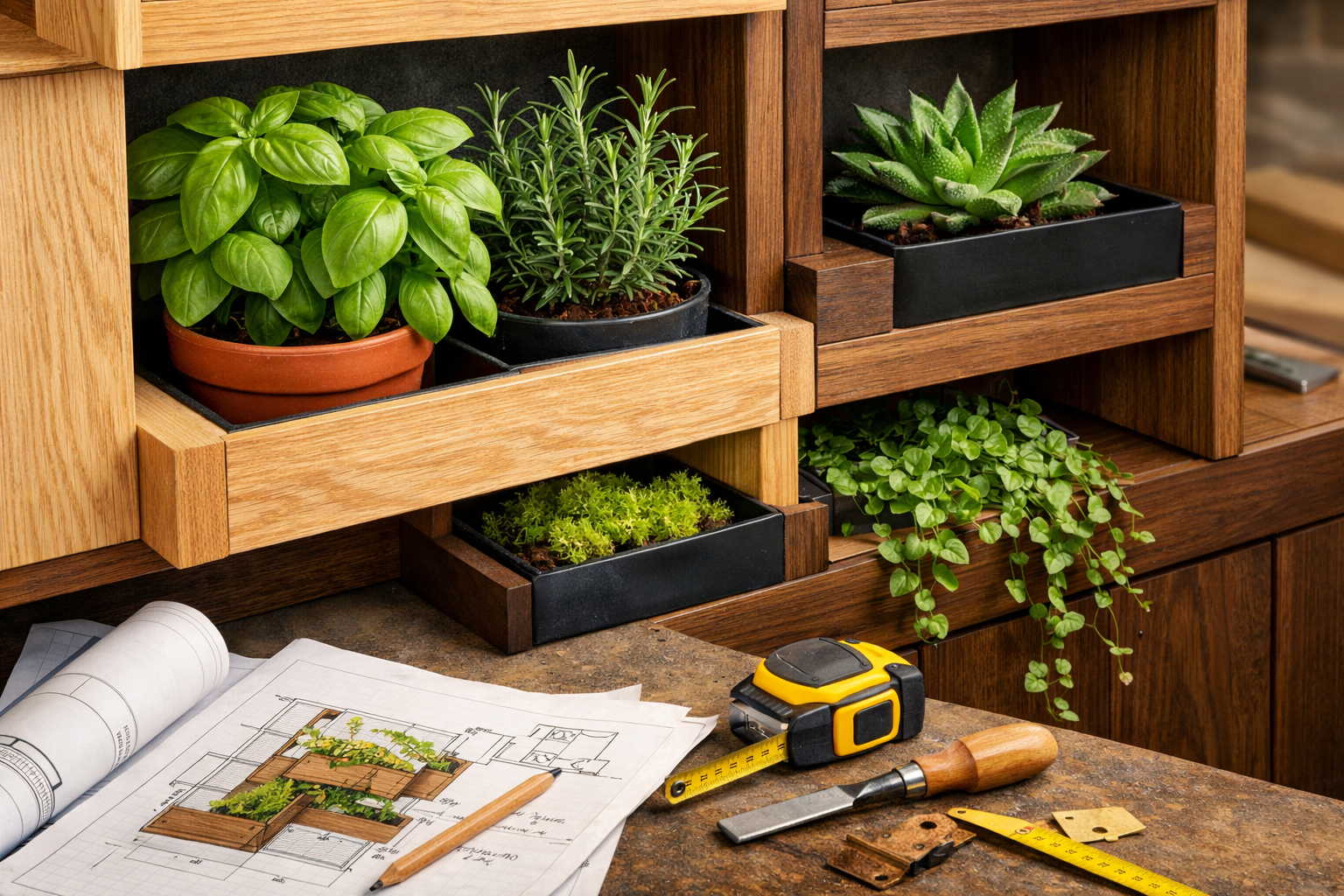
- Shelving Units: Modular shelving can include dedicated, watertight shelves or cubbies for plants. This allows for vertical green spaces that enhance air quality and visual appeal.
- Wall-Mounted Decor: Wooden wall panels with integrated small planters for air plants or trailing vines can create stunning vertical gardens without taking up floor space.
- Dividers and Screens: Use wooden screens with cutouts or built-in pockets for plants to create natural room dividers that bring greenery into open-plan spaces.
- Planter Boxes: While a straightforward option, even basic wooden planter boxes can be elevated with interesting joinery, decorative carvings, or by using unique wood species.
Selecting the Right Plants
The choice of plants is crucial for both aesthetics and practicality.
- Low-Maintenance Options: For furniture, consider plants that are relatively low-maintenance, such as succulents, air plants, ZZ plants, Pothos, or Snake Plants. They tolerate various light conditions and forgive occasional neglect.
- Growth Habits: Choose plants with growth habits that complement the furniture design. Trailing plants can soften edges, while upright plants add structure.
- Size and Root System: Ensure the integrated planter is appropriately sized for the plant’s mature size and root system.
Crafting Techniques and Sustainable Practices
Successful biophilic woodworking goes hand-in-hand with skilled craftsmanship and a commitment to sustainable practices.
Joinery and Construction for Durability
The longevity of pieces integrating live plants depends heavily on robust construction.
- Precision Joinery: Strong, well-executed joints are essential, especially for pieces that will bear the weight of soil and water. Techniques like dovetails, mortise and tenon, or robust dowel joints ensure structural integrity. Our guide on mastering dovetail joints with hand tools offers in-depth instructions.
- Material Expansion and Contraction: Understand how wood moves with changes in humidity. Design floating panels or use techniques that allow for this movement to prevent cracking, particularly around integrated plant areas.
Natural and Eco-Friendly Finishes
The finish applied to biophilic woodworking pieces should complement the natural theme and avoid introducing harmful chemicals into the environment, especially near living plants.
- Oils and Waxes: Finishes like linseed oil, tung oil, or natural waxes penetrate the wood, offering protection while allowing its natural texture and color to shine through. These are often low-VOC (Volatile Organic Compounds) and non-toxic. Our article on sustainable finishes for reclaimed wood provides excellent options.
- Water-Based Polyurethanes: If a harder, more durable surface is needed, opt for water-based polyurethanes, which typically have lower VOCs than oil-based alternatives.
- Avoid Harsh Stains: While stains can enhance grain, choose transparent or semi-transparent options that don’t completely mask the wood’s natural character.
Sustainable Wood Sourcing
A truly biophilic design respects the source of its materials.
- FSC Certified Wood: Look for wood certified by the Forest Stewardship Council (FSC), which ensures responsible forest management.
- Urban Salvaged and Reclaimed Wood: Utilizing wood from urban trees that have fallen or been removed, or reclaiming timber from old buildings, is a highly sustainable practice that adds character. Learn more about sourcing and restoring urban harvested and reclaimed wood.
- Local Species: Whenever possible, use locally sourced wood to reduce transportation emissions and support regional economies.
Thinking Beyond the Conventional
Consider innovative approaches to truly elevate your biophilic woodworking.
- Modular Designs: Create modular pieces that can be reconfigured or expanded, allowing users to adapt their green spaces over time. Our guide on modular furniture design for woodworkers provides a great starting point.
- Sensory Engagement: Design elements that encourage touch (e.g., textured wood surfaces), sound (e.g., a small water feature with a wooden base), or scent (e.g., aromatic woods or fragrant herbs).
- Education: Some biophilic designs might include small placards about the wood species or plant types, further engaging the user with nature’s story.
Conclusion
Creating Biophilic Design Elements in Woodworking: Incorporating Natural Forms and Live Plants into Furniture and Decor is more than a trend; it’s a mindful approach to craftsmanship that enriches living spaces and nurtures human well-being. By thoughtfully integrating organic shapes, celebrating natural wood characteristics, and strategically incorporating live plants, woodworkers in 2026 can produce pieces that are not only beautiful and functional but also serve as vital conduits to the natural world.
To begin your journey into biophilic woodworking, start small. Experiment with a live-edge shelf with an integrated air plant holder, or a console table featuring a recessed planter for succulents. Focus on mastering waterproofing and drainage techniques. Seek out unique wood pieces, embrace their natural imperfections, and finish them with care. By connecting your craft with the principles of biophilia, you can create enduring pieces that bring tranquility, beauty, and a breath of fresh air into any home.