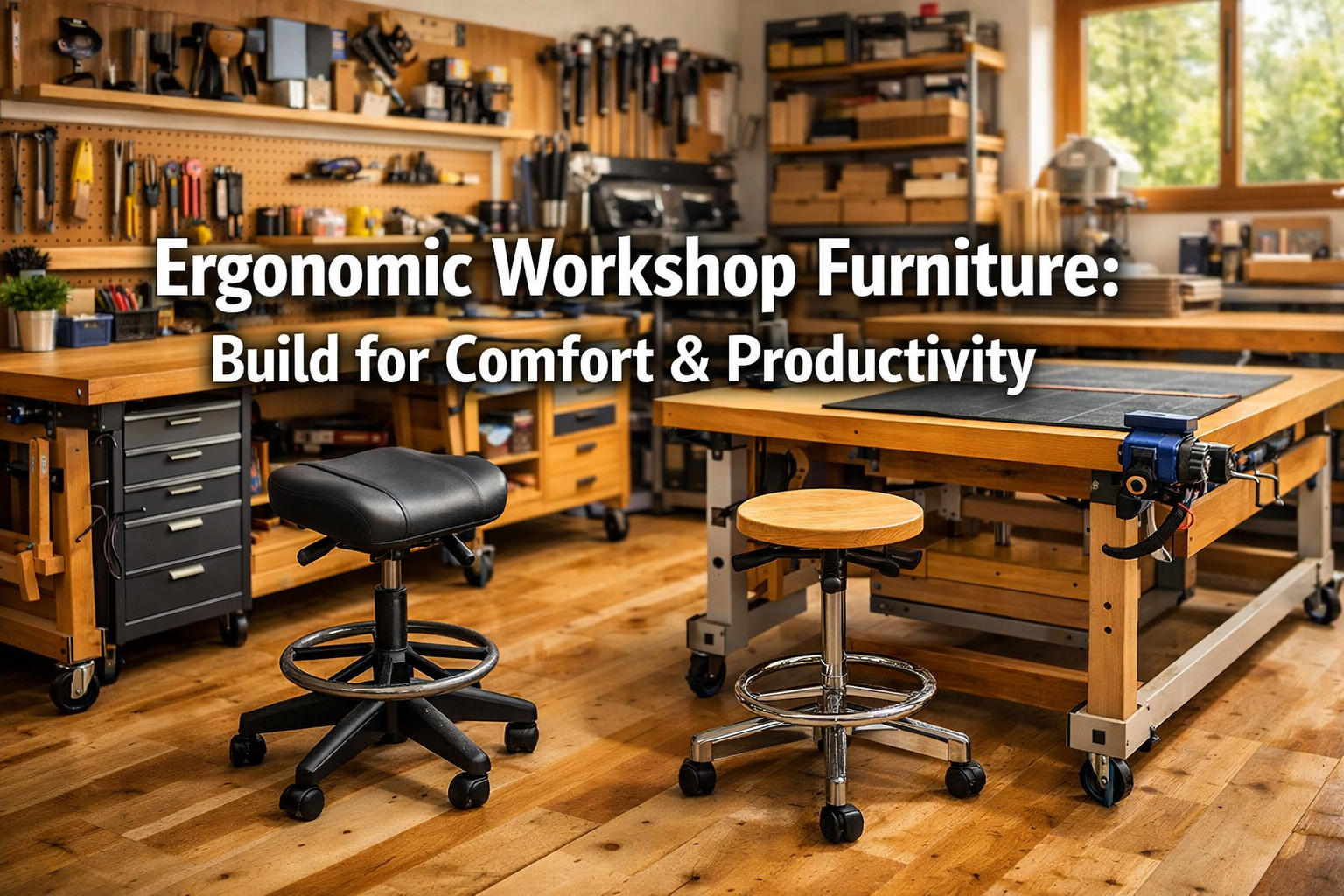

Working in a workshop, whether as a hobbyist or a professional, can be incredibly rewarding. However, long hours spent hunched over a workbench, reaching for tools, or standing in uncomfortable positions can take a serious toll on your body. This is where Creating Ergonomic Workshop Furniture: Building Custom Workbenches, Stools, and Storage to Prevent Strain and Increase Productivity becomes not just a luxury, but a necessity. By designing and building your workshop furniture to prioritize your comfort and health, you can significantly reduce fatigue, prevent injuries, and ultimately improve your efficiency and enjoyment during long hours of woodworking. The focus shifts to adjustable heights, proper posture, and smart, accessible storage solutions, ensuring that your workspace works for you, not against you.
Key Takeaways
- Prioritize Personal Fit: Custom-built ergonomic furniture allows for precise adjustments to match your body dimensions, reducing strain.
- Invest in Adjustability: Workbenches and stools with adjustable heights are crucial for accommodating various tasks and postures.
- Optimize Storage & Accessibility: Smart, modular storage keeps tools and materials within easy reach, minimizing unnecessary movement and clutter.
- Prevent Long-Term Injuries: Ergonomic design actively combats common workshop ailments like back pain, neck strain, and repetitive stress injuries.
- Boost Productivity and Focus: A comfortable, organized workspace leads to less fatigue, fewer mistakes, and more enjoyable, productive work sessions.
The Foundation of Comfort: Designing Ergonomic Workbenches
The workbench is the heart of any workshop, and its design fundamentally impacts your posture and workflow. Creating Ergonomic Workshop Furniture: Building Custom Workbenches, Stools, and Storage to Prevent Strain and Increase Productivity begins with rethinking this central piece. A truly ergonomic workbench should offer flexibility, stability, and intelligent features that support your body throughout different tasks.

Understanding Optimal Workbench Height
The ideal workbench height isn’t one-size-fits-all. It varies based on your height, the specific task, and whether you’re standing or sitting.
- Precision Work (e.g., carving, assembly): Often requires a higher surface, allowing you to lean in without hunching. Aim for a height that lets your elbows bend at a comfortable 90-100 degrees when your hands are resting on the surface.
- Heavy Work (e.g., planing, sanding): A slightly lower workbench provides better leverage and allows you to use your body weight more effectively, reducing strain on your back and shoulders.
- General Tasks: A good starting point for general standing work is a height where your knuckles just brush the top of the bench when your arms are relaxed at your sides.
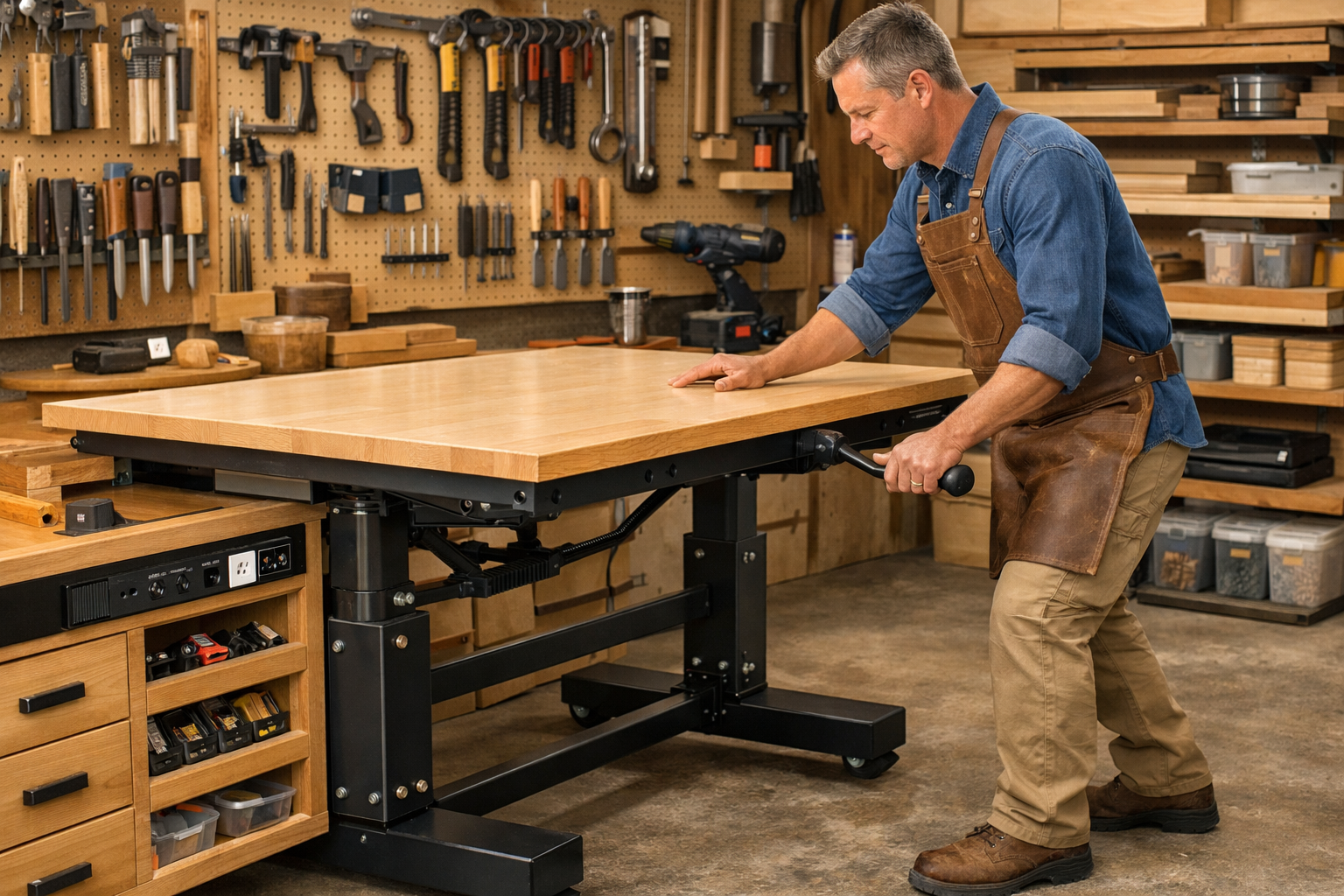
Custom Height Options: For ultimate ergonomics, consider a workbench with adjustable height mechanisms.
| Mechanism Type | Pros | Cons | Ideal For |
|---|---|---|---|
| Manual Crank | Reliable, no power needed, precise | Slower to adjust, physical effort | Moderate adjustments, power outages aren’t an issue |
| Hydraulic/Pneumatic | Smooth, easy, often foot-pedal operated | Can be expensive, requires air compressor/pump | Frequent adjustments, heavy loads, varied users |
| Electric Motor | Effortless, programmable memory settings | Requires power, most expensive, potential failure | High-tech shops, multiple users, quick changes |
| Pin/Bolt Adjustment | Simple, very sturdy, cost-effective | Limited discrete height settings, more manual effort | Fixed heights for specific tasks, less frequent changes |
When building, use sturdy materials like hardwood or robust plywood for the frame and a durable, flat surface. Butcher block, MDF, or even a solid core door can make excellent benchtops. Consider adding dog holes for clamping, a built-in vise, and recessed channels for power strips to keep cords organized and safe. For those interested in advanced joinery techniques, using precise cuts and strong joints will ensure your workbench lasts for decades. See our guide on advanced joinery techniques for durable designs for inspiration.
Supportive Seating and Smart Storage: Enhancing Workshop Efficiency
Beyond the workbench, ergonomic seating and intelligent storage are vital components in Creating Ergonomic Workshop Furniture: Building Custom Workbenches, Stools, and Storage to Prevent Strain and Increase Productivity. They work together to minimize physical exertion and wasted time.
The Importance of Ergonomic Stools
Standing for long periods can be exhausting. An ergonomic workshop stool allows you to alternate between standing and sitting, resting your legs and back without leaving your workspace.
Key Features of an Ergonomic Stool:
- Adjustable Height: Essential for matching your workbench and task. Look for pneumatic lift mechanisms.
- Back Support: A good stool offers lumbar support, encouraging a healthy spinal curve.
- Swivel Function: Allows you to rotate easily, accessing different areas of your bench without twisting your body.
- Casters (Wheels): Gliding smoothly around your workshop reduces the need to stand up and walk for every minor adjustment or tool grab. Ensure they are appropriate for your workshop floor.
- Foot Ring: Provides a place to rest your feet, reducing pressure on your thighs and improving circulation, especially for taller individuals or higher seating positions.
“A well-designed stool isn’t just about sitting; it’s about dynamic support that keeps you energized and focused throughout your work.”
Strategic Storage Solutions
Clutter is the enemy of productivity and safety. Ergonomic storage isn’t just about tidiness; it’s about placing tools and materials where they are most efficiently accessed, minimizing bending, reaching, and searching.
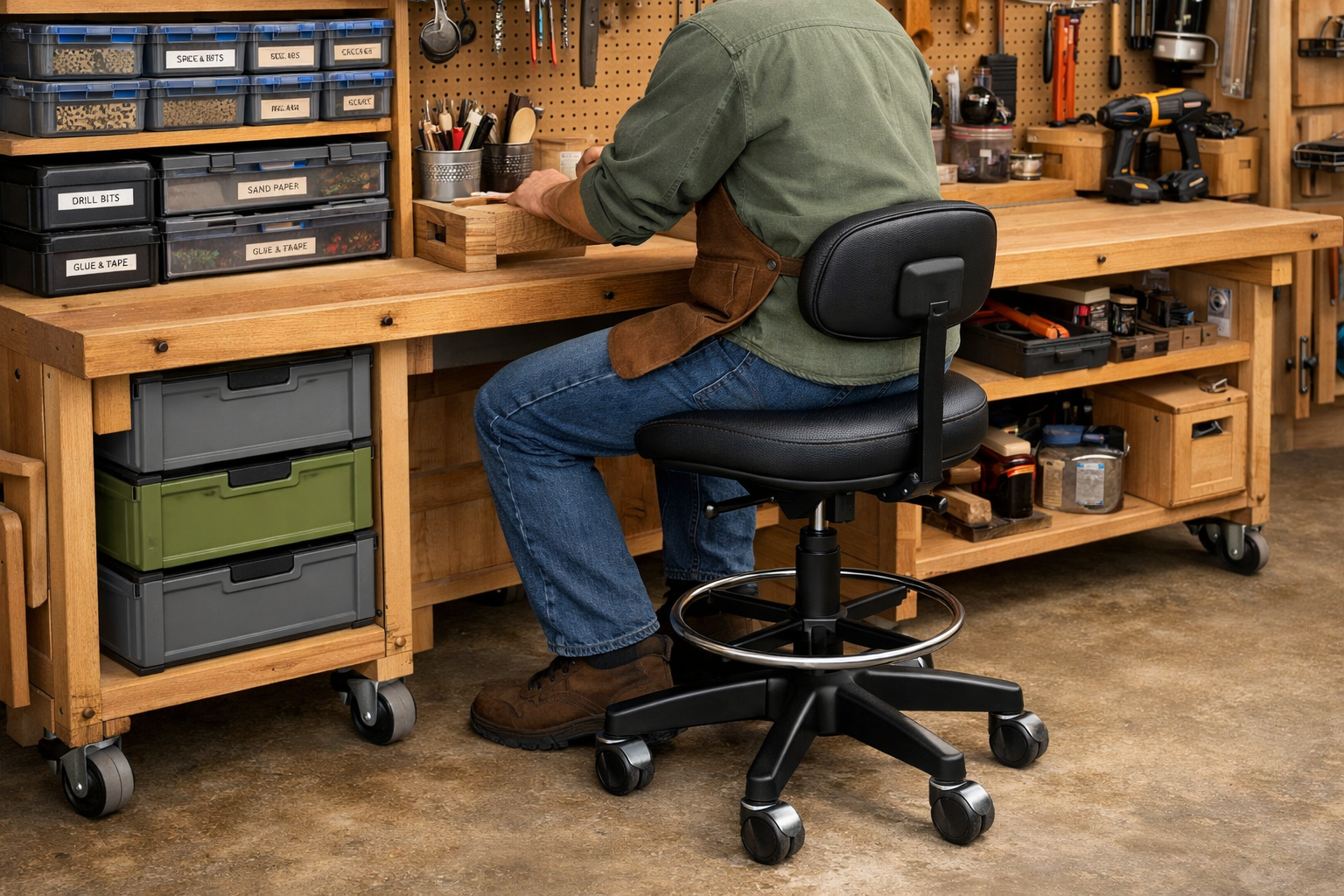
Designing for Accessibility:
- Categorize & Zone: Group similar tools and materials together. Create zones for different operations (e.g., cutting, assembly, finishing).
- Frequent Use at Hand: Tools and supplies you use most often should be within arm’s reach while standing or sitting at your primary workstation. This includes screwdrivers, measuring tapes, and safety glasses.
- Vertical Storage: Wall-mounted cabinets, pegboards, and French cleat systems are excellent for keeping tools off the workbench but still visible and accessible. For ideas on maximizing vertical space, consider our guide on robust floating shelves.
- Rolling Carts/Cabinets: Mobile storage units are incredibly versatile. They can bring tools directly to your workpiece and be moved out of the way when not needed. These are perfect for specialized tools or project-specific supplies.
- Drawer Dividers & Organizers: Keep small items like screws, sandpaper, and bits organized within drawers. This prevents rummaging and saves time. Our guide on mastering woodworking screws offers tips on screw organization.
- Clear Labeling: Label all drawers, bins, and shelves clearly. This makes putting things away as easy as finding them.
Remember, the goal is to create a workflow where every tool has a home, and that home is logically placed for minimal effort.
Implementing Ergonomic Principles: Beyond Furniture
While custom workbenches, stools, and storage are central to Creating Ergonomic Workshop Furniture: Building Custom Workbenches, Stools, and Storage to Prevent Strain and Increase Productivity, a truly ergonomic workshop extends to overall layout, lighting, and environmental control.
Workshop Layout and Workflow
Think about the flow of your work. What are the typical steps for a project?
- Material Prep Zone: Where you cut and dimension lumber (e.g., near a table saw or miter saw).
- Assembly Zone: Your main workbench.
- Finishing Zone: A separate, well-ventilated area to apply stains, paints, or sealants.
- Tool Paths: Ensure clear pathways between zones, free of obstacles.
- Dust Collection: Integrate dust collection systems directly into your major tools. Proper dust management isn’t just about cleanliness; it’s a critical health and safety issue.
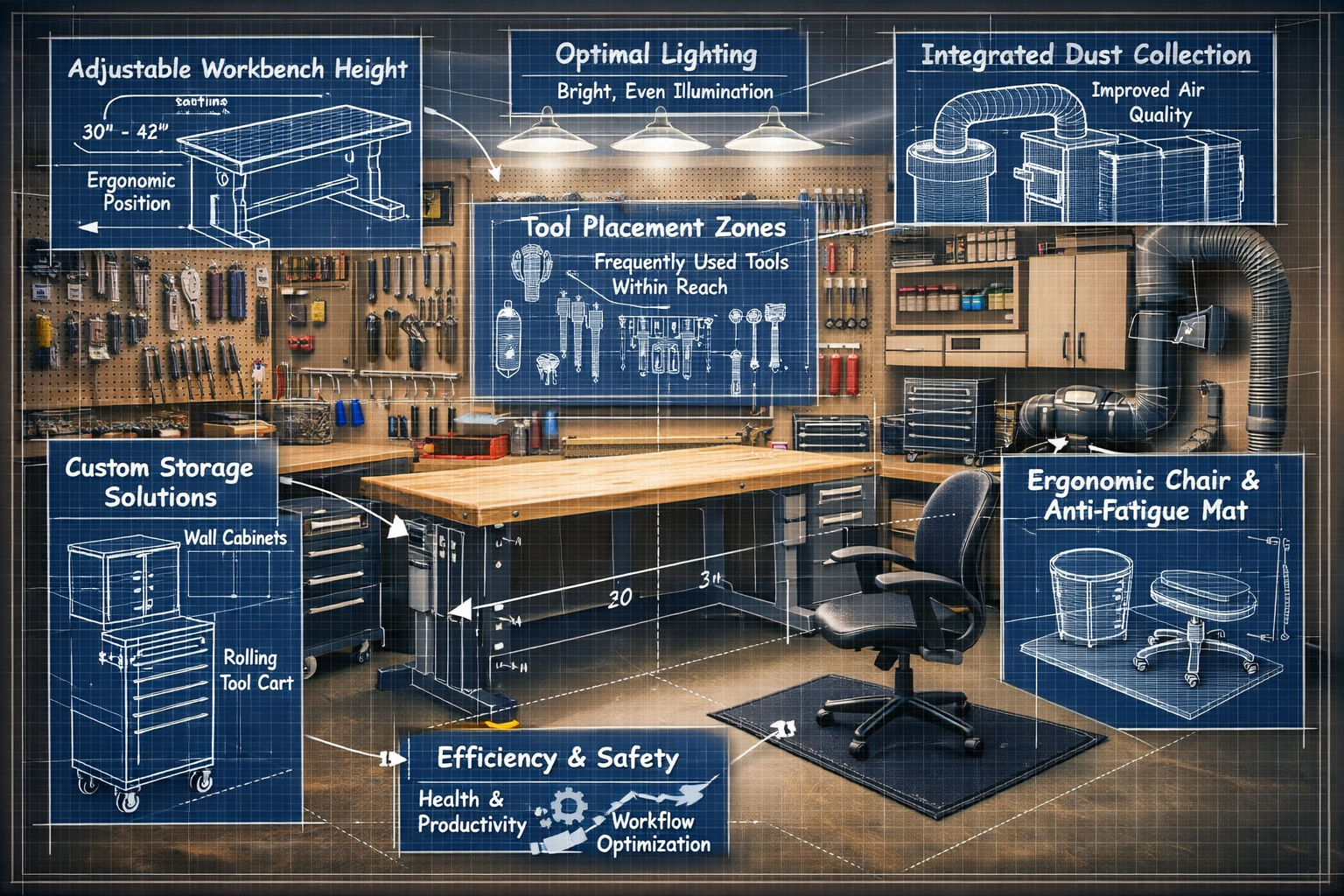
Environmental Considerations:
- Lighting: Good lighting is paramount. A mix of ambient (general room) lighting and task lighting (focused on your workbench) reduces eye strain and helps prevent accidents. Aim for natural light where possible, supplemented by bright, shadow-free artificial light. LED fixtures are energy-efficient and provide excellent illumination.
- Temperature and Ventilation: Maintain a comfortable temperature range. Good ventilation is crucial, especially when working with finishes, glues (see our article on does super glue work on wood for safe handling tips), or producing fine dust. Exhaust fans and open windows can help.
- Anti-Fatigue Mats: For areas where you stand for extended periods, anti-fatigue mats can significantly reduce strain on your feet, legs, and back.
The Benefits of a Thoughtfully Designed Space
By dedicating time to Creating Ergonomic Workshop Furniture: Building Custom Workbenches, Stools, and Storage to Prevent Strain and Increase Productivity, you are investing in your long-term health and the quality of your work.

- Reduced Risk of Injury: Minimizing awkward postures, repetitive motions, and heavy lifting protects your joints, muscles, and spine.
- Increased Comfort and Stamina: You can work longer and more comfortably without the aches and pains that force frequent breaks.
- Enhanced Productivity: An organized, efficient, and comfortable workspace allows you to focus solely on your craft, leading to fewer mistakes and faster project completion.
- Greater Enjoyment: When you’re not battling discomfort or searching for tools, woodworking becomes a more pleasurable and rewarding experience.
This approach isn’t just for professionals; every woodworker, regardless of skill level, can benefit from a more body-friendly workshop. Consider how these principles can be applied when working on other projects, like building live edge dining tables with reclaimed wood or crafting profitable wooden benches.
Conclusion
Creating Ergonomic Workshop Furniture: Building Custom Workbenches, Stools, and Storage to Prevent Strain and Increase Productivity is a proactive step towards a healthier, more enjoyable, and efficient woodworking journey. By carefully considering factors like adjustable heights, proper posture, and intelligent storage, you transform your workshop from a potential source of discomfort into a sanctuary of creativity. In 2026, the emphasis on personal well-being in all aspects of life, including hobbies and professions, is more pronounced than ever. Invest in your body and your craft by designing a workshop that supports both.
Actionable Next Steps:
- Assess Your Current Setup: Identify areas causing discomfort or inefficiency.
- Measure Yourself: Determine your optimal working heights for various tasks.
- Plan Your Layout: Sketch out ideal placements for your workbench, tools, and storage zones.
- Prioritize: Start with one key ergonomic improvement, such as an adjustable workbench or a supportive stool.
- Build or Modify: Begin constructing your custom pieces or adapting existing furniture using ergonomic principles.
By taking these steps, you’ll be well on your way to a workshop that not only looks great but actively contributes to your health, comfort, and passion for woodworking.
References
- Grandjean, E. (1988). Fitting the task to the man: A textbook of occupational ergonomics. Taylor & Francis.
- Pheasant, S., & Haslegrave, C. M. (2016). Bodyspace: Anthropometry, ergonomics and the design of work. CRC press.