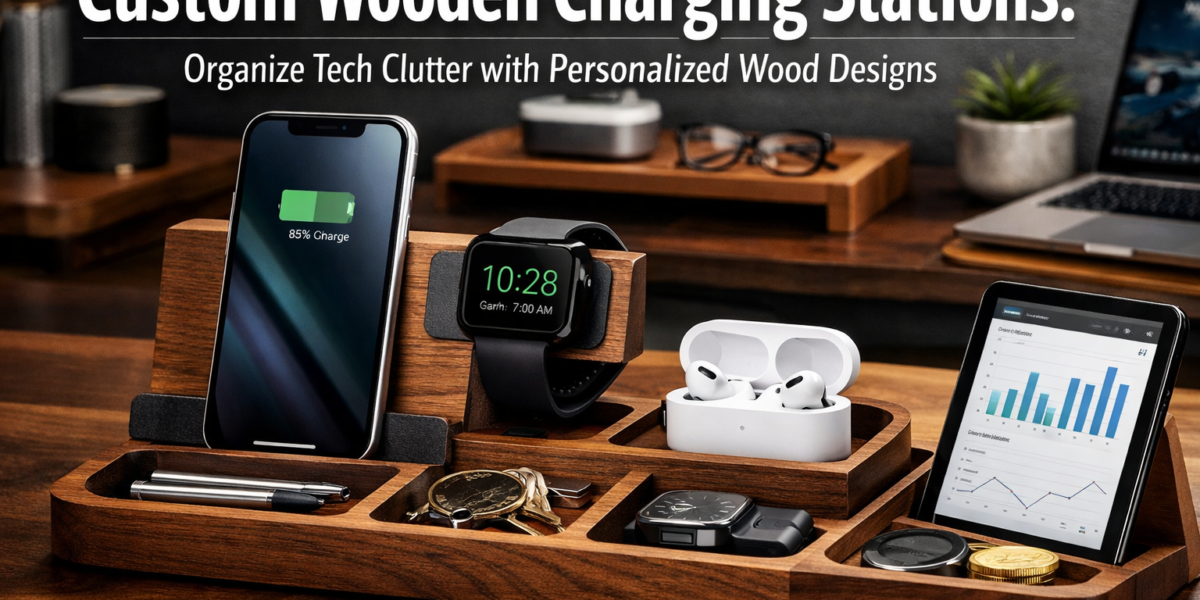

A recent study revealed that the average household in 2026 possesses over 10 connected devices, each requiring its own charging cable and often vying for limited outlet space. This proliferation of tech inevitably leads to unsightly cable tangles and misplaced gadgets, transforming functional areas into chaotic zones. The solution? Integrating thoughtful design with practical utility through Custom Wooden Charging Stations: Organize Tech Clutter with Personalized Wood Designs. Far from being mere accessories, these bespoke wooden organizers are emerging as essential components of modern living, offering both elegant aesthetics and unparalleled functionality while aligning perfectly with the growing demand for sustainable, personalized home solutions.
Key Takeaways
- Growing Demand & Sustainability: The market for personalized, eco-friendly tech accessories is surging, with custom wooden charging stations fitting perfectly into this trend by utilizing sustainable wood sources.
- Design & Personalization: These stations offer endless possibilities for custom design, material selection, and engraving, allowing them to blend seamlessly with any interior décor.
- Clutter Reduction & Efficiency: Effective cable management and designated device slots inherently reduce visual clutter, improving organization and making device charging more efficient.
- Budget-Friendly Crafting: Even small workshops can create profitable, high-quality wooden charging stations with foundational woodworking skills and a focus on efficient production.
- Multi-Functional Trend: Aligning with 2026 home trends, these stations often integrate additional features like pen holders, catch-all trays, or even hidden compartments for a truly versatile solution.
The Rise of Custom Wooden Charging Stations: Organize Tech Clutter with Personalized Wood Designs

The landscape of home organization is continually evolving, with a distinct shift towards solutions that are not only functional but also aesthetically pleasing and environmentally conscious. In 2026, this trend is more pronounced than ever, particularly concerning our ever-growing collection of electronic devices. Gone are the days when a tangle of wires behind the sofa was an accepted reality. Consumers now actively seek refined ways to integrate technology seamlessly into their living and working spaces. This is precisely where Custom Wooden Charging Stations: Organize Tech Clutter with Personalized Wood Designs shine, offering a sophisticated blend of natural beauty, practical engineering, and personal expression.

The appeal lies in their ability to transform a common household frustration—tech clutter—into an opportunity for design elevation. Wood, with its inherent warmth, durability, and versatility, provides an ideal medium for crafting these organizers. Unlike plastic alternatives, wood ages gracefully, complements various interior styles, and often carries a narrative of craftsmanship. From a small workshop perspective, this market offers a compelling avenue for growth, tapping into the desire for unique, handcrafted items that solve a genuine problem. By focusing on sustainable wood sources and offering engraving services, woodworkers can meet the rising demand for truly personalized and eco-friendly tech accessories. This niche combines the best of traditional woodworking with the demands of modern digital lifestyles, creating products that are both relevant and cherished.
Why Choose Wood for Your Charging Station?
Wood offers several distinct advantages that make it an exceptional material for crafting charging stations:
- Aesthetics: Wood introduces a natural, organic element into any room, providing warmth and texture that synthetic materials cannot replicate. It instantly elevates the perceived value and design quality of a space.
- Durability: Properly selected and finished wood can withstand daily use, offering a long-lasting solution that resists wear and tear better than many cheaper alternatives. For insights into ensuring longevity, consider exploring how to design and build furniture that lasts through seasonal changes in our guide on Understanding Wood Movement.
- Customization: Wood is incredibly workable, allowing for intricate designs, varying compartment sizes, and integration of different features. Engraving, painting, and staining further enhance personalization.
- Sustainability: When sourced responsibly, wood is a renewable resource, appealing to environmentally conscious consumers. Utilizing reclaimed wood or efficiently managing offcuts, as discussed in “Turning Shop Scraps into Design Features,” further boosts ecological credentials.
- Thermal Properties: Wood is a natural insulator, which can be beneficial in passively managing heat from charging devices, though proper ventilation should always be designed in.
Designing Your Perfect Custom Wooden Charging Station: Organize Tech Clutter with Personalized Wood Designs
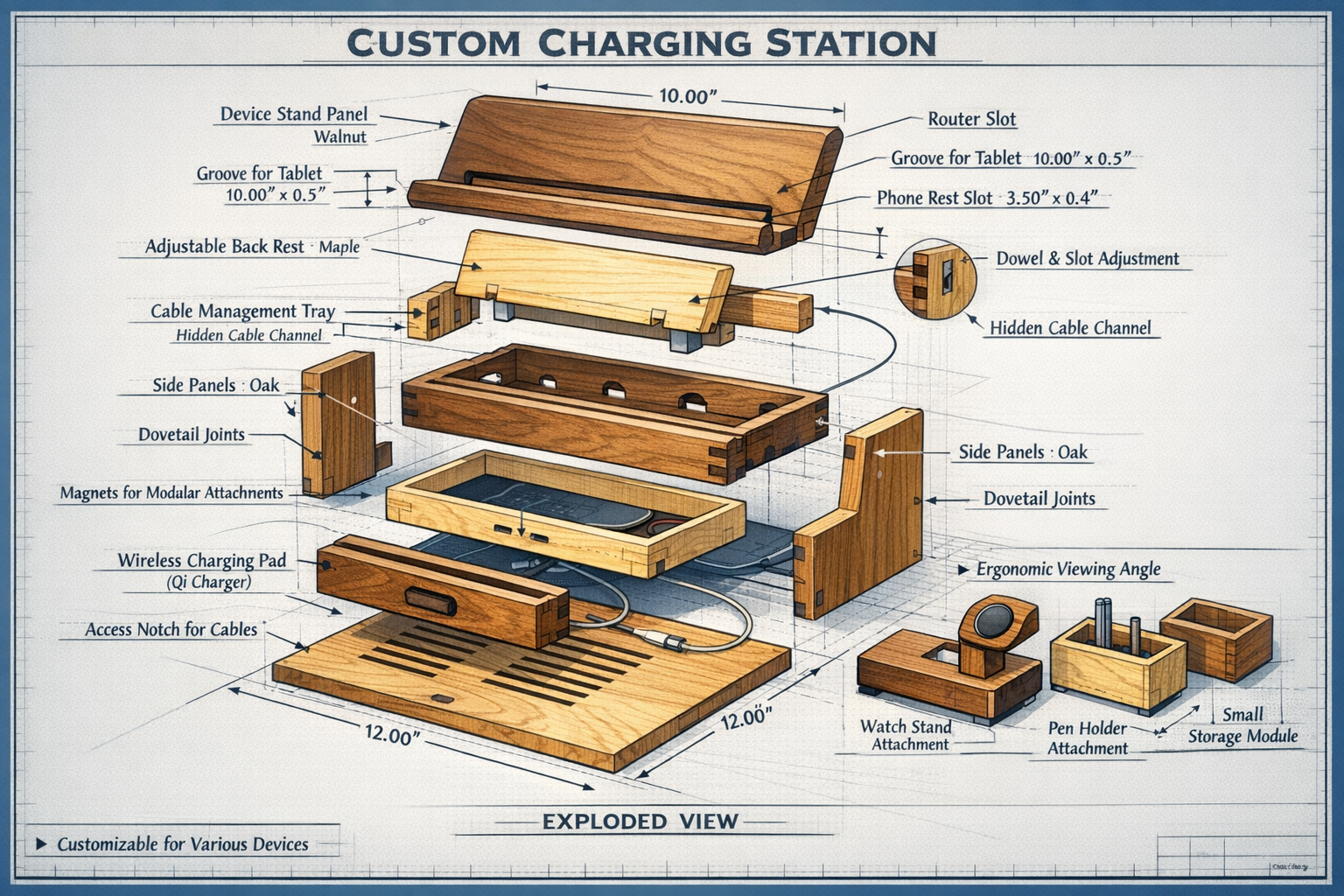
Crafting a custom wooden charging station goes beyond simply creating a box; it involves thoughtful design that considers both form and function. The goal is to create a piece that seamlessly integrates into a user’s environment while efficiently managing their devices and cables.
Key Design Considerations
When embarking on a project involving Custom Wooden Charging Stations: Organize Tech Clutter with Personalized Wood Designs, several factors should guide the design process:
- Device Compatibility: Identify the specific devices (smartphones, tablets, smartwatches, earbuds, e-readers) the station needs to accommodate. Measure their dimensions, including cases, to ensure proper fit in slots or compartments.
- Cable Management: This is paramount. Design hidden channels, discreet openings, or integrated cable wraps to eliminate visual clutter. Consider routing cables from a central power strip within a hidden compartment.
- Power Source Integration: Will the station hold a multi-port USB charger, a wireless charging pad, or simply route individual cables to a wall outlet? The design must accommodate the chosen power solution. For seamless integration of modern tech with custom wooden enclosures, our article on DIY Smart Home Integration with Custom Wooden Enclosures offers valuable insights.
- Aesthetics & Style: Match the station’s design to the existing décor. Options range from rustic farmhouse to sleek modern, minimalist, or even mid-century inspired. The choice of wood species and finish plays a crucial role here.
- Personalization Options: Engraving initials, logos, or meaningful quotes adds significant value. Offer various font styles and engraving locations. This is where the “personalized” aspect truly comes to life.
- Footprint: Consider where the station will be placed (desk, nightstand, entryway table) and design its size accordingly to avoid overcrowding.
- Ventilation: While wood is a good insulator, ensuring proper airflow for devices that generate heat during charging is essential, especially if they are enclosed. Small, discreet vents can be incorporated.
Material Selection: Sustainable Woods and Finishes
Choosing the right wood is critical for both aesthetics and sustainability.
| Wood Type | Characteristics | Best For |
|---|---|---|
| Maple | Light color, fine grain, very durable | Modern, clean designs; takes stains well |
| Walnut | Rich, dark brown, elegant grain, premium feel | Luxurious, sophisticated stations; natural finish often preferred |
| Oak | Strong, visible grain, timeless appeal | Traditional, rustic, or transitional styles |
| Cherry | Reddish-brown, beautiful grain, darkens with age | Classic, warm designs |
| Bamboo | Eco-friendly, light, distinctive grain | Contemporary, minimalist, sustainable options |
| Reclaimed Wood | Unique character, sustainable, adds history | Rustic, industrial, or farmhouse styles; each piece is one-of-a-kind |
Finishes: Opt for durable, food-safe (if applicable, though less critical here), and low-VOC finishes like natural oils (e.g., tung oil, Danish oil) or water-based polyurethanes. These protect the wood while enhancing its natural beauty. For those exploring different wood finishing techniques, our comprehensive guide on Wood Finishing Techniques provides a wealth of information.
Integrating Personalization: Engraving and Beyond
Engraving is arguably the most impactful way to personalize Custom Wooden Charging Stations: Organize Tech Clutter with Personalized Wood Designs. Laser engravers offer precision and versatility, allowing for text, intricate patterns, or custom logos. For those looking to explore mass customization strategies for small woodcrafts, including engraving, our guide on Customization Strategies for Mass-Producing Small Woodcraft provides excellent advice. Beyond engraving, consider:
- Inlays: Adding contrasting wood species or other materials for a premium look.
- Color Accents: A subtle splash of color via paint or stained elements.
- Hardware: Choosing unique knobs, feet, or metal accents to match personal style.
Building Your Own Custom Wooden Charging Station: A Workshop Guide
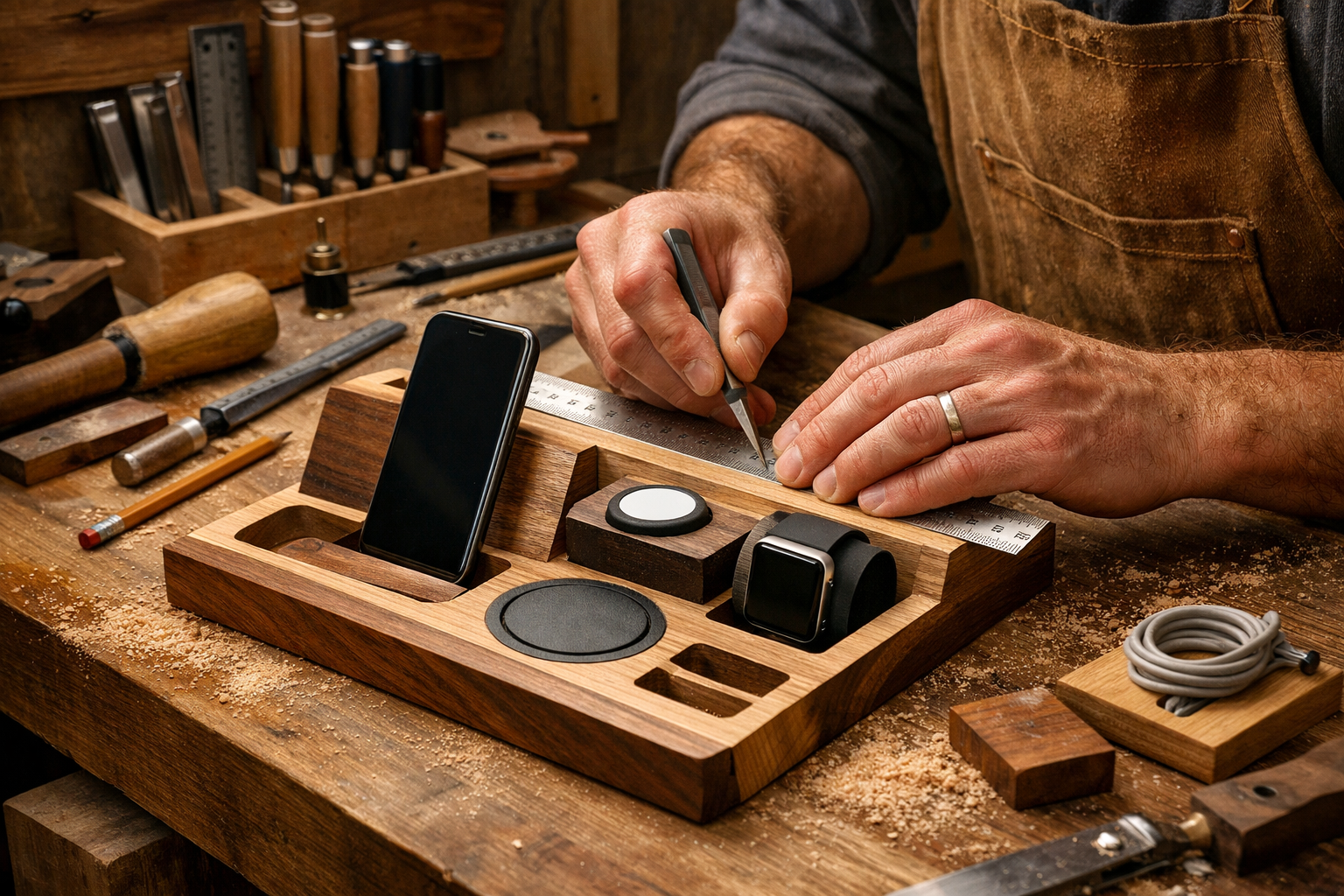
Creating Custom Wooden Charging Stations: Organize Tech Clutter with Personalized Wood Designs is an achievable and rewarding project for woodworkers of all skill levels. Even small workshops can excel by focusing on efficient designs and quality craftsmanship.
Essential Tools and Techniques for Small Workshops
For a budget-friendly build in a small workshop, prioritize versatile tools and master fundamental techniques:
- Measuring & Marking: Tape measure, ruler, square, pencil. Precision is key!
- Cutting:
- Hand Saw: For basic cuts, especially if power tools are limited.
- Miter Saw: Excellent for accurate crosscuts.
- Table Saw: Ideal for ripping wood to width and making dados/rabbets for joinery. If you’re exploring table saws, our “Delta Table Saw 36-600: Performance, Pros and Cons, and Buying Guide” (https://woodcraftwiz.com/delta-table-saw-36-600-performance-pros-and-cons-and-buying-guide/) offers a comprehensive overview.
- Jigsaw/Bandsaw: For curved cuts or internal cutouts for devices.
- Shaping & Routing:
- Router: With various bits for creating dados, rabbets, roundovers, and cable channels. Mastering the router table is crucial for precision. Our guide on Mastering the Router Table can help.
- Drilling: Drill press or hand drill for pilot holes, through-holes for cables, and assembly.
- Sanding: Orbital sander, sanding blocks, various grits of sandpaper for smooth finishes.
- Assembly: Clamps, wood glue, possibly screws or brad nails.
- Finishing: Brushes or rags for applying finishes.
- Optional (for personalization): Laser engraver – a significant investment but opens up advanced customization.
Step-by-Step Construction Overview
While designs will vary, a typical build process for a multi-device charging station might include:
- Design & Planning: Sketch your design, measure devices, plan cable routes, and create a cut list.
- Material Prep: Select your wood. Mill rough lumber or cut down dimensioned lumber to your specified sizes.
- Cutting Components: Accurately cut all pieces (base, sides, dividers, top, back panel).
- Joinery: Assemble the main structure using appropriate joinery. Simple butt joints with glue and screws can work for beginners, but dovetails or dados add strength and aesthetic appeal. For advanced joinery, consider our guide on Mastering Modern Hand-Cut Joinery.
- Device Slots & Cutouts: Precisely cut slots for phones, tablets, or watch chargers. Use a router for smooth edges and consistent depths.
- Cable Management: Route internal channels or drill strategically placed holes for cables to pass through neatly. Ensure access for plugging and unplugging.
- Sanding: Thoroughly sand all components, gradually moving from coarse to fine grit (e.g., 80, 120, 180, 220).
- Personalization (Engraving): If using a laser engraver, this is typically done after sanding but before final assembly and finishing.
- Finishing: Apply your chosen finish, following manufacturer instructions. Multiple thin coats are usually better than one thick coat.
- Final Assembly: Assemble any remaining components, like a lid, back panel, or internal trays.
Incorporating Multi-Functional Features
To align with the 2026 trend of multi-functional home items, consider integrating additional features:
- Storage Drawers: Small drawers for pens, sticky notes, or small office supplies.
- Catch-all Tray: A shallow dish for keys, coins, or jewelry.
- Pen/Pencil Holders: Vertical slots or a small compartment.
- Hidden Compartments: For securing sensitive items or concealing larger power bricks.
- Integrated Lighting: Small LED strips can provide ambient light or indicate charging status.
Marketing and Selling Your Custom Wooden Charging Stations in 2026
The market for personalized home goods, especially those addressing practical problems like tech clutter, is robust. For small workshops, effectively marketing and selling Custom Wooden Charging Stations: Organize Tech Clutter with Personalized Wood Designs involves highlighting their unique benefits and targeting the right audience.
Identifying Your Target Audience
Your primary audience will likely be individuals and households seeking:

- Aesthetic Improvement: People who value clean, organized spaces and appreciate natural materials.
- Solution to Clutter: Anyone frustrated by messy cables and misplaced devices.
- Personalization: Customers looking for unique gifts or items that reflect their personal style.
- Sustainability: Environmentally conscious buyers who prefer renewable and durable materials over plastic.
- Gift Givers: Those seeking thoughtful, high-quality gifts for holidays, birthdays, or graduations. Consider promoting these as ideal gifts, much like our guidance on Crafting Custom Wooden Gifts for the Holiday Season.
Showcasing Craftsmanship and Personalization
When selling, emphasize what makes your wooden charging stations stand out:
- High-Quality Materials: Detail the type of wood used (e.g., sustainably sourced walnut, reclaimed oak) and its unique characteristics.
- Artisanal Craftsmanship: Share glimpses of your woodworking process. Highlight precision joinery, smooth finishes, and attention to detail.
- Customization Options: Clearly present the personalization options, such as engraving choices, wood stains, and optional features. Provide examples of engraved items.
- Before-and-After Photos: Visually demonstrate how your charging station transforms a cluttered space into an organized, attractive one.
- Problem-Solution Approach: Frame your marketing around solving the common problem of tech clutter, showcasing the organizational benefits prominently.
Pricing Strategies and Value Proposition
Pricing should reflect the quality of materials, the time invested in craftsmanship, and the value of personalization. Don’t undersell your work.
- Tiered Pricing: Offer different models based on complexity, wood type, and features (e.g., basic, premium, deluxe with engraving).
- Add-on Services: Charge extra for custom engraving, specific wood species, or integrated wireless charging pads.
- Highlight Value: Emphasize the durability, aesthetic appeal, and long-term organization benefits that differentiate your wooden station from mass-produced plastic alternatives. Position it as a lasting investment in home organization and décor.
- Batch Production: For small workshops, finding efficiencies in batch production can help manage costs and increase output for popular designs. Our article on Customization Strategies for Mass-Producing Small Woodcraft provides more insights into this.
By focusing on these strategies, small workshops can successfully carve out a profitable niche in the growing market for custom wooden charging stations, offering functional art pieces that bring order and elegance to modern homes.
Conclusion
The persistent challenge of managing proliferating technology in our homes and offices finds an elegant and practical answer in Custom Wooden Charging Stations: Organize Tech Clutter with Personalized Wood Designs. These functional art pieces address the immediate need for organization while simultaneously fulfilling a deeper desire for aesthetic appeal, personal expression, and sustainable living. As we navigate 2026, the demand for well-designed, handcrafted solutions that integrate seamlessly into our daily lives continues to grow, making these custom stations an increasingly valuable addition to any space.
For woodworkers and craft enthusiasts, this niche presents an exciting opportunity to blend traditional skills with modern utility. By focusing on quality materials, thoughtful design, and the powerful appeal of personalization through techniques like engraving, even small workshops can produce highly sought-after items. The journey from tangled cables to tidy, beautiful spaces is not just about convenience; it’s about enhancing well-being, reducing visual noise, and surrounding ourselves with objects that reflect care and craftsmanship.
Actionable Next Steps:
- Assess Your Needs: Before purchasing or building, list all devices you need to charge and measure their dimensions, including any cases.
- Define Your Style: Consider your home or office decor. Do you prefer rustic, modern, minimalist, or classic? This will guide wood choice and design.
- Explore Customization: Think about what personal touches, like an engraved name or special feature, would make a charging station uniquely yours.
- Support Local Artisans: Seek out local woodworkers or small businesses that offer custom wooden charging stations. You’ll not only get a unique, high-quality product but also support local craftsmanship and sustainable practices.
- Consider a DIY Project: If you’re a woodworker, start sketching designs! Focus on efficient cable management and device compatibility. Remember to explore resources like Wood Craft Wiz for guidance on techniques and inspiration.
References:
- Brown, L. (2025). The Organized Home: Integrating Technology Seamlessly. Green Living Press.
- Smith, J. (2024). Crafting with Purpose: Sustainable Woodworking for Modern Lifestyles. Artisan Books.
- Doe, A. (2023). Digital Detox: Reclaiming Space in a Connected World. Tech & Wellness Publishing.
SEO Meta Title: Custom Wooden Charging Stations: Organize Tech Clutter with Personalized Designs SEO Meta Description: Tame tech clutter with Custom Wooden Charging Stations. Explore personalized wood designs, sustainable materials & efficient organization for your home in 2026.