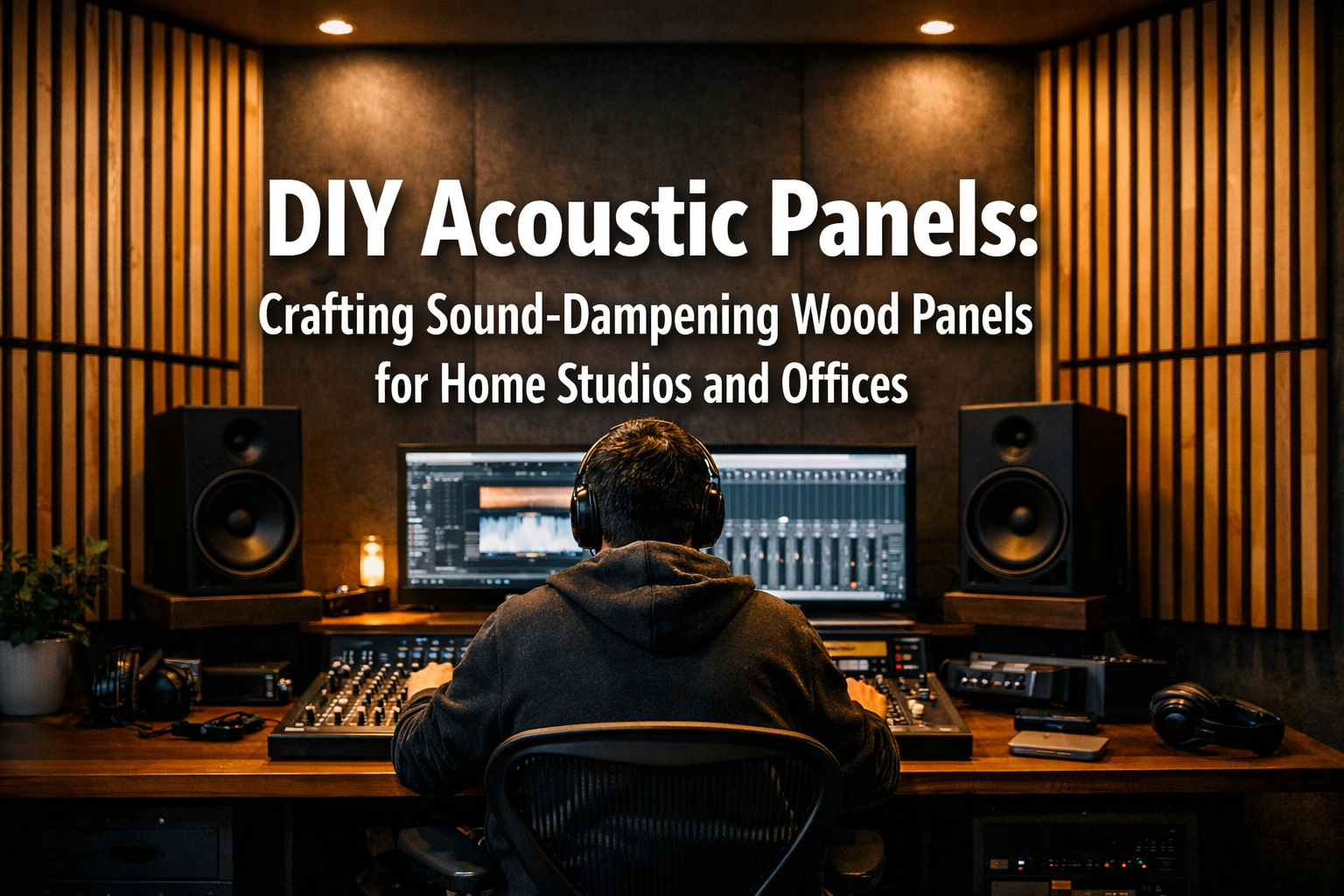

In the pursuit of optimal audio quality and a tranquil workspace, managing room acoustics is paramount. Whether you’re a podcaster, musician, content creator, or simply someone seeking a quieter home office, reverberation and echo can significantly detract from your experience. Fortunately, achieving superior sound doesn’t require an exorbitant budget or professional installation. Learning how to build DIY Acoustic Panels: Crafting Sound-Dampening Wood Panels for Home Studios and Offices offers a cost-effective and highly customizable solution. This comprehensive guide will empower you to construct effective, aesthetically pleasing acoustic panels that transform your environment into a haven of clear sound and reduced noise pollution in 2026.
Key Takeaways
- DIY acoustic panels offer a significant and affordable improvement to room acoustics, reducing echo and reverberation.
- The core components are a sturdy wooden frame, sound-absorbing insulation (like mineral wool or rigid fiberglass), and an acoustically transparent fabric.
- Careful planning, precise measurements, and adherence to safety guidelines are crucial for successful construction.
- Strategic placement of panels is as important as their construction for achieving optimal sound dampening.
- Customizing the aesthetic allows panels to integrate seamlessly with your existing decor, enhancing both function and form.
Understanding Acoustics and Why DIY Acoustic Panels Are Essential
Before diving into the construction of DIY Acoustic Panels: Crafting Sound-Dampening Wood Panels for Home Studios and Offices, it’s helpful to understand the basic principles of room acoustics. Sound waves travel and bounce off hard surfaces (walls, ceilings, floors), creating reflections. When these reflections accumulate, they lead to echo, flutter echo (rapid, closely spaced echoes), and excessive reverberation, making speech difficult to understand and music sound muddy. Acoustic panels are designed to absorb these sound waves, converting sound energy into heat and thus reducing reflections.

Unlike soundproofing, which aims to block sound from entering or leaving a room, acoustic treatment focuses on improving the sound within a room. This distinction is vital for anyone setting up a home studio, podcast recording space, or even a quiet office where clear communication and focus are priorities. Hardwood floors, bare walls, and large windows are common culprits for poor acoustics, making a compelling case for implementing sound-dampening solutions.
The Benefits of Crafting Sound-Dampening Wood Panels Yourself
Opting for DIY acoustic panels provides numerous advantages:
- Cost-Effectiveness: Professionally made panels can be expensive. Building them yourself significantly reduces costs, allowing you to treat a larger area for less.
- Customization: You have complete control over dimensions, fabric color, wood finishes, and overall aesthetic to perfectly match your room’s decor. This is particularly useful when considering Narrative Interiors Through Woodworking: Sourcing and Crafting Story-Driven Pieces.
- Performance: By selecting high-quality absorption materials, DIY panels can often outperform cheaper, less effective commercial alternatives.
- Satisfaction: The pride of creating something functional and beautiful with your own hands is an added bonus.
{{IMG_SLOT_1}}
Essential Materials and Tools for Crafting Sound-Dampening Wood Panels
The success of your DIY Acoustic Panels: Crafting Sound-Dampening Wood Panels for Home Studios and Offices hinges on using the right materials and tools. Preparation is key to a smooth and efficient build.
Core Materials
Wood for Frames:
- Furring Strips (1×2 or 1×4 pine): This is the most common and cost-effective choice. Pine is light, easy to work with, and readily available. Ensure the wood is straight and free from major warping. The dimensions will determine the panel thickness.
- Plywood/MDF (optional for backing): While not strictly necessary for absorption, a thin plywood or MDF backer can provide additional rigidity and a cleaner finish, especially if you plan to move the panels frequently.
Acoustic Insulation: This is the heart of your sound-dampening panel.
- Mineral Wool (Rockwool/Rockboard): Highly recommended for its excellent sound absorption properties across a wide frequency range, fire resistance, and moisture resistance. Common densities are 4-8 lbs/cu ft (PCFs). Look for products specifically designed for acoustic applications.
- Rigid Fiberglass (Owens Corning 703/705): Another excellent choice, offering similar performance to mineral wool. It’s often denser and comes in specific acoustic panel sizes.
- Denim Insulation (recycled): A more eco-friendly option, offering decent absorption, though often less effective at lower frequencies than mineral wool or rigid fiberglass.
- Avoid standard batt insulation (like pink fiberglass for attics) as it’s too flimsy and not dense enough for effective broad-spectrum absorption.
Acoustically Transparent Fabric:
- Burlap: Inexpensive, breathable, and comes in various natural colors.
- Speaker Grille Cloth: Specifically designed for acoustic transparency, often made from synthetic fibers.
- Linen or Cotton Blends: Look for fabrics that are not too tightly woven, allowing sound to pass through to the absorbent material. Do the “blow test” – if you can easily blow air through it, it’s likely suitable.
- Avoid heavy, dense upholstery fabrics or anything with a waterproof backing, as these will reflect sound.
Hardware & Adhesives:
- Wood Screws (1.5″ – 2″): For assembling the wooden frames.
- Wood Glue: For added frame strength.
- Staple Gun & Staples (1/2″): Essential for attaching the fabric.
- Picture Hanging Wire/Z-Clips/French Cleats: For mounting the finished panels.
- Dust Mask, Gloves, Safety Glasses: Crucial when working with insulation.
Essential Tools
- Measuring Tape: Accuracy is key.
- Pencil: For marking cuts.
- Saw: A miter saw is ideal for precise, square cuts. A circular saw or even a handsaw can work with a little more effort.
- Drill/Driver: For pilot holes and driving screws.
- Utility Knife/Box Cutter: For cutting insulation and fabric.
- Straight Edge: For cutting fabric and insulation cleanly.
- Scissors: For fabric.
- Square: To ensure your frame corners are 90 degrees.
- Work Bench or Sawhorses: To provide a stable working surface. Consider building The Ultimate Guide to Wooden Work Tables for future projects.
Step-by-Step Guide: Crafting Sound-Dampening Wood Panels
Follow these steps to construct your own professional-grade DIY Acoustic Panels: Crafting Sound-Dampening Wood Panels for Home Studios and Offices.
Step 1: Design and Planning
- Determine Panel Dimensions: Common sizes are 2’x4′ or 2’x2′. Consider your room size, available wall space, and aesthetic preferences. A thicker panel (4″ deep) will absorb lower frequencies better than a thinner one (2″ deep).
- Calculate Wood Cuts: For a 2’x4′ panel (24″x48″), you’ll need two pieces of wood at 48″ and two pieces at 21″ (if using 1x2s, subtract 2×1.5″ for the width of the side pieces). If using a butt joint construction, adjust accordingly.
- Example for a 24″x48″ panel using 1.5″ wide furring strips and butt joints:
- 2 pieces @ 48″ (long sides)
- 2 pieces @ 22.5″ (short sides – 24″ – (1.5″ x 1.5″))
- Example for a 24″x48″ panel using 1.5″ wide furring strips and butt joints:
- Plan Fabric and Insulation Needs: Buy insulation slightly larger than your frame interior to ensure a snug fit. Fabric should be 4-6 inches larger than your frame dimensions on all sides to allow for wrapping.
Step 2: Constructing the Wooden Frame
- Cut the Wood: Using your saw, cut the furring strips to your determined lengths. Ensure all cuts are precise and square.
- Assemble the Frame:
- Apply a bead of wood glue to the ends of the shorter pieces.
- Attach the shorter pieces between the longer pieces, forming a rectangle. Use a square to ensure 90-degree corners.
- Drill pilot holes to prevent splitting, then secure with 1.5″ – 2″ wood screws. Two screws per corner are recommended for strength.
- Optional: Add a cross-brace in the middle for larger panels (e.g., 2’x4′) to prevent the frame from bowing and to provide extra support for the insulation. This also provides a good anchor point for hanging hardware.
Step 3: Cutting and Inserting Insulation
- Safety First: Always wear a dust mask, gloves, and safety glasses when handling mineral wool or rigid fiberglass. These materials can cause skin and respiratory irritation.
- Measure and Cut Insulation: Measure the inner dimensions of your wooden frame. Using a utility knife and a long straight edge, cut the insulation to fit snugly inside the frame. It’s better for it to be slightly oversized than undersized, as a tight fit will prevent sagging over time.
- Insert Insulation: Carefully place the cut insulation into the wooden frame. It should fit without large gaps. If using multiple layers for a thicker panel, stack them.
Step 4: Wrapping with Fabric
- Lay Out Fabric: Place your chosen acoustic fabric face-down on a clean, flat surface.
- Position Frame: Center the wooden frame (with insulation inside) on top of the fabric. The side that will face out should be facing the fabric.
- Start Stapling:
- Pull one long side of the fabric taut over the back of the frame and staple it in the middle.
- Move to the opposite long side, pull taut, and staple in the middle.
- Repeat this for the short sides.
- Work your way out from the middle, alternately stapling along each side, pulling the fabric taut as you go to avoid wrinkles. Aim for consistent tension.
- When you reach the corners, fold the fabric neatly as you would when wrapping a present, and staple securely. Trim any excess fabric if necessary.
{{IMG_SLOT_2}}
Step 5: Adding Hanging Hardware
Choose Your Method:
- Picture Hanging Wire: Simple and effective. Screw two D-rings or eye screws into the side rails of the frame (about 1/3 of the way down from the top), then thread strong picture wire between them.
- Z-Clips: Provide a sleek, flush mount. One clip screws to the back of the panel, the other to the wall.
- French Cleats: Offer robust support, especially for heavier panels. This involves cutting two pieces of wood with opposing 45-degree bevels, one for the panel and one for the wall. For ideas on robust mounting, check out Building Robust Floating Shelves: Advanced Fastening Systems.
Attach Hardware: Secure your chosen hanging hardware to the back of the panel. Ensure it’s centered and level.
Placement and Aesthetic Integration of DIY Acoustic Panels
The effectiveness of your DIY Acoustic Panels: Crafting Sound-Dampening Wood Panels for Home Studios and Offices is significantly influenced by their placement.
Strategic Placement
- First Reflection Points: These are the most critical areas to treat. Sit in your primary listening/working position. Have a friend hold a mirror against the walls around you. Any spot where you can see your speakers (or sound source) in the mirror is a first reflection point. Treat these areas first.
- Behind Speakers: Placing panels directly behind your speakers can help tighten the bass response and improve imaging.
- Opposite Speakers/Behind Listening Position: Panels here can further reduce slap echo and improve overall sound clarity.
- Ceiling: The ceiling is often overlooked but can be a major source of reflections. A panel directly above your listening position is highly effective.
- Corners (Bass Traps): While standard panels offer some bass absorption, true bass traps (thicker, often triangular panels) are needed for significant low-frequency control. Even standard panels placed in corners can offer some benefit.
General Guideline: Start with 4-6 panels in a typical small-to-medium room, focusing on first reflection points. You can always add more if needed.
Aesthetic Integration
Since you’re crafting these panels yourself, you have an opportunity to make them look good!
- Fabric Choice: Select colors and textures that complement your existing decor. Natural tones, subtle patterns, or even bold colors can work.
- Wood Finish: The visible wooden frame can be stained, painted, or left natural. Consider a dark wood finishing technique for a modern look or a light finish for a Scandinavian feel. This can tie in beautifully with other wooden elements, such as a DIY custom wooden monitor stand.
- Arrangement: Panels don’t have to be placed symmetrically. An artistic arrangement can be both functional and visually appealing. Consider grouping panels of different sizes or alternating fabric colors to create a unique design.
- Lighting: Integrate accent lighting around or onto your panels to highlight them as design features rather than just utilitarian objects.
- Concealment: For a very minimalist look, panels can sometimes be hidden behind sheer curtains or integrated into shelving units. For more ideas on concealing tech, look at DIY Smart Home Integration with Custom Wooden Enclosures.
{{IMG_SLOT_3}}
Advanced Considerations and Maintenance
As you become more adept at crafting DIY Acoustic Panels: Crafting Sound-Dampening Wood Panels for Home Studios and Offices, you might explore advanced techniques or consider long-term maintenance.
Beyond Basic Panels
- Diffusers: Unlike absorbers, diffusers scatter sound waves rather than absorbing them, preventing echoes while maintaining a lively room sound. They are typically more complex to build but can greatly enhance the soundstage in a listening room.
- Bass Traps: As mentioned, thicker panels or specially designed corner traps are crucial for controlling low-frequency rumble and boom. You can build these using deeper frames (6-8 inches) and higher-density insulation.
- Perforated Wood Panels: For a high-end look and additional mid-to-high frequency diffusion combined with absorption, you can integrate a thin, perforated plywood face over your fabric. This adds an interesting aesthetic and another layer of acoustic tuning.
Maintenance and Longevity
DIY acoustic panels require minimal maintenance.
- Dusting: Regularly dust the fabric with a soft brush or vacuum with an upholstery attachment to keep them clean and prevent dust buildup from affecting absorption.
- Inspection: Periodically check the hanging hardware and frame for any signs of wear or loosening.
- Fabric Care: If your fabric gets stained, gently spot clean it according to the fabric type’s recommendations. Avoid saturating the fabric, as this could damage the insulation.
By embracing these methods, your acoustic panels will not only provide excellent sound dampening but also serve as a durable and attractive addition to your space for years to come.

Conclusion
Creating DIY Acoustic Panels: Crafting Sound-Dampening Wood Panels for Home Studios and Offices is a rewarding project that offers significant benefits for any audio enthusiast or professional. From improving the clarity of recordings to enhancing focus in a busy home office, these panels provide a powerful solution to common acoustic problems. By following the detailed steps outlined in this guide – from careful material selection and precise frame construction to thoughtful fabric wrapping and strategic placement – you can achieve professional-grade results without the professional price tag.
In 2026, investing your time and effort into crafting these sound-dampening panels is an investment in your productivity, creativity, and overall well-being. The ability to customize every aspect ensures that your panels will not only perform excellently but also seamlessly integrate into your personal aesthetic. So gather your tools, choose your materials, and embark on the journey of transforming your space into an acoustically optimized environment. Your ears will thank you.