
The average hobbyist workshop contains over five times the particulate matter of an outdoor urban environment, but particulate matter is only half the battle. Far more insidious are the invisible threats: volatile organic compounds (VOCs) and toxic fumes lurking from paints, glues, finishes, and various chemical processes. These airborne pollutants pose significant long-term health risks, from respiratory issues to more severe conditions. This is why building advanced DIY Smart Workshop Air Filtration Systems: Beyond Dust Collection for VOCs and Fumes is no longer a luxury but a crucial investment in your health and longevity. In 2026, with increasing awareness of indoor air quality, smart, comprehensive filtration is becoming standard for serious DIYers.
Key Takeaways
- Traditional dust collection systems are insufficient for VOCs and chemical fumes.
- Effective air filtration for fumes requires multi-stage filtration, specifically activated carbon.
- Integrating smart technology allows for automated operation, air quality monitoring, and remote control.
- DIY systems offer cost-effectiveness and customization superior to many off-the-shelf units.
- Prioritizing air quality protects long-term health and enhances workshop productivity.
Understanding the Invisible Threat: VOCs and Fumes in Your Workshop
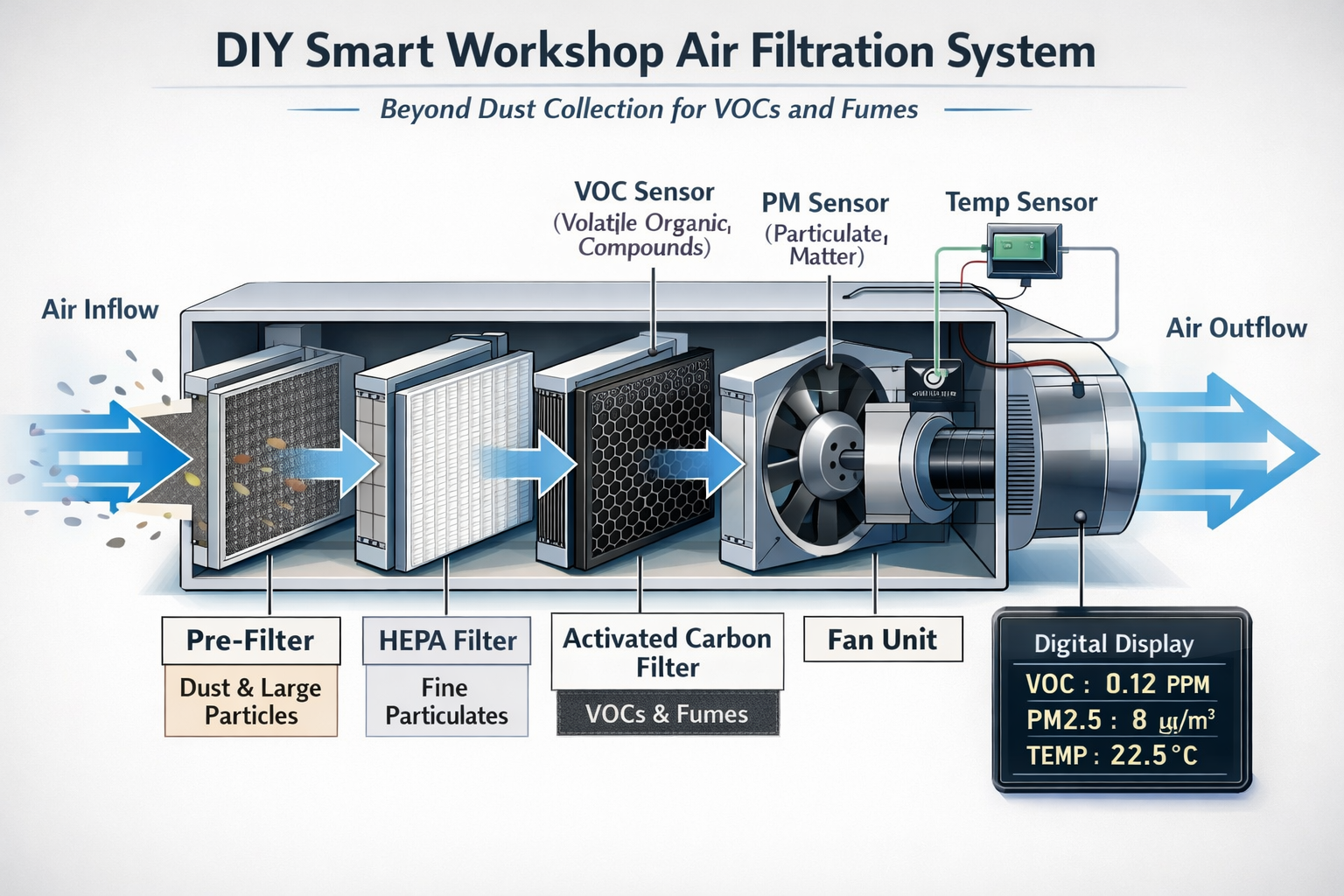
Many workshop enthusiasts primarily focus on dust collection, a vital first step, but often overlook the chemical cocktail floating in the air after applying finishes, using adhesives, or working with certain materials. Volatile Organic Compounds (VOCs) are organic chemicals that have a high vapor pressure at room temperature. They are emitted as gases from certain solids or liquids and can include a variety of chemicals, some of which may have short- and long-term adverse health effects.

Common sources of VOCs and fumes in a woodworking or DIY workshop include:
- Paints, Stains, and Varnishes: Many oil-based and even some water-based finishes release VOCs during application and curing.
- Adhesives and Glues: Wood glues, epoxy resins, contact cement, and superglues often contain strong chemical solvents. For a deeper dive into adhesives, check out our Ultimate Guide to Wood Glue.
- Solvents and Cleaners: Mineral spirits, lacquer thinner, acetone, and other cleaning agents are significant sources of fumes.
- Plastics and Composites: Working with certain plastics or fiberglass can release harmful vapors.
- Burning Materials: Laser engraving, soldering, or even operating internal combustion engines (like small generators) in the workshop can produce harmful combustion byproducts.
Exposure to these invisible threats can lead to headaches, dizziness, respiratory irritation, and over time, more severe health conditions. Therefore, a comprehensive air filtration strategy that goes Beyond Dust Collection for VOCs and Fumes is paramount.
The Role of Multi-Stage Filtration
To effectively combat both particulates and chemical pollutants, a multi-stage filtration approach is essential for any DIY Smart Workshop Air Filtration Systems: Beyond Dust Collection for VOCs and Fumes.
| Filter Stage | Primary Function | What It Captures | Replacement Frequency (Approx.) |
|---|---|---|---|
| Pre-filter | Captures large particles, extends life of other filters | Sawdust, wood chips, large debris | Every 1-3 months |
| MERV-rated Filter | Captures finer airborne particulates | Fine dust, sanding particles, pollen, mold spores | Every 3-6 months |
| HEPA Filter | Captures extremely fine particles (99.97% at 0.3 microns) | Microscopic dust, allergens, bacteria, some viruses | Every 6-12 months |
| Activated Carbon | Adsorbs gaseous pollutants, odors, VOCs, fumes | Chemical fumes, paint odors, glue vapors, solvents | Every 3-6 months |
Note: Replacement frequencies are estimates and depend heavily on usage and air quality.
Activated carbon is the critical component for targeting VOCs and fumes. It works through a process called adsorption, where chemical molecules adhere to the porous surface of the carbon. The more surface area the carbon has, the more pollutants it can capture.
Designing and Building Your DIY Smart Workshop Air Filtration System
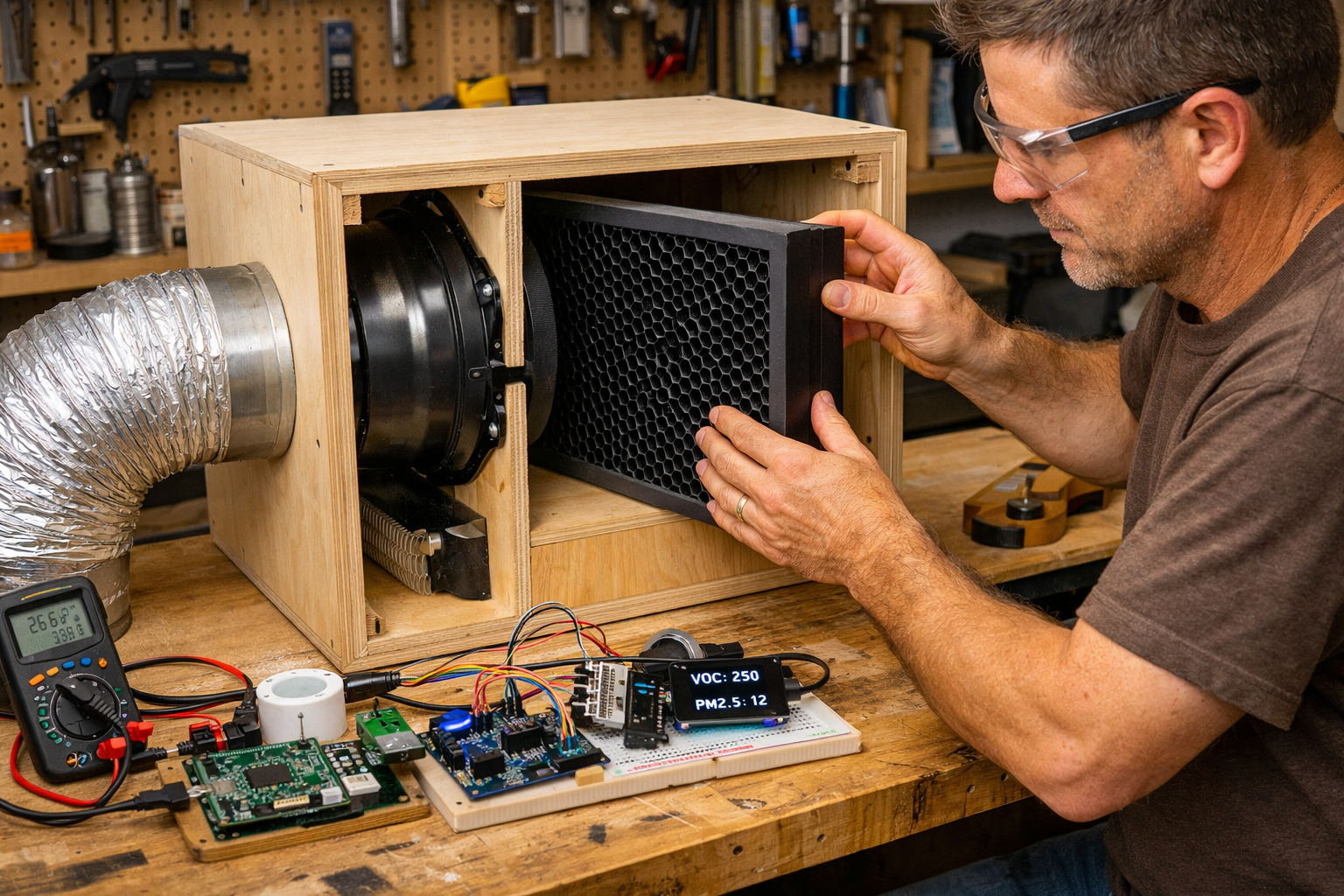
Building your own smart air filtration system offers unparalleled control, customization, and often, cost savings compared to commercial units with similar capabilities. Here’s a breakdown of the design and build process for DIY Smart Workshop Air Filtration Systems: Beyond Dust Collection for VOCs and Fumes.
Core Components
- Enclosure: Build a robust, airtight box from plywood or MDF. Ensure easy access for filter changes. Consider building it into a workbench or as a standalone unit for better portability. For workbench ideas, see our guide on Creating Ergonomic Workshop Furniture.
- Fan/Blower: Select an inline duct fan or squirrel cage blower powerful enough for your workshop size. Airflow is measured in Cubic Feet per Minute (CFM). Aim for a system that can exchange the air in your workshop 6-8 times per hour.
- Calculation: Workshop Volume (Length x Width x Height) / 60 minutes * Air Changes Per Hour (6-8) = Required CFM.
- Filter Slots: Design slots for your chosen filters, ensuring a tight seal to prevent air bypass. You’ll need separate slots for the pre-filter, MERV/HEPA filter, and activated carbon filter.
- Ducting: Use appropriate diameter ducting to connect the fan and direct airflow. Smooth, rigid ducting is more efficient than flexible hose.
- Smart Components:
- Microcontroller: An Arduino or Raspberry Pi is ideal for controlling the system.
- Environmental Sensors:
- PM2.5/PM10 Sensor: Detects particulate matter.
- VOC Sensor (e.g., MQ-135, BME680): Detects various gaseous pollutants.
- Temperature/Humidity Sensor: Useful for overall environmental monitoring.
- Relay Module: To switch the fan on/off based on sensor readings or scheduled times.
- Wi-Fi Module (ESP8266/ESP32): For remote monitoring and control.
Step-by-Step Construction Guide
- Design & Planning: Sketch out your system. Determine filter sizes, fan placement, and the overall dimensions of your enclosure. Consider where it will sit in your workshop. A compact design might be beneficial for smaller spaces; explore concepts like Building a Compact and Ergonomic Workbench for Small Workshops to see how space efficiency is achieved.
- Build the Enclosure: Cut plywood or MDF pieces to form a box. Create tight-fitting dados or rabbets for filter slots. Use wood glue and screws for strong, airtight joints. Seal all internal seams with caulk.
- Install Fan: Mount the fan securely within the enclosure or in line with the ducting. Ensure anti-vibration measures are in place to reduce noise.
- Install Filter Slots: Create sealing gaskets around each filter slot using foam weather stripping. This is crucial for preventing air from bypassing the filters.
- Wiring the Smart System:
- Connect your PM2.5 and VOC sensors to the microcontroller.
- Wire the relay module to the microcontroller and the fan’s power supply. Always use appropriate electrical safety precautions and consult with an electrician if unsure.
- Program the microcontroller to read sensor data.
- Set thresholds: For example, if PM2.5 exceeds 15 µg/m³ or VOC levels rise above a certain ppm, activate the fan.
- Integrate Wi-Fi for remote monitoring via a smartphone app (e.g., Blynk, Home Assistant, or a custom web interface). This smart integration truly elevates DIY Smart Workshop Air Filtration Systems: Beyond Dust Collection for VOCs and Fumes.
- Test and Calibrate: Power up your system. Use a smoke test or an air quality monitor to verify airflow and filtration effectiveness. Calibrate your sensors according to manufacturer guidelines for accurate readings.
Enhancements and Considerations
- UV-C Light: For an extra layer of sanitation, consider adding a UV-C light chamber after the filters to kill airborne bacteria and viruses. Handle UV-C lights with extreme care, as direct exposure is harmful to skin and eyes.
- External Exhaust: If feasible, consider venting particularly noxious fumes directly outside through an exhaust port, especially when using heavy solvents or spray painting. This moves pollutants out of the space entirely, complementing the internal filtration.
- Noise Reduction: Fans can be noisy. Consider insulated enclosures, anti-vibration mounts, and duct silencers.
- Filter Monitoring: Program your smart system to track fan run-time and alert you when filters are due for replacement.
Maintaining Your Advanced Filtration System and Maximizing Air Quality
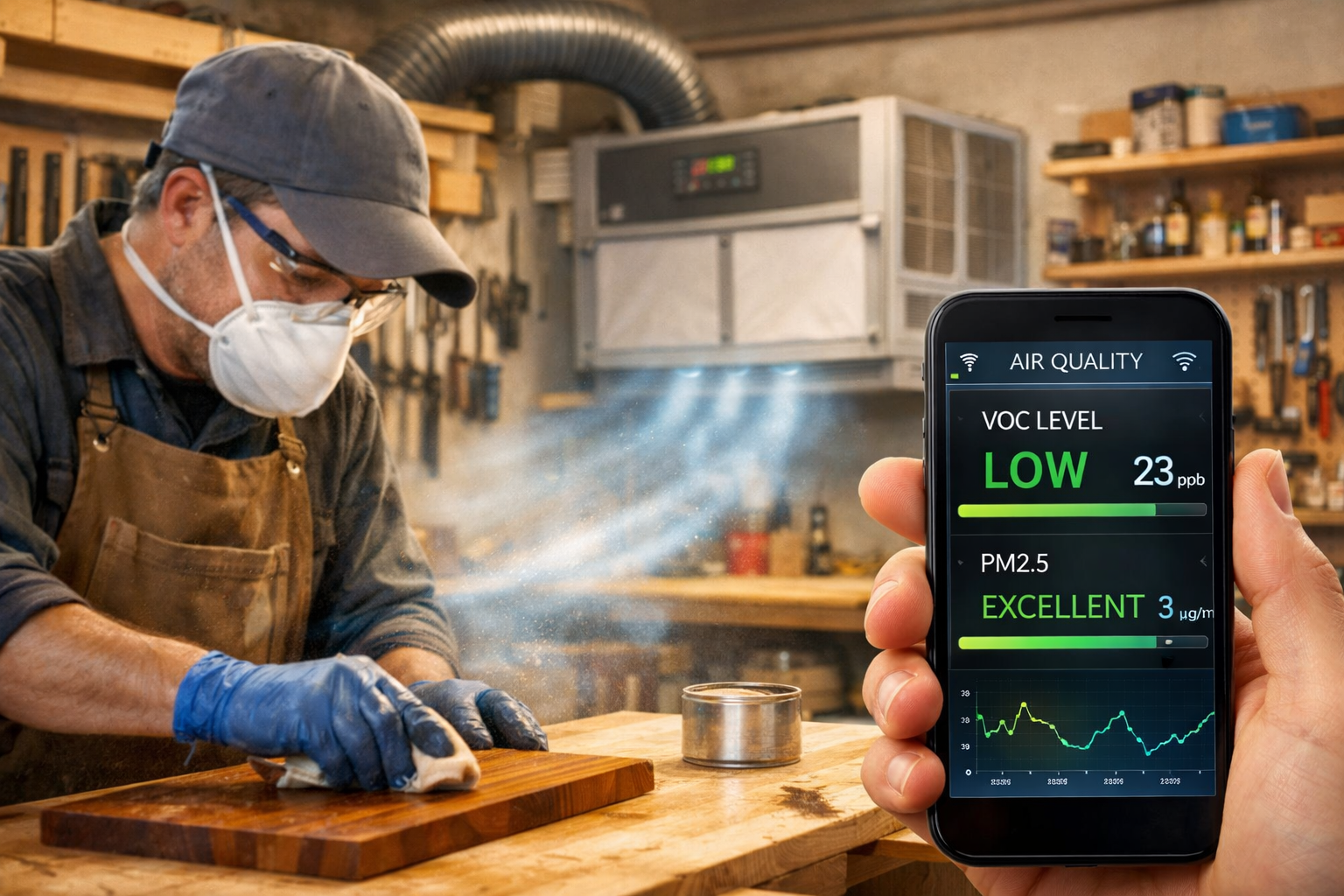
Regular maintenance is key to the long-term effectiveness of your DIY Smart Workshop Air Filtration Systems: Beyond Dust Collection for VOCs and Fumes. Neglecting filters can lead to reduced airflow, decreased filtration efficiency, and even damage to your fan.
Essential Maintenance Schedule
- Pre-filters: Inspect monthly, replace every 1-3 months or when visibly dirty. These are your first line of defense and cheap to replace.
- MERV/HEPA Filters: Inspect every 3 months, replace every 6-12 months depending on usage and air quality readings. A clogged HEPA filter significantly restricts airflow.
- Activated Carbon Filters: Replace every 3-6 months. The effectiveness of activated carbon diminishes as it becomes saturated with adsorbed chemicals. You might notice a return of odors as an indicator.
- Fan: Inspect the fan blades annually for dust buildup and ensure smooth operation. Lubricate bearings if necessary.
- Smart Sensors: Periodically clean sensors with compressed air to remove dust. Check calibration against a known good reference if possible.
Best Practices for Optimal Air Quality
- Source Control: Whenever possible, minimize the generation of pollutants. Use low-VOC finishes, work with less toxic materials, and ensure proper ventilation at the source.
- Local Exhaust Ventilation (LEV): Complement your ambient air filtration with local exhaust systems for specific tasks. For instance, a small fume extractor for soldering or a spray booth for finishing can capture pollutants at their point of origin before they disperse.
- Containment: When using strong chemicals, work in a designated area, perhaps even with temporary plastic sheeting, to contain fumes while your filtration system works.
- Personal Protective Equipment (PPE): Even with excellent air filtration, always use appropriate respirators, safety glasses, and gloves, especially during tasks that generate high levels of dust or fumes. No system is 100% foolproof, and personal protection remains vital.
- Workshop Cleanliness: Regularly clean your workshop to reduce dust buildup. Even static dust can be re-aerosolized. Learn more about effective cleaning techniques in our guide to Craftsman Home N Shop Vac.
- Smart Integration: Utilize your smart system’s capabilities to their fullest. Set up schedules for fan operation during and after work hours, and configure alerts for high pollutant levels. Consider integrating your air filtration system with other smart home elements for a fully connected workspace, as detailed in DIY Smart Home Integration with Custom Woodwork.
Conclusion
The health benefits of implementing DIY Smart Workshop Air Filtration Systems: Beyond Dust Collection for VOCs and Fumes are immeasurable. By proactively addressing both particulate matter and chemical pollutants, you create a safer, more enjoyable, and ultimately more productive environment for your creative endeavors. The ability to customize a system with smart technology for automated, responsive air quality control in 2026 makes this a rewarding and highly impactful DIY project for any serious woodworker or craftsperson. Take the step to build your own advanced system and breathe easier, knowing you’ve invested in your well-being.