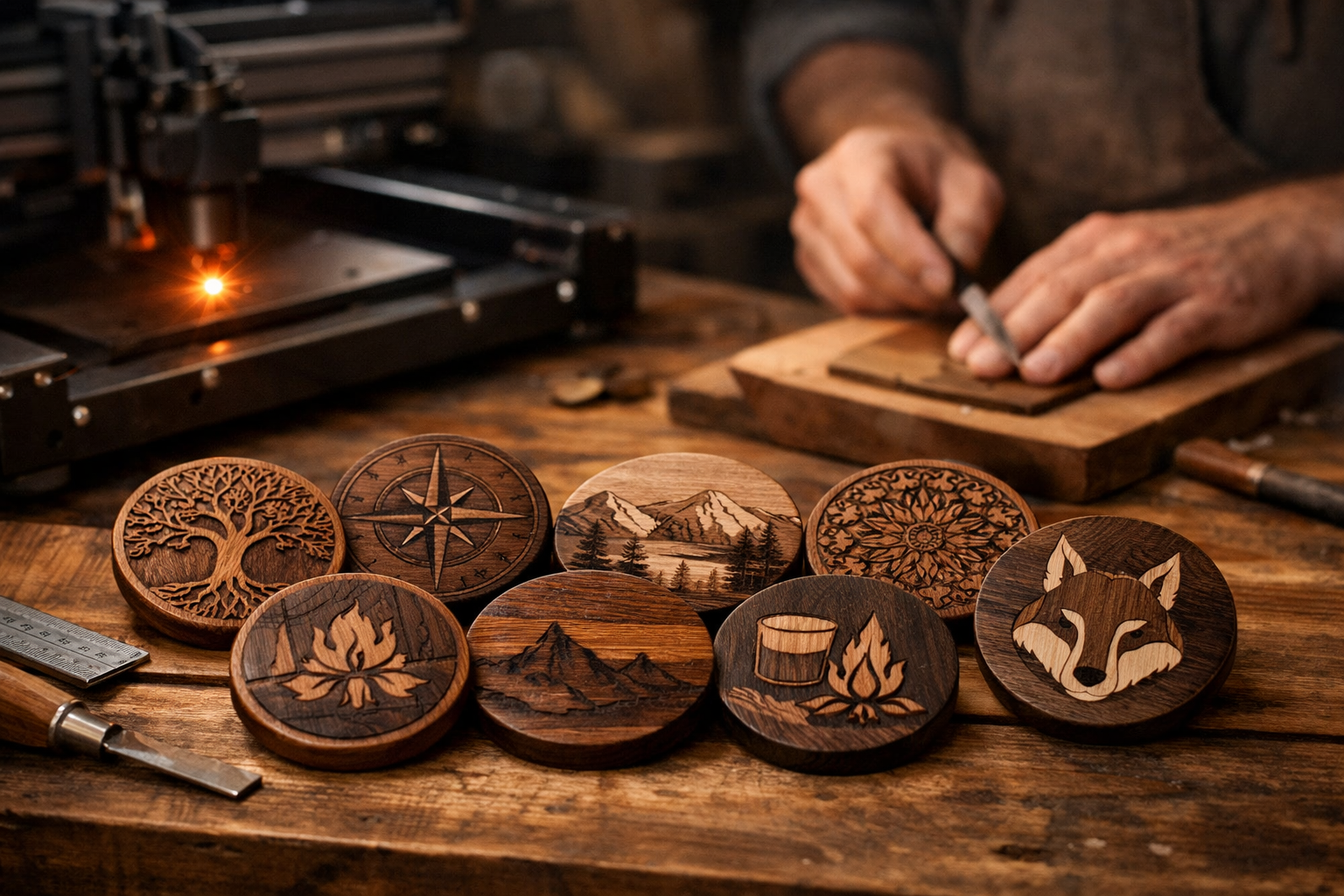

In 2026, the demand for personalized, high-quality home goods continues to surge, making engraved wooden coasters a highly sought-after item. What was once a simple household accessory has transformed into a canvas for intricate artistry and heartfelt personalization. This article delves into the lucrative world of Engraved Wooden Coasters with Custom Designs: Laser and Hand-Carving Techniques for Profitable Sales, exploring how to leverage both modern technology and traditional craftsmanship to create unique products that command higher prices and captivate customers. Whether aiming for the precise detailing of a laser engraver or the rustic charm of a hand-carved piece, mastering these techniques can turn a modest woodworking hobby into a thriving enterprise, especially in today’s minimalist-inspired market.
The key to success lies not just in the craft itself, but in understanding the market for custom designs and how to optimize production for profitability. We will examine wood selection, the distinct advantages of laser versus hand-carving, effective finishing methods, and strategies for marketing your unique creations.
Key Takeaways
- Diverse Techniques, Diverse Markets: Both laser engraving and hand-carving offer unique aesthetics, appealing to different customer segments and allowing for a broader product range.
- Strategic Wood Selection: Choosing the right wood (e.g., maple, walnut, cherry) is crucial for both carving ease and the final appearance and durability of the coaster.
- Customization is King: Personalized designs, from monograms to corporate logos, significantly increase product value and appeal, particularly for gifts and corporate clients.
- Finishing for Durability and Appeal: Proper food-safe and water-resistant finishes are essential for protecting the wood, enhancing the engraving, and ensuring longevity.
- Marketing and Sales Optimization: Understanding your target audience and employing effective online and offline marketing strategies are vital for turning craftsmanship into profitable sales.
Understanding the Craft: Laser Engraving vs. Hand-Carving for Custom Coasters
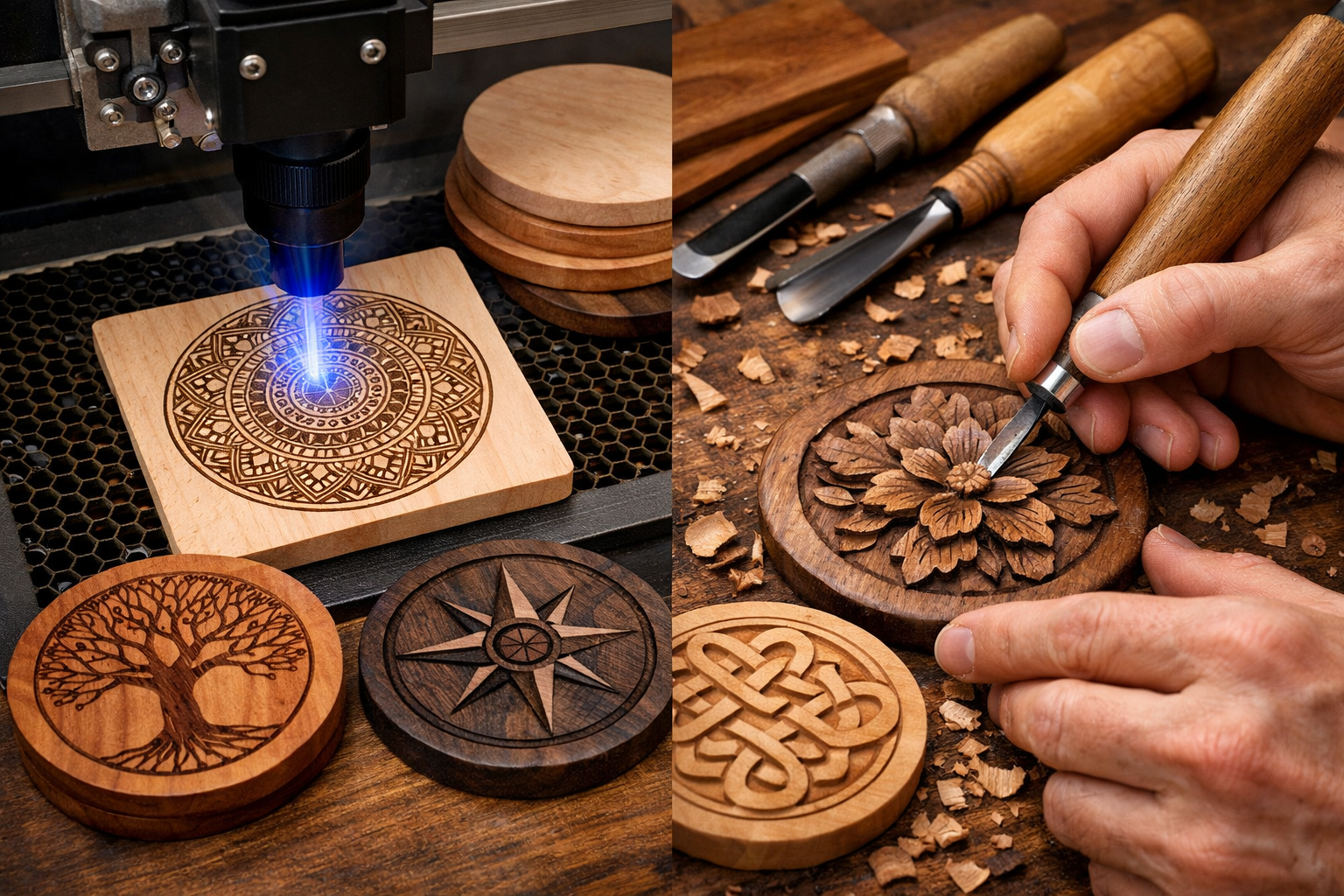
The heart of creating distinctive engraved wooden coasters lies in the engraving method chosen. Both laser engraving and hand-carving offer unique advantages, artistic possibilities, and operational considerations. Understanding these differences is paramount when planning your product line for profitable sales.
Laser Engraving: Precision, Speed, and Scalability
Laser engraving utilizes a focused beam of light to etch designs onto the wood surface. This method is celebrated for its incredible precision, ability to reproduce intricate details, and rapid production speed.
Advantages of Laser Engraving:
- High Precision and Detail: Lasers can achieve incredibly fine lines and complex patterns, making them ideal for detailed logos, text, and elaborate illustrations. This precision is especially valuable for corporate branding or highly personalized designs.
- Speed and Efficiency: Once a design is digitized, a laser engraver can produce multiple coasters quickly and consistently. This makes it an excellent choice for bulk orders, such as wedding favors or promotional items.
- Consistency: Every coaster produced from the same digital file will be identical, ensuring brand consistency and quality control.
- Versatility: Beyond engraving, some laser machines can also cut wood, opening up possibilities for unique coaster shapes or multi-layered designs.
- User-Friendly Software: Modern laser engravers come with intuitive software, allowing designers to easily import and manipulate digital artwork.
Considerations for Laser Engraving:
- Initial Investment: Laser engraving machines can represent a significant upfront cost, though smaller desktop models are becoming more affordable for hobbyists.
- Material Limitations: While versatile, certain woods or finishes may not react ideally to laser heat, potentially causing charring or inconsistent results if not properly calibrated.
- Learning Curve: Operating the software and machine effectively requires some training and experimentation to achieve optimal results.
Hand-Carving: Artistic Touch, Unique Texture, and Artisan Appeal
Hand-carving involves using traditional tools like chisels, gouges, and knives to physically remove wood and create three-dimensional or textured designs. This method imbues each coaster with a unique, handcrafted feel that laser engraving cannot replicate.
Advantages of Hand-Carving:
- Artisan Appeal: Hand-carved items carry a unique charm and story, often commanding higher prices due to their perceived artistry and the effort involved.
- Tactile Texture: Hand-carving creates depth and texture that is pleasing to the touch, offering a multi-sensory experience.
- Uniqueness: No two hand-carved coasters will be exactly alike, providing customers with a truly one-of-a-kind product. This can be a strong selling point for premium items.
- Low Initial Cost: Hand tools are relatively inexpensive compared to laser engravers, making hand-carving an accessible entry point for new woodworkers.
Considerations for Hand-Carving:
- Time-Intensive: Hand-carving is significantly slower than laser engraving, limiting production volume and making bulk orders more challenging or expensive.
- Skill Requirement: Achieving consistent and high-quality results requires considerable skill, practice, and a steady hand.
- Design Limitations: Intricate details and very fine lines can be difficult, if not impossible, to achieve with hand tools compared to a laser.
- Physical Demands: Prolonged carving can be physically taxing and requires good hand strength and dexterity.
Ultimately, the choice between laser engraving and hand-carving depends on your business model, target market, and artistic vision. Many successful businesses even combine both techniques, using lasers for intricate detailing and hand-carving for accentuating certain features or adding a unique tactile element.
Essential Materials and Techniques for Engraved Wooden Coasters with Custom Designs
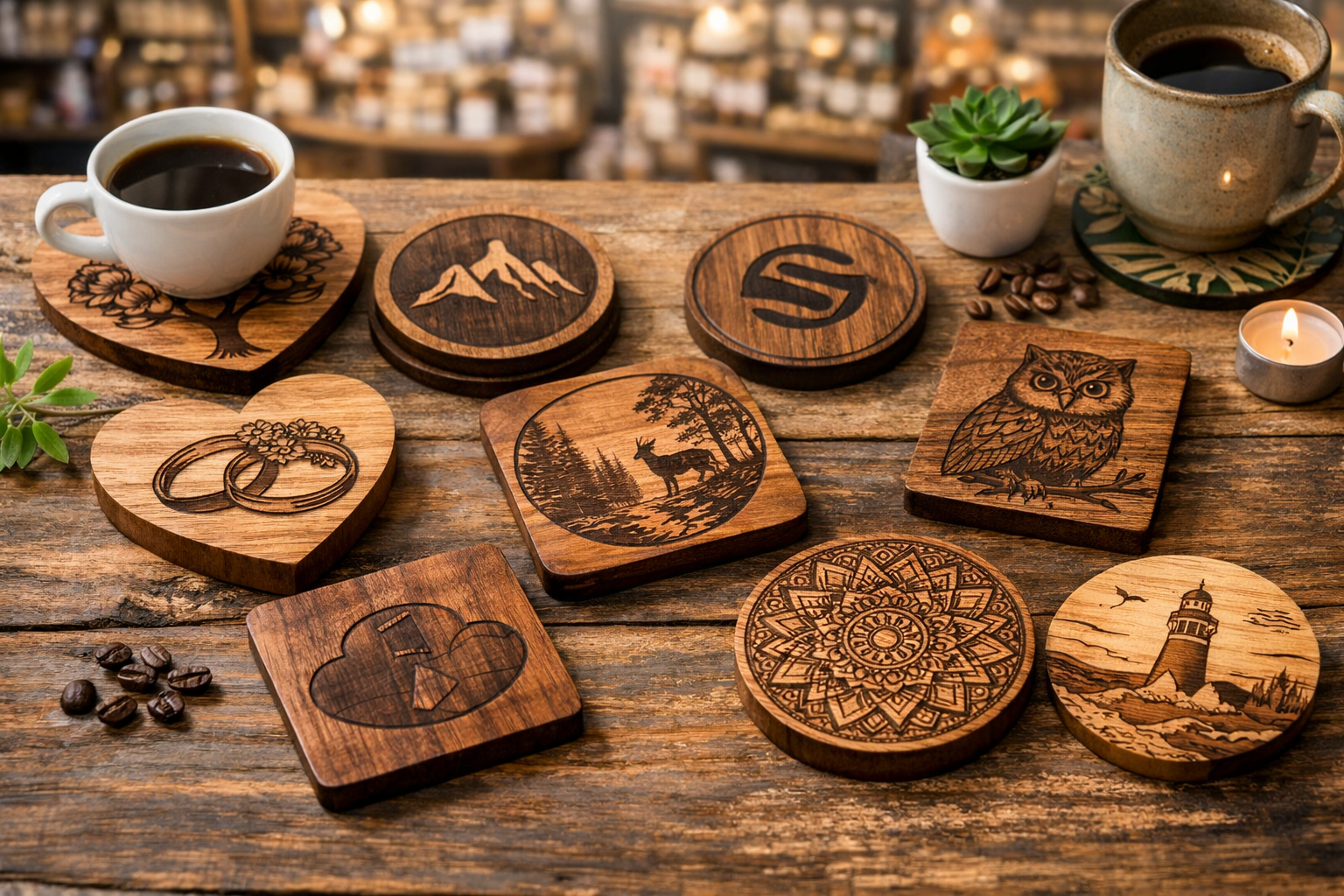
Crafting high-quality engraved wooden coasters requires careful selection of materials and mastery of specific woodworking and finishing techniques. The right foundation ensures durability, enhances the custom design, and contributes to profitable sales.
Wood Selection: The Foundation of Your Coasters
The type of wood you choose profoundly impacts the carving process, the final aesthetic, and the coaster’s longevity.
- Hardwoods (Maple, Walnut, Cherry, Oak): These are excellent choices for coasters due to their durability, resistance to warping, and beautiful grain patterns.
- Maple: Light-colored with a fine, even grain, maple takes laser engraving very well, offering high contrast. It’s also relatively easy to hand-carve for crisp details.
- Walnut: Known for its rich, dark color and attractive grain, walnut provides stunning contrast for lighter laser engravings. It’s moderately hard and carves smoothly.
- Cherry: Features a warm, reddish-brown hue that deepens with age. Cherry wood is fine-grained and a pleasure to carve, and laser engraving shows up beautifully.
- Oak: A very durable wood with a prominent grain. While great for robustness, its open grain can sometimes make very fine laser engraving or delicate hand-carving slightly more challenging.
- Softwoods (Pine, Cedar): While cheaper, softwoods are generally less suitable for coasters as they are prone to dents and absorb moisture more readily. They can be used for rustic, less durable options but typically offer lower profit margins.
- Bamboo: A sustainable and fast-growing option, bamboo offers a unique grain and engraves well with a laser, producing good contrast.
Tip: Consider sourcing wood scraps or offcuts from larger projects. This can significantly reduce material costs, boosting your profit margins, especially for small items like coasters. See our guide on Maximizing Profit from Scrap Wood: High-Demand Micro-Projects for more ideas.
Preparing the Wood Blanks
Regardless of your chosen engraving method, proper wood preparation is key:
- Sizing and Cutting: Cut wood into uniform blanks. Standard coaster sizes range from 3.5 to 4 inches in diameter or square. Use a saw for precision.
- Sanding: Sand all surfaces smooth, starting with a coarser grit (e.g., 120-150) and progressing to a finer grit (e.g., 220-320). Smooth surfaces ensure an even engraving and finish.
- Edge Treatment: Consider chamfering or rounding the edges for a more refined look and comfortable feel. A router with a round-over bit can quickly achieve this.
Engraving Techniques in Detail
Laser Engraving Process:
- Design Creation: Create your custom design using graphic design software (e.g., Adobe Illustrator, Inkscape).
- Software Setup: Import your design into the laser engraver’s software. Adjust power, speed, and focus settings based on the wood type and desired depth of engraving.
- Calibration and Test: Perform a small test engraving on a scrap piece of the same wood to fine-tune settings.
- Engraving: Place the wood blank securely in the laser machine and start the engraving process.
- Cleaning: After engraving, use compressed air or a soft brush to remove any residual soot or dust. Light sanding with very fine grit (400-600) can further clean the engraved area, if needed, taking care not to sand away the design.
Hand-Carving Process:
- Design Transfer: Sketch or transfer your custom design onto the sanded wood blank using pencil or carbon paper.
- Tool Selection: Choose appropriate carving tools (V-gouges for outlines, U-gouges for wider areas, chisels for flattening). Keep your tools sharp; dull tools are dangerous and produce poor results.
- Outline Carving: Begin by carefully carving the outlines of your design. Start shallow and gradually deepen as confidence grows.
- Detailing and Texturing: Work on the interior details, adding texture or dimension as desired. Consider using small, specialized detail knives for intricate work.
- Undercutting (Optional): For a more pronounced 3D effect, carefully undercut certain areas of the design.
- Sanding and Refinement: Gently sand carved areas with fine sandpaper to smooth rough edges without losing detail. Use a small brush to clean dust from crevices.
Finishing for Durability and Aesthetics
A proper finish is crucial for protecting the coasters from moisture, enhancing the wood grain and engraving, and ensuring a long-lasting product.
- Food-Safe Oils (Mineral Oil, Walnut Oil, Tung Oil): These penetrate the wood, offer good water resistance, and bring out the natural beauty of the grain. They require reapplication over time. For more on wood finishes, explore wood finishing techniques.
- Polyurethane or Lacquer: These create a hard, durable, and water-resistant surface film. They are excellent for high-use items like coasters. Ensure they are water-resistant and, if applicable, food-safe once cured. You can learn more about applying these in our guide on spraying water-based poly.
- Wax Finishes: Offer a softer, natural feel and some water resistance. Often used in conjunction with oil finishes.
- Sealing the End Grain: Coaster edges (end grain) absorb moisture more readily. Applying extra coats of finish to the edges helps seal them.
Process: Apply finishes in thin, even coats, allowing adequate drying time between coats. Lightly sand with very fine sandpaper (600+ grit) between polyurethane or lacquer coats for a smoother finish.
Crafting for Commerce: Profitable Sales Strategies for Engraved Wooden Coasters
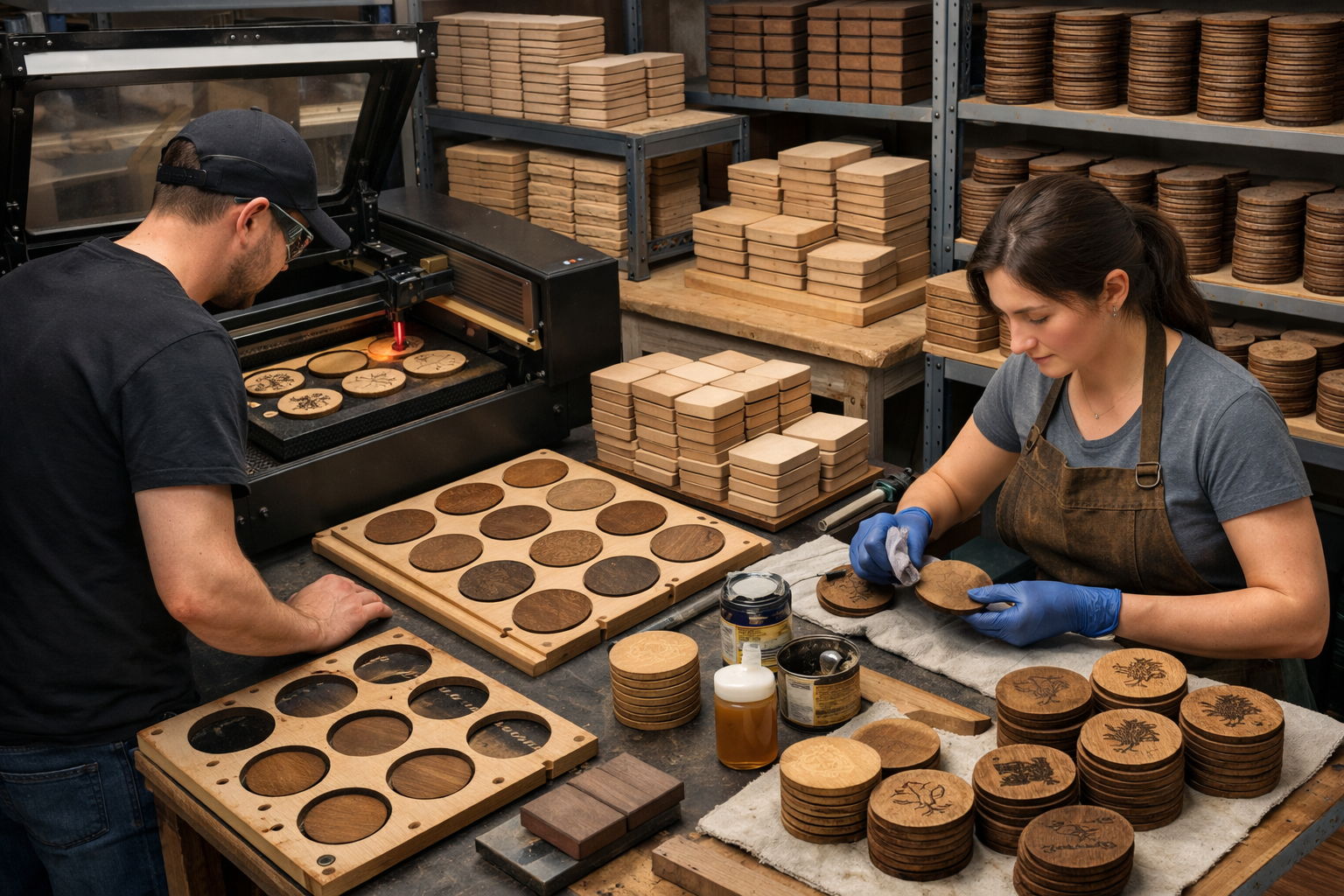
Transitioning from creating beautiful engraved wooden coasters to generating profitable sales requires more than just excellent craftsmanship. It demands a keen understanding of market trends, effective marketing, and smart pricing strategies. In 2026, personalization and unique artisan products are high in demand, making this a prime market to tap into.
Identifying Your Niche and Target Market
Before you sell, know who you’re selling to. Engraved Wooden Coasters with Custom Designs: Laser and Hand-Carving Techniques for Profitable Sales appeal to several distinct markets:
- Personalized Gifts: Individuals seeking unique gifts for weddings, anniversaries, birthdays, or housewarmings. Focus on monograms, dates, names, or special messages.
- Corporate Gifting: Businesses looking for branded promotional items or client gifts. Offer bulk discounts and logo engraving services.
- Event Favors: Weddings, parties, and corporate events requiring custom favors. Think about designs relevant to the occasion.
- Home Decor Enthusiasts: Customers seeking aesthetically pleasing, functional items that complement their interior design. Rustic, minimalist, or themed designs (e.g., nature, geometric) work well.
- Wholesale to Boutiques: Small businesses and gift shops looking to stock unique, handcrafted items.
Pricing Your Engraved Wooden Coasters
Pricing is a critical aspect of profitability. Consider these factors:
- Material Costs: Wood, finish, sandpaper, etc.
- Labor Costs: Your time for carving, laser setup, sanding, finishing, and packaging. Value your time appropriately.
- Overhead: Electricity for tools, marketing expenses, online platform fees, etc.
- Engraving Method: Hand-carved items typically command higher prices due to the skill and time involved, while laser-engraved items can be priced competitively for bulk orders.
- Customization Level: More intricate or personalized designs should increase the price.
- Market Value: Research competitor pricing on platforms like Etsy, craft fairs, and local boutiques.
Formula for Basic Pricing: (Material Cost + Labor Cost + Overhead) * (1 + Profit Margin) = Selling Price. Aim for a healthy profit margin to ensure your business is sustainable.
Marketing and Sales Channels
Leverage a multi-channel approach to reach a wider audience:
- Online Marketplaces: Platforms like Etsy, Shopify, and Amazon Handmade are excellent for reaching a global audience interested in unique crafts. Optimize your product listings with high-quality photos, detailed descriptions, and relevant keywords.
- Your Own Website: A dedicated e-commerce site provides more control over your brand and customer experience. Consider creating an appealing gallery of your handcrafted wooden wall art or other items to cross-promote.
- Social Media: Instagram, Pinterest, and Facebook are highly visual platforms perfect for showcasing your engraved coasters. Use engaging photos, videos of the crafting process, and relevant hashtags.
- Local Craft Fairs and Markets: These provide direct interaction with customers, allowing them to feel the quality of your work and order custom designs in person.
- Collaborations: Partner with local cafes, breweries, or interior designers to create custom coasters for their establishments or for resale.
- Local Woodworking Guilds/Events: Participate in events or workshops to demonstrate your skills and build a local customer base. You might even find opportunities to teach basic woodworking projects that sell.
Maximizing Repeat Business and Referrals
- Exceptional Customer Service: Respond promptly to inquiries, fulfill orders efficiently, and address any concerns professionally.
- Quality Packaging: Attractive and protective packaging enhances the perceived value of your product and ensures it arrives safely.
- Follow-up: Send a polite follow-up email after a sale to thank the customer and invite them to leave a review.
- Loyalty Programs: Offer discounts for repeat purchases or referrals.
By combining superior craftsmanship in Engraved Wooden Coasters with Custom Designs: Laser and Hand-Carving Techniques for Profitable Sales with strategic business practices, you can build a successful and rewarding venture.
Conclusion
The market for Engraved Wooden Coasters with Custom Designs: Laser and Hand-Carving Techniques for Profitable Sales is vibrant and offers significant potential for woodworkers in 2026. By understanding the distinct advantages of both laser engraving for precision and speed, and hand-carving for its unique artisan appeal, creators can tailor their products to diverse customer demands. Strategic wood selection, meticulous preparation, and durable finishing techniques are foundational to producing high-quality coasters that stand out.
Ultimately, turning craftsmanship into a profitable business requires a blend of artistic skill, material knowledge, and astute market understanding. Identify your niche, price your creations thoughtfully, and leverage a variety of marketing channels to reach your target audience. By focusing on customization, quality, and exceptional customer service, you can transform simple coasters into highly sought-after, high-margin gifts and functional art pieces that bring joy to customers and sustained success to your business.
Actionable Next Steps:
- Experiment: Try both laser and hand-carving techniques on different wood types to discover what you enjoy most and what sells best.
- Market Research: Analyze online marketplaces and local craft fairs to understand current pricing and popular design trends.
- Develop a Niche: Identify a specific target audience (e.g., brides, small businesses, specific interior styles) to focus your designs and marketing efforts.
- Invest Wisely: Consider your budget for tools, starting with hand tools for low entry cost, or researching affordable desktop laser engravers if precision and speed are priorities.
- Build a Portfolio: Create a collection of diverse coaster designs to showcase your capabilities and attract custom orders.