
Beyond the whirring of power tools and the dust they generate, lies the timeless craft of woodworking, deeply rooted in precision and the tactile connection between artisan and material. For every aspiring or seasoned woodworker, mastering hand tools is not merely an option but a foundational skill. This comprehensive guide, “Essential Hand Tools for Every Woodworker: A Comprehensive Guide to Selection, Sharpening, and Maintenance,” will delve into the critical aspects of choosing quality instruments, honing their edges to razor sharpness, and ensuring their longevity through diligent care. In 2026, the resurgence of traditional woodworking techniques highlights the enduring value of these fundamental tools.
Key Takeaways
- Quality over Quantity: Invest in well-made hand tools for superior performance, durability, and a more enjoyable woodworking experience.
- Sharpening is Paramount: A sharp tool is a safe and effective tool. Mastering sharpening techniques is non-negotiable for precision work.
- Regular Maintenance Extends Life: Proper cleaning, oiling, and storage prevent rust and damage, ensuring your tools last for generations.
- Ergonomics Matter: Choose tools that feel comfortable and balanced in your hand to reduce fatigue and improve control.
Selecting Essential Hand Tools for Every Woodworker
The journey of woodworking often begins with the right set of tools. While the allure of a fully equipped workshop is strong, starting with a carefully chosen selection of essential hand tools will lay a solid foundation. This section focuses on what to look for when acquiring your core toolkit.

Chisels: The Heart of Hand-Cut Joinery
Chisels are indispensable for joinery, paring, and shaping. For beginners, a set of bevel-edge chisels ranging from 1/8″ to 1″ is an excellent starting point.
- Material: Look for high-carbon steel or chrome vanadium steel blades. These hold an edge well and are durable.
- Handle: Handles should be comfortable, often made of wood (ash, hornbeam) or synthetic materials. They should fit your hand well for control.
- Balance: A well-balanced chisel feels like an extension of your hand.
- Flatness: The back of the chisel should be perfectly flat. This is crucial for accurate paring.
Tip: While vintage chisels can be excellent, be prepared to spend time flattening their backs and sharpening them. New, high-quality chisels from reputable brands often come flatter out of the box.
Hand Planes: Shaping and Smoothing Wood
Hand planes are essential for truing surfaces, shaping edges, and achieving a glass-smooth finish. Start with a few versatile planes:
- Bench Plane (No. 4 or No. 5 Jack Plane): A jack plane is a workhorse for general stock removal and flattening. The No. 4 is a smoother, while the No. 5 is slightly longer and better for initial flattening.
- Block Plane: Small and held in one hand, block planes are perfect for chamfering edges, trimming end grain, and small detail work.
- Rabbet Plane (Optional but Useful): For cutting rabbets (recesses) along the edge of a board.
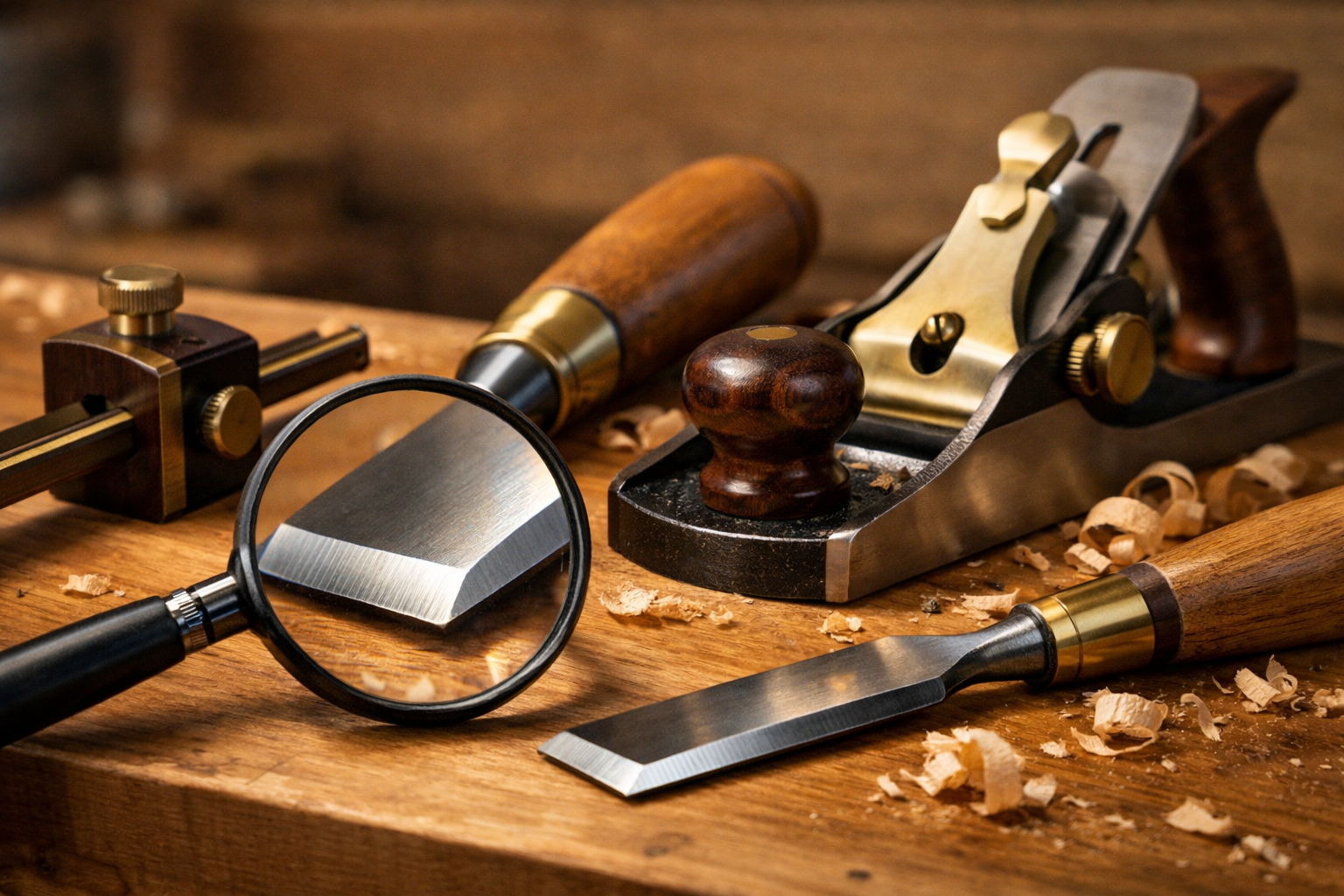
Key Considerations for Planes:
- Sole Flatness: The sole (bottom) of the plane must be flat for accurate work.
- Iron Quality: The blade (iron) should be made of good quality steel that holds a sharp edge.
- Adjustments: Look for planes with smooth, precise mechanisms for adjusting blade depth and lateral position.
- Weight and Feel: A good plane has a reassuring weight and feels balanced when pushed across wood.
Saws: Precision Cutting
While power saws handle bulk cutting, hand saws offer unparalleled control for joinery and fine work.
- Dovetail Saw: A small back saw with fine teeth for cutting precise dovetails. Check out our guide on Mastering Dovetail Drawers for Cabinets for more details.
- Tenon Saw: A larger back saw for cutting tenons and other through-cuts.
- Coping Saw: For intricate curves and internal cuts.
- Japanese Saws (Pull Saws): Many woodworkers prefer these for their thin kerf and cutting on the pull stroke, which offers excellent control.
Choosing Saws:
- TPI (Teeth Per Inch): Higher TPI means finer, slower cuts (good for joinery); lower TPI means faster, coarser cuts.
- Blade Stiffness: Backsaws (dovetail, tenon) have a stiff spine for straight cuts.
- Handle Comfort: As with chisels, ensure the handle provides a comfortable, secure grip.
Marking and Measuring Tools: The Foundation of Accuracy
Accuracy in woodworking begins long before the first cut.
- Layout Square/Combination Square: For marking 90-degree and 45-degree angles.
- Marking Gauge: For scribing lines parallel to an edge or end.
- Awl/Marking Knife: For incising precise lines that guide your saw or chisel, preventing tear-out.
- Rule/Tape Measure: Essential for all measurements.
Tip: A high-quality marking knife leaves a cleaner, more precise line than a pencil, which can be compressed by tool edges.
Sharpening: The Art of the Edge in Essential Hand Tools for Every Woodworker
A dull tool is not only ineffective but also dangerous. Mastering sharpening is arguably the most crucial skill for any woodworker. It transforms a frustrating experience into one of precision and enjoyment.
Understanding Sharpening Systems
Several systems exist, each with pros and cons:
- Waterstones: These natural or synthetic stones use water as a lubricant and to float away swarf (metal particles). They cut quickly and produce very fine edges. They require periodic flattening.
- Oilstones: Traditional and durable, oilstones use honing oil. They cut slower than waterstones but hold their shape longer.
- Diamond Stones: Extremely durable and fast-cutting, diamond stones never need flattening. They can be used dry or with water.
- Sandpaper (Scary Sharp System): A cost-effective method using progressively finer grits of sandpaper adhered to a flat surface (like glass).
The Sharpening Process (General Steps)
While specific angles vary, the core process remains:
- Grinding (Coarse Grit): Use a coarse stone (e.g., 1000 grit waterstone) to establish the primary bevel and remove any nicks.
- Honing (Medium Grit): Progress to a medium stone (e.g., 3000-5000 grit) to refine the bevel and create a burr on the back side of the blade.
- Polishing (Fine Grit): Use a fine stone (e.g., 8000+ grit) to remove the burr and polish the bevel to a razor edge.
- Stropping: Finish with a leather strop loaded with honing compound. This refines the edge further, removes any remaining micro-burr, and makes the edge incredibly keen.
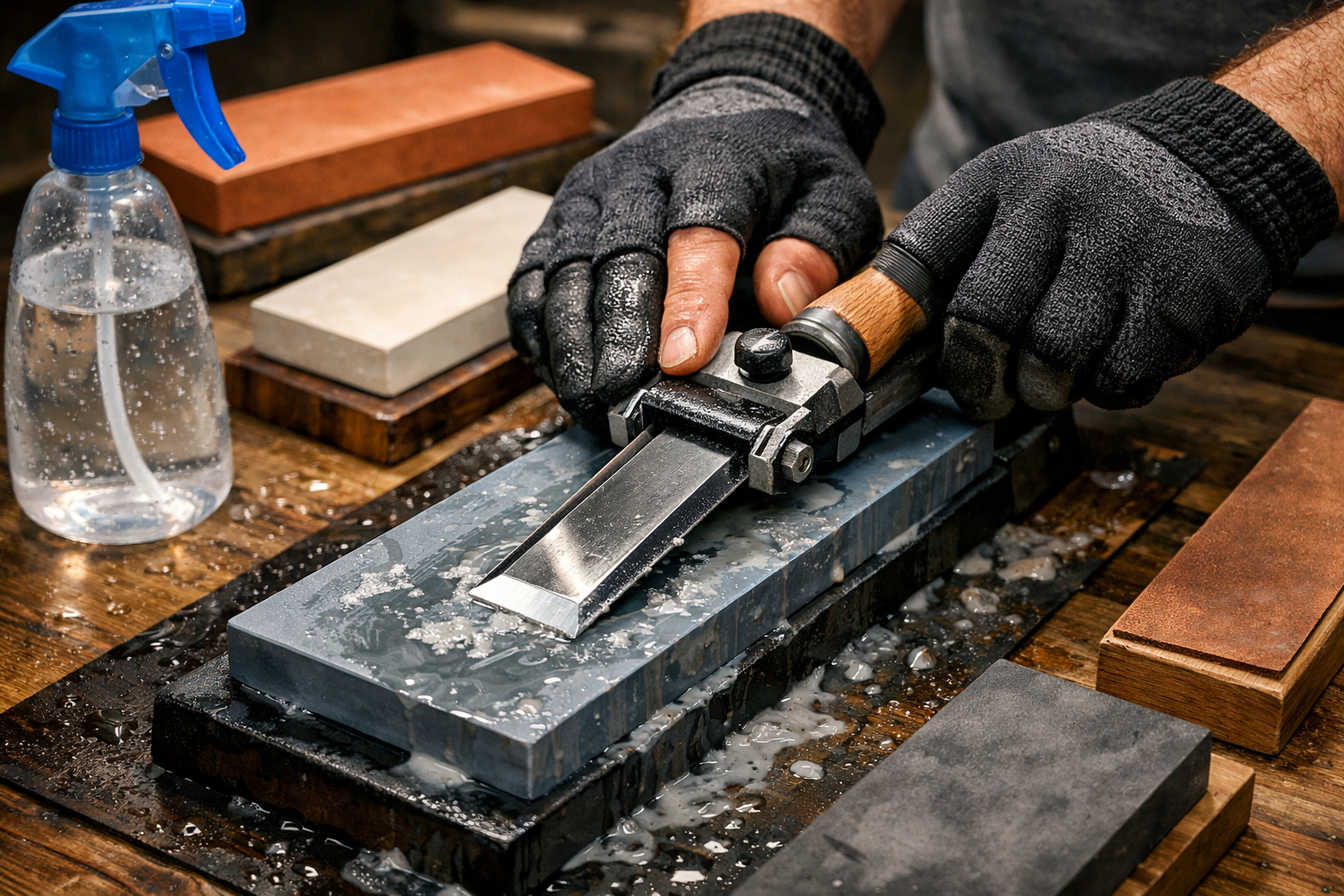
Key Angles for Chisels and Plane Irons:
- Primary Bevel: Typically 25-30 degrees for chisels and planes.
- Micro Bevel/Secondary Bevel: A slightly steeper angle (e.g., 30-35 degrees) applied to the very edge. This provides greater strength and makes sharpening quicker on subsequent passes.
“A sharp tool is a joy to use; a dull one, a chore. The difference in your woodworking experience is profound.”
Flattening Waterstones
Waterstones wear down with use and develop hollows. They must be flattened regularly using a flattening stone, coarse sandpaper on glass, or a diamond plate to ensure consistent contact with the tool blade.

Maintenance of Essential Hand Tools for Every Woodworker
Proper care ensures your investment lasts a lifetime and performs optimally. Neglecting maintenance leads to rust, dullness, and ultimately, damaged tools.
Rust Prevention
Rust is the enemy of hand tools.
- Cleanliness: After each use, wipe down tools to remove sawdust, moisture, and oils from your hands.
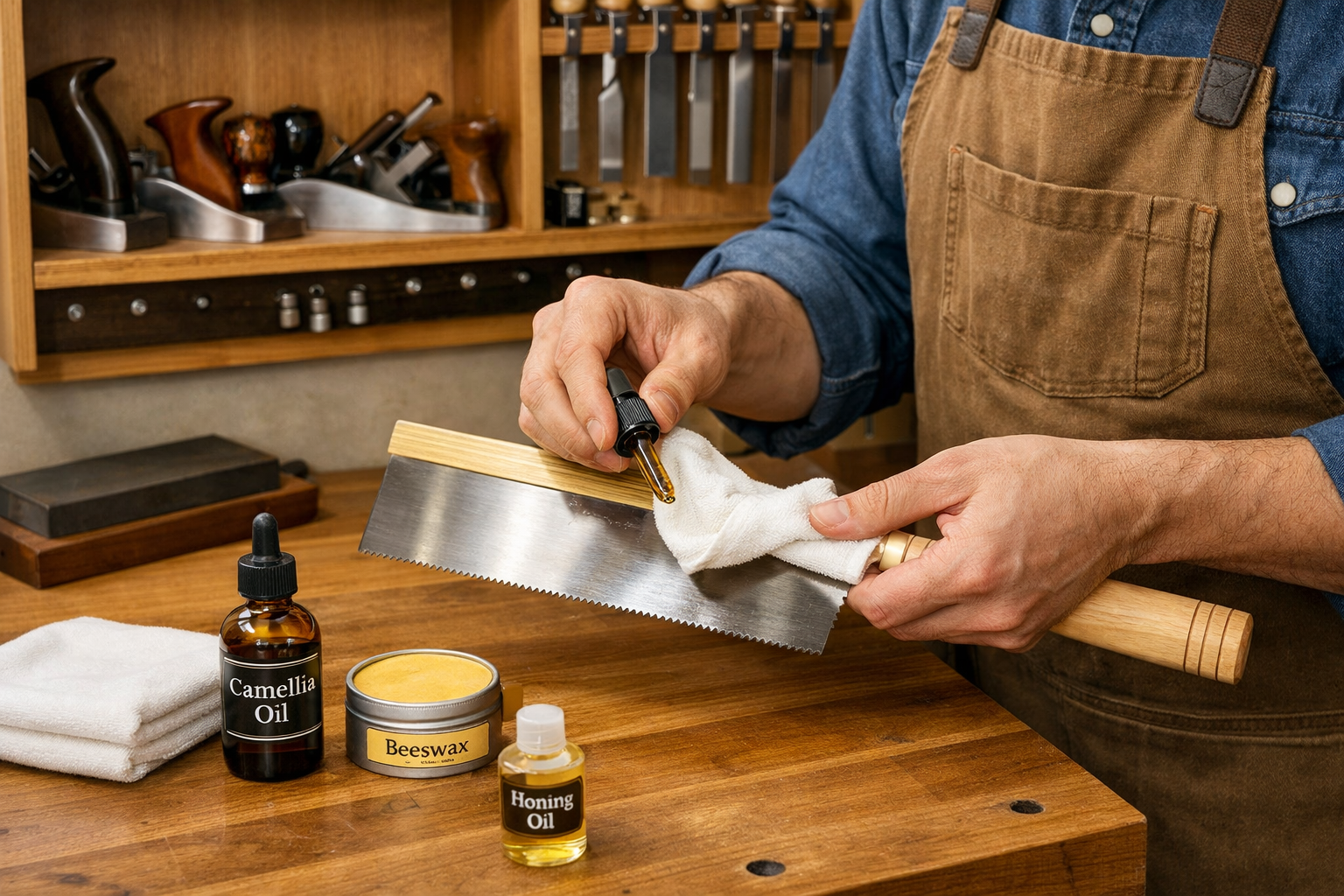
- Oiling: Apply a thin coat of rust-preventative oil (like camellia oil or a specialized tool oil) to all bare metal surfaces, especially blades and soles of planes.
- Desiccants: In humid environments, consider placing desiccant packets in tool chests or cabinets.
- Storage: Store tools in a dry environment. Custom-built tool cabinets or rolls can protect them from dust and humidity. For ideas on optimizing your workspace, consider our guide on The Ultimate Guide to Wooden Work Tables.
Keeping Components Moving Smoothly
- Plane Adjustments: Periodically clean and lubricate the adjustment mechanisms of hand planes with a dry lubricant or a very light oil to ensure smooth operation.
- Saw Blades: Keep saw blades clean of resin buildup. A dedicated saw cleaner or mineral spirits can work. Apply a light oil to prevent rust.
Handle Care
Wooden handles can dry out, crack, or become rough.
- Oil or Wax: Apply a finish like linseed oil or paste wax to wooden handles to protect them and keep them smooth.
- Tighten: Ensure handles are securely attached to chisels and other tools. If loose, re-epoxy or wedge them as needed.
Storage Solutions
Effective storage is a critical part of maintenance, protecting your tools from damage and allowing easy access.
- Tool Chests: A traditional and effective way to store tools, providing protection and organization.
- Wall-Mounted Racks/Pegboards: Great for visibility and quick access, but ensure tools are still protected from dust and humidity.
- Tool Rolls: Ideal for chisels and other edge tools, protecting their edges when not in use or for transport.
Conclusion
Embracing hand tools in woodworking is a rewarding endeavor that connects you to generations of craftspeople. By meticulously selecting the right instruments, dedicating time to master the art of sharpening, and committing to regular maintenance, you ensure that your essential hand tools remain reliable companions in your workshop for years to come. In 2026, the demand for finely crafted, unique wooden pieces continues to grow, and these skills will allow you to produce work of exceptional quality and beauty. Start with quality, keep them sharp, and maintain them with care, and you will unlock the full potential of your woodworking journey.
Actionable Next Steps:
- Assess Your Toolkit: Identify any gaps in your essential hand tools based on this guide.
- Invest in Sharpening Gear: If you don’t have a good sharpening system, prioritize acquiring one (e.g., a set of waterstones and a flattening stone).
- Practice Sharpening: Dedicate time to practice sharpening a dull chisel or plane iron until you achieve a consistent, razor-sharp edge.
- Establish a Maintenance Routine: Schedule regular cleaning and oiling for your hand tools to prevent rust and ensure longevity.