
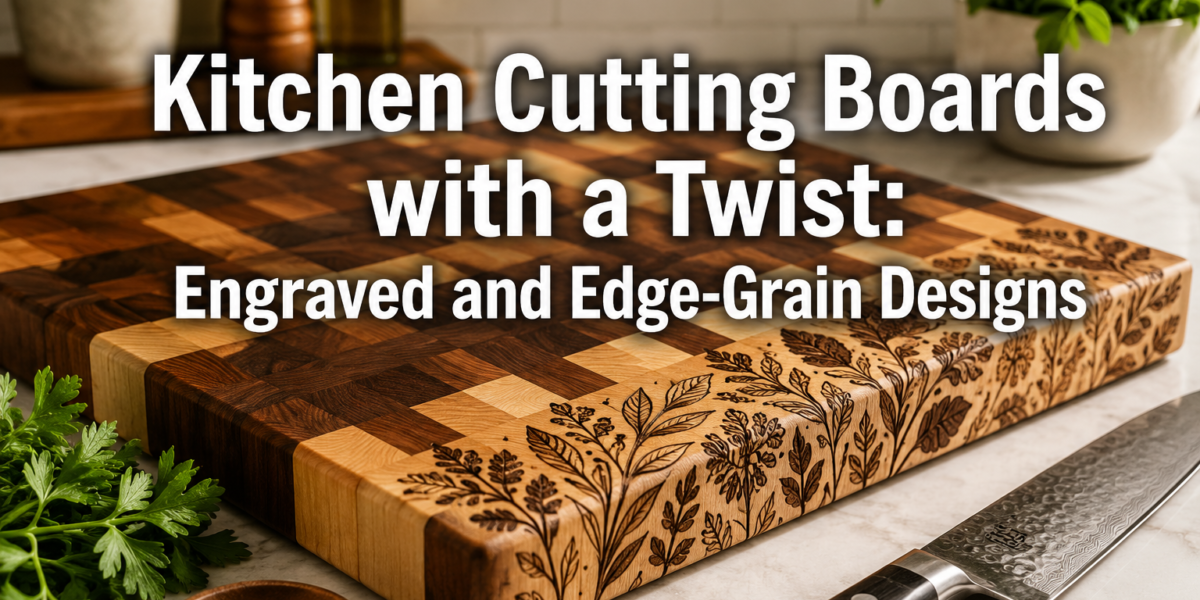
In the landscape of modern kitchens, where functionality often meets aesthetic ambition, a simple kitchen tool has transformed into a statement piece. Far from being merely utilitarian, cutting boards in 2026 are increasingly celebrated for their craftsmanship, personalized touches, and thoughtful design. This shift has given rise to a unique category: Kitchen Cutting Boards with a Twist: Engraved and Edge-Grain Designs. These boards offer more than just a surface for meal preparation; they are a blend of artistic expression, durable construction, and culinary performance. Understanding the nuances of wood selection, the advantages of different grain orientations like edge-grain, and the artistry of engraving is essential for anyone looking to elevate their kitchen experience or craft their own heirloom-quality pieces.
Key Takeaways
- Wood Choice Matters: The type of wood significantly impacts a cutting board’s durability, knife-friendliness, and aesthetic, with hard maple, walnut, and cherry being top contenders.
- Edge-Grain vs. End-Grain: Edge-grain boards offer durability and show fewer knife marks, while end-grain boards are superior for knife longevity and self-healing properties.
- The Art of Engraving: Laser engraving transforms a functional cutting board into a personalized gift or decorative item, adding significant value and character.
- Food-Safe Finishes are Crucial: Protecting your board with mineral oil, beeswax, or other food-safe finishes is vital for hygiene, longevity, and maintaining its appearance (excluding epoxy for pure wood focus).
- Maintenance Extends Life: Proper cleaning and regular re-oiling are key to preserving the beauty and functionality of both engraved and edge-grain cutting boards.
Selecting the Right Wood for Your Cutting Board 🌳
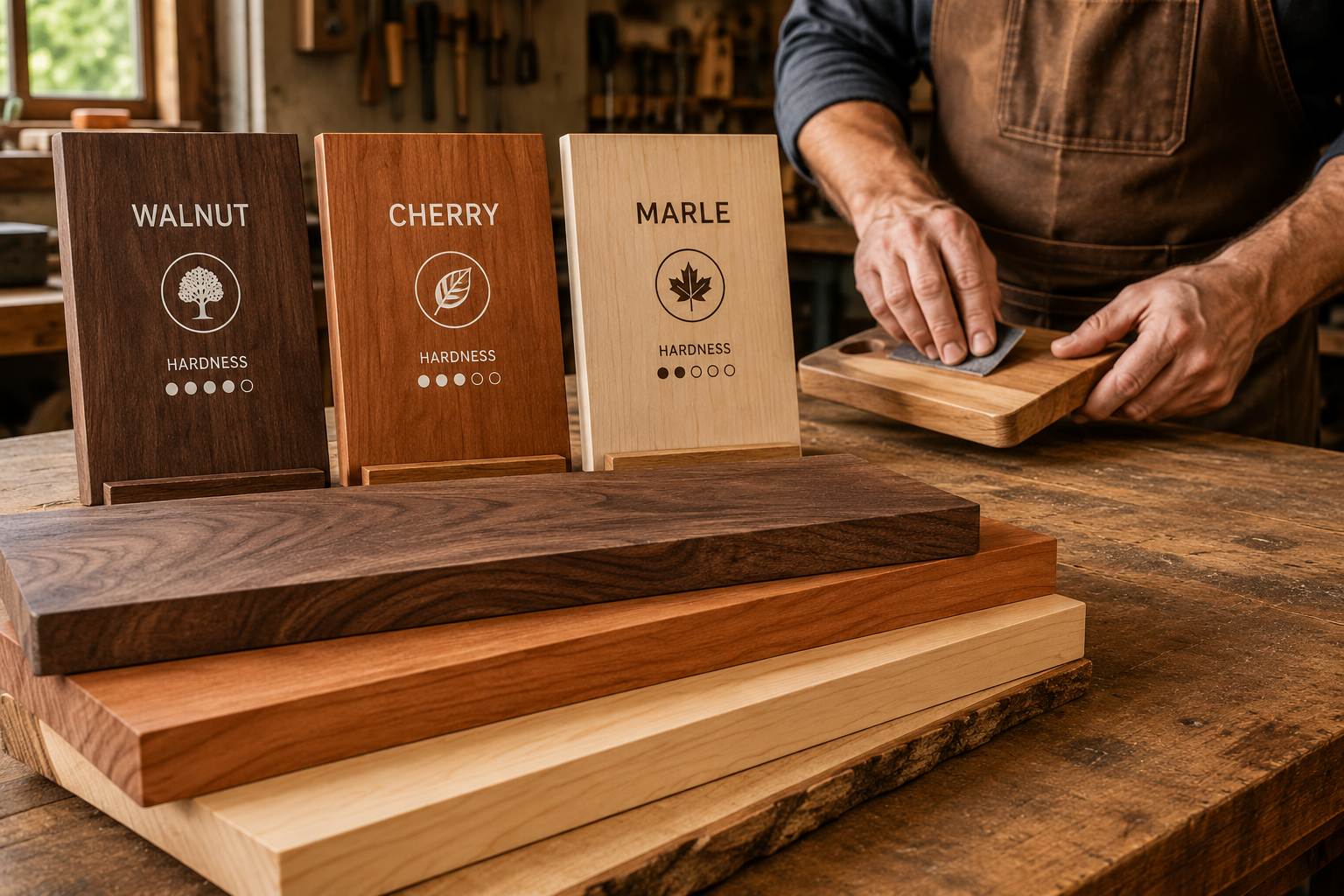
The foundation of any exceptional cutting board, especially those with custom designs, lies in the wood itself. Not all woods are created equal when it comes to kitchen use. Factors like hardness, grain structure, porosity, and natural oils play a crucial role in determining a board’s suitability. For Kitchen Cutting Boards with a Twist: Engraved and Edge-Grain Designs, selecting the right timber ensures both longevity and aesthetic appeal.
When choosing wood for cutting boards, several characteristics are paramount:
- Hardness (Janka Scale): This measures a wood’s resistance to denting and wear. While a hard wood might seem ideal, an overly hard wood can dull knives quickly. A balance is necessary.
- Grain Structure: Tighter, closed grains are generally preferred as they are less porous, making them more resistant to moisture and bacteria penetration.
- Toxicity: It is crucial to choose non-toxic woods. Avoid exotic woods unless their food-safe status is explicitly confirmed.
- Pore Size: Woods with smaller pores are less likely to harbor bacteria and are easier to clean.
Recommended Wood Species
Here’s a comparison of popular wood choices for cutting boards:
| Wood Type | Janka Hardness (lbf) | Grain | Color | Key Benefits | Considerations |
|---|---|---|---|---|---|
| Hard Maple | 1450 | Fine, uniform | Creamy white | Durable, light color, knife-friendly, affordable | Can show stains more easily |
| Walnut | 1010 | Medium, open | Rich dark brown | Striking color, good for knives, hides knife marks | Higher cost, slightly softer than maple |
| Cherry | 950 | Fine, uniform | Reddish-brown, darkens with age | Beautiful color, moderate hardness, easy to engrave | Softer than maple, may show knife marks over time |
| Teak | 1000 | Medium | Golden-brown | Naturally water-resistant, durable | High cost, can dull knives faster due to silica |
| Sapele | 1410 | Interlocking | Reddish-brown | Hard, stable, beautiful ribbon-like grain | Can be harder on knives than cherry/walnut |
Source: Wood-Database.com
For more in-depth information on selecting and preparing wood, consider exploring resources on sourcing and restoring urban harvested and reclaimed wood. The choice of wood significantly influences not only the board’s performance but also its ability to hold an intricate engraving. Hard maple offers a clean, light surface perfect for high-contrast engravings, while walnut’s dark tones provide a sophisticated backdrop for lighter-filled designs.

Edge-Grain Construction: Durability Meets Design
While many basic cutting boards are simply face-grain (the broad side of the plank), the world of premium cutting boards often focuses on two superior constructions: edge-grain and end-grain. For Kitchen Cutting Boards with a Twist: Engraved and Edge-Grain Designs, understanding edge-grain construction is key to appreciating its unique benefits and aesthetic appeal.
What is Edge-Grain?
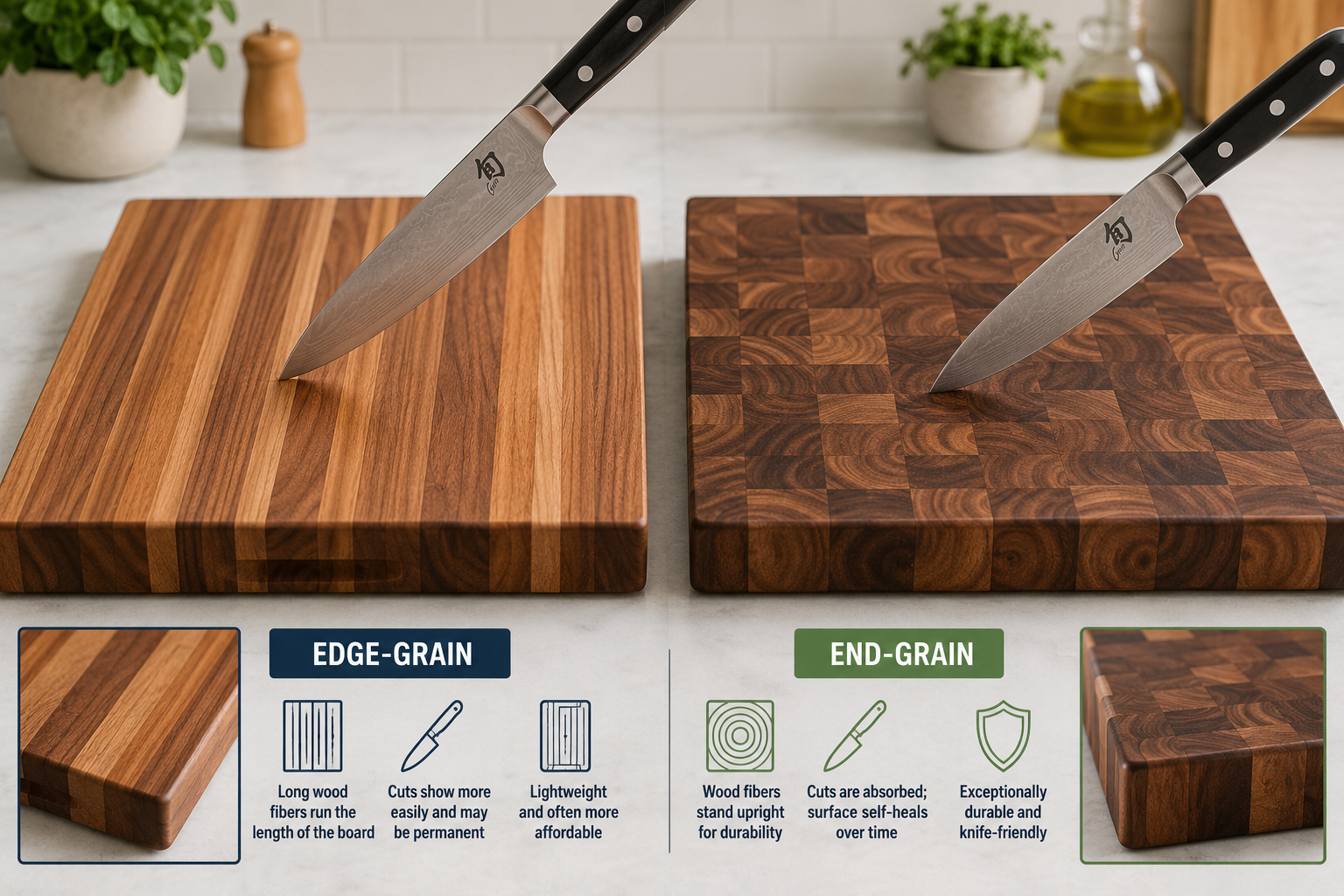
An edge-grain cutting board is constructed by gluing together strips of wood with their “edge” facing upwards, meaning the annual growth rings run parallel to the cutting surface. Imagine stacking several planks on their sides and gluing them together. This method contrasts with face-grain boards (where the widest surface of the board is the cutting surface) and end-grain boards (where the ends of the wood fibers face up).
Benefits of Edge-Grain Boards
- Durability: Edge-grain boards are very stable and resistant to warping, thanks to the way the wood strips are oriented and glued together. They can withstand significant chopping and knife pressure without easily splitting.
- Knife-Friendly: While not as forgiving as end-grain, edge-grain is still gentler on knife blades than face-grain. The fibers run long, allowing the knife to slice between them rather than directly against them.
- Appearance: Edge-grain construction often showcases beautiful, continuous lines of wood grain, especially when using contrasting wood species like maple and walnut. This makes them visually appealing, particularly for custom engraved designs where a smooth, consistent background is desired.
- Cost-Effective: Generally, edge-grain boards are less labor-intensive to produce than end-grain boards, making them a more budget-friendly option for high-quality, durable cutting surfaces.
- Easy to Clean: The relatively smooth, less porous surface of an edge-grain board is straightforward to clean and maintain, which is a significant advantage in a busy kitchen.
Edge-Grain vs. End-Grain for Engraving
When considering Kitchen Cutting Boards with a Twist: Engraved and Edge-Grain Designs, the choice between edge-grain and end-grain is important:
- Edge-Grain: Provides a smoother, more uniform surface for engraving. The continuous grain lines allow for clearer, more consistent laser etching, making intricate details stand out. The relative flatness of the grain means less chance of “burning” inconsistencies that can occur with end-grain’s varied density.
- End-Grain: While excellent for knife longevity due to its self-healing properties (fibers separate and close around the blade), end-grain can be more challenging for laser engraving. The varied density of the end-grain fibers can lead to uneven etching, with some areas appearing darker or lighter than others. However, some find this rustic, variable appearance charming. For more on advanced woodworking, including techniques like dovetail joints, which can be used in cutting board construction, exploring further resources is beneficial.
Here’s a quick comparison:
| Feature | Edge-Grain Cutting Boards | End-Grain Cutting Boards |
|---|---|---|
| Durability | Very stable, resistant to warping | Excellent, fibers “self-heal” from knife cuts |
| Knife-Friendliness | Good, less dulling than face-grain | Superior, preserves knife edges longer |
| Appearance | Long, continuous grain lines, visually striking | Checkerboard/mosaic pattern, unique |
| Engraving Quality | Excellent, uniform surface for clear, precise details | Can be challenging due to varied density, potentially uneven |
| Maintenance | Relatively easy to clean, less prone to drying out | Requires more frequent oiling, more porous |
| Cost | Generally more affordable to produce | More labor-intensive, typically higher cost |
Ultimately, for a board where engraving is a primary “twist” and durability is key, edge-grain often presents a compelling balance.

The “Twist”: Engraved Designs and Food-Safe Finishing
The true “twist” in Kitchen Cutting Boards with a Twist: Engraved and Edge-Grain Designs comes from the personalized touch of engraving. This transforms a functional kitchen item into a treasured keepsake, a meaningful gift, or a unique piece of kitchen decor. Coupled with the right food-safe finish, these boards are both beautiful and practical.
The Art of Engraving
Engraving technology, particularly laser engraving, has made it possible to add intricate details, custom text, logos, and even complex imagery to wooden cutting boards with incredible precision.
Popular Engraving Ideas:
- Family Names & Dates: Perfect for wedding gifts, anniversaries, or housewarmings.
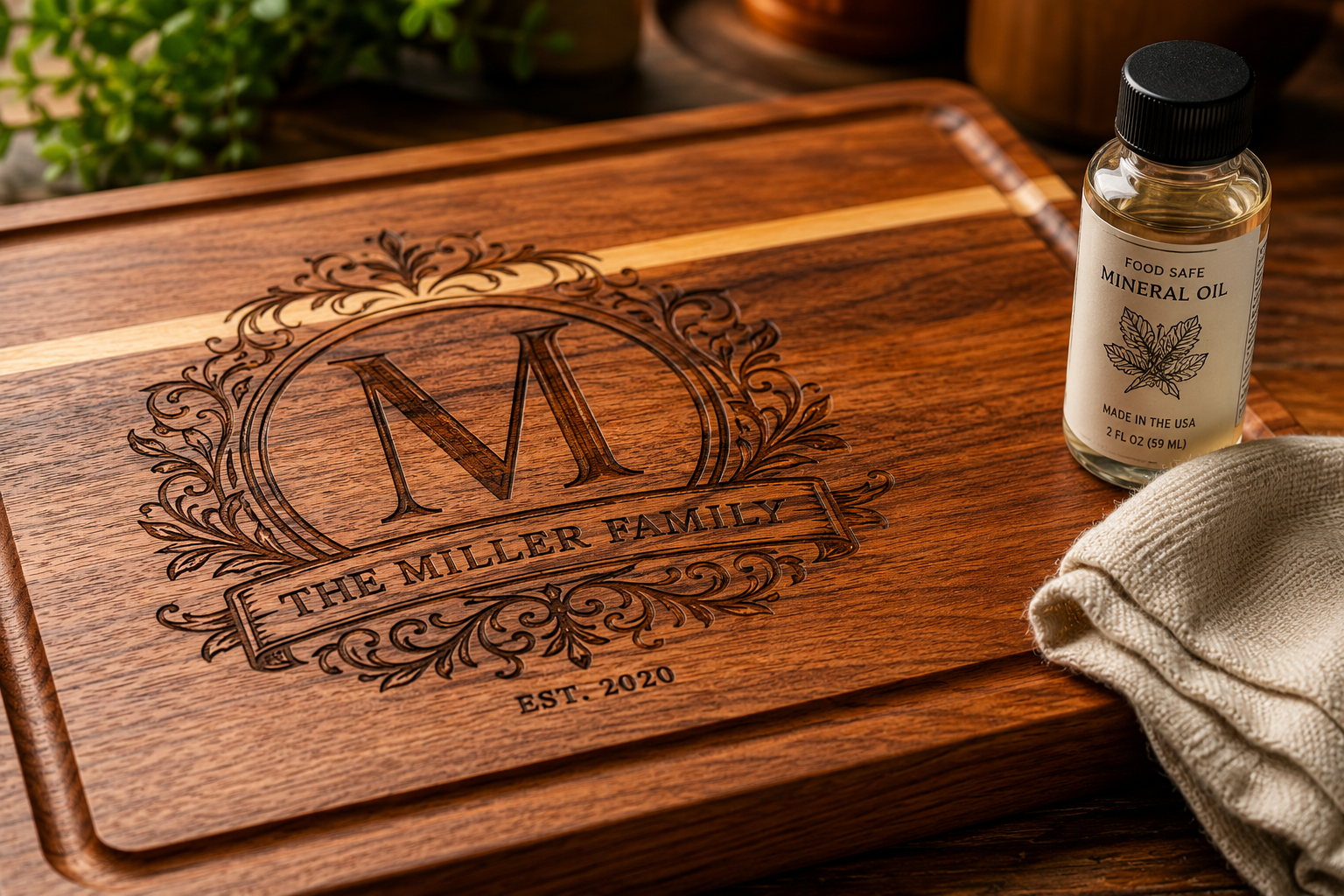
- Monograms & Initials: A classic, elegant personal touch.
- Recipes: A beloved family recipe etched onto the board makes for a truly unique heirloom.
- Culinary Motifs: Whimsical designs featuring chef hats, kitchen utensils, or food illustrations.
- Business Logos: Excellent for culinary businesses, restaurants, or promotional items.
- Geometric Patterns: Enhances the aesthetic, especially on boards with contrasting wood species.
When designing for engraving, consider the wood choice. Lighter woods like hard maple provide higher contrast for laser engravings, making the design pop. Darker woods like walnut require careful design choices or a “reverse” engraving technique to ensure visibility. For more on customization strategies, especially for small woodcrafts, delve into customization strategies for mass-producing small woodcraft.
Food-Safe Finishing for Longevity and Hygiene
Once the cutting board is meticulously crafted and engraved, applying a proper food-safe finish is paramount. This finish protects the wood from moisture, prevents bacterial growth, and brings out the natural beauty of the grain. It’s crucial to use finishes that are approved for direct contact with food.
Recommended Food-Safe Finishes (Pure Wood Focus – No Epoxy):
Mineral Oil:
- Description: A non-toxic, non-drying oil that penetrates wood fibers, conditioning and protecting them. It is tasteless, odorless, and colorless.
- Application: Apply generously, allow to soak in for several hours (or overnight), then wipe off excess. Repeat monthly or as needed.
- Benefits: Easy to apply, deeply conditions, enhances wood color, prevents drying and cracking.
Beeswax/Mineral Oil Blends:
- Description: Combining mineral oil with beeswax creates a thicker “board butter” or “wood wax.” The beeswax adds a protective layer on the surface.
- Application: Apply a small amount, rub it into the wood with a soft cloth, and buff to a gentle sheen.
- Benefits: Provides superior water resistance and a more durable protective layer than oil alone, leaves a pleasant satin finish.
Walrus Oil or Similar Products:
- Description: Many specialty brands offer blends of mineral oil, beeswax, and other food-safe ingredients like vitamin E or citrus extracts. These are formulated specifically for cutting boards.
- Application: Follow manufacturer’s instructions, typically similar to mineral oil or wax blends.
- Benefits: Often provide a more robust and longer-lasting finish, sometimes with antimicrobial properties.
Finishes to Avoid:
- Vegetable Oils (Olive, Canola, etc.): These oils can go rancid over time, creating an unpleasant odor and taste, and potentially fostering bacterial growth.
- Linseed Oil (unless “boiled” and specifically food-safe): Raw linseed oil cures very slowly and can be problematic. Even “boiled” linseed oil can contain metallic driers that are not food-safe. Always verify if a product is food-safe if considering linseed oil, or simply avoid it for cutting boards.
- Varnishes or Lacquers: These create a hard, impermeable film that will eventually chip and peel, posing a health risk and making the board unusable for cutting. They also tend to dull knives excessively.
For general woodworking finishes and understanding how different products interact, consider consulting guides like can you stain over linseed oil. However, for cutting boards, prioritize the food-safe options mentioned above.
Maintaining Your Engraved Edge-Grain Board
Proper maintenance is critical to ensure the longevity and beauty of your Kitchen Cutting Boards with a Twist: Engraved and Edge-Grain Designs:
- Hand Wash Only: Never put a wooden cutting board in a dishwasher, as high heat and prolonged soaking will warp and crack the wood.
- Mild Soap & Water: Wash immediately after use with warm water and a small amount of mild dish soap.
- Rinse & Dry: Rinse thoroughly and wipe dry immediately with a clean towel.
- Air Dry Completely: Stand the board on its edge to allow air circulation around all surfaces for complete drying.
- Regular Oiling: Re-oil your board with food-safe mineral oil or a wax blend at least once a month, or more frequently if it appears dry or dull. This is especially important for the engraved areas, which can sometimes be more prone to drying out.
By combining thoughtful wood selection, durable edge-grain construction, precision engraving, and diligent food-safe finishing and maintenance, these cutting boards transcend their basic function to become cherished pieces in any kitchen.

Conclusion
Kitchen Cutting Boards with a Twist: Engraved and Edge-Grain Designs represent a convergence of artistry, craftsmanship, and practical utility. They are more than just a surface for chopping; they are a canvas for personal expression and a testament to durable, well-made kitchenware. From the careful selection of a hard, closed-grain wood like maple or walnut to the precise assembly of an edge-grain pattern that promises stability and knife-friendliness, every step in their creation contributes to their superior quality. The addition of intricate laser engraving elevates these boards from mere tools to cherished heirlooms and thoughtful gifts, making them a focal point in any kitchen.
Proper food-safe finishing, relying on natural oils and waxes, ensures these boards remain hygienic, protected from moisture, and beautifully preserved for years to come. In 2026, as kitchens continue to evolve into spaces that balance high functionality with bespoke aesthetics, these specialized cutting boards offer a perfect blend. They remind us that even the most everyday items can be infused with character, craftsmanship, and a touch of personal flair.
Actionable Next Steps:
- Assess Your Needs: Decide if an edge-grain board with an engraved design suits your cooking style and aesthetic preferences.
- Research Wood Options: Based on durability, appearance, and knife-friendliness, choose a wood species that aligns with your priorities. Hard maple, walnut, or cherry are excellent starting points.
- Explore Engraving Ideas: Consider what personal message, design, or motif would make your cutting board truly unique. Look for artisans or online services specializing in custom engraving.
- Invest in Quality Finishes: Purchase food-safe mineral oil or a beeswax blend to properly condition and protect your new or custom-made cutting board.
- Commit to Maintenance: Establish a routine for cleaning and re-oiling to ensure your engraved edge-grain board remains a beautiful and functional centerpiece in your kitchen for decades.
SEO Meta Title: Engraved & Edge-Grain Cutting Boards: A Twist for Your Kitchen SEO Meta Description: Discover the art of Kitchen Cutting Boards with a Twist: Engraved and Edge-Grain Designs. Learn about wood choice, construction, and food-safe finishes for 2026.