
Live Edge Wood Slabs: From Forest to Finished Furniture
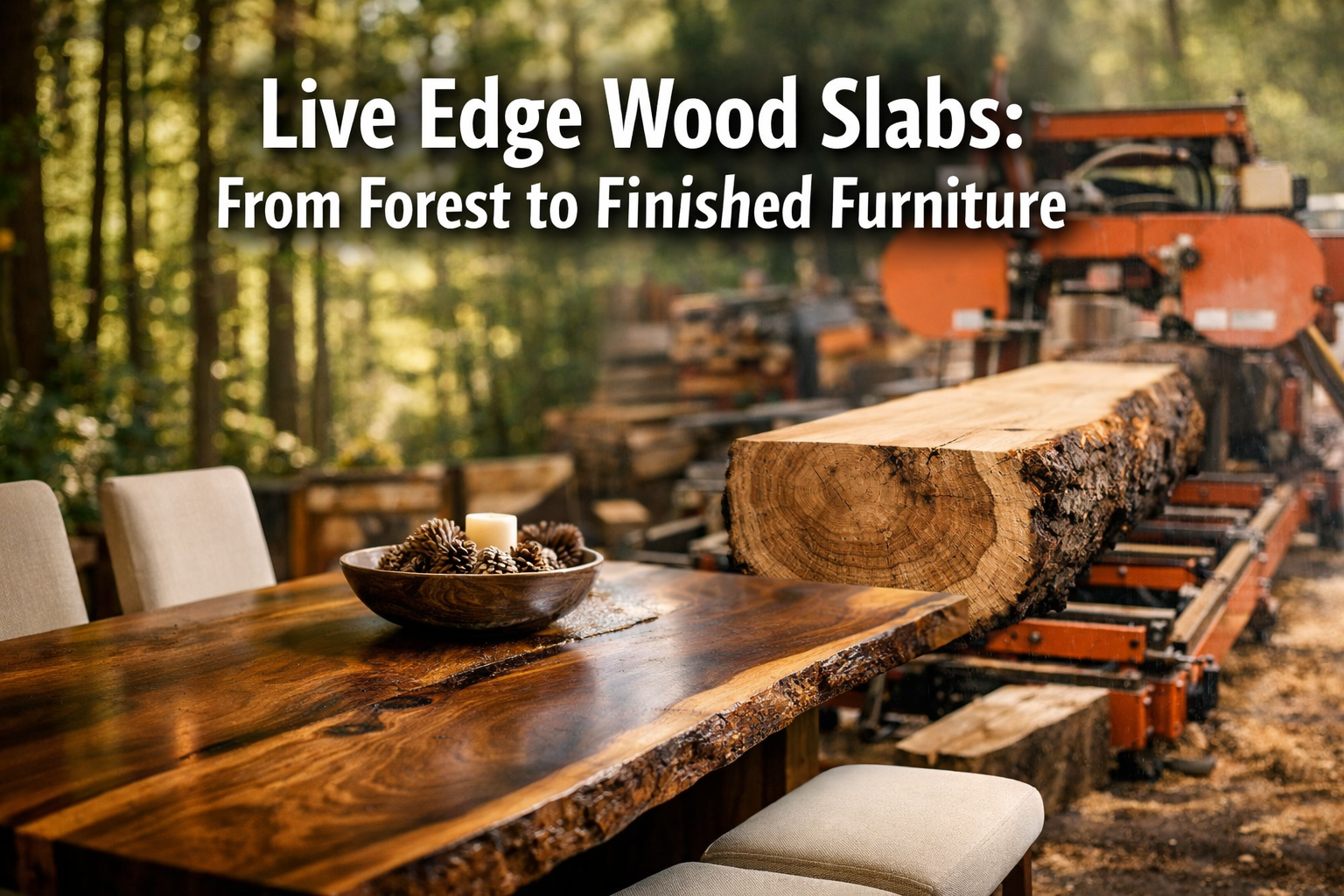
Imagine a piece of furniture that tells a story, where every curve and imperfection speaks of its origin – a tree, standing tall in the forest, now brought into your home. This is the captivating appeal of Live Edge Wood Slabs: From Forest to Finished Furniture. Far from a fleeting fad, live edge furniture has solidified its place as a cornerstone in modern and rustic design, transforming raw, natural beauty into functional art that captures the imagination. In 2026, demand for these unique pieces is not just sustained but accelerating, with a global market for massive wood slabs projected to reach an astounding $2 billion by 2030 [4]. Join us on an in-depth journey as we explore the entire process, from the towering trees to the stunning finished pieces that define contemporary spaces.
Key Takeaways
- Live edge wood slabs are a sustained trend in 2026, with demand skyrocketing for statement pieces in various applications [1, 2, 3].
- The market for massive wood slabs is growing rapidly, projected to hit $2 billion by 2030, with wide slabs over 30 inches commanding premium prices [1, 4].
- Popular species in 2026 include Black Walnut, Big Leaf & Curly Maple, and Elm, valued for their bold grain and natural movement [1]. Mahogany also shows strong value growth [4].
- The journey from forest to furniture involves careful harvesting, milling, drying, and an artisan’s touch for finishing, preserving the wood’s unique character.
- Proper finishing techniques are crucial for durability and enhancing the slab’s natural beauty, requiring careful consideration of oils, sealers, and topcoats.
The Journey Begins: From Forest to Slab – Live Edge Wood Slabs: From Forest to Finished Furniture
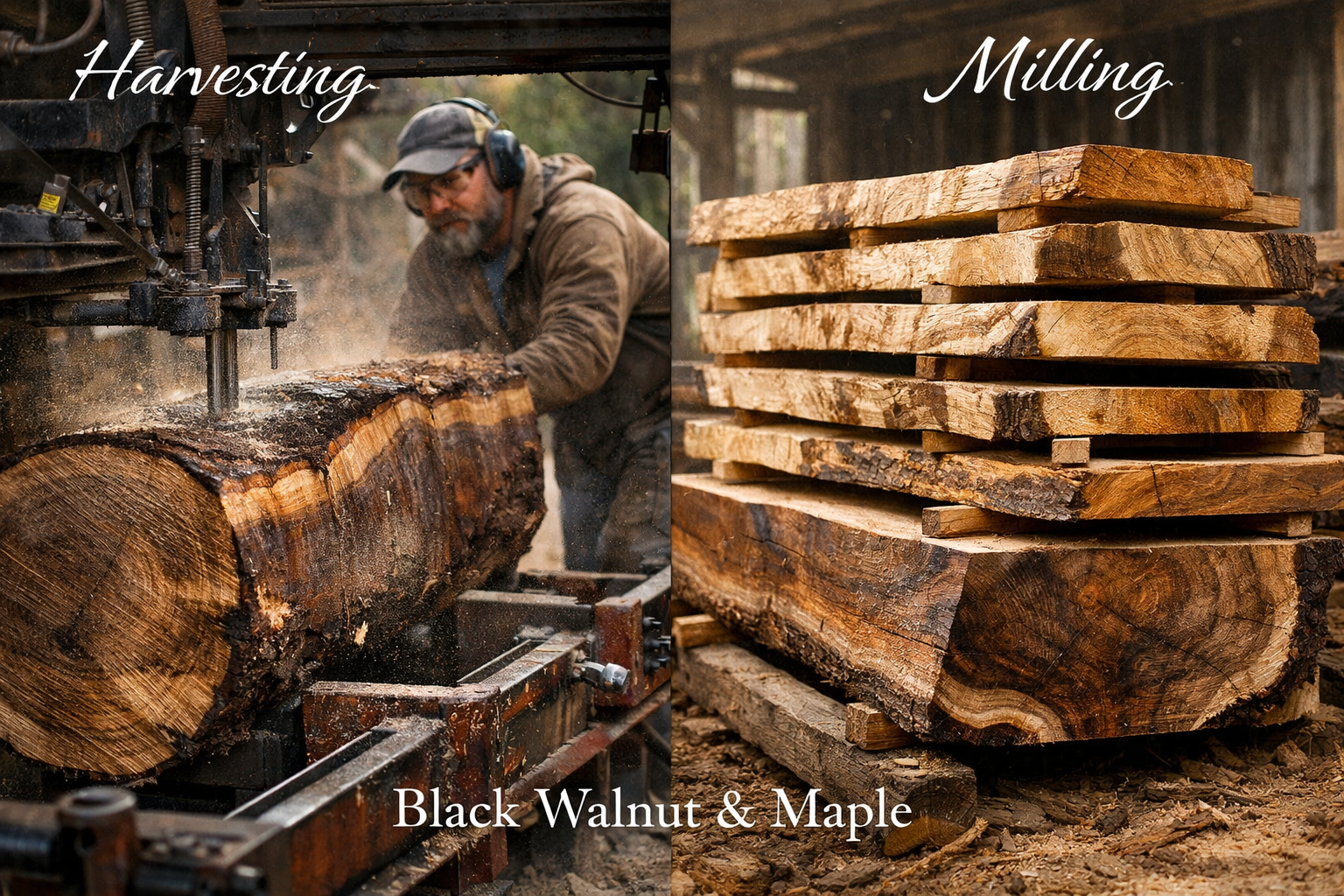
The story of a live edge slab truly begins in the forest. It’s a process steeped in respect for nature and meticulous craftsmanship, ensuring that the unique characteristics of each tree are preserved. In 2026, we’re seeing an ever-increasing appreciation for the authenticity and organic appeal that only a natural perimeter can offer, making the selection and initial processing of these colossal pieces more critical than ever.

Sourcing and Selection: The Heart of the Wood
Not just any tree can become a magnificent live edge slab. The selection process is vital, focusing on trees that possess the right size, structural integrity, and captivating grain patterns. Sustainable sourcing is paramount, ensuring that trees are harvested responsibly, often from areas where they need to be removed for safety, urban development, or forest health.
What Makes a Great Live Edge Tree?
- Size: Wider and longer trees yield the most impressive slabs. Wide slabs exceeding 30 inches, for example, are highly sought after in 2026 and command premium pricing, representing a significant market opportunity [1].
- Species: Certain wood species are inherently more desirable for their aesthetic and durability. In 2026, the most sought-after species include Black Walnut, Big Leaf & Curly Maple, and Elm, prized for their bold grain and natural movement [1]. While White Oak dominated for five years, buyers are now shifting towards darker woods like Walnut and Cherry [5]. Mahogany is also projected to hold a high species value share globally [4].
- Character: Burls, crotches, natural voids, and unique color variations are not flaws; they are the very features that define a live edge slab’s individuality and enhance its value.
Reclaimed hardwood is also experiencing strong demand, particularly reclaimed Oak, Elm, and old-growth Fir. These materials often carry a rich history and unique patina, adding another layer of character to the finished piece [1].
The Art of Milling: Revealing the Slab
Once a suitable tree is identified and harvested, it embarks on the next critical stage: milling. This is where the tree is transformed into rough-cut slabs, carefully preserving the natural edge that gives “live edge” its name.
Types of Milling:
- Chainsaw Milling: Often used for very large logs or in remote locations, a specialized chainsaw mill attachment allows for cutting logs directly into slabs on-site. It’s labor-intensive but offers flexibility.
- Bandsaw Milling: This is the most common and efficient method for producing high-quality live edge slabs. Large industrial bandsaw mills can slice logs with precision, minimizing waste and producing smooth cuts.
- Alaskan Mill: A portable chainsaw mill that allows loggers to mill logs in the forest, producing wide, flat slabs.
The milling process requires skill to ensure the slabs are cut consistently in thickness and that the natural edge is preserved without damage. The resulting slabs are thick, heavy, and full of moisture, far from being ready for furniture.
Drying: The Crucial Curing Process
After milling, the slabs are “green” wood, meaning they contain a high percentage of moisture. Attempting to build furniture from green wood is a recipe for disaster, as it will inevitably warp, crack, and shrink. Proper drying is absolutely essential to stabilize the wood and ensure its longevity.
Drying Methods:
- Air Drying: This traditional method involves carefully stacking the slabs with “stickers” (small strips of wood) between them to allow air circulation. The stack is often covered to protect it from direct rain and sun. Air drying can take many months, or even years, depending on the species and thickness of the slab – roughly one year per inch of thickness is a general rule of thumb.
- Kiln Drying: For a faster and more controlled drying process, slabs are placed in a specialized kiln. Kiln drying uses heat and controlled humidity to systematically reduce the moisture content to a stable level, typically 6-8% for furniture applications. This method also helps to sterilize the wood, killing any insects or fungi.
Proper drying not only prevents future issues but also enhances the wood’s workability and ensures that the final piece of furniture remains stable and beautiful for generations.
Crafting Beauty: From Slab to Finished Furniture
Once the live edge wood slabs are properly dried and stabilized, the true artistry of furniture making begins. This stage involves transforming the raw, rustic slab into a refined, functional, and visually stunning piece of furniture. It’s a meticulous process that combines woodworking skill with an artistic eye.
Flattening and Preparing the Slab
Even after drying, a raw slab will likely have some irregularities, twists, and bows. It’s crucial to flatten the slab before any further work can be done.
Steps to Prepare a Slab:
- Initial Cleaning: Removing bark, loose debris, and any large splinters from the live edge itself. This is often done with wire brushes, chisels, and sometimes a pressure washer.
- Slab Flattening:
- Router Sled: A common method for home workshops and smaller slabs. A router is mounted on a sled that runs along parallel rails, systematically planing the slab’s surface flat.
- Large Planer/Drum Sander: For professional shops, large industrial planers or wide belt sanders can flatten and thickness slabs efficiently.
- Hand Planing: A traditional and highly skilled method for achieving precise flatness, though very labor-intensive for large slabs.
- Crack and Void Filling: Natural cracks and voids are common in live edge slabs and are often celebrated as part of their character. These can be filled with epoxy resin, sometimes tinted with colors or infused with pigments, to stabilize them and create a smooth, functional surface. This technique not only adds durability but also highlights the unique imperfections.
Designing and Shaping: Unleashing Potential
With a flattened and prepared slab, the designer or artisan can begin to envision and create the final piece. The design phase often revolves around the natural shape of the live edge, allowing it to dictate the form of the furniture.

Common Live Edge Furniture Applications:
- Dining Tables: Demand is “skyrocketing” for live edge dining tables, with designers choosing slabs for their statement-making presence [2]. These pieces serve as the focal point of any dining area.
- Conference Tables: Similarly, live edge slabs are popular for conference rooms, providing a sophisticated and unique aesthetic [2].
- Coffee Tables: Coffee table applications currently hold the majority value share in the global market for massive wood slabs [4]. Their smaller scale allows for dramatic use of unique wood characteristics.
- Kitchen Islands: Live edge islands add a touch of warmth and natural beauty to modern kitchens, often contrasting beautifully with sleek cabinetry [2].
- Desks & Benches: Offering a unique and ergonomic workspace or seating option. Bench applications are also significant in the market [4].
The natural perimeter of the live edge often softens rigid room geometry, creating a dynamic visual tension, especially when contrasted against sleek, modern cabinetry – a particularly popular approach in high-end design [2].
Sanding and Finishing: The Touch of Elegance
Sanding is a critical, multi-stage process that prepares the wood for finishing, ensuring a smooth surface that allows the finish to penetrate evenly and showcase the wood’s inherent beauty. It progresses through increasingly fine grits, typically from 80-grit up to 220-grit or even higher for a truly silky feel.
The choice of finish is paramount, as it determines the durability, appearance, and longevity of the furniture. For a comprehensive guide on achieving a beautiful finish, explore our article on wood finishing techniques.
Popular Finishing Options for Live Edge Slabs:
- Oils (e.g., Tung Oil, Danish Oil, Linseed Oil): These penetrate the wood fibers, enhancing the natural grain and providing a warm, matte to semi-gloss finish. They offer good protection but may require more frequent reapplication. For insights into oil finishes, see our guide on Danish Oil vs Linseed. You might also wonder, Can You Stain Over Linseed Oil?
- Polyurethane: A highly durable and water-resistant finish available in various sheens (matte, satin, semi-gloss, gloss). It creates a protective layer on the wood’s surface. For the best options, check out our guide on the best polyurethane for live edge wood.
- Epoxy Resin (Flood Coat): Often used for a high-gloss, extremely durable, and completely flat surface, especially when significant voids or imperfections are filled. It creates a thick, clear, protective layer.
- Varnishes and Lacquers: These provide good protection and come in different sheens, similar to polyurethane. They are often spray-applied in professional settings for a flawless finish.
The choice of finish also depends on the desired aesthetic. For a natural, tactile feel, oils are often preferred. For maximum protection on high-use surfaces like dining tables, polyurethane or epoxy might be more suitable. The goal is always to enhance the unique characteristics of the wood – the bold grains, the distinctive movement, and especially the organic, irregular live edge – making each piece of Live Edge Wood Slabs: From Forest to Finished Furniture a one-of-a-kind masterpiece.
Market Trends and the Enduring Appeal of Live Edge in 2026
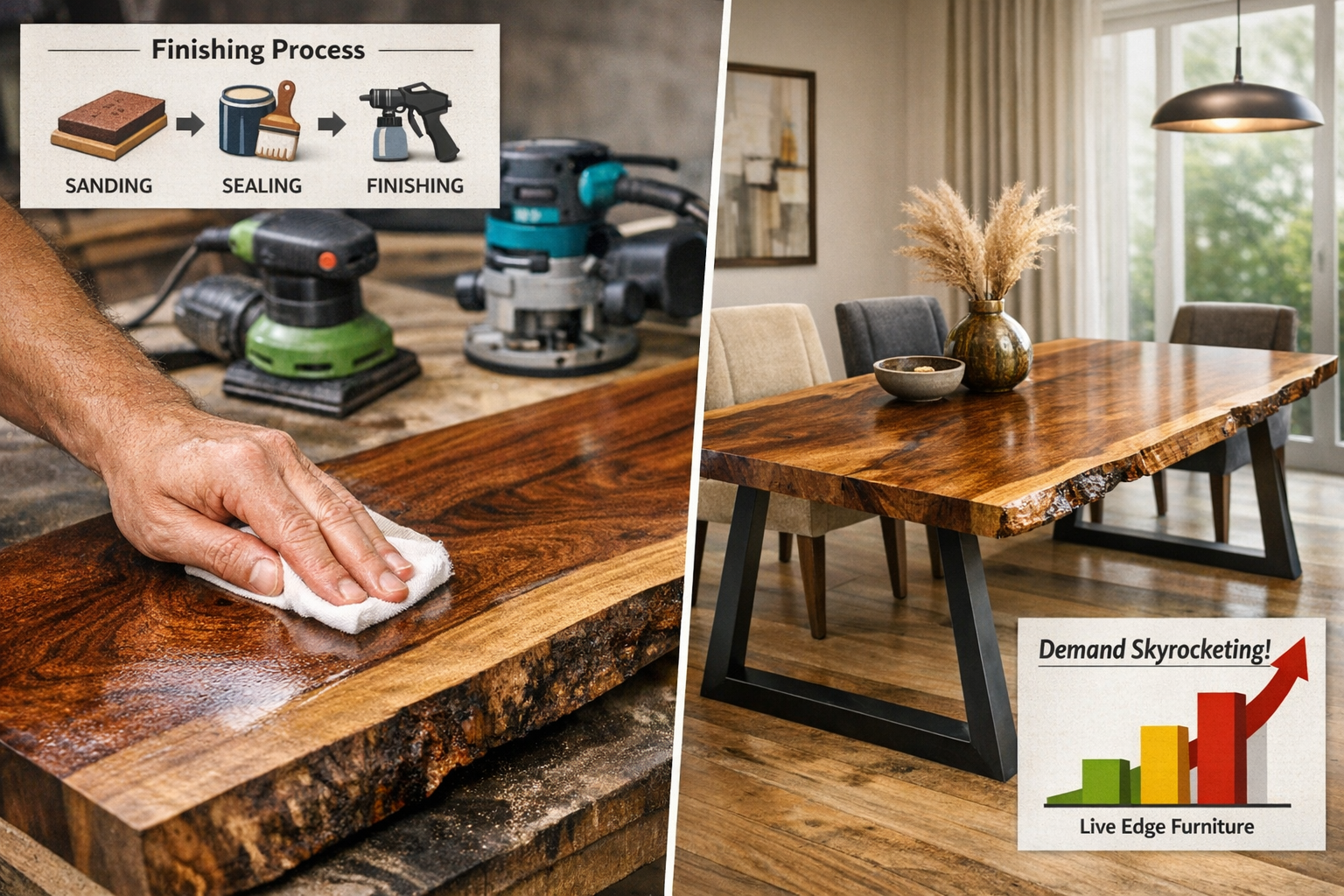
The market for live edge wood slabs has seen significant evolution, transitioning from a niche interest to a mainstream design staple. In 2026, its position is stronger than ever, reflecting a sustained consumer desire for authenticity, unique character, and a connection to nature within interior spaces. Searches for live edge tables increased by 40% since 2022, underscoring this growing and sustained consumer interest [3].
Why Live Edge Endures: More Than Just a Trend
Live edge slabs have solidified their place as a core material in 2025 and continue to thrive in 2026, no longer considered a passing trend but a permanent market segment [1]. This enduring appeal stems from several key factors:
- Unique Aesthetic: No two live edge slabs are exactly alike, offering truly one-of-a-kind furniture pieces that become focal points in any room. This individuality resonates with consumers seeking personalized and distinctive home decor.
- Connection to Nature: In an increasingly digitized world, live edge furniture brings the raw, organic beauty of the natural world indoors, fostering a sense of calm and connection.
- Versatility: While often associated with rustic or industrial styles, live edge pieces can be seamlessly integrated into modern, minimalist, or even luxurious design schemes. The contrast between the organic edge and sleek, modern elements is particularly popular in high-end design, where it creates dynamic visual tension [2].
- Sustainability Story: When sourced responsibly, live edge furniture often tells a story of sustainable forestry or the repurposing of reclaimed wood, appealing to environmentally conscious buyers.
Current Market Dynamics and Desirable Species in 2026
The global massive wood slabs market is projected to reach $2 billion by 2030, expanding at a healthy 5% annual growth rate [4]. This growth is fueled by strong demand across various applications:
- Statement Pieces: Demand is “skyrocketing” for conference rooms, dining areas, and kitchen islands, with designers increasingly choosing slabs for these statement applications rather than supporting roles [2].
- High-Value Dimensions: Wide slabs exceeding 30 inches are the most sought-after dimension in 2026, commanding premium pricing and representing approximately $195 million in market opportunity through 2030 [1, 4].
- Coffee Tables Reign: Despite the demand for large tables, coffee table applications continue to hold the majority value share in the global market, expected to be valued at more than twice as much as bench applications [4].
Top Wood Species in Demand for 2026:
| Species | Key Characteristics / Market Trend | Pricing (Indicative, 2026) | Global Opportunity (Selected) [4] |
|---|---|---|---|
| Black Walnut | Highly sought after for bold grain and natural movement. Dark, rich tones appeal to shifting consumer preferences from lighter woods [1, 5]. | Slabs: High-end, premium pricing | Significant |
| Big Leaf & Curly Maple | Valued for unique figuring and striking patterns. Offers a lighter alternative with distinct character [1]. | Slabs: Premium for highly figured pieces | Strong |
| Elm | Gaining popularity for its beautiful grain patterns and durability. Often seen in reclaimed applications as well [1]. | Varies; reclaimed Elm can be premium | Growing |
| Mahogany | Projected to hold the highest species value share globally, creating an absolute dollar opportunity of $124 million during the 2020–2030 forecast period [4]. Prized for stability, workability, and classic beauty. | Slabs: High-end, substantial investment | $124 Million (2020-2030) |
| White Oak | While dominant for five years, its consumer cycle may have reached its apex in 2025, with buyers potentially shifting to darker woods [5]. Still a valuable wood, but less “trendy” for live edge. | Lumber: $5.75–$9.35/board foot; Slabs: $750 to $3,250+, reflecting quality and visual impact [1] | Sustained |
| Reclaimed Hardwood | Strong demand for species like Oak, Elm, and old-growth Fir. Valued for history, character, and sustainable appeal in various furniture and architectural applications [1]. | Premium pricing due to scarcity and unique character | High and growing |
The market for Live Edge Wood Slabs: From Forest to Finished Furniture is vibrant and dynamic. As an editor, I see that the shift towards darker woods like Walnut and Cherry [5], combined with the enduring appeal of unique grain patterns and the visual tension created by natural perimeters, ensures that live edge furniture will remain a coveted choice for discerning homeowners and designers well beyond 2026. This trend aligns perfectly with the broader interest in craftsmanship and unique woodworking projects, which you can further explore in articles like Unleash Your Inner Artisan: Your Guide to Finding the Perfect Woodworking Class 🪚.
Conclusion
The journey of Live Edge Wood Slabs: From Forest to Finished Furniture is a testament to the enduring beauty of nature and the artistry of human craftsmanship. From the careful selection of a majestic tree in the forest to the meticulous milling, drying, and finishing processes, each step contributes to creating a unique and captivating piece of furniture. In 2026, the demand for these organic masterpieces continues to grow, with consumers and designers alike drawn to their ability to infuse spaces with unparalleled character, warmth, and a direct connection to the natural world.

The market trends clearly indicate that live edge is no longer a passing fad but a permanent fixture in interior design. Its ability to soften rigid geometry, create dynamic visual interest, and offer a one-of-a-kind statement piece ensures its longevity. Whether it’s a grand dining table, an inviting coffee table, or a unique kitchen island, live edge furniture is a celebration of the raw beauty inherent in wood.
Actionable Next Steps
- Explore Local Sawmills and Wood Suppliers: If you’re inspired to create your own live edge piece, start by researching local sawmills or specialty wood suppliers. They often have a selection of dried slabs and can provide expert advice.
- Consider Custom Furniture Makers: For those seeking a bespoke piece, connect with skilled custom furniture makers who specialize in live edge designs. They can help you source the perfect slab and bring your vision to life.
- Learn About Finishing Techniques: Understanding different finishes is crucial for maintaining the beauty and durability of live edge wood. Dive into resources like our guide on the best polyurethane for live edge wood or explore various wood finishing techniques.
- Invest in Quality: Given the premium nature and longevity of live edge furniture, consider it an investment. Prioritize well-dried slabs and professional craftsmanship to ensure your piece stands the test of time.
Embrace the organic elegance of live edge wood and bring a piece of the forest into your home.
References
[1] Hardwoods In Transition How The Market Shifted From 2025 To 2026 – https://woodvendors.com/hardwoods-in-transition-how-the-market-shifted-from-2025-to-2026/
[2] 2026 Trends To Watch In Custom Woodworking And Design – https://www.atlantawoods.com/post/2026-trends-to-watch-in-custom-woodworking-and-design
[3] Tree Slab Dining Table – https://fargowoodworks.com/tree-slab-dining-table/
[4] Massive Wood Slabs Market Eclipse 2 Billion 2030 – https://www.woodworkingnetwork.com/wood/components-sourcing/massive-wood-slabs-market-eclipse-2-billion-2030
[5] 2026 Hardwood Purchasing Plans Fingers Are Crossed For 2026 After An Unpredictable 2025 – https://millerwoodtradepub.com/2026-hardwood-purchasing-plans-fingers-are-crossed-for-2026-after-an-unpredictable-2025/
Meta Title: Live Edge Wood Slabs: Forest to Finished Furniture | 2026 Guide
Meta Description: Explore Live Edge Wood Slabs: From Forest to Finished Furniture. Learn about sourcing, milling, drying, and finishing for stunning bespoke pieces in 2026.