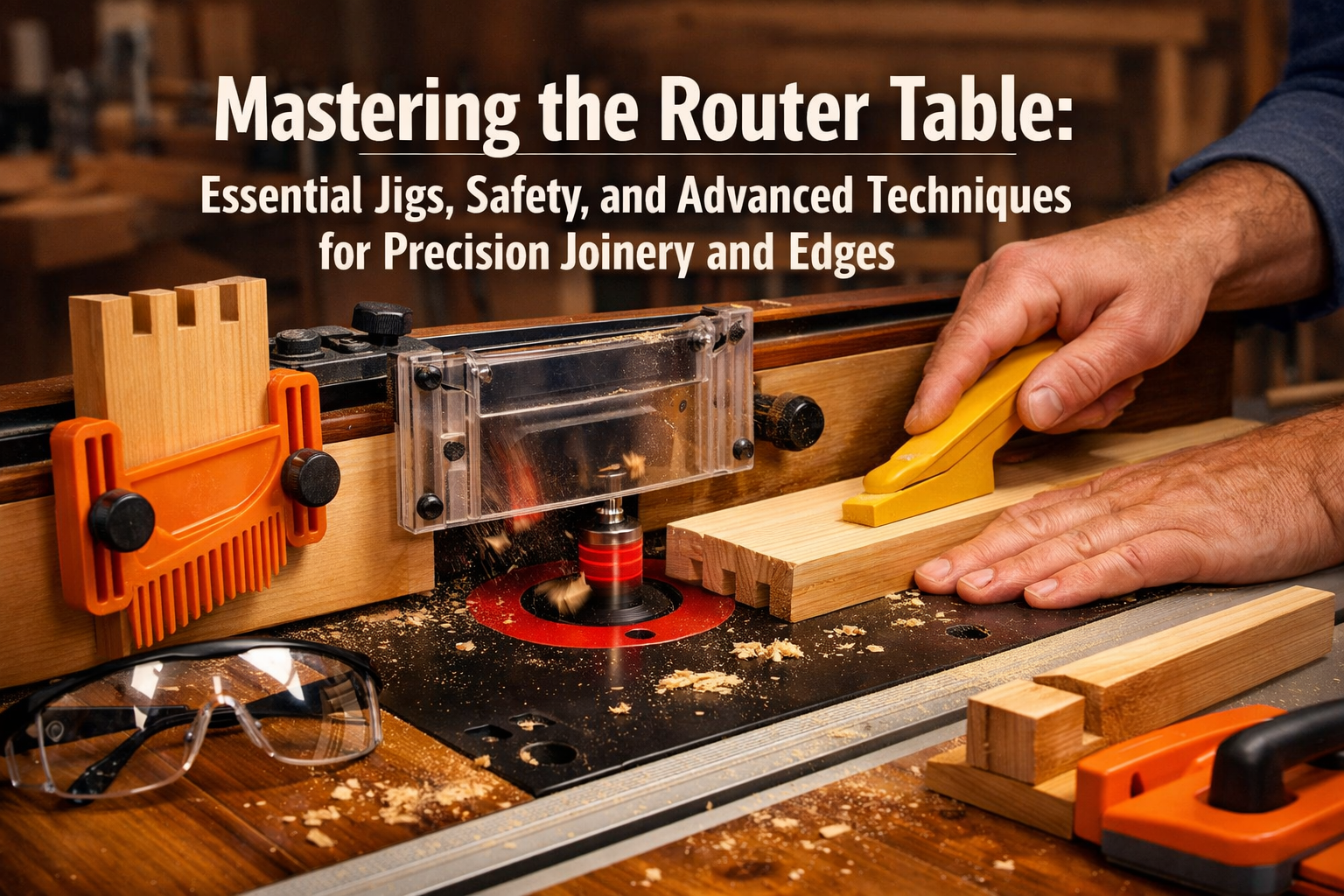

Unlock the full potential of your router table with this comprehensive guide covering crucial safety measures, DIY jigs for complex cuts, and advanced techniques for creating flawless joinery and decorative edges. For woodworkers seeking to elevate their craft, the router table stands as an indispensable tool, transforming a handheld router into a stationary workhorse capable of unparalleled precision. This article delves into Mastering the Router Table: Essential Jigs, Safety, and Advanced Techniques for Precision Joinery and Edges, providing the knowledge needed to tackle projects ranging from intricate furniture to flawless cabinetry in 2026.
Whether you are a seasoned pro or just beginning to explore the capabilities of this versatile machine, understanding its nuances is key to achieving professional-grade results. From ensuring your workspace is safe to constructing specialized jigs and mastering complex operations, this guide covers everything necessary to enhance your woodworking skills.

Key Takeaways
- Prioritize Safety First: Always understand and implement comprehensive safety protocols, including proper PPE, push blocks, and dust collection, before operating a router table.
- Essential Jigs are Game-Changers: DIY and commercial jigs dramatically improve accuracy, repeatability, and safety for various router table operations.
- Precision is in the Setup: Achieving perfect joinery and edges relies heavily on meticulous fence alignment, bit height adjustment, and test cuts.
- Explore Advanced Techniques: Beyond basic edge profiling, the router table excels at complex joinery like mortise and tenons, raised panels, and dadoes with the right setup.
- Continuous Learning: Practice, experimentation, and consistent calibration are vital for ongoing mastery of this powerful woodworking tool.
Prioritizing Safety When Mastering the Router Table: Essential Jigs, Safety, and Advanced Techniques for Precision Joinery and Edges
Safety on the router table is paramount. This machine, while incredibly versatile, involves a high-speed rotating cutter that demands respect and proper precautions. Adhering to strict safety guidelines protects both the operator and the workpiece, ensuring a productive and accident-free woodworking experience.
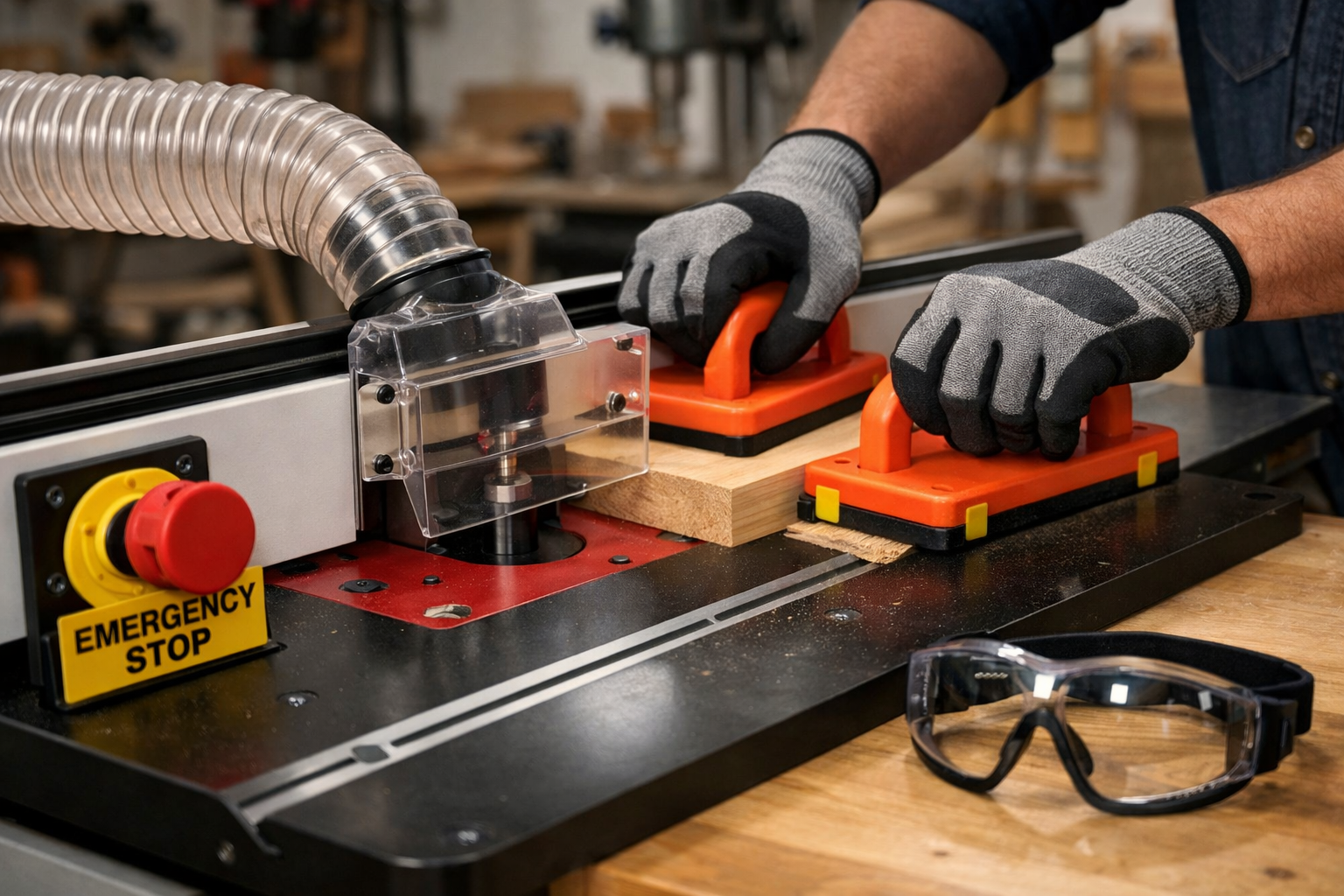
Essential Personal Protective Equipment (PPE)
Always start with the right gear.
- Safety Glasses: Non-negotiable. Chips, dust, and even bit fragments can become dangerous projectiles.
- Hearing Protection: Routers are loud. Prolonged exposure can lead to permanent hearing damage. Earmuffs or earplugs are a must.
- Dust Mask/Respirator: Fine wood dust is a health hazard. A good quality dust mask or respirator will protect your lungs.
- Gloves (Optional, with Caution): Some woodworkers use thin gloves for better grip, but loose-fitting gloves can get caught in the bit. If used, ensure they are tight-fitting and offer good dexterity.
Safe Operating Practices
- Pre-Operation Check: Before powering on, ensure the bit is securely tightened, the fence is locked, and all guards are in place. Check the workpiece for knots, nails, or other imperfections.
- Workpiece Control: This is perhaps the most critical aspect. Always use push blocks or push sticks to keep your hands away from the spinning bit. Never freehand a cut that requires precise guidance from the fence.
- Feed Direction: Always feed the workpiece against the rotation of the router bit (climb cutting is generally unsafe and should only be attempted by experienced users with specific setups and extreme caution). This ensures the bit “bites” into the wood rather than trying to climb over it, which can lead to kickback.
- Depth of Cut: Take multiple shallow passes rather than one deep pass, especially with large bits or hard wood. This reduces strain on the router, minimizes tear-out, and is much safer.
- Dust Collection: A robust dust collection system is vital for both safety and cleanliness. It improves visibility, reduces airborne dust, and keeps your workspace tidier. Most router tables have a dust port on the fence and/or directly under the bit.
- Clear the Work Area: Keep your router table clear of clutter. Only have the tools and materials you need for the current operation on the table.
- Emergency Stop: Know where your router table’s emergency stop switch is and ensure it’s easily accessible.
Safety Tip: Before any cut, visualize the entire process: where your hands will be, how the workpiece will move, and where the offcut will go. This mental rehearsal can prevent accidents.
Essential Jigs for Precision Joinery and Edges
While a router table is powerful on its own, its true potential is unlocked with the aid of well-designed jigs. These accessories provide stability, repeatability, and enhanced safety, allowing you to achieve complex cuts with ease and accuracy.
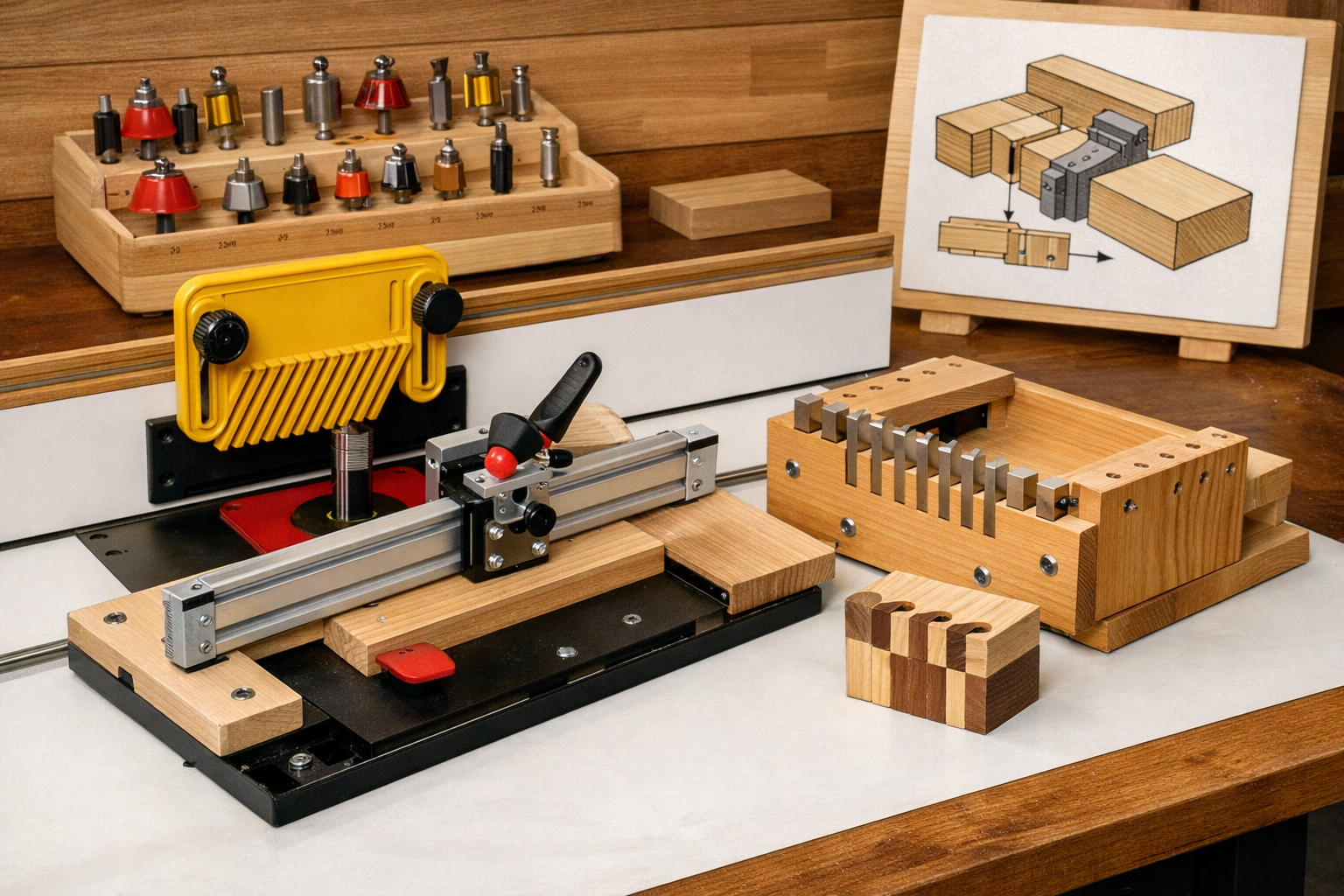
Must-Have Commercial Jigs
- Featherboards: These indispensable devices apply constant pressure to the workpiece against the fence and/or down to the table, preventing chatter and kickback. Both horizontal and vertical featherboards are highly recommended for consistent cuts.
- Miter Gauge: Often overlooked, a good miter gauge allows for precise end-grain routing, creating perfect square or angled cuts. Some even feature extensions for supporting wider workpieces.
- Router Table Fences: While most router tables come with a fence, aftermarket fences often offer better dust collection, micro-adjustment capabilities, and accessory slots for attaching jigs.
- Bit Guards: Clear acrylic guards that cover the exposed bit are crucial for safety, especially when performing through-cuts.
DIY Jigs for Advanced Techniques
Building your own jigs can save money and customize your setup for specific tasks. Many of these can be made from scrap plywood or MDF.
- Coping Sled: Essential for safely routing the end grain of rails when making cope and stick cabinet doors. This sled holds the workpiece securely and slides along the fence, preventing tear-out and ensuring square cuts. For more on advanced joinery, explore Mastering Dovetail Joinery for Drawers: Hand and Router Methods.
- Box Joint Jig: A relatively simple jig to build, a box joint jig uses a guide pin to create perfectly spaced fingers for strong, decorative box joints. This is an excellent project for honing your precision.
- Raised Panel Sled: For creating raised panels for cabinet doors, a dedicated sled allows you to safely guide large panels past big, aggressive bits. It provides much-needed support and control.
- Mortise and Tenon Jig: While more complex, a sliding mortise and tenon jig can produce incredibly precise joints, making it a valuable addition for furniture makers. Learn more about this type of joinery in Hand Tool Joinery for Visible Wood Joints.
- Circle Cutting Jig: Easily made from a piece of plywood, this jig allows you to rout perfect circles and arcs for decorative elements or specialized projects like custom tabletops.
| Jig Type | Primary Function | Benefits |
|---|---|---|
| Featherboards | Keep workpiece against fence/table | Reduces kickback, improves cut consistency |
| Coping Sled | Safely routs end grain for cabinet doors | Prevents tear-out, ensures square cuts |
| Box Joint Jig | Creates precise interlocking finger joints | Strong, decorative joints, repeatable |
| Raised Panel Sled | Safely guides large panels for profiling | Enhanced control, minimizes tear-out on large workpieces |
| Mortise/Tenon Jig | Produces accurate mortises and tenons | Strongest joinery, professional furniture construction |
| Circle Cutting | Routes perfect circles and arcs | Versatile for decorative elements, round parts |
Advanced Techniques for Precision Joinery and Edges
Once you’ve mastered the basics and implemented essential jigs, the router table opens up a world of advanced woodworking possibilities. These techniques demand precision, patience, and often multiple passes to achieve professional-grade results.
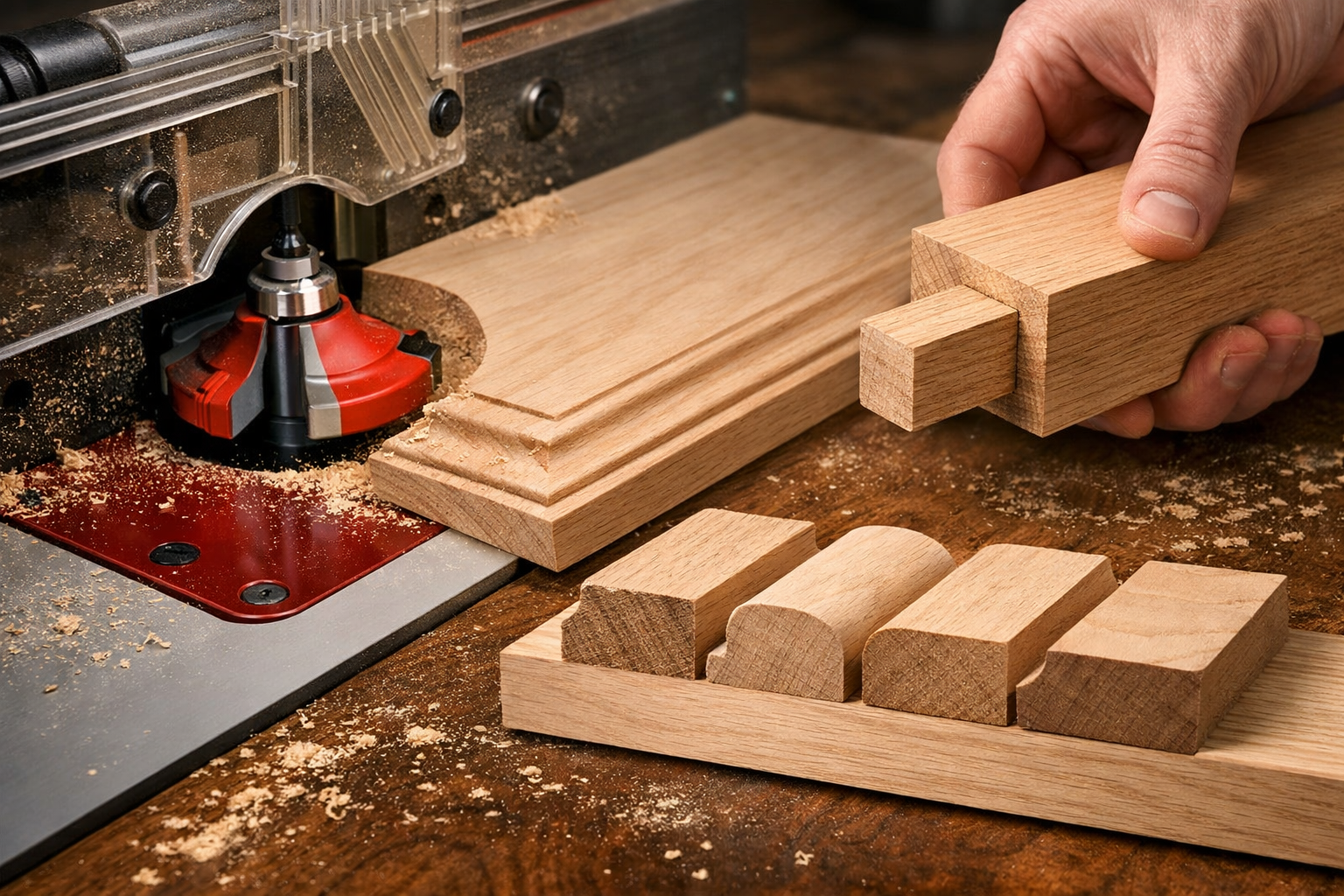
Crafting Flawless Joinery
The router table is exceptional for creating strong, visually appealing joints.
- Mortise and Tenon Joints: This classic joint, a cornerstone of sturdy furniture construction, can be accurately and repeatedly cut on the router table. Use a straight bit for the mortise (often with a plunge router and guide) and a slot-cutting bit or multiple passes with a straight bit for the tenon cheeks. A mortise and tenon jig dramatically improves accuracy and safety. These joints are vital in projects like Building Statement Furniture Pieces: Designing and Constructing Coffee Tables.
- Dovetail Joints: While often associated with hand tools, the router table can produce precise dovetails with specialized jigs and bits. This is particularly useful for drawer construction, offering both strength and beauty. For an in-depth look at dovetails, see Mastering Dovetail Joinery for Drawers.
- Box Joints/Finger Joints: Strong and visually appealing, box joints are ideal for case construction. A dedicated box joint jig makes cutting these interlocking fingers highly repeatable and accurate, even for large batches.
- Raised Panels: For cabinet doors or decorative wall panels, a router table equipped with a large raised panel bit can create elegant profiles. Always take multiple shallow passes and use a raised panel sled for stability.
- Dadoes and Rabbets: These fundamental joints for shelves and back panels are easily and accurately cut on the router table with a straight bit. Proper fence alignment and featherboards ensure consistent depth and width. For joining plywood, precision dadoes are key, as discussed in Joining Plywood Edges: Techniques for a Perfect Finish.
Achieving Perfect Edges and Profiles
Decorative edges and precise profiles add a touch of professionalism to any woodworking project.
- Edge Profiling: Round-over, chamfer, ogee, cove, and bead bits are just a few of the many options available to transform a plain edge. Experiment with different profiles to find what suits your design. Always make test cuts on scrap wood to fine-tune depth and speed.
- Flush Trimming: For laminates or veneered edges, a flush trim bit with a bearing guides the bit along an existing edge, ensuring a perfectly flush finish.
- Panel Raising: Beyond simple edge profiles, panel-raising bits create a distinct profile around the perimeter of a panel, giving it a classic, architectural look. These are large bits, so multiple passes and a slow feed rate are crucial.
- Template Routing: With the right setup, you can use a template and a bearing-guided bit to replicate complex shapes accurately. This is fantastic for repeatable cuts, such as creating identical components for DIY Wooden Plant Stands.
Advanced Tip: When routing a decorative edge, always rout the end grain first, then the long grain. This helps to minimize tear-out on the end grain, as any small imperfections will be cleaned up by the subsequent long-grain pass.
Conclusion
Mastering the router table is a journey that significantly enhances your woodworking capabilities, allowing for precision joinery and beautifully finished edges that elevate any project. From understanding and implementing critical safety measures to building custom jigs and applying advanced techniques, each step brings you closer to achieving professional-grade results.
By consistently prioritizing safety, leveraging the power of specialized jigs, and practicing advanced operations like mortise and tenons or raised panels, woodworkers in 2026 can unlock the full potential of this versatile machine. Remember, the key to mastery lies in meticulous setup, careful execution, and a commitment to continuous learning and practice. Embrace the challenge, and watch your woodworking projects transform with unparalleled precision and craftsmanship.
Actionable Next Steps:
- Review Your Safety Gear: Ensure you have appropriate safety glasses, hearing protection, and a dust mask.
- Evaluate Your Jigs: Identify any gaps in your jig collection and consider building a DIY coping sled or box joint jig.
- Practice on Scraps: Before committing to a project piece, always make test cuts on scrap wood to perfect your setup and technique.
- Invest in Quality Bits: Sharp, high-quality router bits make a significant difference in cut quality and safety.