

The hearth has always been the heart of the home, a place of gathering, warmth, and quiet contemplation. In 2026, as interior design trends continue their elegant dance between contemporary minimalism and the enduring appeal of nature, the fireplace mantel has emerged as a paramount opportunity for expressive design. Gone are the days when mantels merely served a utilitarian purpose; today, they are powerful statement pieces. Embracing this shift, discerning homeowners and designers are turning to the authentic character and sustainable charm of reclaimed wood mantels: craft a rustic focal point for any fireplace. These oversized, rough-hewn timbers bring an unparalleled sense of history, organic warmth, and a grounding presence that beautifully balances the sleek lines of modern gas fireplaces. This comprehensive guide will explore everything from sourcing these unique beams to their expert installation, ensuring your fireplace becomes a captivating centerpiece that tells a story.
Key Takeaways

- Reclaimed wood mantels offer unique character and sustainability, transforming any fireplace into a rustic focal point with historical depth.
- Sourcing involves understanding wood types, their origins, and the visual characteristics that make each piece distinct.
- Proper finishing is crucial for protecting the wood and enhancing its natural beauty, with various options available for desired aesthetics.
- Safe and secure installation requires careful planning, appropriate hardware, and consideration of the mantel’s weight and the fireplace structure.
- Integrating a reclaimed mantel with contemporary gas fireplaces creates a harmonious blend of old-world charm and modern efficiency.
The Enduring Appeal of Reclaimed Wood Mantels: Craft a Rustic Focal Point for Any Fireplace
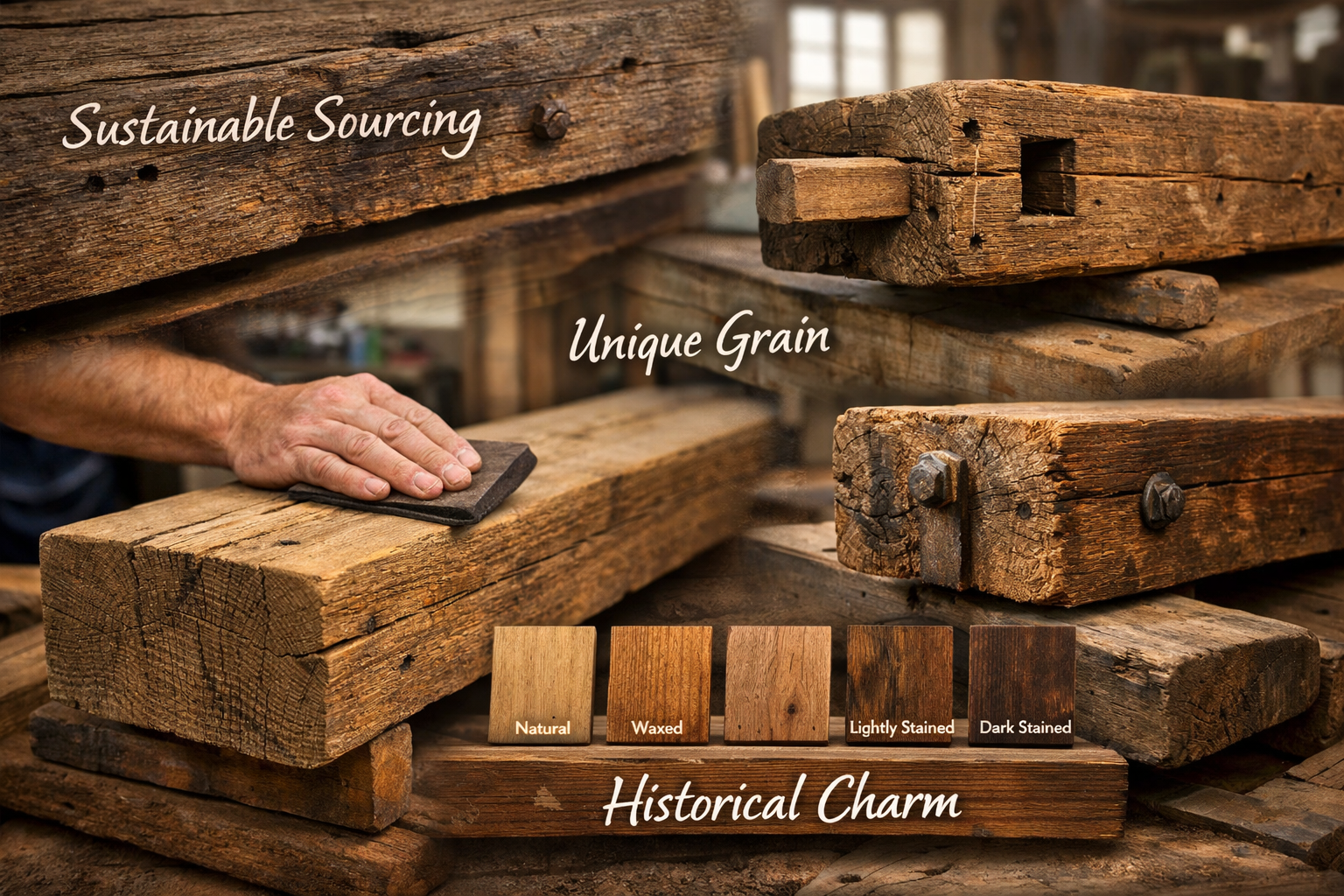
There’s an undeniable allure to wood that has lived a previous life. Each knot, grain pattern, nail hole, and chisel mark on a reclaimed beam tells a silent story of its former existence—whether as a structural support in an 18th-century barn, a joist in an old factory, or a beam from a forgotten mill. This rich history is precisely what makes reclaimed wood mantels so captivating. They inject a soul and authenticity into a space that new wood simply cannot replicate.
In an era where sustainability is not just a buzzword but a guiding principle for many design choices, reclaimed wood stands out. By repurposing old timbers, we reduce demand for newly harvested lumber, lessening deforestation and minimizing the energy required for processing new materials. It’s an eco-conscious decision that also yields stunning aesthetic rewards.
Why Choose Reclaimed Wood for Your Mantel?
The benefits of selecting reclaimed wood for your fireplace mantel extend beyond its captivating aesthetics and environmental friendliness.
- Unrivaled Character: No two reclaimed mantels are alike. The natural imperfections, weathering, and patina developed over decades or even centuries create a unique piece of art.
- Superior Durability: Often, reclaimed timbers come from old-growth forests, meaning the wood is denser and more stable than most commercially available new lumber. It has already withstood the test of time, proving its resilience.
- Historical Significance: Owning a piece of history adds depth and conversation to your home. Imagine the stories your mantel could tell if it could speak!
- Eco-Friendly Choice: As previously mentioned, it’s a sustainable option that promotes recycling and conserves natural resources.
- Versatile Design Element: While inherently rustic, reclaimed wood can complement a surprising range of interior styles—from farmhouse and industrial to modern and transitional, especially when expertly paired with contemporary elements like a sleek gas fireplace.
Understanding the Sources and Types of Reclaimed Wood
The journey of a reclaimed wood mantel begins with its origin. Different sources yield different wood types and characteristics.
| Source Type | Common Wood Species | Typical Characteristics | Aesthetic |
|---|---|---|---|
| Old Barns | Oak, Pine, Hemlock | Nail holes, insect tracks, weathering, hand-hewn marks, deep patina | Rustic, authentic farm-to-home, distressed |
| Industrial Buildings | Douglas Fir, Oak, Maple | Bolt holes, saw marks, robust size, dense grain, often darker | Industrial chic, robust, urban loft |
| Old Mills | Oak, Pine, Chestnut | Water staining, unique coloration, large dimensions, often wide planks | Warm, inviting, often with historical markings |
| Demolished Homes | Pine, Fir, Redwood | Lighter distressing, sometimes with remnants of paint, varied sizes | Eclectic, shabby chic, can be refined rustic |
| Sunk Logs | Oak, Maple, Cypress | Unique mineralization, distinct color variations, very dense | Rare, exotic, highly unique grain patterns |
When considering a reclaimed wood mantel, it is crucial to inquire about its provenance. Reputable suppliers often have detailed information about where their wood was salvaged, which adds to the mantel’s story and value. Look for characteristics that appeal to you—perhaps you desire the rough-hewn texture of an old barn beam or the smoother, denser grain of an industrial timber.
Sourcing, Selecting, and Customizing Your Reclaimed Wood Mantel
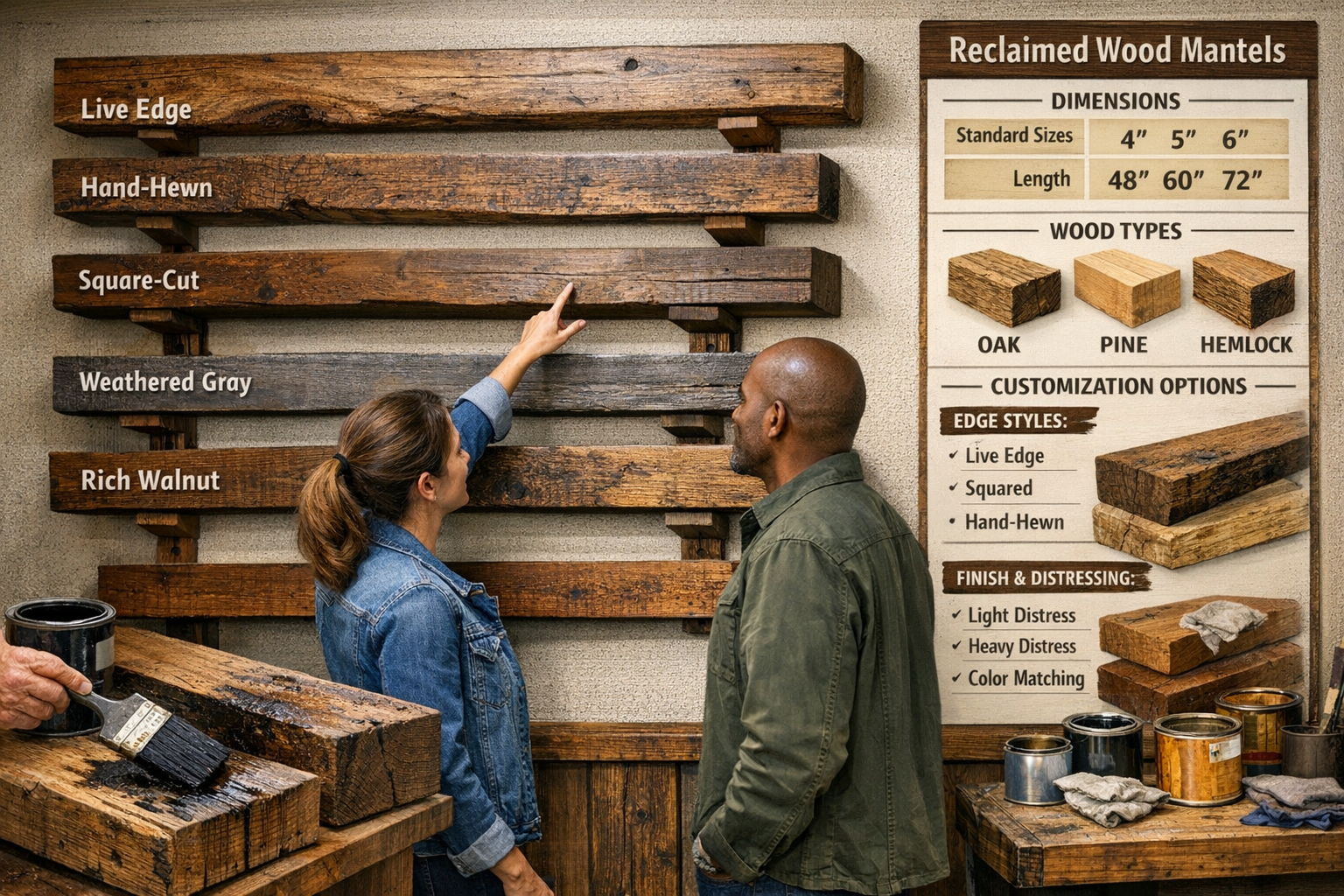
Choosing the perfect reclaimed wood mantel involves more than just picking a piece of wood. It’s about finding a timber that resonates with your home’s aesthetic, fits your fireplace dimensions, and brings the desired character to your space.
Finding Reputable Suppliers
The first step is to locate suppliers specializing in reclaimed lumber. These can range from large architectural salvage yards to smaller, artisanal woodshops.
- Architectural Salvage Yards: These are treasure troves of old materials, often carrying a wide variety of timbers. You might find raw beams that require significant work.
- Specialized Reclaimed Wood Retailers: These businesses often stock pre-cut mantel beams that have been cleaned, de-metaled, and are ready for finishing. They may also offer custom milling and finishing services.
- Local Artisans/Woodworkers: A local craftsman might be able to source a specific type of wood or custom-mill a mantel to your exact specifications. For those interested in the craft of woodworking, understanding tools and techniques can be invaluable. For instance, knowing about precision woodworking tools can help you appreciate the work that goes into preparing a beam.
“A reclaimed mantel isn’t just wood; it’s a preserved piece of history, ready to embark on its next chapter in your home.”
Key Considerations When Selecting a Beam
Once you’ve found a supplier, several factors should guide your selection:
Dimensions:
- Length: The mantel should ideally extend 6-12 inches beyond the fireplace opening on each side for a balanced look.
- Depth: A depth of 6-12 inches is common, providing enough surface area for decor.
- Height/Thickness: Typically 4-8 inches, depending on the scale of your fireplace and the desired visual weight.
- Weight: Reclaimed wood can be incredibly heavy. Ensure your wall can support the weight, especially for larger, denser beams.
Wood Species: As discussed, different species offer varying grain patterns, colors, and densities. Oak is known for its prominent grain and strength, while pine offers a softer, more rustic appearance.
- Expert Tip: If your home has existing wood elements, try to choose a species that complements them, or opt for a contrasting one for a deliberate design statement.
Character and Patina: This is where the true beauty lies.
- Hand-Hewn Marks: Irregular axe marks from early timber framing.
- Saw Marks: Straight lines from early sawmills.
- Nail Holes & Fastener Marks: Evidence of its previous life.
- Weathering: Silver-grey patinas, cracks, and checks from exposure to the elements.
- Insect Trails: Beautiful, intricate patterns left by wood-boring insects.
- Color Variation: From light blondes to deep, rich browns and grays.
Condition: While imperfections are desirable, excessive rot, structural damage, or active insect infestations should be avoided. Reputable suppliers will have properly dried and treated the wood.
Customization Options and Finishing Techniques
After selecting the raw beam, customization allows you to tailor it perfectly to your vision.
- Sizing and Cutting: The supplier can cut the beam to your precise length. They may also offer options for squaring edges or leaving a “live edge” for a more organic look.
- Cleaning and De-Metaling: This essential step involves removing dirt, debris, and any hidden metal (nails, bolts) that could damage tools or pose a safety risk.
- Sanding: The level of sanding dictates the mantel’s texture. A light sanding preserves a rough-hewn feel, while a heavier sanding creates a smoother surface.
- Finishing: This protects the wood and enhances its beauty.
- Natural/Clear Finishes: A clear coat or natural oil (like Danish oil or linseed oil) will highlight the wood’s inherent color and grain. For a detailed comparison, explore Danish Oil vs Linseed: The Ultimate Wood Finishing Guide.
- Staining: If you want to alter the wood’s color, staining is an option, though many prefer to let the reclaimed wood’s natural patina shine through.
- Waxing: Provides a subtle sheen and protection, often used over oil finishes. Learn more about wax over polyurethane for broader finishing ideas.
- Polyurethane/Varnish: Offers robust protection against moisture and wear, available in various sheens. When working with different finishes, understanding techniques like cool wood finishing techniques or distressed wood finishing techniques can be beneficial.
Installation of Reclaimed Wood Mantels: Craft a Rustic Focal Point for Any Fireplace
The installation of a reclaimed wood mantel is a critical step that requires precision, proper tools, and a keen understanding of structural support. Due to the significant weight of these timbers, safety and stability are paramount.
Planning and Preparation
Before any cutting or mounting begins, thorough planning is essential.
- Measure and Mark: Precisely determine the desired height and center point of your mantel above the fireplace. Building codes often specify minimum clearances above fireboxes. Consult your local codes and the fireplace manufacturer’s instructions.
- Rule of Thumb: A common height is 12-18 inches above the top of the firebox opening, but this can vary based on ceiling height and overall room scale.
- Assess Wall Structure: Identify studs or solid blocking within the wall behind where the mantel will be mounted. This is crucial for securely anchoring the heavy beam. If studs are not optimally located, additional blocking may need to be installed within the wall, which could involve opening up the drywall.
- Gather Tools and Materials:
- Measuring Tape & Level: For accurate placement.
- Stud Finder: To locate wall studs.
- Drill & Bits: For pilot holes and mounting hardware.
- Circular Saw or Miter Saw: If you need to cut the mantel to length (a miter saw is ideal for clean, precise cuts).
- Sanding Equipment: For final touches on cut edges.
- Safety Glasses & Gloves: Always protect yourself.
- Shims: For leveling.
- Mounting Hardware: Specifics depend on the method chosen.
Mounting Methods for Heavy Reclaimed Wood Mantels
There are several reliable methods for mounting a heavy reclaimed wood mantel, each with its advantages. The choice often depends on the wall type, mantel weight, and desired aesthetic (visible or hidden supports).

1. Floating Mantel Brackets (Hidden Support)
This is a popular choice for achieving a clean, modern look where the mantel appears to “float” effortlessly.
- Principle: Heavy-duty steel rods or plates are securely anchored into the wall studs, and corresponding holes are drilled into the back of the mantel beam. The mantel slides onto these supports.
- Steps:
- Mount Brackets: Secure the chosen floating mantel brackets (often made of thick steel) firmly into at least two, preferably three or more, wall studs using appropriate lag screws. Ensure they are perfectly level and spaced to align with the mantel’s weight distribution.
- Drill Mantel: Carefully mark and drill deep, straight holes into the back of the reclaimed wood mantel, matching the spacing and diameter of the bracket rods. Use a drill press if possible for accuracy, or a drill guide. Ensure the holes are slightly deeper than the rods to allow for full engagement.
- Test Fit: Carefully lift the mantel and slide it onto the mounted brackets. Check for level and fit. Adjust as necessary.
- Secure (Optional but Recommended): Once fitted, some installers will add a bead of construction adhesive in the drilled holes or use small screws from the top or bottom of the mantel into the brackets for extra security, though the fit should be snug.
2. Corbel Supports (Visible Support)
Corbels offer a classic, architectural look and provide robust support, often used for heavier or very long mantels.
- Principle: Decorative wooden or metal supports (corbels) are mounted to the wall, and the mantel beam rests directly on top of them.
- Steps:
- Select Corbels: Choose corbels that complement the style and scale of your mantel and room. Ensure they are strong enough to support the mantel’s weight.
- Mount Corbels: Securely attach the corbels to the wall studs using heavy-duty lag screws. Use a level to ensure they are at the same height and plumb. The corbels should extend far enough to support a significant portion of the mantel’s depth.
- Position Mantel: Place the reclaimed wood mantel on top of the mounted corbels.
- Secure Mantel: Screw up through the corbels into the bottom of the mantel, or use metal straps or plates to secure the mantel to the corbels, ensuring these fasteners are hidden or aesthetically pleasing.
3. Ledger Board and Brackets (Semi-Hidden Support)
This method involves a sturdy ledger board mounted to the wall, often with additional L-brackets for extra support.
- Principle: A wooden ledger board (e.g., a 2×4 or 2×6) is securely fastened to the wall studs. The mantel is then attached to this ledger board from above or below, and sometimes additional L-brackets are added underneath for further stability.
- Steps:
- Install Ledger Board: Cut a strong piece of lumber (e.g., a 2×4 or 2×6, matching the mantel’s length) and securely fasten it horizontally into the wall studs using long lag screws. Ensure it’s perfectly level.
- Position Mantel: Place the reclaimed wood mantel on top of the ledger board, aligning it as desired.
- Secure Mantel: Fasten the mantel to the ledger board using long, structural screws driven diagonally down through the top of the mantel into the ledger (if the top won’t be visible) or up through the bottom of the ledger into the mantel. For very heavy mantels, consider adding heavy-duty L-brackets underneath the mantel, screwing them into both the mantel and the wall studs. For ideas on securing wood elements, check out our guide on mastering woodworking screws.
Integrating with Contemporary Gas Fireplaces
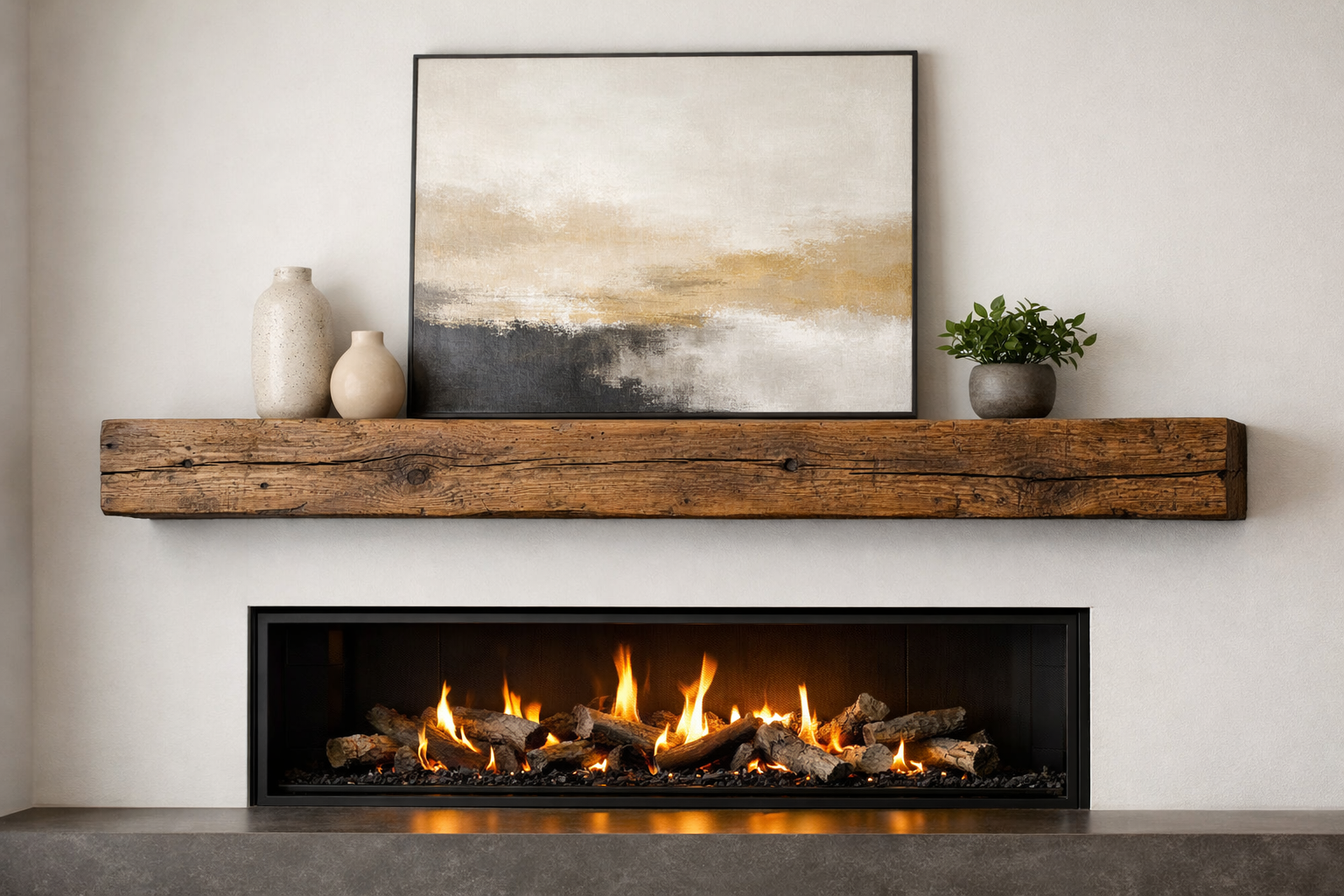
The natural warmth and rugged texture of a reclaimed wood mantel beautifully juxtapose the clean, modern lines and efficient flame of a contemporary gas fireplace. This combination creates a dynamic and appealing aesthetic.
- Balance is Key: With a sleek gas insert, the reclaimed mantel becomes the dominant, grounding element. Ensure its size is appropriate—oversized often works well to make a statement, but avoid overwhelming the space.
- Color Harmony: Consider how the mantel’s finish interacts with the fireplace surround and wall color. A darker mantel can provide rich contrast against a light, minimalist wall, while a lighter, natural finish might blend more seamlessly with earthy tones.
- Minimalist Decor: Allow the mantel to be the star. Adorn it with simple, curated items—a striking piece of art, a few artisanal ceramics, or a minimalist clock like a tambour mantel clock can complement the rustic charm without competing with it.
- Material Contrast: The natural wood beautifully offsets materials like concrete, steel, tile, or stone used in modern fireplace surrounds, creating visual interest and textural depth.
Maintenance and Care for Your Reclaimed Wood Mantel
Once installed, your reclaimed wood mantel will provide years of beauty and character with minimal maintenance.
- Dusting: Regularly dust the mantel with a soft cloth to prevent buildup.
- Cleaning Spills: Wipe up spills immediately with a damp cloth. Avoid harsh chemical cleaners, which can damage the finish or the wood itself.
- Humidity Control: Wood is a natural material and can react to changes in humidity. Maintaining a stable indoor humidity level (ideally 35-55%) will help prevent excessive checking (cracks) or movement in the wood.
- Refinishing: Depending on the type of finish and exposure, you might consider reapplying a protective finish every few years to maintain its luster and protection. For oil-based finishes, this is typically a simple wipe-on process.
Conclusion
Embracing reclaimed wood mantels: craft a rustic focal point for any fireplace offers a unique opportunity to infuse your home with unparalleled character, warmth, and a compelling narrative. In 2026, as design trends lean into authenticity and sustainable choices, these rough-hewn timbers stand as a testament to enduring beauty and responsible living. From the moment you discover a beam’s storied past to the satisfaction of seeing it perfectly installed above your contemporary gas fireplace, you’re not just adding a decorative element—you’re installing a piece of history that will become the organic heart of your living space.
Actionable Next Steps:
- Research Local Suppliers: Begin by searching for reputable reclaimed wood suppliers or architectural salvage yards in your area.
- Visit Showrooms: See reclaimed beams in person to appreciate their varied character, textures, and potential finishes.
- Measure Your Space: Accurately measure your fireplace dimensions and wall area to determine ideal mantel length, depth, and height.
- Consult a Professional: If you’re unsure about wall structure or installation, consider consulting a general contractor or experienced carpenter.
- Plan Your Finish: Decide on the finish that best suits your aesthetic and provides the necessary protection for your chosen mantel.