
Imagine stepping into a workshop where the lights anticipate your arrival, dust collection systems spring to life precisely when a tool is engaged, and power tools can be safely controlled with a tap on your phone. This isn’t a futuristic fantasy; it’s the reality achievable through Smart Workshop Integration: Automating Dust Collection, Lighting, and Tool Control for Enhanced Efficiency and Safety. In 2026, leveraging smart home technology for your woodworking space is no longer a luxury but a strategic move to boost productivity, improve safety, and create a more enjoyable crafting environment. This comprehensive guide will explore how to transform your traditional workshop into an intelligent hub of efficiency.
Key Takeaways
- Enhanced Safety: Automation minimizes manual interaction with hazardous systems and ensures proper ventilation.
- Increased Efficiency: Tools and lighting activate only when needed, reducing wasted time and energy.
- Improved Air Quality: Automated dust collection significantly reduces airborne particulates, protecting health.
- Personalized Control: Customize lighting, tool activation, and dust collection for specific tasks and preferences.
- Modern Workspace: Embrace 2026 technology to create a sophisticated, highly functional, and enjoyable workshop.
The Pillars of Smart Workshop Integration: Dust Collection Automation
One of the most significant advancements in workshop safety and cleanliness comes from automating dust collection. Fine dust particles are not just a nuisance; they pose serious health risks and can degrade tool performance. Smart integration ensures that dust collection is always active when it needs to be, without you having to remember to flip a switch.

How Automated Dust Collection Works
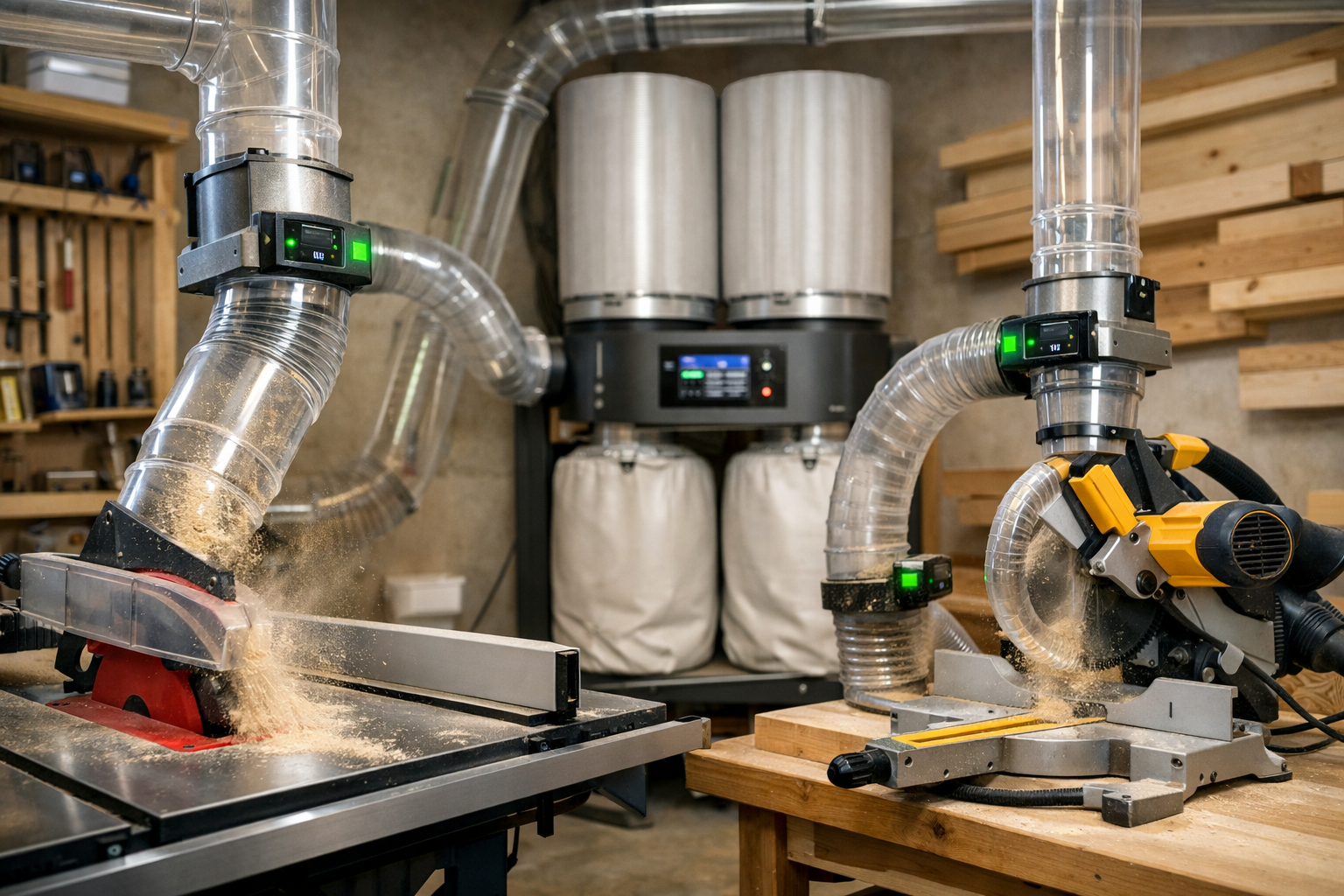
At its core, automated dust collection involves linking your power tools to your dust extractor or shop vac. When a tool is powered on, the dust collection system automatically activates. This can be achieved through various methods:
- Current Sensing Switches: These devices plug into a standard outlet, and your tool plugs into the switch. When the tool draws power, the switch detects the current and sends a signal to turn on the dust collector. Many systems offer adjustable delays, so the collector runs for a few seconds after the tool powers down, clearing any residual dust. For smaller setups, a high-quality 14-gallon RIDGID shop vac or a Craftsman Home ‘N Shop Vac can be integrated with these switches.
- RF Remote Control: Some dust collectors come with RF (radio frequency) remotes that can be mounted near your tools. While not fully automated, they offer hands-free activation from any point in the shop, a significant step up from walking to the collector itself.
- Smart Outlets and Hubs: Integrating smart outlets (Wi-Fi or Zigbee enabled) allows you to use a central smart home hub (like Home Assistant, SmartThings, or Alexa) to create automation routines. For instance, you could set up a routine where “when power tool X is turned on (detected by smart outlet), then turn on smart outlet Y (connected to dust collector).”
Benefits of Automated Dust Collection
- Consistent Cleanliness: No more forgotten dust collector switches. The system works every time the tool does, significantly reducing airborne dust.
- Health and Safety: Minimizing dust exposure protects your respiratory health and reduces fire hazards. This is particularly crucial when working with various wood types, as some dusts are more harmful than others.
- Extended Tool Life: Dust is abrasive and can prematurely wear out motor bearings and switches. Automated collection helps keep tools cleaner.
- Improved Visibility: A dust-free workspace means better sightlines for precise cuts and reduced strain.
- Time Savings: Eliminate the need to manually turn on/off your dust collector, streamlining your workflow.
“Automating dust collection transforms your workshop from a dusty battleground into a clean, safe haven for craftsmanship.”
Consider integrating automated blast gates into your dust collection system. These smart gates automatically open to the active tool and close off inactive ones, maximizing suction where it’s needed most. This advanced step in Smart Workshop Integration: Automating Dust Collection, Lighting, and Tool Control for Enhanced Efficiency and Safety elevates the system’s efficiency significantly.
Intelligent Lighting and Environmental Control
Beyond dust, a well-lit and comfortable workshop is essential for both productivity and safety. Smart lighting and environmental controls take workshop ambiance and functionality to the next level.
Smart Lighting Strategies
Traditional workshop lighting often consists of static fluorescent tubes or basic LEDs. Smart lighting offers dynamic control, adapting to your tasks and preferences.
- Motion Sensor Activation: Install motion sensors near entryways or specific work zones to automatically turn lights on when you enter and off when you leave. This saves energy and ensures you never walk into a dark shop.
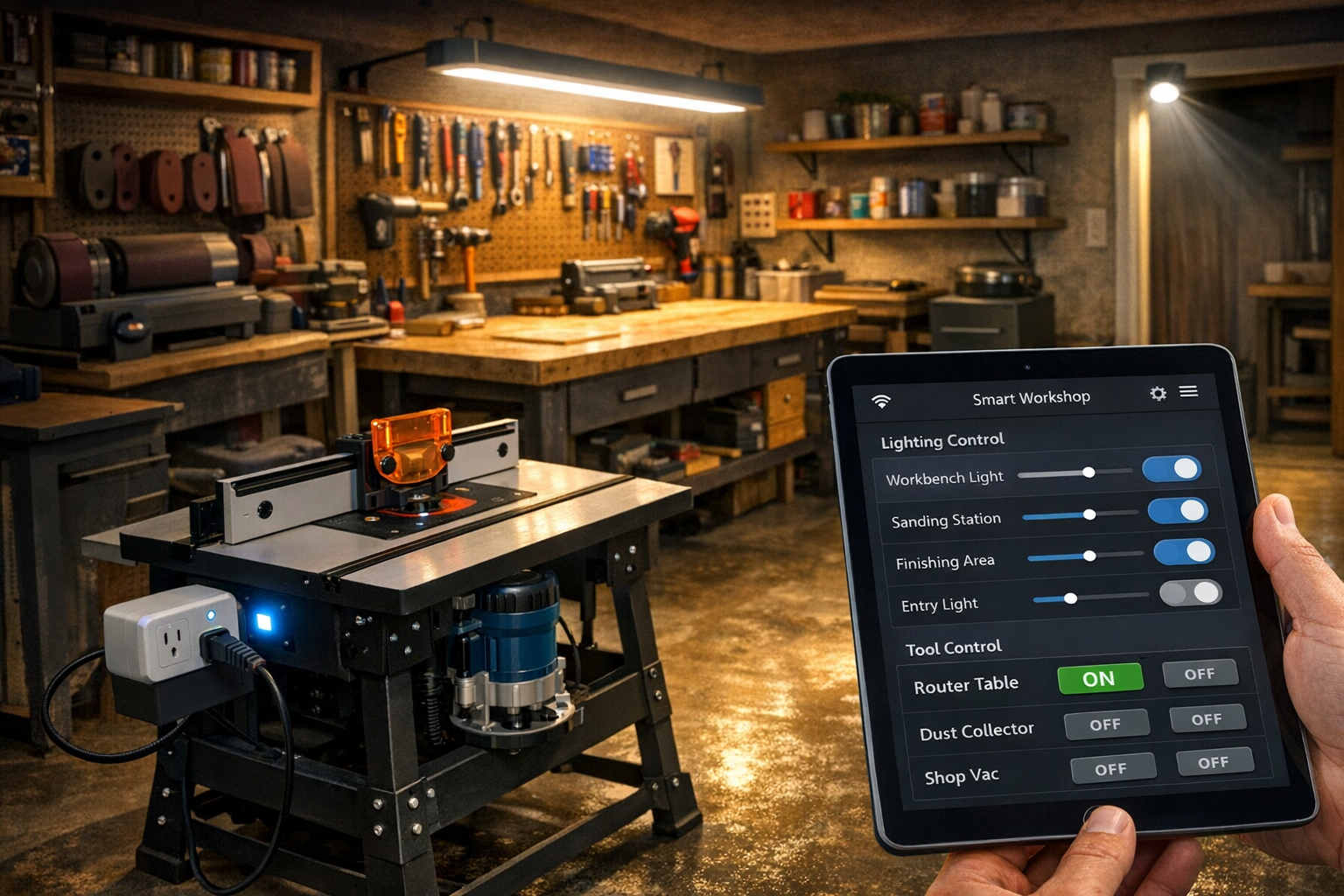
- Zone Lighting: Use smart bulbs or light switches to divide your workshop into distinct lighting zones. You can have bright task lighting over your workbench, softer ambient lighting in a finishing area, and focused illumination for specific tools. For example, a router table could have dedicated, adjustable task lighting.
- Dimmable and Color-Tunable Lights: Adjust brightness and even color temperature (warm white for intricate tasks, cool white for general work) to reduce eye strain and improve visibility for different projects.
- Daylight Harvesting: Integrate light sensors that automatically adjust artificial lighting based on natural light levels coming through windows, further optimizing energy use.
Environmental Monitoring and Control
A comfortable workshop isn’t just about light; it’s also about temperature, humidity, and air quality.
- Smart Thermostats: Control heating and cooling remotely or schedule it to activate before you start working, ensuring a comfortable environment year-round.
- Humidity Sensors and Dehumidifiers: Wood is sensitive to humidity changes. Smart humidity sensors can trigger a smart dehumidifier or humidifier to maintain optimal conditions, preventing wood movement and finish issues.
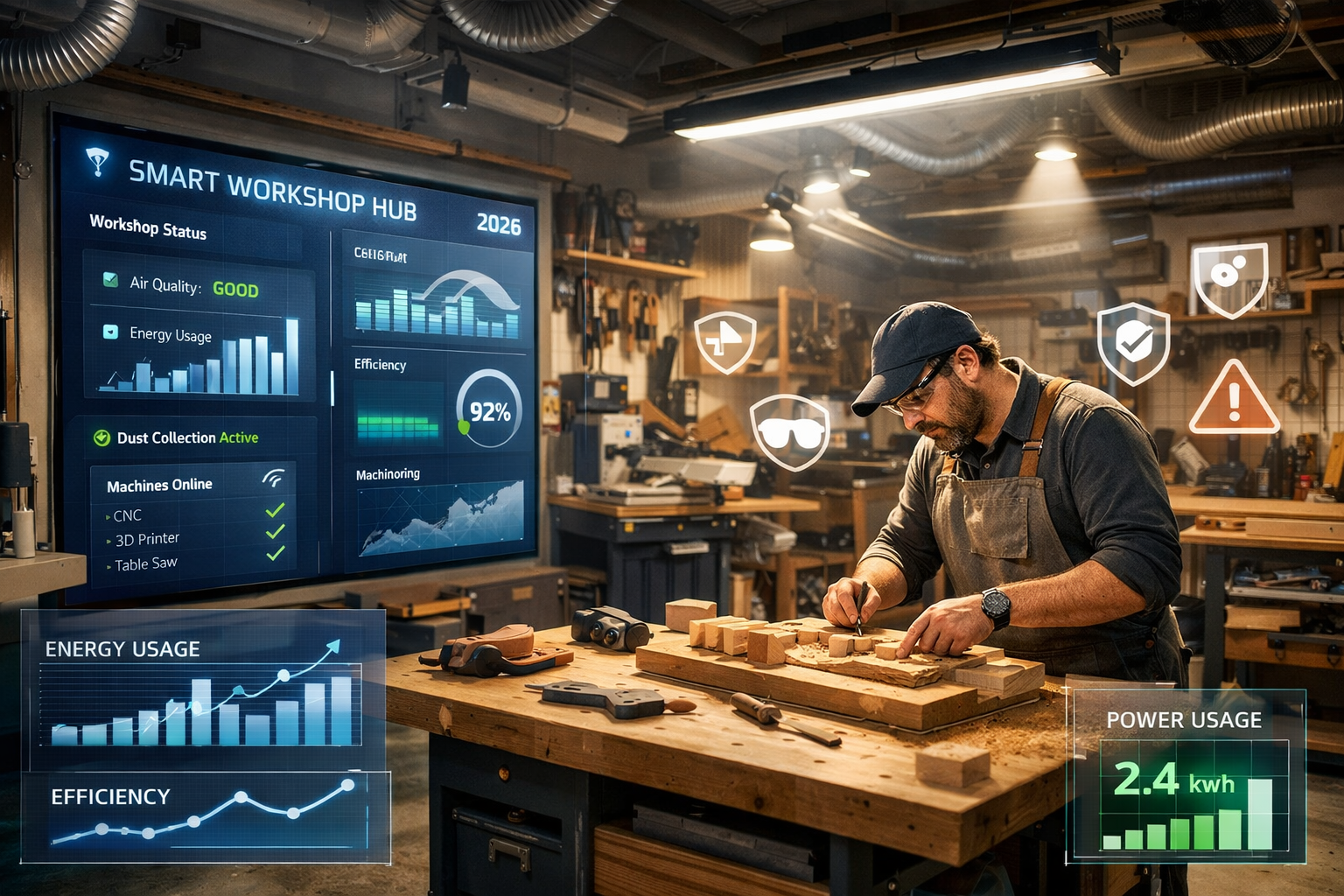
- Air Quality Monitors: Beyond dust, volatile organic compounds (VOCs) from finishes or glues can impact air quality. Smart air quality monitors can alert you to poor conditions and even trigger smart air purifiers or exhaust fans. This complements your dust collection efforts for truly clean air.
| Feature | Traditional Workshop | Smart Workshop Integration (2026) |
|---|---|---|
| Lighting | Manual switches | Motion-activated, zoned, dimmable, color-tunable, scheduled |
| Dust Collection | Manual activation | Automated with tool use, smart blast gates, post-use delay |
| Tool Control | Manual on/off | Remote activation, scheduled power cycles, safety interlocks |
| Climate Control | Basic thermostat | Smart thermostat, humidity control, air quality monitoring |
| Energy Efficiency | Moderate | High (lights/tools only active when needed) |
| Safety | Dependent on user | Enhanced (auto dust-off, remote tool-off, air quality alerts) |
| Convenience | Basic | High (centralized control, voice commands, custom routines) |
Remote Tool Control and Safety Interlocks
Integrating smart technology into your power tool usage isn’t just about convenience; it’s a monumental leap forward in workshop safety. Remote control and intelligent safety interlocks can prevent accidents and provide peace of mind.
Smart Tool Control for Enhanced Efficiency and Safety
The concept here is to gain control over your tools beyond their built-in on/off switches.
- Smart Plugs/Outlets: By plugging your power tools into smart plugs, you can remotely turn them on or off using a smartphone app or voice command. This is incredibly useful if you need to quickly kill power to a machine from across the room, or if you want to ensure all tools are off when you leave the shop. This also allows for scheduling certain tools to only be active during specific hours.
- Integration with Smart Hubs: Connect your smart plugs to a central hub (e.g., Apple HomeKit, Google Home, Home Assistant). This allows you to create complex automations. For example, “When I say ‘start workshop,’ turn on main lights, activate dust collector, and enable power to the table saw.” Remember, safety is paramount, so always ensure you are present and attentive when operating machinery.
- Voice Control: Imagine saying, “Alexa, turn on the planer” or “Hey Google, shut off all workshop tools.” Voice commands can be a hands-free way to manage your power tools, especially useful when your hands are full or dirty.
- Emergency Shut-Offs: A critical application of smart tool control is the ability to create emergency shut-off protocols. A single button press or voice command can de-energize every tool in your shop immediately, which could be a lifesaver in an unforeseen event. This significantly enhances safety alongside crucial components like a Bork Riving Knife on a table saw.
Building Safety Interlocks
Beyond simple on/off, smart technology enables advanced safety features:
- Tool-Specific Activation: Prevent accidental tool activation by linking it to other conditions. For example, a router table’s power could only be enabled if its safety guard is detected as being in place, or if the dust collection system is running.
- Proximity Sensors: Use motion or pressure sensors to ensure no one is too close to a running machine before it activates, or to shut it down if someone enters a danger zone unexpectedly.
- Time-Based Shut-offs: Program tools to automatically shut down after a certain period of inactivity, reducing energy waste and the risk of leaving a tool running unattended.
- Integration with Entry Sensors: Pair door/window sensors with your tool control. If a workshop door is opened while a dangerous machine is running, a custom alert can be sent, or the machine could be programmed to power down (with appropriate overrides for safe use).
For those interested in building a custom wood workbench, integrating smart outlets directly into the bench’s design can create a seamless and highly functional workspace for power tool mastery. Additionally, consider creating DIY Smart Workshop Storage Solutions that incorporate these smart elements from the ground up.
Designing Your Smart Workshop System
Embarking on Smart Workshop Integration: Automating Dust Collection, Lighting, and Tool Control for Enhanced Efficiency and Safety requires thoughtful planning. Here’s how to approach designing your system in 2026:
Assess Your Current Setup
Before buying any new gear, take stock of your existing workshop.
- Tools: List all your power tools, especially those that generate significant dust or require frequent on/off cycles.
- Dust Collection: Identify your current dust collector or shop vac. Is it powerful enough for your needs? Can it be easily integrated with smart switches?
- Lighting: Evaluate your current lighting. Where are the dark spots? Are your current fixtures compatible with smart bulbs or switches?
- Layout: Consider your workflow. Where do you typically stand when operating each tool? Where would remote controls or voice commands be most beneficial?
Choose Your Smart Home Ecosystem
The smart home market offers several platforms. Choosing one that suits your technical comfort level and offers broad compatibility is key.

- Hub-Based Systems (e.g., Home Assistant, SmartThings, Hubitat): These offer the most flexibility and local control, often allowing for complex automations without relying on the internet. They can be more challenging to set up but are powerful.
- Cloud-Based Systems (e.g., Amazon Alexa, Google Home, Apple HomeKit): Easier to set up, relying on cloud services for commands and automations. Compatibility can vary, and they may have more limited local control.
- Single-Brand Ecosystems: Some brands offer their own complete smart workshop solutions, which can be simpler but may lack the versatility of open platforms.
Essential Components and Considerations
- Smart Plugs/Relays: Opt for robust smart plugs rated for the amperage your tools draw. Industrial-grade smart relays might be necessary for larger machines.
- Sensors: Motion sensors for lighting, air quality sensors for dust/VOCs, and door/window sensors for security and safety interlocks.
- Controllers: A central hub, a smartphone app, or voice assistants will be your primary control interfaces.
- Wiring: Ensure your workshop’s electrical wiring can handle the load and that you have enough outlets for all your smart devices. Consult an electrician if unsure.
- Network Stability: A strong and reliable Wi-Fi network is crucial for seamless operation. Consider a mesh Wi-Fi system if your workshop is far from your main router.
Phased Implementation
Don’t try to automate everything at once. Start with one area or function. For example:
- Phase 1: Dust Collection Automation: Integrate smart switches with your primary dust collector and a few key tools (e.g., table saw, miter saw).
- Phase 2: Smart Lighting: Install motion sensors and smart bulbs/switches for general and task lighting.
- Phase 3: Tool Control and Advanced Safety: Add smart plugs to more tools and begin building safety interlocks and remote shut-off capabilities.
- Phase 4: Environmental Monitoring: Introduce air quality, temperature, and humidity sensors with automated responses.
By taking a phased approach, you can learn as you go, test different solutions, and gradually build out a sophisticated smart workshop that perfectly suits your needs. For those building new infrastructure, integrating smart solutions into creating ergonomic workshop furniture and storage from the start is an excellent strategy.
Conclusion
The journey towards Smart Workshop Integration: Automating Dust Collection, Lighting, and Tool Control for Enhanced Efficiency and Safety is an investment that pays dividends in productivity, safety, and comfort. In 2026, accessible smart technology allows woodworkers to create an environment where the tools and systems anticipate needs, minimize risks, and optimize every aspect of the craft. From breathing cleaner air to working under ideal lighting and operating machinery with intelligent oversight, a smart workshop isn’t just a convenience – it’s a testament to modern craftsmanship.
Take the first step today: evaluate your current setup, research compatible smart devices, and envision the ideal workflow for your space. Start small with a single automation, expand incrementally, and soon you’ll experience the transformative power of a truly intelligent workshop.
References
- Duvall, M. (2020). Smart workshop: How to Automate your Dust Collection. Woodworkers Guild of America.
- Schwartz, K. (2023). The Connected Shop: Integrating Smart Home Tech for Woodworkers. Fine Woodworking.
- Home Assistant Community. (Various Years). Workshop Automation Projects.
SEO Meta Title: Smart Workshop Integration: Automate Dust, Light & Tools SEO Meta Description: Transform your workshop in 2026 with smart automation! Integrate dust collection, intelligent lighting, and remote tool control for peak efficiency & safety.