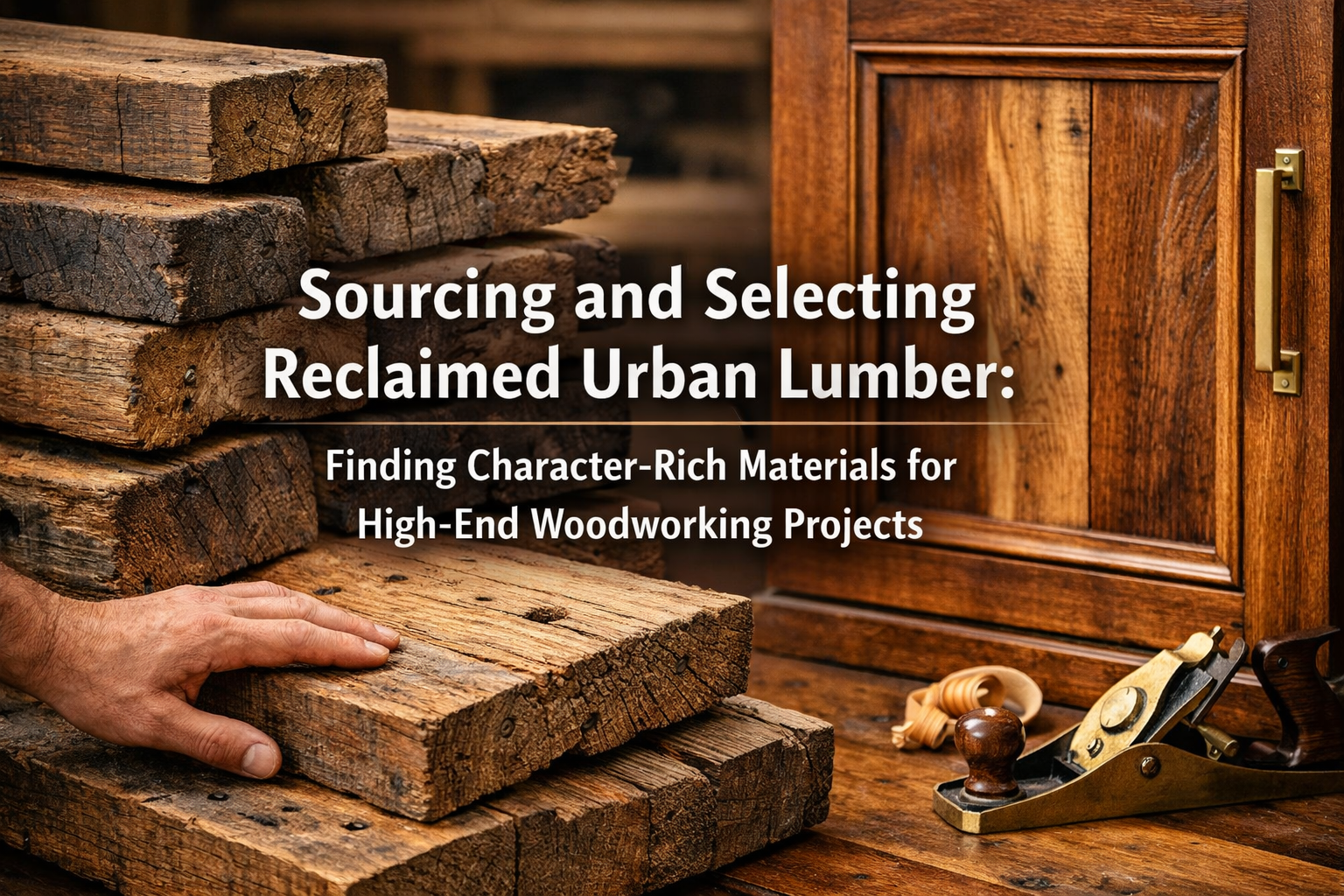

The allure of wood in woodworking projects is timeless, but for those seeking to infuse their creations with unparalleled character and a profound story, the journey often leads to reclaimed urban lumber. This article serves as a comprehensive guide for beginners and intermediate makers alike, navigating the intricate process of Sourcing and Selecting Reclaimed Urban Lumber: Finding Character-Rich Materials for High-End Woodworking Projects. It delves into identifying, sourcing, and meticulously evaluating urban-harvested and reclaimed wood that not only boasts unique aesthetic qualities but also meets the structural demands of high-end craftsmanship in 2026.
Imagine crafting a dining table from a century-old oak tree that once shaded a bustling city park, or building a bespoke cabinet from timbers salvaged from a historic factory. Reclaimed urban lumber offers this very promise: materials imbued with history, sustainability, and distinctive natural features that mass-produced timber simply cannot replicate. As the demand for sustainable and unique materials grows, understanding how to effectively source and select this special kind of wood becomes an invaluable skill for any serious woodworker.

Key Takeaways
- Understanding Urban Lumber Sources: Reclaimed urban lumber comes from diverse origins, including felled city trees, demolition salvage, and storm-damaged timber, each offering unique characteristics and historical narratives.
- Prioritizing Thorough Evaluation: Critical evaluation for moisture content, insect infestation, rot, and embedded metal is paramount to ensure the structural integrity and workability of reclaimed materials.
- Embracing Character, Managing Defects: Distinguish between desirable character marks (spalting, knots, color variations) and actual defects that compromise usability, learning how to incorporate or mitigate them.
- Building Relationships: Establishing connections with arborists, municipal forestry departments, demolition crews, and specialized suppliers is crucial for consistent access to quality urban lumber.
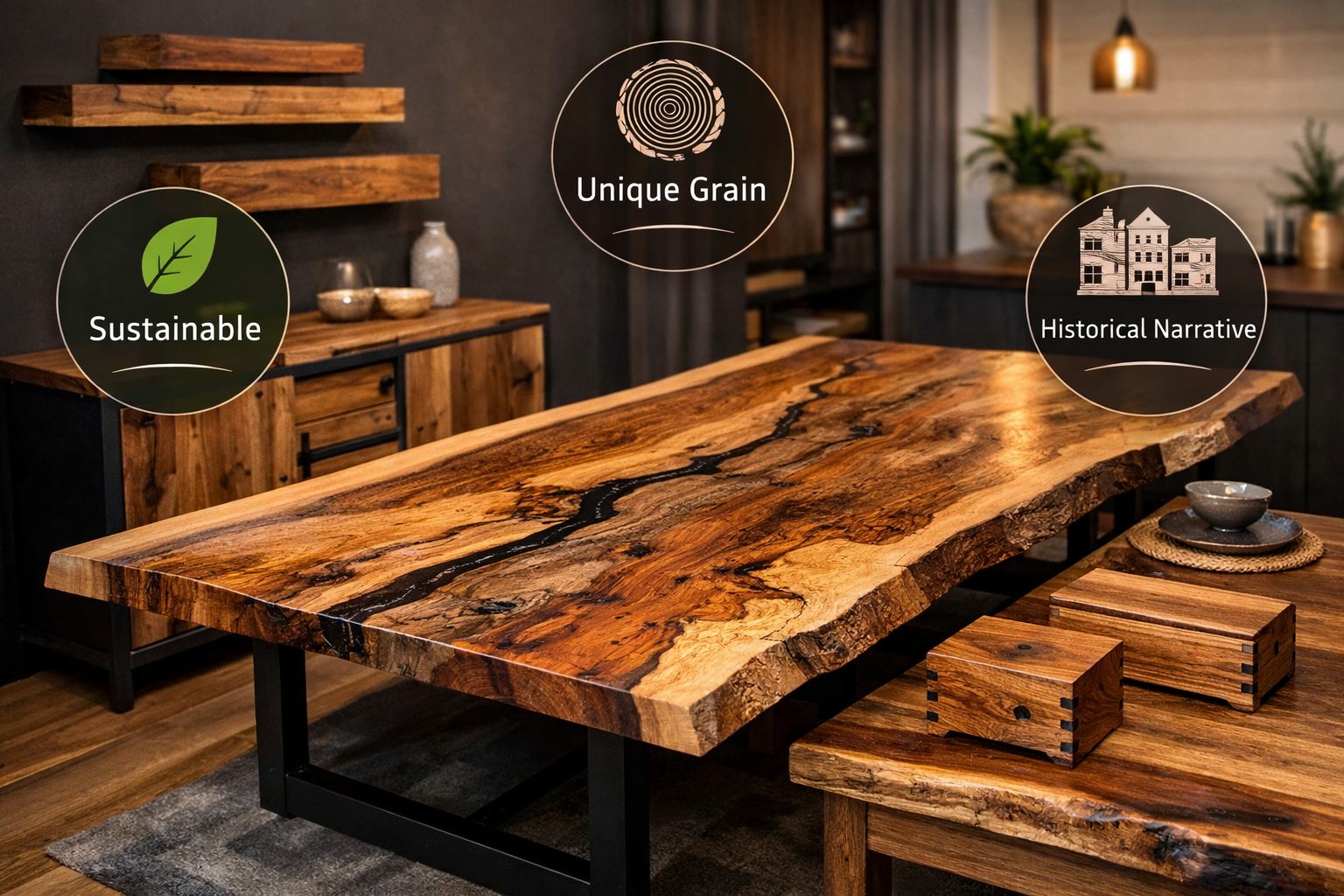
- Sustainable and Story-Rich Projects: Utilizing reclaimed urban lumber not only yields unique, high-end woodworking pieces but also promotes environmental sustainability and preserves local history.
The Diverse Origins of Reclaimed Urban Lumber: Sourcing and Selecting Reclaimed Urban Lumber
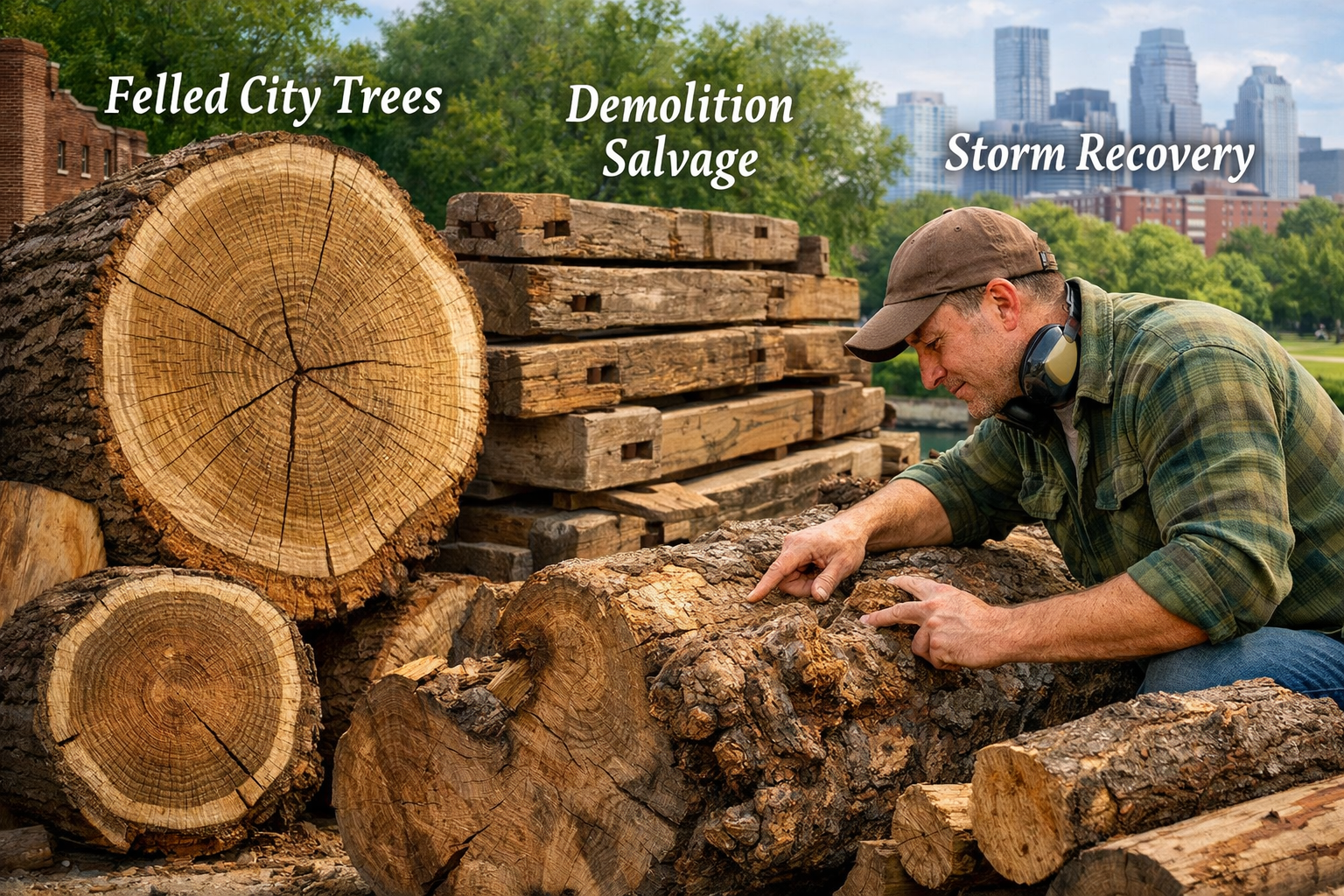
Reclaimed urban lumber is a treasure trove for woodworkers, distinct from traditional reclaimed lumber often found in barns or old industrial buildings. Its urban origins imbue it with a unique character and often a fascinating backstory. Understanding these sources is the first step in Sourcing and Selecting Reclaimed Urban Lumber: Finding Character-Rich Materials for High-End Woodworking Projects.
Felled City Trees 🌳
City trees are felled for various reasons: disease, storm damage, urban development, or simply reaching the end of their natural lifespan in a public space. Instead of becoming mulch or firewood, these magnificent specimens offer dense, often large-dimension lumber from species rarely available through commercial logging.
- Common Species: Oaks, maples, sycamores, elms, black locust, ash, and sometimes even less common species like gingko or magnolia. The specific species will vary greatly depending on the region and urban planning history.
- Characteristics: Urban trees often experience unique growth patterns due to environmental stresses (e.g., restricted root systems, pollution), leading to intriguing grain patterns, mineral streaks, and sometimes reaction wood. They can also yield exceptionally wide slabs.
- Sourcing:
- Municipal Forestry Departments: Many cities have programs or partnerships to mill felled trees into lumber. Contact your local department to inquire about availability and purchasing policies.
- Arborists & Tree Removal Services: These professionals are on the front lines of urban tree removal. Developing relationships with them can provide early access to logs before they are discarded.
- Urban Sawmills/Lumberyards: A growing number of specialized businesses focus solely on milling and drying urban timber. They often have an inventory of various species and sizes.
Demolition Salvage 🏗️
Historical buildings, factories, warehouses, and even older homes slated for demolition can be excellent sources of reclaimed timber. These structures often contain old-growth lumber, which is denser and more stable than modern farmed timber.
- Common Species: Dense heart pine, oak, fir, and sometimes exotic hardwoods used in older commercial buildings.
- Characteristics: This lumber often carries the marks of its previous life: mortise and tenon joints, bolt holes, nail scars, ghosting from old paint, and deeply aged patinas. These “imperfections” are precisely what give the wood its distinctive character.
- Sourcing:
- Demolition Companies: Building rapport with local demolition contractors is key. Inquire about projects and if they are salvaging timbers. Often, a small fee or even a handshake agreement can secure valuable wood.
- Architectural Salvage Yards: These businesses specialize in recovering and reselling building materials, including timber, from old structures. Their stock can be diverse, but prices may be higher.
- Online Marketplaces/Forums: Websites and local woodworking groups can connect you with individuals selling salvaged timbers from personal projects.
Storm-Damaged Timber ⛈️
Severe weather events can bring down healthy, mature trees. While tragic, these events can also present opportunities to salvage high-quality lumber that would otherwise go to waste.
- Common Species: Highly variable, mirroring the local tree population.
- Characteristics: Similar to regularly felled urban trees, but sometimes with unique stress patterns or limb sections that offer interesting shapes and grain.
- Sourcing:
- Local Authorities/Emergency Services: After a major storm, keep an eye on public announcements regarding cleanup efforts. Sometimes, logs are made available to the public.
- Community Outreach: Post inquiries on local social media groups or community boards. Property owners might be looking for ways to dispose of fallen trees.
“Every piece of reclaimed urban lumber tells a unique story, etched in its grain and scarred by its history. It’s not just wood; it’s a piece of the city’s soul, ready to be reimagined.”
— Anonymous Urban Woodworker
Critical Evaluation and Selection of Urban Lumber
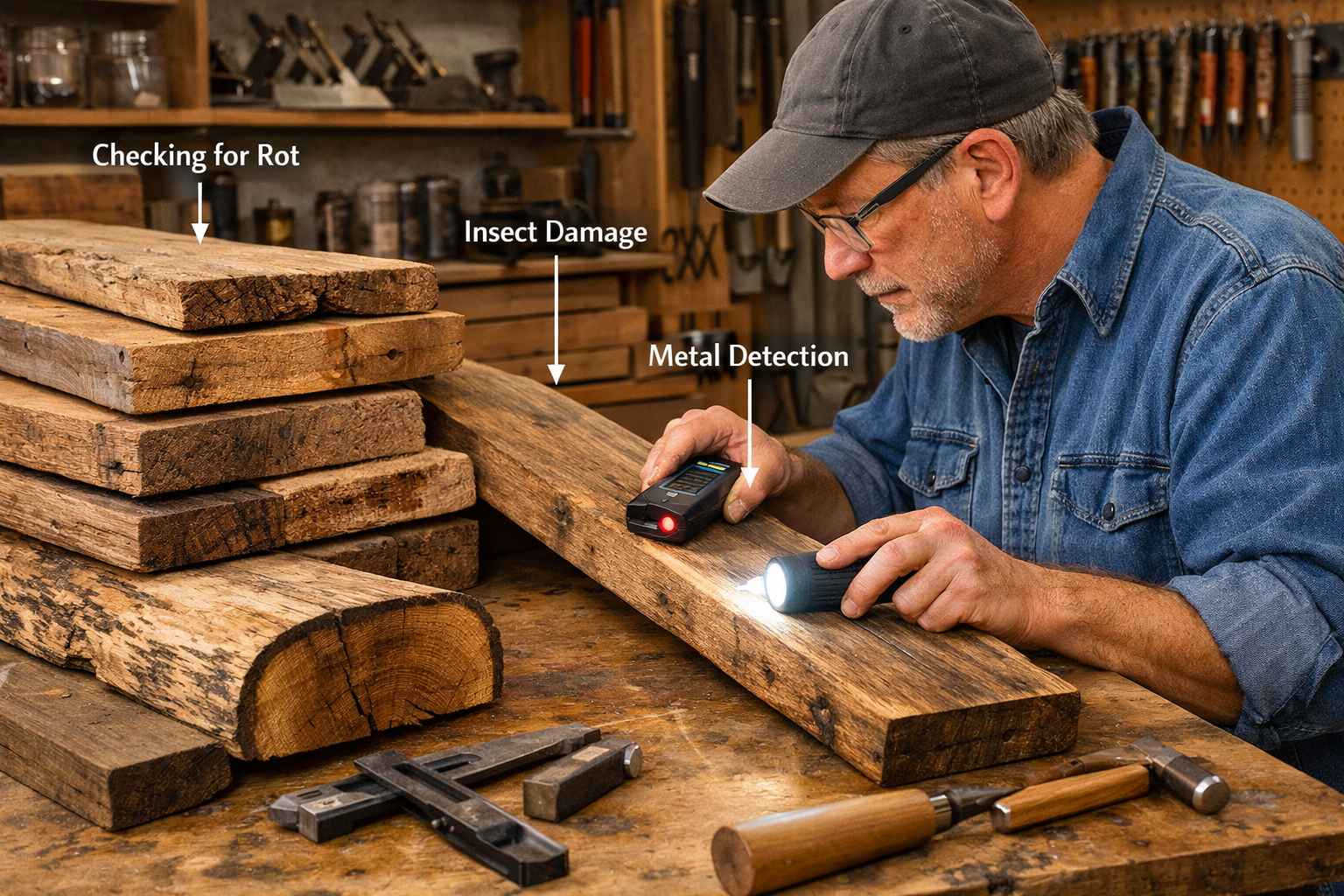
Once potential sources are identified, the next crucial step is the meticulous evaluation of the lumber. This is where the art and science of Sourcing and Selecting Reclaimed Urban Lumber: Finding Character-Rich Materials for High-End Woodworking Projects truly come into play. It’s about discerning quality, understanding potential challenges, and ensuring the material is suitable for high-end projects.
Assessing Wood Quality and Integrity
Not all reclaimed wood is created equal. A thorough inspection is vital to avoid costly mistakes and ensure your project’s longevity.
Moisture Content (MC):
- Why it Matters: High moisture content leads to warping, cracking, and movement as the wood dries. For furniture or interior use, wood typically needs to be dried to 6-8% MC.
- How to Check: Use a reliable moisture meter. If logs are green, they will need to be properly air-dried and/or kiln-dried. Purchased milled lumber should ideally be kiln-dried.
- Red Flag: Unprocessed logs or lumber that feels unusually heavy and wet, especially if intended for immediate use.
Pest and Insect Damage:
- Why it Matters: Active infestations can quickly spread to other wood in your shop or home, destroying your project.
- How to Check: Look for small, perfectly round holes (powder post beetles), sawdust-like frass, tunnels, or live insects. For larger logs, check under bark for larvae.
- Treatment: Kiln-drying effectively kills most pests. For air-dried wood, careful inspection and sometimes chemical treatment (use with caution and proper ventilation) may be necessary.
- Red Flag: Fresh frass, numerous exit holes, or visible insects.
Rot and Decay:
- Why it Matters: Rot significantly weakens wood and makes it unusable for structural purposes.
- How to Check:
- Visual: Discoloration (darkening or white patches), fuzzy growth, or crumbling areas.
- Tactile: Soft spots, spongy texture, or a hollow sound when tapped.
- Smell: Musty or earthy odors.
- Types: Brown rot (breaks down cellulose, leaves crumbly brown residue), white rot (breaks down lignin, leaves stringy white residue), and soft rot (often affects outer layers).
- Red Flag: Extensive soft spots, deep discoloration, or structural compromise due to decay. Small, localized rot can sometimes be cut out, but widespread rot should be avoided.
Embedded Metal and Debris:
- Why it Matters: Nails, screws, bullets, fences, or even old hardware can ruin expensive saw blades and planer knives, and pose significant safety hazards.
- How to Check:
- Visual: Look for old nail holes, dark stains indicating rusted metal, or actual pieces of metal.
- Metal Detector: An indispensable tool for reclaimed lumber. Scan thoroughly over all surfaces.
- Mitigation: Carefully remove any detected metal. If metal is deep or extensive, reconsider the piece unless you have specialized tools to work around it.
Embracing Character vs. Identifying Defects
The appeal of reclaimed urban lumber lies in its unique character. However, it’s crucial to distinguish between features that enhance a project and true defects that compromise it.
Desirable Character Elements 👍
These are the marks that tell the wood’s story and add aesthetic value:
- Grain Variation: Irregular patterns, curly or figured grain, and quarter-sawn ripples unique to urban trees.
- Knots: Sound, tight knots (not loose or rotted) can add rustic charm.
- Mineral Streaks: Discoloration from minerals absorbed during growth, creating interesting color contrasts.
- Spalting: Dark lines and patterns caused by fungi in decaying wood. When caught at the right stage (before structural compromise), it creates stunning visual effects.
- Nail Holes & Scars: Evidence of its previous life, adding authenticity and a historical narrative.
- Color Variation: Patinas developed over time, or differences in sapwood/heartwood due to species and age.
- Worm Tracks: Superficial tracks left by boring insects, often adding texture without compromising structural integrity.
Undesirable Defects 👎
These are issues that typically weaken the wood or make it difficult to work:
- Excessive Cupping, Bowing, Twisting: Indicates improper drying or internal stresses that may be difficult to mitigate. Minor movement can be managed, but severe issues should be avoided.
- Large, Loose, or Rotted Knots: Can fall out, leave holes, or indicate further internal decay.
- Deep Cracks or Checks: Especially through-checks, which indicate excessive drying stress and can lead to breakage.
- Active Insect Infestation: As mentioned above, a major health hazard for your shop.
- Extensive Rot: Compromises structural integrity.
Working with Imperfections
Sometimes, a piece of wood has incredible character but also minor imperfections. A skilled woodworker knows how to integrate these or work around them.
- Epoxy: Can be used to fill voids, stabilize rotten areas (after treatment), or encapsulate features like voids or knots.
- Inlays/Patches: Small patches of contrasting wood can turn a defect into a design element.
- Creative Cutting: Planning your cuts to either feature an imperfection prominently or eliminate it entirely. For instance, using a live edge with bark inclusions for a table or mastering the woodworking box lid where specific sections of the grain are showcased.
Processing and Preparing Reclaimed Urban Lumber for High-End Projects
The journey of Sourcing and Selecting Reclaimed Urban Lumber: Finding Character-Rich Materials for High-End Woodworking Projects doesn’t end with acquisition; it extends into careful processing. Transforming raw, character-rich timber into a pristine material for high-end projects requires specialized techniques and patience.
Milling and Drying 🌲➡️🪚
If you’re starting with raw logs or rough-sawn lumber, proper milling and drying are critical.
- Initial Cleaning and Debarking: Before milling, thoroughly clean the log. Remove dirt, grit, and any remaining bark. Use a wire brush or even a pressure washer. Debarking also helps prevent insect infestation during air drying.
- Slab or Board Milling:
- Portable Sawmills: Many urban lumber suppliers use portable sawmills to mill logs on-site. This is also an option for those with access to one.
- Determining Cut: Plan your cuts carefully. Consider if you want large live-edge slabs, quarter-sawn boards for stability, or specific dimensions for your project. Remember that urban trees can yield impressive widths.
- Metal Detection is Crucial Here: Run a powerful metal detector over the entire log before cutting. Even small metal fragments can destroy expensive bandsaw blades or chainsaw chains.
- Air Drying:
- Stacking: Stack lumber in a well-ventilated, shaded area, off the ground, using stickers (small strips of wood) between layers to allow airflow.
- Weighting: Place heavy weights on top of the stack to minimize warping and twisting.
- End Sealing: Apply a wax-based end sealer to the ends of each board to slow down moisture loss and prevent end checking (cracks).
- Timeframe: Air drying is slow. A general rule of thumb is one year per inch of thickness, but this varies significantly with species, climate, and humidity.
- Kiln Drying (Optional but Recommended for High-End Work):
- Purpose: Kiln drying further reduces moisture content to stable interior levels (6-8%), kills any remaining pests, and sets resins.
- Access: If you don’t own a kiln, seek out commercial kiln drying services. This is a worthwhile investment for high-end projects where stability is paramount.
Pre-processing and Safety 🛠️
Working with reclaimed lumber presents unique challenges that require specific precautions.

- Metal Detection (Re-run): Even if you scanned the logs, run a hand-held metal detector over every board again before any machining. Small fragments can hide. This step cannot be overemphasized for tool and personal safety.
- Cleaning Rough Surfaces: Reclaimed lumber often has dirt, grit, and sometimes concrete or plaster residue embedded in its surface. Before running through a planer or jointer, brush and scrape these off thoroughly. A dull chisel or stiff wire brush works well. This protects your blades and significantly prolongs their life.
- Dedicated Blades/Knives: Consider having a separate set of planer/jointer knives and saw blades specifically for rough, reclaimed lumber. These will inevitably dull faster than those used for new lumber. For tasks requiring precision, such as crafting intricate joints or mastering woodworking screws, having sharp, clean tools is essential.
- Dust Collection and PPE: Old lumber can harbor mold spores, dust mites, and other particulates. Always use a robust dust collection system and wear appropriate personal protective equipment (respirator, safety glasses, hearing protection).
Planning Your Project Around the Material
Unlike working with standardized new lumber, reclaimed urban lumber often dictates the project rather than the other way around.
- Embrace the Irregularities: Let the unique shape of a live edge slab inspire a countertop or coffee table. Design around interesting knots, color variations, or nail holes. These are the “character-rich materials” that define your project.
- Dimensioning: Maximize yield from unique board sizes. If you have a particularly wide board, consider a project that can utilize that width without extensive glue-ups. For example, a wooden work table might benefit from an extra wide top.
- Finishing Choices: The historical narrative of reclaimed wood often shines through with specific finishing techniques. Consider a clear finish to highlight grain and patina, or explore oak wood finishing techniques or antique wood finishing techniques that complement its aged beauty. Avoid heavy stains that might obscure its natural character. For unique aesthetics, even ebonized wood might be an option depending on the project.
Building Relationships and Networking
For consistent access to quality reclaimed urban lumber, networking is paramount in 2026.
- Connect with Arborists: Reach out to local tree care companies. Many are delighted to see their felled trees go to a good cause rather than the landfill.
- Municipal Forestry Departments: Attend public meetings or reach out directly to understand their tree removal and salvage policies.
- Demolition Contractors: Introduce yourself to local demolition firms. Offer to pay for access or even help with salvaging, which can save them disposal costs.
- Urban Sawmills and Lumber Co-ops: These dedicated businesses are the most reliable source for dried, milled urban lumber. Build a relationship with the owners; they often have an eye for unique pieces.
- Woodworking Guilds and Forums: Local and online communities are excellent places to share information about sources, learn from others’ experiences, and even find collaborative opportunities.
By understanding the diverse origins, performing thorough evaluations, and carefully processing these materials, woodworkers can unlock the full potential of reclaimed urban lumber, creating high-end projects that are not only beautiful but also tell a compelling story of sustainability and repurposed history.
Conclusion
Sourcing and Selecting Reclaimed Urban Lumber: Finding Character-Rich Materials for High-End Woodworking Projects is a rewarding endeavor that connects the woodworker to local history, promotes sustainability, and results in truly unique, character-rich pieces. From the venerable trees that once lined city streets to the sturdy timbers of forgotten industrial buildings, each piece of urban lumber carries a story, waiting to be reborn in the hands of a skilled artisan.
The journey begins with understanding the diverse origins of this material—felled city trees, demolition salvage, and storm-damaged timber. It then progresses to the meticulous process of evaluation, where vigilance against moisture, pests, rot, and hidden metal is paramount for ensuring both safety and structural integrity. Learning to differentiate between charming character and detrimental defects allows the woodworker to truly celebrate the material’s unique qualities. Finally, careful processing, including proper milling, drying, and safety protocols, transforms raw, salvaged wood into a stable, workable medium for high-end furniture, cabinetry, and other exquisite creations.
As the appreciation for sustainable and story-rich materials grows in 2026, embracing reclaimed urban lumber offers a distinct advantage. It challenges woodworkers to think creatively, adapt to imperfections, and ultimately craft pieces that resonate with a profound sense of place and history.
Actionable Next Steps:
- Start Local: Contact your municipal forestry department or local arborists to inquire about felled trees in your area.
- Network: Introduce yourself to demolition companies and architectural salvage yards. Build relationships with key contacts.
- Invest in Tools: Acquire a reliable moisture meter and a quality metal detector – these are indispensable for working with reclaimed lumber.
- Educate Yourself: Research the common urban tree species in your region to better understand their properties and potential uses.
- Plan Thoughtfully: When acquiring reclaimed lumber, always envision how its unique character elements can be integrated into your high-end project designs.
- Prioritize Safety: Always wear appropriate PPE and thoroughly inspect lumber for metal before any cutting or machining operations.
By following these guidelines, you can confidently embark on your journey of sourcing and selecting reclaimed urban lumber, transforming overlooked urban resources into timeless works of art.