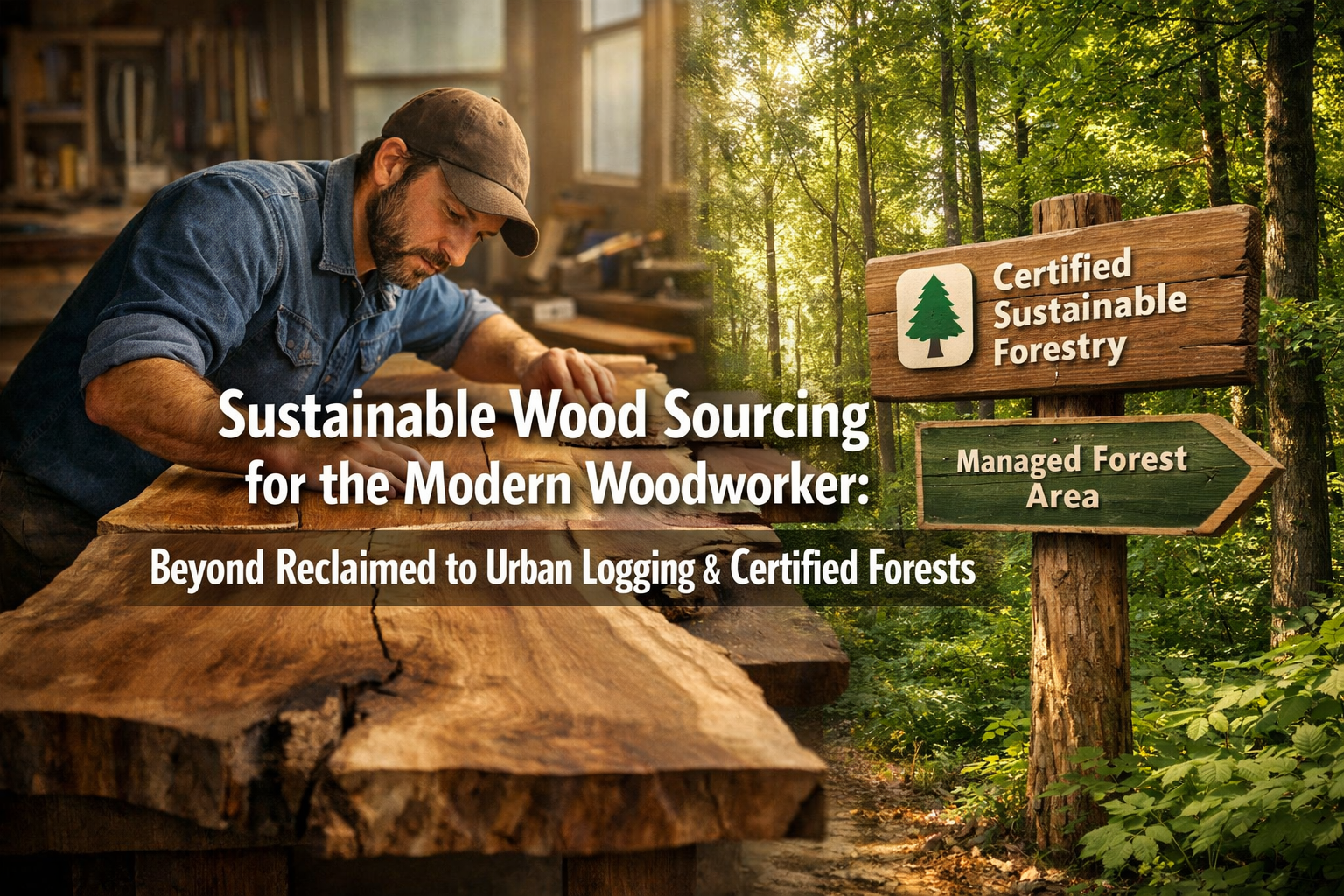

In the vibrant world of woodworking, the material is paramount. For the modern woodworker in 2026, the discussion extends far beyond aesthetics and durability to encompass ethical and environmental responsibility. Crafting beautiful, lasting pieces should no longer come at the expense of our planet’s health. This comprehensive guide delves into Sustainable Wood Sourcing for the Modern Woodworker: Beyond Reclaimed to Urban Logging & Certified Forests, exploring innovative and responsible alternatives to conventionally harvested lumber. As consumer awareness grows, so does the demand for transparent and eco-friendly practices, making sustainable sourcing not just a choice, but an essential aspect of contemporary woodworking.
Moving beyond the popular appeal of reclaimed wood, which often involves salvaged barn wood or deconstructed buildings, this article illuminates emerging avenues like urban logging and robust certification systems. These methods offer exciting opportunities for woodworkers to access unique materials while contributing positively to local economies and forest ecosystems.

Key Takeaways
- Diverse Sustainable Options: Sustainable wood sourcing extends beyond traditional reclaimed wood to include urban logging, salvaged storm timber, and certified forests.
- Urban Logging Benefits: Urban logging provides unique, locally sourced timbers, reduces waste, and supports local arborists and mills, often yielding distinct grain patterns and character.
- Understanding Certifications: FSC and SFI certifications are crucial for ensuring forest products come from responsibly managed forests, each with distinct standards and focuses.
- Environmental & Economic Impact: Choosing sustainable wood reduces deforestation, supports biodiversity, minimizes carbon footprint, and bolsters local green economies.
- Integration into Modern Woodworking: Incorporating these sourcing methods can differentiate projects, appeal to eco-conscious clients, and contribute to a more responsible industry.
Urban Logging: Tapping into the Concrete Forest for Sustainable Wood Sourcing
The urban environment, often overlooked as a timber source, is brimming with valuable wood. Urban logging refers to the practice of harvesting trees that have grown in metropolitan and suburban areas, often removed due to disease, storm damage, construction, or simply reaching the end of their life cycle. Instead of these trees ending up in landfills or being chipped for mulch, urban logging initiatives divert them into high-value lumber, embodying a truly circular economy. This approach offers a compelling path for Sustainable Wood Sourcing for the Modern Woodworker: Beyond Reclaimed to Urban Logging & Certified Forests.
The Process of Urban Wood Recovery
The journey of urban lumber typically begins with arborists or municipal tree removal services. When a tree needs to be cut down, it’s often the last resort, and ideally, its material can be repurposed.
- Tree Removal: Diseased, storm-damaged, or hazardous trees are identified and removed by professional arborists.
- Log Transport: The logs are transported to local sawmills, often smaller, specialized operations equipped to handle urban trees, which may contain metal inclusions (nails, bolts).
- Milling & Drying: Logs are milled into slabs or dimensional lumber. Due to their varied species and moisture content, proper drying (kiln or air drying) is crucial to prevent warping and cracking.
- Availability: Finished urban lumber is then made available to woodworkers through local sawmills, specialized suppliers, or community organizations.
Advantages of Urban Lumber
- Environmental Impact: Diverting trees from landfills significantly reduces waste and methane emissions. It also lessens the pressure on natural forests by providing an alternative timber supply.
- Unique Character: Urban trees, growing in diverse conditions, often exhibit distinctive grain patterns, unique colors, and even spalting (a fungal discoloration that creates beautiful lines and patterns) not typically found in commercially harvested forest wood. This character is highly prized for projects like live edge slab selection and milling and custom furniture.
- Local Economy & Community: Supporting urban logging initiatives keeps money within local communities, provides jobs for arborists and mill operators, and fosters a sense of local pride.
- Reduced Carbon Footprint: Shorter transportation distances from city to mill to workshop mean a lower carbon footprint compared to importing exotic or conventionally harvested lumber from far away.
Challenges and Considerations
While beneficial, urban logging presents its own set of challenges. Metal objects (nails, fences, embedded hardware) can damage sawmill blades, and the highly variable nature of urban trees requires skilled milling. Woodworkers should also be prepared for a wider range of species and characteristics than might be found in a traditional lumberyard. However, for those seeking truly unique materials and a strong connection to sustainability, urban lumber is an excellent choice. For example, creating custom wooden mantels from a tree that once stood in your city adds an incredible story to a home.
Certified Forests: Trusting the System for Responsible Wood Procurement
Beyond reclaimed and urban wood, certified forests represent a cornerstone of Sustainable Wood Sourcing for the Modern Woodworker: Beyond Reclaimed to Urban Logging & Certified Forests. Forest certification systems provide a credible way to verify that forest products originate from responsibly managed forests. These programs set environmental, social, and economic standards for forest operations, ensuring long-term sustainability.
Understanding Forest Certification Programs
Two prominent certification bodies dominate the landscape: the Forest Stewardship Council (FSC) and the Sustainable Forestry Initiative (SFI). While both aim for sustainable forestry, they have different origins and specific focuses.
Forest Stewardship Council (FSC): Established in 1993, FSC is an international non-profit organization promoting responsible management of the world’s forests. It has broad support from environmental groups and uses a rigorous, prescriptive approach to certification.
- Key Principles: FSC’s 10 principles cover a wide range of criteria including environmental impact, community relations, workers’ rights, and transparent management plans. It often emphasizes conservation of high conservation value forests and prohibits conversion of natural forests to plantations.
- Chain of Custody (CoC): FSC also certifies the Chain of Custody, tracking wood from the forest through all stages of processing, manufacturing, and distribution to ensure that the final product bearing the FSC label genuinely comes from an FSC-certified forest.
Sustainable Forestry Initiative (SFI): Originating in North America in 1994, SFI is a non-profit organization dedicated to advancing sustainability through forest-focused collaboration. It is widely supported by the North American forest products industry.
- Key Principles: SFI standards cover fiber sourcing, forest management, and chain of custody. Its approach is generally performance-based, allowing for flexibility in how objectives are met, and focuses on balancing environmental protection with economic viability.
- Fiber Sourcing Standard: SFI includes a unique fiber sourcing standard that applies to all purchased wood fiber, whether from certified or uncertified lands, ensuring responsible procurement practices across the supply chain.
Key Differences and Choosing the Right Certification
| Feature | Forest Stewardship Council (FSC) | Sustainable Forestry Initiative (SFI) |
|---|---|---|
| Origin | International, supported by environmental NGOs | North American, supported by forest products industry |
| Approach | Prescriptive, detailed, higher emphasis on social/environmental | Performance-based, flexible, balances environment, social, economic |
| Focus | Biodiversity, indigenous rights, strict conservation | Sustainable harvesting, water quality, responsible fiber sourcing |
| Environmental NGO Support | High | Moderate (some debate on rigor) |
| Global Reach | Wider global reach, often preferred by European markets | Primarily North American, growing international recognition |
For the modern woodworker, choosing FSC-certified wood often signals the highest standard for environmental and social responsibility, particularly when working with clients who prioritize these aspects. SFI offers a robust alternative, especially for sourcing from North American suppliers, ensuring responsible practices within a broader framework. When selecting wood for projects like building 2026’s hottest trend: DIY live edge dining tables, opting for certified lumber ensures both quality and peace of mind.
Integrating Sustainable Sourcing into Your Woodworking Practice
Embracing Sustainable Wood Sourcing for the Modern Woodworker: Beyond Reclaimed to Urban Logging & Certified Forests is a journey that enriches your craft, strengthens your connection to the material, and aligns your business with ethical principles. It’s about making conscious choices at every step, from material selection to project completion.
Actionable Steps for the Modern Woodworker
- Educate Yourself and Your Clients: Understand the nuances of different sustainable options. Share the stories behind urban lumber or the benefits of certified wood with your clients. This not only builds trust but also differentiates your work.
- Seek Local Suppliers: Investigate local arborists, sawmills, and community organizations involved in urban wood recovery. These connections can lead to unique, character-rich materials and support your local economy. Websites like the Urban Wood Network can be a great starting point.
- Prioritize Certified Lumber: When conventional or urban options aren’t available, specify FSC or SFI certified wood from your suppliers. Ask for proof of certification (e.g., invoices with certification numbers).
- Explore Other Sustainable Options:
- Salvaged Timber: Beyond urban logging, consider wood salvaged from old buildings or demolitions. This “reclaimed” category still holds immense value. Sourcing and selecting reclaimed urban lumber can reveal unique character.
- Bamboo & Cork: While not “wood,” these are rapidly renewable alternatives suitable for certain projects, offering different aesthetic and structural properties.
- Scrap Wood & Offcuts: Don’t underestimate the value of your own workshop’s offcuts. Many smaller projects or accent pieces can be made from what might otherwise be waste. Explore ideas like 3 profitable scrap wood projects under 1 hour.
- Minimize Waste: Design projects to optimize material usage. Implement efficient cutting plans and find ways to use smaller pieces. Even dust collection contributes to a cleaner, healthier workshop.
- Use Durable Finishes: Choosing non-toxic, durable finishes extends the life of your wooden creations, reducing the need for replacements and further resource consumption.
The Impact on Your Craft and Business
By embracing sustainable wood sourcing, woodworkers can:
- Enhance Brand Reputation: Position yourself as an environmentally conscious artisan, appealing to a growing market segment that values sustainability.
- Create Unique Pieces: The inherent character of urban and reclaimed wood, or the diverse species available from certified sources, allows for truly one-of-a-kind projects.
- Connect with a Larger Mission: Contribute directly to environmental conservation, waste reduction, and the health of local ecosystems.
- Future-Proof Your Business: As regulations and consumer preferences shift towards greater sustainability, being ahead of the curve ensures long-term relevance and success.
This conscious shift in material procurement is not merely a trend; it’s a fundamental evolution in responsible craftsmanship. It reflects a deeper respect for the raw materials and the environment from which they come.
Conclusion
The journey into Sustainable Wood Sourcing for the Modern Woodworker: Beyond Reclaimed to Urban Logging & Certified Forests is an empowering one. In 2026, woodworkers have an unprecedented array of ethical choices, from giving a second life to urban trees to meticulously selecting lumber from responsibly managed forests. Moving beyond the well-trodden path of only reclaimed wood opens up a world of possibilities for unique, character-rich materials that tell a story while minimizing environmental impact.
By actively seeking out urban lumber, understanding and requesting certified wood (FSC or SFI), and embracing a mindset of waste reduction, woodworkers can profoundly impact their craft and the planet. This commitment to sustainable practices not only helps conserve vital forest resources and reduce landfill waste but also adds significant value and narrative to every handcrafted piece. The modern woodworker is not just a maker; they are a steward of resources, contributing to a greener, more sustainable future, one exquisitely crafted item at a time. Embrace these alternatives, tell their stories, and let your woodworking reflect a deep respect for both material and environment.