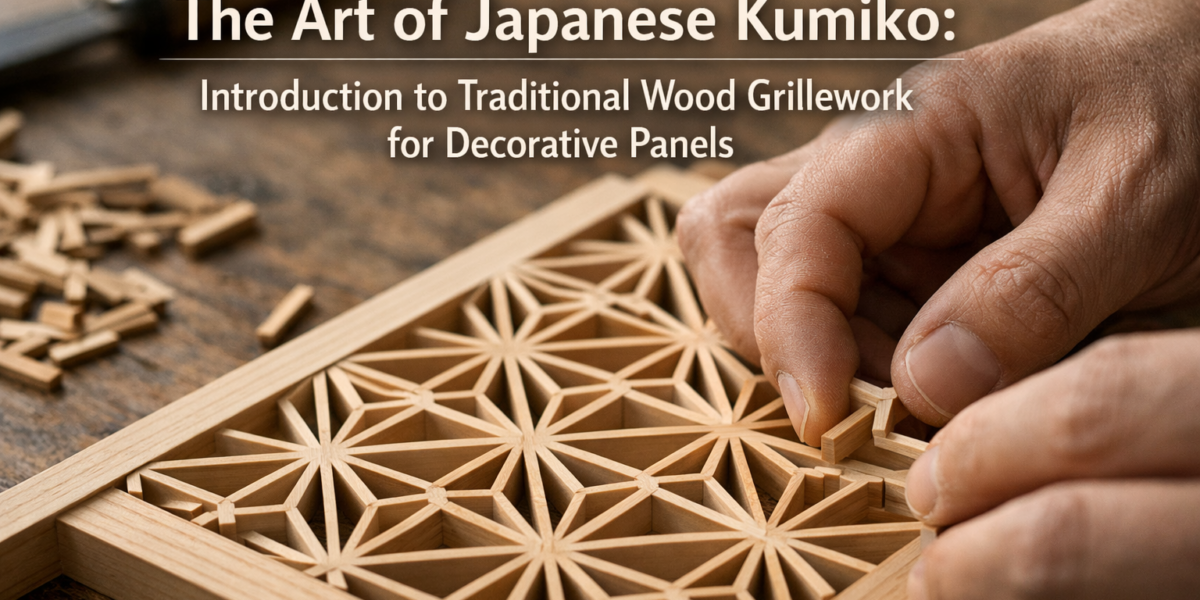

The art of creating intricate wooden patterns without a single nail or drop of glue might seem like a magician’s trick, but it is, in fact, the profound reality of Kumiko. This traditional Japanese woodworking technique, dating back to the Asuka period (600-700 AD), involves meticulously cutting and fitting small, individual pieces of wood together to form stunning geometric designs. At its heart, The Art of Japanese Kumiko: Introduction to Traditional Wood Grillework for Decorative Panels represents an unparalleled blend of precision, patience, and aesthetic sensibility, transforming simple wood into breathtaking works of art that endure for centuries. These delicate yet robust panels are not merely decorative; they serve functional purposes in traditional Japanese architecture, filtering light, creating privacy, and adding an understated elegance to interiors.
Key Takeaways
- Kumiko is a traditional Japanese woodworking technique for creating intricate geometric patterns without fasteners.
- It originated over a thousand years ago, evolving from functional architectural elements to refined decorative art.
- The essence of Kumiko lies in precise cutting, specialized tools, and the interlocking of individual wood pieces.
- Numerous patterns exist, each with symbolic meanings, suitable for diverse decorative applications.
- Mastering Kumiko requires dedication, patience, and an understanding of woodworking fundamentals.
The Foundations of Kumiko: History, Philosophy, and Craft
Kumiko’s roots are deeply entwined with traditional Japanese architecture. Initially used for shoji (sliding screens) and ranma (transom panels above doors), these wooden grilles served to support delicate paper or glass, filter natural light, and allow air circulation. Over centuries, the technique evolved from simple grids into an astounding array of complex geometric patterns.

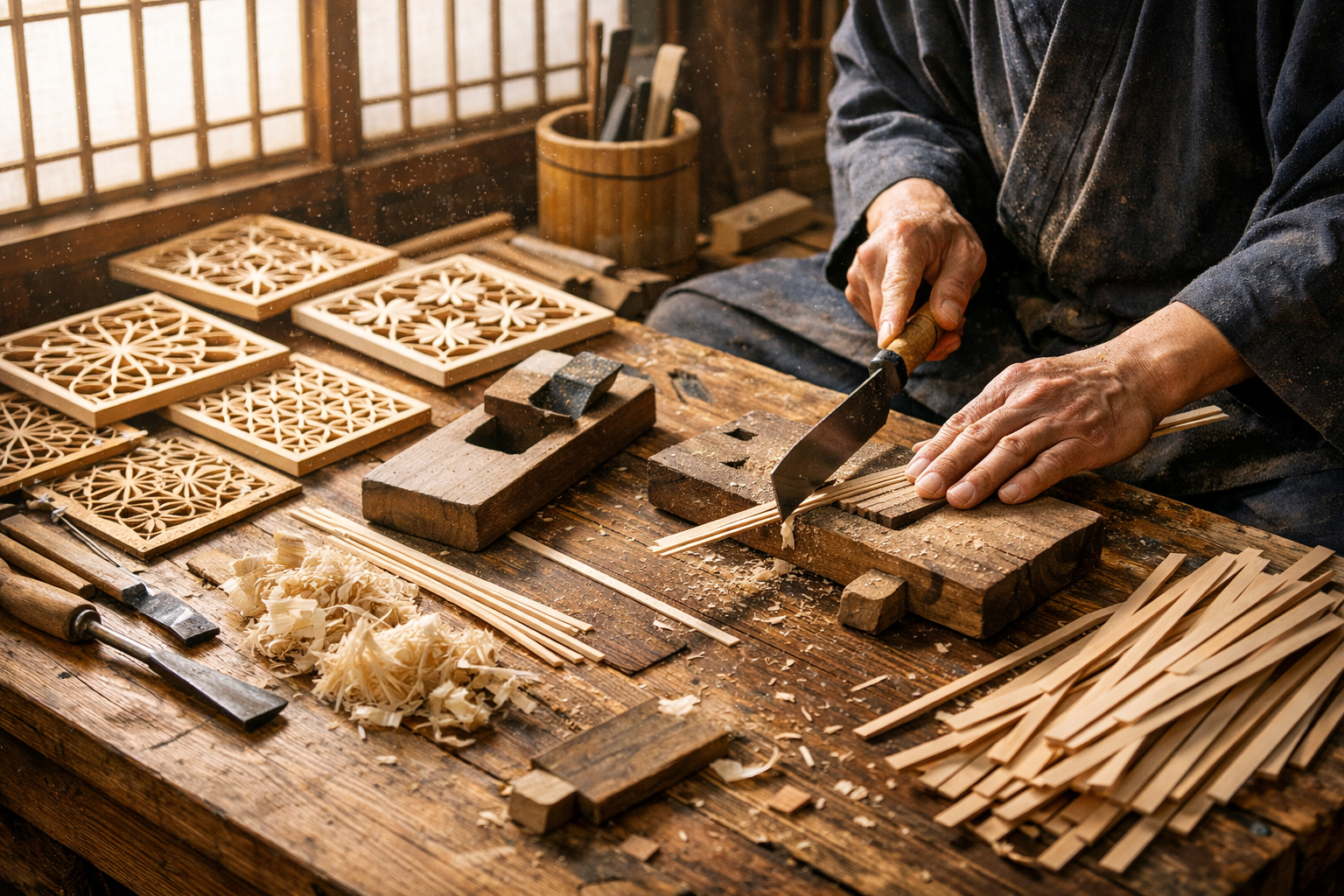
The philosophy behind Kumiko emphasizes harmony with nature, meticulous attention to detail, and a deep respect for the material—wood. Artisans select specific types of wood, often hinoki (Japanese cypress) or cedar, for their stability, workability, and aesthetic appeal. The lightweight and straight grain of these woods are ideal for the fine cuts and delicate joinery required. Unlike Western joinery which often relies on robust glue or metal fasteners, Kumiko’s strength comes from the precise interlocking of its components, a testament to the skill of the craftsman. This approach aligns with the Japanese aesthetic of wabi-sabi, finding beauty in imperfection and the natural world, while celebrating the mastery of craft.
Essential Tools and Materials for The Art of Japanese Kumiko: Introduction to Traditional Wood Grillework for Decorative Panels
To embark on the journey of Kumiko, specific tools are indispensable. While modern power tools can assist with initial milling, the intricate shaping and fitting are almost exclusively done by hand.
| Tool Category | Specific Tools | Purpose |
|---|---|---|
| Measuring & Marking | Precision rulers, marking gauges, squares, calipers | Ensuring exact dimensions and angles for every tiny piece. |
| Cutting | Japanese hand saws (dozuki, ryoba) | Essential for clean, precise cuts, often with finer kerfs than Western saws. |
| Shaping & Planing | Small hand planes (kanna), chisels | Fine-tuning angles, chamfers, and fitting joints. |
| Jigs & Fixtures | Angle cutting jigs, specialized holding fixtures | Crucial for repeatedly cutting precise angles (e.g., 22.5°, 45°, 60°) with consistency and accuracy. |
| Assembly | Small mallets, clamps, sandpaper | Gentle persuasion during assembly, finishing. |
For a beginner, mastering the use of Japanese hand saws is foundational, as discussed in our Beginner’s Guide to Japanese Hand Saws: Precision Cuts and Essential Techniques for Fine Woodworking. The ability to achieve perfectly straight and square cuts by hand is paramount.
Wood selection is also critical. Hinoki is highly prized for its scent and stability. Other common choices include cedar, spruce, and basswood, chosen for their fine grain, dimensional stability, and ease of working with hand tools. It’s crucial to select straight-grained, knot-free lumber that will not warp or twist.
The Intricacy of Patterns: Designs and Their Meanings
The true magic of Kumiko lies in its vast array of patterns, each born from a combination of basic geometric shapes. These patterns are not just visually appealing; many carry deep cultural significance, often inspired by nature and imbued with symbolism.
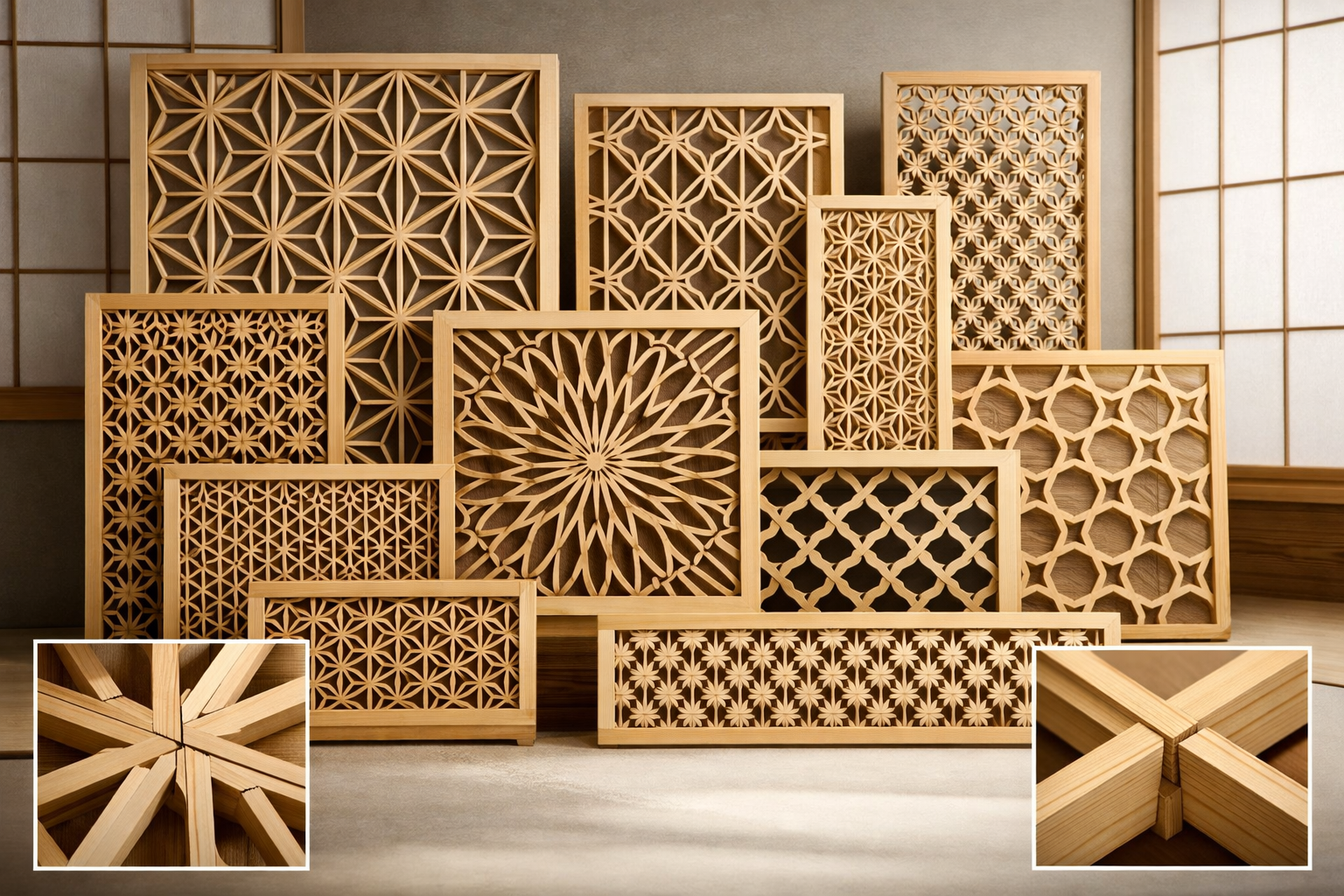
Popular Kumiko Patterns and Their Symbolism
- Asa-no-ha (Hemp Leaf): This is perhaps the most iconic Kumiko pattern. Representing strength, growth, and good health, the hemp leaf grows quickly and straight, making it a popular motif for children’s clothing and for wishing prosperity. It features six radiating points from a central hexagon.
- Goma (Sesame Seed): A simple yet elegant pattern reminiscent of scattered sesame seeds. It symbolizes fertility and a wish for many descendants. Often used as a base pattern, it provides a subtle texture.
- Kikko (Tortoiseshell): Characterized by repeating hexagons, this pattern symbolizes longevity and good fortune, as tortoises are revered in Japanese culture for their long lifespans. It’s a strong, visually impactful design.
- Sakura (Cherry Blossom): Though more complex, this pattern pays homage to Japan’s national flower, symbolizing beauty, renewal, and the fleeting nature of life. It’s often composed of smaller, interlocking pieces that form the delicate petals.
- Yama-Kuzushi (Mountain Break-up): A dynamic, angular pattern evoking rugged mountain ranges. It often appears in ranma panels, suggesting strength and grandeur.
The complexity of Kumiko patterns can range from simple grids to multi-layered, three-dimensional designs. Many advanced patterns are variations or combinations of these foundational elements, showcasing incredible ingenuity and artistic vision.
Applications of Kumiko Grillework
Historically, Kumiko was integrated into architecture. In 2026, its applications have expanded, bringing traditional elegance into modern spaces.
- Shoji and Ranma Screens: Still a classic application, filtering light beautifully and providing subtle privacy.
- Lampshades and Lanterns: The intricate patterns create captivating light and shadow effects.
- Furniture Inserts: Dresser drawers, cabinet doors, and table tops can feature Kumiko panels as sophisticated accents. For those interested in custom furniture, Kumiko offers a unique design element.
- Wall Art and Decorative Panels: Freestanding or mounted Kumiko panels can serve as stunning focal points in any room, a beautiful alternative to conventional handcrafted wooden wall art.
- Room Dividers: Creating subtle separation within open-plan living areas, offering both privacy and artistic flair.
- Small Decorative Items: Coasters, jewelry boxes, and ornamental accents.
The versatility of Kumiko ensures its continued relevance in both traditional and contemporary design aesthetics, embodying warm minimalism in woodworking.
Mastering The Art of Japanese Kumiko: Introduction to Traditional Wood Grillework for Decorative Panels
Learning Kumiko is a journey that demands patience, precision, and an unwavering commitment to craftsmanship. It’s not a technique that can be rushed; each cut, each fit, contributes to the overall integrity and beauty of the finished piece.
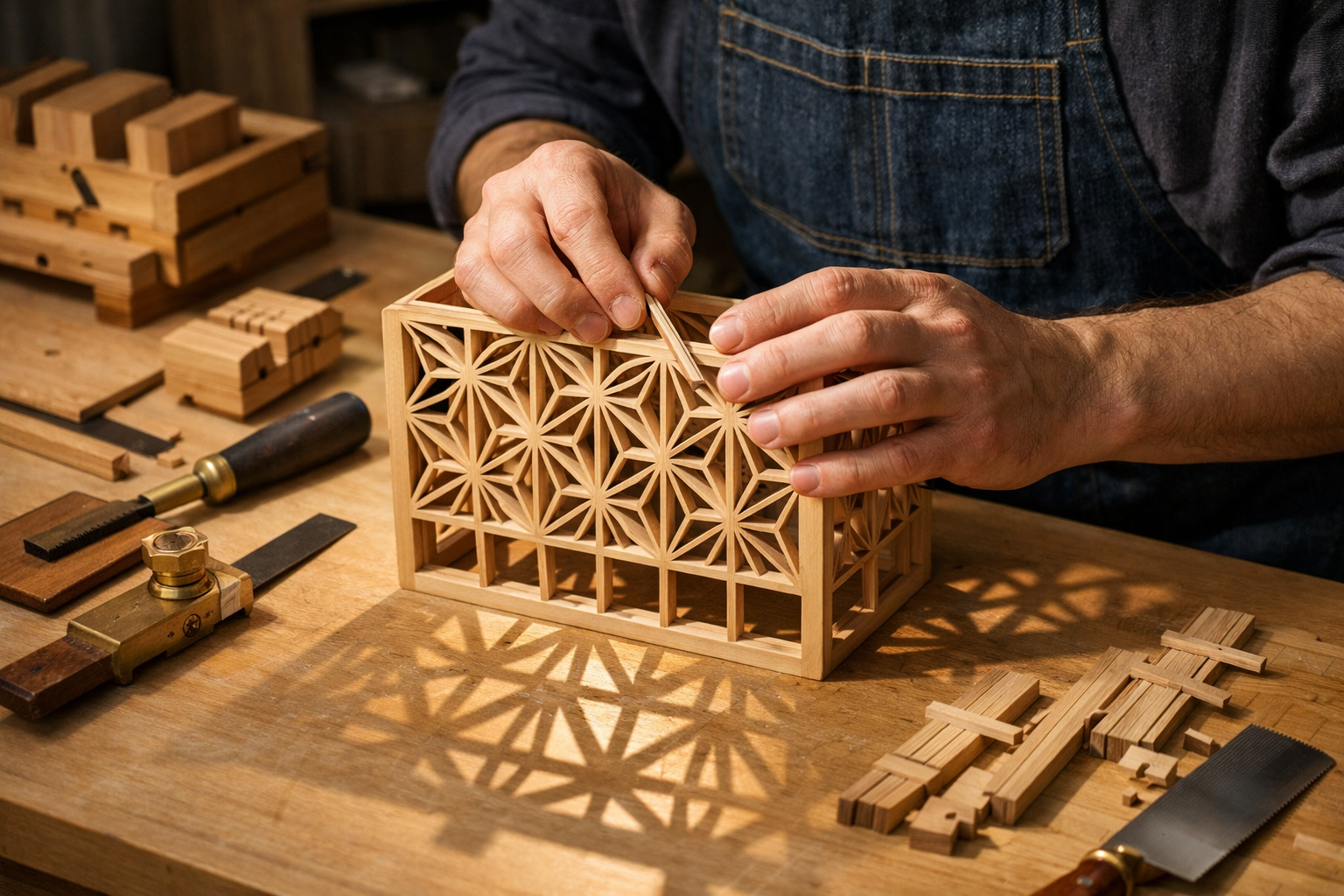
Step-by-Step Overview of Kumiko Creation
- Preparation of Materials: Select high-quality, straight-grained wood. Mill lumber into thin, consistent strips. Precision in this initial stage is paramount, as variations will compound errors later.
- Cutting the Base Grid (Jigumi): Create the primary framework of the panel. This involves cutting longer horizontal and vertical pieces and notching them to interlock, forming a stable grid. This is often done with mortise and tenon or half-lap joints. Understanding hand tool joinery for visible wood joints is highly beneficial here.
- Crafting the Pattern Pieces: This is where the artistry truly shines. Using specialized jigs and hand planes, small pieces of wood are cut to incredibly precise angles and lengths. These pieces must fit together perfectly, often forming geometric patterns without any gaps.
- Assembly of the Pattern: Each pattern piece is gently inserted into the base grid and interlocked with its neighbors. The friction and precise fit hold everything in place. No glue or fasteners are typically used for traditional Kumiko patterns.
- Finishing: Once assembled, the panel is carefully sanded. A light oil finish or clear lacquer can protect the wood and enhance its natural beauty.
Tips for Aspiring Kumiko Artisans
- Start Simple: Begin with basic patterns like goma or a simple grid before tackling complex designs like asa-no-ha.
- Invest in Quality Tools: Sharp, high-quality Japanese hand saws and planes are crucial for precision. Dull tools lead to frustration and inaccurate cuts.
- Practice Precision: Measure twice, cut once, and then cut again with even more precision. Even a fraction of a millimeter off can disrupt an entire pattern.
- Make Jigs: Accurate jigs are essential for repeating precise angles. Consider building your own, or acquiring professional ones.
- Patience is Key: Kumiko is a meditative art form. Rushing will only lead to mistakes and wasted material. Embrace the process.
- Learn from Masters: Study examples of traditional Kumiko, watch videos of experienced artisans, and if possible, seek out workshops.
Mastering Kumiko is a lifelong pursuit, but the satisfaction of creating something so intricate and beautiful with your own hands is immensely rewarding. The meticulous attention to detail required in Kumiko mirrors the precision needed in other fine woodworking projects, from crafting profitable wooden benches to building custom furniture.
Conclusion
The Art of Japanese Kumiko: Introduction to Traditional Wood Grillework for Decorative Panels is more than just a woodworking technique; it’s a profound cultural expression, a testament to the beauty of precision, and a celebration of natural materials. From its humble origins in ancient Japanese architecture to its contemporary applications in modern homes, Kumiko continues to captivate with its intricate patterns and the sheer skill required to create them.
For woodworkers and enthusiasts alike, exploring Kumiko offers a unique opportunity to delve into a truly exquisite craft. It challenges one’s patience, hones precision, and fosters a deeper appreciation for the interplay of light, shadow, and wood. As we navigate 2026, the timeless appeal of handcrafted objects, especially those steeped in such rich tradition, only grows. Embrace the journey, and discover the quiet satisfaction of bringing these delicate wooden masterpieces to life.
Actionable Next Steps:
- Research Patterns: Explore the wide variety of Kumiko patterns and choose a simple one to begin with.
- Gather Tools: Invest in essential Japanese hand saws, marking tools, and a reliable hand plane.
- Source Wood: Acquire small quantities of straight-grained hinoki, cedar, or basswood to practice with.
- Practice Cuts: Dedicate time to perfecting straight and angled cuts on scrap wood before attempting a full panel.
- Build a Basic Jig: Create a simple angle-cutting jig to ensure consistency in your pieces.
Meta Title: Japanese Kumiko: Traditional Wood Grillework & Decorative Panels Meta Description: Discover the art of Japanese Kumiko, traditional wood grillework for stunning decorative panels. Learn history, patterns, tools, and how to start this intricate craft in 2026.