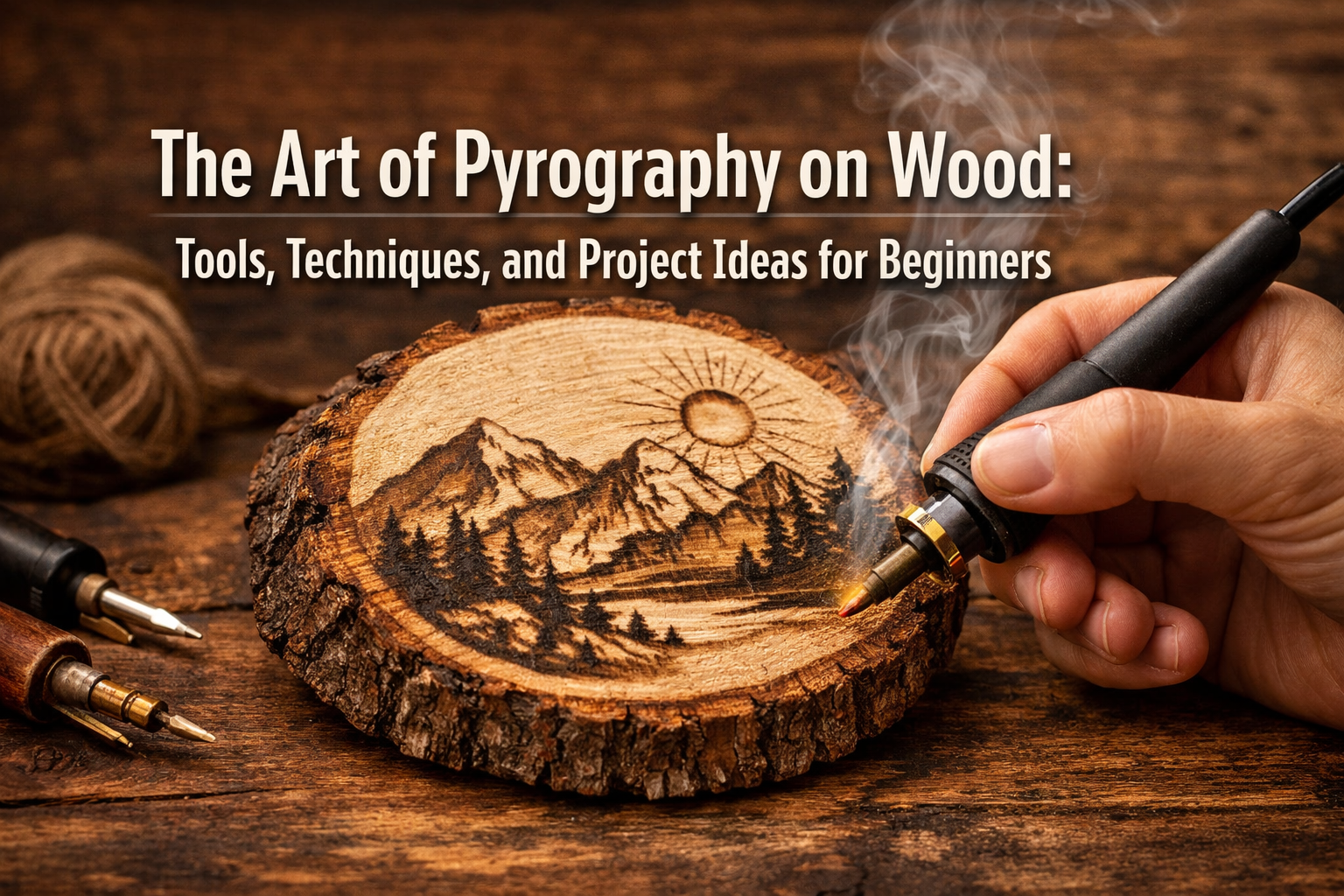

Have you ever looked at a beautiful piece of wood, yearning to transform it into something truly unique with your own artistic touch? The ancient craft of pyrography, often called wood burning, offers an accessible and deeply satisfying way to do just that. This article, “The Art of Pyrography on Wood: Tools, Techniques, and Project Ideas for Beginners,” will guide you through the essentials, from selecting the right tools and mastering fundamental techniques to sparking inspiration for your first projects in 2026. Whether you aim to create personalized gifts, unique home decor, or simply explore a new creative outlet, pyrography is a rewarding journey that begins here.
Key Takeaways
- Essential Tools: Beginners need a reliable pyrography pen (solid-point or wire-nib), assorted tips, heat-resistant gloves, and appropriate wood blanks.
- Safety First: Always work in a well-ventilated area, wear protective gear, and ensure your workspace is clean and organized to prevent hazards.
- Mastering Techniques: Start with basic lines, dots, and shading exercises to gain control and understand how heat affects different wood types.
- Wood Selection: Light-colored, fine-grained woods like basswood, birch, and maple are ideal for beginners due to their smooth surfaces and clear burns.
- Inspiring Projects: Simple projects like coasters, keychains, and decorative plaques offer excellent opportunities to practice and create tangible results.
Essential Tools and Safety for Embarking on The Art of Pyrography on Wood
Embarking on the journey of wood burning requires the right equipment and a strong commitment to safety. Understanding your tools and how to use them safely is the cornerstone of a successful and enjoyable pyrography experience.
Choosing Your Pyrography Tools
There are two primary types of pyrography pens suitable for beginners:
- Solid-Point Burners: These resemble soldering irons and are generally more affordable, making them an excellent starting point. They have a fixed tip or a limited selection of screw-on tips.
- Pros: Cost-effective, good for basic lines and shading.
- Cons: Slower heat recovery, less precise temperature control, tips can cool down during use.
- Wire-Nib Burners: These are often called “professional” or “heavy-duty” burners. They feature a power unit with a handpiece that accepts thin, wire-like tips.
- Pros: Rapid heat recovery, superior temperature control, wider variety of tips for intricate work, more comfortable grip.
- Cons: Higher initial cost.
For beginners, a solid-point burner kit often provides enough versatility to learn the ropes without a significant investment. However, if you’re serious about the craft and foresee pursuing it long-term, a good quality wire-nib burner will offer a more satisfying experience.
Essential Accessories:
- Assorted Tips: Different tips create different effects. Common tips include:
- Universal/Shader: For general outlines and broad shading.
- Writing/Detail: For fine lines and intricate details.
- Dot/Round: For creating textured patterns or stippling.
- Heat-Resistant Gloves: Protect your non-burning hand from accidental contact with hot tools or wood.
- Pencil and Eraser: For sketching designs onto the wood.
- Sandpaper: Fine-grit sandpaper (220-320 grit) for preparing your wood surface.
- Carbon Paper (optional): For transferring detailed designs.
- Small Pliers: To safely change hot wire nibs.
- Cleaner/Strop: For keeping your tips clean and sharp.
- Wood Blanks: We’ll discuss this in more detail, but common choices include basswood, birch, and maple.
- Ventilation Fan: Crucial for safety.
{{IMG_SLOT_1}}
Prioritizing Safety in Pyrography
Safety is paramount when working with heated tools and burning wood. The fumes released during wood burning can be harmful, and the tools themselves pose a burn risk.
Safety Checklist:
- Ventilation: Always work in a well-ventilated area. This means near an open window, with a fan drawing fumes away from you, or ideally, with a fume extractor. Do not underestimate the importance of this step.
- Protective Gear:
- Heat-Resistant Gloves: As mentioned, protect your hands.
- Safety Glasses: Protect your eyes from smoke or wood particles.
- Stable Workspace: Work on a sturdy, non-flammable surface. Keep your workspace clear of clutter, especially flammable materials.
- Tool Handling:
- Always place the hot pen in its designated stand when not in use.
- Never leave a heated pen unattended.
- Unplug the tool when changing tips (for solid-point) or turning it off.
- Use pliers to change hot wire nibs, never your bare hands.
- First Aid: Keep a first-aid kit nearby, specifically with burn cream or gel, just in case of minor accidents.
- Fire Extinguisher: A small fire extinguisher is a wise addition to any workshop dealing with heat.
- Wood Selection: Ensure the wood you are burning is untreated and free of chemicals, paints, or stains, as these can release toxic fumes when heated. For more on wood types, consider exploring our guide on understanding wood movement for different properties.
“Safety isn’t just a recommendation in pyrography; it’s a non-negotiable requirement for a healthy and enjoyable creative process.”
Mastering Basic Techniques for The Art of Pyrography on Wood
Once you have your tools and a safe workspace, it’s time to dive into the core techniques that will bring your designs to life. Practice is key, so start with simple exercises before tackling complex projects.
Wood Preparation and Design Transfer
Proper wood preparation is crucial for clean burns.
- Sanding: Lightly sand your wood blank with fine-grit sandpaper (220-320 grit) to achieve a smooth, clean surface. This helps the pen glide evenly and prevents snags. Clean off all dust after sanding.
- Sketching/Transferring:
- Freehand: If you’re confident in your drawing skills, lightly sketch your design directly onto the wood with a pencil. Make sure lines are light enough to be erased later.
- Carbon Paper: Place carbon paper (graphite paper, not office carbon paper) face down on the wood, then your design printout on top. Trace over your design with a pencil to transfer the lines.
- Tracing Paper: For simple designs, you can trace the design onto tracing paper, flip it, and rub the back with graphite. Then, place it on the wood and trace again.
Fundamental Burning Techniques
Start with a scrap piece of wood to get a feel for your tool’s heat and how it interacts with the wood.
- Line Work:
- Consistent Pressure: Apply steady, even pressure. Too much pressure can gouge the wood, too little will result in faint, inconsistent lines.
- Consistent Speed: Moving too fast will create light lines; too slow will create dark, deep burns. Experiment to find the right speed for your desired darkness.
- Tip Angle: Holding the tip at different angles will produce varied line widths and effects. A flatter angle creates broader lines; a sharper angle creates finer lines.
- Direction: For optimal control, try to pull the pen towards you rather than push it away.
- Shading: This is where pyrography truly shines, allowing you to create depth and dimension.
- Temperature Control: Adjusting the temperature is the most effective way to control shade. Lower temperatures create lighter browns, while higher temperatures produce darker, richer tones.
- Speed: As with lines, moving faster creates lighter shades, while moving slower deepens the burn.
- Feathering: Use the side of a shader tip and gently brush the wood in overlapping strokes. Start lightly and build up layers to create gradual transitions from light to dark.
- Stippling: Use a small, rounded tip to create a series of dots. Varying the density and darkness of the dots can produce interesting textures and shades.
- Cross-hatching: Similar to drawing, create layers of intersecting lines to build up darker areas.
- Holding the Pen: For shading, often holding the pen like a paintbrush, with the tip at a shallower angle, allows for smoother, broader strokes.
- Texture:
- Dots: Varying dot sizes and spacing.
- Hair/Fur: Short, fine, directional lines.
- Wood Grain: Emphasize or replicate natural wood grain patterns.
{{IMG_SLOT_2}}
Practice Exercises
Before committing to a project, dedicate time to these exercises on scrap wood:
- Practice Lines: Draw straight lines, curved lines, and circles. Try to maintain consistent darkness and width.
- Shading Gradients: Create a scale from very light brown to dark black using your shading techniques. This helps you understand how pressure, speed, and temperature affect the burn.
- Texture Samples: Experiment with different tips to create various textures: stippling, cross-hatching, feathering, and swirls.
- Lettering: Practice burning different fonts and letter sizes. This is excellent for personalized projects like engraved wooden coasters.
Remember, patience and persistence are your greatest assets in learning pyrography. Don’t be discouraged by initial imperfections; every burn is a step towards mastery.

Inspiring Project Ideas for Beginners in The Art of Pyrography on Wood
Once you feel comfortable with the basic tools and techniques, it’s time to apply your new skills to some exciting projects. Starting with simple, achievable projects will build your confidence and provide tangible results you can proudly display or gift.
Ideal Wood Choices for Beginners
Selecting the right wood is crucial for a pleasant burning experience, especially for newcomers. Look for light-colored, fine-grained woods that burn evenly and showcase your designs clearly.
| Wood Type | Characteristics | Best For |
|---|---|---|
| Basswood | Very pale, soft, fine, and even grain. Burns easily and consistently. | Beginners, detailed work, smooth shading |
| Birch | Light-colored, fine, and relatively uniform grain. Burns well, good for practice. | All-around projects, cutting boards |
| Maple | Light to medium color, very fine and dense grain. Burns cleanly but can be harder to achieve dark tones due to density. | Intricate details, durable pieces |
| Poplar | Pale, soft, with some green streaks. Easy to burn but can have slightly uneven grain. | Larger projects, practice, general crafts |
| Pine | Pale with prominent dark grain lines. Burns differently in soft and hard grain, creating a distinct rustic effect. | Rustic projects, experimenting with grain contrast |
Avoid: Very dark woods, woods with strong resins (like cedar), or chemically treated woods, as they can be difficult to burn, produce excessive smoke, or release harmful fumes.
Simple and Rewarding Beginner Projects
Here are some fantastic ideas to get you started, perfect for practicing The Art of Pyrography on Wood:
- Wooden Coasters:
- Design Ideas: Simple geometric patterns, mandalas, monograms, outlines of leaves or animals, motivational words.
- Why it’s great: Small surface area, allows practice with borders, simple designs, and finishing. These can also be profitable woodworking items! See our guide on profitable woodworking for beginners.
- Keychains/Ornaments:
- Design Ideas: Initials, small symbols, minimalist animal silhouettes, dates.
- Why it’s great: Very small scale, perfect for practicing detail work and line control without much commitment.
- Small Wooden Plaques/Signs:
- Design Ideas: Inspirational quotes, family names, house numbers, simple landscape scenes.
- Why it’s great: Larger surface area than coasters, allowing for more complex designs and shading practice. You can even combine this with upcycling old pallets for rustic signs.
- Cutting Boards:
- Design Ideas: Decorative borders, simple kitchen-themed motifs (utensils, herbs), family names or sayings (burn on one side for display only, or ensure food-safe finish).
- Why it’s great: Practical items that make excellent gifts. Practice larger-scale burning and finishing techniques. For more on cutting boards, explore our ultimate guide to wooden cutting boards.
- Wooden Spoons/Utensils:
- Design Ideas: Small designs on the handle, personalized monograms.
- Why it’s great: Practice burning on curved surfaces. Choose untreated wooden utensils for this.
- Jewelry Boxes/Small Decorative Boxes:
- Design Ideas: Floral patterns, geometric designs, intricate borders, personalization.
- Why it’s great: Allows for combining multiple techniques on different facets of the box. Consider our article on wooden storage chests for more complex box ideas.
{{IMG_SLOT_3}}
Finishing Your Pyrography Project
Once your burning is complete, a finish can protect the wood and enhance your design.
- Cleaning: Gently erase any remaining pencil marks. If needed, a very light sanding with ultra-fine grit (400+) can smooth the surface, but be careful not to sand away your burn marks.
- Sealing/Finishing:
- Spray Sealant (Acrylic or Polyurethane): Easy to apply, provides good protection. Choose matte or satin for a natural look.
- Oil Finish (Mineral Oil, Tung Oil, Linseed Oil): Penetrates the wood, enhancing its natural color and providing a subtle sheen. Food-safe oils are essential for cutting boards or utensils.
- Wax (Beeswax, Paste Wax): Offers a softer, more natural finish.
- Stain (Optional): Apply wood stain before burning for a contrasting effect, or lightly after for an antiqued look. Test on scrap wood first.
Always ensure the finish is compatible with pyrography and applied according to the manufacturer’s instructions in a well-ventilated area.
The beauty of pyrography lies in its versatility. With just a few basic tools and techniques, you can transform ordinary pieces of wood into extraordinary works of art. Let your creativity flow and enjoy the process of burning your unique visions into wood.
Conclusion
The Art of Pyrography on Wood offers a unique and rewarding avenue for creative expression. From the moment you select your first pyrography pen to the satisfaction of applying a protective finish to your completed project, each step is an opportunity to learn and grow as an artist. We’ve explored the essential tools that form the foundation of this craft, emphasized the critical importance of safety in your workspace, and broken down the fundamental techniques of line work, shading, and texture that will bring your designs to life.
In 2026, the accessibility of pyrography tools and abundant online resources make it easier than ever for beginners to dive in. Remember, patience, practice, and a willingness to experiment are your best companions on this journey. Start with simple projects like custom coasters, personalized keychains, or decorative plaques, and gradually challenge yourself with more intricate designs. The warmth of the burn, the scent of the wood, and the unique patterns you create will make every moment spent on this craft truly special. Unleash your inner artist and begin your pyrography adventure today!
Actionable Next Steps:
- Invest in a Starter Kit: Purchase a reputable beginner pyrography pen kit (either solid-point or wire-nib) along with essential safety gear.
- Gather Supplies: Acquire some basswood or birch blanks, sandpaper, and a pencil.
- Set Up a Safe Workspace: Ensure you have adequate ventilation and a clear, non-flammable surface.
- Practice on Scraps: Dedicate time to practicing lines, shading, and different textures on scrap wood before starting a project.
- Choose Your First Project: Select a simple project from the ideas listed, like a coaster or small plaque, to build confidence and create something beautiful.
SEO Meta Title: Learn Pyrography: Tools, Techniques & Beginner Projects SEO Meta Description: Unlock the art of wood burning in 2026! Discover essential tools, master basic pyrography techniques, and find inspiring project ideas for beginners.