
The router is an indispensable tool in any woodworker’s arsenal, transforming raw lumber into exquisitely detailed pieces. At the heart of this versatility lies the router bit – the unsung hero responsible for shaping, joinery, and decorative work. Without a comprehensive understanding of these crucial components, even the most skilled craftsperson can struggle to achieve professional results. This comprehensive article, “The Ultimate Guide to Router Bits: Selection, Usage, and Maintenance for Every Woodworking Project,” offers an exhaustive guide to understanding the vast array of router bits available, detailing their specific applications for different cuts, proper usage techniques, and essential maintenance tips to prolong their lifespan in 2026.
Whether you’re crafting elegant moldings, intricate joinery, or simply smoothing an edge, the right router bit can make all the difference. Mastering their selection and care not only enhances the quality of your work but also ensures safety and maximizes the efficiency of your woodworking projects.

Key Takeaways
- Diverse Bit Types: Router bits come in an extensive range of shapes and sizes, each designed for specific tasks, from cutting grooves and dados to creating decorative edges and complex joinery.
- Material Matters: The material of the bit (high-speed steel, carbide-tipped, solid carbide) directly impacts its durability, sharpness, and suitability for different wood types.
- Proper Usage is Crucial: Correct router setup, feed rate, and safety practices are vital for achieving clean cuts, preventing tear-out, and ensuring user safety.
- Maintenance Extends Life: Regular cleaning, proper storage, and timely sharpening are essential for maintaining bit performance and significantly extending their lifespan.
- Safety First: Always prioritize safety by wearing appropriate personal protective equipment (PPE) and understanding your router’s operation before beginning any task.
Understanding Router Bit Types: The Ultimate Guide to Router Bits for Selection
Router bits are incredibly diverse, each engineered for a specific purpose. Knowing their functions is the first step in mastering your router. This section will explore the most common categories, helping you make informed decisions for your next woodworking endeavor.
Edge-Forming Bits
These bits are designed to shape the edges of your workpieces, adding decorative profiles or functional rounded corners.
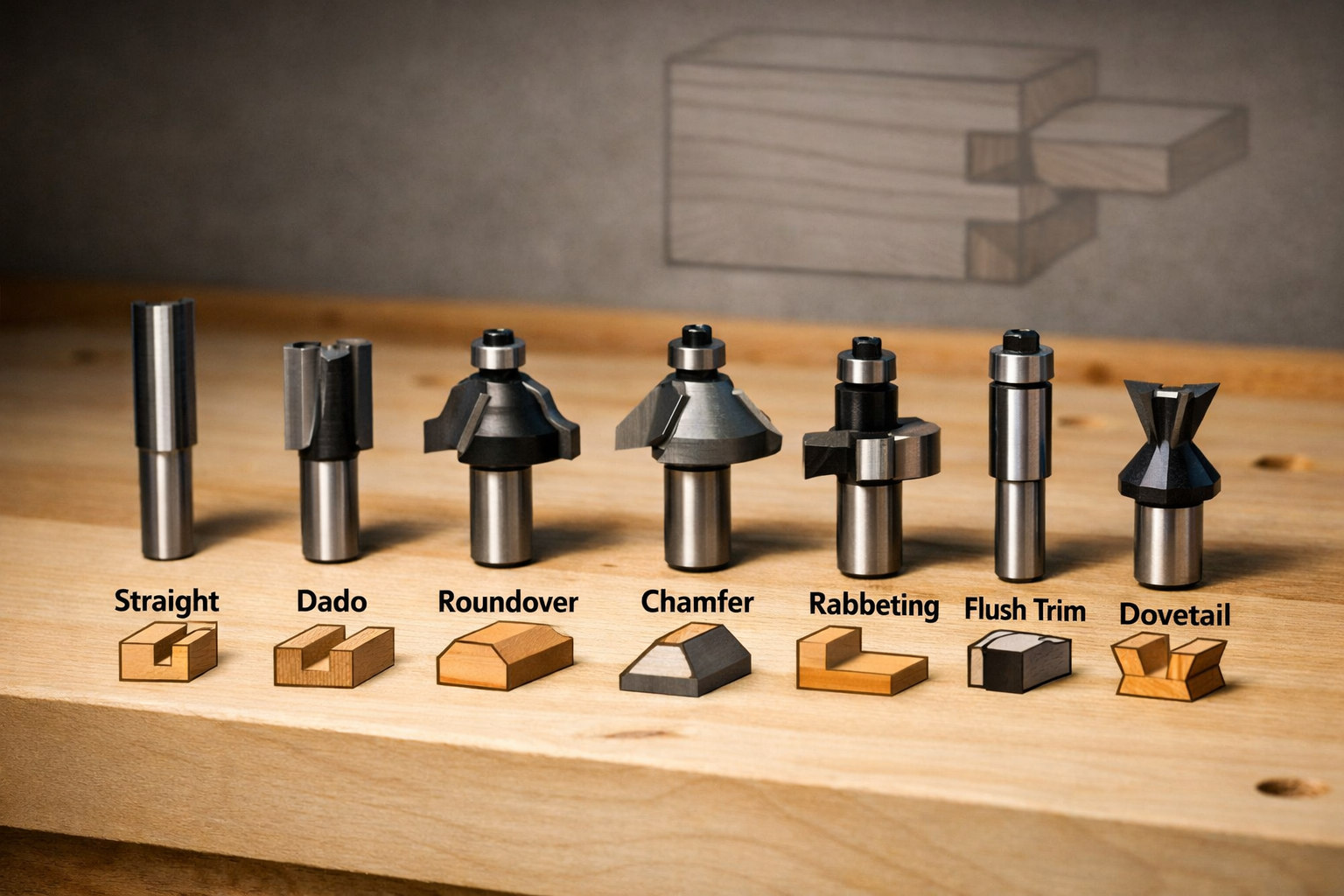
- Roundover Bits: Also known as rounding-over bits, these create a smooth, rounded edge, often used for comfort or aesthetics on tabletops, shelves, and furniture. They come in various radii.
- Chamfer Bits: Producing a crisp, angled edge, chamfer bits are excellent for decorative bevels or for easing sharp corners. They typically come in 45-degree angles but other angles are available.
- Ogee Bits: These create an S-shaped profile, adding a classic, elegant touch to moldings, cabinet doors, and drawer fronts. Variations include Roman ogee and cove and bead ogee.
- Cove Bits: Designed to cut a concave, quarter-round profile, cove bits are often used in combination with roundover bits to create complex edge treatments.
- Beading Bits: Similar to roundover bits, but with a small shoulder, creating a more pronounced, decorative bead along the edge.
- Roman Ogee Bits: A popular decorative bit, creating a more elaborate S-curve profile than a standard ogee, often seen on traditional furniture.
Joinery Bits
These bits are critical for creating strong, precise joints that hold your woodworking projects together. For a deeper dive into woodworking connections, explore our Beginner’s Guide to Essential Woodworking Joints.
- Straight Bits: The most fundamental bit, used for cutting straight dados, grooves, and rabbets. Essential for shelves, cabinet construction, and box making.
- Dado Bits: Specifically designed for cutting dados (grooves across the grain) and rabbets (grooves along the edge).
- Spiral Bits: Offer a shear cutting action, similar to a drill bit, providing cleaner cuts and better chip evacuation. Available in up-cut (pulls chips up) and down-cut (pushes chips down) versions.
- Dovetail Bits: Essential for creating the iconic and incredibly strong dovetail joint, often used in drawers and fine furniture. They come in various angles.
- Rabbeting Bits: Feature a bearing that rides along the edge of the workpiece, creating a rabbet (a step or recess) along the perimeter. Ideal for back panels, cabinet doors, and frame construction.
- Flush Trim Bits: Equipped with a bearing at the tip or shank, these bits are used to trim one material flush with another, often used with templates or for laminates.
- Panel Raising Bits: Used to create the decorative beveled or profiled edges on raised panels for cabinet doors. These are often large bits, requiring a router table. You can learn more about router tables in our guide on Choosing and Using Router Tables.
- Tongue and Groove Bits: Often sold as a matched set, these bits cut the tongue on one piece of wood and the corresponding groove on another, perfect for creating strong, interlocking joints for panels or flooring.
Specialty Bits
Beyond the basics, many bits serve highly specific functions.
- Keyhole Bits: Used to create slots for hanging items on a wall, such as picture frames or wall decor.
- Slot Cutting Bits: Similar to dado bits but typically thinner, used for cutting narrow slots for splines, biscuits, or T-moldings.
- V-Groove Bits: Produce a V-shaped groove, commonly used for decorative lettering, chamfering, or creating decorative panels.
- Bowl & Tray Bits: Designed to hollow out shallow depressions, ideal for crafting wooden bowls, trays, or decorative inlays.
- Mortising Bits: Used for cutting mortises (rectangular holes) for mortise and tenon joints, particularly effective with a router mortising jig.
Router Bit Materials: Choosing for Durability and Performance
The material from which a router bit is made significantly impacts its durability, sharpness, and cost.
| Material Type | Characteristics | Best For |
|---|---|---|
| High-Speed Steel (HSS) | Softer, less expensive, prone to dulling faster. | Light-duty work, softwoods, occasional use. |
| Carbide-Tipped | Most common, harder than HSS, retains sharpness longer. | General woodworking, hardwoods, plywood, MDF, everyday use. |
| Solid Carbide | Most durable and sharp, but brittle and expensive. | Heavy-duty industrial use, abrasive materials, intricate work, CNC routing. |
| Diamond Grit (PCD) | Extremely hard, used for highly abrasive materials (e.g., composites). | Specialty industrial applications. |
For most woodworkers, carbide-tipped bits offer the best balance of performance, durability, and cost-effectiveness.
Proper Usage Techniques for Router Bits: Safety and Precision
Effective and safe router bit usage goes beyond simply inserting the bit and turning on the machine. Precision, control, and adherence to safety guidelines are paramount.
Router Setup and Safety
- Read Your Router Manual: Always start by understanding your specific router’s features and safety warnings.
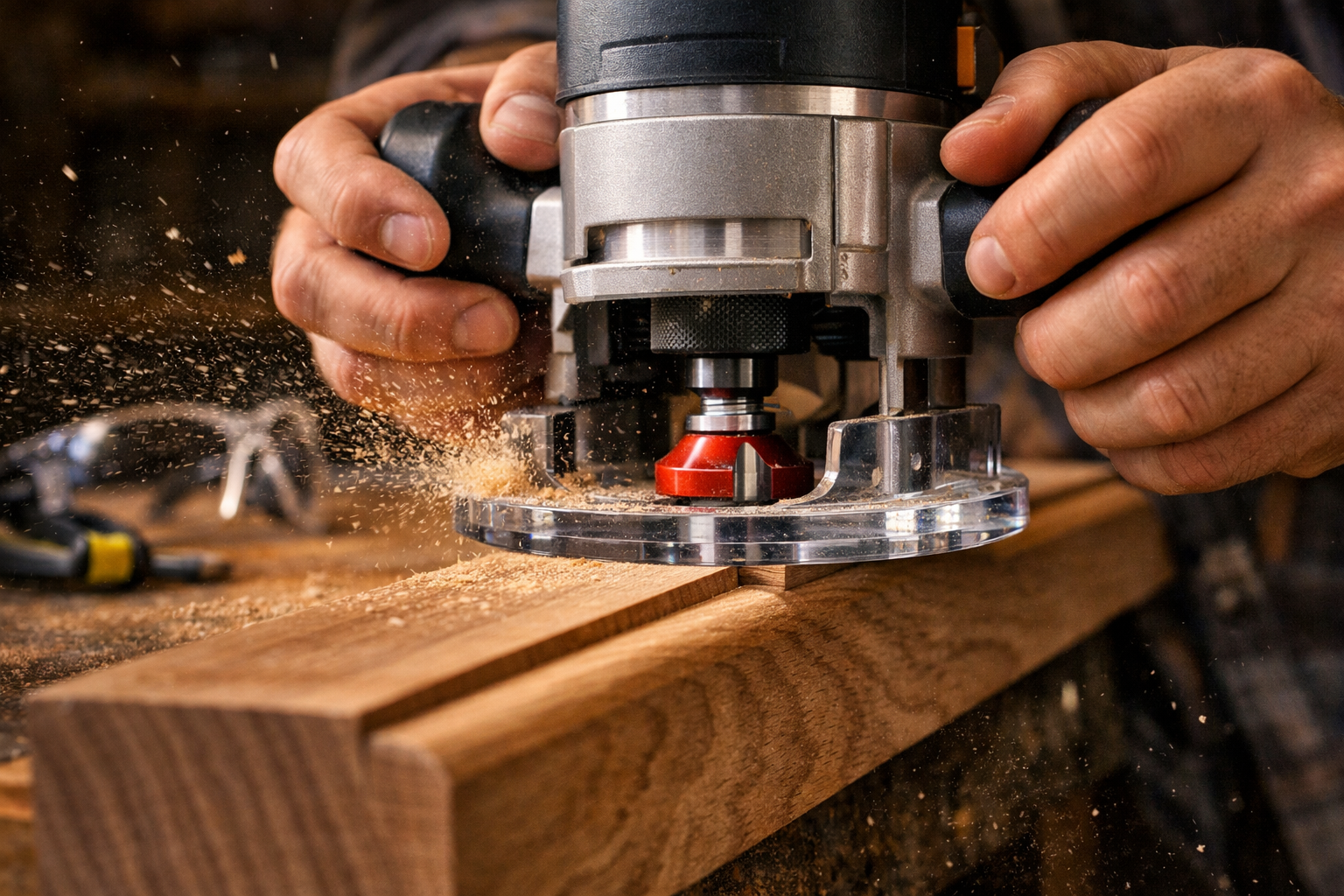
- Wear PPE: Always wear safety glasses or a face shield, hearing protection, and a dust mask.
- Secure the Workpiece: Ensure your workpiece is clamped firmly to a stable surface. Movement can lead to kickback or inaccurate cuts.
- Insert Bit Correctly: Insert the bit shank at least three-quarters of the way into the collet, but never bottom out. Tighten the collet nut securely with the correct wrenches.
- Adjust Bit Depth: Set the bit depth accurately. For deep cuts, make multiple shallow passes to reduce strain on the bit and router, and to prevent tear-out.
- Direction of Cut: Always feed the router against the direction of the bit’s rotation.
- Handheld Router: Move the router from left to right when routing edges (climb cut is dangerous and should be avoided by beginners).
- Router Table: Feed the workpiece from right to left into the bit.
- Test Cuts: Always perform test cuts on scrap material to ensure the depth and profile are correct before working on your final piece.
Techniques for Common Cuts
- Edge Routing: When routing an edge, keep the router base flat against the workpiece and move it smoothly and consistently. Use a fence or bearing to guide the cut.
- Dadoes and Grooves: For straight cuts like dadoes and grooves, use a straight edge guide or a router jig to ensure accuracy. Make multiple shallow passes to avoid burning the wood or stressing the bit.
- Joinery: For intricate joinery like dovetails, precise setup is key. Invest in a good dovetail jig or practice freehand techniques extensively on scrap wood. For other joint types, our article on Beyond the Basic Box: Advanced Joinery can provide further insights.
- Freehand Routing: For decorative or artistic work, freehand routing is possible but requires a steady hand and practice. Always ensure the bit is appropriate for the task and maintain a slow, controlled feed rate.
Feed Rate and Router Speed
- Feed Rate: The speed at which you move the router or workpiece through the bit.
- Too Fast: Can lead to tear-out, burning, and a rough finish.
- Too Slow: Can cause burning and excessive heat buildup, dulling the bit faster.
- Just Right: Produces clean cuts, good chip evacuation, and minimal effort. You should hear the router working but not struggling.
- Router Speed (RPM): Larger diameter bits, or bits with more aggressive profiles, generally require lower RPMs to prevent overheating, burning, and vibration. Smaller bits can run at higher RPMs. Most routers have variable speed controls; consult your router manual for recommended speeds for different bit sizes.
“Precision woodworking begins with a sharp bit and a cautious hand. Never rush a cut, and always respect the power of your tools.”
Maintenance and Storage for Router Bits: Prolonging Lifespan
Proper maintenance and storage are critical for extending the life of your router bits, ensuring they remain sharp, clean, and ready for your next project in 2026. Neglecting these steps can lead to dull bits, poor cut quality, and even damaged workpieces.
Cleaning Your Router Bits
Resin and pitch buildup on router bits is a common issue that causes them to run hotter, dull faster, and produce inferior cuts.
- Disassemble: Remove the bit from the router. If it has a bearing, take note of its orientation and remove it for cleaning if accessible.
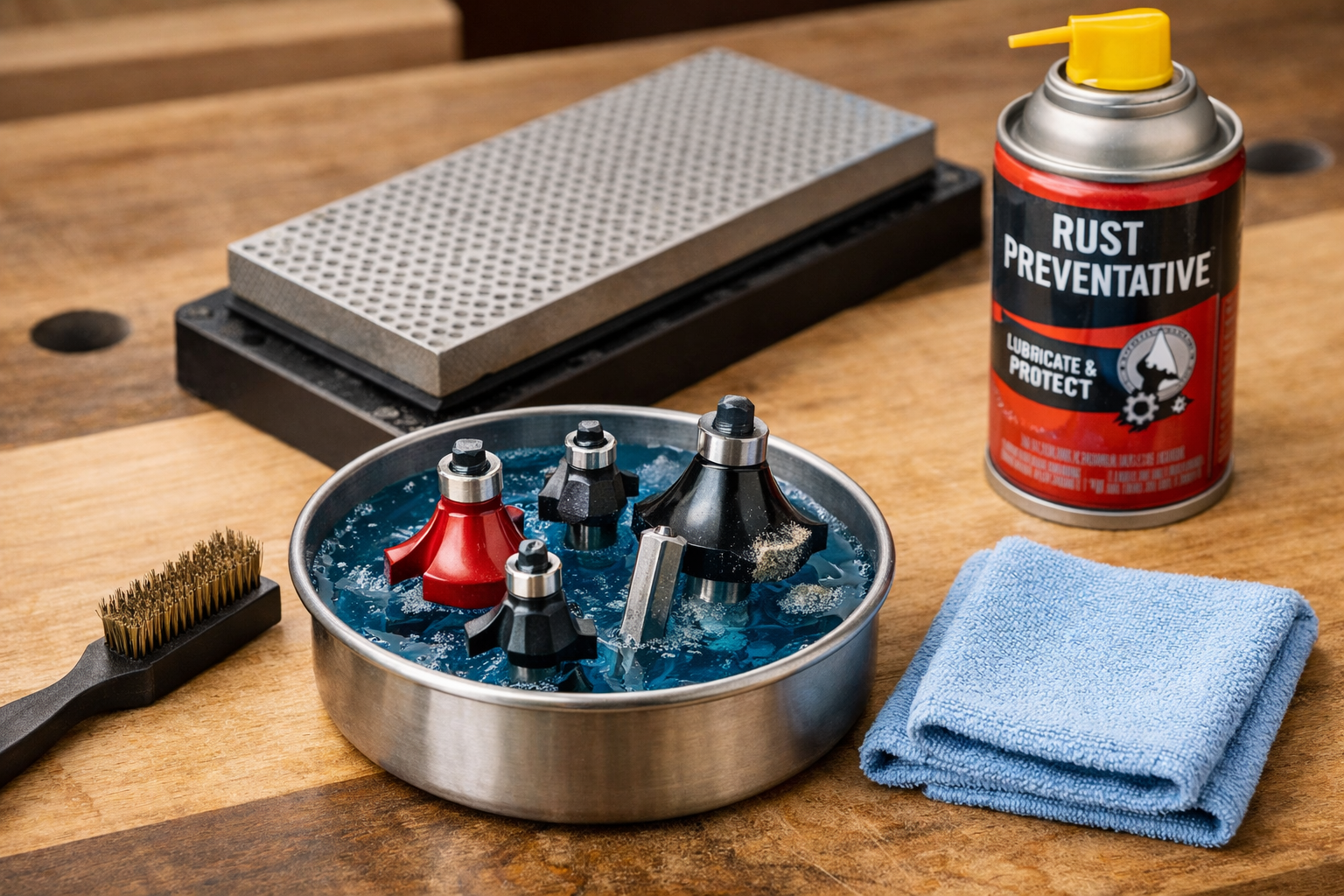
- Soak: Submerge the bit (excluding bearings, which can be damaged by solvents) in a specialized router bit cleaner or a household degreaser like Simple Green. Allow it to soak for 10-15 minutes.
- Scrub: Use a stiff brush (brass or nylon, not steel) to gently scrub away any softened resin or pitch.
- Rinse and Dry: Rinse the bit thoroughly with water and dry it immediately and completely with a clean cloth to prevent rust.
- Lubricate: Apply a light coat of dry lubricant (PTFE spray) or camellia oil to the bit and any bearings. This protects against rust and helps prevent future pitch buildup.
Sharpening Router Bits
While carbide-tipped bits hold an edge longer, they will eventually dull. Sharpening can restore their performance, though it’s often best left to professionals for complex profiles.
- Flat Surfaces: For bits with flat cutting edges (like straight bits), you can often touch them up with a diamond sharpening card or a fine-grit stone. Be careful to maintain the original cutting angle.
- Profiled Bits: Sharpening profiled bits (roundovers, ogees, etc.) is more challenging as it requires maintaining the intricate profile. If you notice a significant decline in cut quality or burning, consider replacing the bit or sending it to a professional sharpening service.
- When to Sharpen/Replace: If a bit consistently produces burning, tear-out, or requires excessive force to cut, it’s a clear sign it needs attention. Dull bits are dangerous and produce poor results.
Router Bit Storage
Proper storage protects your bits from damage, rust, and keeps them organized.
- Individual Slots: Store bits in individual slots within a specialized router bit box or tray. This prevents the carbide tips from hitting each other and chipping.
- Original Packaging: Many bits come in plastic cases that serve well for long-term storage.
- Vertical Storage: Storing bits vertically in a block or tray allows for easy identification and access.
- Dry Environment: Keep your router bits in a dry environment to prevent rust. Consider adding a desiccant packet to your storage box if you live in a humid area.
- Labeling: Labeling bit profiles on your storage system can save time and reduce confusion.
By adhering to these cleaning, sharpening, and storage guidelines, you can ensure your router bits perform optimally for years, making your woodworking projects more enjoyable and successful.
Conclusion
Mastering the selection, usage, and maintenance of router bits is a cornerstone of proficient woodworking. From understanding the nuanced differences between a cove and an ogee bit to practicing safe and precise routing techniques, and diligently cleaning and storing your tools, each step contributes to the quality and enjoyment of your craft. In 2026, with the wealth of information and tools available, there’s no excuse for anything less than a clean, precise cut.

By applying the principles outlined in “The Ultimate Guide to Router Bits: Selection, Usage, and Maintenance for Every Woodworking Project,” you’re not just improving your technique; you’re investing in the longevity of your tools and the professional finish of your projects. Remember, the journey of woodworking is one of continuous learning and refinement. Keep practicing, keep exploring different bits, and always prioritize safety and thoughtful craftsmanship.
Next Steps:
- Evaluate Your Collection: Review your current router bit collection. Do you have the right bits for the projects you want to undertake?
- Practice on Scraps: Dedicate time to practice new bits and techniques on scrap wood before moving to your final project.
- Invest in Quality: Consider upgrading to higher-quality carbide-tipped bits for frequently used profiles.
- Regular Maintenance Schedule: Implement a routine for cleaning and inspecting your bits after each significant use. For more tips on workshop organization, check out our guide on DIY Smart Workshop Storage Solutions.