
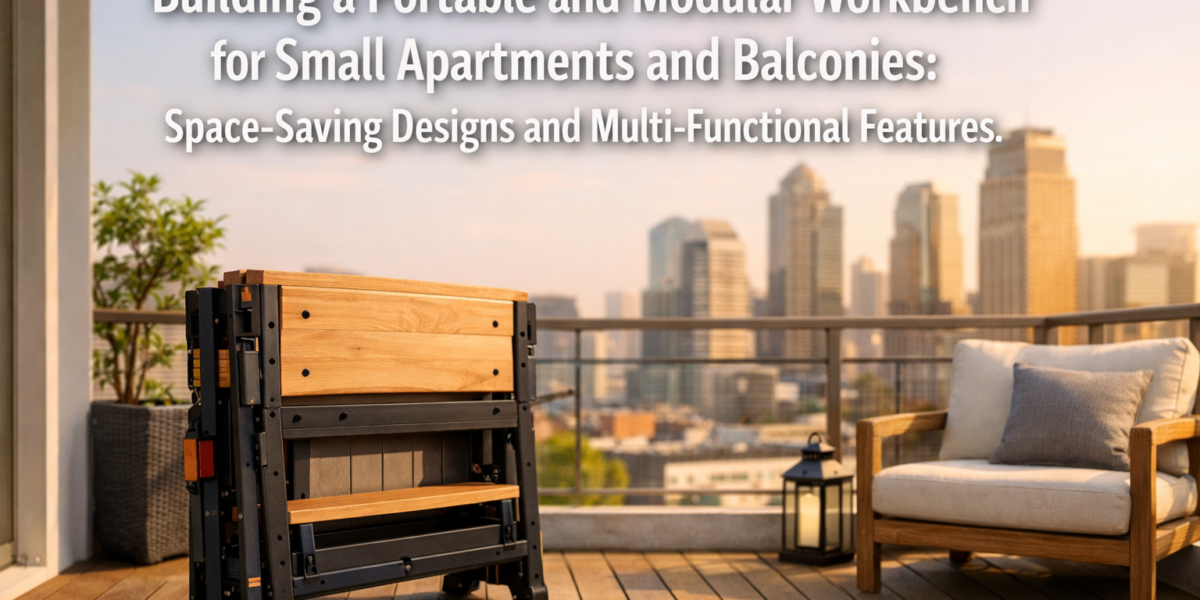
For the urban dweller with a passion for woodworking or DIY projects, limited space is often the biggest hurdle. The dream of a dedicated workshop can feel out of reach when living in a compact apartment or relying on a small balcony. However, the solution doesn’t require a larger footprint, but rather smarter design. This article delves into the innovative world of Building a Portable and Modular Workbench for Small Apartments and Balconies: Space-Saving Designs and Multi-Functional Features, empowering hobbyists and professionals alike to create functional workspaces without sacrificing precious living area in 2026.
Imagine transforming a cozy balcony into a productive crafting zone, or a corner of your living room into a temporary workbench that seamlessly blends back into your decor. This guide will explore the principles, designs, and features that make such a versatile workbench not just a possibility, but a practical and enjoyable reality.
Key Takeaways
- Space Optimization is Key: Portable and modular designs prioritize efficient use of limited space, allowing for easy setup, breakdown, and storage.
- Multi-Functional Features Enhance Value: Incorporating elements like integrated storage, fold-out extensions, and convertible surfaces maximizes the utility of a compact workbench.
- Material Choice Matters: Selecting lightweight yet durable materials like Baltic birch plywood or aluminum is crucial for portability and longevity.
- Stability and Security: Despite being portable, a workbench must offer a stable and secure platform for safe and accurate work, often achieved through clever locking mechanisms and adjustable feet.
- Personalization is Essential: The best workbench is one tailored to your specific needs, tools, and projects, allowing for a truly efficient and enjoyable crafting experience.
The Foundation: Principles of Portable and Modular Design
The core concept behind Building a Portable and Modular Workbench for Small Apartments and Balconies: Space-Saving Designs and Multi-Functional Features revolves around adaptability and efficiency. These workbenches are not merely scaled-down versions of their larger counterparts; they are engineered for a specific environment.
Understanding Portability and Modularity
- Portability: This refers to the ease with which the workbench can be moved, collapsed, or disassembled. Key aspects include lightweight materials, integrated handles, and quick-release mechanisms. For anyone living in a small space, the ability to store the workbench away when not in use is paramount. Think of designs that can fold flat against a wall, slide under a bed, or even fit into a closet. This flexibility is crucial for maximizing multi-use rooms or temporary setups on a balcony.
- Modularity: This principle allows the workbench to be reconfigured or expanded based on the task at hand. Instead of a single, fixed unit, modular workbenches consist of interchangeable components. This could mean adding an extension wing for larger projects, swapping out a specialized jig, or attaching different tool mounts. Modularity ensures that the workbench can evolve with your projects and tools, providing maximum utility in a minimal footprint. This approach aligns perfectly with smart workshop storage solutions that maximize small spaces. Smart Workshop Storage Solutions: Maximizing Small Spaces with Modular Systems and DIY Organizers offers further insights into this concept.
{{IMG_SLOT_1}}

Design Considerations for Compact Spaces
When designing such a workbench, several factors come into play:
- Footprint: Keep the base dimensions as compact as possible while still providing a stable work surface. Consider designs that can be set up in narrow spaces, like along a balcony railing or against a wall.
- Height Adjustability: A workbench that can adjust its height offers ergonomic benefits and allows for different types of tasks, from precision work to standing assembly. Some designs even allow the workbench to function as a dining table or desk when not in use for projects.
- Storage Integration: Every inch counts. Built-in drawers, shelves, or pegboard panels that fold or slide away are invaluable for keeping tools organized and accessible without cluttering the main work surface.
- Material Selection:
- Plywood: Baltic birch or high-quality hardwood plywood (1/2″ to 3/4″ thick) offers an excellent strength-to-weight ratio, stability, and screw-holding capability. It’s a popular choice for durable yet relatively lightweight construction.
- Aluminum: For ultimate portability and weather resistance (especially for balcony use), an aluminum frame can be exceptionally lightweight.
- Hardware: Opt for robust, quick-release hinges, locking casters, and heavy-duty latches that can withstand repeated use and provide secure connections.
“The magic of a well-designed portable workbench isn’t just its size; it’s its ability to disappear when not needed and emerge fully capable when inspiration strikes.”
Space-Saving Designs and Multi-Functional Features
The true brilliance of a portable and modular workbench lies in its ability to adapt and serve multiple purposes. Here, we explore specific design types and the innovative features that make them indispensable for small spaces.
Popular Space-Saving Workbench Designs
- Folding Workbench: This classic design features legs that fold flat against the underside of the tabletop, making it easy to store in a closet or hang on a wall. Some variations include a hinged top that folds in half, further reducing its stored footprint. These are ideal for quick setup and breakdown. For inspiration, consider exploring designs for Building a Portable Workbench: Designs for Small Spaces and On-the-Go.
- Wall-Mounted Fold-Down Workbench: Perfect for balconies or narrow hallways, this design permanently mounts a hinged tabletop to a wall. When not in use, it folds up flat against the wall, often looking like a decorative panel or shelf. When needed, it drops down to reveal a sturdy work surface. Some even integrate a small tool storage area behind the folded-up panel.
- Table Saw Extension Workbench: For those who own a compact job site table saw, a workbench designed to integrate with it can be a game-changer. It extends the table saw’s ripping capacity and provides an invaluable outfeed support while also serving as a general workbench.
- Rolling Workbench with Storage: While slightly less ‘portable’ in the traditional sense, a workbench on heavy-duty locking casters offers excellent mobility within a room or apartment. By adding drawers and cabinets underneath, it becomes a mobile storage unit as well. This design can also be tucked into a corner or rolled onto a balcony as needed.
{{IMG_SLOT_2}}

Essential Multi-Functional Features
When Building a Portable and Modular Workbench for Small Apartments and Balconies: Space-Saving Designs and Multi-Functional Features, these features elevate its utility:
- Integrated Vises and Clamping Solutions: Instead of large, bulky vises, look for designs that integrate smaller, quick-release vises that can be recessed when not in use. Dog holes across the workbench surface allow for versatile clamping with bench dogs and hold-downs, securing workpieces without needing external clamps cluttering the space.
- Tool Storage and Organization:
- Recessed Trays: Keep small parts, screws, and hardware within easy reach but out of the way.
- Fold-Out Shelves/Drawers: Maximize storage capacity while keeping the workbench compact when stored.
- Magnetic Strips: Ideal for holding metal tools like chisels, screwdrivers, and small wrenches.
- Perforated Panels (Pegboard/French Cleat): Attach directly to the workbench or a wall behind it to hang tools. These systems are highly modular and can be reconfigured endlessly. Check out our guide on DIY Smart Workshop Storage Solutions: Maximizing Space and Organization for Every Tool for more ideas.
- Dust Collection Ports: Even in a small space, managing sawdust is crucial. Incorporating a small port for attaching a shop vacuum hose can keep your workspace and living area cleaner.
- Power Strips and USB Ports: Integrate a power strip with multiple outlets and perhaps some USB ports directly into the workbench design. This keeps cords tidy and ensures power is always available for tools and charging devices.
- Expandable Surfaces:
- Pull-Out Wings: Hidden surfaces that slide out from under the main top to increase the working area.
- Drop-Leaf Extensions: Hinged panels that can be raised and supported when extra space is needed, then dropped down again.
- Modular Inserts: Removable panels that can be swapped out for specialized tasks, such as a router table insert or a sanding station. Our article on Mastering the Router Table: Beyond Basic Edges for Precision Joinery provides excellent context for such a feature.
Table: Workbench Feature Checklist for Small Spaces
| Feature | Benefit | Application Example |
|---|---|---|
| Collapsible Legs | Easy storage, rapid setup/breakdown | Folding workbench for balcony use |
| Integrated Vise | Secure clamping without added bulk | Small woodworking projects, assembly |
| Dog Holes | Versatile clamping for various workpiece shapes | Holding odd-shaped pieces for sanding or routing |
| Fold-Out Storage | Maximized tool access, minimal stored footprint | Shelves for hand tools, hardware compartments |
| Locking Casters | Easy repositioning, stable work platform | Rolling workbench in a studio apartment |
| Height Adjustment | Ergonomic comfort for diverse tasks | Switching between standing work and seated precision |
| Power Strip (Built-in) | Organized power access, reduced cable clutter | Powering small tools, charging devices |
| Router Plate Insert | Doubles as a dedicated router table | Creating accurate dados, rabbets, or decorative edges |
DIY Construction and Customization Tips
Embarking on the DIY journey for Building a Portable and Modular Workbench for Small Apartments and Balconies: Space-Saving Designs and Multi-Functional Features is a rewarding endeavor. It allows for complete customization to fit your specific needs and available space.
Planning Your Build
- Measure Your Space: Before anything else, precisely measure the intended setup and storage areas. Consider door clearances, balcony railing heights, and potential storage spots. Sketch out different layouts.
- Define Your Needs: What projects will you tackle? What tools do you primarily use? Do you need a dedicated router station, a strong clamping surface, or just a clean assembly area? This will inform the features you prioritize.
- Choose Your Materials Wisely: As discussed, plywood is a strong contender. For a beginner, working with plywood is generally more forgiving than solid hardwoods. Consider a robust finish, especially if the workbench will be exposed to the elements on a balcony.
- Gather Tools: Essential tools include a circular saw or track saw for accurate cuts, a drill/driver, clamps, and measuring tools. For more advanced joinery, a router and appropriate bits will be invaluable.
{{IMG_SLOT_3}}

Building Process Highlights
- Accurate Cuts: Precision is key for modularity and stability. Take your time with measurements and cuts. Consider using a crosscut sled or a straight-edge guide for your circular saw.
- Strong Joinery: While simple butt joints with screws can suffice for some elements, consider more robust joinery for critical stress points. Pocket hole joinery offers strong, hidden connections. The ultimate guide to wood glue can also assist in creating durable joints. The Ultimate Guide to Wood Glue: Choosing the Right Adhesive for Every Project, Joint and Environmental Condition
- Assembly Order: Plan your assembly. Often, building sub-assemblies (like leg units or drawer boxes) first makes the final construction easier and more accurate.
- Finishing Touches: Apply a durable finish, especially if the workbench will be exposed to moisture or heavy use. Polyurethane is a popular choice for its protective qualities. For outdoor use, consider marine-grade finishes.
Customization and Personalization
This is where your workbench truly becomes yours.
- Tool-Specific Storage: Design compartments or holders precisely for your router, sander, or hand tools.
- Adjustable Features: Incorporate T-tracks into the workbench surface for versatile clamping and jig placement. Add adjustable stops or fences.
- Color and Aesthetic: Don’t forget the visual appeal. Choose colors and finishes that complement your apartment’s decor, especially if it will be visible in your living space. This aligns with the principles of Warm Minimalism in Woodworking: Balancing Clean Design with Textured, Natural Materials.
- Mobility Upgrades: If you initially built a stationary unit, consider adding locking casters later for improved mobility.
- Future Expansion: Design with future modularity in mind. Perhaps an empty slot for a future tool insert or pre-drilled holes for additional clamping options.
By carefully planning and executing your build, you can create a highly functional, attractive, and truly indispensable workbench that defies the limitations of small apartment and balcony living.
Conclusion
Building a Portable and Modular Workbench for Small Apartments and Balconies: Space-Saving Designs and Multi-Functional Features is not just about having a place to work; it’s about reclaiming your creative potential despite spatial constraints. In 2026, urban living doesn’t mean sacrificing hobbies or DIY ambitions. By embracing smart design principles like portability and modularity, you can create a dynamic workspace that adapts to your needs and disappears when not in use.
The journey begins with careful planning, understanding your specific requirements, and selecting the right materials and features. Whether you opt for a folding design, a wall-mounted solution, or a rolling workbench, the key is to integrate multi-functional elements that maximize utility without overwhelming your living space. From cleverly hidden storage to expandable surfaces and integrated clamping solutions, every feature contributes to a workbench that is both practical and a pleasure to use.
Start sketching your ideas, measure your available space, and envision how a custom-built, adaptable workbench can transform your small apartment or balcony into a hub of creativity. The satisfaction of crafting your own workspace, tailored precisely to your needs, is just as rewarding as the projects you’ll bring to life on it.
Actionable Next Steps:
- Assess Your Needs: List the types of projects you do and the tools you use most frequently.
- Measure and Sketch: Accurately measure your potential workspace and draw simple design ideas.
- Research Designs: Explore various portable and modular workbench plans online for inspiration.
- Source Materials: Identify suitable lightweight yet durable materials like plywood and high-quality hardware.
- Plan Your Build: Create a cut list and assembly sequence before making any cuts.
SEO Meta Title: Build a Portable Modular Workbench for Small Spaces SEO Meta Description: Unlock DIY potential in small apartments and balconies! Discover space-saving designs and multi-functional features for your portable workbench in 2026.