
The subtle click of a perfectly fitted panel, a discreet slide revealing a hidden recess—these are the hallmarks of true artisanal woodworking. While a basic wooden box serves its purpose, mastering the art of creating exquisite wooden gift boxes featuring hidden compartments elevates a simple craft into a sophisticated pursuit. This article delves into utilizing advanced joinery techniques and thoughtful design to create memorable and personalized keepsakes, offering both security and a delightful element of surprise. In 2026, the demand for unique, handcrafted items continues to grow, making such intricate projects highly sought-after.
Key Takeaways
- Design for Deception: Integrating secret compartments requires meticulous planning from the outset, considering both aesthetics and functionality.
- Advanced Joinery is Key: Techniques like dovetails, splined miters, and specialized mortise and tenon joints are critical for structural integrity and seamless concealment.
- Material Selection Matters: Choosing stable, beautiful hardwoods enhances both the box’s appearance and its longevity.
- Precision is Paramount: Small tolerances and accurate cuts are essential for mechanisms to operate smoothly and for compartments to remain truly hidden.
- Finishing Conceals and Protects: Thoughtful finishing techniques can further mask hidden seams and protect the wood.
Understanding the Appeal of Secret Compartments in Artisanal Wooden Gift Boxes
The allure of a hidden compartment dates back centuries, embodying a sense of mystery, security, and personal significance. In 2026, this fascination remains, with custom-made items holding a special place. When crafting artisanal wooden gift boxes with secret compartments, the goal is not merely to hide an object but to create an experience. It’s about the delight of discovery, the satisfaction of a clever mechanism, and the inherent value of a piece that holds a secret within its very structure. These boxes serve as perfect vessels for sentimental items, valuable jewelry, or simply as conversation starters.
The Psychology Behind Hidden Features 🕵️♀️
Humans are naturally drawn to puzzles and secrets. A well-executed secret compartment engages the recipient on a deeper level than a standard box. It transforms the act of opening a gift into an interactive experience, enhancing its perceived value and uniqueness. This psychological engagement is a powerful driver for the popularity of such handcrafted items.
Common Types of Secret Compartments
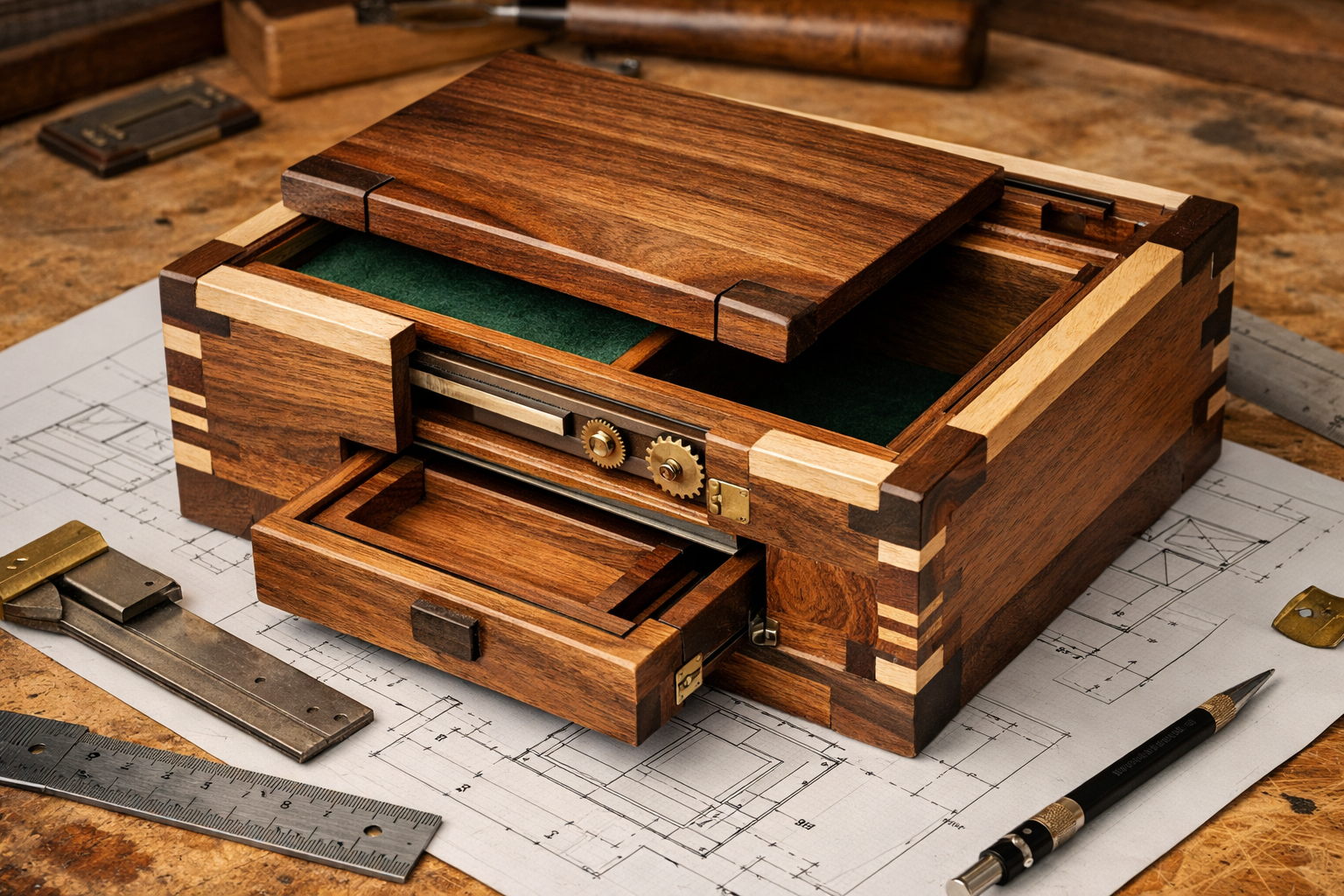
Secret compartments can range from simple false bottoms to complex, mechanically actuated drawers. Here are a few popular examples:
- Sliding Panels: A panel that slides open horizontally or vertically, often secured by magnets or a friction fit.
- False Bottoms/Tops: An additional, removable layer at the bottom or top of the box that conceals a cavity underneath.
- Hidden Drawers: Small drawers integrated seamlessly into the box’s design, often requiring a specific tilt or a hidden release mechanism to open.
- Spring-Loaded Mechanisms: Utilizing springs for automatic opening or locking of panels and drawers.
- Rotational Sections: Parts of the box that rotate to reveal a hidden space.