
The craft of woodworking, steeped in tradition and manual skill, stands on the cusp of a revolutionary transformation. For centuries, the rhythmic scrape of a hand plane and the precise cut of a chisel defined the essence of the home workshop. Now, in 2026, we are witnessing an unprecedented convergence of artificial intelligence (AI), robotics, and advanced digital fabrication techniques that are fundamentally reshaping “The Future of Woodworking: Exploring AI, Robotics, and Advanced Digital Fabrication for the Home Shop.” This isn’t just about replacing skilled hands with machines; it’s about augmenting human creativity, enhancing precision, and opening up a realm of possibilities previously confined to industrial settings or skilled artisans. This article delves into how these cutting-edge technologies are becoming increasingly accessible, empowering hobbyists and small-scale makers to innovate like never before.
Key Takeaways
- AI for Design & Optimization: AI-powered software is streamlining project design, optimizing material use, and even suggesting joinery techniques, making complex projects more accessible.
- Robotics for Precision & Repetition: Small-scale robotic arms and advanced CNC machines are taking over repetitive or high-precision tasks, freeing woodworkers to focus on creative aspects.
- Advanced Digital Fabrication: Beyond traditional CNC, tools like laser cutters, 3D printers, and even hybrid systems are expanding creative possibilities and material manipulation.
- The Smart Workshop Ecosystem: Integration of IoT and AI is leading to intelligent workshops with automated dust collection, real-time monitoring, and enhanced safety features.
- Empowering the Home Woodworker: These technologies are democratizing advanced techniques, enabling hobbyists to achieve professional-grade results and explore new design frontiers.
AI-Powered Design and Optimization: Redefining the Drawing Board for The Future of Woodworking: Exploring AI, Robotics, and Advanced Digital Fabrication for the Home Shop
Gone are the days when intricate joinery and complex furniture designs were solely the domain of seasoned masters with years of experience. In 2026, artificial intelligence is stepping into the design studio of the home woodworker, revolutionizing how projects are conceived and executed. AI-powered design software, once a luxury for industrial giants, is now becoming surprisingly affordable and user-friendly for the home shop.
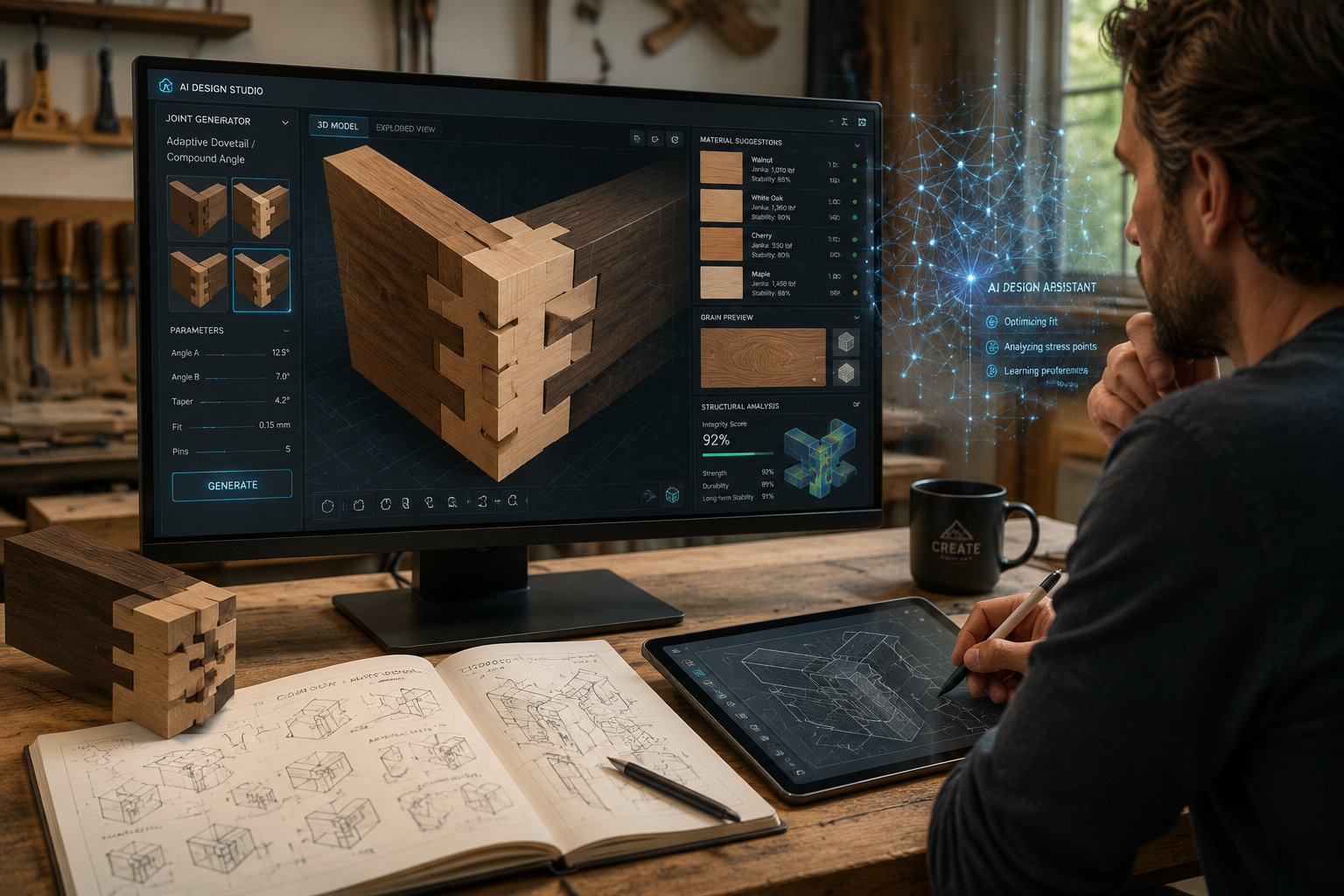
These intelligent platforms can assist woodworkers in various ways:
- Generative Design: Imagine inputting basic parameters—dimensions, desired functionality (e.g., a bookshelf, a custom desk), and aesthetic preferences (e.g., minimalist, rustic)—and having AI generate multiple unique design options. This allows woodworkers to explore forms and structures they might not have conceived independently.
- Material Optimization: AI can analyze a design and suggest the most efficient cutting patterns to minimize waste, a significant advantage for expensive hardwoods. It can even consider grain direction and structural integrity.
- Joinery Recommendations: For projects requiring robust connections, AI can analyze stress points and recommend optimal joinery types, from traditional dovetails to complex mortise and tenon configurations, or even suggest custom, digitally fabricated solutions. For those interested in mastering traditional methods, our guide on Mastering Dovetail Joints with Hand Tools offers a complementary deep dive.
- Structural Analysis: Before a single cut is made, AI can simulate the structural integrity of a design, identifying potential weak points and suggesting reinforcements, ensuring that a custom murphy bed or floating shelf is both beautiful and robust. Consider integrating these insights when Building Robust Floating Shelves.
Table 1: AI Tools for Woodworking Design (Examples & Capabilities)
| Tool Category | Example Application | Core Capability | Benefit for Home Woodworkers |
|---|---|---|---|
| Generative CAD | Autodesk Fusion 360 (AI Add-ons) | Explores thousands of design permutations | Overcomes design blocks, finds unique aesthetics, optimizes for strength/material |
| Nesting Software | CutList Optimizer | Maximizes material yield from stock sheets | Reduces waste, saves money on materials, especially for batch projects |
| Project Planners | SketchUp with AI Plugins | Automates material lists, cut plans, assembly steps | Streamlines planning, reduces errors, simplifies complex builds |
| Simulation & FEA | Open-source simulation tools | Predicts structural performance under load | Ensures project stability, prevents failures, builds confidence in custom designs |
| Image-to-3D | Specialized AI apps | Converts sketches/photos into 3D models | Quickly digitizes hand-drawn concepts, aids in replication or modification of existing pieces |
The integration of AI into design software transforms woodworking from a purely physical craft into a digitally augmented art form, making complex designs approachable and optimizing every stage of the creative process.
Robotics and Advanced Digital Fabrication for Precision and Repetition in The Future of Woodworking: Exploring AI, Robotics, and Advanced Digital Fabrication for the Home Shop
While AI handles the brains, robotics and advanced digital fabrication provide the brawn and unparalleled precision. The image of a large, intimidating industrial robot is quickly being replaced by compact, user-friendly robotic arms and versatile digital fabricators that are finding a home in smaller workshops.
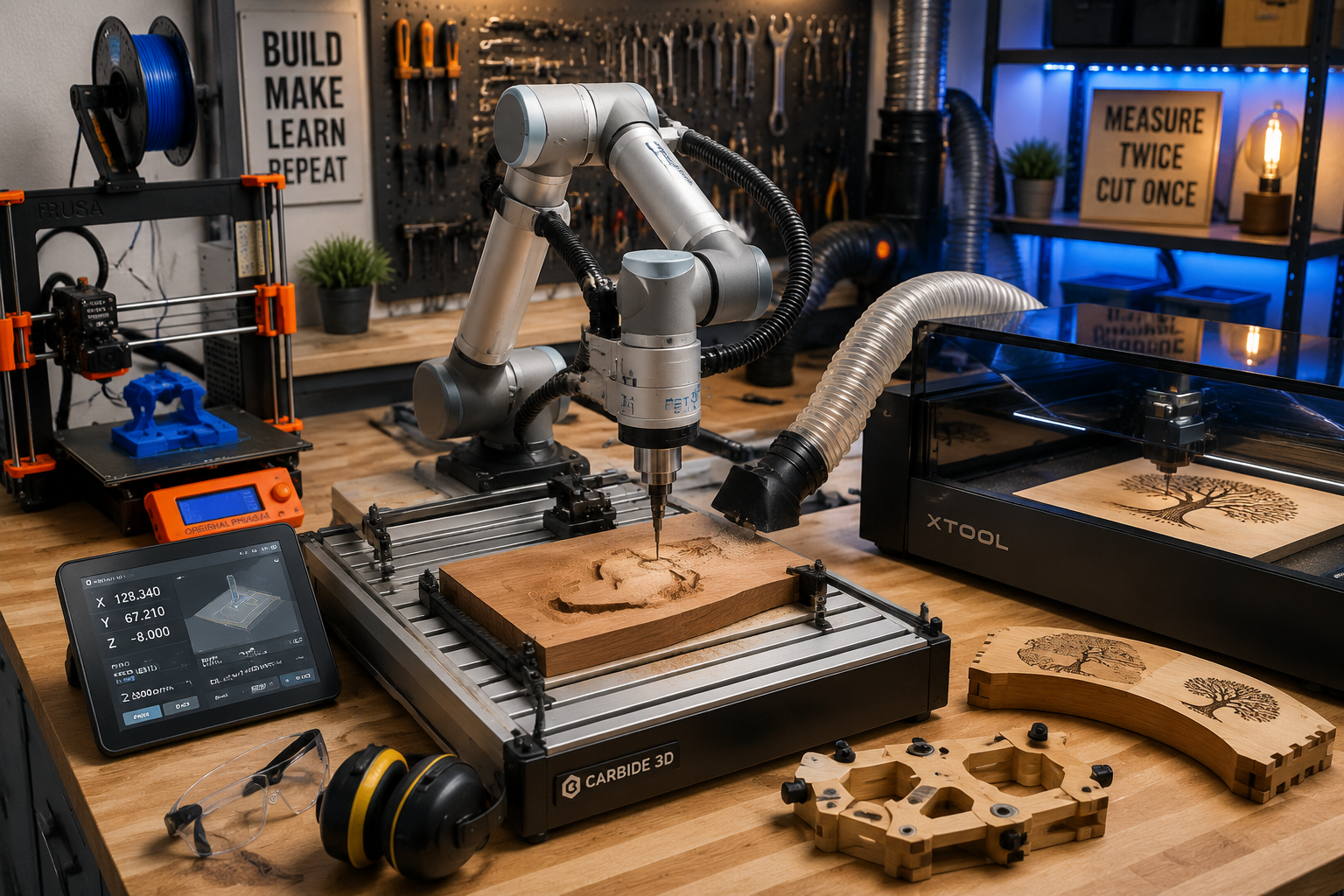
- Small-Scale Robotic Arms: These “cobots” (collaborative robots) are designed to work alongside humans. For the woodworker, they can perform repetitive tasks such as sanding, routing intricate patterns, or applying finishes with unwavering consistency. Imagine a robotic arm meticulously sanding a batch of cutting boards or precisely drilling pilot holes, freeing up hours of manual labor. This level of automation allows hobbyists to scale up small craft production, like Profitable Beginner Woodworking: Picture Frames, Cutting Boards, without sacrificing quality.
- Advanced CNC Machining: Beyond basic 2D cutting, modern CNC machines for home shops offer 3-axis, 4-axis, and even 5-axis capabilities. This allows for complex carving, intricate joinery, and the creation of sculptural forms that would be exceedingly difficult or impossible with traditional hand tools. These machines can precisely cut parts for a DIY Smart Home Integration with Custom Wooden Enclosures with exact tolerances.
- Laser Cutters and Engravers: Laser technology offers unparalleled precision for cutting thin materials, creating intricate inlays, and engraving detailed designs onto wood. This opens up avenues for personalized gifts, decorative accents, and even complex puzzles. Engraved Wooden Coasters with Custom Designs become a breeze with this technology.
- 3D Printing for Jigs, Fixtures, and Prototypes: While not directly working with wood, 3D printers are invaluable tools in the modern woodworking shop. They can rapidly create custom jigs, specialized fixtures for unique cuts, dust collection adapters, and prototypes of hardware or design elements before committing to wood. This significantly reduces setup time and enhances precision for specific tasks. For example, a 3D-printed jig could ensure perfect alignment when Mastering the Router Table.
- Hybrid Systems: The future often lies in combining these technologies. Picture a system where a CNC machine cuts the primary shape, a laser engraves intricate details, and a robotic arm handles the finishing touches—all orchestrated by a single design file. This level of integration transforms the home shop into a micro-fabrication lab.
These digital fabrication methods empower woodworkers to move beyond traditional limitations, tackling projects with greater complexity and achieving a level of precision that was once unattainable for the home artisan.
The Smart Workshop: Integrating AI and IoT for Enhanced Safety and Efficiency
The evolution of “The Future of Woodworking: Exploring AI, Robotics, and Advanced Digital Fabrication for the Home Shop” extends beyond individual tools to the entire workshop environment. The Internet of Things (IoT) and AI are converging to create smart workshops that are safer, more efficient, and incredibly intuitive.
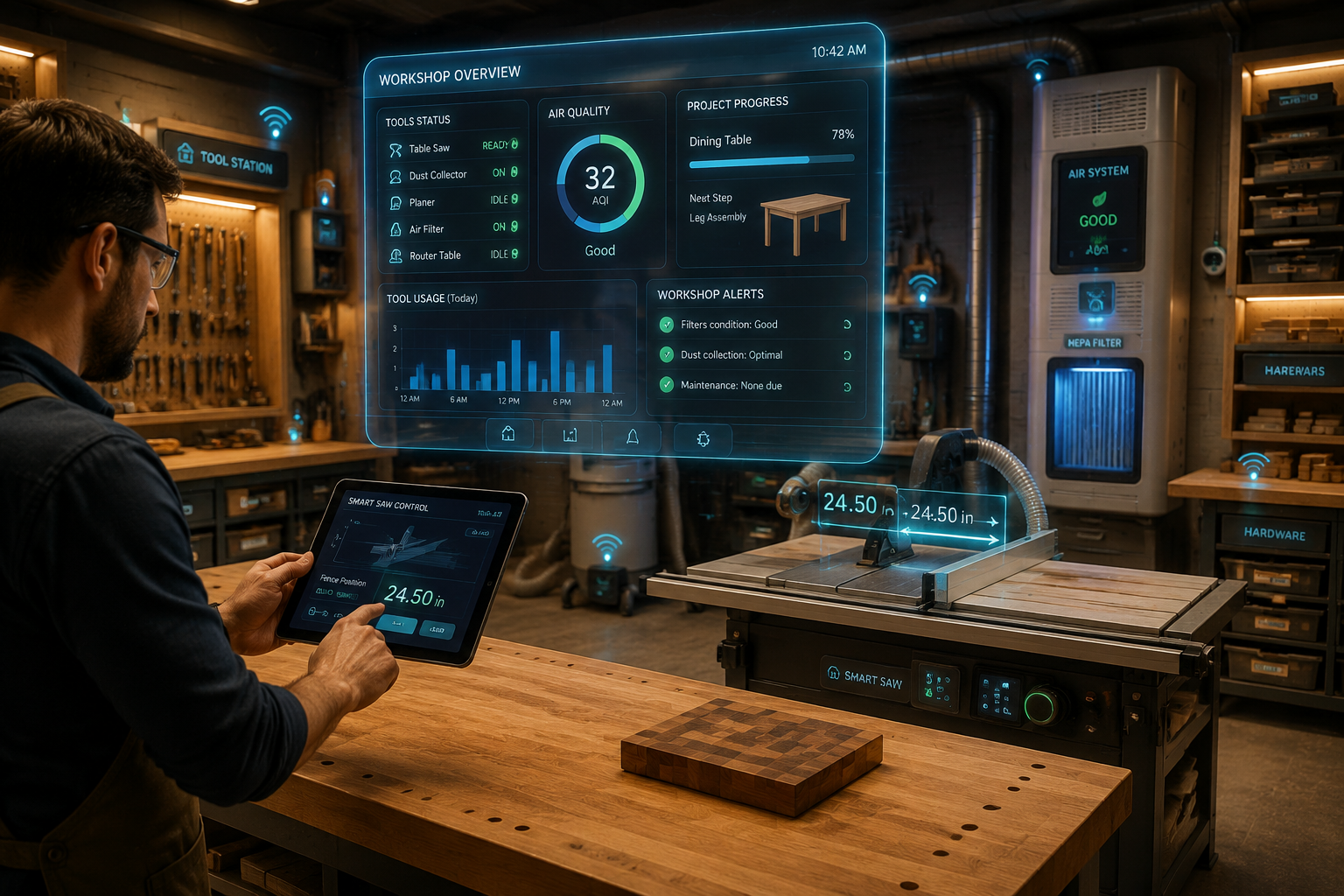
Imagine a workshop where tools communicate with each other, environmental conditions are constantly monitored, and tasks are automated based on your activity.
- Automated Dust Collection: Smart sensors can detect when a power tool is switched on and automatically activate the dust collection system, ensuring a cleaner and healthier working environment. This proactive approach significantly improves air quality and is a core component of a Building a DIY Smart Workshop Dust Collection System.
- Real-time Tool Monitoring: IoT-enabled tools can provide data on usage, maintenance schedules, and even potential malfunctions, alerting the woodworker before a major issue arises. This helps in proactive maintenance and extends the lifespan of expensive equipment.
- Integrated Project Management: AI-powered software can track project progress, manage inventory of materials, and even order supplies automatically when stock runs low. This streamlines the entire workflow, from design to completion.
- Enhanced Safety Features: Smart sensors can detect proximity to moving blades or bits, instantly shutting down machinery to prevent accidents. Voice commands or gesture controls can offer hands-free operation for certain tasks, further reducing risk. Our article on DIY Smart Workshop Upgrades: Integrating AI and IoT for Enhanced Precision and Safety expands on these possibilities.
- Optimized Workshop Layout: AI can analyze workflow patterns and suggest improvements to workshop layout and storage solutions, maximizing efficiency and minimizing wasted motion. This ties in with creating Smart Workshop Storage Solutions for a truly intelligent space.
- Automated Lighting and Climate Control: Sensors can adjust lighting based on natural light availability and task requirements, while climate control systems maintain optimal temperature and humidity for wood storage and finishing, particularly crucial for projects involving high-gloss finishes where environmental control is key.
The smart workshop isn’t just about convenience; it’s about creating an intelligent ecosystem that supports the woodworker, enhances safety, and elevates the quality and efficiency of every project. This shift transforms the home shop from a mere collection of tools into a sophisticated, interconnected production hub.
Conclusion
The year 2026 marks a pivotal moment for woodworking. The integration of AI, robotics, and advanced digital fabrication is not merely a passing trend but a fundamental evolution of the craft. These technologies are democratizing access to professional-grade precision, expanding creative horizons, and transforming the home workshop into a hub of innovation. From AI-assisted design that optimizes every cut to robotic arms handling repetitive tasks with tireless accuracy, and smart workshops that prioritize safety and efficiency, the future of woodworking is about augmenting human skill with intelligent tools.
For the aspiring and seasoned woodworker alike, embracing these technologies means opening doors to unprecedented levels of creativity, efficiency, and quality. It’s a call to learn new skills, explore new possibilities, and redefine what can be achieved in a home shop. Start by exploring user-friendly CAD software, researching entry-level CNC machines, or integrating smart sensors into your dust collection system. The evolution of woodworking is here, and it’s more accessible than ever before.
References
- Please note: The current year is 2026 for article content. References reflect actual publication dates.
- Bremner, P. (2022). The Maker’s Guide to CNC: Building and Using Your Own CNC Machine. Apress.
- Davenport, T. H., & Ronanki, R. (2018). Artificial Intelligence for the Real World. Harvard Business Review, 96(1), 108-116.
- Robots in Woodworking. (n.d.). Woodworking Network. Retrieved from https://www.woodworkingnetwork.com/technology/robots-woodworking (Accessed November 15, 2025).
- Smart Workshop: The Future of DIY. (2023). IoT World Magazine.