

Plywood, often dismissed as a humble construction material, commands a surprising 15% share of the global panel products market, a testament to its versatility and structural integrity. This ubiquity, however, belies its burgeoning role in high-end, contemporary furniture design. Gone are the days when plywood was hidden away; today, its distinctive layered edges, strength-to-weight ratio, and stable composition make it a prime candidate for crafting modern plywood furniture: design principles and joinery techniques for contemporary pieces that are both aesthetically striking and exceptionally durable. The shift sees plywood embraced for its inherent beauty, allowing designers and makers to push boundaries and create truly innovative pieces.
This article delves into the aesthetic and structural possibilities of plywood in modern furniture design, focusing on innovative joinery techniques, sophisticated edge treatments, and precise finishing methods essential for creating sleek, contemporary pieces for the home in 2026.
Key Takeaways
- Plywood’s layered structure offers unique aesthetic opportunities for contemporary furniture.
- Modern plywood furniture benefits from design principles emphasizing clean lines, minimalism, and exposed joinery.
- Advanced joinery techniques like dado, rabbet, and specialized CNC-cut joints are crucial for strength and visual appeal.
- Thoughtful edge treatments and natural finishes enhance plywood’s inherent beauty and durability.
- Careful material selection and understanding plywood grades are foundational to successful projects.
Understanding Plywood for Modern Furniture Design
Plywood’s composition—multiple thin layers (plies) of wood veneer glued together with alternating grain directions—gives it exceptional strength, stability, and resistance to warping, properties highly valued in furniture making. Beyond its structural advantages, the visible layered edges offer a unique aesthetic that can be celebrated as a design feature in contemporary pieces. Selecting the right type and grade of plywood is the first critical step in crafting modern plywood furniture.
Plywood Types and Grades
Different types of plywood offer varying characteristics suitable for specific applications:
- Baltic Birch Plywood: Widely favored for furniture, Baltic birch boasts numerous thin plies, a void-free core, and attractive, consistent light-colored faces. Its density and strength make it ideal for intricate joinery and exposed edges.
- Appleply: Similar to Baltic birch but often with even more plies and a distinct applewood veneer, offering excellent stability and an elegant aesthetic.
- Hardwood Plywood: Available with face veneers of oak, maple, walnut, or cherry, these options combine the stability of plywood with the appearance of solid hardwoods.
- Marine Plywood: While primarily designed for wet environments, its waterproof glues and durable construction can be advantageous for outdoor or high-moisture furniture applications.
Plywood grades are crucial for determining surface quality. Furniture-grade plywood typically uses A-grade or B-grade faces for a smooth, blemish-free appearance ready for finishing. Interior plies are often rated C or D, indicating potential voids or patches, but a good quality furniture-grade panel will minimize these in the core.
Core Design Principles for Contemporary Plywood Furniture
Modern plywood furniture often embraces principles of minimalism, functionality, and honest expression of materials.
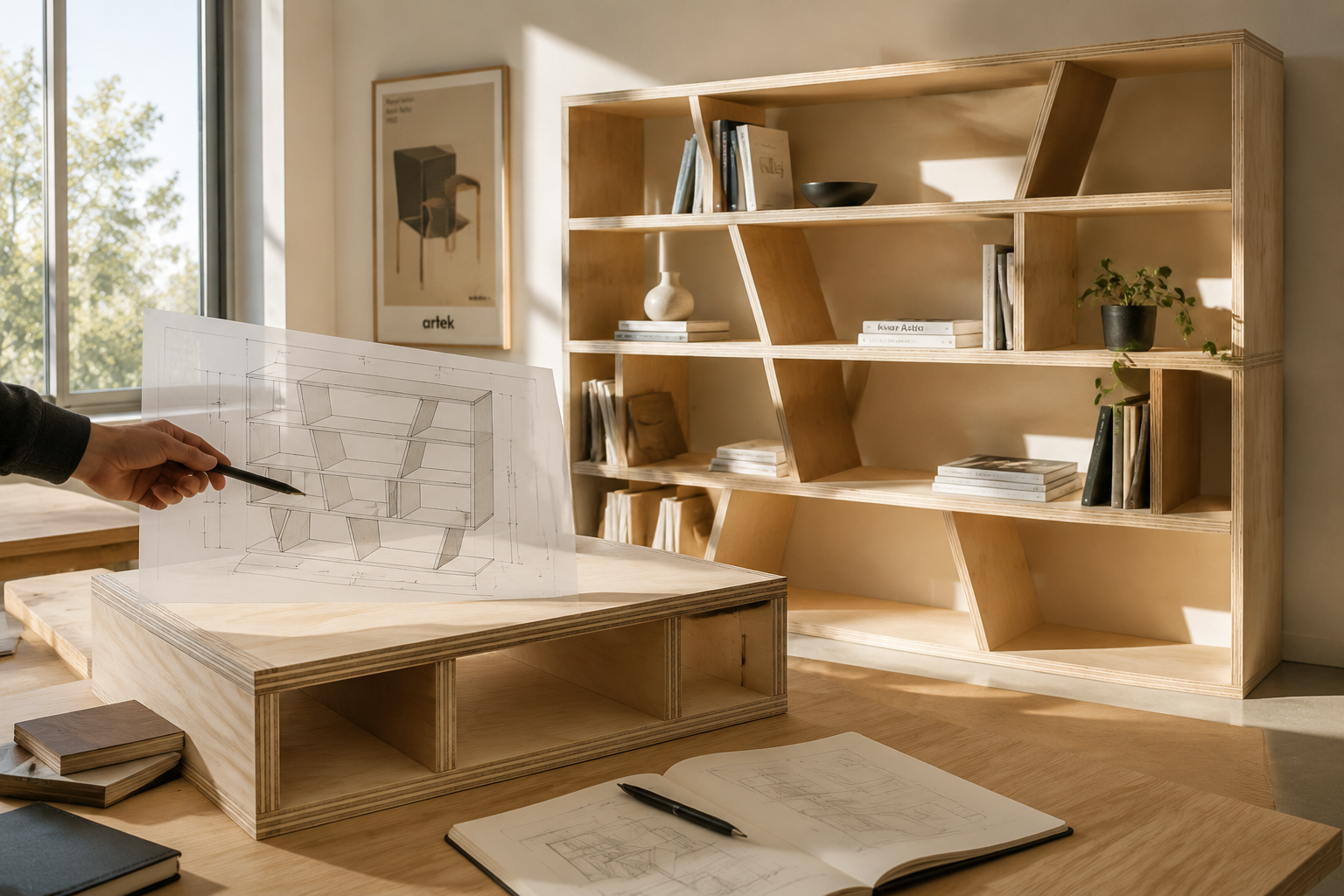
- Clean Lines and Geometric Forms: Plywood lends itself well to precise cuts and angular shapes, forming sleek, uncluttered designs. Think rectilinear bookshelves, modular storage units, and tables with sharp profiles.
- Exposed Edges as a Design Feature: Rather than concealing them, the characteristic layered edges of plywood are celebrated, often becoming a focal point. This can be enhanced through contrasting finishes or specific joinery.
- Structural Integrity and Visual Lightness: Despite its strength, plywood can be used to create pieces that appear light and airy, especially when combined with clever cantilevered designs or open frameworks.
- Modularity and Adaptability: Plywood’s consistent thickness and ease of fabrication make it excellent for modular systems that can be reconfigured or expanded.
For more on integrating clean design with natural materials, explore principles of Warm Minimalism in Woodworking: Balancing Clean Lines with Tactile Wood Materials.
Essential Joinery Techniques for Plywood Furniture
The choice of joinery is paramount for both the structural integrity and the aesthetic appeal of modern plywood furniture. While traditional solid wood joinery can be adapted, plywood’s uniform thickness and tendency to chip require specific considerations and techniques.
Common and Advanced Joinery Methods
- Dado and Rabbet Joints: These are fundamental for plywood construction. A dado is a groove cut across the grain, perfectly sized for a mating piece to slide into, ideal for shelves. A rabbet is a groove cut along the edge, often used for backs or bottom panels. These joints offer excellent glue surface and strength.
- Butt Joints with Reinforcement: While simple, a plain butt joint is weak. Reinforcing it with screws, dowels, biscuits, or pocket screws significantly increases its strength. For a cleaner look, pocket screws from the inside are often favored.
- Miter Joints: Mitered edges create the illusion of solid material and hide plywood layers, producing very clean corners. While strong with proper gluing and splines, they can be challenging to execute perfectly without specialized jigs.
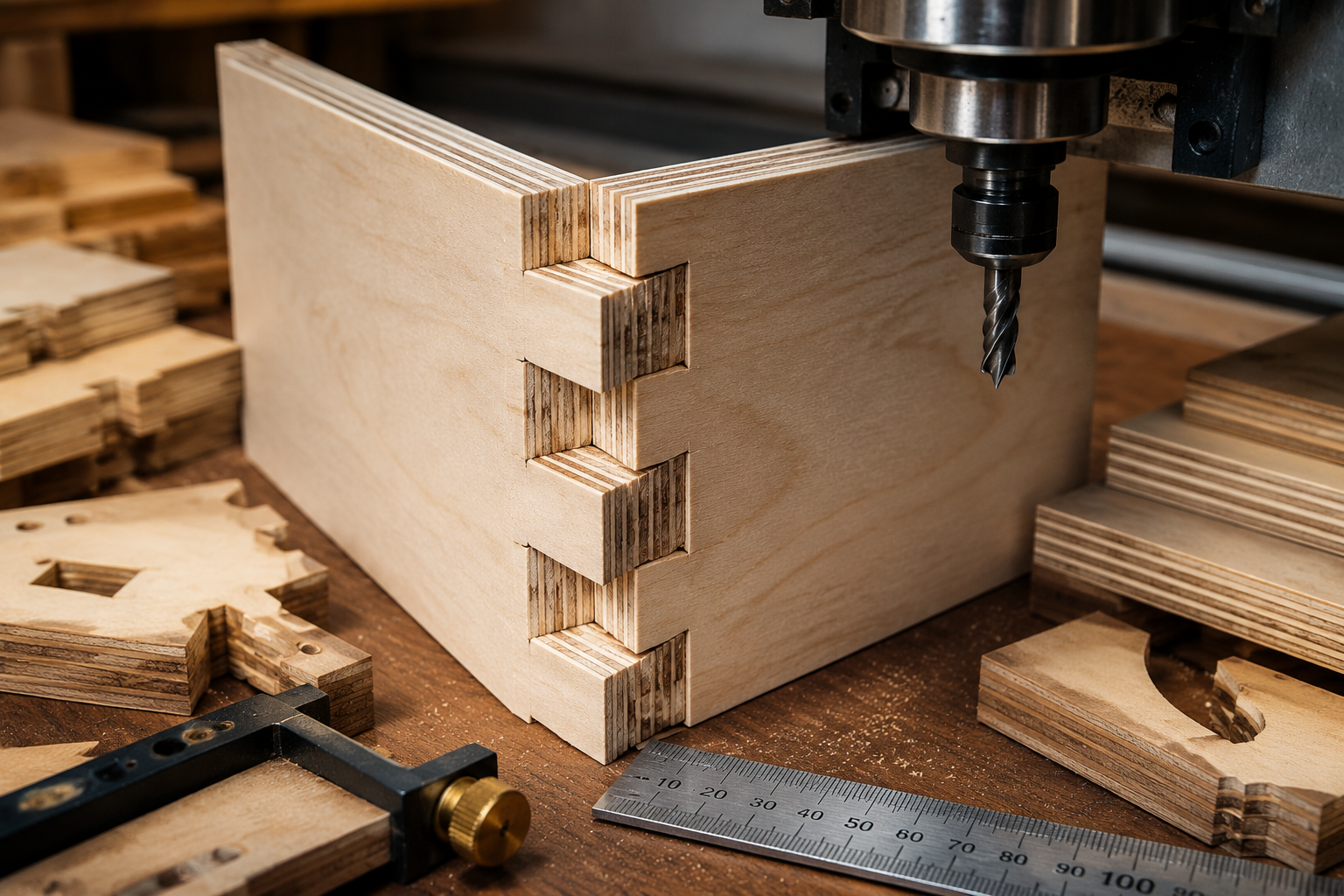
- Box Joints and Finger Joints: These exposed joints celebrate the layered aesthetic of plywood beautifully. They offer a large gluing surface and are incredibly strong, making them ideal for drawers, boxes, or even carcases. Hand Tool Joinery for Visible Wood Joints: Dovetails, Mortise and Tenon, and Box Joints as Design Features in Furniture and Small Projects delves deeper into such decorative yet strong joints.
- Dovetail Joints: Though more complex, dovetails can be cut into plywood. When exposed, the alternating grain of the plies creates a visually stunning effect, particularly with Baltic birch.
- Interlocking and CNC-Cut Joints: Modern design often leverages CNC routers to create highly precise, intricate interlocking joints that are both structural and decorative. These can range from simple tab-and-slot designs to complex puzzle-piece connections that require minimal fasteners. For precision with power tools, mastering the router table is essential, as detailed in Mastering the Router Table: Essential Jigs, Safety, and Advanced Techniques for Precision Joinery and Edges.
| Joinery Type | Strength (1-5, 5=highest) | Aesthetic Value | Best Use Cases | Tooling | Notes |
|---|---|---|---|---|---|
| Dado | 4 | Hidden/Subtle | Shelves, drawer bottoms, cabinet partitions | Table Saw, Router | Excellent load-bearing, good for internal structures. |
| Rabbet | 3 | Hidden/Subtle | Back panels, drawer sides, edge banding | Table Saw, Router | Stronger than butt, often used in conjunction with other joints. |
| Pocket Hole | 3 | Concealed | Face frames, cabinet construction, general assemblies | Pocket Hole Jig, Drill | Fast, strong, good for hidden joinery. |
| Box/Finger Joint | 5 | Exposed/Decorative | Drawers, boxes, decorative case goods | Table Saw (jig), Router (jig), CNC | Visually striking, strong, highlights plywood layers. |
| Dovetail | 5 | Exposed/Highly Decorative | High-end drawers, carcases, heirloom pieces | Router (jig), Hand tools, CNC | Ultimate strength and beauty, showcases craftsmanship. |
| CNC Interlocking | 4-5 | Exposed/Modern | Modular furniture, flat-pack designs, unique profiles | CNC Router | Precision fit, minimizes fasteners, highly customizable. |
Adhesives and Fasteners
For plywood, wood glue (PVA) is typically sufficient for strong joints, especially when combined with good clamping pressure. For joints that might experience more stress or for a quick setup, consider construction adhesives. Fasteners like screws and nails should be pre-drilled to prevent splitting the plywood and countersunk for a clean finish. Specialized plywood screws with self-tapping tips can reduce splitting.
Finishing Touches: Edge Treatments and Coatings
The final appearance of modern plywood furniture is significantly impacted by how its edges are treated and what finishes are applied. These steps transform raw plywood into a refined, contemporary piece.
Elevating Edges: Techniques and Styles
The exposed edge of plywood is a defining characteristic in modern design. How it’s treated can dramatically change the piece’s aesthetic.
- Sanding and Sealing: At its simplest, a well-sanded and sealed edge can look incredibly clean and highlight the ply layers. This minimalist approach is popular.
- Chamfer and Bevel: Adding a slight chamfer (angled cut) or bevel (sloped edge) breaks the sharp corner, making the edge feel softer and more refined while still showcasing the layers.
- Round-over: A subtle round-over softens the edge, providing a comfortable touch and a more organic feel.
- Veneer Banding: For those who wish to conceal the ply layers on specific edges, iron-on or pre-glued wood veneer banding can be applied. This gives the appearance of solid wood along the edge.
- Laminates and Paint: For a bold, contemporary look, the edges can be painted in a contrasting color or laminated with a solid-color high-pressure laminate (HPL) for durability and a clean, monolithic appearance.
Selecting and Applying Finishes
The right finish protects the plywood, enhances its natural beauty, and contributes to the overall aesthetic.
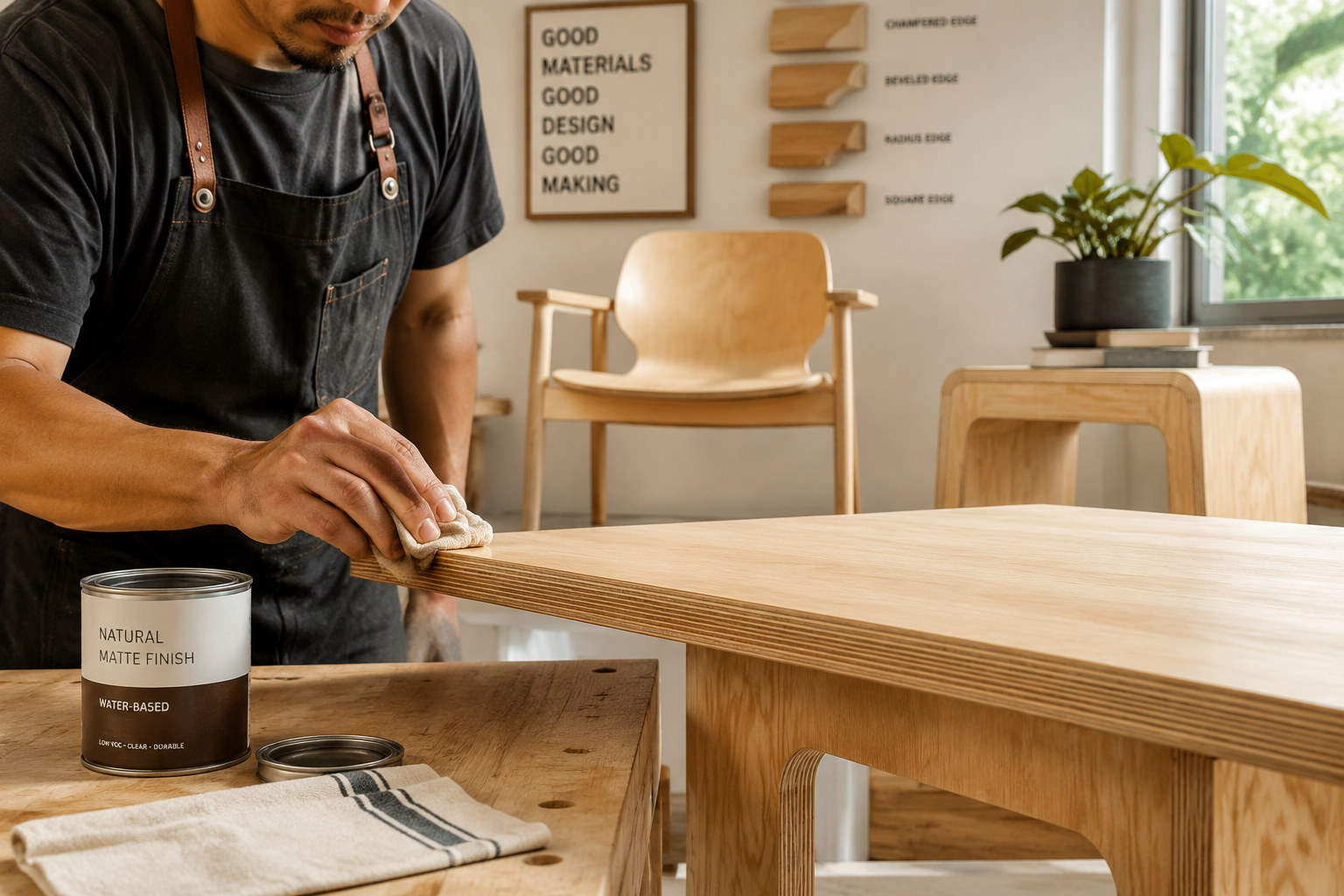
- Clear Coats: Polyurethane, lacquer, shellac, and water-based clear coats are excellent for protecting plywood while allowing its natural grain and layered edges to shine through. Matte or satin finishes are often preferred for a modern, understated look over high-gloss.
- Oils and Waxes: Penetrating oils (like Danish oil, tung oil, or linseed oil) offer a natural, hand-rubbed look that accentuates the wood grain and provides a tactile, warm feel. They require more frequent reapplication but are easy to repair. Waxes can be applied over oils for added protection and a subtle sheen. For more on natural finishes, consider Natural Wood Finishing Techniques.
- Paint and Stains: Plywood can be painted for a uniform, colored finish, or stained to alter its tone while still allowing some grain to show through. When staining, consider using a wood conditioner first to ensure even absorption, as plywood can stain unevenly.
- Preparation is Key: Regardless of the chosen finish, thorough sanding is crucial. Start with a coarser grit (e.g., 120) and progressively move to finer grits (e.g., 180, 220) to achieve a smooth surface. Clean off all dust before applying any finish.
By carefully considering these design principles, joinery techniques, edge treatments, and finishes, woodworkers can master the art of crafting modern plywood furniture, creating contemporary pieces that are not only functional but also works of art. From building statement furniture pieces to intricate DIY wooden wall clocks, plywood offers endless possibilities for creative expression in 2026.
Conclusion
The journey of crafting modern plywood furniture from concept to completion is a rewarding one, transforming a practical material into pieces of contemporary art. By understanding plywood’s unique properties, embracing minimalist design principles, and mastering precise joinery and finishing techniques, woodworkers can create furniture that stands out. The exposed layered edges, once overlooked, are now celebrated, providing a visual signature for durability and modern aesthetics.
As we move through 2026, the demand for sustainable, well-designed, and durable furniture continues to grow. Plywood, with its inherent stability and versatility, is perfectly positioned to meet this demand. Experiment with different types of plywood, explore innovative joinery methods like CNC-cut interlocking joints, and don’t shy away from showcasing those distinctive edges. The possibilities are truly boundless for those willing to innovate and push the boundaries of this remarkable material.
References
- Greenwood, P. (2018). The Complete Woodworker’s Guide: A Source Book of Tools, Techniques & Materials. Sterling Publishing Co., Inc.
- Petersen, S. (2020). Plywood: A Material Story. Phaidon Press.
- Tolpin, J. (2019). The New Traditional Woodworker: From Hand-Tool Fundamentals to Essential Joinery. Popular Woodworking Books.