
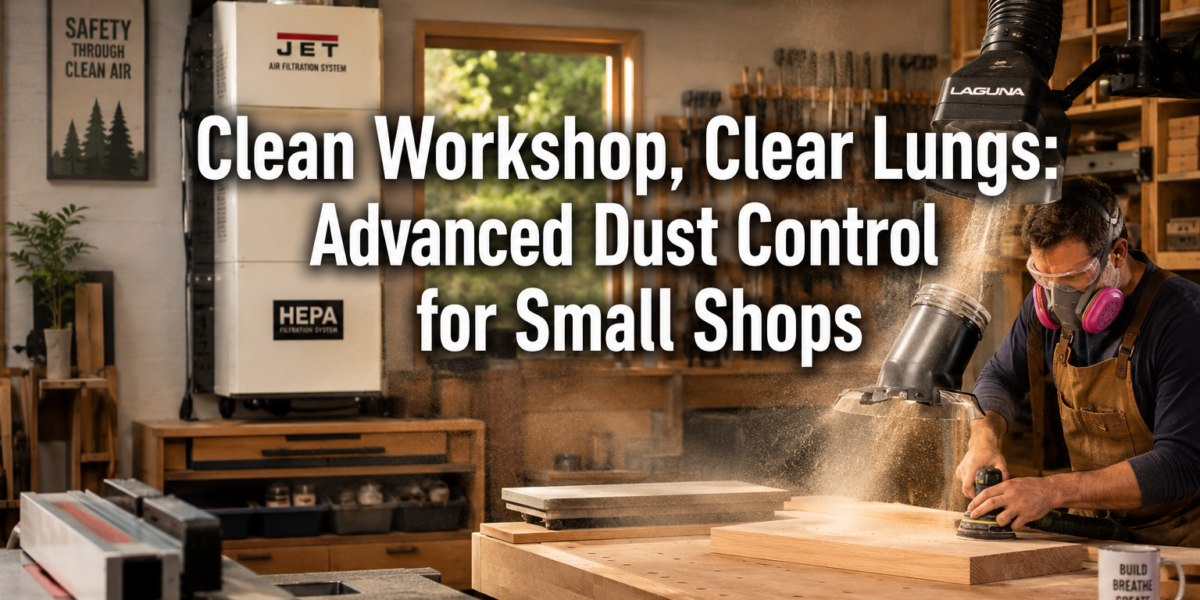
In 2026, the notion that a single, large dust collector is the alpha and omega of small workshop dust control is increasingly outdated. While essential, relying solely on a centralized system often overlooks the insidious nature of fine dust particles and their far-reaching health and operational impacts. True mastery of Small Workshop Dust Control Solutions: Beyond the Dust Collector for Cleaner Air and Surfaces demands a multi-layered approach, addressing dust at its source, filtering ambient air, and implementing intelligent shop practices. This article delves into supplementary methods that synergistically work with, and often improve upon, traditional dust collection, ensuring a healthier environment and cleaner projects.
Key Takeaways
- Source Capture is Paramount: Immediately removing dust at the point of generation prevents most particles from becoming airborne.
- Ambient Air Filtration is Crucial: Air scrubbers and purifiers tackle airborne dust that escapes source capture, significantly improving air quality.
- Shop Vacuums are Versatile: Equipped with HEPA filters, they offer powerful, portable dust extraction for hand tools and clean-up.
- Intelligent Shop Practices: Layout, airflow management, and regular cleaning protocols are vital, often overlooked components of effective dust control.
- Personal Protective Equipment (PPE) is Non-Negotiable: Respirators remain the last line of defense for respiratory health, even with excellent dust control.
Attacking Dust at the Source: Localized Extraction and Specialized Tools
The most effective strategy for Small Workshop Dust Control Solutions: Beyond the Dust Collector for Cleaner Air and Surfaces is to prevent dust from ever becoming airborne. This “source capture” approach is vastly more efficient than trying to filter it out once it’s dispersed throughout the space.
Optimizing Shop Vacuums and Dedicated Attachments
Your trusty shop vacuum, often seen as merely a clean-up tool, transforms into a powerful dust control ally when paired with the right accessories. A standard shop vac, especially one like the 14 Gal Ridgid Shop Vac, becomes exponentially more effective with a HEPA filter and a cyclonic separator.
- Cyclonic Separator: This ingenious device is a pre-separator that sits between your tool and the shop vac. It uses centrifugal force to drop the vast majority of dust and chips into a separate bin before they ever reach your vacuum’s filter. This extends filter life, maintains suction, and makes emptying much easier.
- HEPA Filters: Standard shop vac filters often let microscopic dust particles pass right through. A HEPA (High-Efficiency Particulate Air) filter captures 99.97% of airborne particles 0.3 microns or larger, providing superior air quality.
- Specialized Tool Attachments: Many power tools—sanders, routers, saws—have integrated dust ports. Connect these directly to your shop vac using flexible hoses and adapters. For tools without ports, consider universal shrouds or homemade solutions. For instance, when working on a Craftsman 12-inch table saw, connecting a dust hose to its port drastically reduces airborne sawdust.
Micro-Extraction for Hand Tools and Sanding
Even hand-held power tools generate significant dust. Here’s how to manage it:
- Random Orbital Sanders (ROS): Most modern ROS come with dust collection bags or ports. Connect these to a shop vac with a HEPA filter for maximum effectiveness. Some even integrate into sanding stations with downdraft tables.
- Track Saws and Circular Saws: These often have efficient dust ports. Utilizing them with a shop vac during cuts minimizes fine particle release.
- Routers: When performing routing operations, whether freehand or with a router table, connecting to a shop vac is crucial. Many router bases accept standard hose sizes, or you can build simple enclosures with extraction points for router tables. For intricate work on custom floating shelves, precise routing can generate a surprising amount of dust, making localized extraction essential.
| Tool Type | Recommended Solution | Benefit |
|---|---|---|
| Table Saws, Planers | Main Dust Collector (DC) + Overarm Guard DC | Captures heavy chips and fine dust simultaneously |
| Sanders (ROS, Belt) | Shop Vac w/ HEPA + Cyclonic Separator | Captures fine dust at source, extends filter life |
| Routers, Jig Saws | Shop Vac w/ HEPA + Tool-specific attachments/shrouds | Prevents localized dust clouds |
| Hand Planes, Chisels | Small Brush & Dustpan, Dedicated Workbench Extraction | Manages minimal, localized debris |
Filtering the Invisible: Ambient Air Cleaners and Shop Ventilation
Despite best efforts at source capture, some fine dust inevitably escapes and lingers in the air. These microscopic particles (PM2.5 and smaller) are the most dangerous to inhale. This is where ambient air filtration and strategic ventilation become critical components of Small Workshop Dust Control Solutions: Beyond the Dust Collector for Cleaner Air and Surfaces.
Air Scrubbers and Purifiers
These devices actively pull in workshop air, filter out fine particulates, and exhaust cleaner air back into the space.
- Ceiling-Mounted Air Scrubbers: These are workhorses for whole-shop air quality. They typically use a two-stage or three-stage filtration system (pre-filter, pleat filter, and often a HEPA or charcoal filter) to capture varying particle sizes. Position them to create a circular airflow pattern, drawing dusty air from one end of the shop and returning clean air at the other. Run them constantly while working and for a period afterward.
- Portable Air Purifiers: Smaller, more flexible units can be moved to specific areas where dust is actively generated, or where you spend a lot of time. Look for models with HEPA filtration and a high Clean Air Delivery Rate (CADR) for your shop size.
- DIY Box Fan Filters: For budget-conscious woodworkers, a simple setup of a box fan with high-quality furnace filters (MERV 13 or higher) taped to its intake side can provide a surprising amount of ambient air cleaning. While not as efficient as dedicated units, it’s a significant improvement over no ambient filtration.
 visual comparison table illustrating different types of ambient air filtration systems for small workshops.](https://zsxkvszxbhpwnvzxdydv.supabase.co/storage/v1/object/public/generated-images/kie/764c2c32-b912-4d85-a69c-d5063309f6d1/slot-2-1778734691853.png))
Strategic Ventilation
While not “dust collection” in the traditional sense, proper ventilation flushes out airborne particles.
- Exhaust Fans: Installing an exhaust fan to draw air out of the shop can create negative pressure, pulling in fresh air from outside and expelling dusty air. This is especially useful during sanding or finishing operations where fumes are also a concern. Ensure any exhaust vents are directed away from neighboring properties.
- Airflow Management: Think about how air moves in your shop. Can you create a cross-breeze or a directed flow towards an exhaust point? Even opening windows on opposite sides of the shop can help clear the air. When building custom wood workbenches, consider incorporating a down-draft sanding station directly into the design, vented externally.
Cultivating a Clean Environment: Shop Layout and Maintenance Protocols
The final, often overlooked, layer of Small Workshop Dust Control Solutions: Beyond the Dust Collector for Cleaner Air and Surfaces involves proactive shop organization and diligent cleaning habits. A clean shop is inherently less dusty, and good habits prevent dust accumulation that can later become airborne.
Intelligent Workshop Layout
Your shop’s arrangement directly impacts how dust behaves and how easily it can be managed.
- Zone Planning: Designate specific areas for dust-producing tasks (e.g., cutting, sanding) and separate them from assembly, finishing, or electronics storage areas. Even a simple curtain can help contain dust. When planning modular wood storage systems, consider making storage units sealed to prevent dust ingress.
- Machinery Placement: Position dustiest machines (table saw, planer, jointer) closer to your main dust collector or external exhaust points.
- Smooth Surfaces: Opt for smooth, easily wipeable surfaces for benchtops, walls, and floors over porous materials that trap dust.
Proactive Cleaning Regimen
Consistent cleaning prevents dust buildup and its re-suspension.
- Vacuum, Don’t Sweep: Sweeping often kicks fine dust back into the air. Use a shop vacuum with a floor attachment for floors and benchtops.
- Wipe Down Surfaces: Regularly wipe down all surfaces, tools, and equipment with a damp cloth or a tack cloth to capture settled dust.
- Empty Dust Bins Regularly: Don’t wait for your dust collector or shop vac bins to be overflowing. Empty them frequently, ideally outdoors, to prevent dust from escaping during handling.
- Seal Storage: Store lumber, hardware, and finished projects in sealed containers or cabinets to protect them from dust. This is especially important for items like custom wooden planters before they are sealed.
- Personal Hygiene: Change out of dusty clothes before entering living spaces. Regularly clean your personal protective equipment (PPE).
Personal Protective Equipment (PPE)
Even with all the above measures, a good quality respirator is non-negotiable, especially for tasks that generate significant fine dust, like sanding or routing. A P100 rated respirator protects against 99.97% of airborne particles. Don’t forget eye protection and hearing protection too!
Conclusion
Achieving truly clean air and surfaces in a small workshop in 2026 transcends the capabilities of a single dust collector. It requires a thoughtful, integrated strategy that captures dust at its source, rigorously filters the ambient air, and is supported by meticulous shop organization and cleaning protocols. By combining optimized localized extraction with shop vacuums and cyclonic separators, deploying effective ambient air scrubbers, and embracing smart workshop layout and maintenance, woodworkers can create an environment that is not only cleaner but significantly healthier. This multi-pronged approach ensures that your passion for woodworking doesn’t come at the expense of your lung health or the quality of your finished projects. Implement these Small Workshop Dust Control Solutions: Beyond the Dust Collector for Cleaner Air and Surfaces to transform your workspace into a safer, more enjoyable haven.