

The average homeowner hosts 10-12 social gatherings annually, yet a dedicated, functional entertaining space remains an elusive luxury for many. While a kitchen island can serve in a pinch, it often lacks the specialized design and features needed to truly elevate a host’s capabilities. Crafting a custom home bar, however, transforms a simple corner or basement into a sophisticated hub, providing tailored storage, serving areas, and a personalized aesthetic that store-bought units simply cannot match. This article will guide you through the intricate process of Building a Custom Home Bar: Designs, Joinery, and Features for Entertaining, offering insights into creating a truly exceptional space.
Key Takeaways
- Design Customization is Paramount: A custom home bar allows for complete personalization of style, size, and layout to perfectly fit your space and entertaining needs.
- Solid Joinery Ensures Durability: Employing robust woodworking joints is crucial for a stable, long-lasting structure that can withstand regular use.
- Integrated Features Enhance Functionality: Thoughtful inclusion of refrigeration, sinks, and storage solutions optimizes the bar for seamless entertaining.
- Material Selection Influences Aesthetics and Longevity: Choosing the right wood, countertops, and finishes impacts both the bar’s look and its resilience.
- Careful Planning Prevents Costly Mistakes: Thorough design and budgeting before construction are essential for a successful project.
Designing Your Dream Home Bar: Styles and Layouts
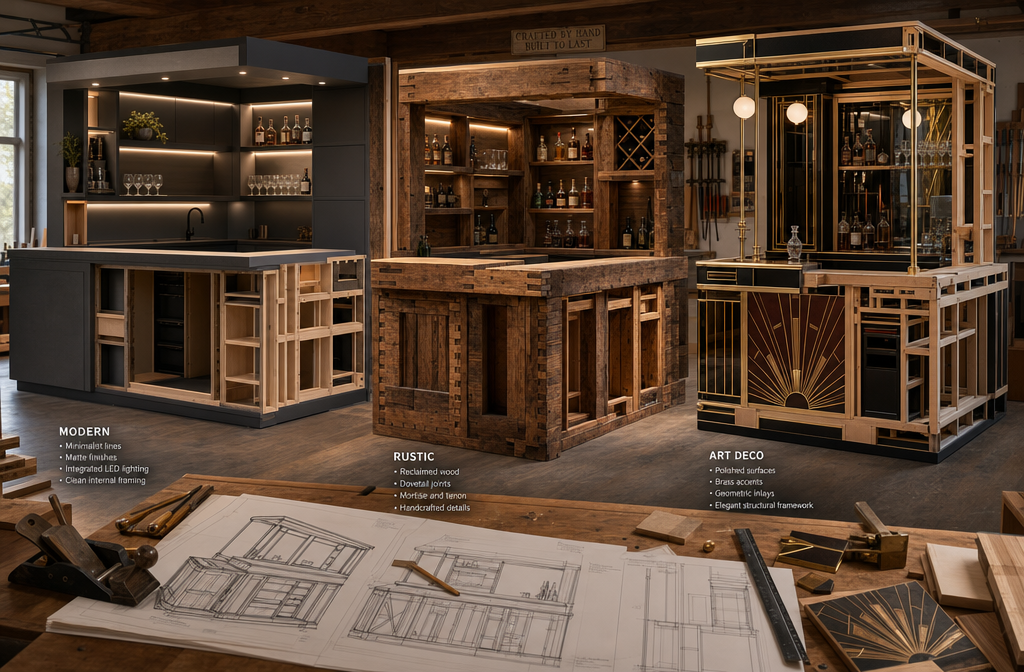
Designing a custom home bar begins with understanding your space, aesthetic preferences, and entertaining habits. The goal is to create a functional, visually appealing centerpiece that complements your home’s existing décor while maximizing its utility.
Assessing Your Space and Needs
Before sketching any designs, measure your available area meticulously. Consider traffic flow, proximity to electrical and plumbing lines, and how the bar will integrate with other rooms. Think about:
- Footprint: Will it be a compact wet bar, a sprawling full-service bar, or something in between?
- Capacity: How many people do you typically entertain? This dictates the length of the bar top and seating requirements.
- Functionality: Do you need a full sink, dishwasher, ice maker, or just basic bottle storage?
- Aesthetics: What style resonates with your home? Modern, rustic, industrial, traditional, or eclectic?
Popular Home Bar Design Styles
The beauty of a custom bar lies in its ability to embody any style. Here are a few popular options:
- Modern & Minimalist: Characterized by clean lines, sleek surfaces (quartz, polished concrete, glass), hidden storage, and often handle-less cabinetry. Colors tend to be monochromatic with subtle accents.
- Rustic & Industrial: Often features reclaimed wood, exposed metal piping, raw concrete elements, and warm, earthy tones. Distressed finishes and robust hardware are common. For inspiration on rustic elements, explore Building Statement Furniture Pieces: Designing and Constructing Coffee Tables, Benches, and Console Tables That Sell for $500 in 2026.
- Traditional & Classic: Emphasizes rich wood tones (cherry, mahogany, oak), ornate carvings, raised panel doors, and classic architectural details. Darker color palettes and brass or bronze hardware are typical.
- Contemporary & Eclectic: A blend of styles, often incorporating unique materials, bold colors, and unexpected elements. This style allows for significant personal expression.
Layout Options for Building a Custom Home Bar
Bar layouts are typically dictated by available space and desired functionality:
- Straight Bar: The simplest and most common design, fitting against a wall. Ideal for smaller spaces or as an extension of a larger room.
- L-Shaped Bar: Offers more counter space and can define an entertaining zone. Great for corner installations or to separate open-plan areas.
- U-Shaped Bar: Provides maximum counter space and can accommodate multiple bartenders and guests. Best suited for larger dedicated bar rooms.
- Island Bar: A freestanding unit, often with seating on one or more sides. Offers flexibility in placement and can be a great focal point.
Table: Common Bar Dimensions
| Feature | Minimum Recommendation | Ideal Recommendation |
|---|---|---|
| Bar Height | 40 inches (102 cm) | 42 inches (107 cm) |
| Counter Depth | 18 inches (46 cm) | 24 inches (61 cm) |
| Bar Top Overhang | 8 inches (20 cm) | 10-12 inches (25-30 cm) |
| Back Bar Depth | 12 inches (30 cm) | 18 inches (46 cm) |
| Knee Clearance | 12 inches (30 cm) | 15 inches (38 cm) |
Pro Tip: Ensure sufficient space behind the bar (at least 36-48 inches) for a bartender to work comfortably.
Essential Joinery Techniques for a Durable Home Bar
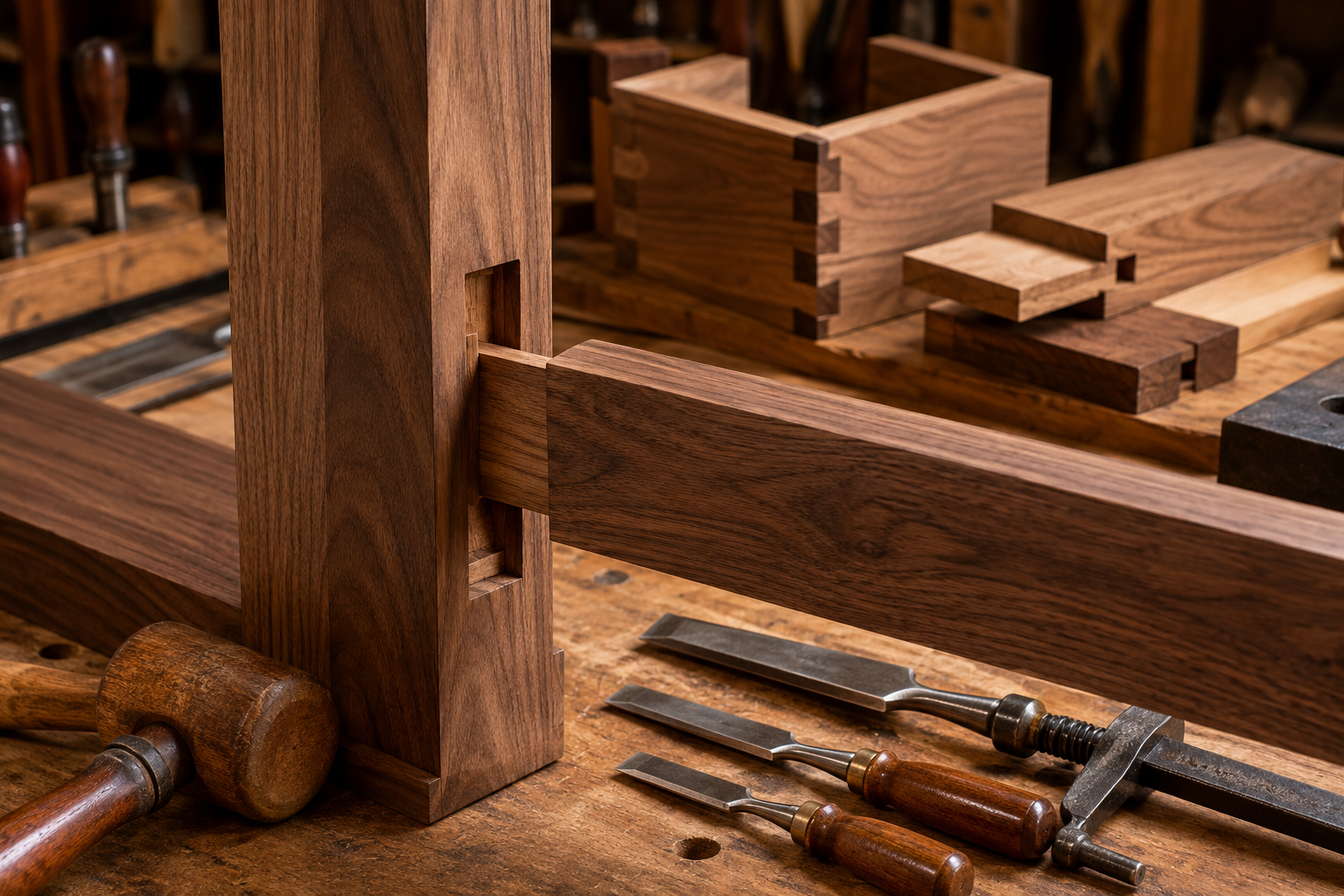
The longevity and stability of your custom home bar hinge significantly on the quality of its joinery. While screws and glue provide initial strength, proper woodworking joints distribute stress more effectively and prevent racking over time, especially in a piece of furniture subject to spills, heavy bottles, and leaning guests.
Why Quality Joinery Matters for a Custom Home Bar
- Structural Integrity: Joints create a rigid framework that resists movement and maintains squareness.
- Durability: Well-made joints can last for decades, even centuries, outperforming fasteners alone.
- Aesthetics: Exposed joinery, like dovetails, can add significant visual appeal and demonstrate craftsmanship.
- Repairability: A properly joined piece is often easier to repair than one held together primarily with fasteners, as components can be more readily disassembled and reassembled.
Key Joinery Techniques for Bar Construction
When building a custom home bar, several joinery methods are particularly useful:
Mortise and Tenon Joints:
- Description: A classic, incredibly strong joint where a tenon (tongue) on one piece fits precisely into a mortise (hole) in another.
- Application: Ideal for connecting rails to legs in the bar’s frame, or for attaching vertical dividers. It offers excellent resistance to pulling apart and twisting.
- Tip: Through mortise and tenons, where the tenon passes entirely through the mortise and is often wedged or pinned, offer maximum strength and can be a beautiful design element.
Dovetail Joints:
- Description: Known for its exceptional tensile strength, this joint features interlocking “tail” and “pin” shapes.
- Application: Essential for constructing strong, durable drawers within your bar cabinetry. It prevents the drawer box from pulling apart when loaded. For mastering this, refer to Mastering Dovetail Joinery for Drawers: Hand and Router Methods for Cabinet Builders.
- Variations: Through dovetails are visible on both faces, while half-blind dovetails are only visible from one.
Dado and Rabbet Joints:
- Description: A dado is a groove cut across the grain of a board, while a rabbet is a groove cut along the edge.
- Application: Perfect for shelves, drawer bottoms, and cabinet backs. They provide strong, stable support and ensure components remain flat.
- Consideration: Dados and rabbets are often reinforced with glue and sometimes fasteners for added security.
Biscuit and Domino Joints:
- Description: These are essentially reinforced butt joints. A slot is cut in each piece, and a pre-made biscuit (compressed wood) or domino (flat, rectangular tenon) is inserted with glue.
- Application: Useful for panel glue-ups (e.g., bar top sections, cabinet sides) where alignment and added strength are desired without complex traditional joinery.
- Benefit: They are relatively quick to cut and offer good alignment properties.
Pocket Hole Joinery:
- Description: Involves drilling an angled hole into one piece of wood and then driving a screw through this hole into an adjacent piece.
- Application: Excellent for face frames, cabinet carcasses, and attaching components where hidden fasteners are preferred. While not as strong as traditional joinery in all applications, it’s quick and effective for non-stress-bearing internal structures.
- Note: Always use quality pocket hole screws designed for the specific wood type.
Tooling Up for Joinery
To execute these joints effectively, you’ll need a combination of hand and power tools:
- Table Saw: For accurate rip and cross cuts, and with jigs, for dados and rabbets.
- Router & Router Table: Indispensable for precision dados, rabbets, profiles, and with appropriate jigs, mortises and tenons. See Mastering the Router Table: Beyond Basic Edges for Precision Joinery.
- Chisels & Mallet: Essential for cleaning up mortises, paring tenons, and hand-cutting dovetails.
- Jigs: Mortising jigs, dovetail jigs (for routers), and pocket hole jigs streamline the process and improve accuracy.
- Clamps: A wide variety of clamps are crucial for holding joints tight while glue dries.
Essential Features and Finishes for Entertaining
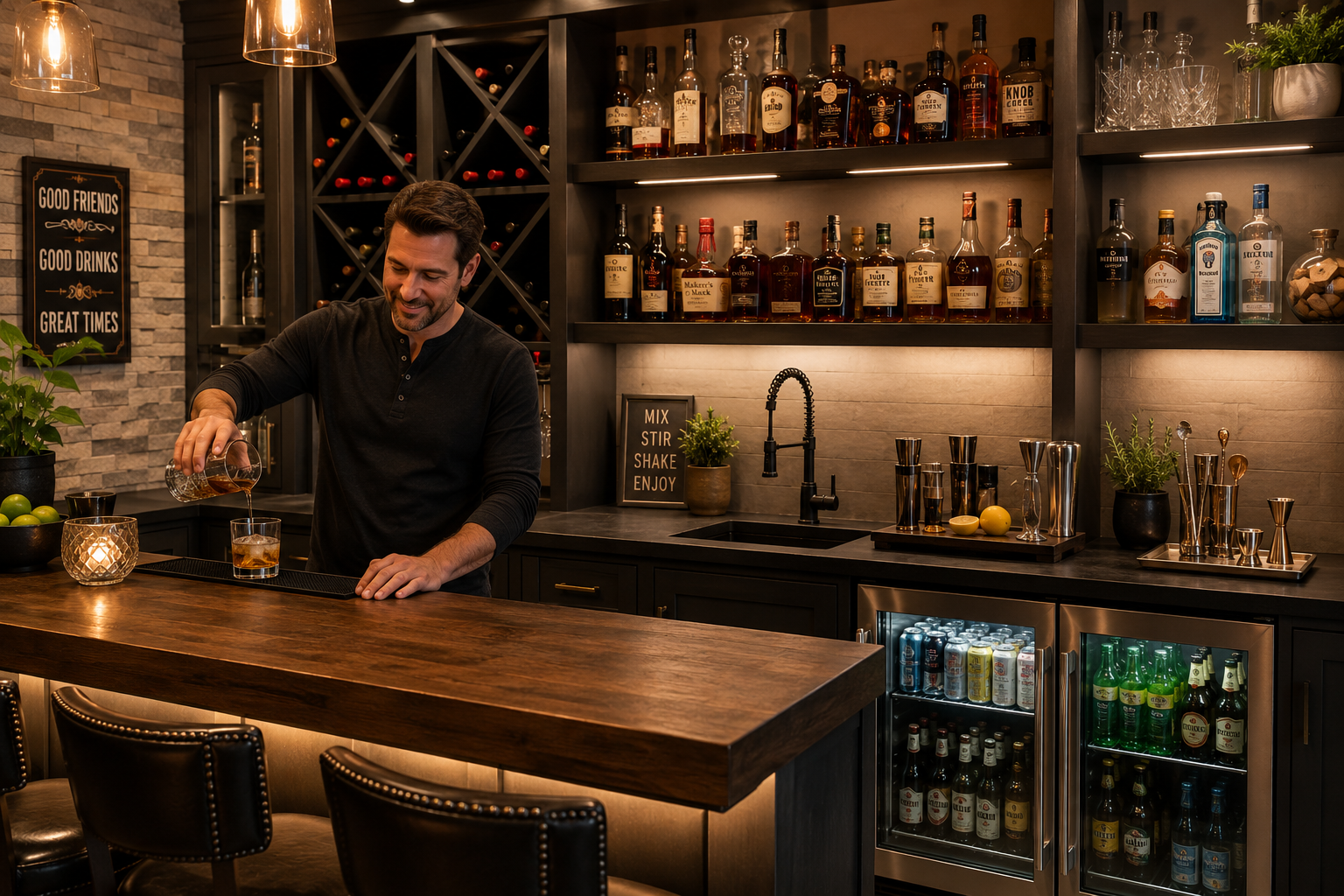
Beyond the structural integrity and aesthetic appeal, the true success of a custom home bar lies in its functional features and durable finishes, making it a joy to use for both the host and guests.
Integrating Practical Features
Thoughtful feature integration transforms a basic structure into a high-performance entertaining hub.
- Refrigeration:
- Beverage Cooler: Dedicated under-counter units maintain optimal temperatures for beer, wine, and mixers. Look for models with adjustable shelving and quiet operation.
- Ice Maker: A built-in ice maker is a game-changer for frequent entertainers, eliminating trips to the kitchen or store.
- Sink & Plumbing:
- Wet Bar Sink: Essential for washing glassware, rinsing shakers, and disposing of liquid waste. Choose a compact, stainless steel or composite sink.
- Faucet: A high-arch or pull-down faucet makes cleaning easier. Ensure you have hot and cold water lines.
- Storage Solutions:
- Bottle Storage:
- Wine Racks: Integrated racks can store wine bottles horizontally, preserving corks.
- Liquor Shelving: Open shelving or glass-front cabinets for displaying premium spirits. Consider adjustable shelves for varying bottle heights.
- Pull-out Cabinets: Narrow pull-out cabinets can store tall bottles efficiently.
- Glassware Storage:
- Stemware Racks: Inverted racks keep wine and cocktail glasses dust-free.
- Open Shelving: For everyday tumblers and rocks glasses.
- Bar Tools & Accessories: Shallow drawers with custom dividers or DIY Modular Desk Organizers: Custom Solutions for a Clutter-Free Woodworking Workspace can keep shakers, jiggers, and strainers organized.
- Bottle Storage:
- Lighting:
- Task Lighting: Under-cabinet lights illuminate the workspace.
- Accent Lighting: LED strips along shelves or toe kicks create ambiance.
- Pendant Lights: Above the bar top add a stylish focal point and direct light onto the serving area.
- Power Outlets: Strategically placed outlets are crucial for blenders, phone chargers, and other small appliances. Consider outlets with integrated USB ports.
Choosing Durable and Attractive Finishes
The finishes you choose directly impact the bar’s aesthetic appeal, durability, and ease of maintenance.
- Countertops:
- Quartz: Highly durable, non-porous, stain-resistant, and available in a vast array of colors and patterns.
- Granite: Natural stone, very durable, heat-resistant, but requires periodic sealing.
- Solid Wood: Offers warmth and character but requires careful sealing and maintenance against moisture.
- Concrete: Industrial look, very durable, but heavy and can be porous if not properly sealed.
- Wood Finishes:
- Polyurethane: A highly durable, water-resistant finish available in various sheens. It’s excellent for bar tops and other high-traffic surfaces. Consider Sprayable Water-Based Polyurethane: A Step-by-Step Guide for a smooth application.
- Epoxy Resin: Provides an extremely hard, waterproof, and high-gloss surface, ideal for protecting bar tops from spills and heavy use.
- Oil Finishes: Penetrate the wood, offering a natural look and feel, but provide less protection against moisture than polyurethane or epoxy. Regular reapplication is needed.
- Hardware:
- Knobs & Pulls: Choose hardware that complements your bar’s style and stands up to frequent use. Stainless steel, brass, and matte black are popular choices.
- Hinges: Soft-close hinges are a premium touch, preventing cabinet doors from slamming.
Final Touches for an Inviting Atmosphere
- Backsplash: A tiled or panelled backsplash protects the wall from splashes and adds a decorative element.
- Seating: Comfortable bar stools with appropriate height are essential for guest comfort.
- Decor: Personalize your bar with artwork, plants, or unique bar signs. Don’t forget Engraved Wooden Coasters with Custom Designs: Laser and Hand Carving Techniques for Profitable Sales for protecting surfaces.
A well-designed and executed custom home bar transforms entertaining, making hosting effortless and enjoyable for years to come.
Conclusion
Building a custom home bar is a rewarding project that significantly enhances your home’s entertaining capabilities and adds a unique, personalized touch. From the initial conceptualization of its design and style to the meticulous execution of strong joinery and the integration of essential features, every step contributes to a highly functional and aesthetically pleasing outcome. By carefully planning your layout, selecting appropriate joinery techniques for durability, and thoughtfully incorporating modern amenities like refrigeration and specialized storage, you can create a bar that not only meets your needs but becomes a true centerpiece for social gatherings in 2026 and beyond.
Start by sketching out your ideas, considering how the bar will flow with your existing space, and researching the best materials for your desired look and budget. Don’t underestimate the importance of solid construction; robust joinery is the backbone of any long-lasting custom piece. Finally, pay close attention to the details – the right lighting, convenient power outlets, and a durable, attractive finish will elevate your home bar from good to truly exceptional. Embark on this project with vision and precision, and you’ll soon be toasting to your craftsmanship with friends and family.