
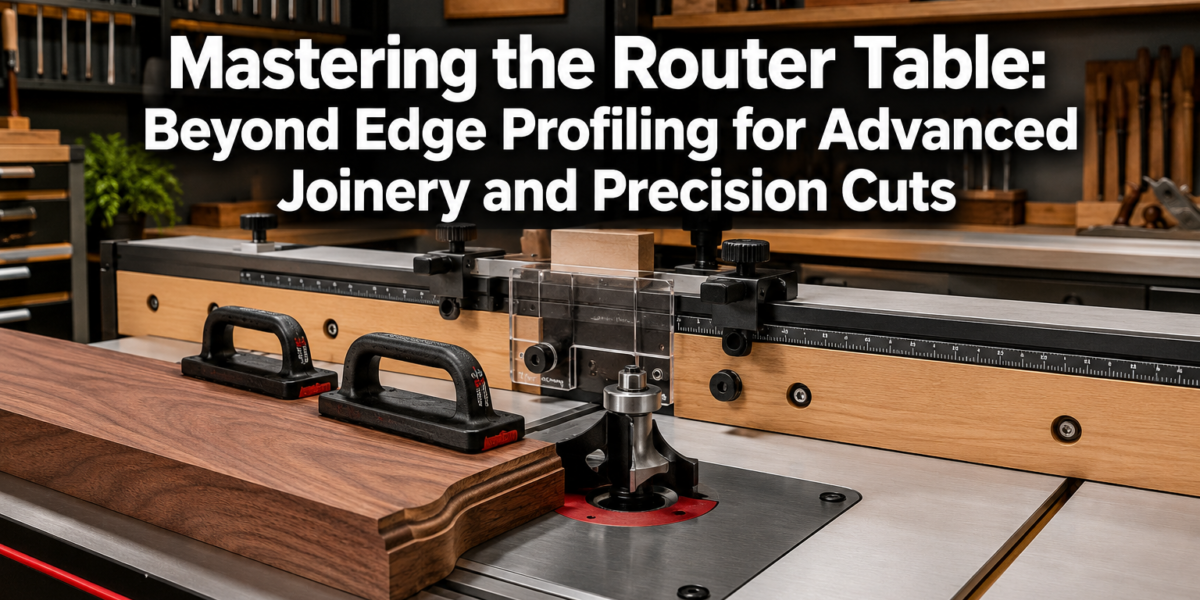
The average woodworker, after mastering basic edge profiles, often encounters a plateau, unaware that their router table is capable of far more than decorative edges. This powerful tool, often relegated to simple roundovers and chamfers, is in fact a cornerstone for advanced joinery, intricate moldings, and critically, precision cuts that elevate projects from good to exceptional. The true potential of a router table lies in its ability to transform raw timber into furniture-grade components with repeatable accuracy, making it indispensable for any serious woodworker aiming for “Mastering the Router Table: Beyond Edge Profiling for Advanced Joinery and Precision Cuts.”
Key Takeaways
- Router tables excel at creating strong, precise joinery like mortise and tenon, dadoes, and rabbets.
- Specialized jigs and fixtures are essential for safety, accuracy, and repeatable results in advanced router table operations.
- Understanding router bit types, feed rates, and climb cutting vs. conventional routing is crucial for achieving clean, tear-out-free cuts.
- Dust collection, proper setup, and regular maintenance are vital for efficient and safe router table use.
- Practice and thoughtful planning are key to unlocking the full potential of your router table for complex projects.
Unlocking Advanced Joinery with Your Router Table
While handheld routers are versatile, the router table provides a stable, controlled environment essential for executing complex joinery with high precision. By fixing the router upside down, the workpiece moves across the bit, offering greater control, particularly with smaller pieces or when routing against grain. This stability is the key to achieving tight-fitting joints and consistent results across multiple components.
Mortise and Tenon Joints
The router table is exceptional for cutting both mortises and tenons, offering a faster and more accurate method than traditional hand tools for many applications.
Cutting Mortises: For through mortises or blind mortises, a straight bit is typically used. Jigs play a critical role here. A simple mortising jig clamps the workpiece vertically, allowing the router bit to plunge accurately into the edge or face of the stock. For blind mortises, precise depth stops are essential. For larger mortises, multiple passes are usually required, gradually increasing the depth of cut to prevent overloading the router and burning the wood.
Cutting Tenons: Creating accurate tenons is arguably where the router table shines brightest. A tenoning jig holds the workpiece vertically against the fence, allowing you to rout the shoulders and cheeks of the tenon. This method ensures perfectly square shoulders and consistent thickness. For furniture like chairs or tables, where repeatable, strong joints are paramount, this precision is invaluable. You can explore how such joinery contributes to sturdy structures in projects like building picnic tables for outdoor gatherings.
Dadoes and Rabbets
These fundamental joints are used extensively in cabinet making, shelving, and case construction. The router table offers superior control for these operations compared to a handheld router, especially for long, consistent cuts.
- Dadoes: A dado is a trench cut across the grain of a board, designed to receive another piece of wood. Using a straight bit, the router table fence acts as a guide, ensuring perfectly straight and consistently deep dadoes. For projects like building bookcases or storage units, this consistency is crucial for structural integrity and aesthetics.
- Rabbets: A rabbet is a stepped groove cut along the edge or end of a board, often used for back panels, drawer bottoms, or for creating an overlap joint. A straight bit or a rabbeting bit with a bearing can be used. The fence is adjusted to control the width of the rabbet, and the bit height controls its depth.
By mastering these basic yet critical joints on the router table, woodworkers can confidently tackle more complex assemblies and improve the structural integrity of their projects.
Advanced Router Table Techniques for Precision Cuts
“Mastering the Router Table: Beyond Edge Profiling for Advanced Joinery and Precision Cuts” also involves embracing techniques that push the boundaries of accuracy and repeatability. These methods often rely on specialized jigs, careful setup, and a deep understanding of router bit mechanics.
Box Joints and Dovetails
While often associated with specialized jigs or dedicated machines, the router table can be surprisingly effective for cutting both box joints and dovetails with the right setup.
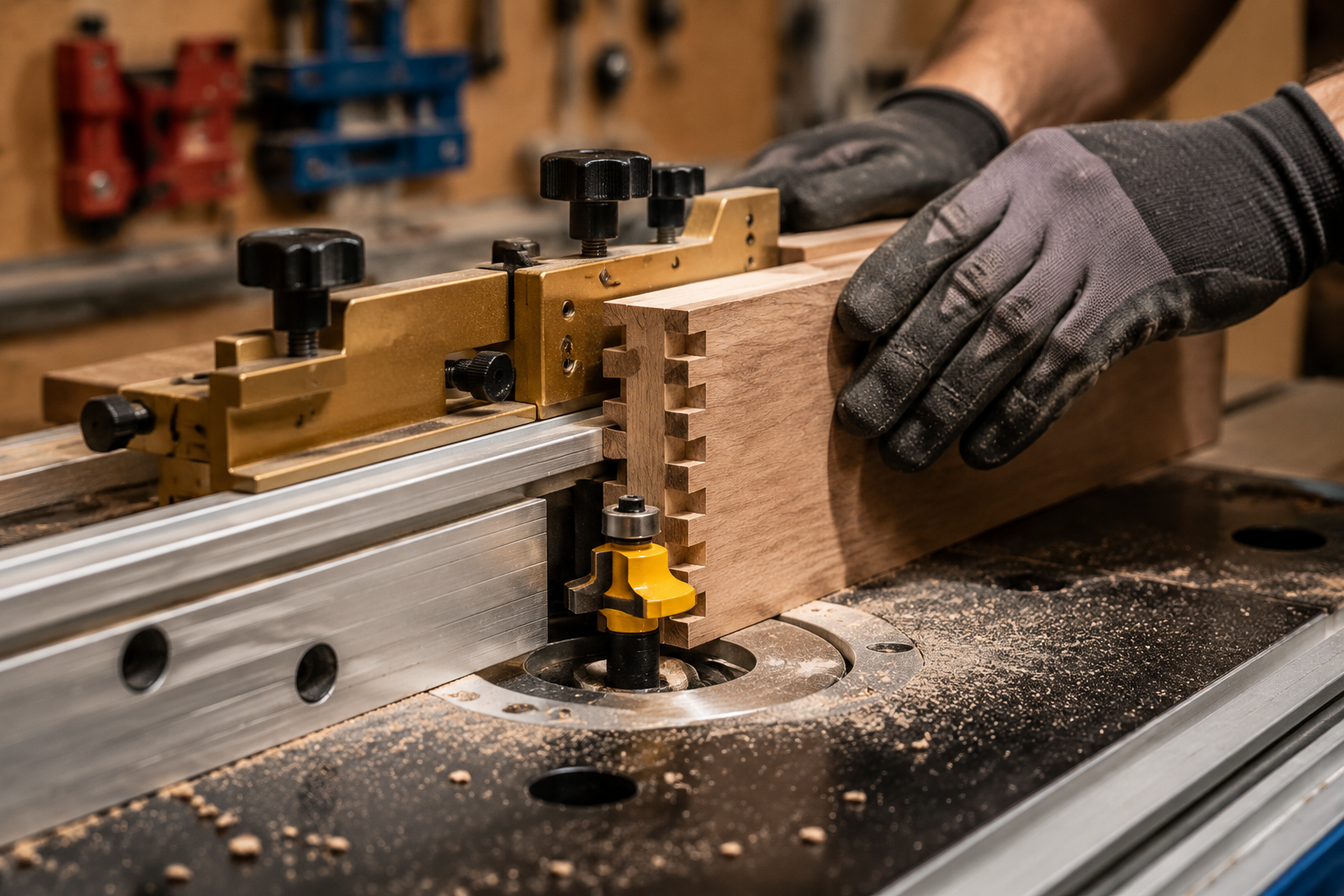
- Box Joints: These strong, decorative joints are ideal for drawer boxes and small chests. A simple box joint jig, often shop-made, slides along the fence and guides the workpiece over a straight bit. By alternating the workpiece and a spacer, perfectly interlocking fingers can be created. For a deeper dive into this specific technique, consider learning about the best router bit for box joints.
- Dovetails: Through dovetails and half-blind dovetails can be cut on a router table using specialized dovetail bits and dedicated jigs that control both the pin and tail cuts. While more complex than edge profiling, the consistency offered by the table setup can yield beautiful, repeatable results, essential for items like the drawers found in ultimate DIY end tables.
Panel Raising and Cabinet Door Construction
Creating custom cabinet doors is a hallmark of advanced woodworking, and the router table is central to this process.
| Operation | Router Bit Type | Purpose |
|---|---|---|
| Stile & Rail | Matched Stile & Rail | Creates the interlocking cope and stick profiles |
| Panel Raising | Panel Raising Bit | Shapes the decorative profile on the panel edges |
| Edge Profiling | Chamfer, Roundover | Finishes door edges (optional) |
Stile and rail bits, used in sets, create the frame components that lock together. Panel raising bits, often large diameter, create the distinctive profile on the central panel. Safety is paramount with these larger bits, requiring careful setup, multiple shallow passes, and a robust fence.
Fluting and Reeding
For decorative accents on furniture legs, columns, or moldings, fluting and reeding bits allow for precise, consistent patterns. A specialized jig that accurately indexes the workpiece for each pass is typically required, ensuring even spacing and depth. This technique adds a touch of sophistication to projects and showcases advanced router table capabilities.
Essential Jigs, Safety, and Troubleshooting
Truly “Mastering the Router Table: Beyond Edge Profiling for Advanced Joinery and Precision Cuts” extends beyond just techniques to encompass the crucial aspects of jigs, safety, and problem-solving. These elements ensure consistent quality, protect the user, and maintain the longevity of the tools.
Building and Using Essential Jigs
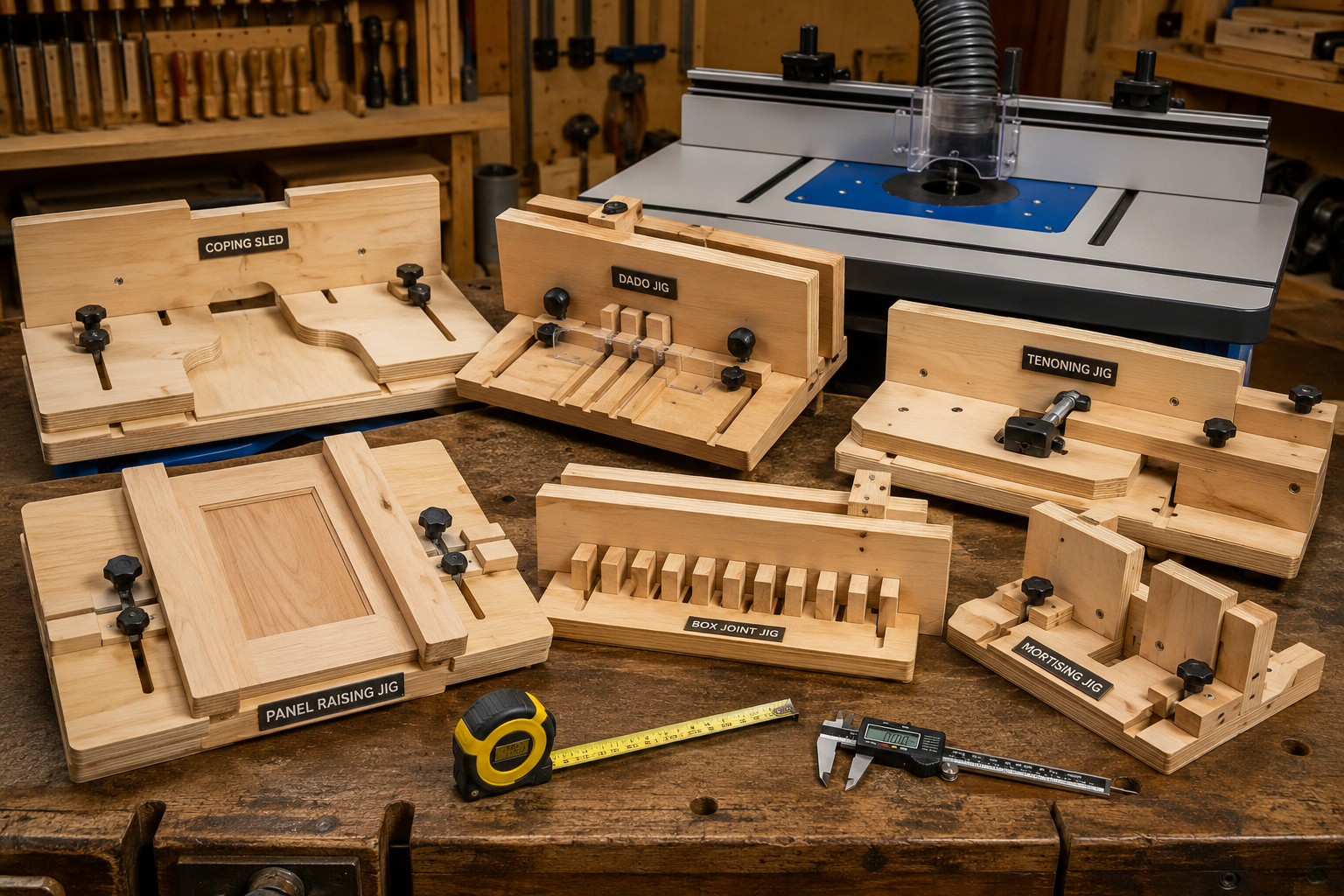
Jigs are the unsung heroes of precision routing. They provide support, guide the workpiece, and ensure repeatable accuracy. While many commercial jigs are available, shop-made jigs are often cost-effective and tailored to specific needs.
- Featherboards: Indispensable for holding workpieces firmly against the fence and table, preventing kickback and ensuring consistent depth of cut. They should be used on both the table surface and the fence for maximum stability.
- Push Blocks and Sticks: Always use push blocks or sticks to keep hands clear of the spinning bit, especially with smaller workpieces.
- Coping Sleds: Used for cutting the cope (end grain) profile on stile and rail joinery, providing excellent control and preventing tear-out.
- Tenoning Jigs: As mentioned, these jigs hold stock vertically for precise tenon cuts.
- Circle-Cutting Jigs: Allow for routing perfect circles or arcs, useful for tabletops or decorative elements.
For those interested in enhancing accuracy and safety across various woodworking tasks, a broader understanding of essential woodworking jigs is highly recommended.
Safety Protocols for Advanced Router Table Use
The router table, with its high-speed spinning bits, demands strict adherence to safety.
- Hearing Protection and Eye Protection: Always wear appropriate PPE.
- Dust Collection: A good dust collection system is vital not only for a clean shop but also for visibility and preventing respiratory issues. Wood dust can also be a fire hazard.
- Proper Bit Installation: Ensure bits are clean, sharp, and properly inserted into the collet according to manufacturer instructions.
- Test Cuts: Always perform test cuts on scrap material to confirm settings, depth, and cut quality before routing your final workpiece.
- Feed Rate and Direction: Rout against the rotation of the bit (conventional cut) for most operations. For climb cutting (routing with the bit’s rotation), use extreme caution and only with appropriate jigs or setups that prevent aggressive grabbing. Climb cuts can sometimes yield a cleaner finish on difficult grain but are significantly more dangerous.
- Multiple Passes: Never try to achieve full depth in one pass, especially with large bits or hard woods. Take multiple shallow passes to reduce strain on the router, prevent burning, and improve cut quality.
Troubleshooting Common Router Table Issues
Even with careful setup, issues can arise. Knowing how to troubleshoot them will save time and material.
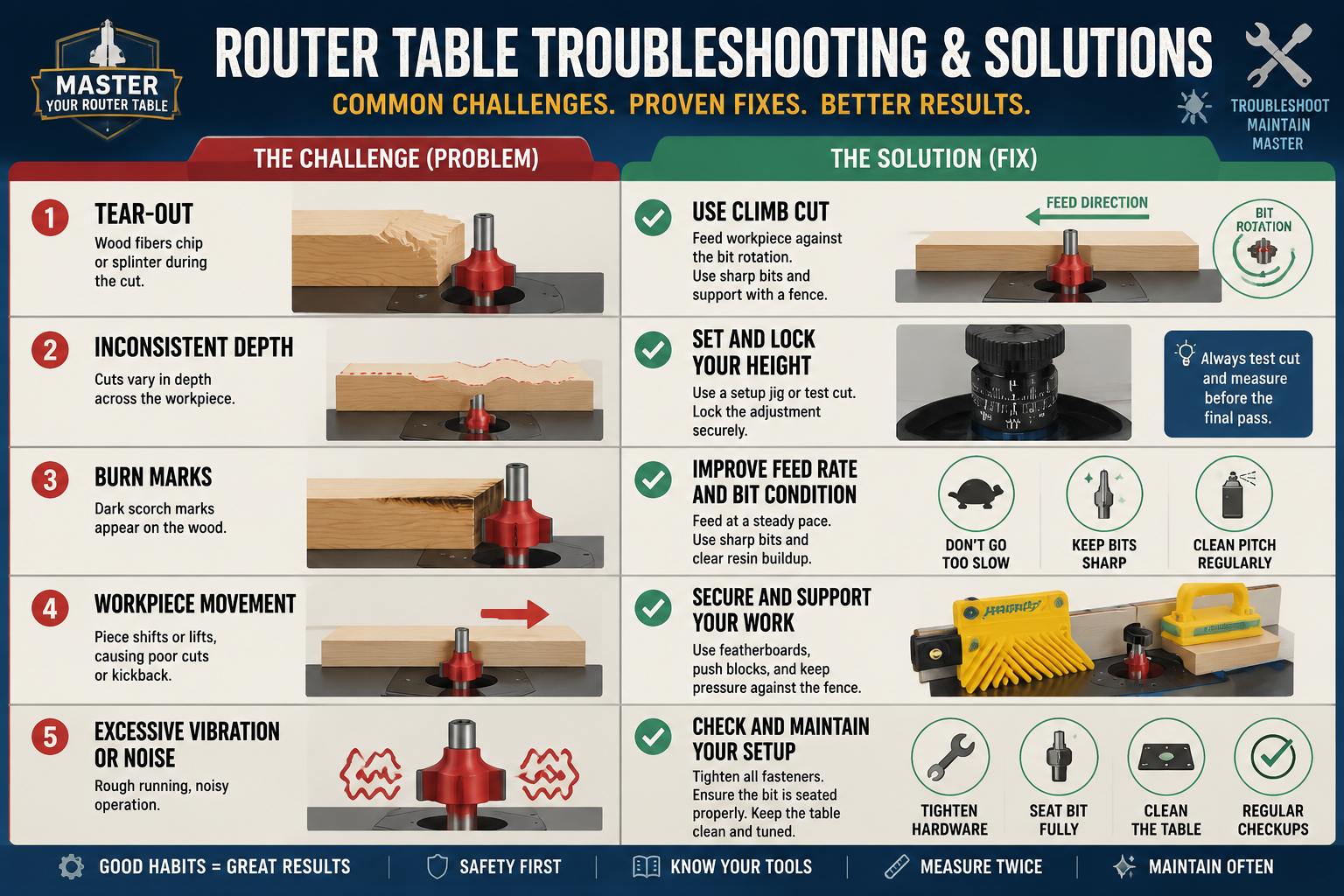
- Burning: Caused by a dull bit, too slow a feed rate, or taking too deep a cut. Solutions: Replace or sharpen bit, increase feed rate, take shallower passes.
- Tear-Out: Often occurs on the exit side of the cut or with splinter-prone wood. Solutions: Use a sharp bit, use a backer board, utilize featherboards to hold the workpiece firmly, adjust feed rate, consider a climb cut for the very last pass (with caution).
- Inconsistent Depth/Width: Usually indicates movement in the fence, bit, or workpiece. Solutions: Ensure fence is clamped securely, check bit for slippage, use featherboards or push blocks to maintain constant pressure.
- Vibration/Noise: Can signal an unbalanced bit, a loose bit, or worn router bearings. Solutions: Check bit installation, inspect bit for damage, consider router maintenance or replacement.
Regular maintenance, including cleaning bits, checking fence alignment, and ensuring the router lift operates smoothly, will prevent many of these problems before they start. Proper tool care ensures longevity and consistent performance, a tenet of true mastering the woodworking box lid.
Conclusion
The router table is far more than a tool for simple edge profiling; it is a versatile powerhouse capable of creating complex joinery, intricate moldings, and achieving precision cuts that define professional-grade woodworking. By understanding the capabilities of various router bits, employing essential jigs for safety and accuracy, and mastering advanced techniques like mortise and tenon, dadoes, rabbets, and panel raising, woodworkers can unlock a new level of craftsmanship. The commitment to safety, combined with diligent troubleshooting and maintenance, will empower you to tackle ambitious projects with confidence and consistently produce exceptional results.
Ready to transform your woodworking? Start by building or acquiring the right jigs for the joinery you want to master, invest in quality router bits, and dedicate time to practice on scrap material. With patience and precision, your router table will become one of the most valuable and rewarding tools in your workshop.
SEO Meta Title: Mastering Router Table: Advanced Joinery & Precision Cuts
SEO Meta Description: Unlock advanced joinery, dadoes, rabbets, and precision cuts with your router table in 2026. Learn jigs, safety, and troubleshooting for expert woodworking.