

A staggering 70% of homeowners admit their garage is the most disorganized space in their house (Garage Living, 2023). This prevalent issue often stems from a lack of effective, tailored storage, leading to wasted space, lost tools, and daily frustration. Fortunately, reclaiming this valuable real estate doesn’t require expensive professional solutions. With a commitment to DIY, robust materials, and a bit of woodworking know-how, anyone can construct custom DIY Wooden Storage Solutions for the Garage: Shelves, Cabinets, and Organization Systems that perfectly fit their needs and space. Building your own not only saves money but also ensures a personalized, durable, and highly functional organization system designed to last.
Key Takeaways
- Customization is Key: DIY wooden storage allows for precise measurements and designs, maximizing every inch of garage space, unlike off-the-shelf options.
- Cost-Effective and Durable: Wood is a versatile and relatively inexpensive material for building long-lasting shelves, cabinets, and workbenches, offering superior durability compared to many plastic alternatives.
- Enhanced Functionality: From heavy-duty shelving for tools to specialized cabinets for hazardous materials, wooden solutions can be designed for specific storage needs, improving accessibility and safety.
- Skill Development: Undertaking these projects provides valuable woodworking experience, enhancing practical skills and confidence for future home improvement tasks.
- Increased Home Value: A well-organized, functional garage can be a significant selling point, adding perceived value to your home in 2026.
Planning Your DIY Wooden Garage Storage System
Effective garage organization begins long before the first cut of wood. A thorough planning phase is crucial to ensure your DIY Wooden Storage Solutions for the Garage: Shelves, Cabinets, and Organization Systems meet your specific needs, maximize space, and remain within your budget.
Assessing Your Current Space and Needs
Start by evaluating your garage as it stands. What items are currently stored there? Categorize them: tools, sports equipment, holiday decorations, automotive supplies, gardening equipment, hazardous materials, etc. Take inventory of their sizes, weights, and frequency of use. Items used daily or weekly should be easily accessible, while seasonal items can be stored higher or in less prominent locations.
Consider the dimensions of your garage: wall lengths, ceiling height, and any obstructions like windows, doors, or electrical outlets. Sketching a simple floor plan can be incredibly helpful. Think about how vehicles are parked and what pathways need to remain clear.
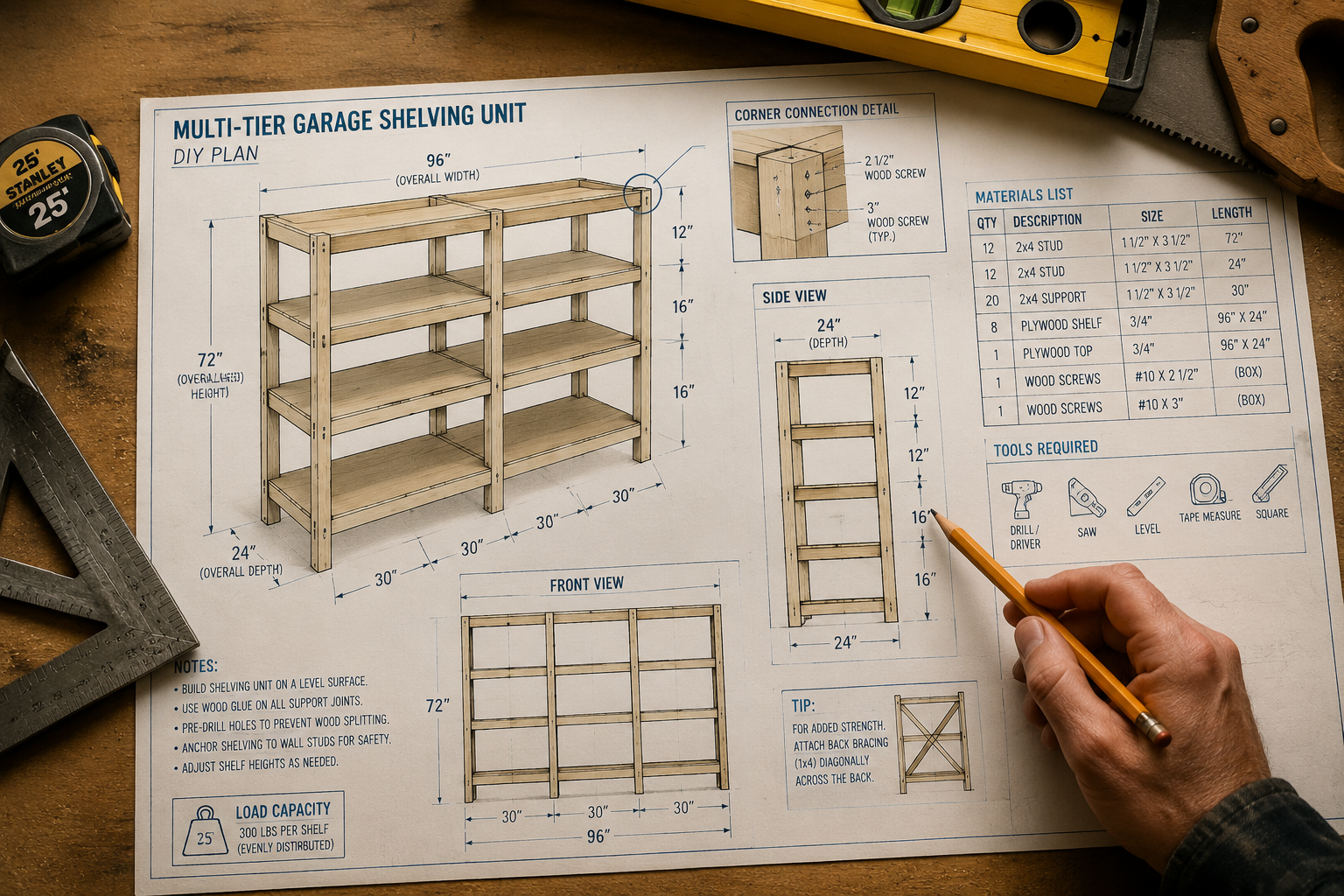
A common mistake is underestimating storage needs. Err on the side of slightly more storage than you think you need, as collections tend to grow over time. Ask yourself:
- What frustrates me most about my current garage organization?
- What types of items do I have in abundance?
- Are there items that require special storage (e.g., locking cabinets for chemicals, breathable storage for garden tools)?
Designing Shelves, Cabinets, and Workbenches
Once you have a clear understanding of your needs, you can begin designing your wooden storage solutions.
Shelving Units: Shelves are the backbone of garage storage. For heavy items like paint cans, power tools, or automotive parts, sturdy, deep shelves are essential. Consider building freestanding units or wall-mounted shelves.
- Dimensions: Aim for shelf depths of 12-24 inches, depending on what you’re storing. Height between shelves should accommodate your tallest items, but adjustable shelves offer maximum flexibility.
- Materials: Plywood (3/4-inch for shelves, 1/2-inch for backs), 2x4s, or 2x6s are excellent choices for structural integrity. For a simpler project, explore our Beginner’s Guide to Building a Simple Wooden Bookshelf for foundational techniques.
- Load Bearing: Ensure adequate support. Vertical supports spaced no more than 32-48 inches apart are generally recommended for heavy loads.
Cabinets: Cabinets provide enclosed storage, protecting items from dust and pests, and creating a cleaner look. They are ideal for smaller tools, chemicals, or items you want out of sight.
- Types: Base cabinets (with countertops for a workbench), wall cabinets, or tall utility cabinets are common.
- Construction: Plywood is usually the go-to material for cabinet carcasses. Doors can be made from plywood, MDF, or solid wood, depending on your desired aesthetic and skill level. For a deeper dive into cabinet components, refer to our article on Cabinet Face Frame Overhang Tips.
- Security: Add locks to cabinets storing hazardous materials or valuable tools.
Workbenches: A dedicated workbench is a game-changer for any garage.
- Height: Design the workbench height to be comfortable for you to work at while standing or using a stool. Standard heights range from 34-38 inches.
- Storage Integration: Incorporate drawers or shelves beneath the workbench for tool storage, maximizing its functionality.
- Surface: A thick plywood or solid wood top is durable. Consider adding a replaceable hardboard or MDF top for messy projects. Our guide on the ultimate guide to wooden work tables offers more insights.
Essential Tools and Materials
For most DIY wooden garage storage projects, you’ll need a basic set of woodworking tools.
Common Tools:
- Tape measure, pencil, straightedge
- Circular saw or miter saw (for precise cuts)
- Drill/driver (cordless is highly recommended)
- Level and square
- Clamps
- Safety glasses and hearing protection
Optional but Recommended Tools:
- Table saw (for ripping sheet goods)
- Pocket hole jig (for strong, concealed joints)
- Orbital sander
- Router (for edge profiling or dadoes)
Materials:
- Lumber: Plywood (CDX grade for utility, sanded plywood for visible parts), dimensional lumber (2x4s, 2x6s)
- Fasteners: Wood screws (various lengths), nails, bolts (for heavy-duty shelving)
- Adhesives: Wood glue
- Finishes: Paint, stain, polyurethane (for durability and moisture resistance)
- Hardware: Hinges, drawer slides, cabinet pulls, casters (for mobile units)
Always prioritize safety. Wear appropriate personal protective equipment (PPE) and understand how to safely operate all power tools before starting your projects.
Building Your DIY Wooden Storage Solutions
With your plans in hand and materials ready, it’s time to bring your DIY Wooden Storage Solutions for the Garage: Shelves, Cabinets, and Organization Systems to life. This section will walk you through general construction techniques and considerations for common garage storage projects.
Constructing Sturdy Shelving Units
Shelving is often the simplest and most impactful storage solution to build first.
- Cut Your Lumber: Following your design, cut all vertical supports, horizontal shelf supports, and shelf panels. Accuracy in cutting is paramount for stable and square units. A miter saw is excellent for precise crosscuts, while a table saw handles ripping plywood.
- Assemble Frames: For freestanding units, build the side frames first. Use wood glue and screws at each joint for maximum strength. If building wall-mounted shelving, locate wall studs and mark their positions.
- Attach Shelves:
- Adjustable Shelves: Use shelf pin jigs and pins for adjustable shelving. This allows you to reconfigure shelf heights as your storage needs change.
- Fixed Shelves: Attach fixed shelves directly to vertical supports using screws. For heavy loads, adding a small cleat (a strip of wood) beneath each shelf and screwing into it provides extra support.
- Backing: For additional rigidity and to prevent items from falling off the back, consider adding a thin plywood or hardboard backing to your shelving unit.
- Secure to Wall (if applicable): Even freestanding units benefit from being secured to the wall with L-brackets to prevent tipping, especially in homes with children. For wall-mounted shelves, screw securely into wall studs.
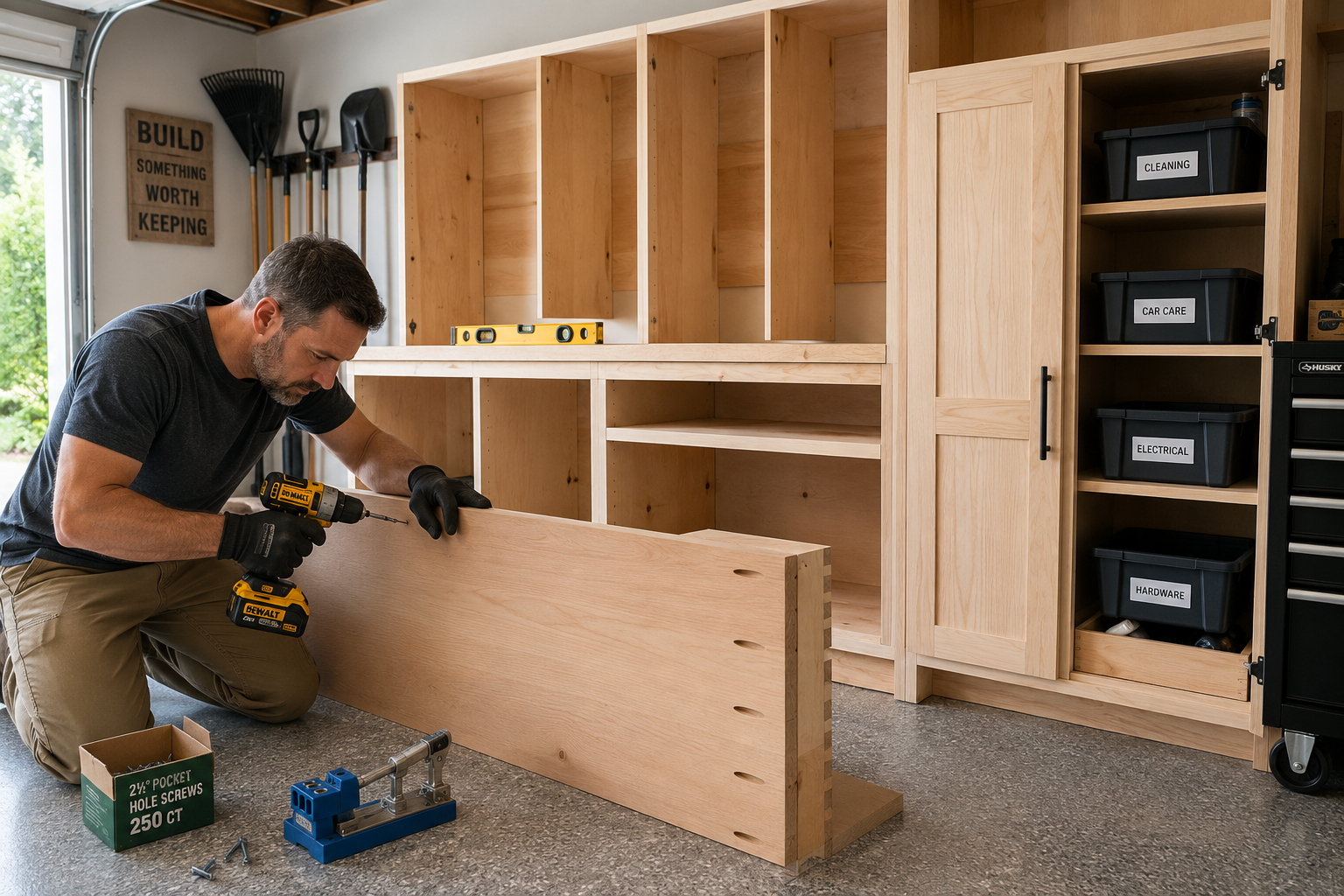
Pro Tip: For maximum strength, use a combination of wood glue and screws. Apply glue to mating surfaces before driving screws, then wipe away any squeeze-out with a damp cloth.
Crafting Custom Cabinets and Organization Systems
Cabinets offer enclosed, dust-free storage and a more finished aesthetic.
- Build Carcasses: Start by constructing the cabinet boxes (carcasses) from plywood. Common joinery methods include pocket holes, dadoes, or butt joints reinforced with corner blocks. For stronger, more traditional joinery, explore Mastering Dovetail Joints with Hand Tools.
- Install Shelves and Drawers:
- Shelves: Install fixed or adjustable shelves within the cabinet carcasses.
- Drawers: Building drawers requires more precision. Utilize drawer slides for smooth operation. You can find detailed guides on drawer construction online, often using pocket holes or simple rabbet joints.
- Add Face Frames (Optional but Recommended): A face frame (strips of wood attached to the front edges of the cabinet carcass) adds rigidity and provides a clean, finished look for attaching doors and drawers.
- Install Doors: Attach cabinet doors using hinges. Ensure proper alignment for a professional appearance.
- Finishing Touches: Install drawer pulls and cabinet handles.
Specialized Organization Systems:
- Pegboards: Mount a plywood or hardboard pegboard to an open section of your garage wall or inside a cabinet door. Paint outlines around tools for quick identification and return.
- Tool Racks: Create custom racks for long-handled tools (shovels, rakes), garden hoses, or extension cords using scrap wood.
- Bin Storage: Design cubbies or open shelves to perfectly fit plastic storage bins, keeping small items contained and accessible. For ideas on smaller-scale organization, consider tips from Building Modular Wood Storage Systems for Small Workshops.
Finishing and Maintenance for Durability
The final steps involve preparing your wooden storage for the harsh garage environment and ensuring its longevity.
- Sanding: Sand all surfaces smooth, starting with a coarser grit (e.g., 80-100 grit) and progressing to finer grits (e.g., 150-220 grit). This ensures a professional finish and helps the chosen sealant adhere better.
- Cleaning: Wipe down all surfaces with a tack cloth or damp rag to remove dust.
- Applying Finish:
- Paint: A good quality latex or oil-based paint offers protection and a clean look. Use a primer first, especially on raw plywood or MDF.
- Stain: If you prefer the look of natural wood, apply a wood stain followed by a protective topcoat.
- Polyurethane/Varnish: A clear coat of polyurethane or varnish is highly recommended for garage storage. It provides excellent protection against moisture, chemicals, and general wear and tear. Apply multiple thin coats, sanding lightly between coats for the best results. Our guide on Dark Wood Finishing Techniques offers valuable insights for durable finishes.
- Maintenance: Periodically inspect your wooden storage for any loose screws, damaged wood, or wear on the finish. Touch up paint or reapply protective coats as needed, typically every few years, to ensure your DIY Wooden Storage Solutions for the Garage: Shelves, Cabinets, and Organization Systems remain functional and attractive for years to come.
Advanced Tips and Considerations for Garage Storage
Taking your DIY Wooden Storage Solutions for the Garage: Shelves, Cabinets, and Organization Systems to the next level involves thoughtful considerations for aesthetics, safety, and maximizing functionality.
Optimizing Space with Clever Designs
Garages often have challenging spaces that can be converted into useful storage with creative design.
- Vertical Space: Don’t neglect the vertical space. Taller shelving units, up to the ceiling, can store less frequently used items.
- Ceiling Storage: Overhead storage racks, either suspended from the ceiling or built as platforms, are excellent for seasonal items like holiday decorations, camping gear, or canoes. Ensure these are securely anchored into ceiling joists.
- Corner Units: Corners are often underutilized. Custom-built corner shelving or angled cabinets can make these spaces highly efficient.
- Mobile Solutions: Adding casters to workbenches or smaller cabinet units allows for flexible rearrangement of your garage layout, which is particularly useful in multi-purpose spaces.
- Pull-Outs and Specialty Storage: Consider pull-out tool boards, sliding shelves for easy access to deep storage, or custom-sized compartments for specific items like large power tools or sports equipment.
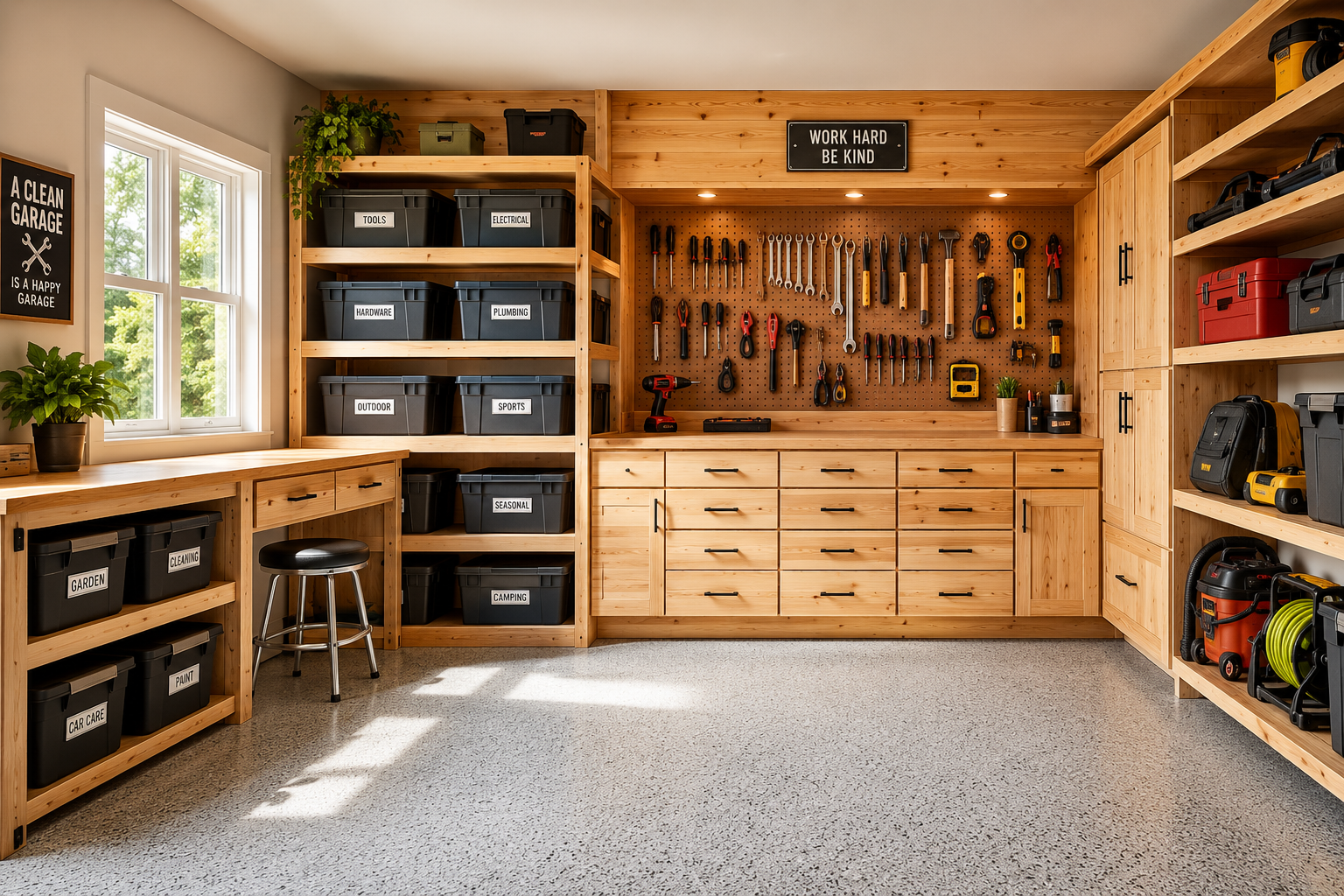
“The true measure of a well-designed garage isn’t just about how much it can hold, but how easily you can find what you need.”
Material Selection and Fasteners for Durability and Safety
Choosing the right materials and fasteners is critical for the safety and longevity of your garage storage.
- Wood Selection:
- Plywood: A workhorse for garage storage. CDX plywood (construction grade with exterior glue) is good for structural components where appearance isn’t critical. Sanded plywood (ACX or BCX) offers a smoother surface for visible parts or cabinets.
- Dimensional Lumber: 2x4s and 2x6s are excellent for frames and heavy-duty shelving supports due to their strength.
- MDF (Medium Density Fiberboard): Can be used for cabinet doors or shelving where extreme moisture isn’t a concern and a smooth painted finish is desired. It’s not as strong as plywood for load-bearing applications.
- Fasteners:
- Wood Screws: Generally superior to nails for strength and ease of disassembly. Use appropriate lengths that penetrate well into the receiving piece without poking through.
- Pocket Hole Screws: When using a pocket hole jig, dedicated pocket hole screws create very strong, hidden joints.
- Lag Bolts/Anchors: For anchoring heavy shelving or cabinets to wall studs or masonry, lag bolts or heavy-duty concrete anchors are essential. Always use washers.
- Adhesives: High-quality wood glue should be used in conjunction with screws for almost all joints. It significantly increases the strength and rigidity of the finished piece.
- Protective Coatings: As mentioned, paint, stain, or polyurethane protect wood from moisture, chemicals, and physical damage, extending the life of your storage units. Ensure adequate ventilation when applying finishes.
Integrating Safety Features and Future-Proofing
Safety in the garage extends beyond proper construction.
- Stability: Ensure all units are stable and cannot tip over. Anchor tall shelving and cabinets to wall studs.
- Child Safety: If children are present, consider lockable cabinets for chemicals, sharp tools, or hazardous items. Rounded edges on shelves can also prevent injuries.
- Ventilation: If storing gasoline or other volatile chemicals, ensure adequate ventilation in the garage. Wooden cabinets can help contain fumes to some extent, but proper airflow is still vital.
- Lighting: Good lighting improves safety and usability. Position your storage so it doesn’t block existing light sources.
- Future Expansion: When designing, think about potential future needs. Could a shelving unit be easily modified into a cabinet? Can you add more shelves later? Building modular components, as detailed in our guide on Building Modular Wood Storage Systems for Small Workshops: Maximizing, can make future adjustments much simpler.
- Electrical Outlets: Plan your storage around existing electrical outlets, ensuring they remain accessible. If building a workbench, consider installing a power strip or additional outlets directly on the bench for convenience and safety.
- Fire Safety: Keep a fire extinguisher readily accessible in the garage, especially near areas where flammable liquids are stored or where power tools are used frequently.
By incorporating these advanced tips and considerations, your DIY Wooden Storage Solutions for the Garage: Shelves, Cabinets, and Organization Systems will not only be highly functional and durable but also safe and adaptable for years to come.
Conclusion
Transforming a cluttered garage into an organized, efficient workspace is a rewarding endeavor, and DIY wooden storage solutions offer the perfect path to achieve it. From the initial planning stages of assessing your needs and designing custom units, through the hands-on construction of sturdy shelves and practical cabinets, to the final protective finishes, each step contributes to reclaiming valuable space and enhancing your home’s functionality. In 2026, the value of a well-organized garage cannot be overstated, contributing to both daily convenience and potential property value.
Embracing this DIY journey not only results in tailor-made storage that perfectly fits your specific tools, equipment, and lifestyle but also sharpens your woodworking skills. Remember to prioritize safety, choose appropriate materials, and dedicate time to proper planning and finishing. By building your own DIY Wooden Storage Solutions for the Garage: Shelves, Cabinets, and Organization Systems, you create a durable, attractive, and highly personalized space that will serve you efficiently for years to come. Start your garage transformation today, one piece of wood at a time.