

The global kitchenware market is projected to exceed $25 billion in 2026, a significant portion of which is dedicated to items that blend functionality with aesthetic appeal. Within this expansive market, Wooden Kitchen Products That Sell: From Cutting Boards to Utensil Sets—Design and Production at Scale represents a burgeoning niche driven by consumer demand for sustainable, durable, and visually appealing household goods. This article delves into the critical aspects of creating high-demand wooden kitchen items, from innovative design trends and careful material selection to efficient production methodologies and targeted marketing strategies for both culinary enthusiasts and home décor aficionados.
Key Takeaways
- The wooden kitchenware market thrives on a blend of aesthetic design, material sustainability, and practical functionality.
- Selecting the right wood and applying food-safe finishes are paramount for consumer safety and product longevity.
- Scalable production methods, including automation and quality control, are essential for meeting market demand efficiently.
- Effective marketing leverages design aesthetics and highlights the natural, eco-friendly attributes of wooden products.
- Innovation in design, such as ergonomic features and modularity, creates distinct market advantages.
The Art and Science of Designing Wooden Kitchen Products That Sell: From Cutting Boards to Utensil Sets

Designing wooden kitchen products is a delicate balance between artistic vision and practical engineering. In 2026, consumers are increasingly seeking items that not only perform their function flawlessly but also contribute to the overall aesthetic and sustainability of their homes. This drives a need for thoughtful design, considering both form and function.
Identifying Market Trends and Consumer Desires
Current market research indicates a strong preference for natural, eco-friendly, and handcrafted-looking products. This trend extends beyond mere aesthetics to include a desire for durability and products with a story. Designers must therefore consider:
- Sustainability: Sourcing ethically harvested wood (FSC-certified) and using environmentally friendly production processes.
- Ergonomics: Products should be comfortable and easy to use, enhancing the user’s culinary experience.
- Versatility: Items that can serve multiple purposes, such as a cutting board that doubles as a serving platter.
- Aesthetics: Clean lines, natural finishes, and unique grain patterns are highly valued. Customization options, like engraving, also add significant appeal. For instance, Engraved Wooden Coasters with Custom Designs: Laser and Hand exemplifies how customization enhances perceived value.
Innovative Design Elements
Innovation in wooden kitchen product design can differentiate a brand in a crowded market. This includes:
- Modular and Stackable Designs: Utensil sets that neatly nest together or cutting boards with integrated storage solutions maximize kitchen space.
- Integrated Features: Examples include cutting boards with juice grooves, crumb trays, or even integrated measuring guides.
- Mixed Materials: Combining wood with brass, stainless steel, or ceramic elements can create a modern, luxurious feel. For example, Mastering Wooden Napkin Holders: Foldable Designs with Brass shows how mixed materials can elevate a simple item.
- Unique Forms: Moving beyond traditional rectangular shapes to explore organic curves, asymmetrical designs, or even abstract forms for serving pieces and fruit bowls. Understanding techniques like those covered in Ultimate Guide to Wood Lathe Turning: Pens, Bowls, and Advan can inspire innovative shapes.
Material Selection: Wood Species and Food Safety
The choice of wood is critical, affecting not only the product’s appearance and durability but also its food safety.
Table 1: Common Wood Species for Kitchen Products and Their Characteristics
| Wood Species | Characteristics | Best Use Cases |
|---|---|---|
| Maple | Hard, fine grain, light color, excellent durability | Cutting boards, rolling pins, spoons |
| Cherry | Medium-hard, beautiful reddish-brown hue, smooth grain | Utensil handles, decorative bowls, serving platters |
| Walnut | Hard, rich dark brown, attractive grain, premium feel | High-end cutting boards, serving trays, specialized utensils |
| Beech | Hard, uniform texture, light color, good shock resistance | Spoons, spatulas, pastry boards |
| Bamboo | Sustainable, lightweight, durable, naturally antimicrobial | Cutting boards (laminated), utensil sets, serving trays |
It is paramount that all wood used for food contact is non-toxic and free from harmful chemicals. Avoiding porous woods that can harbor bacteria is also important, particularly for items like cutting boards.
Food-Safe Finishes and Treatments
Once designed and shaped, wooden kitchen products require appropriate finishing. This is where food safety truly comes into play.
- Mineral Oil: A common, non-toxic, and inexpensive option that penetrates the wood, conditioning it and bringing out its natural luster. It requires regular reapplication.
- Beeswax/Carnauba Wax Blends: Often combined with mineral oil, these waxes provide an additional protective layer, making the surface more resistant to water and enhancing durability.
- Shellac: When made from food-grade denatured alcohol, shellac can be a safe, natural finish. It creates a durable, non-toxic barrier.
- Curing Oils (e.g., Tung Oil, Linseed Oil): Pure tung oil and polymerized linseed oil (not raw linseed oil, which can harbor bacteria) cure to a hard, water-resistant finish that is food-safe once fully cured. For an in-depth look at finishes, consider Danish Oil vs. Linseed: The Ultimate Wood Finishing Guide.
Avoid varnishes, lacquers, and polyurethane unless specifically labeled as food-safe. Even then, consider the long-term durability and potential for chipping, especially for items subjected to heavy use.
Production at Scale: From Workshop to Market with Wooden Kitchen Products That Sell
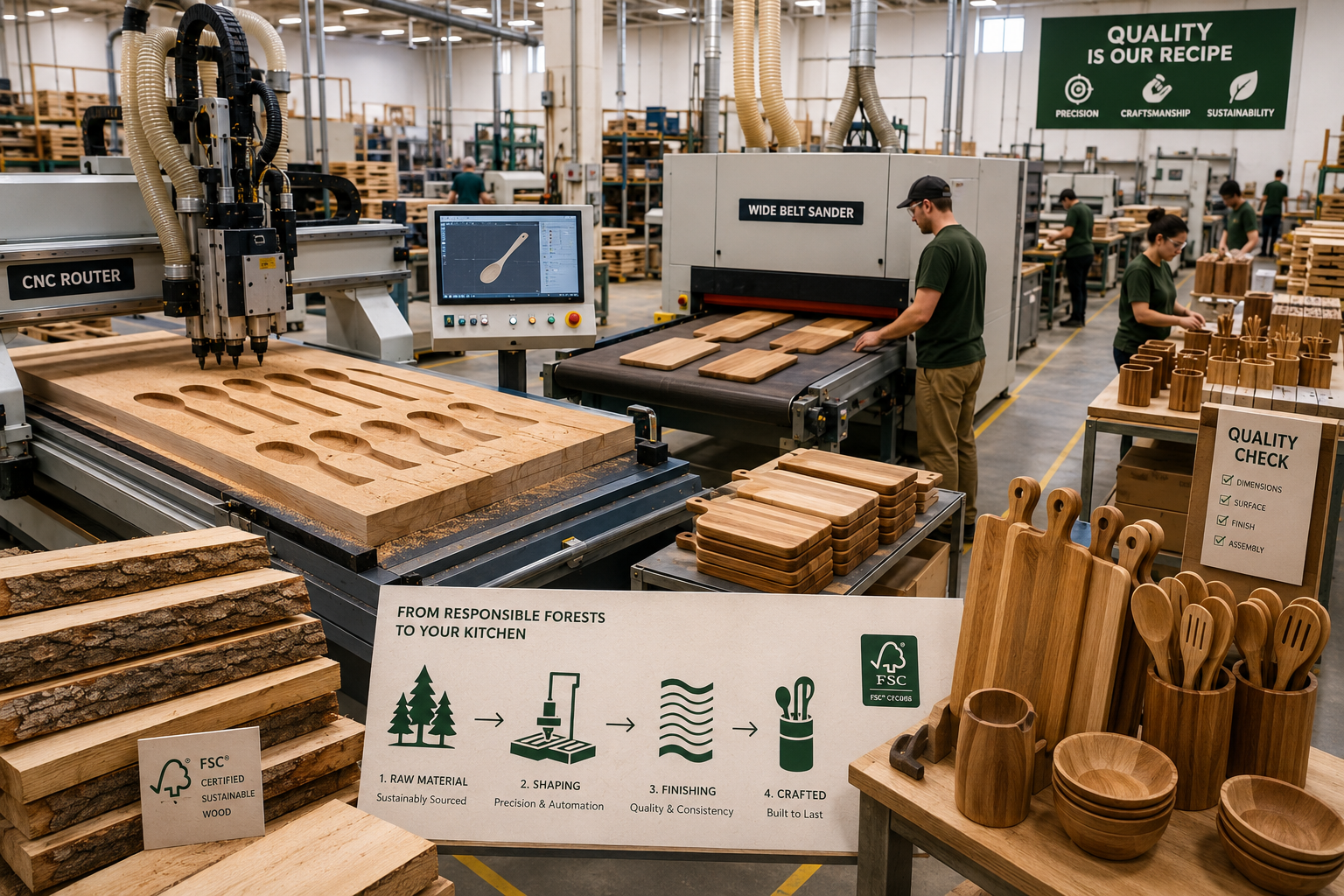
Scaling production of Wooden Kitchen Products That Sell: From Cutting Boards to Utensil Sets—Design and Production at Scale requires a strategic approach that balances craftsmanship with efficiency. Moving from bespoke pieces to high-volume manufacturing demands robust processes and investment in appropriate technology.
Efficient Manufacturing Processes
To meet demand, woodworking businesses must adopt efficient production workflows:
- Batch Production: Grouping similar products for simultaneous processing (e.g., cutting multiple cutting boards from a single large plank, or turning multiple utensil handles).
- Standardization: Developing templates, jigs, and fixtures for consistent cuts and shapes, reducing variations and speeding up assembly.
- CNC Machining: Computer Numerical Control (CNC) routers can precisely carve complex shapes, engrave designs, and cut multiple identical pieces with minimal human intervention. This is particularly valuable for items like Wooden Fruit Bowls: Lathe-Turned and Segmented Builds for Ki which can have intricate designs.
- Automated Sanding and Finishing: While hand-finishing adds a touch of craftsmanship, automated sanding machines can significantly reduce labor time for initial smoothing, leaving hand-finishing for final details.
- Assembly Line Principles: Breaking down the production into smaller, repeatable tasks performed by different stations or individuals can increase throughput.
Quality Control and Consistency
Maintaining high quality is crucial for brand reputation, especially when scaling up.
- Material Inspection: Rigorous checks of raw lumber for defects, consistent grain, and moisture content before processing.
- In-Process Checks: Regularly verifying dimensions, joinery quality, and surface finish at each stage of production. For intricate joinery, the principles from Hand Tool Joinery for Visible Wood Joints: Dovetails, Mortis still apply, even in scaled production to ensure structural integrity and aesthetic appeal.
- Final Product Inspection: Comprehensive review of finished items for any flaws, ensuring they meet design specifications and food safety standards.
- Finishing Consistency: Implementing standardized procedures for applying finishes to ensure uniform appearance and protection across all units.
Sourcing and Supply Chain Management
Reliable sourcing is the backbone of scalable production.
- Sustainable Sourcing: Partnering with suppliers who provide FSC-certified or sustainably harvested lumber. This resonates strongly with consumers in 2026.
- Bulk Purchasing: Negotiating better prices and ensuring a steady supply of raw materials by buying in larger quantities.
- Local vs. Global Sourcing: Evaluating the trade-offs between cost, lead time, and environmental impact of local versus international suppliers. Utilizing resources like Sourcing and Selecting Reclaimed Urban Lumber: Finding Character-Rich Materials for High-End Woodworking Projects can offer unique material options.
- Inventory Management: Implementing systems to track raw materials, work-in-progress, and finished goods to prevent stockouts or overstocking.
Workshop Setup for Efficiency
An optimized workshop layout is critical for efficient production. This involves:
- Workflow Optimization: Arranging machinery and workstations in a logical sequence to minimize movement and maximize material flow.
- Dust Collection: Investing in robust dust collection systems to maintain a clean working environment and protect equipment and health.
- Storage Solutions: Implementing smart storage for tools, jigs, and materials to keep the workshop organized and accessible. Concepts from Building Modular Wood Storage Systems for Small Workshops: Maximizing can be adapted for larger-scale operations.
Marketing and Selling Wooden Kitchen Products That Sell: From Cutting Boards to Utensil Sets

Once high-quality wooden kitchen products are designed and produced, effective marketing is essential to connect with the target audience and drive sales. This involves understanding who the buyers are and how to best reach them.
Target Audiences
The market for wooden kitchen products is diverse, encompassing several key segments:
- Culinary Enthusiasts: Home cooks, professional chefs, and food bloggers who value high-quality, durable, and ergonomic tools. They often prioritize functionality, material quality, and brand reputation.
- Home Décor Aficionados: Individuals who see kitchen items as extensions of their home’s aesthetic. They seek products that blend seamlessly with their interior design, emphasizing natural materials, craftsmanship, and unique design.
- Eco-Conscious Consumers: Buyers who prioritize sustainability, ethical sourcing, and natural materials. They are often willing to pay a premium for products with a low environmental footprint.
- Gift Givers: Those seeking thoughtful, durable, and aesthetically pleasing gifts for weddings, housewarmings, or holidays. Customization options are highly appealing here.
Crafting a Compelling Brand Narrative
A strong brand story is vital for Wooden Kitchen Products That Sell: From Cutting Boards to Utensil Sets—Design and Production at Scale. This narrative should highlight:
- Craftsmanship: Emphasize the skill, dedication, and attention to detail that goes into each piece.
- Material Origin: Detail where the wood comes from, highlighting sustainability and ethical sourcing. This adds to the product’s story and value.
- Durability and Longevity: Position products as investments that will last for years, in contrast to disposable alternatives.
- Lifestyle Integration: Show how products enhance daily life, from preparing meals to entertaining guests.
Digital Marketing Strategies
In 2026, a robust online presence is non-negotiable.
- E-commerce Website: A beautifully designed, user-friendly website with high-quality product photography and detailed descriptions.
- Content Marketing: Create blog posts, videos, and guides on topics like “How to Care for Your Wooden Cutting Board,” “Recipes Perfect for Your New Wooden Utensils,” or “Sustainable Kitchen Swaps.” This builds authority and engages potential customers.
- Social Media Marketing: Platforms like Instagram and Pinterest are ideal for showcasing the visual appeal of wooden kitchen products. Utilize high-quality imagery, video tutorials, and user-generated content.
- Influencer Collaborations: Partner with food bloggers, home décor influencers, and sustainable living advocates to reach a wider, engaged audience.
- SEO Optimization: Ensure product listings and content are optimized with relevant keywords to rank high in search engine results.
Retail and Wholesale Opportunities
Beyond direct-to-consumer sales, exploring other channels can significantly expand market reach.
- Boutique Retailers: Partner with independent kitchenware stores, home décor boutiques, and gift shops that align with the brand’s aesthetic and values.
- Trade Shows: Exhibit at industry trade shows to connect with wholesale buyers and distributors.
- Online Marketplaces: Sell through established platforms like Etsy, Amazon Handmade, or specialty eco-friendly marketplaces.
- Subscription Boxes: Explore partnerships with curated kitchen or home goods subscription services.
By strategically combining compelling design, efficient production, and targeted marketing, businesses can successfully bring Wooden Kitchen Products That Sell: From Cutting Boards to Utensil Sets—Design and Production at Scale to a thriving market.
Conclusion
The market for wooden kitchen products remains robust, driven by consumers’ increasing desire for functional, aesthetically pleasing, and sustainable home goods. Successfully navigating this landscape in 2026 requires a holistic approach that integrates innovative design, careful material selection, scalable production techniques, and strategic marketing. From meticulously crafted cutting boards to thoughtfully designed utensil sets, the potential for growth lies in understanding consumer preferences for durability, food safety, and a compelling brand story. Businesses that prioritize these elements, while leveraging efficient manufacturing and a strong digital presence, are poised to capture a significant share of the thriving kitchenware market.
Actionable Next Steps
- Market Research Deep Dive: Continuously monitor design trends and consumer feedback to inform product development and refinement.
- Supplier Evaluation: Regularly assess wood suppliers for sustainability certifications and consistent quality.
- Process Optimization: Invest in technology and training to streamline production, ensuring both efficiency and high-quality output.
- Brand Story Refinement: Develop a clear, authentic brand narrative that resonates with your target audience, highlighting craftsmanship, sustainability, and lifestyle benefits.
- Multi-Channel Marketing: Implement a diverse marketing strategy, combining digital outreach with strategic retail partnerships to maximize market penetration.
By focusing on these areas, businesses can ensure their wooden kitchen products not only sell but also build lasting customer loyalty and brand equity.
References
- Grand View Research. (2025). Kitchenware Market Size, Share & Trends Analysis Report By Product, By Application, By Distribution Channel, By Region, And Segment Forecasts, 2024 – 2030. Grand View Research.
- Forest Stewardship Council. (n.d.). About FSC. Retrieved from https://fsc.org/
- United States Department of Agriculture. (n.d.). Wood Handbook: Wood as an Engineering Material. General Technical Report FPL-GTR-190. Forest Products Laboratory.
Meta Title: Wooden Kitchen Products: Design, Production & Sales at Scale Meta Description: Discover how to design, produce, and market wooden kitchen products like cutting boards and utensil sets at scale for a booming 2026 market.