
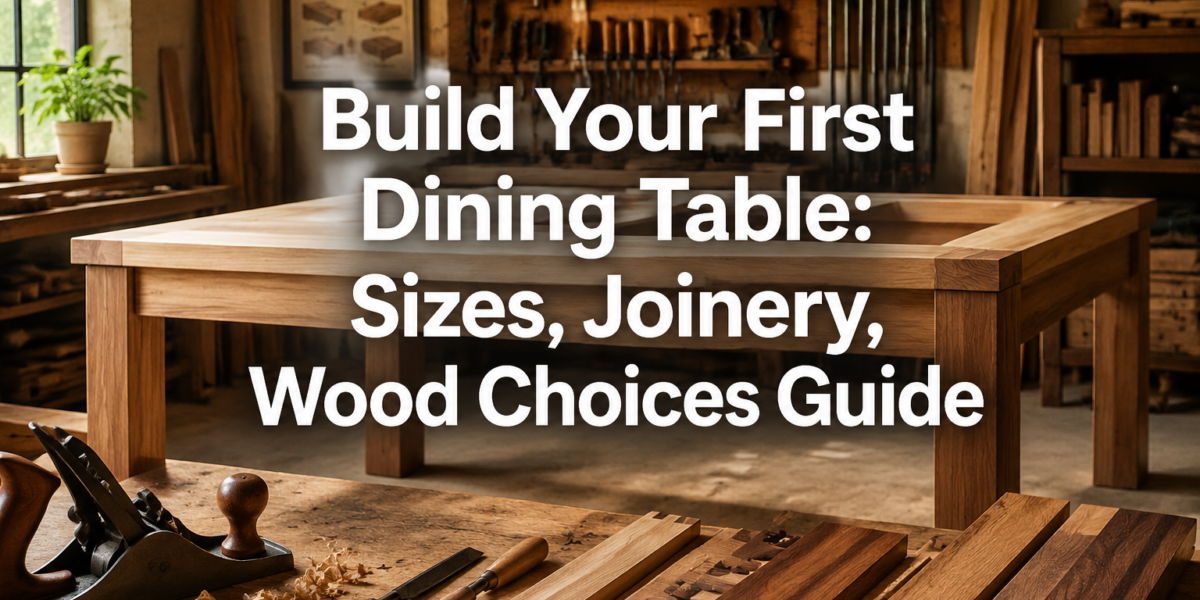
]} Creating your first dining table can appear daunting, a project that involves more than simply cutting wood and assembling parts. It requires understanding how dimensions impact function, how different joinery methods ensure longevity, and how wood species influence both aesthetics and durability. This comprehensive “Beginner’s Guide to Dining Tables: Standard Sizes, Joinery Options, and Wood Choices for Your First Build” aims to demystify the process, transforming an ambitious idea into an achievable woodworking endeavor. By breaking down the essential considerations from the ground up, you’ll gain the knowledge and confidence to craft a beautiful, functional centerpiece for your home in 2026.
Key Takeaways
- Sizing is Critical: Correctly measure your space and estimate seating capacity to determine the ideal dining table dimensions, ensuring comfortable use and movement around the table.
- Legs vs. Trestle Bases: Understand the structural and aesthetic differences between leg tables (simple, versatile) and trestle tables (stable, traditional) to choose the best support for your design.
- Joinery Ensures Durability: Focus on strong, reliable joinery like mortise and tenon for structural connections and breadboard ends for tabletop stability to build a lasting piece.
- Wood Choice Matters: Select wood based on desired aesthetics, durability, workability, and budget, considering options like oak, maple, walnut, or pine.
- Breadboard Ends: Learn how breadboard ends prevent cupping and warping in tabletops while adding a refined aesthetic, a crucial technique for your first build.
Demystifying Dining Table Dimensions: Standard Sizes and Seating Capacity
The first step in any dining table project, especially for a beginner, is determining the right size. This isn’t just about fitting it into your room; it’s about creating a comfortable and functional dining experience. Too small, and guests feel cramped; too large, and it overwhelms the space.
Measuring Your Space
Before anything else, measure your dining area. You need at least 3 feet (about 90 cm) of clearance around the table on all sides from walls or other furniture. This allows people to pull out chairs and move around comfortably.
Standard Dining Table Dimensions
Dining tables come in various standard shapes and sizes, each suited for different capacities and room layouts.
Rectangular Tables: These are the most common and versatile.
- 4-6 people: 60-72 inches long x 36-40 inches wide (152-183 cm x 91-102 cm)
- 6-8 people: 72-96 inches long x 36-42 inches wide (183-244 cm x 91-107 cm)
- 8-10+ people: 96-120+ inches long x 40-44 inches wide (244-305+ cm x 102-112 cm)
Round Tables: Ideal for smaller spaces and promote conversation.
- 2-4 people: 36-48 inches diameter (91-122 cm)
- 4-6 people: 48-60 inches diameter (122-152 cm)
- 6-8 people: 60-72 inches diameter (152-183 cm)
Square Tables: Best for smaller groups or when space is limited.
- 2-4 people: 36-48 inches square (91-122 cm)
- 4-8 people: 48-60 inches square (122-152 cm)
A general rule of thumb is to allow at least 24 inches (61 cm) of width per person at the table. For depth, aim for a tabletop width of 36-44 inches (91-112 cm) to provide ample space for dishes and diners.
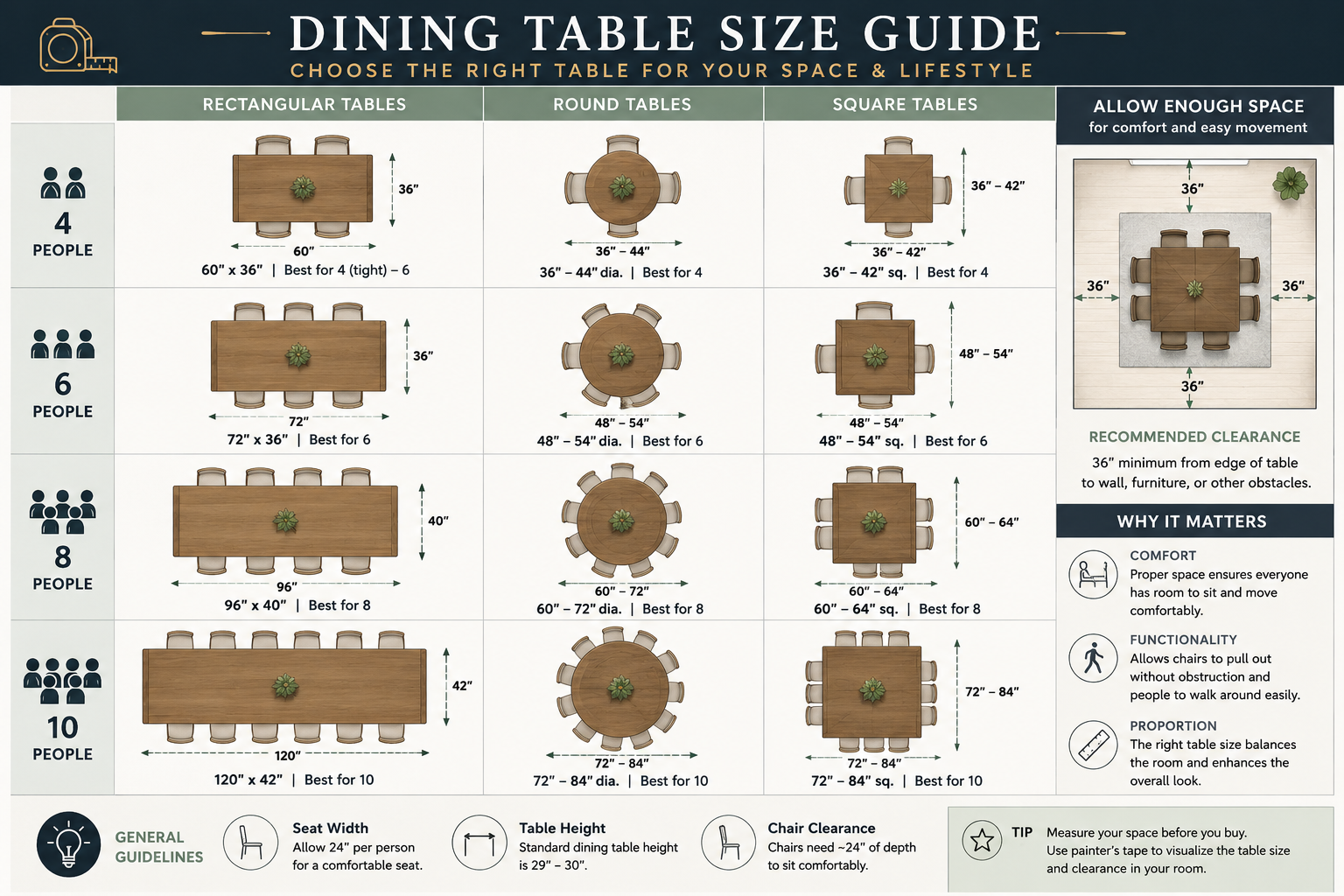
Table Height
Standard dining table height is typically 29-30 inches (74-76 cm) from the floor to the top of the table. This height works well with standard dining chairs, which usually have a seat height of 17-19 inches (43-48 cm). When designing your first build, adhering to these standard heights will ensure compatibility with existing or future dining chairs.
Essential Joinery Options and Base Designs for Your First Build
The structural integrity and longevity of your dining table depend heavily on the joinery methods and base design you choose. For a beginner’s guide to dining tables, focusing on strong, reliable joints is paramount.
Leg vs. Trestle Bases
The two most common base designs for dining tables are leg tables and trestle tables.
Leg Tables: These feature a leg at each corner, often connected by aprons (horizontal supports) beneath the tabletop. They are simpler to build for beginners and offer maximum legroom.
- Pros: Easy to build, traditional look, allows for flexible seating arrangements.
- Cons: Can wobble if joinery isn’t robust; legs can sometimes get in the way of chairs.
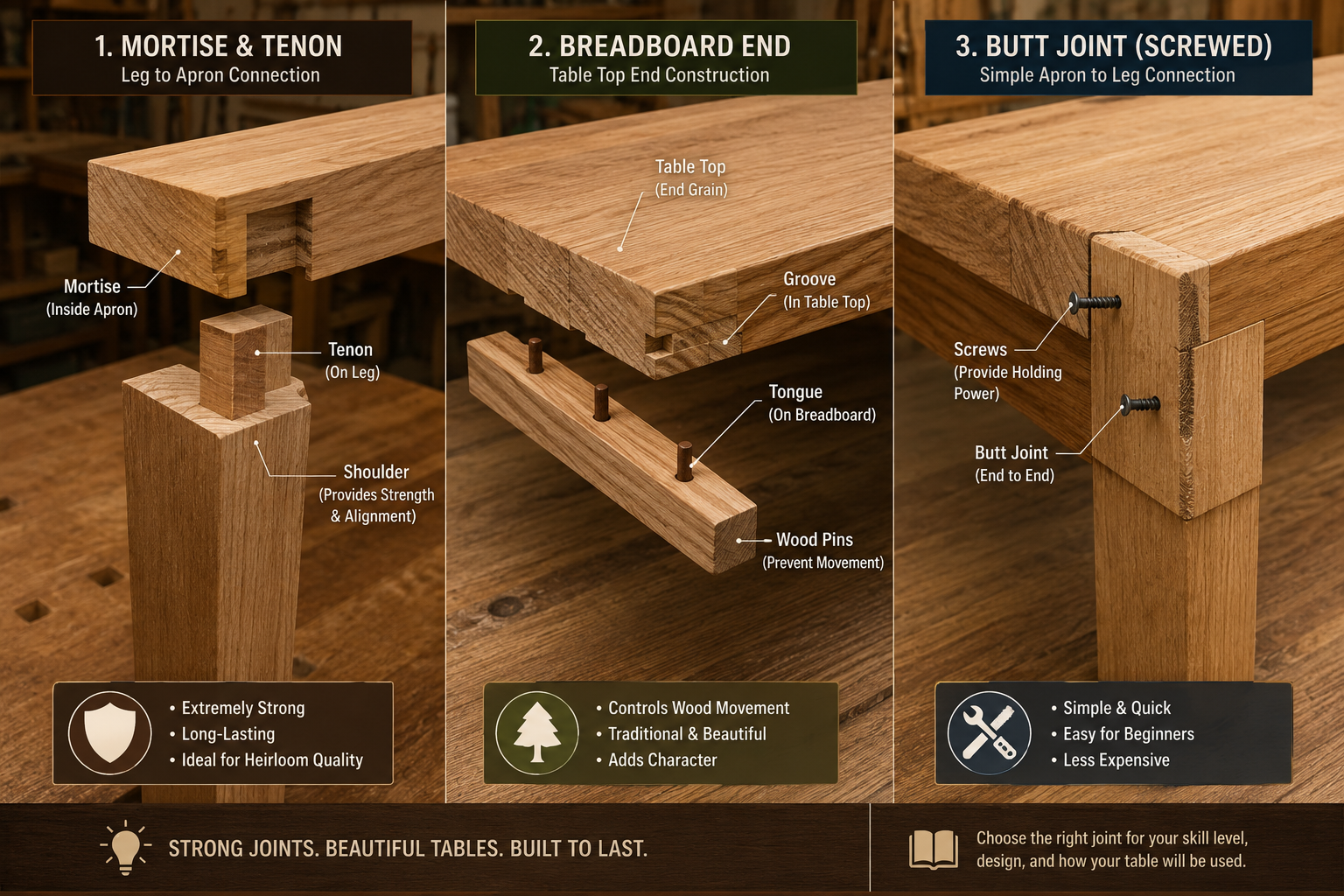
- Joinery Focus: The crucial joints here are where the legs meet the aprons, and where the aprons connect to each other. Mortise and tenon joints or robust dowel joints are ideal for these connections. For tabletop attachment, Z-clips or expansion fasteners are preferred over fixed screws to allow for wood movement.
Trestle Tables: Characterized by two or more upright supports (trestles) connected by a stretcher beam. This design offers excellent stability and a distinctive aesthetic.
- Pros: Very stable, traditional or rustic appeal, no legs at corners mean easier seating.
- Cons: Can be more complex to build, less legroom in the middle, heavier visually.
- Joinery Focus: Trestle bases require strong joints where the uprights meet the feet and where the stretcher connects to the uprights. Through mortise and tenon joints or robust bridle joints are excellent choices here. The tabletop is typically secured to the trestles using similar expansion fasteners.
Key Joinery Techniques for Dining Tables
For building a robust dining table, especially for a beginner, mastering a few key joinery techniques is essential. While butt joints with screws might seem easy, they lack the strength and longevity required for furniture subjected to daily use.
- Mortise and Tenon Joint: This is a classic, incredibly strong woodworking joint where a projecting tenon (male part) fits snugly into a rectangular mortise (female part). It’s perfect for connecting legs to aprons or rails, providing excellent resistance to racking. You can explore how hand tools are used for this and other visible wood joints in our guide on Hand Tool Joinery for Visible Wood Joints: Dovetails, Mortis.
- Dowel Joints: Simpler than mortise and tenon, dowel joints use cylindrical pins (dowels) glued into corresponding holes in mating pieces. When properly executed with a doweling jig, they provide significant strength for apron connections.
- Pocket Hole Joinery: While often debated in fine woodworking, pocket hole screws offer a strong, relatively easy-to-execute joint for beginners. They’re great for attaching aprons to legs or for securing tabletop panels before glue-up, though traditional joinery is generally preferred for primary structural connections.
- Breadboard Ends: This crucial technique is used for solid wood tabletops. A breadboard end is a piece of wood attached to the ends of a tabletop across its grain. Its primary purpose is to prevent the main tabletop panels from cupping and warping due to seasonal wood movement, while also providing a clean, finished look. The breadboard end is typically attached with a tongue and groove, where the tenon is part of the tabletop and the mortise is in the breadboard. Critically, the connection must allow the main tabletop to expand and contract across its width, usually achieved with elongated holes for screws or pins in the breadboard.
For gluing the panels of your tabletop together, a strong wood glue is essential. Learn more about choosing the right adhesive for your project in The Ultimate Guide to Wood Glue: Choosing the Right Adhesive for.
Choosing Your Wood: Aesthetics, Durability, and Workability for a Beginner’s Guide to Dining Tables
The choice of wood profoundly impacts the look, feel, durability, and cost of your first dining table. As a beginner, understanding the characteristics of common wood species will guide your decision.
Hardwoods vs. Softwoods
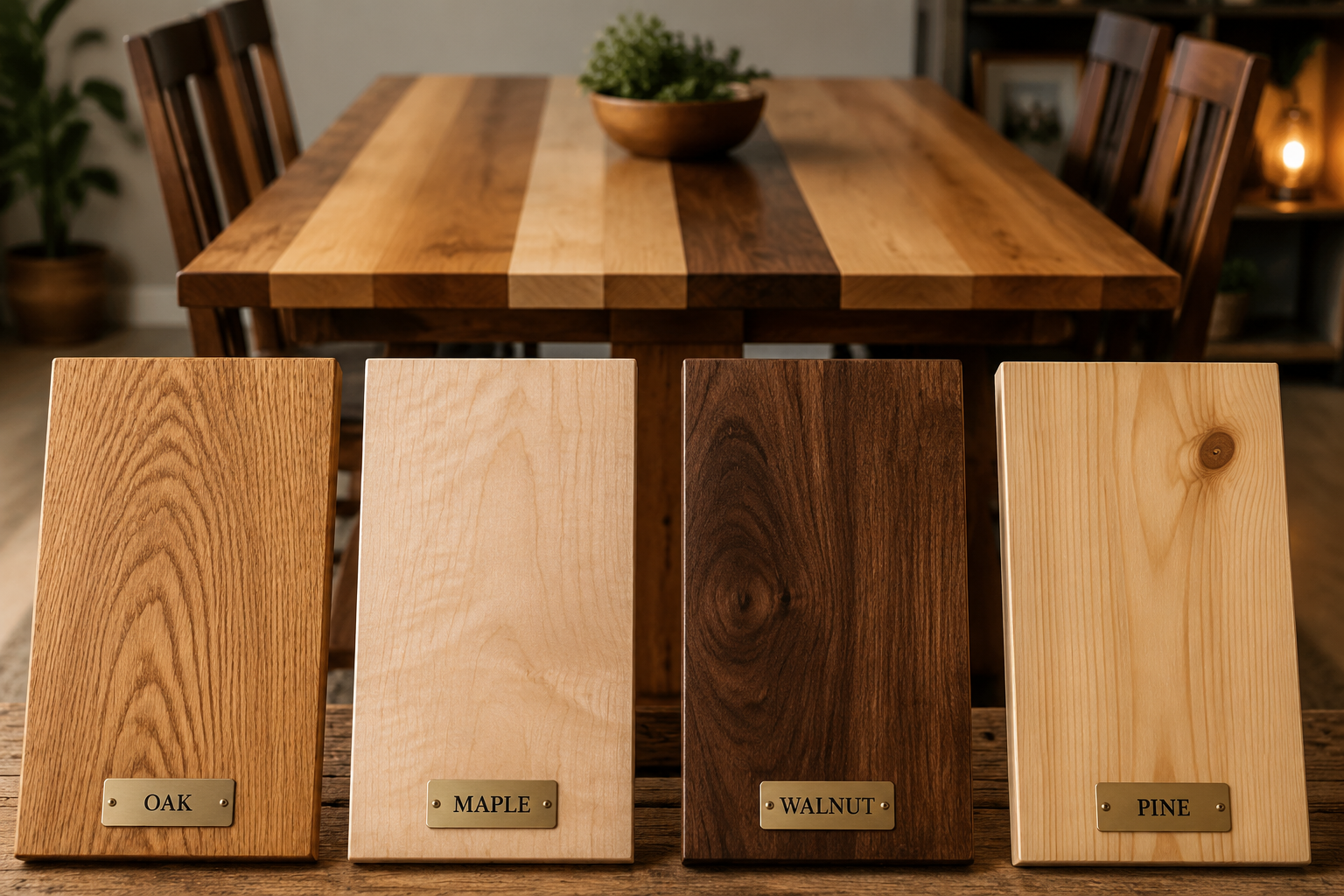
- Hardwoods: Derived from deciduous trees, hardwoods are generally denser, more durable, and often have more intricate grain patterns. They are ideal for furniture that will see heavy use, like dining tables. Common examples include oak, maple, walnut, cherry, and ash.
- Softwoods: From coniferous trees, softwoods like pine, cedar, and fir are typically lighter, less dense, and easier to work with. While more affordable, they are more susceptible to dents and scratches, making them less ideal for primary tabletops but acceptable for legs or aprons if budget is a major concern.
Popular Wood Choices for Dining Tables
Here’s a breakdown of common wood species suitable for your dining table build:
Oak (Red & White):
- Pros: Extremely durable, strong, distinct open grain (which accepts stains beautifully), relatively affordable for a hardwood. White oak is particularly resistant to moisture.
- Cons: Can be heavy, open grain may require grain filler for a perfectly smooth finish.
- Workability: Moderate. It’s a hard wood but machines and glues well.
Maple (Hard & Soft):
- Pros: Very dense and hard (especially hard maple), fine and even grain, light color takes various finishes well, very resistant to dents.
- Cons: Can be difficult to stain evenly without blotching (requires pre-conditioner), hard to work with hand tools due to its density.
- Workability: Hard. Requires sharp tools and patience, but finishes to a very smooth surface.
Walnut:
- Pros: Exquisite dark brown color, beautiful grain patterns, very stable, machines well, naturally resistant to decay. Considered a premium wood.
- Cons: Expensive.
- Workability: Good. Despite being a hardwood, it’s quite cooperative to work with, making it a joy for beginners who want a high-end look.
Cherry:
- Pros: Smooth, fine grain, rich reddish-brown color that deepens beautifully with age and exposure to light. Machines and finishes excellently.
- Cons: Softer than oak or maple, more susceptible to dents, expensive.
- Workability: Excellent. A pleasure to cut and shape.
Ash:
- Pros: Similar in strength and appearance to oak but often lighter in color and slightly more affordable. Good elasticity and shock resistance.
- Cons: Can have a less pronounced grain than oak, sometimes confused with oak.
- Workability: Good. Responds well to machining and finishes.
Pine:
- Pros: Very affordable, widely available, easy to work with hand and power tools.
- Cons: Soft, easily dented and scratched, prone to sap bleeding, less durable for a tabletop.
- Workability: Excellent. The easiest wood to work with for beginners, but be mindful of its durability limitations.
When making your choice for a “Beginner’s Guide to Dining Tables: Standard Sizes, Joinery Options, and Wood Choices for Your First Build,” consider your budget, the aesthetic you’re aiming for, and your comfort level with woodworking tools. Pine might be a forgiving choice for a first project to practice techniques, while oak or maple will yield a more robust and lasting piece. For more project ideas, you might also consider “High-Demand Woodworking Projects for 2026: Coffee Tables, Wi” which often use similar wood choices.
Working with Solid Wood
Remember that solid wood moves with changes in humidity. This is why techniques like breadboard ends are essential for tabletops. Always design your table to allow for this natural expansion and contraction, especially where the tabletop connects to the base. This is a critical lesson for any beginner working with solid lumber. Consider integrating essential woodworking jigs into your workflow to improve accuracy and safety, as outlined in “Beginner’s Guide to Essential Woodworking Jigs: Improve Accuracy and”.
Conclusion
Embarking on your first dining table build in 2026 is an ambitious yet incredibly rewarding woodworking journey. This “Beginner’s Guide to Dining Tables: Standard Sizes, Joinery Options, and Wood Choices for Your First Build” has provided the foundational knowledge you need to start. You’ve learned how to correctly size your table for your space and needs, differentiate between leg and trestle bases, and understand the critical joinery techniques that will ensure your table’s strength and longevity. Furthermore, you’ve explored the diverse world of wood species, weighing their aesthetics, durability, and workability to make an informed choice.
Armed with this information, your next steps should be:
- Sketch Your Design: Begin by drawing out your table, incorporating your chosen dimensions, base style, and preferred joinery.
- Create a Cut List: Detail every piece of wood you’ll need, including exact dimensions.
- Source Your Wood: Visit a local lumberyard to inspect different species firsthand and select the best material within your budget.
- Practice Joinery: If new to mortise and tenon or breadboard ends, practice on scrap wood before cutting into your project pieces.
Building a dining table is a significant undertaking that will hone your woodworking skills and leave you with a functional, beautiful piece of furniture that can be enjoyed for generations.
dining table build, woodworking for beginners, standard table sizes, mortise and tenon, breadboard ends, wood choices, hardwood furniture, leg table, trestle table, DIY dining table, wood movement, joinery techniques