
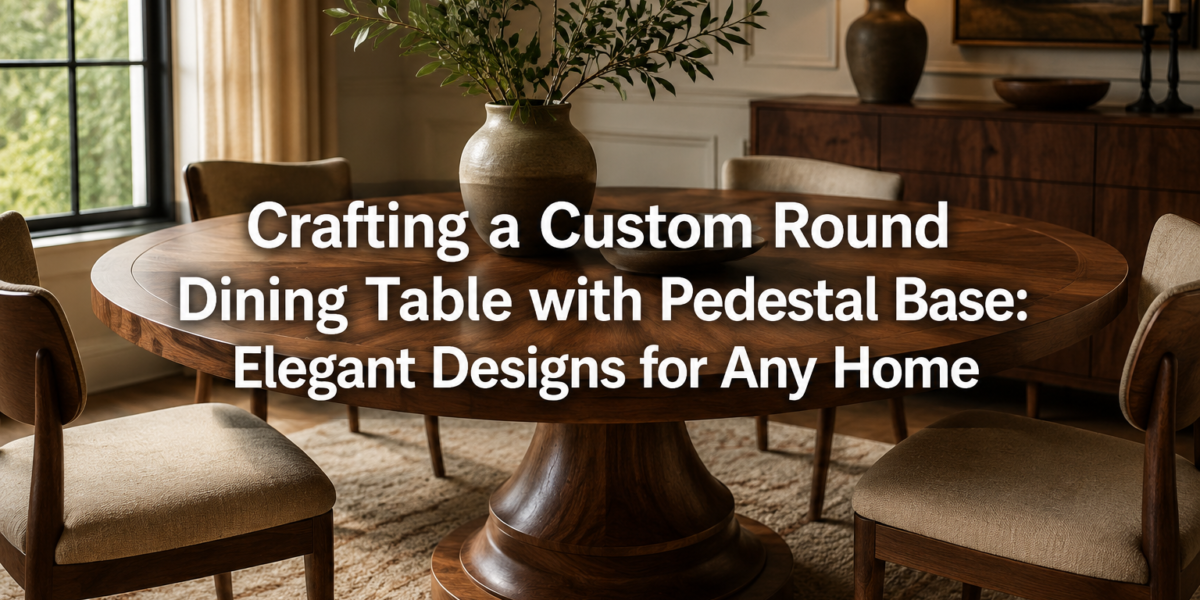
The average household in 2026 hosts over 100 meals at their dining table annually, underscoring its role as the undisputed heart of the home. Yet, many homes settle for mass-produced furniture that lacks character and fails to meet specific spatial or aesthetic needs. For those who envision a truly unique centerpiece, one that combines robust stability with captivating design, the solution lies in crafting a custom round dining table with a pedestal base. This approach allows for unparalleled personalization, superior build quality, and an elegant aesthetic that can transform any dining space, offering both an intimate setting and a conversation starter.
Key Takeaways
- Design Freedom: Custom tables allow for specific dimensions, wood species, and finishes to perfectly match your home’s aesthetic and functional needs.
- Enhanced Stability: Pedestal bases offer superior stability and legroom compared to traditional four-leg designs, making them ideal for round tables.
- Advanced Joinery: Employing techniques like mortise and tenon, bridle joints, or spline joints ensures a durable and long-lasting table structure.
- Material Selection: The choice of wood significantly impacts the table’s appearance, durability, and finishing requirements.
- Finishing Excellence: Proper sanding and finishing are crucial for protecting the wood and achieving a professional, elegant look.
Understanding the Appeal of a Round Dining Table with Pedestal Base
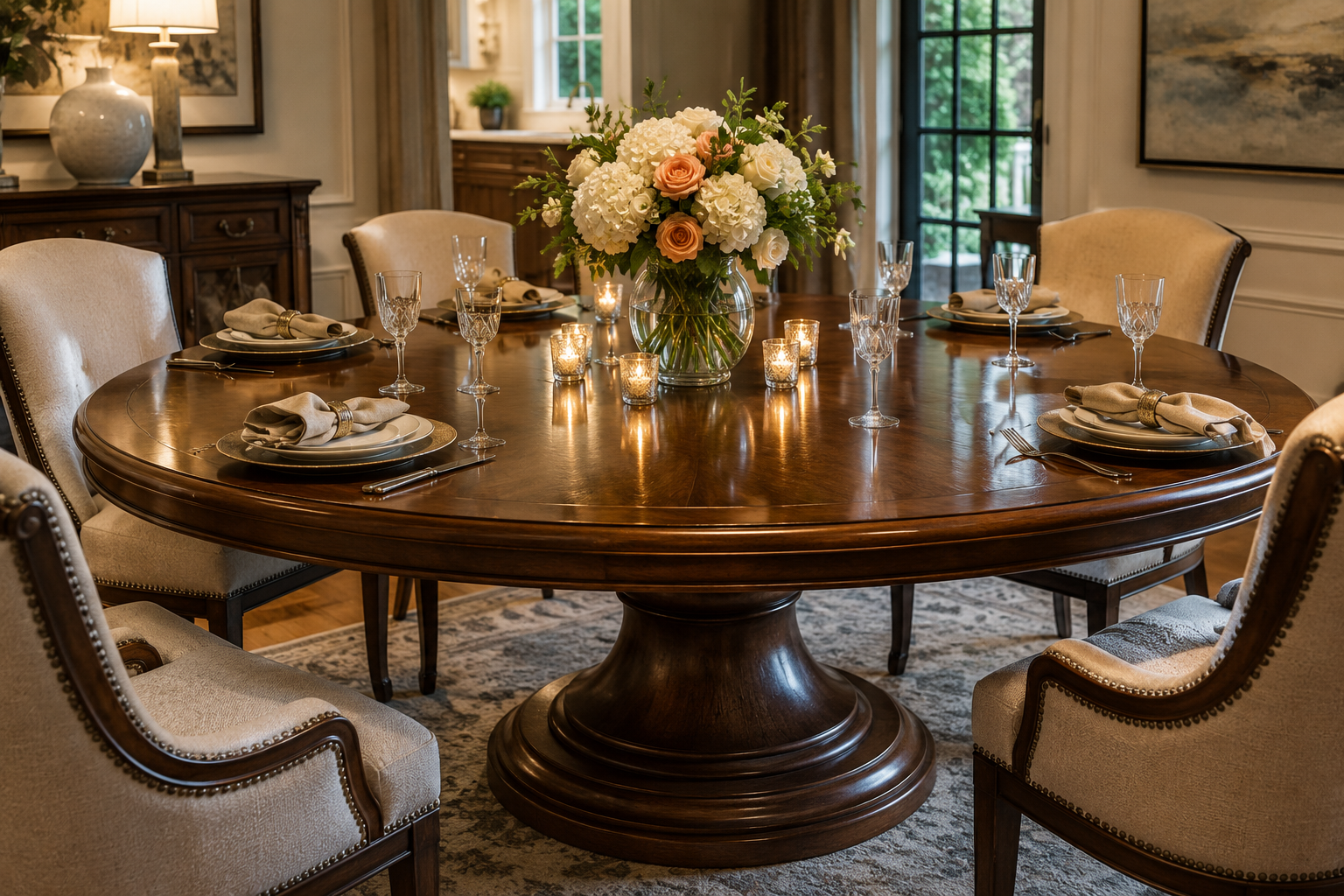
Round dining tables inherently promote conversation and intimacy, as everyone is equidistant and faces each other directly. Unlike rectangular tables, there are no awkward head-of-the-table positions, fostering a more egalitarian and connected dining experience. When combined with a pedestal base, these advantages are amplified. A pedestal design eliminates the obstruction of individual table legs, providing maximum legroom and seating flexibility. This is particularly beneficial in smaller spaces where maneuvering chairs around legs can be cumbersome, or when trying to accommodate an extra guest.
The aesthetic appeal is equally significant. A well-designed pedestal can be a sculptural element in its own right, adding a focal point of craftsmanship and elegance beneath the tabletop. This allows the beauty of the wood and the skill of the artisan to be showcased from every angle, contributing to the overall design story of your dining area.
Why Go Custom?
Opting for a custom-built table means you are not confined by standard sizes, materials, or styles. Do you need a specific diameter to fit a cozy breakfast nook or a grand dining hall? Customization makes it possible. Do you dream of a table crafted from a unique species of wood, perhaps a reclaimed timber with a rich history, or a sustainably sourced domestic hardwood? A custom project allows for this precision.
Beyond aesthetics, a custom table is built to last. While mass-produced furniture often relies on simpler, less durable construction methods to cut costs, a custom piece is typically built with longevity in mind, utilizing robust joinery and high-quality materials. This ensures your investment will serve your family for generations.
Designing Your Custom Round Dining Table with Pedestal Base: Elegant Designs for Any Home
The design phase is where your vision truly takes shape. This involves not only determining the overall dimensions but also selecting the right materials and conceptualizing the pedestal base that will complement your home’s interior.
Dimensions and Ergonomics
The ideal diameter for your round dining table depends on the number of people you typically seat. A good rule of thumb is to allow approximately 24-30 inches of table edge per person for comfortable dining.
| Seating Capacity | Recommended Table Diameter (inches) |
|---|---|
| 2-4 people | 36-48 |
| 4-6 people | 48-60 |
| 6-8 people | 60-72 |
| 8-10 people | 72-84 |
The standard dining table height is typically around 29-30 inches. Ensure there is enough clearance between the tabletop and the chair seats (usually 10-12 inches) for comfortable legroom.
Material Selection
The choice of wood dramatically impacts the table’s character, durability, and cost.
- Hardwoods:
- Oak: Known for its prominent grain and durability, available in red and white varieties. White oak is particularly resistant to moisture.
- Walnut: A premium hardwood with rich, dark tones and a fine grain, excellent for formal or contemporary settings.
- Maple: A very dense wood with a subtle grain, suitable for a clean, modern aesthetic. It takes stains well.
- Cherry: Features a beautiful reddish-brown hue that deepens with age. It has a fine, elegant grain.
- Softwoods (less common for tabletops due to denting):
- Pine: More affordable, but softer and prone to dents. Often used for rustic or farmhouse styles.
- Douglas Fir: Stronger than pine, but still softer than hardwoods. Can be a good choice for a more rugged look.
Consider also using reclaimed and salvaged wood for a table with unique character and a sustainable story. This often involves careful assessment and restoration to prepare the wood for furniture building.
Pedestal Base Designs
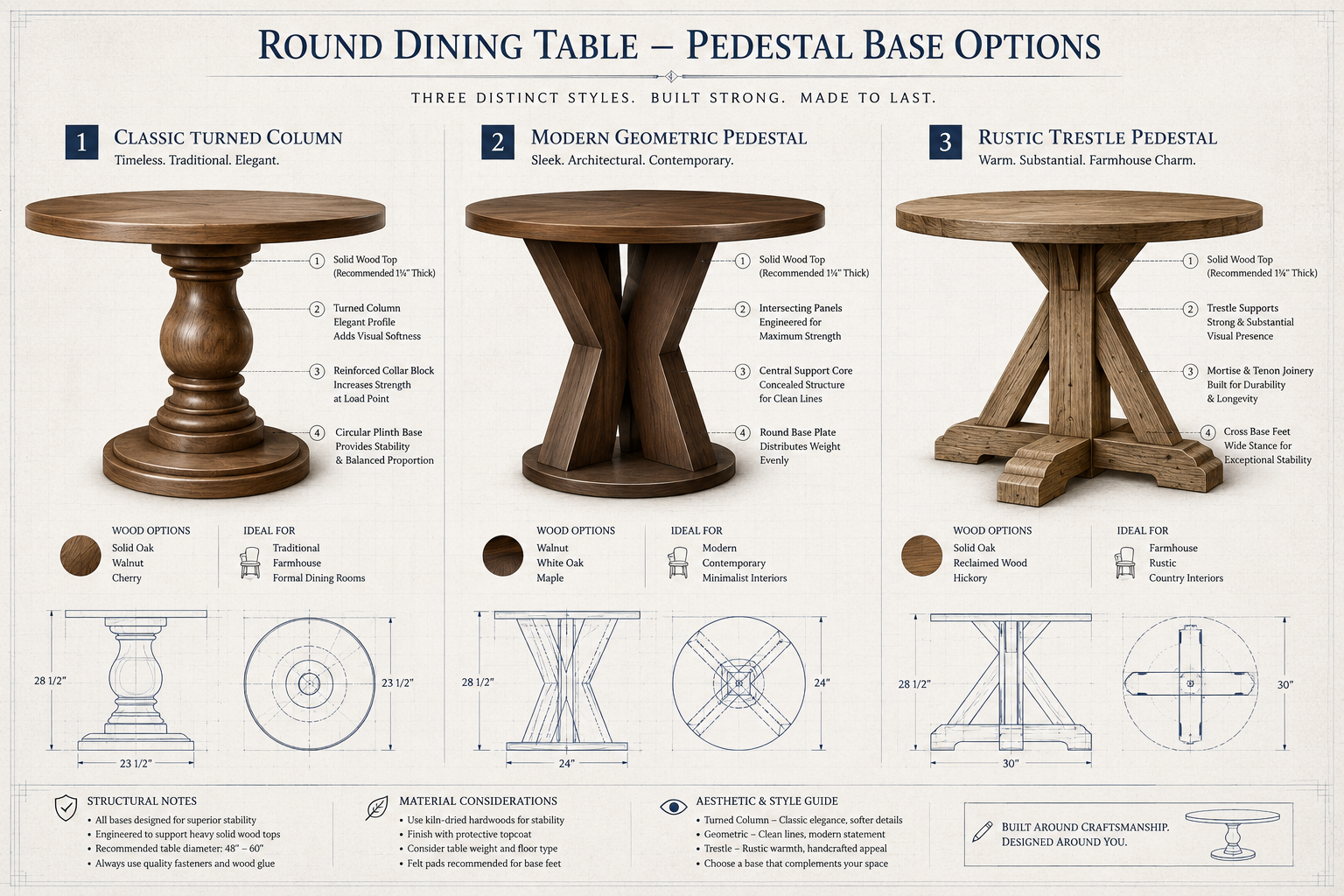
The pedestal base is where creativity truly shines when crafting a custom round dining table with a pedestal base. Here are some popular design concepts:
- Classic Turned Column: This timeless design features a single, substantial column often turned on a lathe to create ornate profiles (e.g., baluster, urn). It evokes traditional elegance and offers maximum legroom.
- Trestle Style Pedestal: Consisting of two or more upright supports connected by a stretcher, this design provides excellent stability and can range from rustic to modern depending on the joinery and shaping.
- Geometric Multi-Leg Base: A more contemporary approach involves multiple angled or straight supports converging at a central point or a smaller base footprint. This can create a striking, architectural statement.
- Solid Block/Drum Base: For a minimalist or industrial look, a solid, cylindrical or cuboid base offers robust support and a clean aesthetic.
When designing the pedestal, ensure its footprint is large enough to provide stability without being overly intrusive. The wider the tabletop, the larger and more stable the base needs to be to prevent wobbling. For example, a 60-inch diameter tabletop might require a pedestal base with a footprint of at least 30 inches in diameter or width.
Construction Techniques and Advanced Joinery for Your Custom Round Dining Table with Pedestal Base
Building a sturdy and aesthetically pleasing pedestal base requires thoughtful planning and execution, especially regarding joinery. Advanced joinery techniques not only enhance the structural integrity but also elevate the craftsmanship of your piece.
Constructing the Round Tabletop
The tabletop itself can be constructed from several solid wood planks joined together.
- Milling Lumber: Start with rough lumber, milling it square and flat. Aim for consistent thickness.
- Edge Joining: Use biscuits, dowels, or a tongue-and-groove joint for alignment, and apply a strong wood glue like PVA. Clamp the boards together firmly until the glue cures. For best results, use a high-quality wood glue suited for furniture.
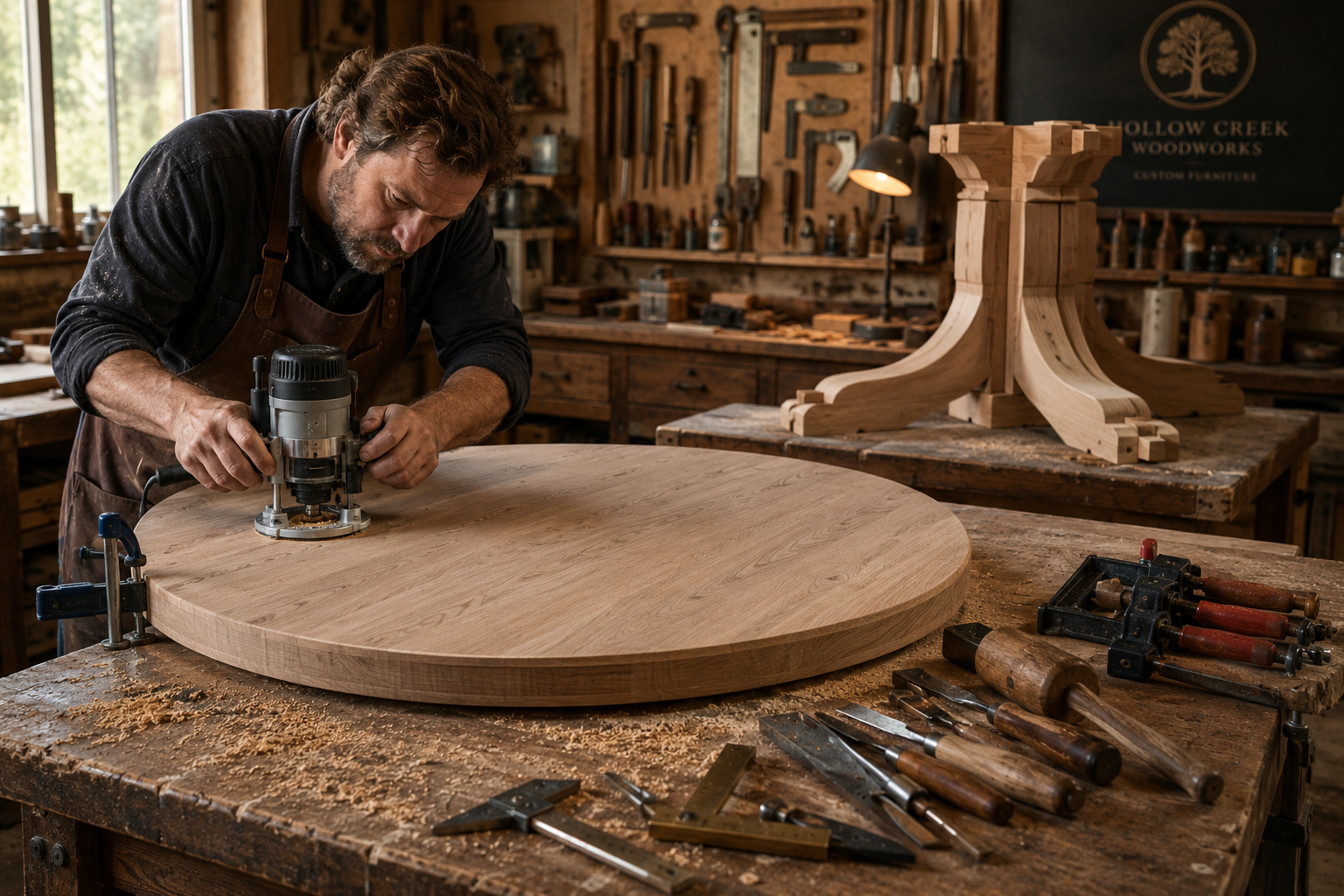
- Cutting the Circle: Once the glued-up panel is stable, mark the desired diameter. A trammel attached to a router or jigsaw can be used to cut a perfect circle. A router with a flush trim bit can then refine the edge.
- Edge Profiling: Use a router with a desired bit (e.g., round-over, chamfer, ogee) to create an attractive edge profile. This is where a router table becomes invaluable for precision and safety.
Building the Pedestal Base
The complexity of the pedestal base will dictate the joinery methods.
- Turned Pedestal: If opting for a classic turned column, you’ll need access to a wood lathe. This involves shaping a large blank of wood. For beginners, exploring wood turning can be a rewarding skill.
- Box or Segmented Pedestal: For a contemporary look, a pedestal can be built from multiple panels joined to form a hollow box or a segmented structure.
- Miter Joints: Miter joints (45-degree cuts) are common for corners, reinforced with splines or biscuits.
- Dovetail Joints: For a superior aesthetic and strength, dovetail joints can be used to connect larger sections. While challenging, they offer unmatched durability and beauty, often seen in advanced joinery for gift boxes and other fine furniture.
- Legs/Supports: If the pedestal involves individual legs converging, strong joinery is paramount.
- Mortise and Tenon Joints: These are highly robust and widely used in traditional furniture making. They involve cutting a tenon on one piece that fits into a mortise (hole) in another.
- Bridle Joints: Similar to mortise and tenon but with an open-ended mortise, providing a strong connection for right-angle joints.
Connecting the base to the tabletop is critical. A sturdy mounting plate, often made of plywood or a smaller piece of solid wood, is typically attached to the top of the pedestal. This plate should be large enough to provide a stable connection to the tabletop using screws that allow for seasonal wood movement. Elongated holes in the mounting plate or “Z” clips can facilitate this movement, preventing cracks.
Sanding and Finishing
Proper sanding is crucial for a professional finish. Start with a coarse grit (e.g., 80 or 100), then progressively move to finer grits (150, 220, or even 320) until the wood is silky smooth. Between grits, lightly dampen the wood to raise the grain, then sand it back down; this helps achieve a smoother final finish.
The finishing process protects the wood and enhances its natural beauty. Options include:
- Oil Finishes (e.g., Tung Oil, Linseed Oil): Penetrate the wood, offering a natural look and feel. They are easy to repair but require reapplication over time.
- Varnish/Polyurethane: Form a durable protective layer on the surface, offering excellent resistance to spills and scratches. Sprayable water-based polyurethane can provide an exceptionally smooth, even coat.
- Lacquer: Dries quickly and provides a very hard, clear finish. Often applied professionally.
- Stain: Applied before the clear finish to alter the wood’s color. Always test stains on scrap wood of the same species.
For a comprehensive understanding of various techniques, consult resources on natural wood finishing techniques. The chosen finish should be durable enough to withstand the rigors of dining room use.
Crafting a Custom Round Dining Table with Pedestal Base: Final Touches and Integration
The culmination of careful planning and skilled execution results in a dining table that is not only functional but also a work of art. The final steps involve ensuring the table is properly installed and integrated into your home’s decor.
Assembly and Installation
Once all components are finished, carefully assemble the pedestal base and attach it to the tabletop. Use high-quality hardware and ensure all connections are secure. For larger, heavier tables, enlist help to safely move and position the table in your dining area.
Consider adding leveling feet to the base of the pedestal. This allows you to easily adjust the table to compensate for uneven floors, ensuring it sits perfectly stable and wobble-free.
Integrating into Your Home’s Aesthetic
A custom round dining table with a pedestal base can become the defining piece of your dining room.
- Harmonize with Seating: Choose dining chairs that complement the table’s style, wood, and finish. For a warm minimalist aesthetic, clean-lined chairs in a contrasting material or matching wood can work beautifully.
- Lighting: Overhead lighting, such as a pendant lamp or chandelier, should be scaled appropriately for the table’s size and positioned centrally to illuminate the entire surface.
- Decor: Keep tabletop decor minimal to allow the table’s craftsmanship to shine. Simple elements like a vase of fresh flowers, a handcrafted wooden centerpiece, or elegantly engraved wooden coasters can enhance the setting without overwhelming it.
- Surrounding Furniture: Ensure other furniture pieces in the room, such as sideboards or display cabinets, work in harmony with the table’s style and scale. This creates a cohesive and inviting dining environment.
The beauty of a custom piece lies in its ability to reflect your personal style and meet your specific needs. Whether your home leans towards modern, rustic, traditional, or eclectic, a thoughtfully designed and meticulously crafted round dining table with a pedestal base can elevate the entire space.
Conclusion
Crafting a custom round dining table with a pedestal base is a rewarding endeavor that culminates in a truly unique and elegant piece of furniture. From the initial design considerations, balancing ergonomics with aesthetic appeal, to the careful selection of wood and the application of advanced joinery techniques, every step contributes to a table that is both beautiful and built to last. The elegance of a pedestal base, combined with the communal nature of a round tabletop, fosters intimate gatherings and becomes the focal point of any home.
By investing time in planning, mastering construction techniques, and meticulously applying finishes, you create more than just a table; you create a legacy piece. This bespoke approach ensures your dining table perfectly fits your space, reflects your personal style, and offers unparalleled durability for years of cherished meals and memories.
Actionable Next Steps:
- Measure Your Space: Accurately determine the maximum and ideal diameter for your table, considering traffic flow around it.
- Research Wood Species: Collect samples of various hardwoods to see how they look in your home’s lighting and with your existing decor.
- Sketch Designs: Explore different pedestal base concepts, considering stability and aesthetic integration.
- Source Materials: Identify local suppliers for quality lumber and hardware. Consider options for live edge wood slabs for a unique tabletop.
- Plan Your Joinery: Select appropriate joinery techniques for your chosen design and acquire the necessary tools.
- Practice Techniques: If new to certain joinery or finishing methods, practice on scrap wood before working on your final project.
SEO Meta Title: Crafting a Custom Round Pedestal Dining Table: Elegant Designs
SEO Meta Description: Build a stunning custom round dining table with a sturdy pedestal base for your 2026 home. Explore designs, joinery, and materials for an elegant, unique centerpiece.