
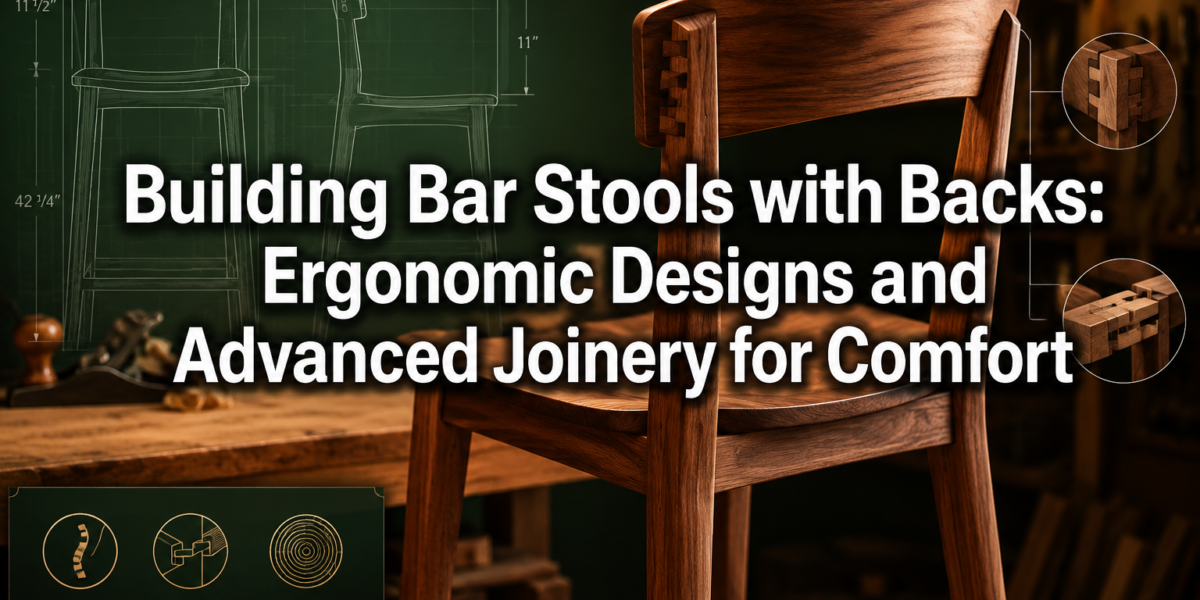
The average person spends nearly 30% of their waking hours sitting, making ergonomic support not just a luxury but a necessity for long-term health and comfort. Yet, many bar stools, especially those without backs, offer minimal support, leading to poor posture and discomfort. This article delves into Building Bar Stools with Backs: Ergonomic Designs and Advanced Joinery for Comfort, moving beyond rudimentary construction to focus on principles that ensure superior support and lasting durability. We’ll explore how thoughtful design and sophisticated woodworking techniques can transform a simple seating element into a comfortable, health-conscious piece of furniture, perfect for any home bar or kitchen island in 2026.
Key Takeaways
- Ergonomic design is crucial for bar stool comfort, focusing on proper seat height, depth, backrest angle, and lumbar support.
- Advanced joinery techniques like mortise and tenon, dovetail, and bridle joints provide superior strength and aesthetic appeal.
- Material selection significantly impacts both the ergonomics and durability of a bar stool.
- Precise measurements and templates are essential for consistent, high-quality construction.
- A well-designed bar stool offers both aesthetic value and long-term health benefits.
Understanding Ergonomics in Bar Stool Design
Ergonomics, the science of designing and arranging workplaces and products so that they fit the people who use them, is paramount when Building Bar Stools with Backs: Ergonomic Designs and Advanced Joinery for Comfort. A well-designed bar stool should support the natural curves of the human spine, distribute weight evenly, and encourage a healthy posture, even during extended periods of sitting.
Ideal Dimensions and Angles for Comfort
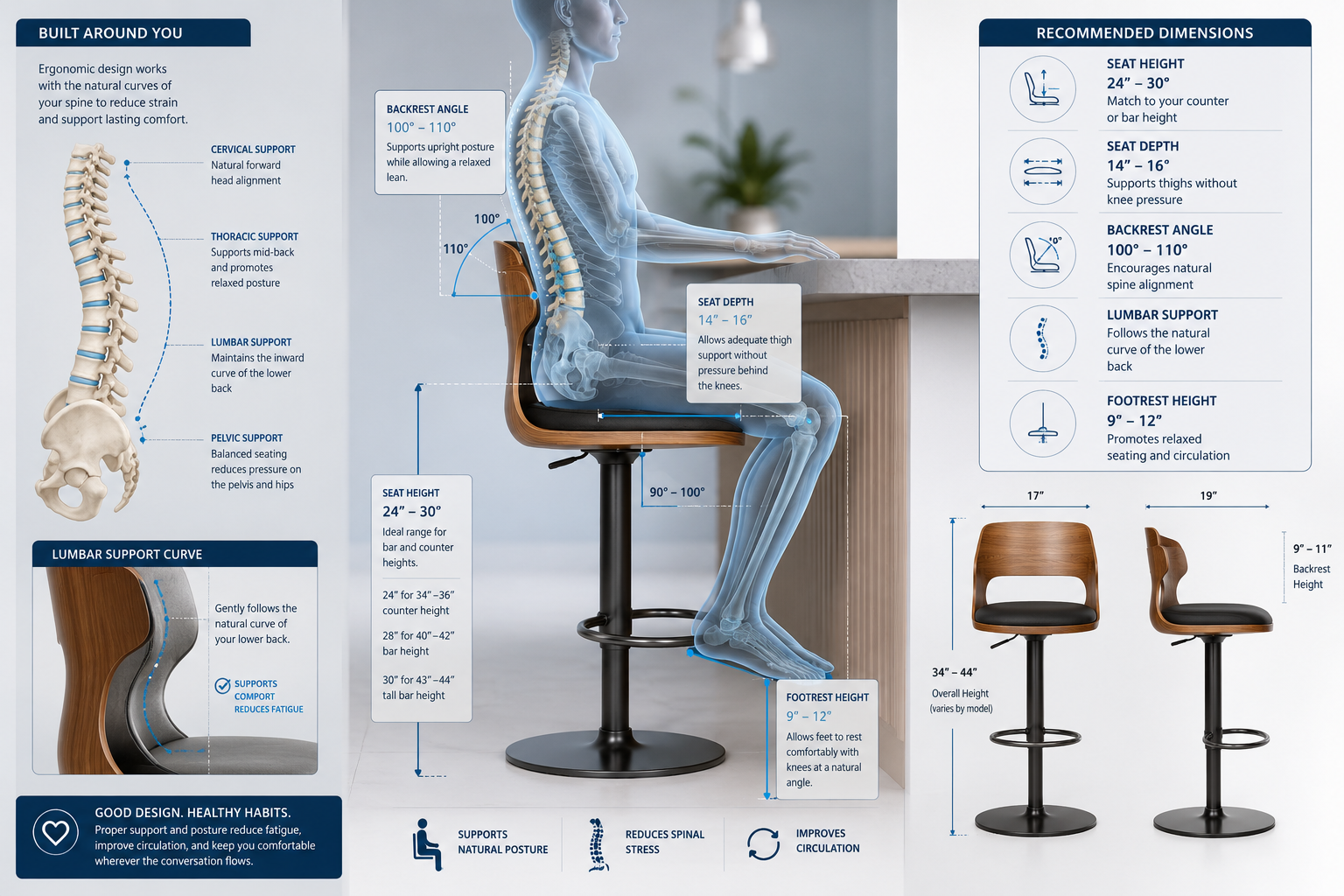
Achieving ergonomic comfort involves careful consideration of several key dimensions and angles. These are not one-size-fits-all, as individual body types vary, but general guidelines provide an excellent starting point.
Seat Height
The ideal seat height allows the user’s feet to rest flat on a footrest or the floor, with their knees at approximately a 90-degree angle. For most standard bar heights (40-42 inches), this translates to a stool seat height of 28-30 inches. Counter-height stools (35-36 inches) typically require a seat height of 24-26 inches. Including a footrest at an appropriate height (usually 16-18 inches below the seat) is crucial to prevent dangling feet and reduce pressure on the thighs.
Seat Depth and Width
A sufficient seat depth allows about 2-4 inches between the back of the user’s knees and the front edge of the seat. This prevents pressure on the popliteal fossa (behind the knee) and ensures proper blood circulation. A typical depth ranges from 16 to 18 inches. Seat width should be generous enough for comfort, generally 18-20 inches, allowing for slight movement.
Backrest Angle and Lumbar Support
The backrest is where ergonomic bar stools truly distinguish themselves. An optimal backrest angle is typically between 100 and 110 degrees relative to the seat. This slight recline helps maintain the natural S-curve of the spine. Crucially, the backrest should provide robust lumbar support, cradling the lower back. This can be achieved through a subtly curved backrest design or by incorporating a distinct lumbar pad. The height of the backrest should support the shoulder blades without pushing the user forward.
“A truly ergonomic bar stool doesn’t just hold you up; it actively supports your posture, transforming sitting from a static act into a comfortable, dynamic experience.”
Designing for Customization
While general guidelines are helpful, truly custom bar stools can be tailored. Consider features like adjustable seat height mechanisms, which can be incorporated into wooden designs using threaded inserts and adjustable legs. Backrests can be designed with interchangeable lumbar pads of varying thickness. For inspiration on creating ergonomic workshop furniture, which shares similar principles, see our detailed guide.
| Ergonomic Feature | Recommended Dimension/Angle | Benefit |
|---|---|---|
| Seat Height | 28-30 inches (bar height) | Feet flat on footrest, 90-degree knee bend |
| Seat Depth | 16-18 inches | Prevents pressure behind knees, good circulation |
| Seat Width | 18-20 inches | Ample space for comfort and movement |
| Backrest Angle | 100-110 degrees from seat | Maintains natural spine curve |
| Lumbar Support | Contoured or padded lower back support | Reduces lower back strain |
| Footrest Height | 16-18 inches below seat | Prevents dangling feet, even weight distribution |
Advanced Joinery Techniques for Strength and Aesthetics
Beyond ergonomics, the structural integrity and visual appeal of bar stools with backs largely depend on the quality of their joinery. When Building Bar Stools with Backs: Ergonomic Designs and Advanced Joinery for Comfort, opting for advanced woodworking joints ensures longevity and imbues the piece with a sense of handcrafted excellence. These joints are stronger than screws alone, resisting racking and loosening over time.
Mortise and Tenon Joints
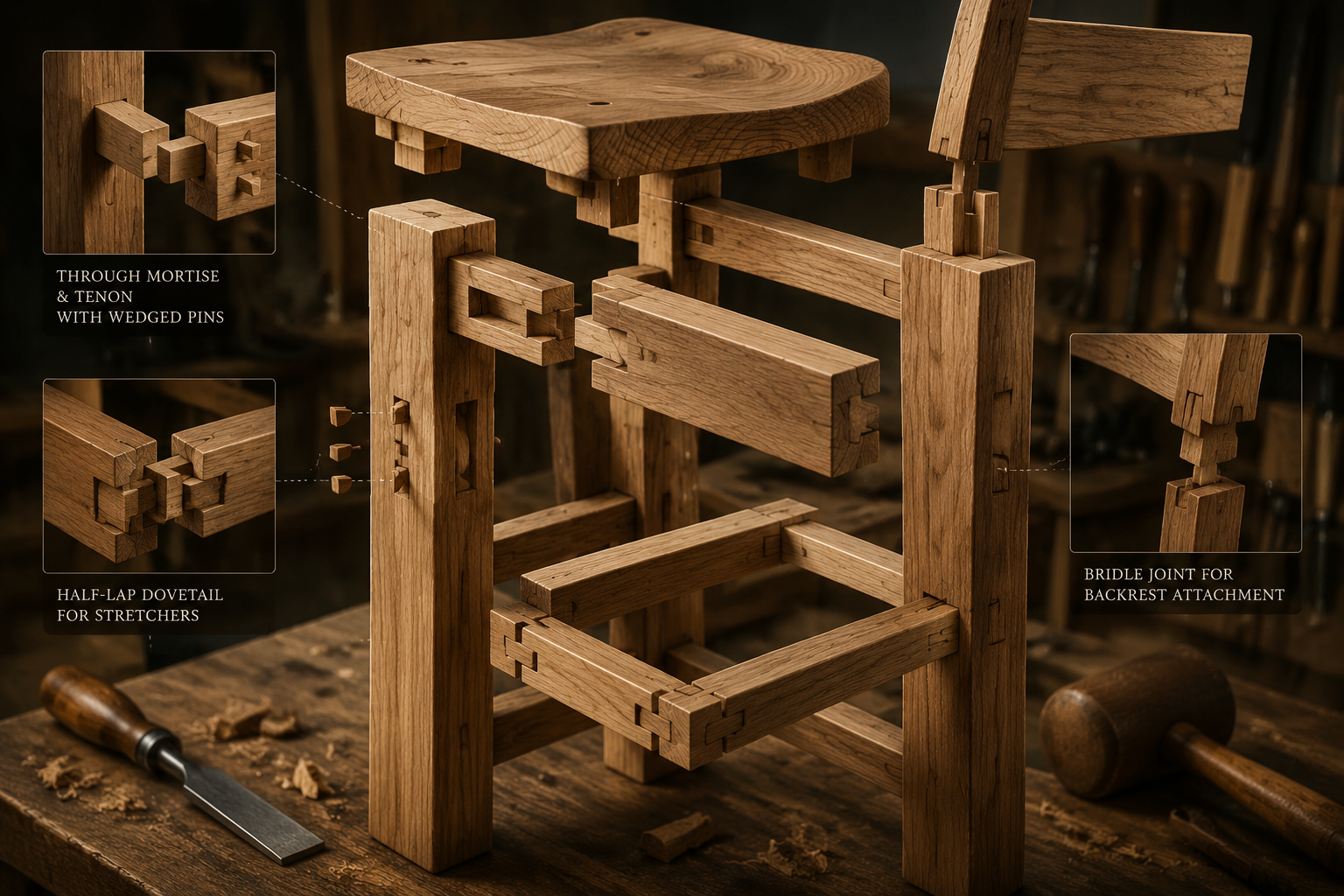
The mortise and tenon joint is a cornerstone of fine furniture making and exceptionally well-suited for bar stool construction, particularly for attaching legs to rails (stretchers) and seat frames, and for connecting backrest components.
- Through Mortise and Tenon: This variation involves the tenon passing completely through the mortise and being visible on the other side. It’s incredibly strong and can be wedge-pinned for added security and decorative effect.
- Blind Mortise and Tenon: The tenon fits into a mortise that does not pass through the full thickness of the receiving piece, resulting in a cleaner, concealed joint. This is ideal for subtle connections where aesthetics are paramount.
- Haunched Mortise and Tenon: Features a shoulder on the tenon that fits into a corresponding notch in the mortise. This adds strength by increasing the glue surface and resisting twisting.
For more on foundational woodworking techniques, our Beginner’s Guide to Essential Woodworking Joints offers a great overview.
Dovetail Joints
While often associated with drawers, dovetail joints can be incredibly effective in bar stool construction, particularly for attaching seat aprons or securing cross-members within the backrest frame.
- Half-Lap Dovetail: This joint is strong and creates a beautiful, interlocking connection that can be seen from one side. It’s excellent for joining stretchers to legs where visual interest is desired.
- Through Dovetail: If you want to showcase the craftsmanship, a through dovetail can be used for seat aprons, providing maximum strength and an unmistakable aesthetic. Learn more about mastering dovetail joinery for exceptional results.
Bridle Joints
The bridle joint is essentially an open mortise and tenon joint, where both the mortise and tenon are cut to the same width as the stock. It offers a large gluing surface and high strength, making it suitable for joining the backrest stiles to the seat frame or connecting top rails. Its exposed nature makes it an attractive design feature.
| Joinery Type | Best Use Cases | Advantages | Considerations |
|---|---|---|---|
| Mortise and Tenon | Leg-to-rail, seat frame connections, backrest stiles | Extremely strong, resists racking, versatile | Requires precise layout and cutting |
| Dovetail | Seat aprons, internal frame connections | High tensile strength, visually appealing | Complex to cut, requires careful fitting |
| Bridle Joint | Top rails, backrest frame connections | Strong, large gluing surface, attractive exposed joinery | Can be prone to splitting if not properly cut |
“The beauty of advanced joinery lies not just in its strength but in its ability to tell a story of craftsmanship and care, turning a functional piece into a work of art.”
Using a router table can significantly improve the precision and efficiency of cutting these advanced joints. Check out our guide on choosing and using router tables for maximizing precision and safety.
Material Selection and Finishing for Longevity and Appeal
The choice of wood and the subsequent finishing process are critical steps in Building Bar Stools with Backs: Ergonomic Designs and Advanced Joinery for Comfort. These decisions impact the stool’s durability, stability, comfort, and overall aesthetic.
Selecting the Right Wood
Hardwoods are generally preferred for bar stools due to their strength, density, and resistance to wear and tear.
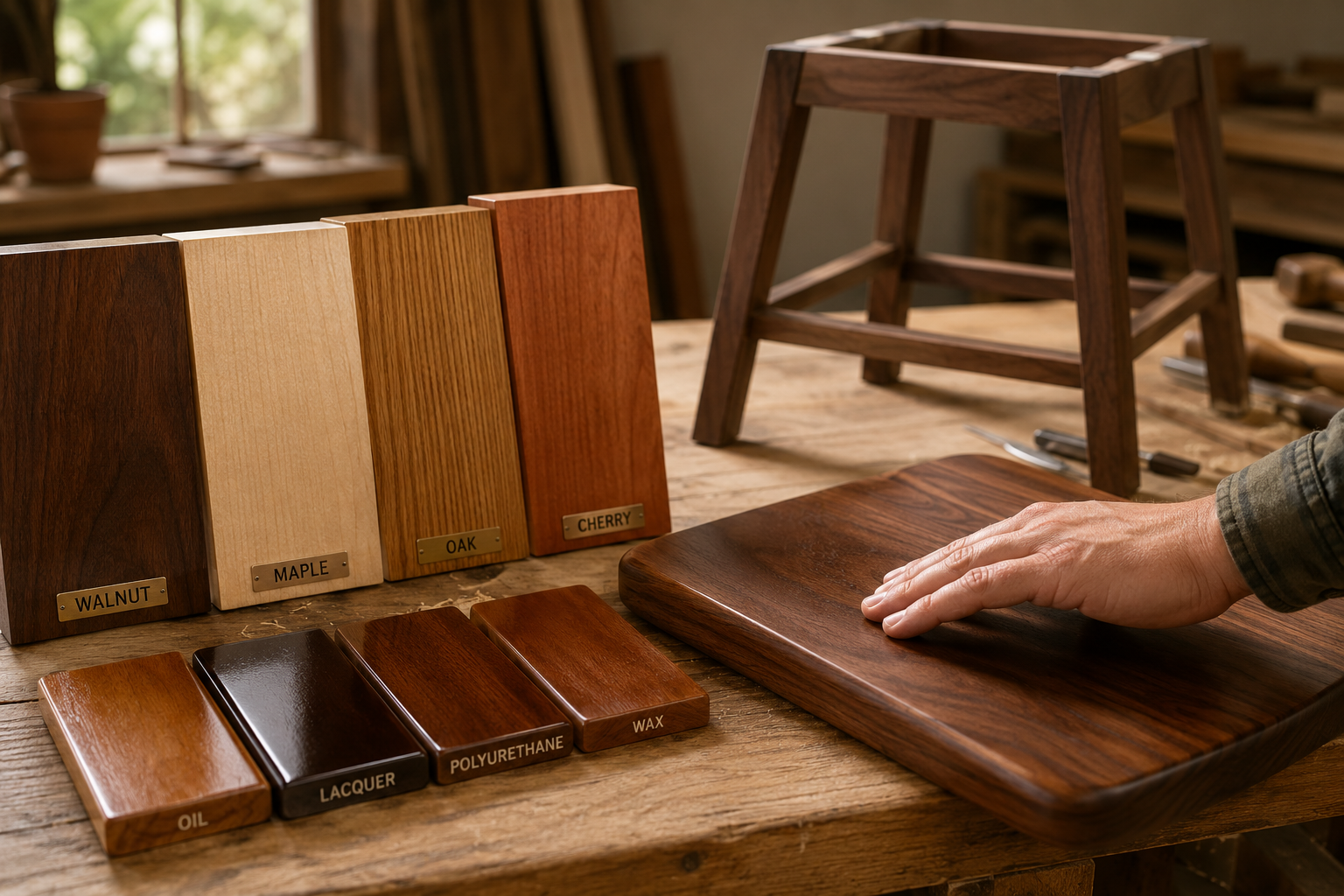
- Oak (Red or White): Excellent strength, distinct open grain, and good workability. White oak is particularly durable and water-resistant.
- Maple: Very hard and dense, with a fine, uniform grain. It’s highly resistant to dents and scratches, making it ideal for high-traffic furniture.
- Walnut: Known for its rich, dark color and beautiful grain patterns. Walnut is strong, stable, and works well, though it can be more expensive.
- Cherry: Features a beautiful reddish-brown color that deepens with age. It’s moderately hard and machines well, offering a classic, refined look.
Consider the environment where the bar stools will be used. If they are for an outdoor area, weather-resistant woods like Teak or Ipe would be more suitable, though they require different joinery and finishing considerations. Sourcing reclaimed and salvaged wood can also provide unique character and sustainability.
Seat Material Considerations
For ergonomic comfort, the seat material is paramount.
- Solid Wood: A sculpted solid wood seat can be highly ergonomic and durable, offering a classic look. Carving a slight dish or contour improves comfort significantly.
- Upholstered: For maximum comfort, an upholstered seat with quality foam (high-density foam for support, memory foam for contouring) and durable fabric (leather, vinyl, or heavy-duty upholstery fabric) is often preferred.
- Woven (Cane, Rush): Offers breathability and a traditional aesthetic but may require a cushion for prolonged sitting.
Essential Finishing Techniques
A proper finish protects the wood, enhances its natural beauty, and makes it easier to clean and maintain.
- Sanding: Begin with coarse sandpaper (80-100 grit) and progressively move to finer grits (180-220 grit) for a smooth surface. Proper sanding is the foundation of any good finish.
- Staining: If desired, a wood stain can alter the color of the wood, highlighting its grain. Apply evenly and wipe off excess according to manufacturer instructions.
- Protective Topcoats:
- Polyurethane: Highly durable, offering excellent resistance to moisture, scratches, and abrasion. Available in oil-based (more ambering) and water-based (clearer) formulations.
- Varnish: Similar to polyurethane but often more flexible, good for pieces that might experience slight movement.
- Oil Finishes (Tung Oil, Linseed Oil): Penetrate the wood, providing a natural-looking, soft sheen that is easy to repair. Offers good protection but requires reapplication over time. For insights on natural wood finishing techniques, explore our comprehensive guide.
- Lacquer: Dries quickly and provides a hard, durable finish with excellent clarity, often used in professional settings.
“The right wood, meticulously joined and flawlessly finished, elevates a bar stool from mere seating to a cherished piece of furniture that endures for generations.”
Consider the environmental factors of your workshop when applying finishes. Proper ventilation is crucial. Our guide on building a DIY smart workshop dust collection system can help maintain a cleaner and safer workspace.
Conclusion
Building Bar Stools with Backs: Ergonomic Designs and Advanced Joinery for Comfort is a rewarding woodworking endeavor that combines the art of craftsmanship with the science of human comfort. By meticulously planning for ergonomic principles such as optimal seat height, depth, and a supportive backrest, woodworkers can create pieces that are not only visually appealing but also promote well-being. The integration of advanced joinery techniques, like robust mortise and tenons, elegant dovetails, and strong bridle joints, ensures structural integrity and showcases a higher level of skill, guaranteeing longevity and enduring beauty. Finally, thoughtful material selection and a meticulous finishing process bring the entire project to fruition, protecting the wood and enhancing its natural character.
For your next project, take the time to sketch out your ergonomic dimensions, practice your advanced joinery cuts, and carefully consider your wood and finish choices. The extra effort invested in these areas will result in custom bar stools that offer unparalleled comfort, stand as testaments to your woodworking prowess, and become cherished additions to any space.