
The average lifespan of a well-crafted wooden table can exceed several decades, but only if the right wood is chosen for its specific purpose. Selecting wood is not merely an aesthetic decision; it’s a critical engineering choice that dictates a table’s durability, stability, and overall longevity. This guide provides an in-depth look at The Ultimate Wood Selection Guide for Tables: Hardwoods vs. Softwoods and Grain Patterns, empowering you to make informed decisions for your next woodworking project, whether it’s a robust dining table or a delicate accent piece.
Key Takeaways
- Hardwoods offer superior durability and impact resistance due to their dense cellular structure, making them ideal for high-traffic tables like dining tables.
- Softwoods provide cost-effective and lighter alternatives with distinct aesthetic appeal, often suitable for rustic or less intensely used tables.
- Grain patterns significantly influence both aesthetics and structural properties, with different cuts (plain sawn, quarter sawn, rift sawn) revealing unique visual characteristics and stability benefits.
- Moisture content and dimensional stability are crucial factors to consider, as they directly impact how a table will behave in different environments.
- Matching wood properties to the table’s intended use is paramount for ensuring longevity and satisfaction with the finished piece.
Hardwoods vs. Softwoods: Understanding the Fundamental Differences for Table Construction
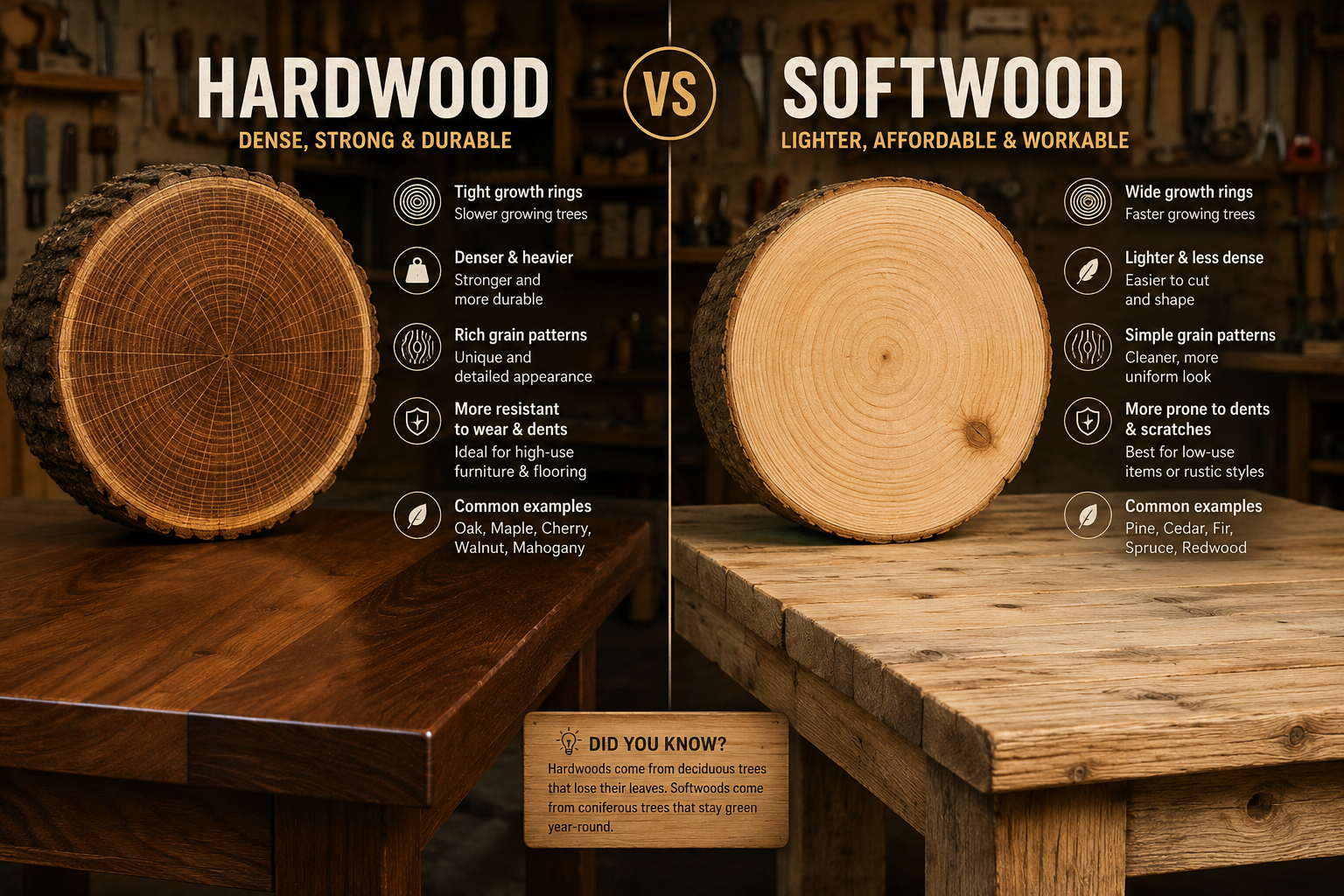
When embarking on any table construction project in 2026, the first major decision often revolves around choosing between hardwoods and softwoods. Despite their names, the terms “hardwood” and “softwood” don’t always refer to the actual physical hardness of the wood. Rather, they classify wood based on the tree’s reproductive characteristics. Hardwoods come from deciduous trees (angiosperms) that lose their leaves annually, while softwoods come from coniferous trees (gymnosperms) that typically have needles and cones.
The cellular structure of hardwoods is generally more complex, featuring specialized vessels for water transport, which contributes to their higher density and strength. Softwoods, conversely, have a simpler, more uniform cell structure, often making them lighter and easier to work with.
Characteristics of Hardwoods for Tables
Hardwoods are renowned for their strength, durability, and often beautiful, intricate grain patterns, making them a top choice for furniture that needs to withstand significant wear and tear.
Pros:
- Durability and Longevity: Hardwoods are dense and resistant to dents, scratches, and wear, ideal for dining tables, kitchen islands, and desks.
- Aesthetic Appeal: Many hardwoods exhibit rich colors and distinctive grain patterns that become more pronounced with various finishes.
- Stability: Generally more dimensionally stable than softwoods, meaning they are less prone to warping and shrinking with changes in humidity.
- Value: Tables crafted from high-quality hardwoods often command a higher price and retain their value over time.
Cons:
- Cost: Hardwoods are typically more expensive than softwoods, both in raw material and sometimes in processing.
- Weight: Their density makes them heavier, which can be a consideration for large tables or those that need to be moved frequently.
- Workability: Can be harder to cut, shape, and sand, requiring sharper tools and more effort.
Popular Hardwoods for Tables:
- Oak (Red and White): Known for its distinct open grain and excellent durability. White oak is particularly resistant to moisture, making it suitable for outdoor applications or kitchens.
- Maple: A very hard and dense wood with a fine, uniform grain. It’s highly resistant to dents and scratches, perfect for tabletops that see heavy use.
- Cherry: Offers a smooth, close grain and a beautiful reddish-brown color that darkens with age and exposure to light. It’s a premium choice for fine furniture.
- Walnut: Features a rich, dark brown color and striking grain patterns. It’s strong, durable, and considered a luxury wood for sophisticated designs.
- Ash: A flexible and strong wood with a pronounced grain, often used for shaker-style furniture due to its good bending properties.
- Mahogany: Prized for its reddish-brown color, fine grain, and excellent workability, often seen in classic, elegant furniture. For those interested in enhancing its natural beauty, exploring mahogany wood finishing techniques can yield stunning results.
Characteristics of Softwoods for Tables
Softwoods, while generally less dense than hardwoods, offer their own set of advantages, particularly for projects where budget, weight, or a specific aesthetic (like rustic or farmhouse) is a priority.
Pros:
- Cost-Effectiveness: Softwoods are generally more affordable, making them excellent for larger projects or those on a tighter budget.
- Workability: Easier to cut, shape, and sand, making them more forgiving for beginners or for projects requiring intricate detailing.
- Weight: Lighter than hardwoods, which can be beneficial for portable tables or structures where weight is a concern.
- Aesthetic Versatility: Their typically lighter color and distinctive knots can lend a charming, rustic, or casual look.
Cons:
- Durability: More susceptible to dents, scratches, and wear than hardwoods.
- Stability: Can be more prone to expansion, contraction, and warping, especially if not properly dried or finished.
- Appearance: While aesthetically pleasing in their own right, they may not offer the same level of sophistication as some hardwoods for formal settings.
Popular Softwoods for Tables:
- Pine: Widely available and affordable, pine is light-colored with visible knots, often used for rustic, farmhouse, or casual furniture. It takes paint and stain well.
- Cedar: Known for its aromatic scent and natural resistance to rot and insects, making it an excellent choice for outdoor tables.
- Fir (Douglas Fir): Strong for a softwood, with a straight grain, often used in construction but also for sturdy, utilitarian tables.
- Redwood: Highly resistant to decay and insects, and stable, making it another prime candidate for outdoor furniture. Its reddish hue is also attractive.
- Spruce: Similar to pine in workability and cost, often used for framing and light furniture.
Deciding between hardwoods and softwoods ultimately depends on the table’s function, desired aesthetic, and budget. For instance, a DIY outdoor wood pizza oven stand would benefit from moisture-resistant cedar or redwood, while a formal dining table might call for the robust elegance of oak or walnut.
Unveiling the Beauty and Impact of Wood Grain Patterns
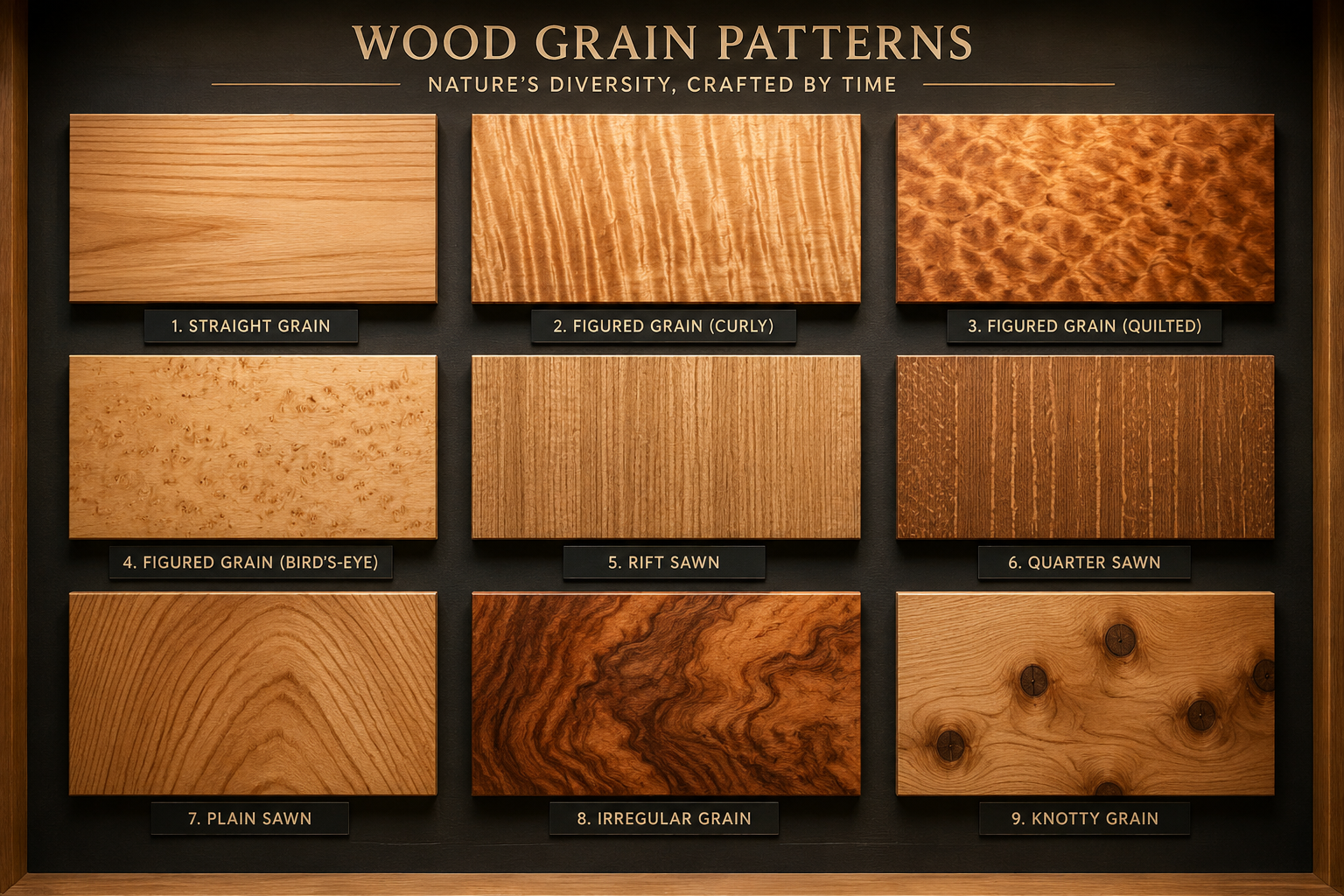
Beyond the hardwood versus softwood debate, the grain pattern of wood is a pivotal element that profoundly influences a table’s visual appeal and structural characteristics. Grain refers to the orientation of wood fibers, and how a log is cut directly impacts the visible pattern and the wood’s behavior. Understanding these patterns is essential for The Ultimate Wood Selection Guide for Tables: Hardwoods vs. Softwoods and Grain Patterns.
Common Sawing Techniques and Their Grain Patterns
The method used to cut lumber from a log dictates the resulting grain pattern and, importantly, the wood’s stability.
Plain Sawn (Flat Sawn):
- Description: This is the most common and economical way to cut lumber. The log is cut straight through, tangent to the growth rings.
- Grain Pattern: Produces a distinctive “cathedral” or “flame” pattern on the face of the board due to the visible arcs of the growth rings.
- Characteristics: Boards tend to be less stable, more prone to cupping and warping, and can expand and contract more across their width. However, it yields the widest boards and showcases beautiful, prominent grain.
- Best for: Tabletops where a bold, natural grain is desired and some movement is acceptable or can be managed through proper joinery and finishing.
Quarter Sawn:
- Description: The log is first quartered lengthwise, and then each quarter is sawn perpendicular to the growth rings, through the center of the log.
- Grain Pattern: Features straight, parallel lines running the length of the board. In some woods like oak, this method also exposes beautiful medullary rays (flecking), which are highly prized.
- Characteristics: Offers superior dimensional stability, making it highly resistant to warping, twisting, and cupping. It is also harder and more wear-resistant on the face.
- Best for: High-end tabletops, cabinet doors, and applications where stability and a refined, linear grain are paramount. For projects demanding precision, learning mastering dovetail joints with hand tools could be highly beneficial when working with quarter-sawn lumber.
Rift Sawn:
- Description: Cut with the growth rings at a 30-60 degree angle to the face of the board. This method is the least wasteful, but produces less wide boards.
- Grain Pattern: Extremely consistent, straight-line grain pattern with no cathedraling or flecking.
- Characteristics: Even more dimensionally stable than quarter-sawn, with minimal expansion and contraction. It is also highly resistant to twisting.
- Best for: Premium furniture, Mission-style furniture, and applications where absolute straightness of grain and maximum stability are desired, such as table legs or rails.
Figured Grain and Special Patterns
Beyond the standard sawing techniques, some wood species exhibit unique “figured” grain patterns that are highly sought after for their aesthetic beauty. These are often the result of unusual growth conditions, genetic predisposition, or the presence of burls.
- Curly: Wavy, ripple-like patterns that create a three-dimensional effect. Common in maple, cherry, and birch.
- Quilted: Resembles the surface of a quilt, with irregular, wavy depressions. Often found in maple.
- Bird’s-Eye: Small, circular patterns resembling a bird’s eye, typically found in maple.
- Spalted: Caused by fungal decay, creating dark lines and patterns throughout the wood, offering a unique, artistic look.
- Burl: Irregular, swirling grain patterns formed by abnormal growth, often found at the base of trees or where branches meet the trunk. Highly decorative and often used for veneers or small, intricate pieces.
When planning your table, consider how the grain pattern will complement the design. A live edge table, for instance, celebrates the natural, untamed grain and contours of the wood slab, often incorporating unique features like cracks or bark inclusions. For more on such projects, our guide on live edge wood projects from design to execution offers valuable insights.
Matching Wood Properties to Table Requirements
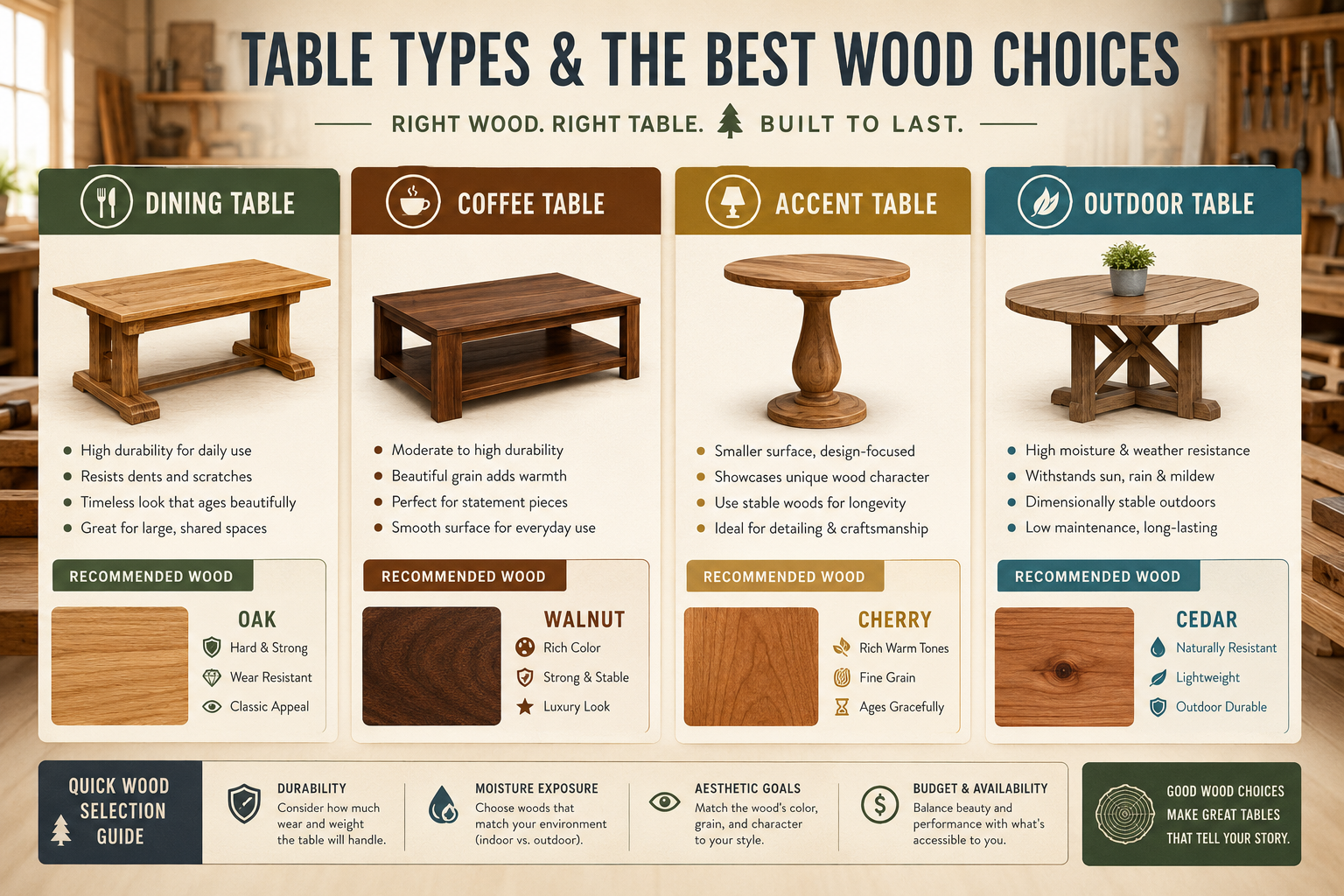
The ultimate success of your table project hinges on a thoughtful alignment of wood properties with the table’s intended function, environment, and desired aesthetic. This section brings together the considerations discussed in The Ultimate Wood Selection Guide for Tables: Hardwoods vs. Softwoods and Grain Patterns to provide a holistic approach to selection.
Table Type and Usage Considerations
Different types of tables place varying demands on the wood.
- Dining Tables: These are high-traffic pieces, subject to spills, impacts, and frequent cleaning. Hardwoods like oak, maple, and walnut are excellent choices due to their durability, resistance to dents, and long-term stability. Quarter-sawn lumber can offer added stability for large tabletops.
- Coffee Tables & End Tables: While still experiencing some use, these generally don’t endure the same abuse as dining tables. Hardwoods are still preferred for durability, but slightly softer hardwoods like cherry or even some well-finished softwoods (e.g., pine for a rustic look) can be suitable. The aesthetic of the grain pattern plays a significant role here. End Table Mastery: 5 Designs from Rustic to Mid-Century Modern offers inspiration for these projects.
- Desks/Worksurfaces: Require a durable, smooth surface resistant to scratches from writing or computer equipment. Maple, oak, and ash are strong contenders. A fine, tight grain is often preferred for a clean writing surface.
- Outdoor Tables: Must withstand moisture, UV radiation, temperature fluctuations, and pests. Naturally resistant woods are crucial. Softwoods like cedar, redwood, and treated pine are excellent, as are durable hardwoods like white oak or teak.
- Accent Tables/Decorative Pieces: For tables that are more ornamental than functional, the visual appeal of the wood, including figured grain patterns, might take precedence over extreme durability. Softer, more exotic woods could be considered.
Environmental Factors
The environment in which the table will reside significantly impacts wood choice.
- Humidity: High or fluctuating humidity can cause wood to expand and contract, leading to warping or cracking. Properly seasoned (dried) wood and stable species (like quarter-sawn hardwoods) are crucial in such conditions. Good finishing techniques also help seal the wood.
- Direct Sunlight: Prolonged exposure to UV light can cause some woods (like cherry) to darken, while others (like pine) might fade or yellow. Consider the wood’s natural reaction to light and choose appropriate finishes with UV inhibitors.
- Temperature Extremes: Rapid temperature changes, particularly in conjunction with humidity shifts, can stress wood. This is particularly relevant for outdoor or unconditioned spaces.
Aesthetic and Design Style
The wood’s color, grain, and figure contribute immensely to the table’s overall design style.
- Modern/Minimalist: Often favors woods with a clean, straight, or subtle grain pattern, like rift-sawn oak, maple, or walnut. Lighter woods often complement a minimalist palette.
- Rustic/Farmhouse: Emphasizes natural beauty, knots, and imperfections. Pine, cedar, or reclaimed wood with prominent, plain-sawn grain patterns are ideal. Sourcing reclaimed and salvaged wood can provide unique character for these styles.
- Traditional/Classic: Richer, darker hardwoods with refined grain, such as cherry, mahogany, or walnut, are often chosen for their timeless elegance.
- Contemporary/Transitional: Offers more flexibility, allowing for a mix of hard and softwoods depending on the specific aesthetic goal. Often, unique grain patterns or contrasting wood combinations are used.
Financial and Practical Considerations
- Budget: Hardwoods typically cost more than softwoods. Consider the overall budget and whether premium hardwoods are necessary for the table’s function.
- Workability: If you are a beginner or have limited tools, easier-to-work softwoods or softer hardwoods like poplar might be a good starting point. For more advanced joinery, explore hand tool joinery for visible wood joints.
- Finish: The type of wood influences how it takes stains and finishes. Open-grain woods like oak absorb stain differently than closed-grain woods like maple. Test finishes on scrap pieces. For a comprehensive understanding of various treatments, refer to our wood finishing techniques guide.
By carefully weighing these factors, you can confidently select the perfect wood that not only meets your aesthetic desires but also ensures the longevity and performance of your table for years to come. This deliberate selection process is key to crafting beautiful and functional furniture in 2026 and beyond.
Conclusion
Choosing the ideal wood for a table is a foundational decision that impacts every aspect of the finished piece, from its structural integrity to its aesthetic appeal. By delving into The Ultimate Wood Selection Guide for Tables: Hardwoods vs. Softwoods and Grain Patterns, we have explored the distinct advantages and disadvantages of each wood type, the profound influence of different sawing techniques on grain patterns, and the critical importance of matching wood properties to the table’s specific requirements.
Whether you opt for the robust durability of a hardwood like oak for a busy dining table, the natural charm of pine for a rustic coffee table, or the weather resistance of cedar for an outdoor piece, an informed choice ensures satisfaction. Remember to consider the table’s intended use, the environment it will inhabit, your design aspirations, and your budget. Selecting the right wood is an investment in quality and longevity, transforming a simple project into a lasting heirloom.
Actionable Next Steps:
- Define Your Table’s Purpose: Clearly outline how the table will be used, its location, and the expected level of wear and tear.
- Research Wood Species: Explore specific hardwoods and softwoods that align with your requirements for durability, aesthetics, and workability.
- Inspect Grain Patterns: Understand the implications of plain-sawn, quarter-sawn, and rift-sawn lumber on stability and appearance.
- Consider Your Skill Level and Tools: Choose a wood that matches your woodworking experience and available equipment.
- Obtain Samples: If possible, acquire small samples of your preferred woods to test finishes and observe their natural characteristics before committing to a larger purchase.