
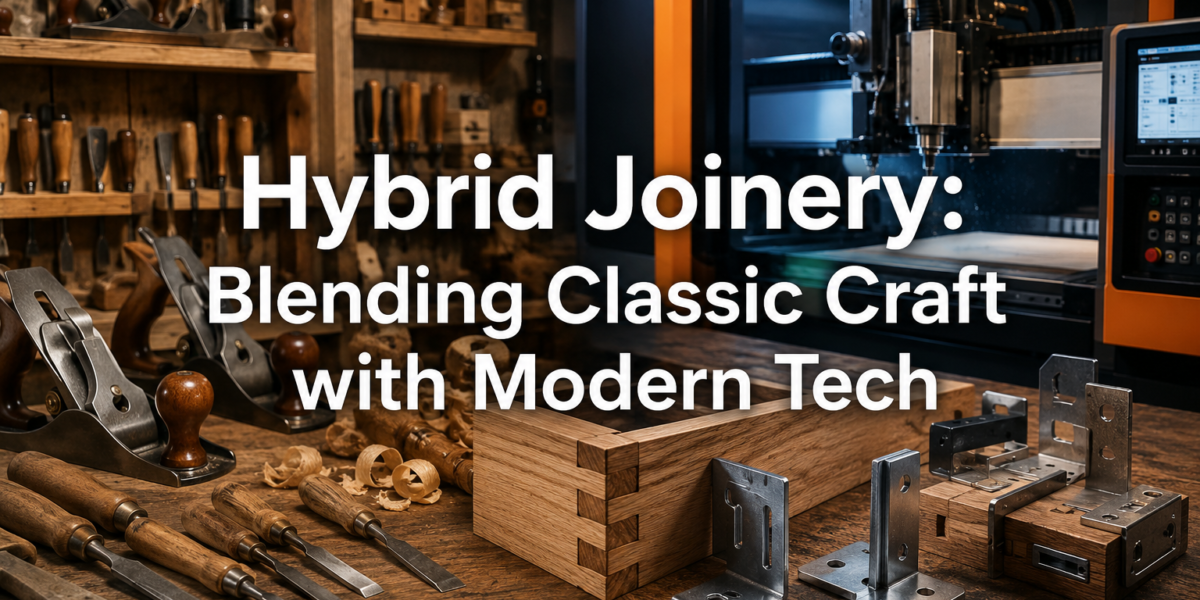
The woodworking landscape is rapidly evolving. For decades, the craft relied on time-honored techniques, often characterized by the strength and beauty of classic wood joints. However, a significant shift is underway in 2026, as makers increasingly integrate advanced manufacturing methods. Hybrid joinery systems that fuse mortise-and-tenon with CNC pockets and modular metal inserts are rising as makers chase faster, repeatable builds. This article explores hybrid joinery tutorials blending classic joints with CNC and metal connectors, offering a comprehensive guide to mastering these innovative methods for superior strength, efficiency, and aesthetic versatility.
Key Takeaways
- Hybrid joinery combines traditional wood joints with modern CNC machining and metal connectors to enhance strength and efficiency.
- Integrating CNC allows for high precision, repeatability, and the creation of complex joint geometries that simplify assembly.
- Metal connectors provide superior mechanical strength, especially in high-stress applications or when working with difficult wood species.
- Mastering hybrid joinery requires understanding both traditional woodworking principles and digital fabrication techniques.
- Numerous tutorials are available in 2026 to guide woodworkers through these blended approaches, from basic concepts to advanced project applications.
The Evolution of Joinery: Why Hybrid is the Future
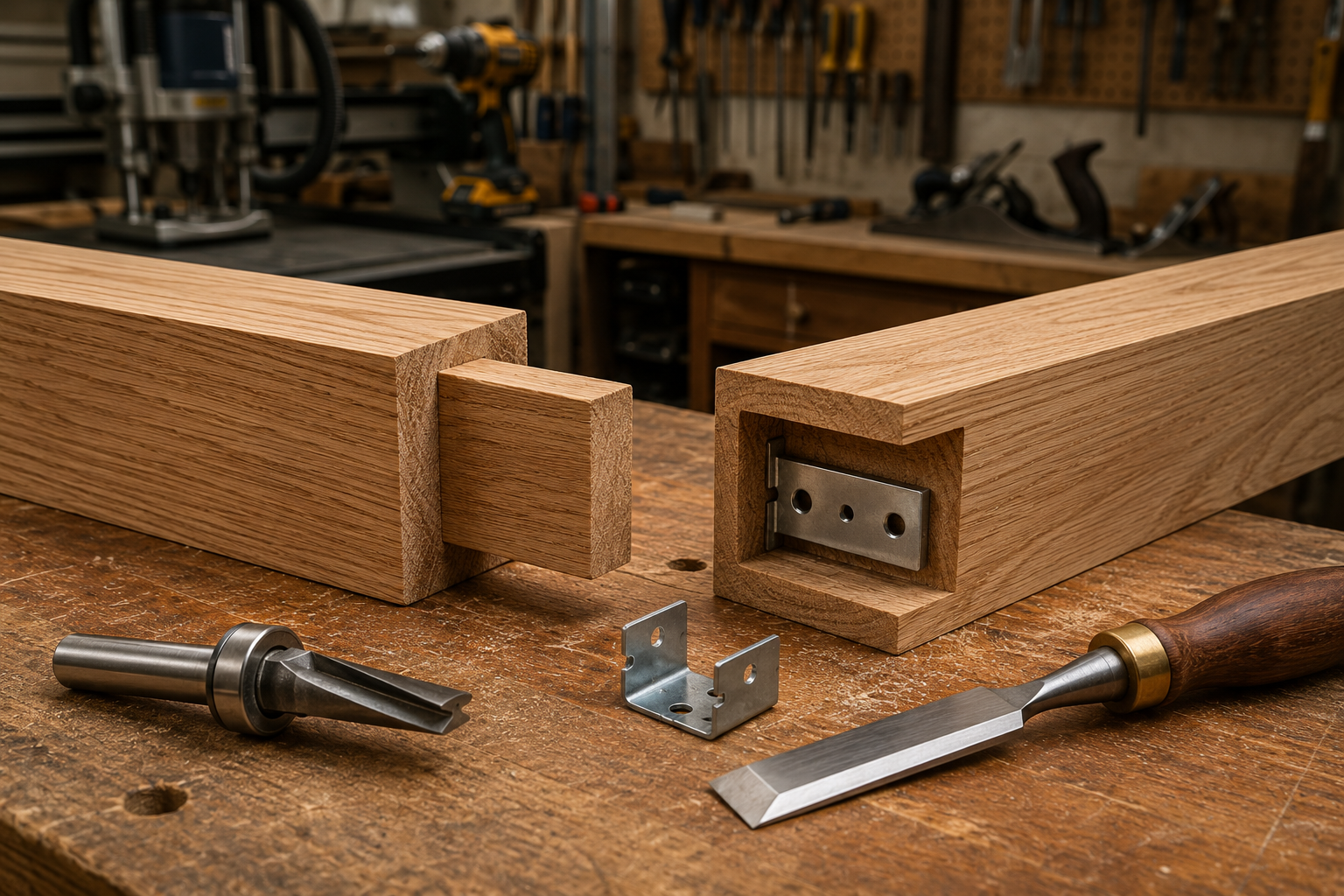
Traditional woodworking joints, dovetails, mortise and tenons, finger joints, have proven their endurance over centuries. Their strength comes from clever interlocking wood fibers, creating beautiful and durable connections. Yet, hand-cutting these joints can be time-consuming and demand a high level of skill. This is where the power of modern technology steps in.
CNC (Computer Numerical Control) machines offer unparalleled precision and repeatability. They can cut complex shapes, pockets, and profiles with incredible accuracy, far surpassing what even the most skilled artisan can achieve consistently by hand. When these capabilities are combined with the inherent strength of classic joinery, and further bolstered by engineered metal connectors, the result is a joinery system that offers the best of all worlds. This fusion defines “Hybrid joinery tutorials blending classic joints with CNC and metal connectors.”
The impetus for this evolution is clear: woodworkers in 2026 seek to build stronger, more reliable structures while optimizing production time. Whether for custom furniture, architectural elements, or intricate art pieces, hybrid joinery delivers. It’s about respecting the past while embracing the future.
Advantages of Blending Classic, CNC, and Metal Connectors
The synergy created by combining these three elements offers distinct advantages:
- Enhanced Strength: Metal connectors, such as gussets, brackets, and specialized fasteners, significantly increase the load-bearing capacity and resistance to racking forces, especially in large-scale structures or furniture subject to heavy use.
- Precision and Repeatability: CNC machining ensures that all components, including tenons, mortise pockets, and recesses for metal connectors, are cut with exact dimensions every time. This precision leads to tighter joints and faster assembly.
- Time Efficiency: While designing for CNC takes initial effort, the actual cutting process is much faster than hand-tool methods for complex or repetitive joints. This translates to reduced production times, particularly for batch work.
- Design Flexibility: The ability to cut intricate shapes with CNC opens up new design possibilities. Woodworkers can create joints that are aesthetically pleasing, functionally superior, and previously unachievable with traditional methods alone.
- Simplified Assembly: Precisely machined components and pre-drilled holes for metal connectors can make the assembly process remarkably straightforward, often reducing the need for extensive clamping or specialized jigs.
- Mitigation of Wood Movement: Metal connectors can sometimes be designed to accommodate wood movement better than rigid all-wood joints, preventing stress and potential cracking. Understanding understanding wood movement is crucial here.
Essential Components of Hybrid Joinery Tutorials Blending Classic Joints with CNC and Metal Connectors
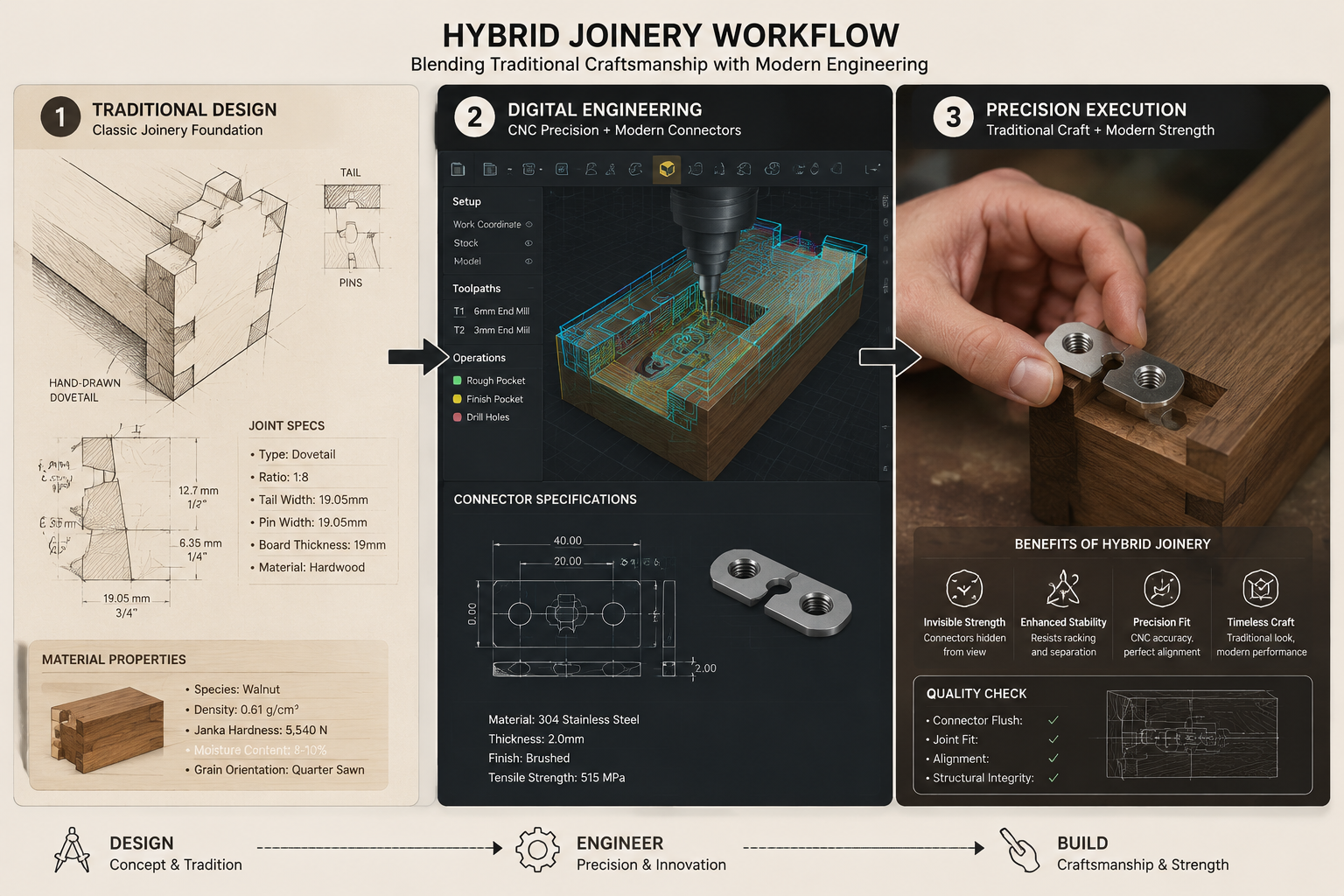
To effectively implement hybrid joinery, woodworkers need a foundational understanding of each component and how they interact. Tutorials focusing on “Hybrid joinery tutorials blending classic joints with CNC and metal connectors” typically break down these elements into manageable learning modules.
Classic Joinery Foundations
Even with advanced tools, the principles of classic joinery remain paramount. Understanding how wood fibers interact and the structural advantages of different joint types is critical for successful hybrid designs.
- Mortise and Tenon: A cornerstone of woodworking, this joint provides excellent strength and resistance to racking. In a hybrid context, the mortise or tenon might be cut via CNC for precision, and then a metal connector could reinforce the joint, perhaps with through-bolts or concealed plates.
- Dovetails: Renowned for their strength in resisting pull-apart forces, dovetails are often cut by hand or with a router jig. Hybrid approaches might involve CNC-cut half-blind dovetails that perfectly align with a structural metal backplate. For more on this, explore mastering dovetail joints with hand tools or mastering dovetail joinery for drawers.
- Finger Joints (Box Joints): Offering a large gluing surface, these are ideal for boxes and drawers. CNC can rapidly produce highly accurate finger joints, which could then be augmented with corner brackets for extreme durability in heavy-duty applications.
- Lap Joints: Simple yet effective, these can be quickly cut with a table saw or router. For hybrid designs, a lap joint might be used as a primary connection, with a decorative or structural metal plate screwed or bolted across the joint for added flair and strength.
The Role of CNC Machining
CNC equipment transforms how joints are made. From carving intricate patterns to cutting precise joinery, its capabilities are vast.
- Precision Joint Cutting: CNC routers can accurately cut mortises, tenons, rebates, and dadoes. This means perfect fitting joints that require minimal sanding or adjustment.
- Pocketing for Connectors: One of the most significant hybrid applications is using CNC to create precise pockets or recesses for metal connectors. This allows connectors to be fully concealed or partially exposed as a design element.
- Through-Tenon and Wedge Prep: CNC can precisely cut through-tenons and even the mortises for contrasting wedges, ensuring a tight, strong connection.
- Parametric Design: With CAD/CAM software, designs can be made parametrically, meaning joint sizes and connector placements can be easily adjusted for different material thicknesses or project scales. This makes “Hybrid joinery tutorials blending classic joints with CNC and metal connectors” highly scalable.
Integrating Metal Connectors
Metal connectors are not just for structural steel; they play a vital role in hybrid woodworking.
- Hidden Fasteners: Specialized connectors like knock-down fittings, concealed shelving brackets, or threaded inserts can provide immense strength without compromising the clean lines of a wooden piece.
- Structural Brackets: Angle brackets, gussets, and plates, often made from steel or aluminum, can reinforce high-stress areas. These can be exposed for an industrial aesthetic or recessed via CNC for concealment.
- Threaded Rods and Bolts: For large assemblies, through-bolts with washers and nuts can exert enormous clamping force, holding pieces together more securely than glue alone. CNC can precisely drill the necessary holes.
- Specialty Joinery Hardware: Connectors like dominoes (from Festool), although wood, function similarly to metal connectors in their precision and ease of insertion. Many hybrid tutorials explore how CNC can replicate or enhance these types of connections for various dowel or spline joints.
| Joinery Type | Traditional Method | CNC Integration | Metal Connector Integration | Benefits of Hybrid Approach |
|---|---|---|---|---|
| Mortise & Tenon | Hand chiseling, router | Precision routing of mortise & tenon | Concealed plates, through-bolts | High strength, faster assembly |
| Dovetail | Hand sawing, router jig | Accurate half-blind pockets | Reinforcing backplates, corner brackets | Aesthetically pleasing, enhanced pull strength |
| Finger Joint | Table saw sled, router | Rapid, accurate cutting | External corner brackets, internal plates | Fast production, superior shear strength |
| Lap Joint | Table saw, router | Precise dadoes, rebates | Decorative or structural plates/screws | Simplified design, added stability |
Practical Applications and Project Tutorials in 2026
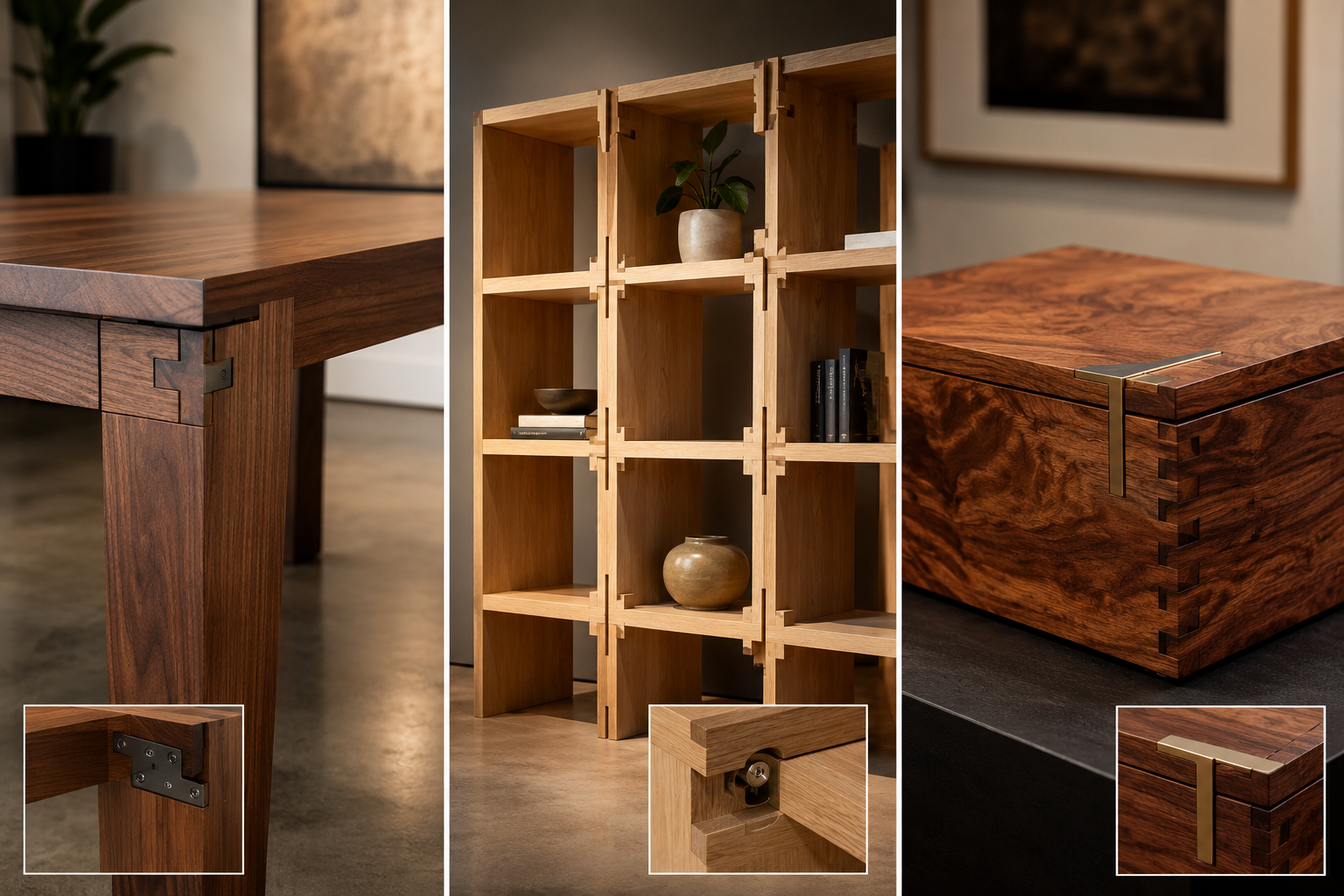
The real value of “Hybrid joinery tutorials blending classic joints with CNC and metal connectors” lies in their practical application. Many projects in 2026 are leveraging these techniques to achieve results that are both durable and visually striking.
Designing for Hybrid Joinery
The design phase is where the magic happens. It involves conceptualizing how traditional joints, CNC capabilities, and metal connectors will harmoniously work together.
- CAD/CAM Software Proficiency: Tools like Fusion 360, VCarve Pro, or even simpler CAD programs are essential for designing parts and generating toolpaths for the CNC machine. This allows for precise planning of mortises, tenons, and recesses for metal connectors.
- Material Selection: The type of wood and metal chosen impacts both aesthetics and structural integrity. Tutorials often cover how different wood species react to CNC machining and how to select appropriate metal alloys for specific applications.
- Joint Optimization: Deciding whether a joint should be fully wooden, fully metallic, or a hybrid requires careful consideration of stress points, aesthetics, and assembly methods. For projects like building a simple wooden bookshelf, hybrid techniques can add immense stability.
Step-by-Step Tutorial Examples
Many online platforms and woodworking schools offer comprehensive tutorials. Here are common project types explored:
CNC-Reinforced Mortise and Tenon Table Base:
- Concept: A robust dining table base where traditional mortise and tenons are CNC-cut for perfect fit and then reinforced with concealed metal plates screwed into the end grain.
- Tutorial Focus: Designing the mortise and tenon in CAD, creating CNC toolpaths for the joint and plate recesses, selecting appropriate steel plates, and assembly techniques. This ensures a durable table that can withstand significant loads, much like building statement furniture pieces.
Modular Shelving Units with CNC and Knock-Down Hardware:
- Concept: Building a versatile shelving system using CNC to cut interlocking wooden components (e.g., finger joints or lap joints) and integrate specific pockets for knock-down metal hardware.
- Tutorial Focus: Designing modular components, precise CNC cutting of intricate profiles, choosing the right knock-down fasteners for easy assembly and disassembly, and finishing. This is highly relevant to modular furniture design.
Live Edge Slab Furniture with Hidden Metal Connectors:
- Concept: Crafting a live edge table or bench where the wooden slabs are joined or supported using traditional methods (e.g., butterfly keys cut by hand or CNC) but with underlying, hidden metal bracing or threaded rod systems for long-term stability and flatness.
- Tutorial Focus: Selecting and preparing live edge slabs (see live edge slab selection and milling), designing custom metal supports, CNC routing channels for concealed connectors, and proper finishing for large surfaces.
Tools and Resources for Hybrid Joinery
To embark on these tutorials, specific tools and resources are invaluable:
- CNC Router: Essential for precise, repeatable cuts. Various sizes exist, from desktop models to large format machines.
- CAD/CAM Software: For design, simulation, and generating G-code for the CNC.
- Traditional Hand Tools: Chisels, planes, and marking gauges are still necessary for fine-tuning and detail work.
- Power Tools: Table saws, routers (for traditional router bits), and drills remain fundamental. Mastering the band saw can also be useful for initial stock preparation.
- Quality Metal Connectors: Sourcing reliable, appropriately sized, and aesthetically suitable metal hardware is key.
- Online Communities and Forums: Platforms where woodworkers share designs, techniques, and troubleshoot issues related to hybrid joinery.
Embracing “Hybrid joinery tutorials blending classic joints with CNC and metal connectors” signifies a commitment to pushing the boundaries of woodworking. It’s an approach that values efficiency and strength without sacrificing the timeless beauty of wood craftsmanship.
Conclusion
The integration of classic joinery techniques with the precision of CNC machining and the robustness of metal connectors represents a significant advancement in woodworking. “Hybrid joinery tutorials blending classic joints with CNC and metal connectors” offer a pathway for woodworkers in 2026 to create projects that are stronger, more efficient to produce, and possess a unique aesthetic appeal. This approach isn’t about replacing traditional skills but rather augmenting them with modern technology to achieve results that were once difficult or impossible.
By studying these tutorials, woodworkers can unlock new levels of precision, accelerate their production, and design innovative pieces that stand the test of time. The future of woodworking lies in this harmonious blend of old and new, allowing artisans to push creative boundaries while ensuring structural integrity.
Actionable Next Steps:
- Invest in Learning CAD/CAM: Start with free or affordable software trials to grasp the basics of digital design for CNC.
- Explore Basic CNC Operations: If you have access to a CNC machine, begin with simple cuts to understand its capabilities and limitations.
- Research Metal Connectors: Familiarize yourself with different types of metal fasteners and brackets suitable for woodworking applications.
- Practice on Scraps: Experiment with creating hybrid joints on scrap wood to perfect your techniques before committing to a major project.
- Seek Out Specific Tutorials: Look for “Hybrid joinery tutorials blending classic joints with CNC and metal connectors” that align with your current skill level and project interests.
References
- Crispin, L. (2020). Hybrid Woodworking: Integrating CNC and Hand Tools. Popular Woodworking Books.
- Koch, M. (2018). CNC for Woodworkers: The Complete Guide. Fox Chapel Publishing.
- Schwarz, C. (2019). The Anarchist’s Workbench. Lost Art Press.
SEO Meta Title: Hybrid Joinery Tutorials: Classic Joints, CNC & Metal Connectors
SEO Meta Description: Explore hybrid joinery tutorials blending classic wood joints with CNC precision and metal connectors for stronger, faster, and innovative woodworking projects in 2026.