
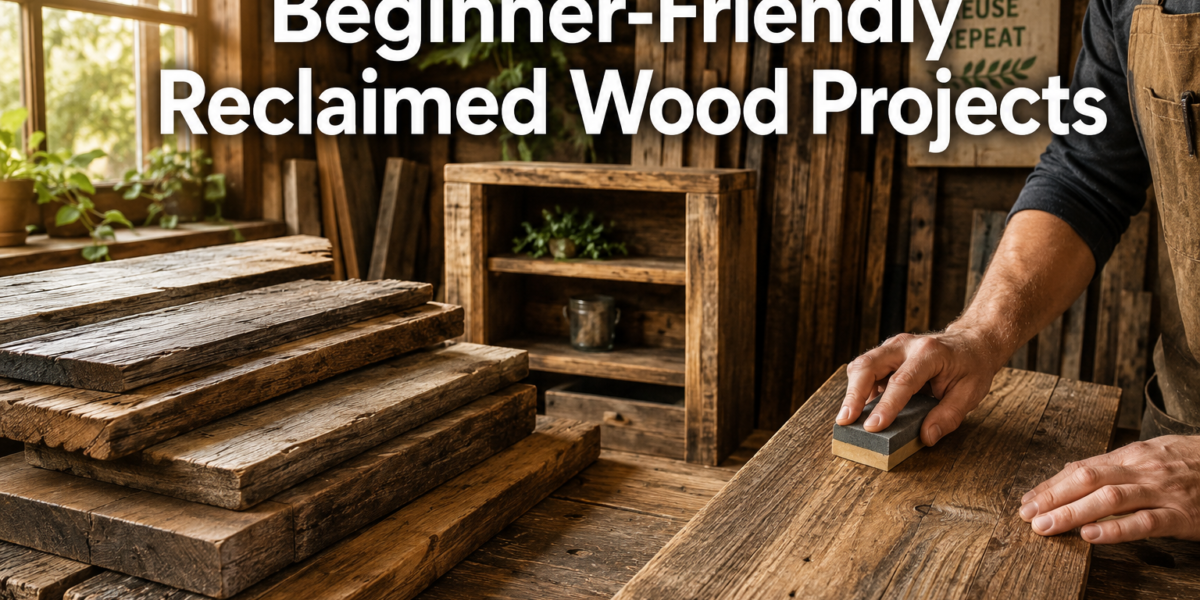
Over 80% of fallen urban trees end up as waste, contributing to landfills and squandering a valuable resource. As sustainability and sourcing transparency surge in 2026, eco-conscious makers are increasingly seeking simple builds that showcase reclaimed, story-rich local wood. This approach not only diverts material from waste streams but also imbues projects with unique character and a compelling narrative. For aspiring woodworkers, tackling beginner-friendly projects using reclaimed and urban lumber offers an accessible entry point into crafting, allowing them to transform overlooked materials into functional and beautiful pieces.
Key Takeaways
- Reclaimed and urban lumber provides a sustainable, character-rich material for woodworking.
- Beginners can start with simple projects like shelving, cutting boards, and decorative boxes.
- Essential tools for these projects are often basic and inexpensive.
- Proper sourcing and preparation of reclaimed wood are crucial for safety and project success.
- These projects offer a unique blend of craftsmanship, sustainability, and personal expression.
The Appeal of Beginner-Friendly Projects Using Reclaimed and Urban Lumber
The allure of working with reclaimed and urban lumber extends far beyond its aesthetic appeal. Each piece carries a history, whether it’s wood salvaged from an old barn, a deconstructed factory, or a fallen tree from a city park. This backstory adds an unparalleled depth and character that new, milled lumber simply cannot replicate. For beginners, this intrinsic character can be incredibly forgiving; small imperfections or irregularities often enhance the piece rather than detract from it.
One of the primary advantages for those embarking on beginner-friendly projects using reclaimed and urban lumber is the material’s unique visual qualities. Knots, nail holes, worm tracks, and natural distressing tell a visual story, giving projects an immediate sense of authenticity and warmth. Furthermore, using these materials aligns perfectly with the growing movement towards sustainable living and circular economies. Instead of contributing to deforestation, woodworkers give new life to materials that would otherwise be discarded.
The accessibility of these materials is also a significant draw. Urban lumber, often sourced from local arborists, city forestry departments, or even individuals removing trees, can sometimes be acquired for free or at a low cost. Reclaimed lumber yards, demolition sites, and online marketplaces offer other avenues. For guidance on finding these unique materials, explore Sourcing Reclaimed and Salvaged Wood: Quality Assessment, Re. This makes woodworking more affordable, breaking down one of the potential barriers for beginners.
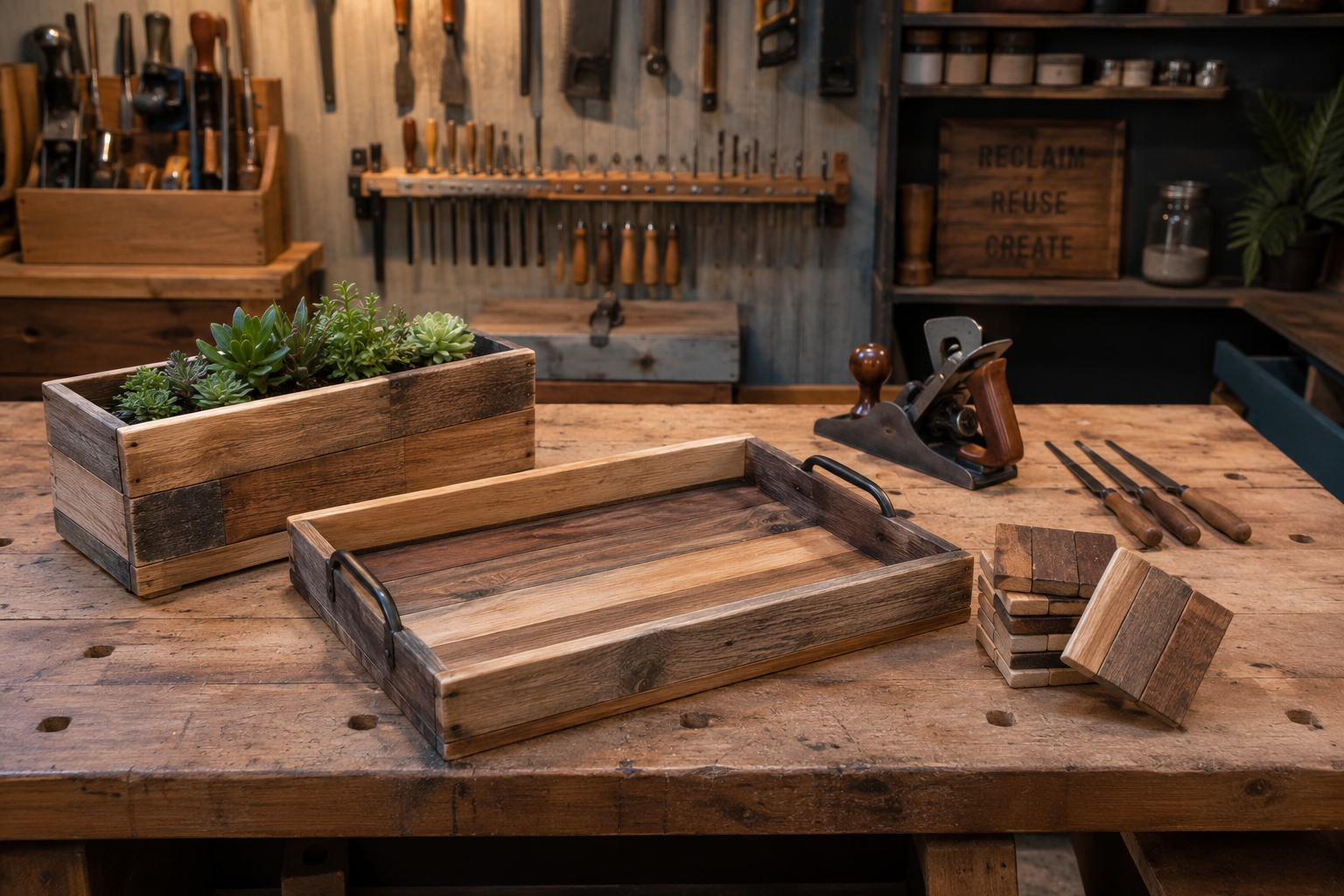
Beyond the material itself, the types of projects suitable for beginners are often straightforward, requiring minimal specialized tools or advanced techniques. This allows new woodworkers to focus on fundamental skills like measuring, cutting, joining, and finishing, building confidence with each completed item. The inherent “rustic” or “industrial” aesthetic often associated with reclaimed wood also means that minor flaws in craftsmanship can often be incorporated into the design, rather than seen as mistakes.
Why Choose Reclaimed Wood for Your First Projects?
- Unique Aesthetics: Every piece is distinct, offering unparalleled character and warmth.
- Sustainability: Reduces waste and demand for new timber, supporting eco-friendly practices.
- Cost-Effectiveness: Often more affordable, sometimes even free, compared to new lumber.
- Forgiving Material: Imperfections can be embraced, making it ideal for learning.
- Story & History: Each project carries a narrative, adding value and conversation.
Essential Tools and Techniques for Beginner-Friendly Projects
Starting out with reclaimed and urban lumber doesn’t require a fully outfitted professional workshop. Many beginner-friendly projects using reclaimed and urban lumber can be completed with a modest collection of hand tools and a few power tools. The key is to select tools that are versatile, safe, and relatively easy to master.
Basic Hand Tools:
- Measuring Tape & Pencil: Essential for accurate marking.
- Clamps: Indispensable for holding workpieces securely during cutting, drilling, and gluing.
- Hand Saw: A crosscut saw or a Japanese pull saw (Beginner’s Guide to Japanese Hand Saws: Precision Cuts and Essential Techniques for Fine Woodworking) is excellent for simple cuts.
- Hammer & Chisel: Useful for minor adjustments, removing old nails, or simple joinery.
- Sanding Blocks & Sandpaper: For preparing surfaces and achieving a smooth finish.
- Pry Bar: Crucial for safely deconstructing pallets or separating joined pieces of reclaimed wood.
Recommended Power Tools for Beginners:
| Tool | Primary Function | Why it’s useful for reclaimed lumber |
|---|---|---|
| Circular Saw | Straight cuts across large boards | Efficiently cuts down rough stock |
| Jigsaw | Curved cuts and intricate shapes | Versatile for various project designs |
| Cordless Drill | Drilling holes, driving screws | Essential for assembly |
| Orbital Sander | Efficient surface preparation | Speeds up sanding of rough surfaces |
Before diving into a project, it’s crucial to properly prepare your reclaimed wood. This often involves cleaning, de-nailing, and potentially flattening or dimensioning the lumber. For detailed guidance on preparing and assessing wood, refer to Sourcing Reclaimed and Salvaged Wood: Quality Assessment, Re. This preparation step is vital for safety, as old nails or hidden debris can damage tools and pose hazards.
Learning basic joinery techniques is also important. For many beginner projects, simple butt joints reinforced with screws and wood glue are sufficient. For more robust connections, pocket holes are an excellent beginner-friendly option, providing strong, concealed joints with a pocket hole jig. For a deeper dive into improving accuracy, consider exploring Beginner’s Guide to Essential Woodworking Jigs: Improve Accuracy and.
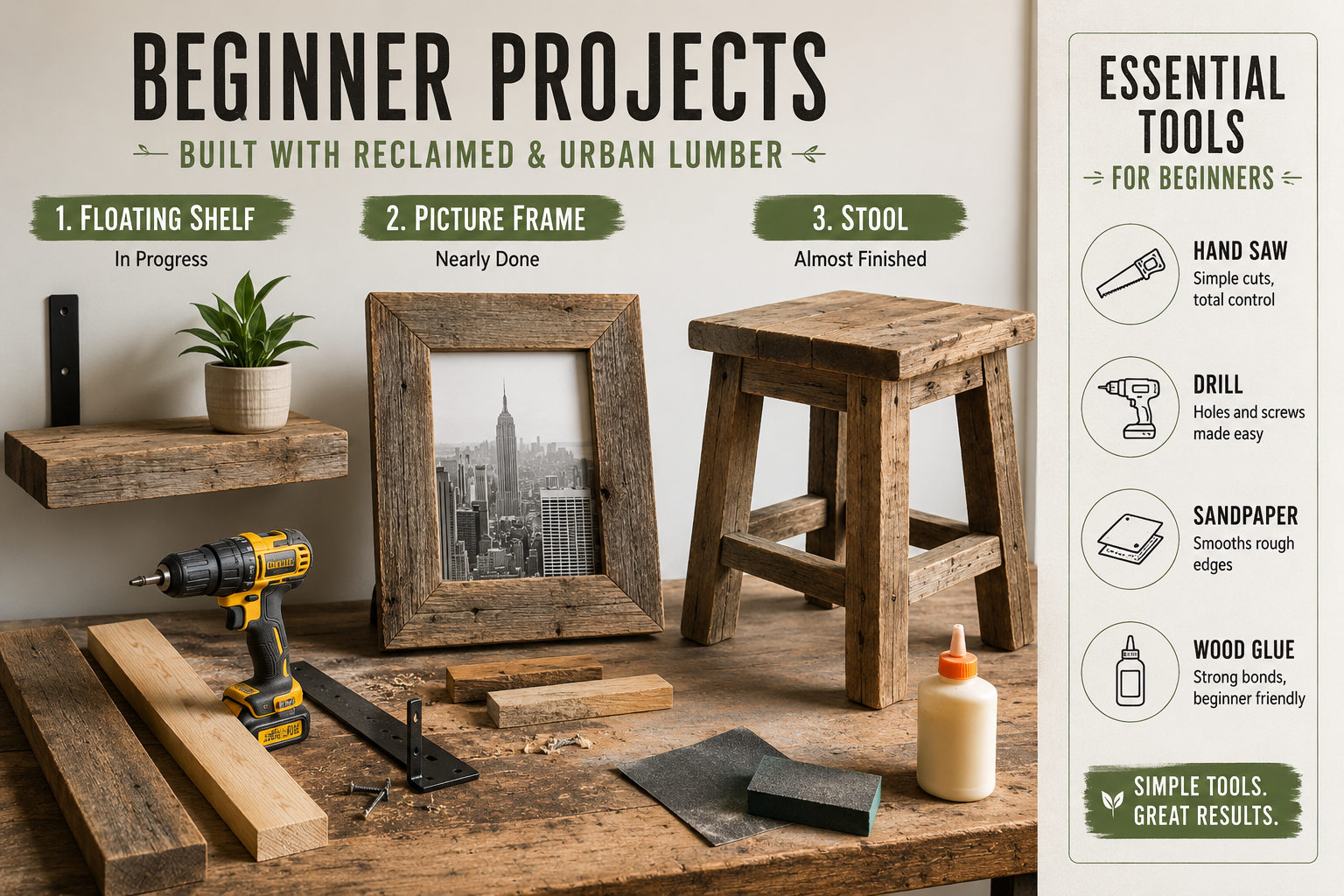
Finishing reclaimed wood can range from simply sealing its natural state to applying stains or paints that highlight its character. Often, a clear coat or a simple oil finish is preferred to let the wood’s unique story shine through. Understanding different reclaimed wood finishing techniques will allow you to protect your projects while enhancing their natural beauty.
Inspiring Beginner-Friendly Projects Using Reclaimed and Urban Lumber
The possibilities for beginner-friendly projects using reclaimed and urban lumber are vast, limited only by imagination and the available material. The key is to start small and choose projects that build foundational skills without overwhelming complexity. Here are several ideas that are perfect for new woodworkers in 2026.
1. Rustic Wall Shelves or Floating Shelves
Wall shelves are an excellent starting point. They require relatively few cuts, and the rustic nature of reclaimed wood enhances their appeal. For floating shelves, you’ll need to learn basic fastening techniques, but the visual impact of a shelf made from a thick, character-rich slab of urban lumber is significant. These can be used in kitchens, living rooms, or bedrooms. Our guide on Robust Floating Shelves with Hidden Fasteners: Power Tool Techniques for 2026 Warm Minimalism offers advanced techniques but the principles are applicable for simpler designs.
2. Custom Cutting Boards or Serving Trays
Small offcuts of reclaimed lumber or even segments from wider urban slabs can be transformed into beautiful and functional cutting boards or serving trays. These projects teach critical skills in dimensioning, sanding, and applying food-safe finishes. The varied grain patterns from different wood species often found in reclaimed wood make each board unique. For more profitable ideas, consider Profitable Beginner Woodworking: Picture Frames, Cutting Boa.
3. Simple Planter Boxes or Herb Gardens
Building a basic planter box involves cutting four sides and a bottom, then assembling them with screws or glue. This is a fantastic way to practice square cuts and basic joinery. Reclaimed fence posts or pallet wood (Upcycling Old Pallets: Creative and Sustainable Woodworking Projects) are ideal for this. These projects are practical and bring a touch of natural beauty to any home or garden.
4. Picture Frames
A simple picture frame is a classic beginner project. It teaches precise miter cuts and basic assembly. Reclaimed trim pieces or thinner urban lumber can be used to create frames that highlight both the photo and the wood’s character.
5. Small Storage Crates or Boxes
These projects are versatile and can be used for anything from organizing tools to decorative storage. They involve cutting and joining multiple pieces, offering a good opportunity to refine your measuring and assembly skills. Try making a few DIY Wooden Storage Chests with Hinged Lids: Techniques for Dovetail Joints and Rustic Finishes (simplifying the joinery for beginner level).
6. Wall-Mounted Coat Racks or Entryway Organizers
Using a sturdy piece of reclaimed timber as a base, you can add hooks to create a functional and stylish coat rack. Adding a small shelf or cubbies transforms it into an entryway organizer. This project allows for creativity in selecting unique hooks and finishes. For inspiration on similar projects, check out Wall-Mounted Coat Racks: Functional Art for Entryways with H or DIY Compact Entryway Organizers: Building Wall-Mounted Solutions for.

When selecting your next project, always consider the size and condition of your reclaimed materials. Smaller, simpler pieces are often more forgiving and quicker to complete, providing a sense of accomplishment that fuels further learning. The beauty of beginner-friendly projects using reclaimed and urban lumber is that even with basic skills, you can create something truly unique and meaningful.
Conclusion
Embarking on beginner-friendly projects using reclaimed and urban lumber is a rewarding journey that combines craftsmanship, sustainability, and personal expression. In 2026, as the demand for eco-conscious practices grows, working with these character-rich materials offers an accessible entry point into woodworking. You don’t need a professional workshop or advanced skills to begin. With basic tools, a commitment to proper preparation, and a willingness to learn, you can transform forgotten wood into cherished pieces that tell a story.
Start by sourcing locally, check with arborists, city forestry, or local demolition companies. Focus on projects like wall shelves, cutting boards, planter boxes, or simple storage solutions. These allow you to practice fundamental techniques while creating functional and aesthetically pleasing items. Embrace the unique imperfections of reclaimed wood; they are features, not flaws, that give your projects an inimitable charm. By engaging in these projects, you contribute to a more sustainable future and gain the profound satisfaction of creating something beautiful with your own hands.
Actionable Next Steps:
- Source Your Wood: Identify local sources for reclaimed or urban lumber. Start with small, manageable pieces.
- Gather Basic Tools: Acquire a measuring tape, hand saw, drill, clamps, and sandpaper.
- Choose a Simple Project: Select one of the beginner-friendly projects mentioned above, such as a cutting board or a small shelf.
- Prepare Your Material: Clean and de-nail your reclaimed wood thoroughly.
- Start Building: Follow simple plans, focusing on accurate cuts and secure joints.
- Finish Thoughtfully: Apply a suitable finish that protects the wood and enhances its natural character.
SEO Meta Title: Beginner-Friendly Reclaimed Wood Projects in 2026 SEO Meta Description: Explore beginner-friendly projects using reclaimed and urban lumber. Learn essential tools and techniques for sustainable, character-rich woodworking in 2026.