
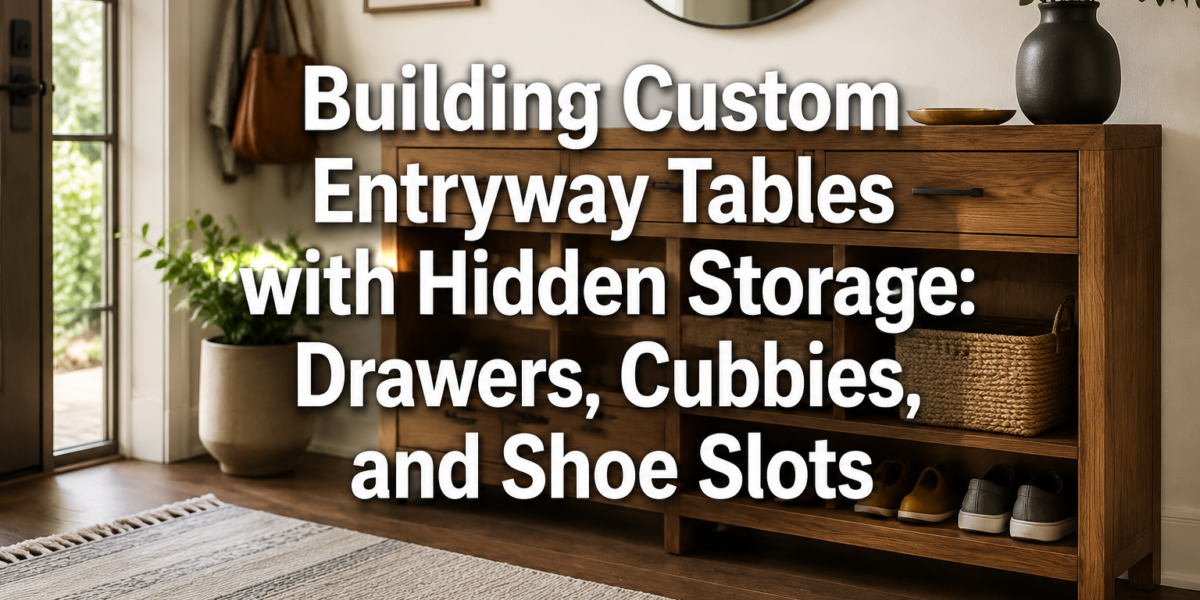
The average home, regardless of its size, often struggles with the daily deluge of keys, mail, shoes, and bags that accumulate near the front door. This common challenge points to a critical need for efficient entryway organization. Compact entryway table designs, specifically those integrating drawers, cubbies, and shoe storage, offer a streamlined solution, proving that even small foyers can become models of order and elegance. This article will delve into the art of Building Custom Entryway Tables with Hidden Storage: Drawers, Cubbies, and Shoe Slots, providing simple joinery plans and finishing ideas that perfectly complement modern interiors in 2026.
Key Takeaways
- Custom entryway tables enhance organization by providing dedicated spots for daily essentials.
- Incorporating drawers, cubbies, and shoe slots maximizes storage in a compact footprint.
- Careful planning of dimensions and joinery is crucial for both functionality and aesthetic appeal.
- Choosing the right wood and finish can elevate the table to a statement piece that matches modern décor.
- Even woodworking novices can achieve professional results with clear plans and basic tools.
Designing Your Custom Entryway Table with Hidden Storage
The foundation of a successful custom entryway table lies in meticulous design. Before cutting a single board, consider the specific needs of your space and household. A well-designed table will not only manage clutter but also seamlessly integrate with your home’s existing aesthetic. Think about the items you regularly bring into your home: mail, keys, wallets, phones, umbrellas, and shoes. Each of these can influence the types of hidden storage you’ll need.
Measuring and Planning for Small Spaces
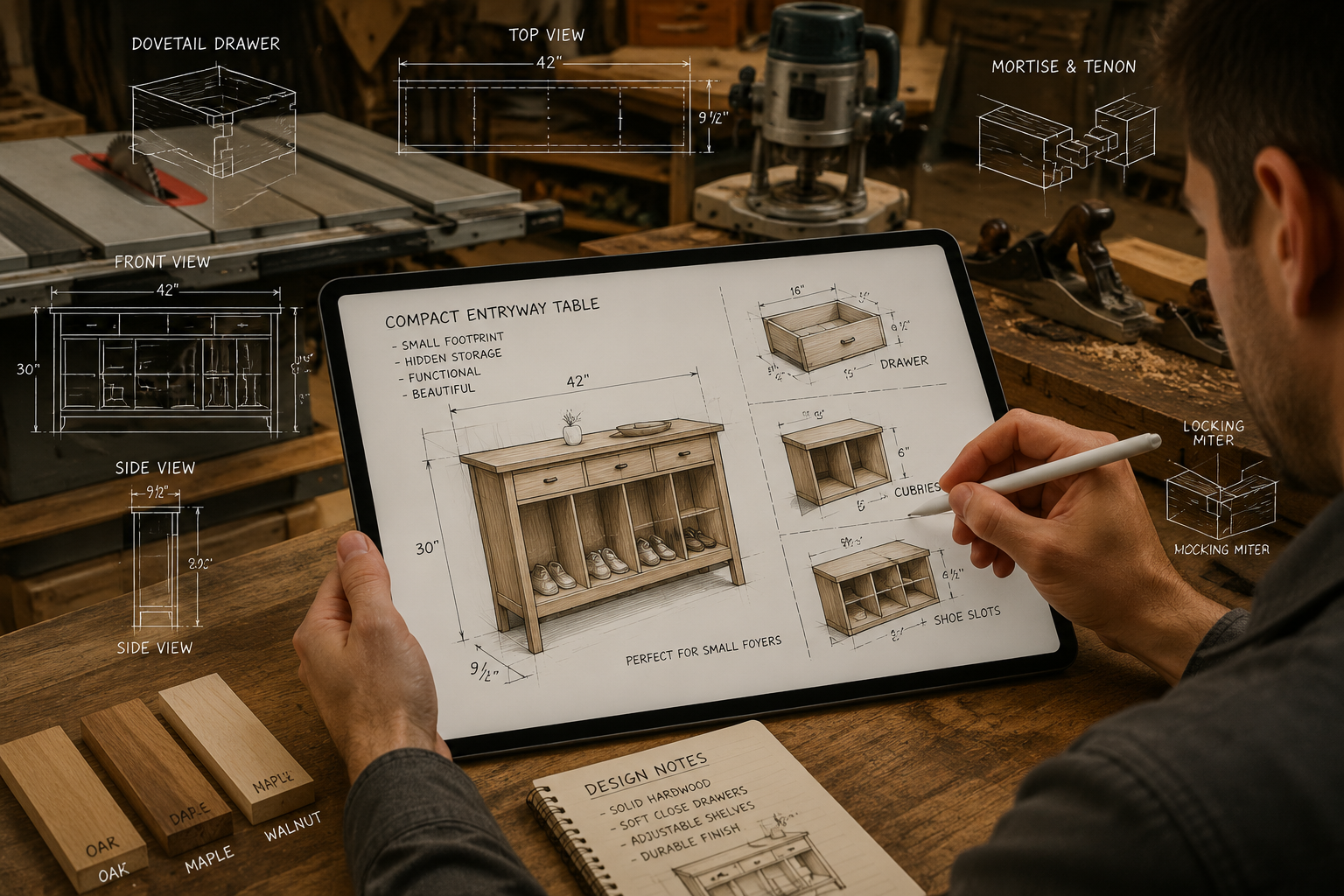
Begin by accurately measuring the available space in your entryway. Crucially, determine the maximum depth, width, and height your table can occupy without obstructing pathways or overwhelming the area. For smaller foyers, a slim profile is paramount. Aim for a depth of no more than 10-14 inches, which allows for sufficient surface area without protruding too far into the walkway.
Consider the following dimensions:
- Overall Width: Dictated by wall space.
- Overall Depth: Critical for narrow entryways.
- Overall Height: Typically 30-36 inches, aligning with standard table heights.
- Internal Drawer Dimensions: Based on items like keys, mail, or charging cables.
- Cubbies: Sized for baskets, decorative items, or small bags.
- Shoe Slots: Designed to accommodate common shoe sizes without creating bulk.
When planning, sketch multiple layouts. A modular approach can be beneficial, allowing you to visualize different combinations of drawers, open cubbies, and shoe storage. For instance, a common configuration might include a slim drawer at the top for keys and mail, an open cubby beneath it for decorative storage baskets, and a hidden pull-out or tilt-down shoe rack at the bottom.
Integrating Drawers, Cubbies, and Shoe Slots
The beauty of a custom table is its ability to tailor storage to specific needs.
Drawers
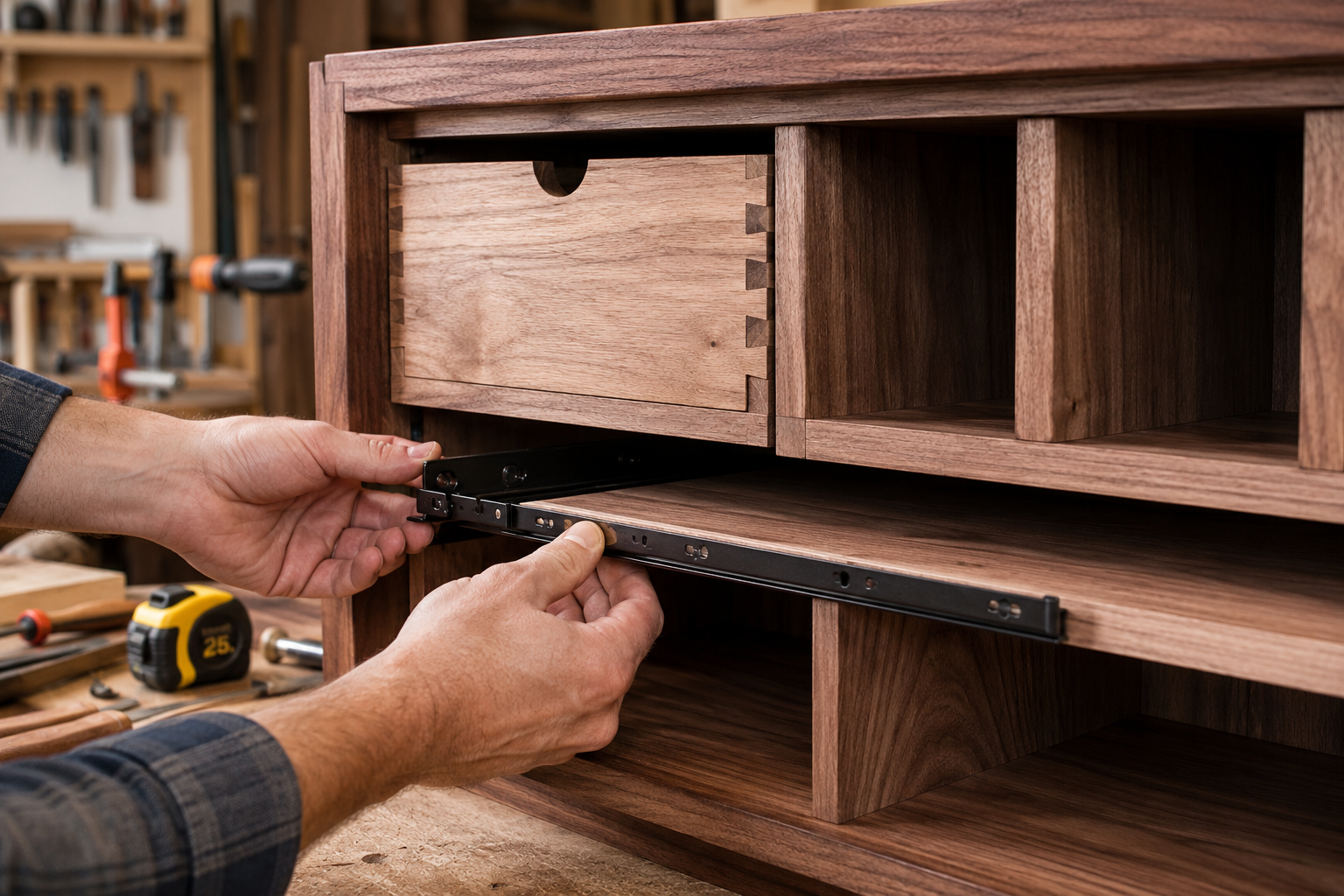
Drawers are excellent for concealing small, frequently used items, preventing surface clutter. When designing drawers, prioritize smooth operation. Full-extension drawer slides are ideal, allowing complete access to the drawer’s contents. For a touch of sophistication, consider mastering dovetail joinery for drawers, which provides superior strength and a timeless aesthetic. The number and size of drawers will depend on your items, one wide, shallow drawer might be perfect for mail, while a deeper, narrower one could hold gloves or a small umbrella.
Cubbies
Open cubbies offer quick access and can be styled with baskets or decorative items to enhance the entryway’s visual appeal. They are perfect for items that don’t need to be fully hidden but benefit from a designated spot, such as small purses, hats, or even a charging station for electronics. Ensure cubby dimensions are generous enough for practical use but not so large that they become a catch-all for clutter.
Shoe Slots
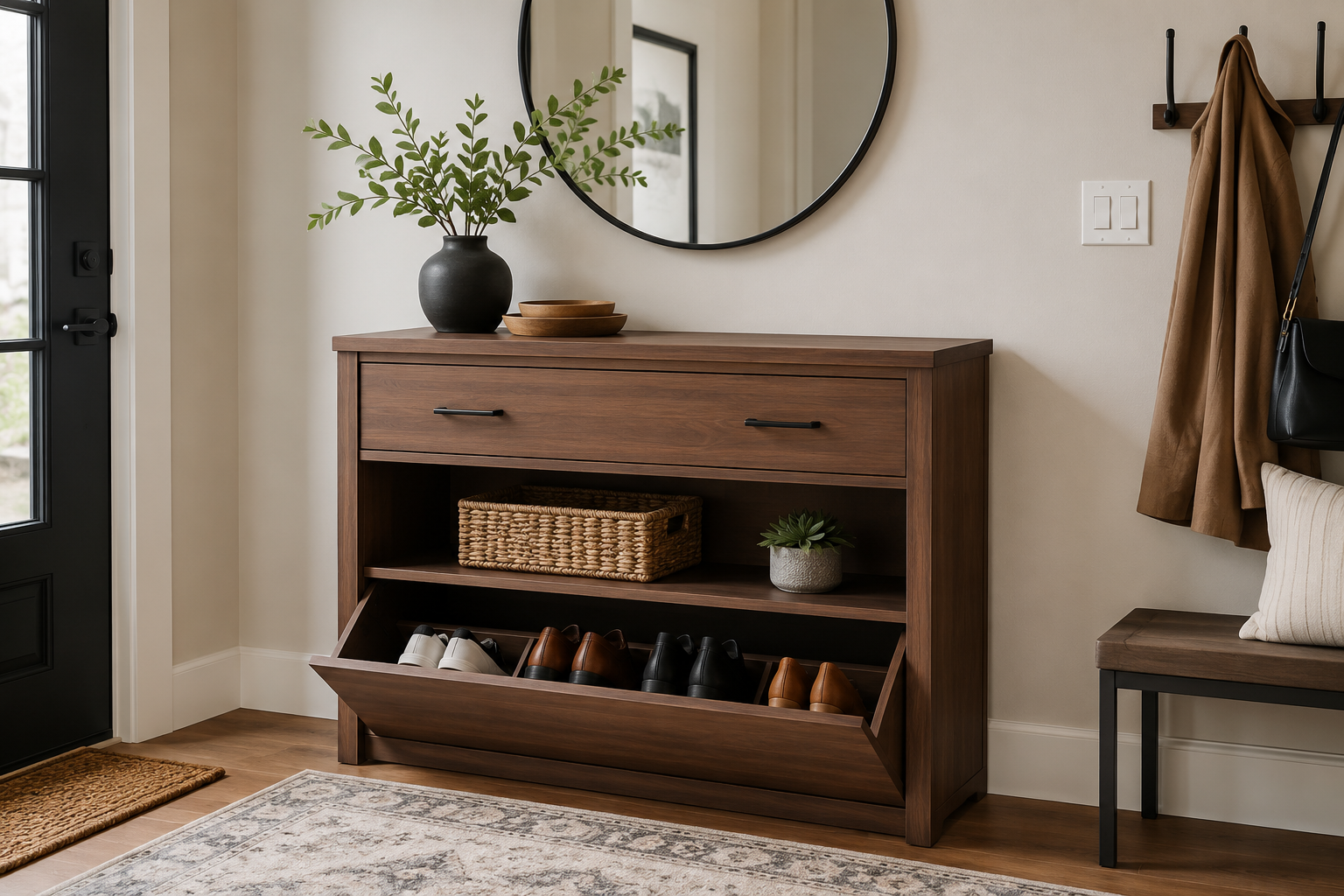
Shoe storage often presents the biggest challenge in entryways. Integrated shoe slots can range from simple open shelves to more discreet solutions like tilt-out bins or pull-out racks. For a truly hidden approach, consider a hinged front panel that drops down to reveal shelves, or individual cubbies sized precisely for pairs of shoes. Vertical dividers within a larger compartment can create individual shoe slots, keeping footwear tidy and accessible without being an eyesore.
For a cohesive look that aligns with modern minimalist trends, explore concepts related to warm minimalism in woodworking to inform your design choices, ensuring your table is both functional and aesthetically pleasing.
Construction Techniques and Joinery for Durability
Once your design is finalized, the next step involves selecting materials and employing robust construction techniques. The choice of wood significantly impacts both the table’s appearance and its durability. Hardwoods like oak, maple, or walnut are excellent choices for their strength and aesthetic appeal. Plywood, especially Baltic birch, can also be a cost-effective and stable option for internal structures or even the main carcass, especially when veneered.
Simple Joinery for Strong Structures
For custom furniture, sturdy joinery is critical. While complex joints like dovetails offer superior strength and aesthetic value, simpler yet effective joints are entirely suitable, especially for those newer to woodworking.
- Pocket Hole Joinery: This is an incredibly popular method for beginners and experienced woodworkers alike. It uses specialized screws driven into angled holes, creating strong, invisible joints quickly. It’s ideal for attaching face frames, carcass components, and even drawer boxes.
- Dado and Rabbet Joints: These are highly effective for creating strong, load-bearing joints, particularly for shelves and cubby dividers. A dado is a groove cut across the grain, into which another piece of wood is fitted. A rabbet is a notch cut along the edge of a board. These joints increase glue surface area and prevent shelves from sagging. Using a router table can make cutting precise dados and rabbets much easier and safer.
- Miter Joints: While often used for aesthetics, reinforced miters (with splines or biscuits) can create strong corners, especially for the table’s top or external frame, offering a clean, modern look.
- Butt Joints (Reinforced): Simple butt joints, reinforced with dowels, biscuits, or internal corner blocks, can be surprisingly strong and are easy to execute. This is a good option for less critical internal components.
For drawers, precise joinery is essential for smooth operation and longevity. Beyond dovetails, consider using strong butt joints reinforced with screws and glue, or simple rabbet joints. For robust drawers, explore ultimate DIY end tables for inspiration on drawer construction.
Essential Tools and Materials
Having the right tools is paramount for efficient and accurate construction.
Basic Tool List:
- Measuring & Marking: Tape measure, ruler, combination square, marking knife/pencil.
- Cutting: Circular saw or miter saw for crosscuts, table saw for rip cuts (a track saw is an excellent alternative for large panels).
- Shaping & Joining: Router (handheld or table-mounted) for dados, rabbets, and edge profiling; drill/driver for screws and pilot holes; pocket hole jig.
- Clamping: A variety of clamps (bar clamps, F-clamps, pipe clamps) are indispensable for gluing.
- Sanding: Orbital sander with various grits of sandpaper.
Materials:
- Wood: Solid hardwood, cabinet-grade plywood, or MDF (for painted finishes).
- Fasteners: Wood glue, appropriate screws (pocket hole screws, regular wood screws), nails (optional).
- Hardware: Drawer slides (full extension recommended), drawer pulls/knobs, hinges (if applicable for hidden compartments).
- Finish: Sanding sealer, stain, paint, polyurethane, or oil finish.
When working with wood, proper organization of your workspace can significantly improve safety and efficiency. Consider exploring ideas for building modular wood storage systems for small workshops to keep your materials and tools tidy.
Finishing Touches and Modern Aesthetics
The finish of your custom entryway table is just as important as its construction. It protects the wood, enhances its natural beauty, and ultimately dictates how well the table integrates into your modern interior.
Choosing the Right Wood and Finish for Modern Interiors
Modern interiors often favor clean lines, natural materials, and a sense of understated elegance. Your choice of wood and finish should reflect this.
Wood Selection:
- Light Woods: Maple, birch, and white oak offer a bright, airy feel that complements minimalist and Scandinavian-inspired designs.
- Medium Woods: Ash and natural walnut provide warmth and texture without being too heavy.
- Dark Woods: Dark walnut or stained oak can add a sophisticated contrast, especially in rooms with lighter walls and furniture.
- Reclaimed Wood: For a touch of rustic modernism, carefully selected reclaimed wood can add character and a unique story. Ensure it’s properly prepared and finished for indoor use.
Finishing Options:
- Clear Finishes: Polyurethane, lacquer, or shellac protect the wood while allowing its natural grain to shine through. Water-based polyurethanes are popular for their low odor and non-yellowing properties, maintaining the wood’s natural tone.
- Oil Finishes: Danish oil or tung oil penetrate the wood, providing a natural, matte look and feel. They are easy to apply and repair, giving a tactile warmth. These finishes are excellent for highlighting the natural beauty of the wood, aligning with the “warm minimalism” aesthetic.
- Stains: If you desire a specific wood tone not inherent in your chosen material, stains can be used before a clear topcoat. Opt for lighter, muted stains that don’t obscure the grain, or deep, rich tones for a bold statement.
- Paint: For a truly contemporary or custom color match, paint is an excellent option. High-quality semi-gloss or satin paint can provide a durable, easy-to-clean surface. Ensure proper priming for a smooth, lasting finish.
Remember to consider the surrounding elements of your entryway. If your space features light walls and floors, a medium-toned wood with a natural oil finish can add warmth. Conversely, a crisp white painted table can blend seamlessly into a bright, contemporary setting, offering a stark contrast to darker decor.
Incorporating Hardware and Decorative Elements
Hardware choices, though small, play a significant role in the overall aesthetic.
- Drawer Pulls and Knobs: For modern interiors, opt for minimalist designs in materials like brushed brass, matte black, or polished chrome. Recessed pulls or finger-pull grooves can maintain an ultra-sleek, handle-less look.
- Hinges: If you’re using hinged panels for hidden shoe storage, choose high-quality European-style hinges that offer soft-close functionality for a premium feel. Concealed hinges maintain a clean exterior.
- Legs: Tapered legs, slim metal hairpin legs, or a solid plinth base can each give the table a distinct modern flair. Ensure the leg design matches the scale and style of the table top and body.
Beyond the table itself, consider how it interacts with other elements in your entryway. A large mirror above the table can reflect light and make the space feel larger. A small, curated display of artwork or a single, elegant vase can elevate the table from merely functional to a focal point. For a complete guide to personalizing your home with handcrafted wood, consider exploring resources on profitable woodworking for beginners to inspire future projects.
Conclusion
Building Custom Entryway Tables with Hidden Storage: Drawers, Cubbies, and Shoe Slots is a rewarding woodworking project that significantly enhances home organization and aesthetics. By carefully planning your design to fit the specific dimensions of your entryway, incorporating thoughtful storage solutions, and applying robust construction techniques, you can create a piece that is both highly functional and a beautiful reflection of your personal style. In 2026, the demand for smart, space-saving furniture is higher than ever, making a custom-built entryway table an intelligent addition to any modern home. Start with precise measurements, choose quality materials, master your joinery, and finish with care to craft an entryway table that brings order and elegance to your daily routine.
SEO Meta Title: Build Custom Entryway Tables with Hidden Storage SEO Meta Description: Master building custom entryway tables in 2026 with hidden drawers, cubbies, and shoe slots. Get plans, joinery tips, & modern finish ideas.