
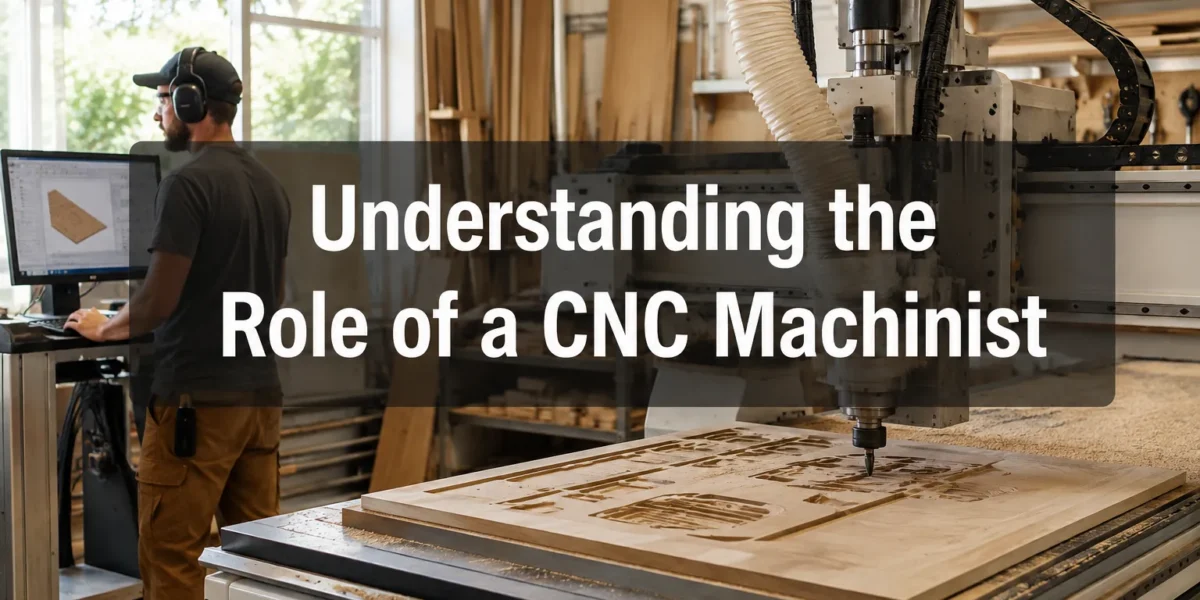
The woodworking industry, once characterized solely by the skilled hands of artisans, has undergone a profound transformation. In 2026, the modern woodworking shop is increasingly a blend of traditional craftsmanship and cutting-edge technology. At the heart of this evolution is the Computer Numerical Control (CNC) machine, and central to its operation is the CNC machinist. Far from merely pressing buttons, understanding the role of a CNC machinist in modern woodworking shops reveals a highly technical, problem-solving, and creative profession essential for contemporary fabrication. This article explores the evolving responsibilities, essential skills, and significant impact of CNC machinists, highlighting their pivotal contribution to precision, efficiency, and innovative design in woodcraft.
Key Takeaways
- CNC machinists are crucial for integrating digital fabrication into modern woodworking, bridging design software with physical production.
- Their role extends beyond operation to include programming, toolpath generation, material optimization, and quality control.
- A blend of technical expertise (CAD/CAM, machine operation) and traditional woodworking knowledge is essential for success.
- CNC technology significantly enhances precision, efficiency, and the ability to produce complex designs, impacting shop profitability.
- The demand for skilled CNC machinists continues to grow as woodworking shops embrace automation and advanced manufacturing techniques.
The Evolution of the CNC Machinist: Bridging Craft and Code
The journey of the CNC machinist in woodworking mirrors the broader industrial shift towards automation. Historically, woodworkers relied on a deep understanding of joinery, material properties, and manual tool proficiency. While these skills remain valuable, the introduction of CNC technology has dramatically expanded the scope of woodworking possibilities and the demands on its practitioners. What started as simple automated cutting has blossomed into complex, multi-axis machining capabilities that can carve intricate designs, precise joinery, and consistent components with unparalleled accuracy.
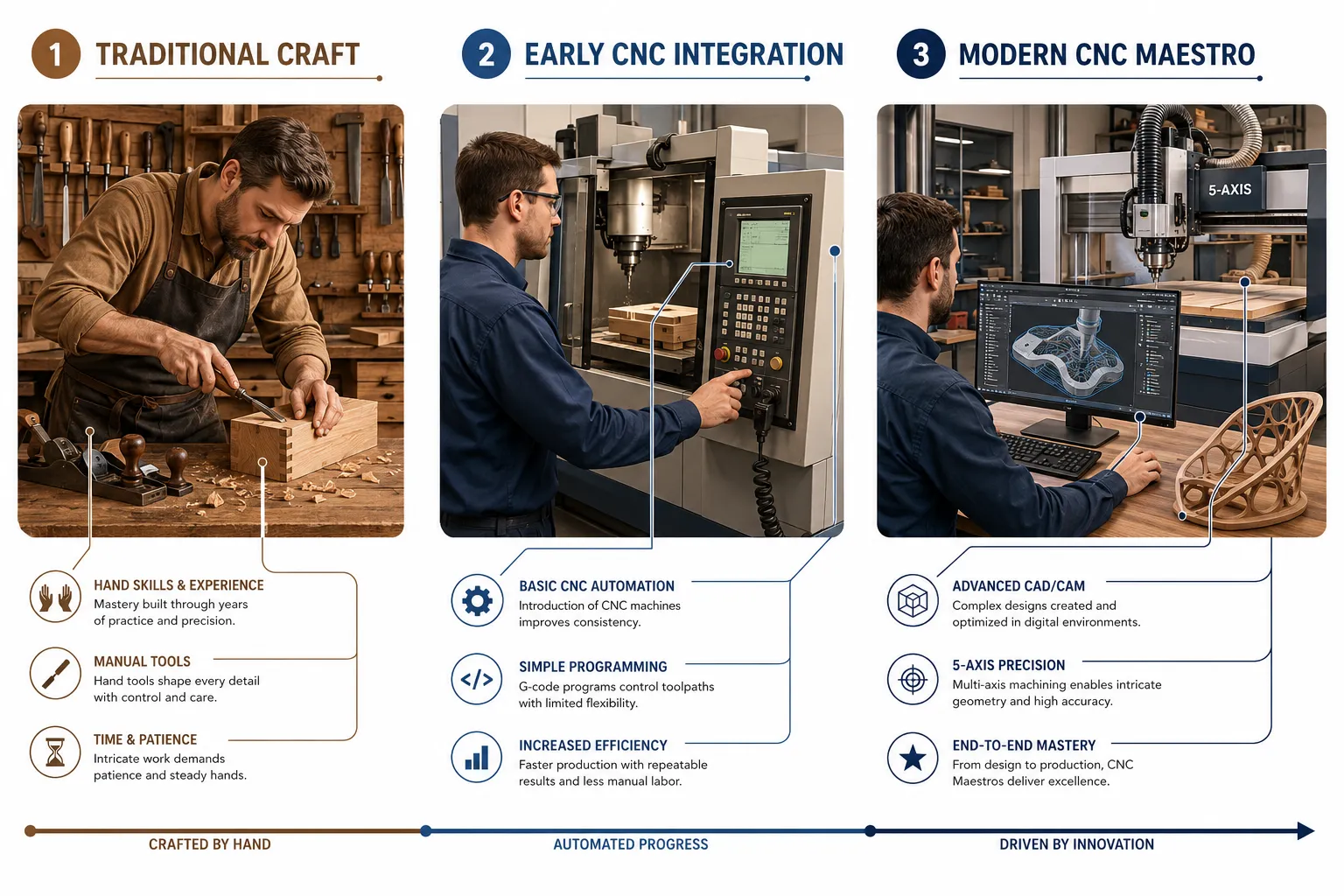
In the early days of CNC adoption, the machinist’s role might have been primarily operational, loading material, initiating pre-programmed cuts, and monitoring the machine. Today, the role requires a much deeper engagement with the entire production pipeline. It’s about translating a designer’s vision into a machine-readable language, optimizing material usage, and ensuring the final product meets exacting standards.
“The modern CNC machinist is not just an operator; they are a programmer, a problem-solver, and a vital link between digital design and physical realization in the woodworking process.”
This expanded scope necessitates a robust understanding of both the digital and physical realms of woodworking. Machinists must be adept at using sophisticated software while also possessing an intuitive feel for wood as a material.
From Manual to Automated: The Paradigm Shift
The shift to CNC machining has introduced several key changes:
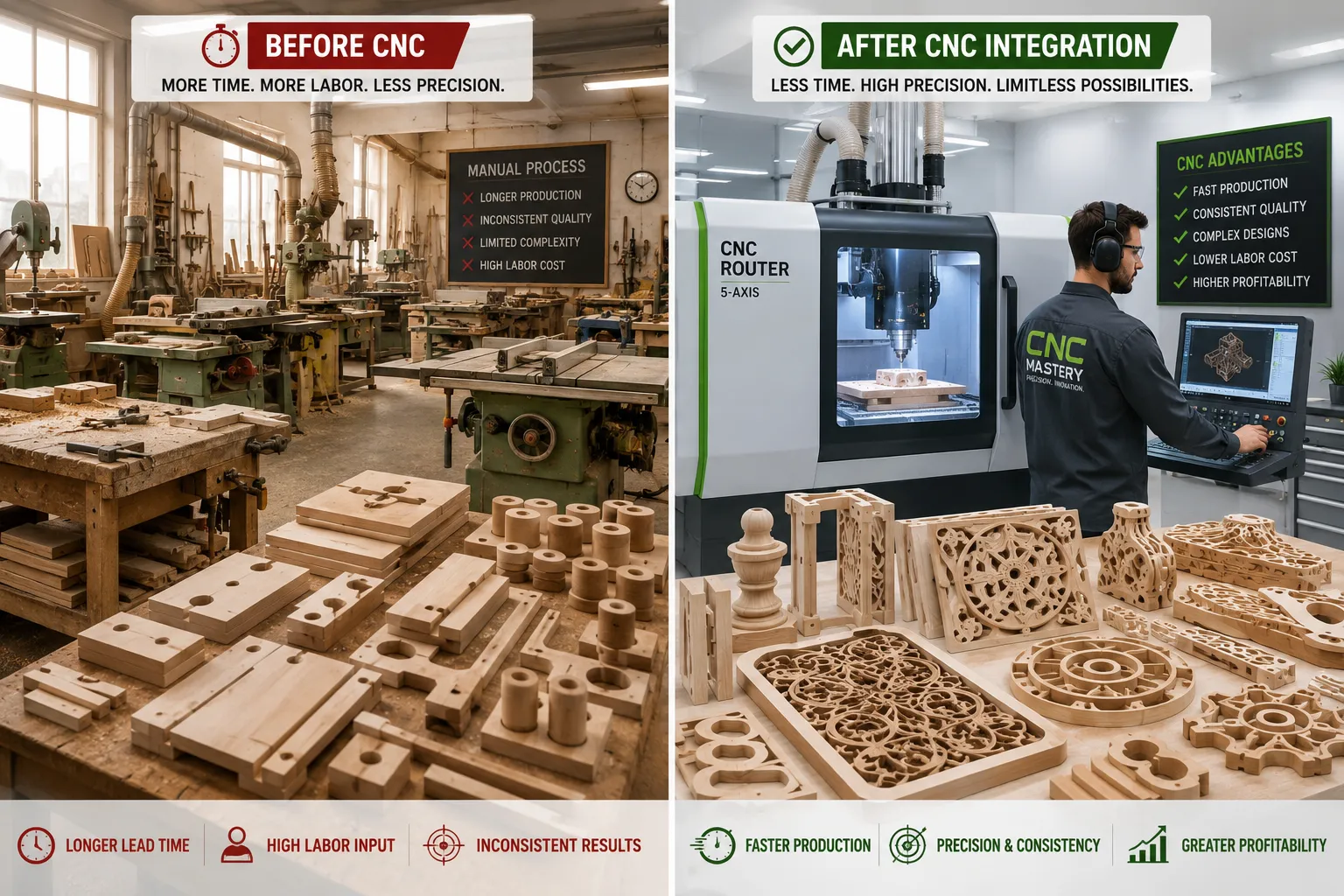
- Precision and Repeatability: CNC machines can execute cuts with tolerances far beyond what’s achievable by hand, ensuring identical parts for large-scale production or modular furniture.
- Complexity of Design: Intricate carvings, complex curves, and advanced joinery that would be prohibitively time-consuming or impossible with traditional methods become feasible with CNC.
- Efficiency and Speed: Automation drastically reduces production time per piece, allowing shops to take on more projects and improve turnaround times.
- Material Optimization: Sophisticated nesting software, often managed by the machinist, can arrange parts on a sheet of material to minimize waste, contributing to zero waste woodworking.
Understanding the role of a CNC machinist in modern woodworking shops means recognizing this fundamental shift from purely manual skill to a hybrid expertise encompassing digital design, machine operation, and material science.
Core Responsibilities and Daily Tasks of a CNC Machinist
The day-to-day life of a CNC machinist is dynamic and intellectually engaging. Their responsibilities span several critical stages of the woodworking process, ensuring seamless transition from digital design to finished product.
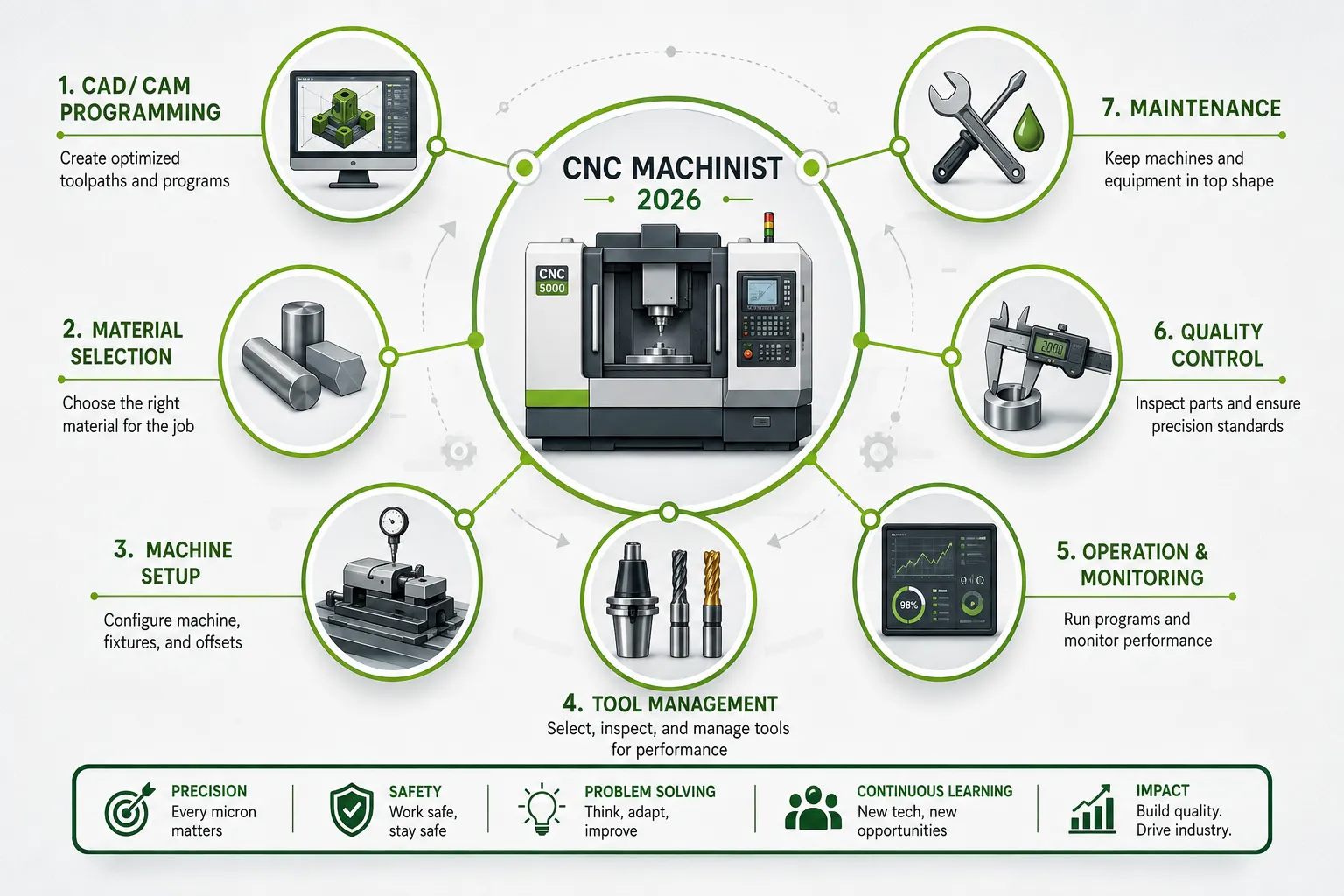
1. CAD/CAM Programming: This is arguably the most critical and intellectually demanding aspect of the role. CNC machinists must be proficient in Computer-Aided Design (CAD) software to create or modify 2D and 3D models of parts. They then use Computer-Aided Manufacturing (CAM) software to translate these designs into machine instructions, known as G-code. This involves:
- Toolpath Generation: Determining the precise path the cutting tool will follow.
- Feeds and Speeds Calculation: Selecting appropriate cutting speeds and feed rates based on material type, tool type, and desired finish.
- Nesting: Optimizing part placement on raw material sheets to minimize waste, a key factor in cost efficiency.
- Simulation: Running virtual simulations to check for potential collisions or errors before actual machining.
2. Machine Setup and Operation: Once the program is ready, the machinist prepares the CNC machine for operation. This includes:
- Loading Material: Safely securing wood sheets, panels, or blocks onto the machine bed.
- Tool Installation: Selecting and installing the correct cutting tools (bits, drills, routers) as specified by the program.
- Fixture and Clamp Setup: Ensuring the material is securely held in place to prevent movement during cutting.
- Zeroing: Calibrating the machine’s starting point relative to the material.
- Supervising Machining: Monitoring the cutting process, listening for unusual sounds, and visually inspecting cuts to ensure quality and address any issues promptly.
3. Quality Control and Inspection: A meticulous eye for detail is paramount. Machinists continually inspect parts for dimensional accuracy, surface finish, and adherence to design specifications. They use precision measuring tools like calipers, micrometers, and gauges to verify tolerances. If deviations occur, they must troubleshoot and adjust the program or machine settings.
4. Tool Management and Maintenance: Keeping tools sharp and machines in prime condition is essential for consistent quality and operational safety. Responsibilities include:
- Tool Selection: Choosing the right tool for specific cuts and materials.
- Tool Sharpening/Replacement: Identifying dull or worn tools and ensuring they are sharpened or replaced.
- Preventative Maintenance: Performing routine checks, cleaning, lubrication, and minor repairs on the CNC machine to prevent downtime. This contributes to a well-maintained workshop layout.
5. Troubleshooting and Problem-Solving: When issues arise, a bad cut, a machine error, or a software glitch, the CNC machinist is the first line of defense. They must diagnose the problem, identify its root cause, and implement effective solutions, often under time pressure. This requires a strong analytical mind and a deep understanding of the entire CNC system.
Essential Skills for the Modern CNC Machinist in Woodworking Shops
To excel in 2026, a CNC machinist needs a diverse skill set that blends technical prowess with traditional craftsmanship and critical thinking. Understanding the role of a CNC machinist in modern woodworking shops means appreciating this multifaceted expertise.
Technical and Software Proficiency
- CAD/CAM Software Mastery: Expert knowledge of programs like Fusion 360, VCarve Pro, Aspire, Mastercam, or Cabinet Vision is non-negotiable. This includes 2D and 3D modeling, toolpath generation, and simulation.
- G-Code Understanding: While CAM software generates G-code, the ability to read, understand, and even manually edit G-code is invaluable for advanced troubleshooting and optimization.
- Machine Operation and Setup: In-depth knowledge of various CNC router types, vacuum tables, tooling systems, and machine interfaces.
- Measurement and Metrology: Proficiency with precision measuring tools to ensure parts meet specifications.
- Material Science: Understanding the properties of different woods, composites, and plastics, and how they react to various cutting techniques.
Woodworking and Craft Skills
While technology is central, a strong foundation in traditional woodworking is highly beneficial.
- Material Handling: Knowledge of how to safely handle, store, and prepare various wood species.
- Joinery Principles: Understanding classic woodworking joints helps in designing and programming accurate CNC-cut joinery. Consider resources on mastering modern hand-cut joinery for context on traditional techniques.
- Finishing Knowledge: An understanding of how different cuts and wood types will accept various finishes.
- Eye for Detail: The aesthetic sensibility of a traditional craftsman combined with the precision of a technician.
Soft Skills and Problem-Solving
- Problem-Solving: The ability to diagnose and rectify issues, from software glitches to machine malfunctions.
- Attention to Detail: Meticulousness is crucial for producing high-quality, accurate parts and ensuring safety.
- Spatial Reasoning: Visualizing 3D designs and toolpaths in space.
- Communication: Effectively communicating with designers, engineers, and other shop personnel.
- Adaptability: The industry is constantly evolving, requiring machinists to continuously learn new software, machines, and techniques.
| Skill Category | Key Competencies | Impact on Role |
|---|---|---|
| Digital Proficiency | CAD/CAM software, G-code, simulation software | Translates designs into machine instructions; prevents errors |
| Machine Operation | Setup, calibration, monitoring, troubleshooting | Ensures safe and efficient production; maintains machine health |
| Material Knowledge | Wood species, cutting properties, waste optimization | Improves cut quality, extends tool life, reduces material cost |
| Quality Assurance | Precision measurement, inspection, defect identification | Guarantees product accuracy and client satisfaction |
| Problem-Solving | Analytical thinking, diagnostic skills | Minimizes downtime, resolves technical challenges quickly |
The Impact of CNC Machinists on Modern Woodworking Shops
The presence of skilled CNC machinists has a profound and positive impact on the efficiency, capability, and profitability of contemporary woodworking shops. They are not merely employees but strategic assets.
Enhanced Production Efficiency and Output
With a skilled machinist at the helm, a CNC machine can run continuously, producing parts much faster than manual methods. This increases overall shop output, reduces lead times, and allows the business to fulfill more orders. It also frees up traditional woodworkers to focus on specialized hand finishing, assembly, or custom artistic elements.
Unlocking Design Innovation
CNC technology, driven by a capable machinist, liberates designers from the constraints of traditional manufacturing. Shops can offer highly customized furniture, intricate architectural millwork, and complex artistic pieces that were previously impossible or cost-prohibitive. This ability to innovate allows shops to stand out in a competitive market and attract high-value projects, such as building a modern wood and resin river table with complex inlay patterns.
Cost Reduction and Material Optimization
Through precise programming and nesting, CNC machinists significantly reduce material waste. Less scrap means lower material costs, which directly impacts a shop’s bottom line. Furthermore, the accuracy of CNC cuts minimizes errors and rework, saving time and labor. This focus on efficiency aligns with modern sustainable practices.
Safety and Ergonomics
While woodworking always carries risks, CNC machines, when properly programmed and operated by a trained machinist, can improve safety. Many dangerous cutting operations are performed automatically, keeping operators’ hands clear of moving blades. An ergonomic workshop design, which includes appropriate placement of CNC machines, also contributes to overall safety and worker well-being, as detailed in guides like creating ergonomic workshop layouts.
Future Growth and Competitiveness
For any woodworking shop aiming for growth in 2026 and beyond, embracing CNC technology and investing in skilled machinists is essential. It enables shops to adapt to changing market demands, take on diverse projects, and remain competitive against larger manufacturers or those with more advanced capabilities. The CNC machinist is the linchpin in this technological advancement, ensuring that a woodworking business remains at the forefront of innovation and efficiency.
Conclusion
The role of a CNC machinist in modern woodworking shops is a testament to the dynamic evolution of craftsmanship. These professionals are far more than machine operators; they are programmers, designers, problem-solvers, and quality controllers, bridging the gap between digital innovation and tangible wood products. Their expertise ensures precision, drives efficiency, unlocks complex designs, and significantly contributes to the profitability and competitiveness of contemporary woodworking businesses. As technology continues to advance, the demand for highly skilled CNC machinists will only grow, solidifying their position as indispensable assets in the woodworking landscape of 2026 and beyond.
For those interested in pursuing a career in modern woodworking, developing proficiency in CAD/CAM software and machine operation, alongside a foundational understanding of woodcraft, will be key to unlocking exciting opportunities in this evolving field.
References
- Piotrowski, J. (2018). CNC Programming Handbook. Industrial Press Inc.
- Modern Machine Shop. (n.d.). Understanding the Fundamentals of CNC Machining. Retrieved from https://www.mmsonline.com/ (Please note: specific article links may vary over time).
- Wood Industry Magazine. (n.d.). The Future of Woodworking: Automation and Technology. Retrieved from https://woodindustry.ca/ (Please note: specific article links may vary over time).
SEO Meta Title: CNC Machinist Role in Modern Woodworking Shops (2026) SEO Meta Description: Explore the vital role of a CNC machinist in modern woodworking shops for 2026, covering programming, operation, and integrating digital craft.