
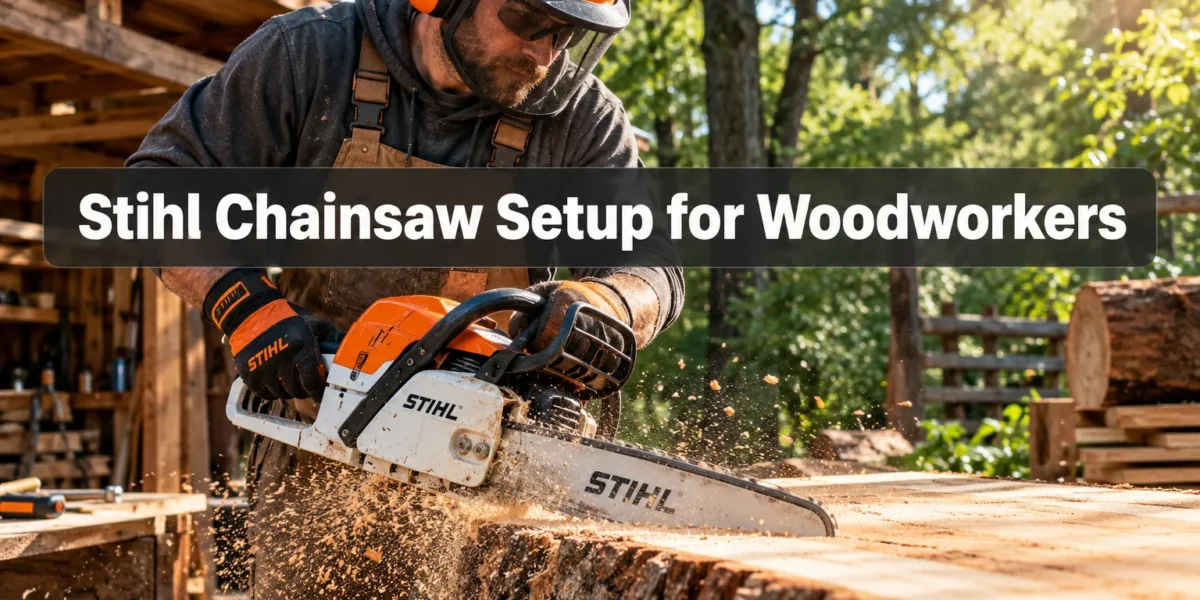
The resonant thud of a felled tree presents not just a raw log, but a canvas awaiting transformation into elegant slabs, robust benches, and enduring outdoor projects. For woodworkers venturing beyond milled lumber, mastering the Stihl Chainsaw Setup for Woodworkers: Safe Timber Prep for Slabs, Benches, and Outdoor Projects is an invaluable skill. This guide will equip you with the knowledge to safely and effectively utilize a Stihl chainsaw for milling, bucking, and processing raw timber, ensuring high-quality material for your next masterpiece.
Key Takeaways
- Proper Stihl chainsaw setup involves selecting the right chain type and ensuring optimal tension and lubrication for specific woodworking tasks like ripping or crosscutting.
- Prioritizing safety is paramount; always wear appropriate personal protective equipment (PPE) and maintain a clear, stable work area.
- Mastering specialized cutting techniques, such as using milling guides and understanding tension wood, is crucial for producing high-quality slabs and beams.
- Regular maintenance, including chain sharpening, bar cleaning, and air filter inspection, extends tool life and ensures consistent performance.
- Understanding timber characteristics and preparation methods is essential for converting raw logs into stable, usable material for various projects.
Essential Stihl Chainsaw Setup for Woodworkers
The foundation of successful timber preparation for woodworking lies in the correct Stihl Chainsaw Setup for Woodworkers: Safe Timber Prep for Slabs, Benches, and Outdoor Projects. This goes beyond just fueling the saw; it involves selecting the right components and ensuring they are properly adjusted for the task at hand.
Choosing the Right Chainsaw Model
Stihl offers a range of chainsaws, from homeowner models to professional powerhouses. For serious woodworking, especially milling larger logs into slabs, a professional-grade saw with sufficient power is often preferred. Models in the 60-90cc range (e.g., Stihl MS 362, MS 462, or even MS 661 for very large timber) provide the necessary torque and durability for sustained cutting. Consider the average diameter of the logs you’ll be processing.
Bar Length and Chain Selection
The length of your guide bar directly impacts the size of timber you can process. For milling slabs, longer bars (25-inch to 36-inch, or even longer with a dedicated milling attachment) are common. However, a longer bar requires more power and precision to operate safely.
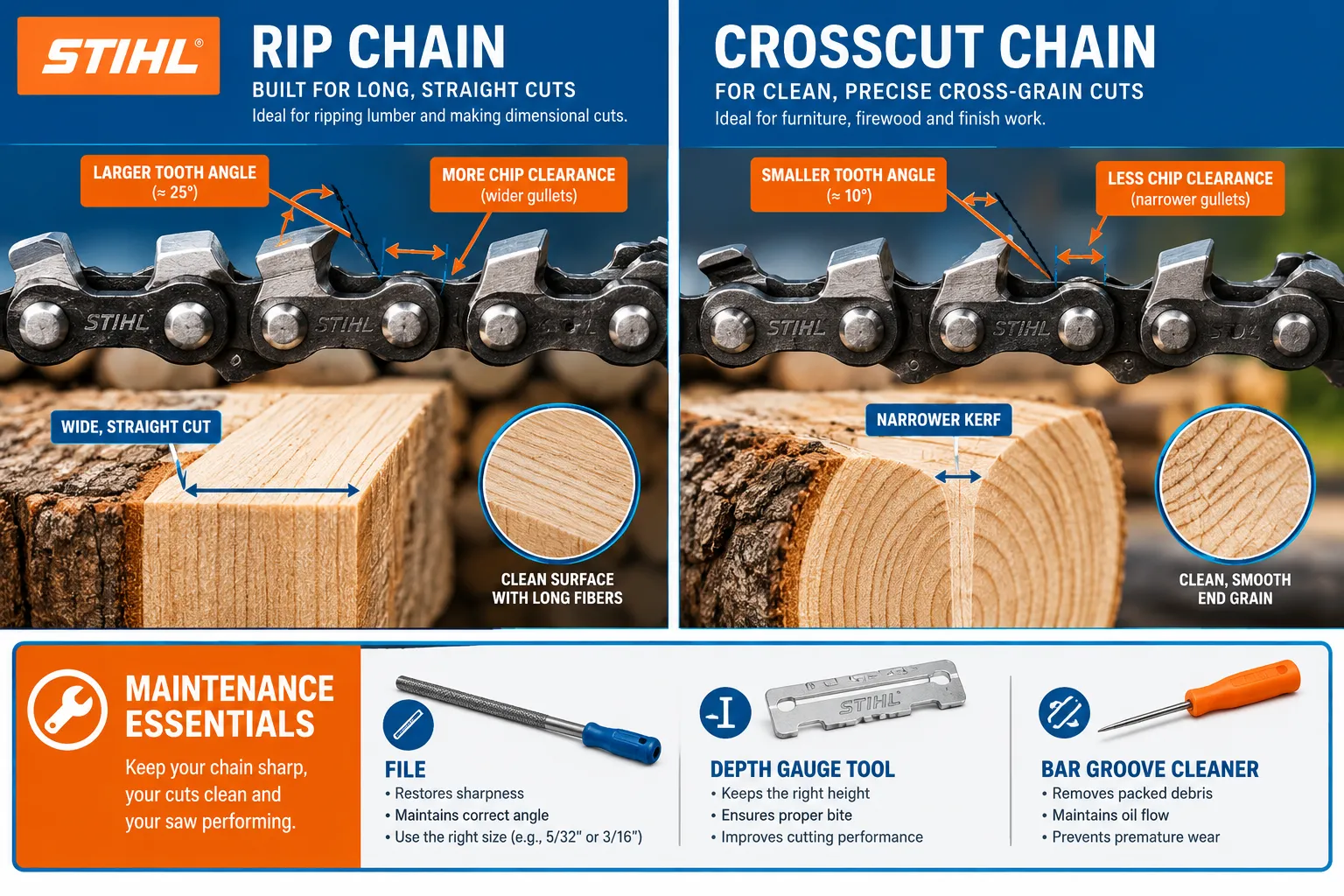
Crucially, the type of chain is paramount for woodworking. Most chainsaws come standard with a crosscut chain, designed for efficiently cutting across the grain. For ripping logs lengthwise into slabs, a specialized rip chain (also known as a milling chain) is essential.
| Feature | Crosscut Chain | Rip Chain (Milling Chain) |
|---|---|---|
| Tooth Angle | Typically 25-30 degrees | Typically 5-10 degrees |
| Cutting Direction | Across the grain (bucking, limbing) | With the grain (milling slabs, beams) |
| Kerf Width | Standard (designed for efficient chip ejection) | Often wider, designed for coarse sawdust removal |
| Resulting Finish | Rougher surface, requires more sanding | Smoother surface, less tear-out along the grain |
| Recommended Use | Felling, bucking firewood, general forestry | Portable sawmill attachments, log slabbing |
A rip chain has a much shallower cutting angle on its teeth (typically 5-10 degrees) compared to a crosscut chain. This shallower angle shaves wood fibers cleanly along the grain, producing large, consistent chips and a much smoother surface ideal for slab production. Using a crosscut chain for ripping will result in excessive sawdust, slower cutting, increased heat, and significant strain on the chainsaw.
Fuel and Lubrication
Always use the correct fuel mix for your 2-stroke Stihl engine, typically a 50:1 gasoline to 2-stroke oil ratio. Stihl’s own MotoMix is a convenient pre-mixed option that also extends shelf life.
Chain lubrication is equally critical. Use a quality bar and chain oil to minimize friction and heat, which prolongs the life of your bar and chain. Check the oil level frequently, as a lack of lubrication can quickly damage components. A good rule of thumb is that your chain oil should run out shortly after your fuel.
Safe Timber Prep for Slabs, Benches, and Outdoor Projects
Safety is not just a recommendation; it is an absolute requirement when operating a chainsaw, especially when tackling large timber. A methodical approach to Safe Timber Prep for Slabs, Benches, and Outdoor Projects will prevent accidents and ensure successful results.
Personal Protective Equipment (PPE) Checklist
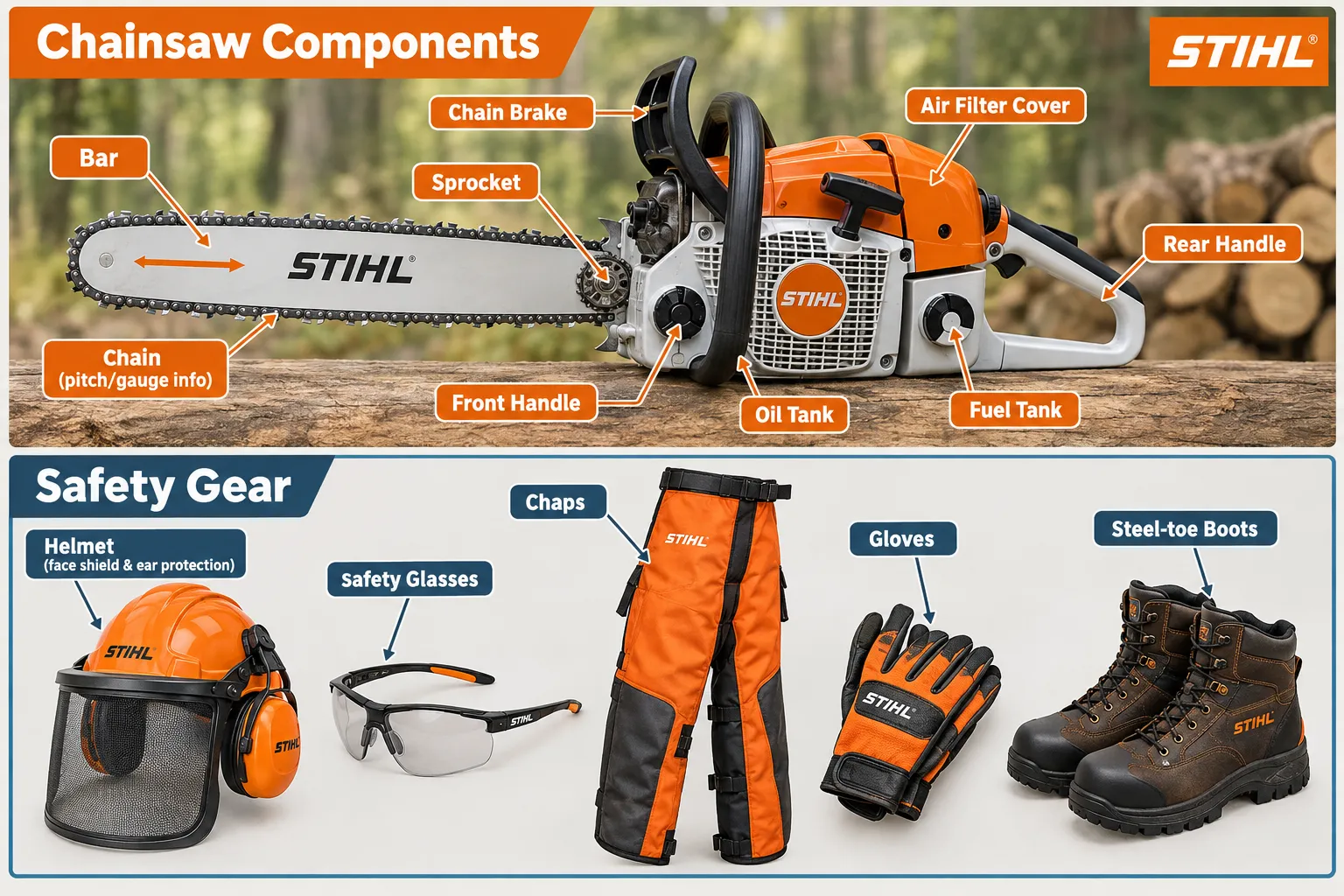
Before even starting your Stihl chainsaw, ensure you are wearing the full complement of PPE:
- Chainsaw Helmet: Must include hearing protection and a mesh or polycarbonate face shield.
- Safety Glasses: Worn under the face shield for added eye protection.
- Chainsaw Chaps: Essential for protecting your legs from chain contact. These contain ballistic fibers that jam the chain if contact occurs.
- Heavy-Duty Work Gloves: For grip and protection.
- Steel-Toe Boots: With good ankle support and non-slip soles.
- Snug-Fitting Clothing: Avoid loose clothing that can snag on the chain or branches.
Site Preparation and Log Stabilization
A stable work environment is critical. Clear the area of debris, rocks, and anything that could obstruct your movement or become a projectile. Ensure you have a clear escape path should the log shift unexpectedly.
When preparing logs for milling, they must be securely stabilized. For smaller logs, sturdy sawbucks or wedges can prevent rolling. For larger logs, consider methods like:
- Cribbing: Using smaller logs or timbers to support the main log at several points, keeping it off the ground and preventing rolling.
- Wedges: Driving wedges into the ground on either side of the log to prevent movement.
- Excavation: For very large logs, sometimes digging a shallow trench to seat the log can provide stability.
Always inspect the log for foreign objects like nails, metal fragments, or embedded stones that could damage your chain or cause kickback. You can learn more about finding and processing sustainable wood in our guide to Sustainable Wood Sourcing: A Guide To Salvaging Urban Timber And Fallen Trees For Woodworking Projects.
Understanding Wood Tension and Compression
Timber, especially freshly felled logs, contains internal stresses. Understanding these forces is crucial for safe cutting.
- Tension Wood: When a log is supported only at its ends, the top fibers are in compression and the bottom fibers are in tension. Cutting from the bottom up will cause the kerf to close, pinching the bar. Cutting from the top down can cause the kerf to open.
- Compression Wood: Conversely, if the log is supported in the middle, the top is in tension and the bottom in compression.
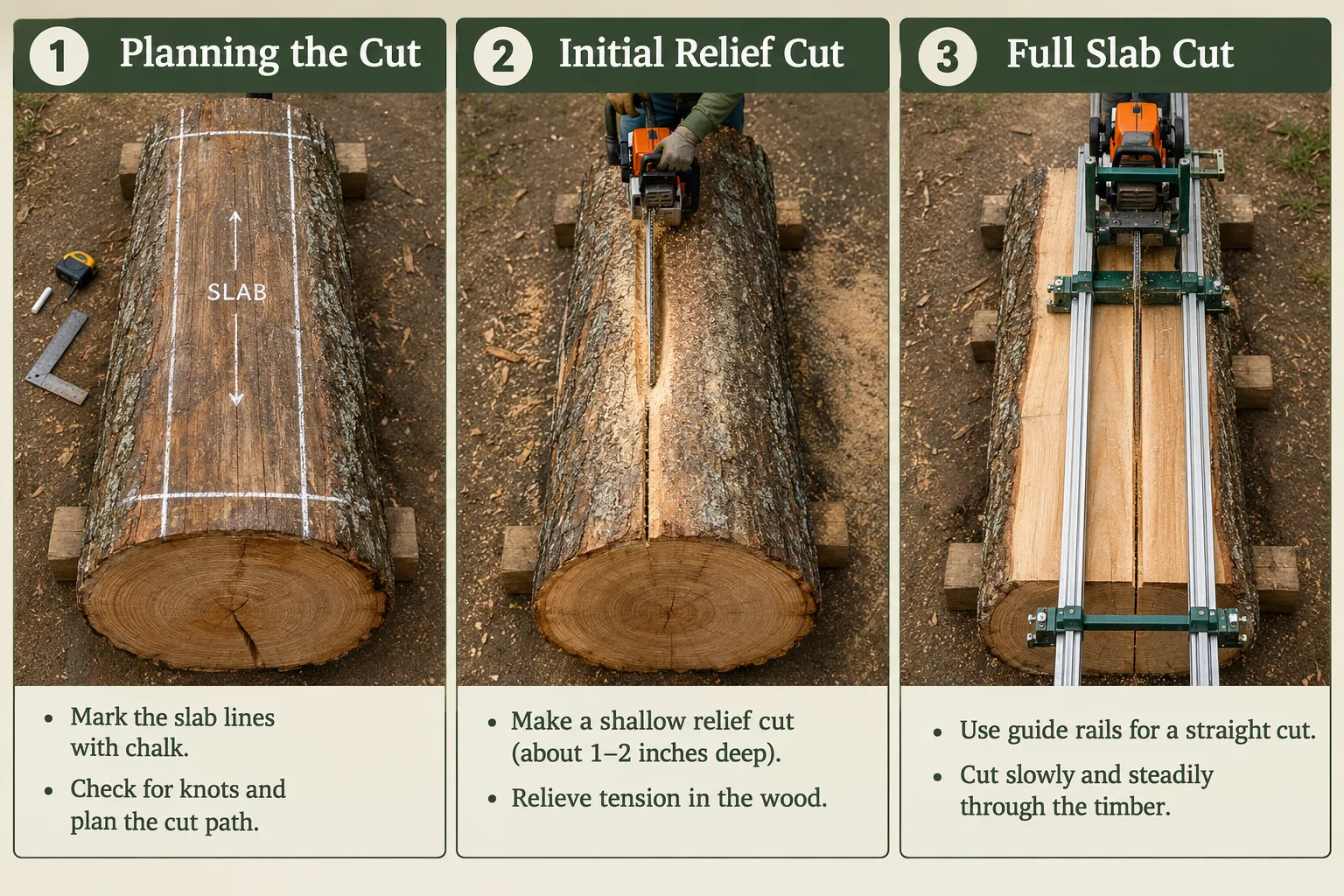
Always start cuts on the compression side to avoid pinching the bar. If you must cut through the tension side first, make a shallow cut, then move to the compression side and finish the cut. This technique is known as a “relief cut” and is vital for safety and preventing bar pinch.
Advanced Techniques and Maintenance for Timber Prep
Beyond basic setup and safety, mastering advanced techniques and rigorous maintenance will ensure your Stihl Chainsaw Setup for Woodworkers: Safe Timber Prep for Slabs, Benches, and Outdoor Projects remains effective and efficient.
Portable Chainsaw Mills
For producing consistent, high-quality slabs, a portable chainsaw mill attachment is indispensable. These jigs, often made of aluminum, bolt onto your guide bar and run along a guide rail (usually a 2×4 or aluminum ladder) to create a flat, parallel cut.
There are two main types:
- Vertical Milling Attachment: This allows you to cut horizontally through the log. The chainsaw is mounted vertically, and you push it along the guide rail. This is ideal for the initial squaring of a log and creating the first flat surface.
- Alaskan Mill (Horizontal Milling Attachment): This mounts the chainsaw horizontally and allows you to cut vertical slabs. This is the most common setup for producing wide live edge slabs.
Using a mill attachment significantly improves accuracy, reduces physical strain, and dramatically enhances the quality of your cuts. For more on this process, consider exploring guides on Live Edge Wood Slabs From Forest To Finished Furniture.
Sharpening the Rip Chain
A sharp chain is not just about efficiency; it’s also a safety feature. A dull chain forces you to push harder, increasing the risk of fatigue and loss of control. Sharpening a rip chain is different from a crosscut chain due to its shallower angle.
- File Selection: Use the correct size round file for your chain’s pitch (e.g., 5/32″ for .325″ pitch, 3/16″ for 3/8″ pitch).
- Filing Angle: The top plate filing angle for a rip chain is much shallower, typically 5-10 degrees, compared to the 25-30 degrees for a crosscut chain. Maintaining this angle consistently across all teeth is crucial.
- Depth Gauges: Regularly file down the depth gauges (rakers) to ensure proper chip removal. For rip chains, depth gauges are often set slightly lower than for crosscut chains to allow for deeper, more aggressive cuts with the grain.
- Filing Guide: Using a Stihl filing guide or a similar jig is highly recommended to maintain consistent angles and depths.
Routine Maintenance Schedule
Consistent maintenance prevents breakdowns, ensures optimal performance, and prolongs the life of your Stihl chainsaw.
- After Each Use:
- Clean the air filter. Sawdust buildup restricts airflow and reduces engine power.
- Clean the guide bar groove to remove sawdust and debris.
- Check chain tension. It should be snug but still allow you to pull the chain around the bar by hand.
- Inspect the chain for dullness, damage, or stretched links.
- Periodically (Every 5-10 hours of operation):
- Flip the guide bar to promote even wear.
- Clean the cooling fins on the engine.
- Check spark plug for wear and proper gap.
- Inspect fuel filter and fuel lines for clogs or damage.
- Check the condition of the sprocket. Worn sprockets can damage the chain.
By adhering to a strict maintenance schedule, your Stihl chainsaw will be ready to tackle demanding timber prep for projects like Building Picnic Tables For Outdoor Gatherings Durable Designs With Advanced Joinery Techniques or Creating Custom Wooden Planters Designs For Indoor Herb Gardens And Outdoor Container Gardening.
Conclusion
Mastering the Stihl Chainsaw Setup for Woodworkers: Safe Timber Prep for Slabs, Benches, and Outdoor Projects transforms a powerful tool into a precise instrument for crafting raw timber into usable material. From selecting the appropriate chainsaw model and specialized rip chain to implementing rigorous safety protocols and understanding advanced milling techniques, each step is critical for success. Regular maintenance, including proper sharpening and cleaning, ensures your equipment remains reliable and efficient. By following these guidelines, you can safely and effectively process logs, unlocking a world of possibilities for custom slabs, durable outdoor furniture, and unique woodworking creations in 2026.
Actionable Next Steps
- Assess Your Needs: Determine the typical size and type of timber you plan to process to select the right Stihl chainsaw and bar length.
- Invest in a Rip Chain: If you plan on milling slabs, purchase a dedicated rip chain and learn how to sharpen it correctly.
- Prioritize PPE: Ensure you have a complete set of chainsaw-specific PPE and commit to wearing it every time you operate the saw.
- Practice Log Stabilization: Develop reliable methods for securing logs to prevent movement during cutting.
- Consider a Chainsaw Mill: For consistent slab production, explore vertical or Alaskan mill attachments to enhance precision and ease of use.
References
- Stihl Inc. (n.d.). Operating Instructions: Chainsaws. Retrieved from https://www.stihlusa.com/ (Accessed: May 15, 2026).
- Food and Agriculture Organization of the United Nations. (2012). Chainsaws in Tropical Forests: A Practical Guide to Safe Work and Best Practice. FAO.
SEO Meta Title: Stihl Chainsaw Setup: Safe Wood Prep for Slabs & Projects SEO Meta Description: Master Stihl chainsaw setup for woodworkers in 2026. Learn safe timber prep techniques for slabs, benches, and outdoor projects, including chain selection and milling.