
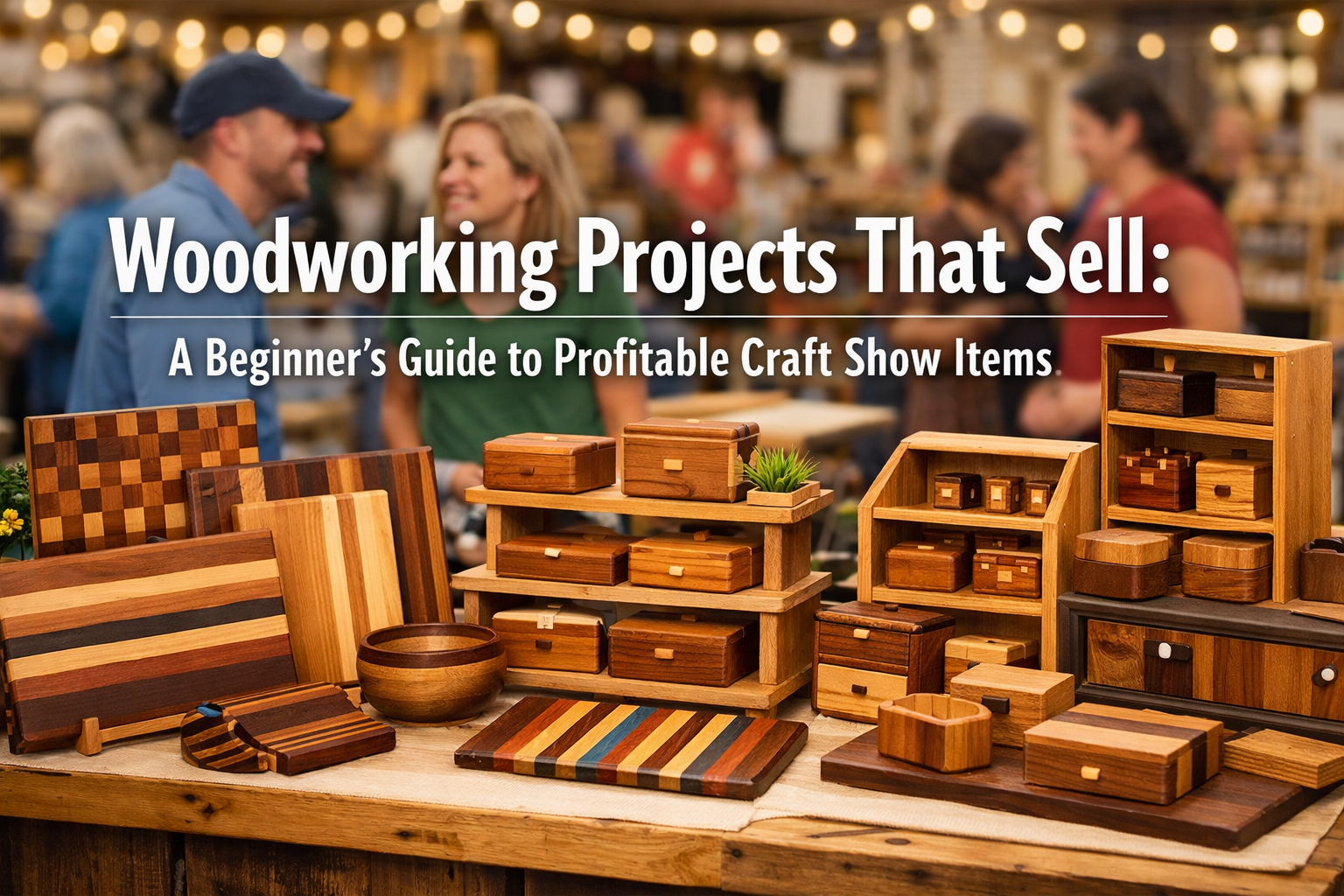
Are you eager to transform your passion for woodworking into a thriving income stream? Do you dream of seeing customers admire and purchase your handcrafted creations? This comprehensive article, “Woodworking Projects That Sell: A Beginner’s Guide to Profitable Craft Show Items,” is your ultimate resource for identifying and mastering the top projects that consistently capture attention and generate sales at craft shows in 2026. Turn your workshop into a revenue stream by mastering the top woodworking projects that consistently sell at craft shows—from jewelry boxes to cutting boards to floating shelves.
Many aspiring woodworkers possess incredible skill and creativity but struggle to identify which projects will actually sell. It’s a common misconception that complex, large furniture pieces are the most profitable. While grand items have their place, the craft show market often thrives on smaller, more affordable, and universally appealing items. This guide will walk you through the entire process, from selecting the right projects to pricing and presentation, ensuring your efforts lead to tangible profits.
Key Takeaways
- Focus on Small, Functional, and Decorative Items: The most profitable craft show items are typically smaller, easy to transport, and serve either a practical purpose or enhance home decor.
- Prioritize Material Efficiency and Production Time: Choose projects that utilize readily available materials efficiently and can be produced in batches to maximize profit margins.
- Master Essential Woodworking Skills: While complex joinery isn’t always necessary, precision in cutting, sanding, and finishing is crucial for creating high-quality, sellable items.
- Understand Market Demand and Pricing: Research current trends, analyze competitor pricing, and factor in all material and labor costs to set competitive and profitable prices.
- Presentation and Marketing are Key: A well-staged booth, attractive packaging, and clear branding significantly boost sales and customer interest at craft shows.
Identifying High-Demand Woodworking Projects That Sell

The secret to success at craft shows lies in understanding your potential customers. They are often looking for unique gifts 🎁, charming home decor accents, or functional items that are better made than mass-produced alternatives. These items should be easy to carry, fit into various home styles, and offer good value for their price.
Categories of Profitable Woodworking Crafts
When considering “Woodworking Projects That Sell: A Beginner’s Guide to Profitable Craft Show Items,” it’s helpful to categorize them. This helps diversify your offerings and appeal to a broader audience.
Kitchen & Dining Items:
- Cutting Boards: Always in demand. From simple rectangle boards to intricate end-grain butcher blocks, these are staples. Consider different wood types like maple, walnut, and cherry.
- Coasters: Easy to make in sets, these can be customized with engravings or different wood species.
- Spoon Rests/Utensil Holders: Practical and often overlooked, these add a touch of handmade charm to any kitchen.
- Bottle Openers with Magnetic Catch: A fun, quick project that makes an excellent gift.
Home Decor & Organization:
- Small Shelves (Floating or Wall-Mounted): Highly sought after for displaying small items or adding functional storage. Check out our guide on Crafting Your Perfect Woodworking Nightstand: A Comprehensive Guide for 2026 for inspiration on small furniture.
- Picture Frames: Offer unique, handmade frames in various sizes.
- Jewelry Boxes/Trinket Boxes: These can range from simple designs to more elaborate ones with dividers.
- Candle Holders/Votives: Create warmth and ambiance.
- Key Holders/Mail Organizers: Practical items that help declutter entryways.
- Small Plant Stands/Succulent Planters: Perfect for urban dwellers and plant enthusiasts.
Personal Accessories & Gifts:
- Phone Stands/Tablet Holders: Essential in today’s digital world.
- Desk Organizers: Help keep workspaces tidy.
- Small Wooden Toys (e.g., blocks, cars, puzzles): Great for gifts, especially if child-safe finishes are used.
- Personalized Signs: Offer custom engraving for names, dates, or sayings.
Holiday & Seasonal Items:
- Ornaments: Small, decorative, and perfect for seasonal sales.
- Holiday-themed Decorations: Think wooden snowflakes, pumpkins, or themed figurines. These are great for boosting sales during specific times of the year.
Top 25 Profitable Woodworking Projects for Beginners in 2026
Here’s a curated list of “Woodworking Projects That Sell: A Beginner’s Guide to Profitable Craft Show Items” with beginner-friendly appeal:
- Simple Cutting Boards: Classic, always sells.
- Coaster Sets: Easy to make in batches, great for gifts.
- Small Wall Shelves: Functional and decorative.
- Phone Stands: High utility, quick build.
- Trinket Boxes: Good for small jewelry or keepsakes.
- Bottle Openers: Quick, quirky, and useful.
- Key Holders: Simple, practical entryway decor.
- Wooden Plant Stands (small): Trendy for succulents.
- Picture Frames: Timeless decor.
- Candle Holders: Adds ambiance to any room.
- Desk Organizers: For pens, clips, etc.
- Decorative Wooden Bowls (turned or carved): More advanced but very sellable.
- Wooden Spoons/Spatulas: Kitchen tools that last.
- Garden Markers: For herb gardens or flower beds.
- Birdhouses: Appeal to nature lovers.
- Pet Bowl Stands: Functional for pet owners.
- Serving Trays: Versatile for entertaining.
- Bookends: Simple, decorative, and useful.
- Small Stools: Can be used as plant stands or extra seating.
- Door Stops: A simple solution to a common problem.
- Wine Bottle Holders: Creative ways to display wine.
- Wooden Game Boards (e.g., tic-tac-toe, checkers): Fun for families.
- Memo Clipboards: For notes and reminders.
- Remote Control Caddies: Helps organize living spaces.
- Small Wooden Signs: Customizable and popular.
💡 Pro Tip: “The most successful craft show vendors focus on high-quality, small, and versatile items that customers can immediately imagine in their own homes or as gifts.”
Tools, Materials, and Techniques for Craft Show Success
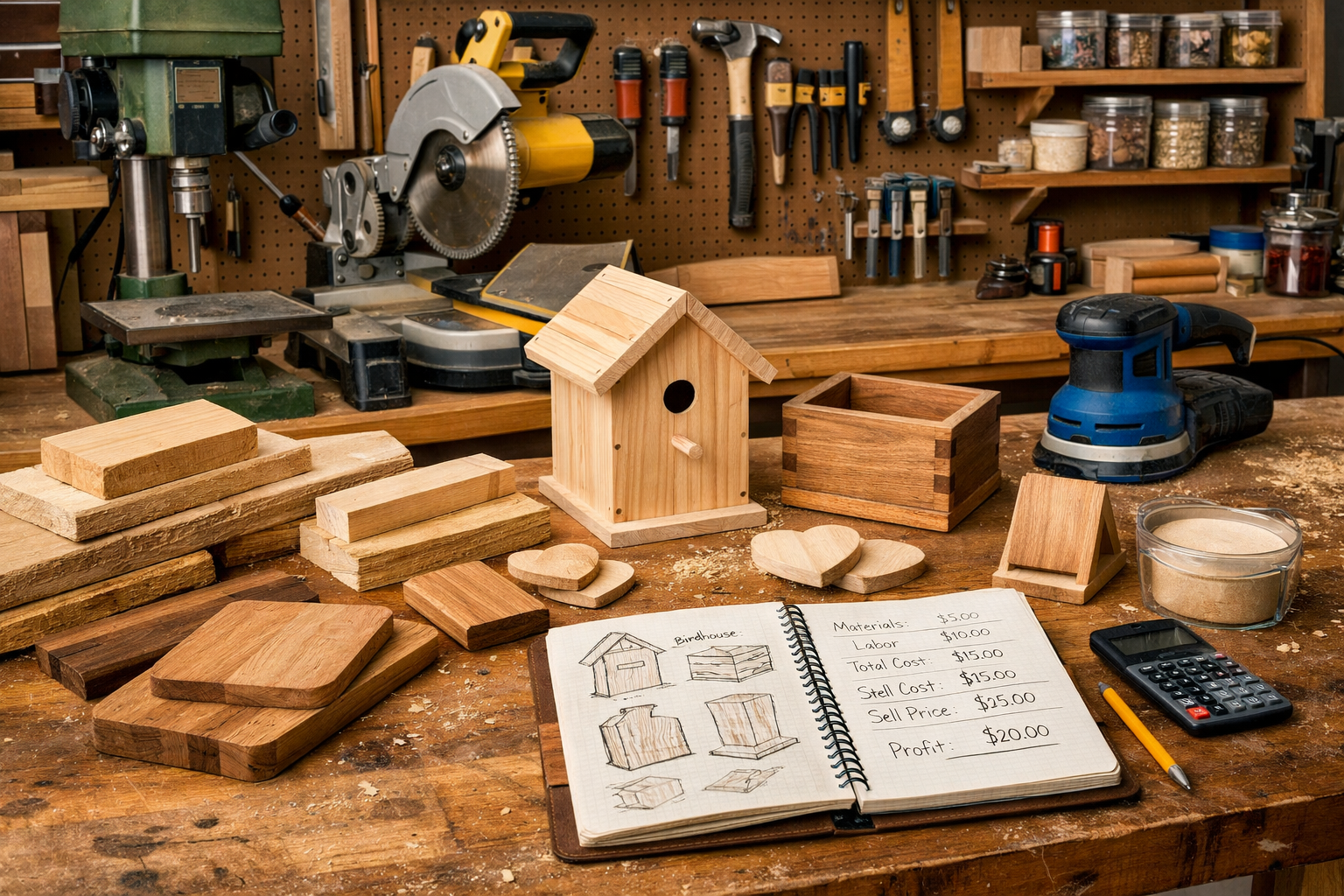
Crafting profitable items doesn’t require a fully equipped professional workshop, but having a few essential tools and understanding efficient techniques can make a significant difference.
Essential Tools for Beginner Woodworkers
Before diving into “Woodworking Projects That Sell: A Beginner’s Guide to Profitable Craft Show Items,” ensure you have access to these fundamental tools:
- Measuring & Marking Tools: Tape measure, ruler, square, pencil.
- Cutting Tools:
- Miter Saw: Excellent for accurate crosscuts. Understanding Miter Saw Table Height: Importance, Guidelines, and Tips can greatly improve your cuts.
- Table Saw: Ideal for ripping lumber and making precise cuts. For those looking at budget-friendly options, our article on the Delta Table Saw 36-600: Performance, Pros & Cons, and Buying Guide provides useful insights.
- Jigsaw or Bandsaw: For curved cuts.
- Shaping & Sanding Tools:
- Orbital Sander: Essential for smooth finishes.
- Hand Planes: For small adjustments and smoothing.
- Joining & Assembly Tools:
- Drill/Driver: For pilot holes and screws. Learn about Mastering Woodworking Screws: Your Ultimate Guide for 2026.
- Clamps: Crucial for gluing.
- Wood Glue: Strong bonds are essential. For small repairs or quick fixes, you might wonder, Does Super Glue Work on Wood? The Ultimate Guide for Woodworkers 🧰.
- Finishing Supplies: Sandpaper (various grits), wood stain, polyurethane, brushes/rags. Consider Sprayable Water Based Polyurethane: A Step-by-Step Guide for an efficient finish.
Material Selection
Choosing the right wood is critical for both appearance and profitability.
- Common & Affordable Woods: Pine, Poplar, and Aspen are good for practice and some painted items.
- Mid-Range & Popular Woods: Maple, Oak, Cherry, and Walnut are excellent choices for items like cutting boards, boxes, and shelves due to their durability and attractive grain.
- Exotic Woods: While beautiful, these can be expensive and may not be necessary for beginner projects. Use them sparingly for accents.
- Reclaimed Wood: Offers a rustic aesthetic and can be very cost-effective if sourced properly.
“Quality materials don’t just look better; they feel better, and customers are willing to pay more for that perceived value.”
Efficient Techniques for Production
To maximize your earnings, focus on efficiency:
- Batch Production: Instead of making one item at a time, cut all pieces for 5-10 items simultaneously. Then assemble all of them, and then finish all of them. This streamlines your workflow.
- Jigs and Templates: Create simple jigs for repetitive cuts or templates for consistent shapes. This ensures uniformity and speeds up production.
- Standardized Sizing: If possible, design items with standard lumber dimensions in mind to minimize waste.
- Effective Finishing: Spend time on sanding. A smooth finish makes a huge difference in perceived quality. Experiment with different wood finishing techniques to find what works best for your projects and aesthetic. For example, explore maple wood finishing techniques for popular light woods.
| Project Type | Recommended Wood(s) | Beginner Skill Level | Average Material Cost (per item) |
|---|---|---|---|
| Cutting Board | Maple, Walnut, Cherry | Easy | $5 – $15 |
| Coaster Set | Maple, Oak, Exotic Scraps | Very Easy | $1 – $3 |
| Small Wall Shelf | Pine, Poplar, Oak | Easy/Medium | $3 – $10 |
| Phone Stand | Walnut, Maple, Cherry | Easy | $2 – $7 |
| Trinket Box | Poplar, Maple, Walnut | Medium | $5 – $12 |
| Key Holder | Pine, Oak, Poplar | Easy | $3 – $8 |
| Small Plant Stand | Pine, Poplar, Cedar | Easy | $4 – $10 |
Pricing, Presentation, and Marketing Your Woodworking Projects That Sell
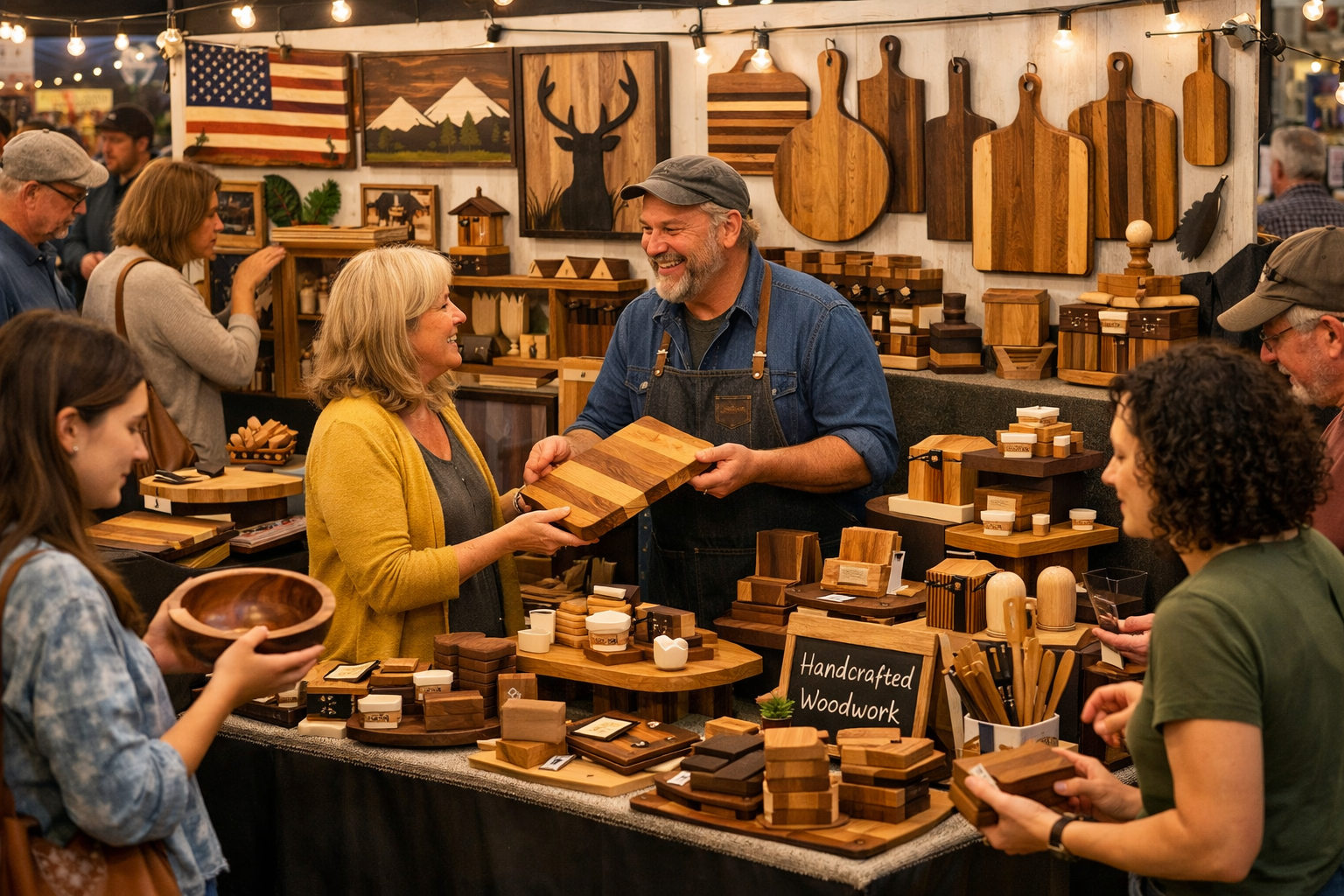
Once you’ve crafted your items, the next crucial steps are pricing them correctly, presenting them beautifully, and effectively marketing them to sell at craft shows.
Strategic Pricing
Pricing is a delicate balance. You want to be competitive but also ensure you’re making a profit. Here’s a common formula:
Materials Cost + Labor Cost + Overhead + Profit Margin = Selling Price
- Materials Cost: The actual cost of wood, glue, sandpaper, finish, etc., for one item.
- Labor Cost: Estimate your hourly wage (e.g., $20-$30/hour) and multiply it by the time it takes to make one item. Be honest about this, even for small items.
- Overhead: A small percentage to cover tools, electricity, booth fees, transportation, etc. (e.g., 10-20% of materials + labor).
- Profit Margin: What you want to earn on top of all costs (e.g., 20-50%).
“Never undersell your craftsmanship. Your time and skill are valuable.”
Example for a Small Cutting Board:
- Material Cost: $10
- Labor (2 hours @ $25/hr): $50
- Overhead (15% of $60): $9
- Total Cost: $69
- Profit Margin (30% of $69): $20.70
- Suggested Selling Price: $89.70 (round to $89 or $90)
Always research what similar “Woodworking Projects That Sell: A Beginner’s Guide to Profitable Craft Show Items” are selling for at the craft shows you plan to attend. This helps you gauge market expectations.
Appealing Presentation
First impressions are everything at a craft show.
- Booth Setup: Invest in a clean, attractive booth. Use lighting to highlight your work. Wooden crates, fabric backdrops, and risers can create appealing displays. Think about how your items will look in a home setting.
- Clear Labeling: Clearly label each item with its name, wood type, and price. Consider small cards detailing the unique features or benefits of the wood.
- Professional Finishing: A smooth, durable finish is paramount. Whether it’s a high gloss wood finishing technique or a natural oil, ensure it’s impeccable.
- Packaging: Offer attractive and practical packaging. A simple brown paper bag with your logo, or tissue paper for delicate items, adds a professional touch.
- Storytelling: Be ready to talk about your craft. How did you make it? What inspired you? Customers love to connect with the maker.
Marketing Your Craft Show Items
Even at a craft show, a little marketing goes a long way.
- Business Cards: Have professional business cards with your name, business name, website/social media, and contact information.
- Social Media: Post about your upcoming shows. Share photos and videos of your making process. Use relevant hashtags.
- Email List: Offer a sign-up sheet for an email newsletter to inform customers about future shows or new products.
- Special Offers: Consider multi-buy discounts (e.g., “Buy 3 Coaster Sets, Get 10% Off”) or small bundled gifts.
- Custom Orders: Be prepared to discuss custom orders for larger pieces, like a custom farmhouse dining table or a woodworking storage bench in 2026.
By carefully selecting your projects, honing your skills, and presenting your work professionally, you can successfully turn your woodworking hobby into a profitable venture. The journey of finding “Woodworking Projects That Sell: A Beginner’s Guide to Profitable Craft Show Items” is an exciting one, filled with learning and creativity.
Conclusion
Embarking on the journey of selling your woodworking creations at craft shows in 2026 can be incredibly rewarding. By focusing on “Woodworking Projects That Sell: A Beginner’s Guide to Profitable Craft Show Items,” you equip yourself with the knowledge to create products that resonate with customers and fill a real demand. Remember, success isn’t just about crafting beautiful pieces; it’s about understanding the market, optimizing your production, and presenting your work in an irresistible way.
The projects highlighted in this guide – from practical cutting boards and elegant jewelry boxes to charming small shelves and unique phone stands – offer an excellent starting point for any beginner looking to turn their woodworking passion into profit. These items are generally quick to make, efficient with materials, and appeal to a broad audience looking for quality, handmade goods.
Actionable Next Steps:
- Choose 3-5 Projects: Select a few projects from the list that excite you and align with your current skill level and available tools.
- Practice and Refine: Make several prototypes to perfect your technique and ensure consistency in quality.
- Calculate Costs & Set Prices: Accurately determine material and labor costs, then set competitive and profitable prices for your items.
- Source Materials: Buy your chosen woods and supplies in bulk if possible to save on costs.
- Plan Your Booth: Sketch out your craft show display, considering lighting, layout, and how to make your products shine.
- Find Local Craft Shows: Research and sign up for local craft fairs or markets in your area. Start with smaller, less competitive events to gain experience.
- Market Your Presence: Announce your participation on social media and to friends and family.
With dedication and strategic planning, your woodworking skills can indeed lead to a thriving business. Happy crafting and selling!
References
- Anderson, C. (2020). The Craft Show Handbook: A Guide to Exhibiting & Selling Your Work. Timber Press.
- Peters, S. (2018). Making & Selling Your Art: A Guide for Artists, Craftspeople, and Designers. Schiffer Publishing.
- Wood Magazine. (2023). 25 Easy Woodworking Projects for Beginners. Meredith Corporation.