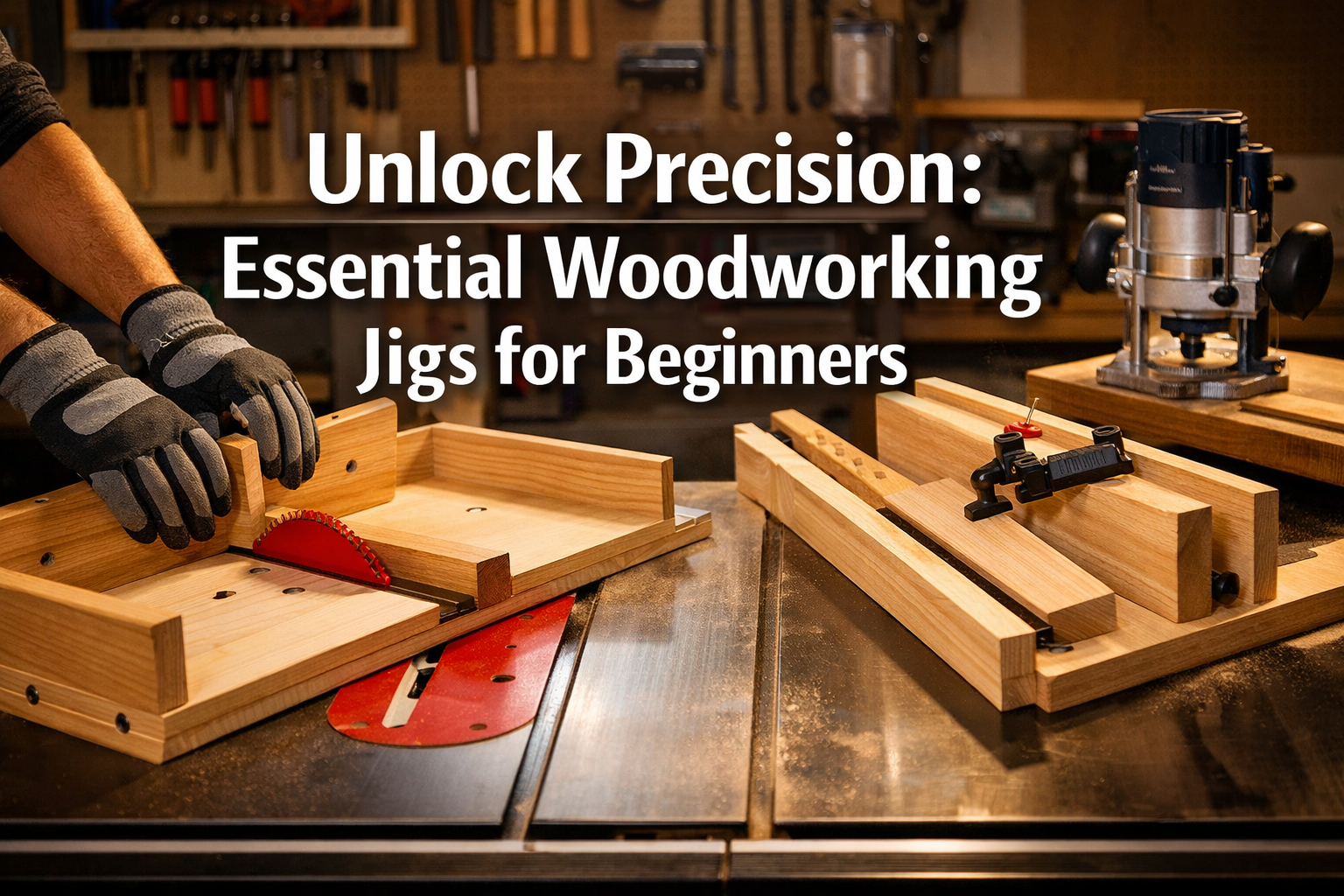

Do you often find yourself struggling to achieve perfectly straight cuts, accurate angles, or consistent dimensions in your woodworking projects? Are you concerned about safety when working with powerful tools like table saws or routers? Discover how simple, DIY woodworking jigs can transform your beginner projects, making complex cuts safer and more precise without expensive tools. This Beginner’s Guide to Essential Woodworking Jigs: Improve Accuracy and Safety for Common Cuts will demystify these invaluable workshop aids, empowering you to create professional-quality work with confidence in 2026.
Woodworking jigs are unsung heroes in any workshop, especially for those new to the craft. They are custom-built guides or fixtures designed to hold a workpiece or tool in a specific position, ensuring repeatable and accurate results. More than just aids for precision, they are critical safety devices, keeping your hands away from dangerous blades and bits. By understanding and utilizing essential woodworking jigs, you can significantly elevate the quality of your projects, reduce waste, and work with greater peace of mind.

Key Takeaways
- Jigs Enhance Accuracy & Safety: Essential woodworking jigs are crucial for achieving precise, repeatable cuts and significantly improving safety, particularly for beginners.
- Cost-Effective Solutions: Many indispensable jigs can be built cheaply with scrap wood, eliminating the need for expensive specialized tools.
- Versatility for Common Cuts: Jigs simplify common cuts like crosscuts, rip cuts, dados, and tapering, making them accessible to all skill levels.
- Boost Confidence & Project Quality: Mastering jig use builds confidence, reduces frustration, and leads to higher quality, professional-looking finished projects.
- Foundation for Advanced Techniques: A solid understanding of basic jigs forms the foundation for tackling more complex joinery and woodworking challenges.
Why Essential Woodworking Jigs are Game-Changers for Beginners: Accuracy and Safety First
For many new woodworkers, the pursuit of precision can be daunting. The slightest wobble or miscalculation can ruin a piece of wood and set back a project. This is where the Beginner’s Guide to Essential Woodworking Jigs: Improve Accuracy and Safety for Common Cuts truly shines. Jigs act as an extension of your tools, guiding them or your material with unwavering consistency. Imagine trying to cut a perfect 90-degree angle freehand on a table saw – nearly impossible and incredibly dangerous! A crosscut sled, for example, transforms this challenge into a routine, safe, and accurate task.
Jigs provide a consistent reference point, eliminating human error inherent in freehand operations. This repeatability is vital for projects requiring multiple identical parts, such as cabinet doors, chair legs, or frames. Without jigs, achieving such consistency would require advanced skills and often dedicated, costly machinery.
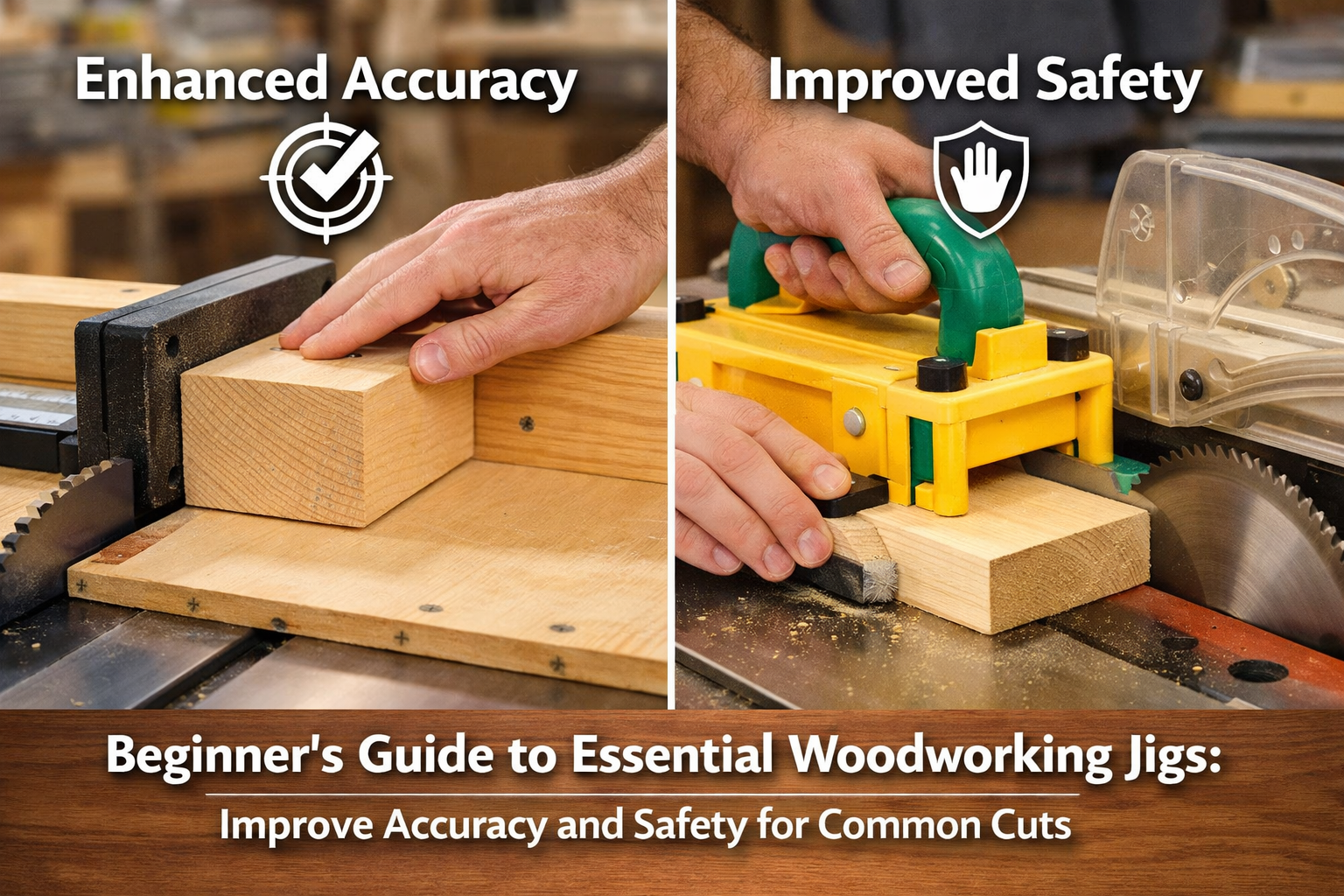
Beyond accuracy, safety is paramount in any woodworking shop. Power tools, while incredibly efficient, can be unforgiving. Jigs are specifically designed to keep your hands and fingers clear of blades, bits, and moving parts. They secure the workpiece, preventing kickback and ensuring smooth, controlled feeding. This is especially true when making cuts close to the blade, or when working with small or awkwardly shaped pieces. Investing time in building and using jigs is an investment in your safety and the longevity of your woodworking journey.
💡 Safety First: The Importance of Jigs
When working with power tools, even seemingly simple cuts can pose risks. Jigs not only guide your cuts but create a barrier between your hands and the cutting action. For instance, a push stick used in conjunction with a rip fence jig is far safer than pushing wood directly by hand. Always prioritize safety gear (eyewear, hearing protection) and follow proper tool operation procedures alongside jig use.The Double Benefit: Precision and Protection
The primary allure of essential woodworking jigs for beginners lies in their dual benefit: they empower you to achieve results that look like they were made by a seasoned pro, while simultaneously protecting you from common workshop hazards. This balance of precision and protection makes them indispensable.
Consider making a series of consistent dado cuts for shelving. Without a dado jig, each pass would rely on careful measurement and setup, prone to slight variations. A custom dado jig, however, allows you to set the precise width and depth once, then replicate it flawlessly and safely across multiple workpieces. This approach drastically reduces frustration and waste, making woodworking more enjoyable and productive. Learn more about precise joinery techniques, including how jigs can assist, by exploring our guide on Hand Tool Joinery for Visible Wood Joints: Dovetails, Mortise and Tenon, and Box Joints as Design Features in Furniture and Small Projects.
Jigs are not just for large power tools. Small projects like cutting boards or picture frames also benefit immensely from the accuracy and safety jigs provide. For example, a simple miter sled for a table saw ensures perfectly square or angled cuts for frame corners, vastly improving the fit and finish. If you’re looking for profitable beginner projects, jigs can certainly help you craft Profitable Beginner Woodworking: Picture Frames, Cutting Boards, and Kitchen Products That Sell Fast.
The initial time spent constructing a jig is quickly recouped through saved material, increased efficiency, and most importantly, accident prevention. By integrating jigs into your workflow from the start, you’re building a foundation of good habits that will serve you throughout your woodworking journey.
Essential Woodworking Jigs for Common Cuts: A Beginner’s Toolkit
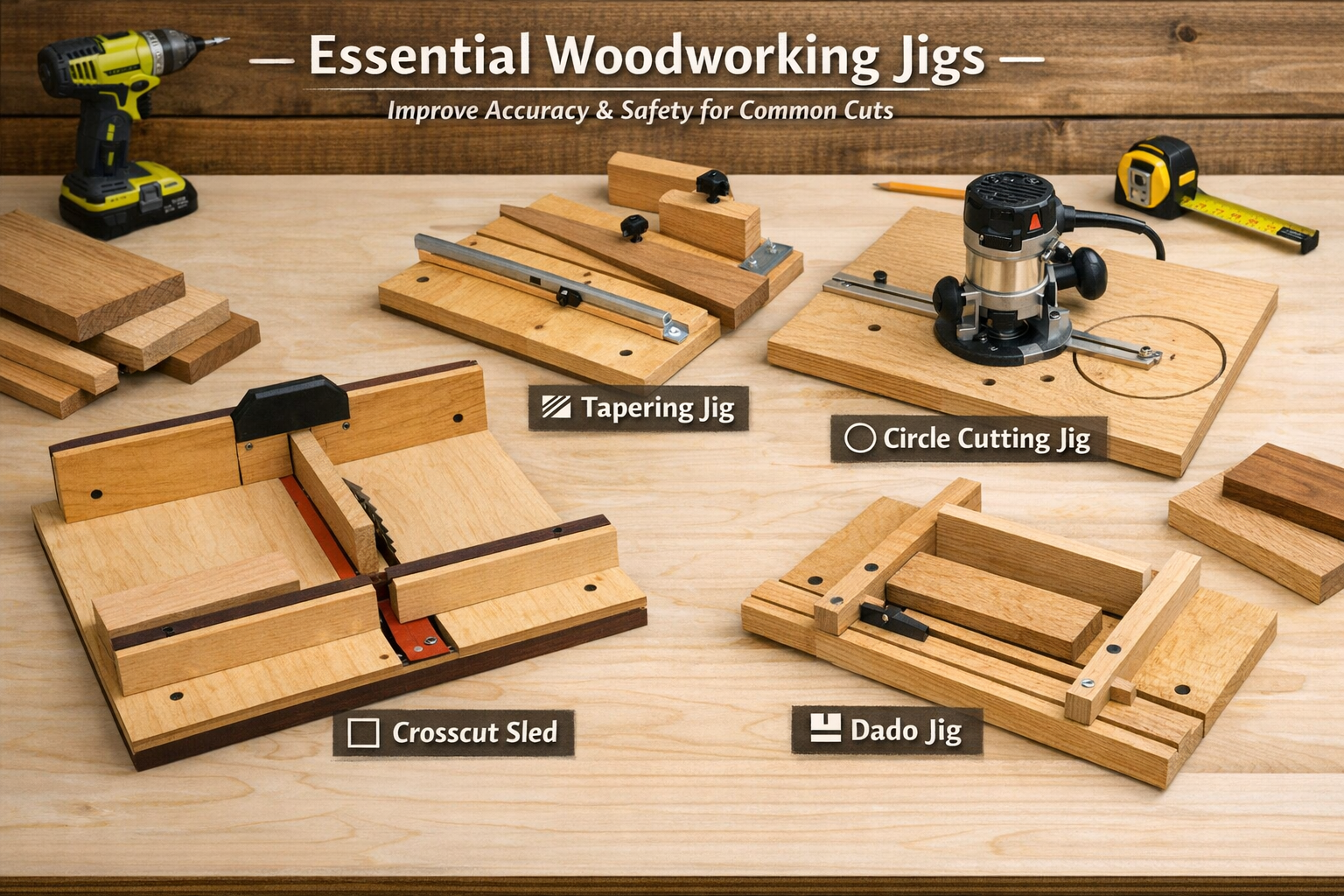
Building a solid foundation in woodworking begins with mastering fundamental cuts. This section of the Beginner’s Guide to Essential Woodworking Jigs: Improve Accuracy and Safety for Common Cuts focuses on the most critical jigs you can build or acquire to tackle these common operations with ease and confidence. Most of these jigs can be made from scrap plywood or MDF, making them incredibly cost-effective.
1. The Crosscut Sled (Table Saw)
🥇 The Gold Standard for Square Cuts
The crosscut sled is arguably the most essential jig for any table saw owner. It’s a platform that slides in your saw’s miter slots, guiding your workpiece perpendicular to the blade.
- Function: Delivers perfectly square (90-degree) crosscuts on wide or narrow boards, which is difficult and dangerous using the miter gauge alone on wider pieces.
- Safety Benefit: Keeps your hands far from the blade and firmly holds the workpiece, preventing kickback.
- Construction: Typically made from a piece of plywood or MDF base, two runners that fit snugly in your table saw’s miter slots, and a tall fence securely fastened at a precise 90-degree angle to the blade. A secondary fence can be added for tear-out reduction.
- Key Feature: Often includes hold-downs and stop blocks for repeatable cuts.
| Component | Material Suggestion | Purpose |
|---|---|---|
| Base | 3/4″ Plywood or MDF | Main platform for workpiece |
| Runners | Hardwood (e.g., maple) | Glide in miter slots |
| Front/Rear Fence | 3/4″ Plywood or Hardwood | Guiding edge, support, square reference |
| Stop Blocks | Scrap wood | For repeatable length cuts |
2. Tapering Jig (Table Saw)
📏 Perfect Angles for Legs and Spindles
A tapering jig allows you to cut precise, consistent tapers on table saw, ideal for furniture legs, table skirts, or decorative elements.
- Function: Holds a workpiece at a fixed angle to the table saw blade, enabling precise angled cuts along its length.
- Safety Benefit: Secures the workpiece, preventing it from shifting during the cut and maintaining control, reducing kickback risk.
- Construction: Often consists of two pieces of plywood hinged at one end, with a locking mechanism to set the desired angle. A cleat holds the workpiece against the jig.
3. Dado Jig / Router Jig (Router Table or Handheld Router)
⚡ Clean Grooves and Joints

Dados (grooves cut across the grain) and rabbets (grooves cut along the edge) are common in cabinetry and shelving. A dado jig, often used with a router, makes these cuts precise.
- Function: Guides a router to cut straight, accurate dados, grooves, or rabbets. Can be a simple straightedge clamp or a more elaborate jig for specific joint types.
- Safety Benefit: Keeps the router stable and on track, reducing the chance of slips or gouges, especially with handheld routers.
- Construction: Can be as simple as a straight piece of wood clamped to the workpiece, or a dedicated sled for repetitive cuts with a router. For advanced router jig applications, particularly for drawers, consider our guide on Mastering Dovetail Joinery for Drawers: Hand and Router Methods for Cabinet Builders.
4. Rip Sled (Table Saw)
⚙️ Safe and Accurate Narrow Rips
While the table saw’s rip fence handles most ripping, a rip sled is invaluable for safely cutting very narrow strips or for ensuring perfectly parallel cuts on less stable workpieces.
- Function: Guides narrow pieces or pieces with irregular edges through the blade, ensuring parallel cuts. Essential when the rip fence would be too close to the blade.
- Safety Benefit: Protects hands from the blade during narrow cuts, eliminating the dangerous practice of freehand ripping or using an inadequate push stick near the blade.
- Construction: A simple sled with a runner that fits the miter slot, and a fence to register the workpiece.
🛠️ DIY vs. Commercial Jigs
While many excellent commercial jigs are available, beginners often benefit from building their own. This process teaches fundamental construction skills, allows for customization to your specific tools, and is incredibly satisfying. Plus, it’s often much cheaper! Building your own robust items like [Robust Floating Shelves: Power Tool Guide for Warm Minimalism](https://woodcraftwiz.com/robust-floating-shelves-power-tool-guide-for-warm-minimalism/) can be made much easier with custom jigs.5. Circle Cutting Jig (Router or Bandsaw)
⭕ Perfect Circles Every Time
Cutting perfect circles can be tricky. A circle cutting jig makes it effortless, whether you’re using a router or a bandsaw.
- Function: Allows for cutting perfect circles or arcs of various diameters.
- Safety Benefit: Provides a stable pivot point, making controlled cuts easier and reducing the risk of the tool grabbing or the workpiece spinning out of control.
- Construction: For a router, it’s typically a base plate attached to the router with a pivot pin. For a bandsaw, it involves a pivot point mounted on the saw table.
These five jigs represent a fantastic starting point for any beginner. They address common challenges and significantly boost both the accuracy and safety of your workshop operations in 2026.
Building and Using Your First Jigs: Practical Steps and Best Practices
Stepping into the world of jigs can feel like adding another layer of complexity, but the truth is, the investment of time to build a jig pays dividends almost immediately. This section of the Beginner’s Guide to Essential Woodworking Jigs: Improve Accuracy and Safety for Common Cuts will walk you through the practical aspects of getting started.
1. Start Simple: The Crosscut Sled
The table saw crosscut sled is often recommended as the first jig to build because its benefits are immediate and profound. Here’s a simplified overview of the process:
- Materials: You’ll need a piece of stable plywood or MDF for the base (around 24″ x 24″ is a good starting size), two hardwood runners (e.g., maple or oak) that fit snugly in your table saw’s miter slots, and a piece of sturdy plywood for the fence.
- Step 1: Attach Runners: Securely glue and screw the hardwood runners to the underside of the base, ensuring they are perfectly parallel and slide smoothly in the miter slots without any side-to-side slop.
- Step 2: Attach Fence (Crucial Step): With the sled on the table saw, cut the front edge of the base. Then, clamp the fence to the front of the sled, ensuring it’s square to the cut line you just made. A reliable method involves using the 5-cut method to dial in perfect 90-degree accuracy. Once precisely square, permanently attach the fence with glue and screws.
- Step 3: Add a Back Fence (Optional but Recommended): A second, smaller fence at the back of the sled supports the workpiece through the cut, minimizing tear-out.
Pro Tip: Always test your new jig with scrap material before using it on your project pieces. Make sure everything slides smoothly and the cut is accurate.
2. Best Practices for Jig Use
Once you have your jigs, knowing how to use them effectively and safely is key.
- Inspect Before Use: Before every cut, check that your jig is clean, free of debris, and in good working order. Ensure all fasteners are tight.
- Secure the Workpiece: Always make sure your workpiece is firmly seated against the jig’s fence or clamped in place. Any movement can compromise accuracy and create a safety hazard.
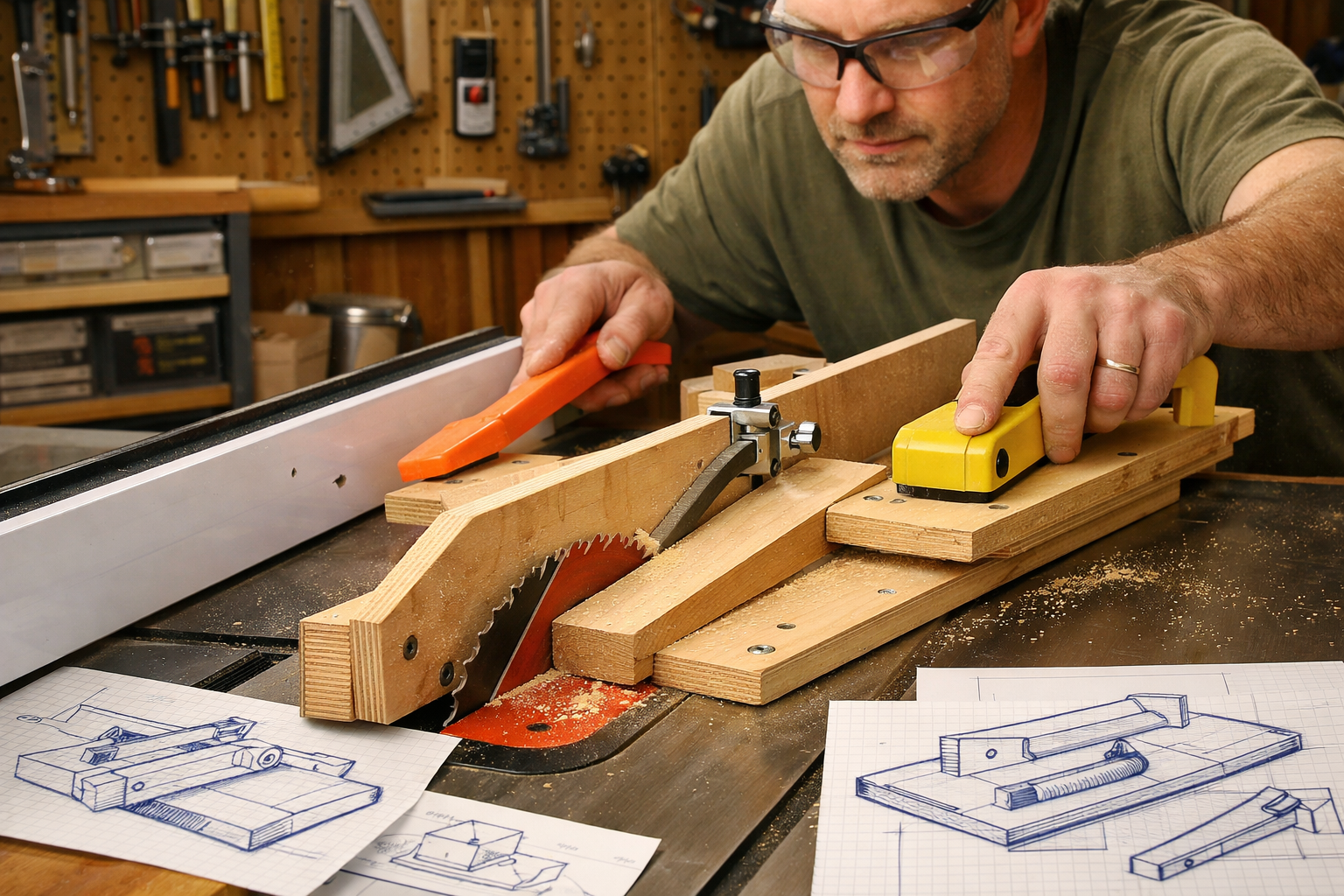
- Use Push Sticks/Blocks: Even with jigs, never get your hands too close to the blade. Utilize push sticks or push blocks to guide the material through the cut.
- Proper Dust Collection: Jigs can sometimes interfere with standard dust collection, but it’s vital to keep your workspace clear. Consider portable dust extractors or shop vacuums.
- Store Jigs Safely: Jigs can be bulky. Store them on wall-mounted racks or dedicated shelves to keep them from getting damaged and to ensure they’re readily accessible.
“The true measure of a woodworker isn’t just in their skill with a chisel, but in their ability to leverage simple tools and clever jigs to create complex results with repeatable precision and unwavering safety.” – Woodcraft Wiz Editorial Team, 2026.
3. Expanding Your Jig Collection
Once comfortable with the basics, you can explore more specialized jigs:
- Box Joint Jig: For creating strong, decorative box joints, often used with a table saw or router table.
- Dovetail Jigs: For crafting classic dovetail joints, either through dedicated commercial jigs or more advanced homemade versions. Read more about this in Mastering Dovetail Drawers for Cabinets: Hand-Cut and Router Jigs for Seamless Furniture Integration.
- Panel Raising Jig: For safely raising panels on a router table for cabinet doors.
- Mortising Jig: Aids in cutting mortises, essential for mortise and tenon joinery.
Remember, the goal isn’t to build every jig imaginable, but to build or acquire the ones that will most benefit your current projects and skill level. For beginners, the crosscut sled, tapering jig, and a straightedge router jig will provide a significant boost in both accuracy and safety for the most common cuts. As you progress, consider projects like Building Custom Wooden TV Stands: Modern Media Consoles with Cable Management and Hidden Joinery which can benefit from a variety of custom jigs for precision.

Conclusion
Embarking on your woodworking journey in 2026 with a solid understanding of jigs will profoundly impact your success. This Beginner’s Guide to Essential Woodworking Jigs: Improve Accuracy and Safety for Common Cuts has highlighted not only the immense benefits jigs offer in achieving professional-grade precision but also their critical role in ensuring a safe workshop environment. From the indispensable table saw crosscut sled to the versatile tapering and router jigs, these simple shop-made aids empower you to tackle common cuts with confidence, reduce frustrating mistakes, and elevate the quality of your finished projects.
By prioritizing the construction and proper use of these essential woodworking jigs, you are not just making cuts; you are building a foundation of good habits and technical mastery. This foundation will serve you well as you move from simple beginner projects to more complex creations. Embrace the power of jigs, and watch your woodworking skills and project outcomes transform for the better.
Actionable Next Steps
- Prioritize Your First Jig: Start by building a high-quality table saw crosscut sled. This single jig will revolutionize your square cuts and significantly enhance safety.
- Gather Materials: Collect scrap plywood, MDF, and hardwood offcuts – these are often all you need to create effective jigs.
- Practice Safely: Always test new jigs with scrap wood and use appropriate safety gear (eyewear, hearing protection, push sticks).
- Explore Further: As you gain confidence, consider building other essential jigs like a tapering jig or a router dado jig to expand your capabilities.
- Maintain Your Jigs: Keep your jigs clean and in good repair to ensure their continued accuracy and safety.