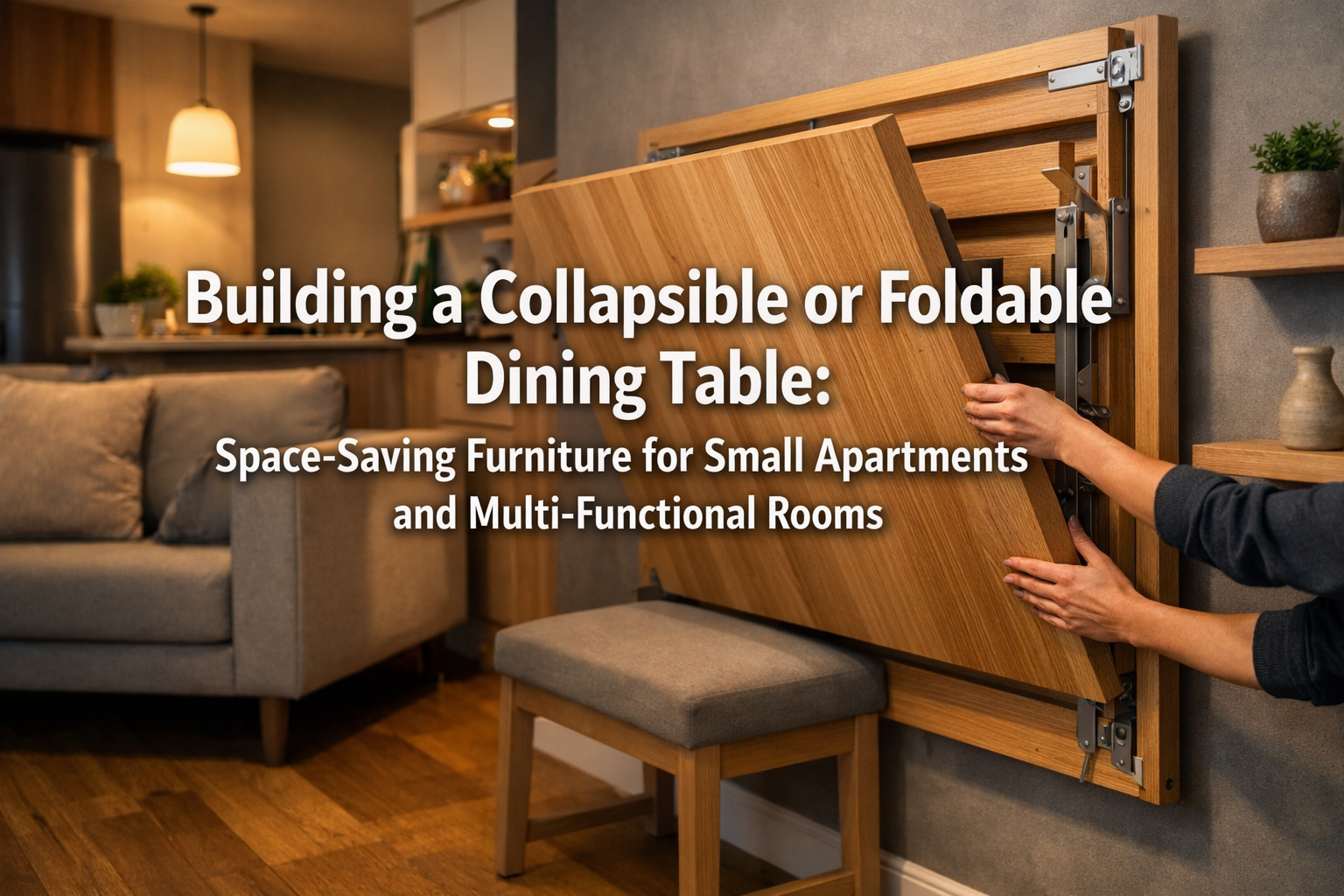

In an era where urban living spaces are becoming increasingly compact, the demand for ingenious, space-saving furniture has never been higher. For many, the traditional dining table, while central to family life and entertaining, often presents a significant challenge in smaller apartments or multi-functional rooms. This article provides a comprehensive guide to Building a Collapsible or Foldable Dining Table: Space-Saving Furniture for Small Apartments and Multi-Functional Rooms, focusing on clever joinery, robust hardware, and innovative design to maximize both stability and functionality. By constructing a versatile dining table that can be easily folded or collapsed, you can unlock precious floor space, transforming your living area to suit various needs throughout the day.
This guide is designed for woodworkers of all skill levels, offering insights into selecting the right materials, understanding different folding mechanisms, and applying finishing techniques to create a durable and aesthetically pleasing piece that enhances modern living in 2026.

Key Takeaways
- Design for Functionality and Space: Prioritize designs that offer maximum space-saving benefits without compromising on table size when extended.
- Crucial Hardware Selection: High-quality hinges, slides, and locking mechanisms are essential for durability and ease of use.
- Stable Joinery Techniques: Employ strong, reliable joinery to ensure the table’s stability in both open and closed positions.
- Material Choice Matters: Select wood types and finishes that complement your interior while offering sufficient strength and resistance to wear.
- Safety First: Always consider safety features, such as secure locking mechanisms, to prevent accidental collapse.
Designing Your Space-Saving Dining Table: Concepts and Blueprints
The journey of Building a Collapsible or Foldable Dining Table: Space-Saving Furniture for Small Apartments and Multi-Functional Rooms begins with thoughtful design. The core objective is to create a dining surface that can expand for meals and gatherings, yet retract to free up valuable square footage. Several design concepts can achieve this, each with its unique advantages and challenges.
Popular Collapsible Dining Table Designs
Understanding the various folding mechanisms is crucial to choosing the right design for your space and woodworking skills. Here are some popular options:
- Gate Leg Tables: A classic design where table leaves are supported by legs that swing out like gates. When collapsed, the leaves drop, and the gate legs tuck neatly underneath.
- Pros: Offers significant extension, relatively simple construction.
- Cons: Gate legs can sometimes be cumbersome.
- Drop-Leaf Tables: Similar to gate-leg, but often with simpler supports (e.g., pull-out slides or fixed brackets) for the leaves.
- Pros: Minimalist appearance when folded, good for smaller expansions.
- Cons: Might offer less robust support than gate legs for heavier loads.
- Wall-Mounted Fold-Down Tables: These tables are hinged directly to a wall and fold down when needed, then fold back up flush against the wall when not in use.
- Pros: Extremely space-efficient, frees up floor space entirely.
- Cons: Requires strong wall mounting, fixed location.
- Console-to-Dining Tables: These innovative designs start as slim console tables and extend or unfold into full-sized dining tables, often using complex telescopic slides or multiple hinged sections.
- Pros: Highly versatile, elegant solution for multi-functional rooms.
- Cons: More complex to build, requires specialized hardware.
Before cutting any wood, thorough planning is essential. Sketch out your ideas, considering the dimensions of your room, the number of people you typically need to seat, and the available space for the table when collapsed. Create detailed blueprints with measurements, accounting for the thickness of your chosen materials and the space required for hardware.
Choosing Your Materials and Joinery
The success of your collapsible dining table hinges on selecting the right materials and employing strong joinery.
Wood Selection
- Hardwoods (Oak, Maple, Cherry): Offer excellent durability, stability, and a beautiful grain. Ideal for tabletops and structural components.
- Plywood (Birch, Baltic Birch): A stable and strong option for tabletops, leaves, and cabinet components. Look for high-grade, void-free plywood.
- Softwoods (Pine, Poplar): More affordable and easier to work with, but less durable. Best suited for internal frames or components not subjected to heavy wear.
Consider sustainable wood sourcing for an eco-friendly approach. If using reclaimed wood, ensure it is properly prepped and free from pests. Read our guide on reclaimed wood restoration for best practices.
Essential Joinery Techniques
For a stable and durable collapsible table, reliable joinery is paramount.
- Mortise and Tenon Joints: Excellent for connecting legs to aprons, offering superior strength.
- Dadoes and Rabbets: Ideal for shelving, drawer construction, and connecting components within a frame.
- Pocket Hole Joinery: A fast and strong method for assembling frames and attaching aprons, especially useful for hidden connections.
- Dovetail Joints: While more advanced, dovetails offer exceptional strength and aesthetic appeal, particularly for drawers or connecting table sections. Learn more about precise cutting with our guide on hand tool mastery for detail work.
When designing, visualize how the forces will act on the table when open and closed, ensuring your joinery can withstand these stresses.
Essential Hardware and Assembly Techniques for Stability
The magic of a collapsible table lies in its hardware. Choosing the correct hinges, slides, and locking mechanisms is critical for both the functionality and longevity of your furniture. When Building a Collapsible or Foldable Dining Table: Space-Saving Furniture for Small Apartments and Multi-Functional Rooms, the quality of these components directly impacts the user experience.
Selecting the Right Hardware
- Hinges:
- Piano Hinges: Long, continuous hinges ideal for connecting large table leaves, ensuring even support and a clean look.
- Butt Hinges: Standard hinges for attaching smaller leaves or components. Choose heavy-duty options for dining tables.
- Concealed Hinges: Provide a clean, seamless look when the table is closed, often used for wall-mounted designs.
- Folding Leg Mechanisms:
- Gate Leg Hinges: Specifically designed for gate-leg tables, allowing legs to swing out and lock into place.
- Folding Table Leg Brackets: Robust brackets that allow legs to fold flat against the tabletop or frame, often featuring a locking mechanism.
- Slides and Tracks:
- Telescopic Slides: Used for console-to-dining tables, allowing table sections to extend smoothly. Ensure they are heavy-duty to support the tabletop.
- Drawer Slides (Heavy Duty): Can be adapted for specific folding mechanisms where a section needs to slide out.
- Locking Mechanisms:
- Barrel Bolts or Latch Locks: Essential for securing leaves or legs in the open position, preventing accidental collapse.
- Magnetic Catches: Useful for holding folded components securely when the table is collapsed.
Always purchase hardware rated for the weight and stress your table will endure. Skimping on hardware can lead to instability and frustration.
Step-by-Step Assembly Overview
While specific steps vary by design, here’s a general sequence for assembling your collapsible dining table:
- Cut and Prepare All Components: Measure and cut all wood pieces according to your blueprints. Sand and prepare surfaces before assembly.
- Construct the Main Frame/Apron: Assemble the core structure of your table using your chosen joinery (e.g., mortise and tenon, pocket holes). Ensure it is square and sturdy.
- Attach Legs: Secure the table legs. If they are fixed, use strong joinery. If they are folding, install the folding leg mechanisms and ensure they operate smoothly and lock securely.
- Install Tabletop and Leaves:
- For drop-leaf or gate-leg designs, attach the fixed tabletop section first. Then, precisely position and attach the hinges for the folding leaves.
- For wall-mounted tables, securely mount the main table section to the wall using appropriate fasteners for your wall type (e.g., toggle bolts for drywall, lag screws for studs).
- For console-to-dining tables, integrate the telescopic slides or complex hinging systems, ensuring smooth operation.
- Add Locking Mechanisms: Install all necessary latches, bolts, or magnetic catches to secure the table in both its open and closed positions. This is crucial for safety and stability.
- Test and Adjust: Thoroughly test the table’s folding and unfolding actions. Check for stability, wobbles, and smooth operation. Make any necessary adjustments.
For more advanced joinery, consider using a miter saw for precise cuts, or mastering the band saw for intricate curves.
Finishing Touches and Practical Considerations for 2026
Once the structural work is complete, the finishing touches elevate your project from a functional piece to a cherished item in your home. These steps are vital for enhancing durability, aesthetics, and user experience, especially for furniture designed for constant use and transformation.
Sanding and Finishing
Proper finishing not only protects the wood but also brings out its natural beauty.

- Sanding: Start with coarse-grit sandpaper (e.g., 80 or 100 grit) to remove imperfections, then progressively move to finer grits (e.g., 150, 220) for a smooth finish. Pay extra attention to edges and areas that will be handled frequently.
- Staining (Optional): If you desire a different color, apply a wood stain according to the manufacturer’s instructions. Always test on a scrap piece first. Explore different maple wood finishing techniques or distressed wood finishing techniques for unique looks.
- Protective Finish: Apply a durable protective finish such as polyurethane, lacquer, or Rubio Monocoat. For dining tables, a hard-wearing, water-resistant finish is essential. Apply multiple thin coats, sanding lightly between coats with a very fine grit (e.g., 320-400) for a silky smooth surface. Consider options like spar urethane over polyurethane for added protection.
“A well-finished piece of furniture isn’t just about aesthetics; it’s about safeguarding your craftsmanship and ensuring longevity, especially for a multi-functional piece that endures frequent use.”
Maintenance and Long-Term Durability
Even the best-built collapsible dining table requires some care to maintain its functionality and appearance over time.
- Regular Cleaning: Wipe down the table with a damp cloth after use. Avoid harsh chemical cleaners that can damage the finish.
- Hardware Inspection: Periodically check all hinges, slides, and locking mechanisms. Tighten any loose screws and lubricate moving parts with a dry lubricant if they become stiff.
- Finish Protection: Use coasters and placemats to protect the tabletop from spills and scratches. Reapply a protective finish as needed, typically every few years, depending on wear and tear.
Integrating into Multi-Functional Rooms in 2026
The ultimate goal of Building a Collapsible or Foldable Dining Table: Space-Saving Furniture for Small Apartments and Multi-Functional Rooms is seamless integration into your living space.
- Consider Adjacent Furniture: Design your table to complement other multi-functional furniture, such as a custom wooden TV stand or modular shelving units.
- Aesthetic Harmony: Choose wood species and finishes that match your existing decor. A neutral wood like maple or birch, or a modern painted finish, can blend well.
- Lighting and Flow: Plan the table’s placement to ensure good lighting when in use and that it doesn’t obstruct natural pathways when folded.
By carefully considering these finishing touches and practical aspects, your custom-built collapsible dining table will not only be a testament to your woodworking skill but also a highly functional and beautiful addition to your home for many years to come.
Conclusion
Building a Collapsible or Foldable Dining Table: Space-Saving Furniture for Small Apartments and Multi-Functional Rooms is a rewarding project that combines practical utility with the satisfaction of crafting your own furniture. In 2026, with living spaces continuing to shrink, the ability to maximize every square foot is invaluable. By understanding different design concepts, carefully selecting quality materials and hardware, and employing sound woodworking techniques, you can create a versatile dining solution that adapts effortlessly to your lifestyle.
The key to success lies in meticulous planning, precise execution, and a commitment to detail, especially when it comes to the intricate mechanisms that allow these tables to transform. Whether you opt for a simple drop-leaf or a complex console-to-dining design, the result will be a piece of furniture that not only serves its purpose but also enhances the aesthetics and functionality of your small apartment or multi-functional room. Embrace the challenge, enjoy the process, and soon you’ll have a beautifully crafted, space-saving dining table that perfectly fits your modern home.
SEO Meta Title: Build a Collapsible Dining Table for Small Spaces SEO Meta Description: Learn to build a collapsible or foldable dining table for small apartments and multi-functional rooms in 2026. Maximize space with clever designs and hardware.