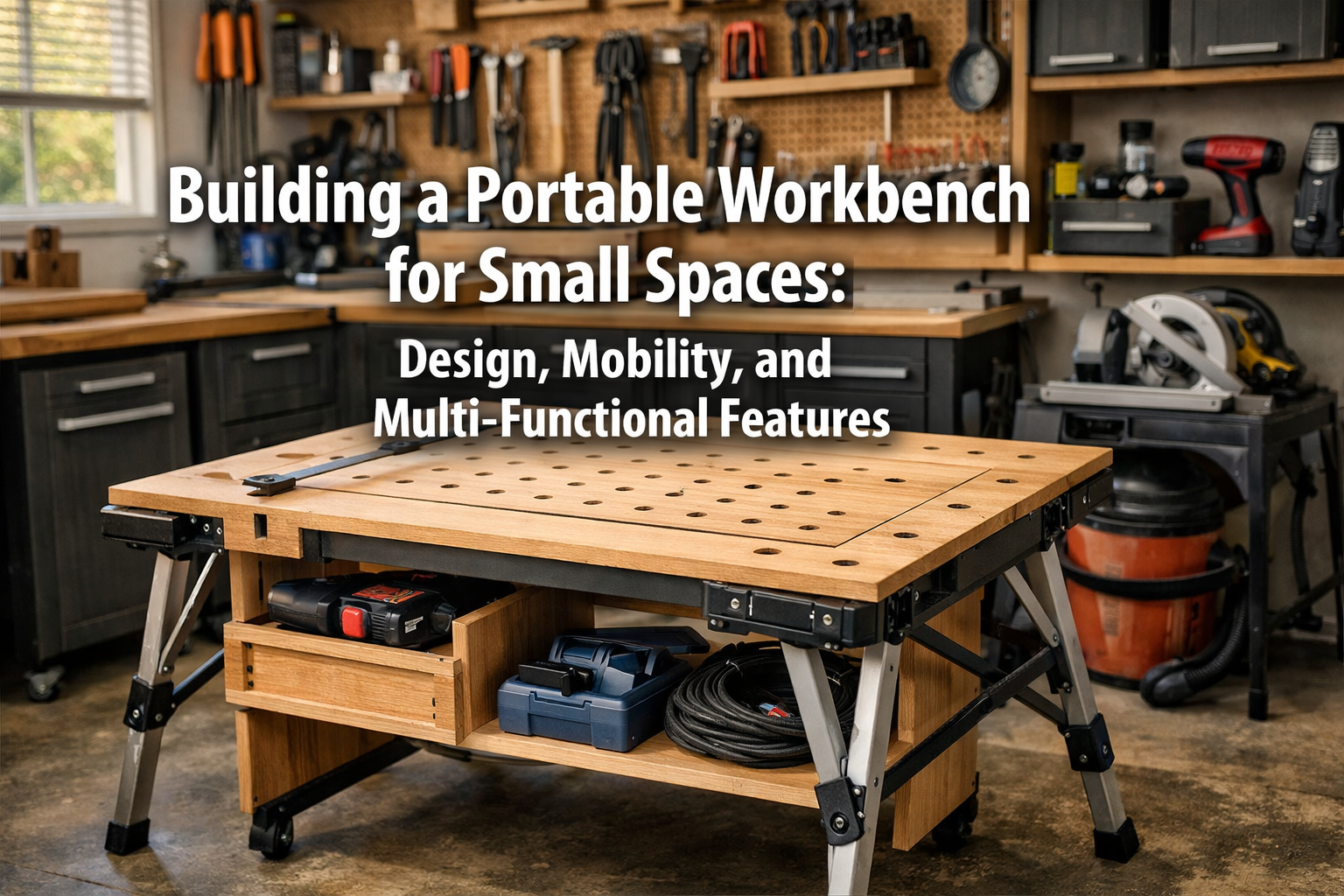

In the bustling world of 2026, where living spaces are often at a premium, the dream of having a dedicated workshop can feel out of reach for many enthusiasts and DIYers. However, limited space doesn’t have to mean sacrificing productivity or the joy of crafting. The solution lies in smart design and adaptable tools, particularly when it comes to the cornerstone of any workshop: the workbench. This article delves into the essential aspects of Building a Portable Workbench for Small Spaces: Design, Mobility, and Multi-Functional Features, empowering you to create a versatile workspace that adapts to your needs and constraints.
Key Takeaways
- Prioritize Compact Design: Focus on foldability, collapsibility, and modularity to maximize space efficiency.
- Enhance Mobility: Incorporate heavy-duty casters, lifting mechanisms, or lightweight materials for easy movement and storage.
- Integrate Multi-Functional Features: Design for adaptability with clamping solutions, tool storage, and interchangeable tops.
- Select Durable Materials: Choose robust materials like Baltic birch plywood or solid hardwood for longevity and stability.
- Embrace Customization: Tailor the workbench to your specific tools and projects for optimal workflow in a small footprint.
Designing a Portable Workbench for Small Spaces: Principles and Practicalities
The foundation of an effective portable workbench for a small space lies in its design. Every element must be carefully considered to maximize utility while minimizing footprint. The core principles revolve around compactness, stability, and ease of transformation.

Essential Design Principles
A successful portable workbench starts with a clear vision of its primary function and how it will interact with your limited space.
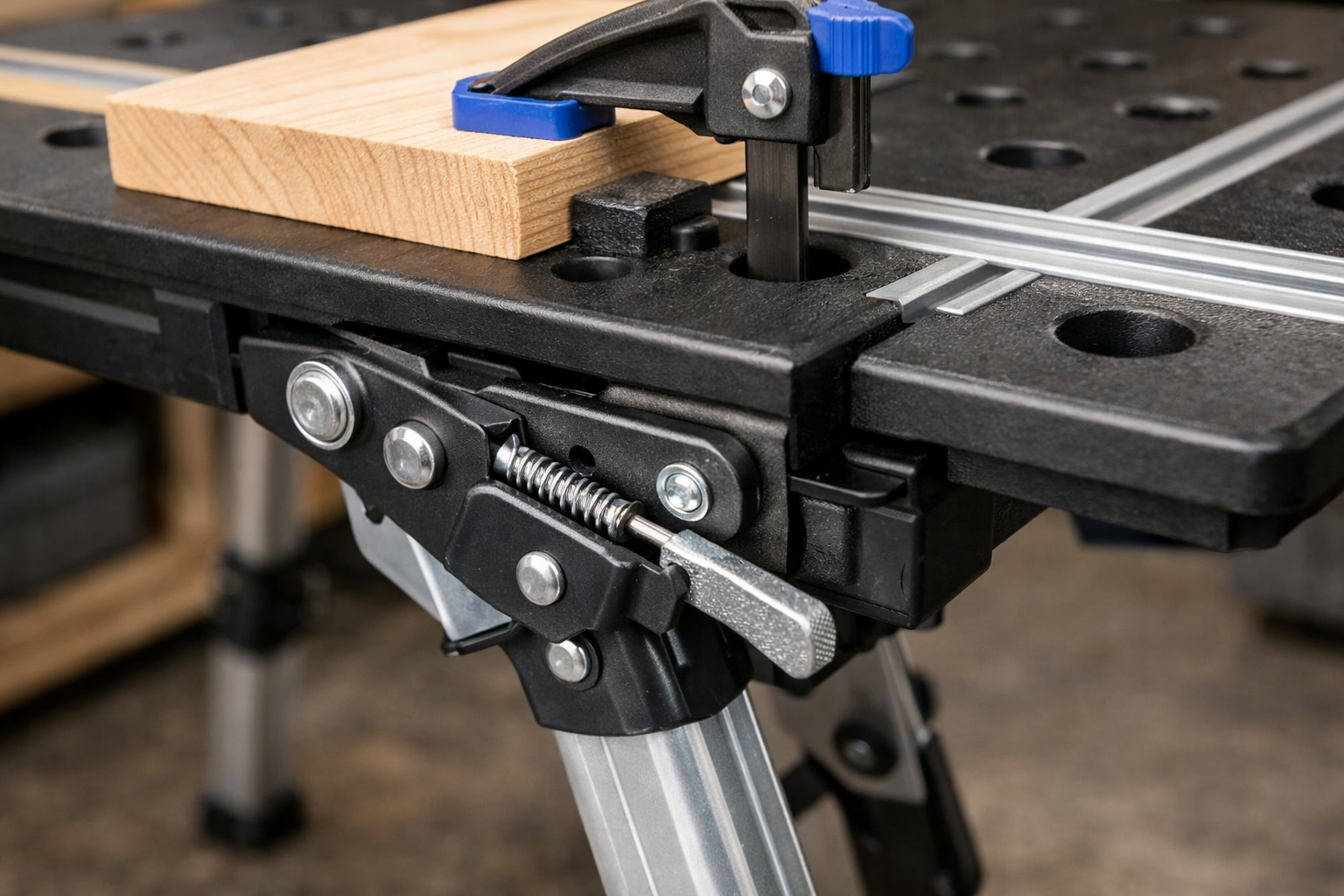
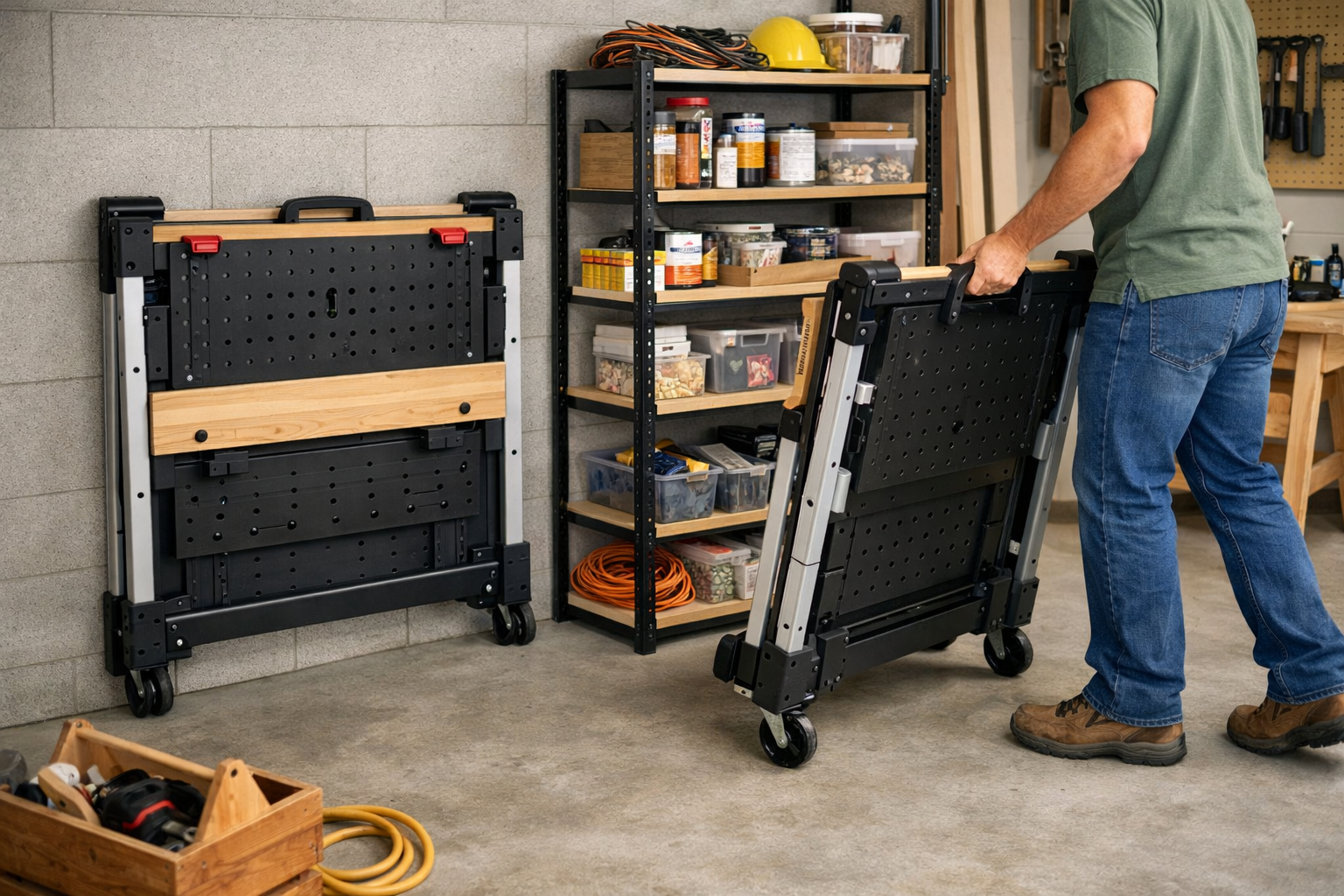
- Foldability and Collapsibility: This is paramount. Designs that allow the workbench to fold flat or collapse significantly are ideal. Think about mechanisms like folding legs (sawhorse style), hinged tops, or removable components that can be stored separately. The goal is to reduce its volumetric footprint when not in use.
- Modularity: Consider a workbench with modular sections. Perhaps a base unit that remains somewhat constant, with interchangeable tops or add-on modules for specific tasks like routing, assembly, or finishing. This allows for specialized setups without needing multiple workbenches.
- Stability vs. Weight: A crucial balance. A workbench needs to be stable enough for various tasks (e.g., planing, sawing, assembly) without being so heavy that it’s difficult to move. This often involves choosing materials wisely and reinforcing key joints.
- Ergonomics: Even in a small space, ergonomics are vital. Design the workbench height to suit your typical working posture, whether standing or sitting. Adjustable height features can significantly enhance comfort and versatility.
Practical Design Considerations for Building a Portable Workbench for Small Spaces
When planning your build, specific features will make a significant difference in functionality.
- Work Surface Material:
- Baltic Birch Plywood: Excellent stability, flat, and durable. Its void-free core makes it resistant to warping and provides strong screw holding.
- MDF (Medium-Density Fiberboard): Economical, very flat, and smooth, ideal for assembly or finishing. However, it’s susceptible to moisture damage and not as durable for heavy impacts.
- Solid Hardwood: Offers superior durability and a pleasing aesthetic, but is heavier and more expensive. Good for workbenches intended for heavy-duty work like hand planing.
- Integrated Clamping Solutions: A workbench without clamping options is severely limited.
- Dog Holes: A series of evenly spaced holes across the workbench top allow for bench dogs and holdfasts, providing flexible clamping. Consider a 3/4-inch diameter for compatibility with many off-the-shelf accessories.
- T-track: Embedded T-track allows for quick and secure clamping with various T-track clamps and jigs. These can be routed into the surface or added as surface-mounted strips.
- Bench Vises: A small, quick-release bench vise can be a game-changer. Consider designs that can be quickly attached and removed, or even fold away. For more detailed insights into workbench design, explore our guide on “Building a Compact and Ergonomic Workbench for Small Workshops.” Building a Compact and Ergonomic Workbench for Small Workshops: Maximizing Space and Efficiency
| Feature Type | Description | Best Use Cases |
|---|---|---|
| Worktop | Baltic Birch Plywood | General woodworking, assembly |
| MDF | Finishing, detailed work | |
| Solid Hardwood | Heavy-duty planing, chiseling | |
| Clamping | Dog Holes | Flexible clamping with bench dogs |
| T-track | Quick-release clamping with jigs | |
| Removable Vise | Secure holding for various tasks |
Enhancing Mobility and Multi-Functional Features
The true power of a portable workbench for small spaces lies in its ability to be easily moved and adapted for various tasks. This involves thoughtful additions to its structure and surface.
Maximizing Mobility
Movement should be effortless, allowing you to reconfigure your workspace as needed.
- Casters: Heavy-duty, locking casters are non-negotiable. Look for:
- Swivel Casters: For complete maneuverability in tight spaces.
- Braking Mechanisms: Essential for stability during work, preventing unintended movement.
- Weight Capacity: Ensure the casters can support the workbench’s weight, plus any tools or materials you might place on it.
- Retractable Casters: Some designs incorporate casters that can be retracted when the workbench is in its working position, allowing the workbench to rest firmly on its feet for maximum stability.
- Handles or Grips: Ergonomic handles make it easier to lift, push, or pull the workbench, especially when navigating uneven surfaces or thresholds.
- Lightweight Construction (where possible): While stability is key, using lighter materials like aluminum for frames or thinner, yet strong, plywood for certain sections can reduce overall weight without compromising strength.
Integrating Multi-Functional Features into Your Portable Workbench
Beyond just a flat surface, a portable workbench should act as a Swiss Army knife for your projects.
- Integrated Storage Solutions: Small spaces demand smart storage.
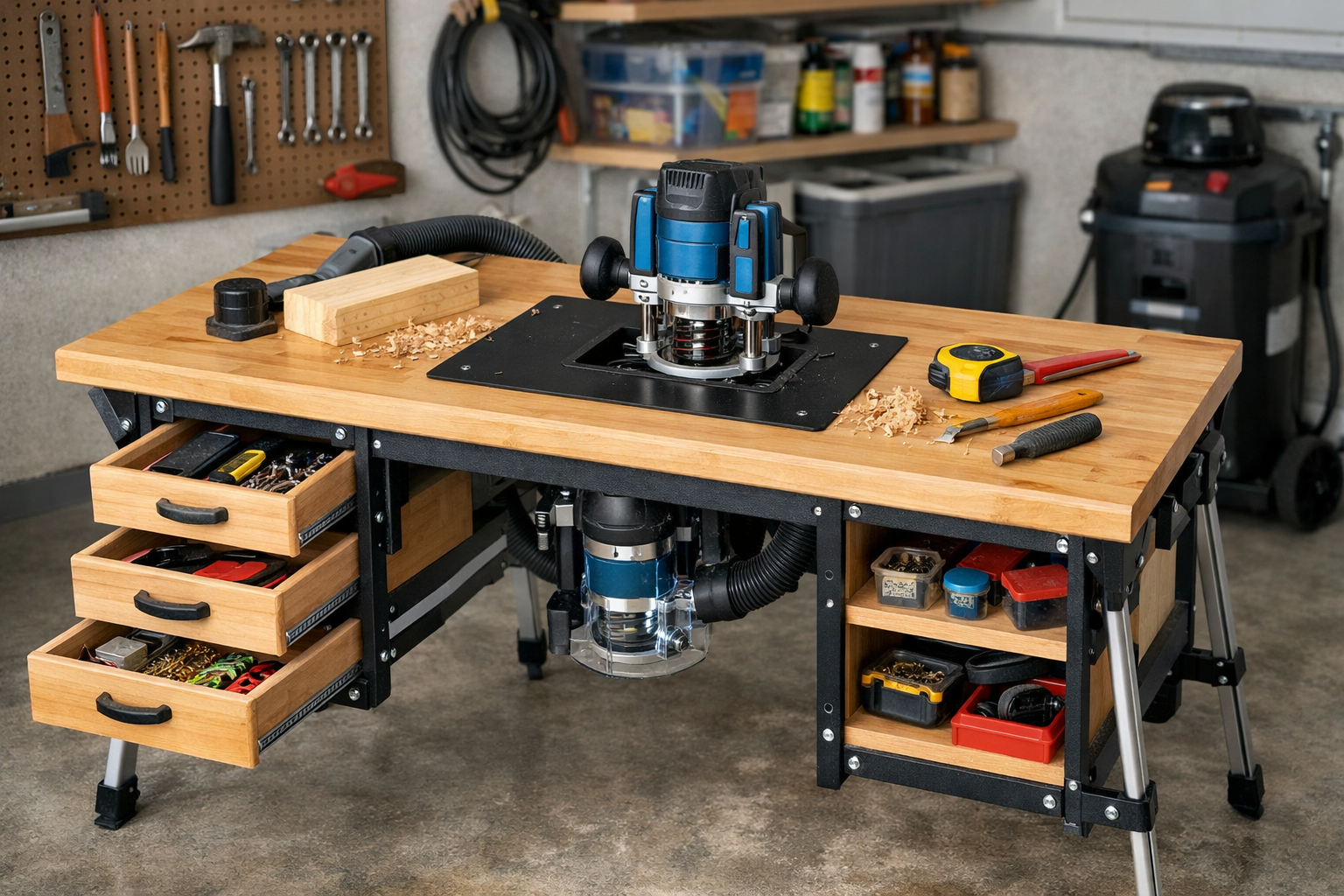
- Drawers and Shelves: Shallow drawers for hand tools, fasteners, and smaller accessories keep things organized. Open shelves can store larger items or frequently used power tools.
- Tool Trays/Holders: Built-in slots or removable trays for chisels, screwdrivers, or pencils keep essential tools within reach.
- Magnetic Strips: Ideal for holding drill bits, small metal parts, or measuring tapes.
- Pegboard Sections: Incorporating a small pegboard area, perhaps on a fold-down side, offers customizable hanging storage for smaller tools. Consider how you might adapt ideas from Building a Modular Home Office Desk System to integrate storage seamlessly.
- Interchangeable Tops/Inserts: This feature dramatically boosts versatility.
- Router Table Insert: A removable section of the workbench top that can be replaced with a router plate, transforming your workbench into a dedicated router table. This is a brilliant space-saver. For tips on router table mastery, see Mastering the Router Table: Beyond Basic Edges for Precision Joinery.
- Miter Saw Station: A customizable insert or extension that can accommodate a miter saw, providing support wings for longer stock.
- Assembly Grid: A top with a grid pattern or a grid mat can aid in precise assembly and squaring up projects.
- Power Management:
- Integrated Power Strip: Mounting a power strip to the side or underneath the workbench provides convenient access to outlets for power tools, reducing cable clutter.
- Cord Management: Channels or hooks for routing power tool cords keep them out of the way and prevent tripping hazards.
“A well-designed portable workbench is more than just a surface; it’s a dynamic workspace that empowers creativity in the most confined environments.”
Customization and Advanced Features for Your Portable Workbench
Building a Portable Workbench for Small Spaces: Design, Mobility, and Multi-Functional Features truly shines when tailored to individual needs. Customizing your workbench ensures it perfectly complements your workflow and specialized projects.
Tailoring Your Workbench to Specific Needs
No two workshops are exactly alike, and your workbench should reflect that.
- Project-Specific Adjustments:
- Adjustable Height: Beyond basic fixed height, consider a mechanism (e.g., scissor lift, threaded rods, or pin system) that allows for height adjustments for different tasks or users. This is particularly useful if you alternate between precision work and heavy assembly.
- Integrated Planing Stop: A simple, retractable stop can be invaluable for hand planing operations.
- Tool Integration:
- Recessed Areas: Design specific recessed areas for frequently used hand tools, small power tools, or even a laptop/tablet for project plans.
- Dust Collection Port: For larger power tools like a miter saw or router, incorporating a dedicated dust collection port can vastly improve air quality and cleanliness.
- Material Selection for Longevity:
- Protective Finishes: Apply a durable finish to the workbench top (e.g., polyurethane, spar varnish, or even multiple coats of Danish oil) to protect against spills, dents, and wear. A sacrificial top layer of hardboard can also be added and replaced when worn.
- Reinforced Joints: Use robust joinery techniques. For heavy-duty applications, Hand Tool Joinery for Visible Wood Joints can offer superior strength and aesthetics, though simpler joinery like mortise and tenon or robust lag screws with appropriate wood glue will suffice for most portable designs.
- Lighting Solutions: A small, clip-on LED work light or a built-in light strip can illuminate your immediate work area, especially important in dimly lit garages or basements.
Examples of Innovative Portable Workbench Designs
Drawing inspiration from successful designs can spark new ideas for your own build.
- Paulk Workbench Variation: Known for its lightweight design, integrated storage, and excellent clamping features, the Paulk workbench concept can be adapted into a smaller, more portable version. Its torsion box construction offers rigidity with minimal material.
- MFT (Multi-Function Table) Style: Inspired by Festool’s MFT, a workbench with a precisely drilled grid of dog holes can serve as a cutting station, assembly table, and clamping platform. The key is precise hole drilling for maximum utility.
- Folding Wall-Mounted Workbench: For the smallest spaces, a workbench that folds flat against a wall when not in use can be incredibly efficient. These often rely on sturdy wall cleat systems and collapsible legs. For ideas on maximizing wall space, review DIY Compact Entryway Organizers: Building Wall-Mounted Solutions for Keys, Mail, and Small Accessories.
- Stacked/Nested Workbench: A design where smaller work surfaces or storage units can nest within the main workbench, effectively creating multiple tiers of workspace or storage that can be compacted.
When considering the longevity and structural integrity of your portable workbench, understanding Understanding Wood Movement: How to Design and Build Furniture That Lasts Through Seasonal Changes is crucial, even for a portable item, to ensure its joints remain strong over time.
Conclusion
Building a Portable Workbench for Small Spaces: Design, Mobility, and Multi-Functional Features is an investment in your crafting journey, transforming limitations into opportunities. By carefully considering foldability, mobility, integrated storage, and interchangeable surfaces, you can create a dynamic workspace that not only fits your physical constraints but also enhances your efficiency and enjoyment. The ideal portable workbench is a reflection of your specific needs, tools, and projects. It liberates you from the confines of a traditional workshop, allowing you to create, build, and innovate wherever your passion takes you.
Actionable Next Steps:
- Assess Your Needs: List the types of projects you’ll undertake and the tools you use most often.
- Sketch Designs: Begin drawing concepts, focusing on how it will fold, move, and store.
- Choose Materials: Select materials based on durability, weight, and budget.
- Gather Tools: Ensure you have the necessary tools for construction (saws, drills, fasteners).
- Build Iteratively: Start with a basic frame and add features incrementally, testing as you go.
References
- Schwarz, C. (2018). The Anarchist’s Workbench. Lost Art Press.
- Klos, A. (2020). Paulk Workbench Build. Fine Woodworking.